The typical height for kitchen countertops is 36 inches from the floor to the top of the counter surface. This is considered the standard height for most kitchens and is based on common cabinet sizes and average user comfort. However, this is not the only height used, and other options exist for different needs and tasks.
Designing a kitchen involves many choices, and the height of your countertops is one of the most important. The right height makes cooking, cleaning, and spending time in your kitchen much more comfortable. The wrong height can lead to back pain, shoulder strain, and general discomfort. Let’s look closer at the standard height and why it is so common, along with other heights you might choose for your home.
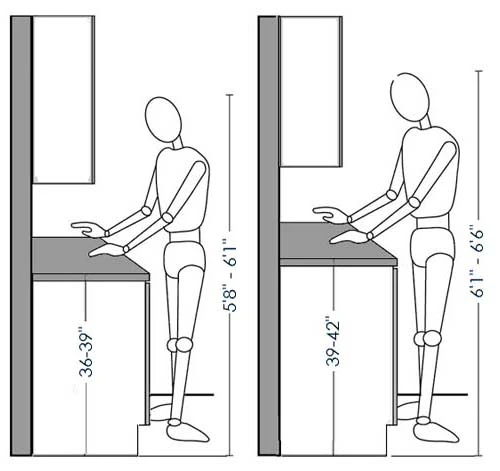
Image Source: www.regattaexports.com
The Standard Kitchen Counter Height
Most kitchens use a countertop height of 36 inches. This measurement includes the base cabinet and the countertop material placed on top.
Why 36 Inches is Common
For many years, 36 inches has been the go-to height for kitchen counters. There are several reasons for this:
- Historical Basis: This height evolved from the height of old-fashioned work tables used for food preparation.
- Cabinet Manufacturing: Kitchen kitchen base cabinet height is typically made to be 34.5 inches tall. When you add a standard countertop thickness (usually 1.5 inches), you get that common 36-inch height. Cabinet makers build standard cabinets this way, making installation simple and predictable for most kitchens.
- General Comfort: For a long time, 36 inches has been seen as a good average kitchen counter height for someone standing to do tasks like chopping vegetables, washing dishes, or mixing ingredients.
Components Making Up the Height
The final height of your counter comes from putting two main parts together:
- The Base Cabinet: These are the cabinets that sit on the floor. They usually have a toe kick space at the bottom (a small recessed area for your feet). Standard kitchen base cabinet height is 34.5 inches. This includes the cabinet box and the toe kick.
- The Countertop Material: This is the slab of material that sits on top of the cabinets (like granite, quartz, laminate, wood). The thickness of the countertop adds to the total height. Common thicknesses are 1.25 inches (3 cm) or 1.5 inches (4 cm). Sometimes, they can be thicker or thinner, but 1.5 inches is very common for stone or solid surface tops.
Add the cabinet height and the countertop thickness, and you usually get right around 36 inches.
Here is a simple breakdown:
| Component | Typical Height |
|---|---|
| Kitchen Base Cabinet | 34.5 inches |
| Standard Countertop | 1.5 inches |
| Total Counter Height | 36 inches |
So, the 36-inch standard kitchen counter height is not just a random number. It is based on how cabinets are built and the common thickness of countertop materials.
Exploring Different Counter Heights
While 36 inches is the standard, it is not the only option. Different heights offer different uses and suit different needs.
Stepping Up: Bar Height
A bar height kitchen counter is taller than the standard counter.
- What it is: Bar height is typically around 42 inches from the floor.
- Common Use: These taller counters are often used for eating areas in kitchens, especially on islands or peninsulas. They create a space for casual meals, snacks, or just hanging out while someone is cooking.
- Seating: Bar height counters need taller stools, often called bar stools, which usually have a seat height around 30 inches.
- Design: They can separate the kitchen workspace from a living or dining area. The raised height can also help hide any mess on the lower counter from view on the other side.
Counter Height vs. Bar Height: What’s the Difference?
This is a common question. The main difference is simply the height and how the space is used and seated.
- Counter Height: This is the standard 36 inches. It is the main work surface for food prep, cooking, and cleaning. It uses standard counter-height stools (seat height around 24-26 inches) if you add an overhang for seating.
- Bar Height: This is the taller 42 inches. It is primarily an eating or casual gathering surface. It requires bar stools (seat height around 30 inches).
Choosing between counter height vs bar height often depends on how you plan to use the space and your kitchen layout. Counter height seating feels more integrated into the kitchen, while bar height seating feels more separate.
Here is a quick comparison:
| Feature | Counter Height (36 inches) | Bar Height (42 inches) |
|---|---|---|
| Height | 36 inches (standard) | 42 inches (taller) |
| Primary Use | Food prep, cooking, cleaning, work | Eating, casual gathering |
| Seating | Counter-height stools (24-26″ seat) | Bar stools (30″ seat) |
| Placement | Main counters, islands, peninsulas | Islands, peninsulas (often raised) |
| Visuals | Creates a single-level look | Creates a two-level look |
Going Lower: Specialty Counters
Not all kitchen tasks are best done at 36 inches. Some kitchens include sections with low kitchen counter height.
- Height: These counters are typically around 30 to 32 inches tall, similar to the height of a desk or dining table.
- Why Use Them:
- Baking: A lower height is often preferred for tasks that involve leverage and force, like kneading dough. You can lean into the counter more easily at a lower height.
- Sitting: A 30-inch height is comfortable for sitting on a standard chair while working, which can be helpful for tasks that take a long time or for people who prefer to sit while prepping.
- Accessibility: As we will discuss later, lower counters are necessary for wheelchair users.
Including a lower section can make your kitchen more versatile and comfortable for specific tasks or users.
Finding Your Perfect Counter Height
While standards exist, the ideal kitchen counter height for user comfort depends on the people using the kitchen.
Grasping Ergonomics for Comfort
Ergonomics is about designing spaces and tools to fit people, helping them work comfortably and safely. In the kitchen, good ergonomics means counters are at a height that feels natural for your body.
- Why it Matters: Working at a counter that is too low or too high can strain your back, neck, and shoulders.
- Too low: You might hunch over, putting pressure on your back and neck.
- Too high: You might have to lift your shoulders or arms too much, causing tension.
- The Right Angle: For comfortable standing work, your elbows should be bent at about a 90-degree angle. Your work surface should be about 6 inches below your elbow height. This allows you to use your hands and arms effectively without lifting or reaching too much.
This principle is why 36 inches works for many people. It is a good average for that “elbow minus 6 inches” rule for people of average height.
How to Figure Out Your Best Height
The best way to know what feels right is to test it.
- Stand Tall: Stand in a comfortable position as you would when working at a counter.
- Bend Your Elbows: Bend your arms at a 90-degree angle, keeping your upper arms close to your body.
- Measure: Have someone measure the distance from the floor to the bottom of your bent elbow.
- Calculate: Subtract 6 inches from that measurement. This gives you an idea of the ideal work surface height for you.
For example, if your elbow height is 42 inches, an ideal counter height might be around 36 inches (42 – 6 = 36). If your elbow height is 44 inches, 38 inches might feel better. If it’s 40 inches, 34 inches might be more comfortable.
This elbow rule provides a good starting point for figuring out your ergonomic kitchen counter height. Since 36 inches is standard, it works well for people whose elbow height is around 42 inches.
Considering Multiple Users
Many kitchens are used by more than one person. What happens when the cooks have different heights?
- Compromise: Often, the 36-inch standard is a compromise height that works reasonably well for most adults in a household.
- Multiple Heights: The best solution in a busy kitchen used by people of varying heights might be to include sections of different heights. A standard 36-inch counter can be the main prep area, while a lower section (30-32 inches) is used for baking or seating, and maybe a taller section (42 inches) is used as a bar for eating.
- Focus on the Primary Cook: If one person does most of the cooking, designing the main work area to suit their height makes the most sense, with other areas at standard or different heights.
Thinking about who uses the kitchen and what tasks they do most often will help you choose the most comfortable height or heights.
Planning Your Kitchen Layout
Counter heights play a big role in how your kitchen looks and works. The height choice impacts cabinets, islands, and the overall flow.
Base Cabinets Set the Stage
As mentioned, the kitchen base cabinet height is the foundation for your counters. Standard cabinets are 34.5 inches tall.
- Custom Cabinets: If you want counters higher or lower than the standard 36 inches, you might need custom-height base cabinets. For instance, to achieve a 38-inch counter height with a 1.5-inch top, you would need cabinets that are 36.5 inches tall.
- Adjusting Standard Height: Sometimes, you can slightly adjust the final height with thicker countertop material or by building a small platform under the cabinets, but changing cabinet height is the most direct way to get a non-standard counter height for your main runs.
Islands: Versatile Work Areas
Kitchen islands are central to many kitchen designs today. Their height is also a key decision.
- Standard Island Height: The kitchen island height standard is typically the same as the main counters, 36 inches. This allows the island to be used as a primary work surface for prep, cooking, and cleanup, just like the perimeter counters.
- Bar Height Islands: Many islands are designed with a raised bar height kitchen counter section (42 inches) on one side, creating a seating area separate from the main 36-inch work surface. This is a popular way to add casual dining space to the kitchen.
- Lower Island Sections: Less common, but some islands might have a lower section (30-32 inches) for baking or for comfortable seating at dining table height.
The height of your island should match its planned use – a work island needs a good working height, while an eating island needs a comfortable seating height.
Mixing and Matching Heights
Using different counter heights in different zones of the kitchen is a practical and popular design choice.
- Zoning: You can design a specific area for baking at a lower height, a main prep area at standard height, and an island or peninsula with a raised bar height section for entertaining or quick meals.
- Benefits:
- Improved Function: Tasks are more comfortable at their ideal height.
- Defined Areas: Different heights naturally separate different work or social zones in the kitchen.
- Visual Interest: Varying heights can add depth and character to the kitchen design.
Designing a kitchen with multiple heights requires careful planning to ensure the transitions look good and the layout flows well.
Special Considerations
Not everyone’s needs fit the standard mold. Some situations require specific height planning.
Designing for Accessibility (ADA)
The Americans with Disabilities Act (ADA) provides guidelines to make spaces accessible for people with disabilities, including wheelchair users. ADA kitchen counter height is lower than the standard.
- Required Height: For accessible kitchen counters, the finished height must be no more than 34 inches from the floor. This allows someone in a wheelchair to comfortably reach the work surface.
- Knee Clearance: Crucially, ADA-compliant counters require open space underneath (without cabinets) to allow for knee and toe clearance. This space should be at least 30 inches wide, 27 inches high, and 19 inches deep. This open space makes it possible for a wheelchair user to roll under the counter and work at the sink or a preparation area.
- Placement: An accessible kitchen might have one section of counter at the 34-inch height with open knee space, while other sections remain at the standard 36 inches if the layout allows.
- Benefits: Designing accessible features benefits not only wheelchair users but also people who prefer to sit while working or children who are learning to help in the kitchen.
Including an ADA kitchen counter height section ensures the kitchen is welcoming and usable for everyone.
Counters with More Than One Level
Multi-level countertops are a common design feature, especially on islands or peninsulas.
- How They Work: These typically involve one section at the standard kitchen counter height (36 inches) used for food prep, with an attached higher section at bar height kitchen counter (42 inches) behind it.
- Uses: The lower level is the primary workspace. The upper level serves as a seating area or serving space.
- Advantages:
- Hide Clutter: The raised bar often helps hide dirty dishes or prep mess on the lower counter from view, particularly from an adjacent living or dining area.
- Defined Zones: Clearly separates the working part of the kitchen from the social or eating area.
- Versatility: Provides both a comfortable standing work height and a comfortable sitting/eating height in one unit.
Multi-level counters are a practical solution for adding different functional areas to a kitchen footprint, particularly in open-concept homes.
Putting It All Together
Choosing the right counter height goes beyond picking the average kitchen counter height. It is about function, comfort, style, and the specific needs of your household.
The 36-inch standard is a great starting point and works well for a large percentage of people and tasks. However, do not feel limited by it.
Consider:
- Who uses the kitchen? Think about the heights of the main cooks.
- What tasks are done? Do you bake a lot? Do you want a seating area?
- Are there accessibility needs? An ADA kitchen counter height section might be necessary or desirable.
- What is the overall kitchen layout? Can you incorporate different heights in different zones?
- Do you want seating? Decide between counter height vs bar height seating based on how you want the area to feel and function.
Designing with different heights, like a 36-inch main counter, a 42-inch bar, or a 30-inch baking area, can make your kitchen much more functional and enjoyable for everyone who uses it.
In Summary
Knowing the standard kitchen counter height (36 inches) is important, as it is the most common measurement you will encounter in kitchens and cabinet catalogs. This height is based on typical kitchen base cabinet height and countertop thickness and works well for many people performing standard kitchen tasks.
However, the perfect counter height for you might be slightly different, based on your own height and preferred working posture. The principle of ergonomic kitchen counter height suggests the work surface should be about 6 inches below your bent elbow.
Furthermore, standard height is just one option. Bar height kitchen counter (42 inches) is popular for seating, while low kitchen counter height (30-32 inches) is useful for specific tasks like baking or for seated work. ADA kitchen counter height (34 inches with knee clearance) is necessary for accessibility.
When planning your kitchen, think about the different ways you use the space. Using a kitchen island height standard of 36 inches keeps it a primary work zone, but a higher 42-inch section can add valuable seating. Mixing different heights can improve comfort, efficiency, and the overall look of your kitchen. Do not hesitate to consider what feels best for your body and your cooking style, not just the standard numbers.
Frequently Asked Questions
Is 36 inches the only counter height I can have?
No, 36 inches is the most common standard kitchen counter height, but you can choose different heights. Options include lower heights (30-32 inches) for baking or sitting, and higher bar heights (42 inches) for seating.
What is the best height for a kitchen island?
The most common kitchen island height standard is 36 inches, matching the main counters so it can be used as a primary workspace. However, many islands include a raised section at 42-inch bar height kitchen counter for seating.
What height is considered bar height?
Bar height kitchen counter is typically 42 inches from the floor to the top of the counter. This height requires bar stools for seating.
What’s the difference between counter height and bar height?
Counter height vs bar height refers to two different heights. Counter height is the standard 36 inches used for main work surfaces. Bar height is a taller 42 inches, typically used for seating areas.
How do I find the right counter height for me?
A good way to estimate your ideal ergonomic kitchen counter height is to stand at a potential counter, bend your elbows at 90 degrees, and measure from the floor to the bottom of your elbow. Subtract about 6 inches from this measurement. This height should feel comfortable for standing work.
What is ADA kitchen counter height?
ADA kitchen counter height for accessibility is a maximum of 34 inches from the floor. These counters also require open space underneath for knee and toe clearance for wheelchair users.
Can I have different counter heights in one kitchen?
Yes, many modern kitchens include sections at different heights, such as a main 36-inch counter, a 42-inch bar area, or a 30-inch low kitchen counter height section for specific tasks like baking or sitting. This can make the kitchen more functional and comfortable for different activities and users.
Does the cabinet height determine the counter height?
Yes, the height of the kitchen base cabinet height (usually 34.5 inches for standard cabinets) is the main factor setting the counter height, along with the thickness of the countertop material.