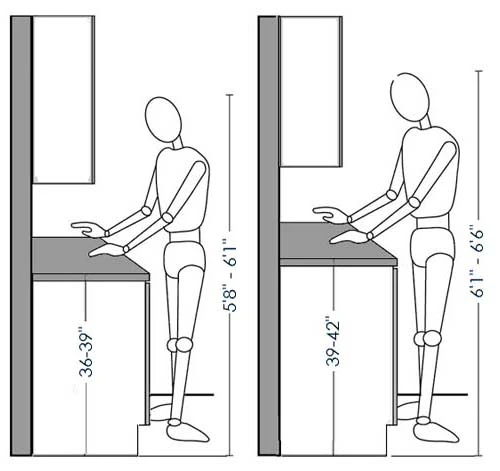
Image Source: www.regattaexports.com
How Tall Is A Kitchen Counter? Standard Heights & Tips
What is the standard height of a kitchen counter? The standard kitchen counter height is typically 36 inches from the finished floor to the top of the countertop. This measurement is a widely accepted benchmark in kitchen design and functionality.
When planning your kitchen, one of the most crucial elements to get right is the height of your countertops. This seemingly simple measurement significantly impacts the usability, comfort, and overall flow of your kitchen space. Let’s delve into the details of kitchen counter height, exploring the standard dimensions and various factors that can influence this decision.
Deciphering Standard Countertop Height
The universally recognized standard countertop height in most kitchens is 36 inches. This height has become the norm for several compelling reasons, primarily revolving around ergonomics and practicality. This 36-inch mark is measured from the finished floor to the very top surface of the countertop.
This standard height offers a comfortable working surface for a wide range of individuals, allowing for efficient meal preparation and general kitchen tasks without excessive bending or reaching. It’s a height that balances the needs of most adults, providing a good balance between standing and chopping, mixing, or rolling dough.
Examining Counter Height Dimensions
Beyond the top surface height, other counter height dimensions are important to consider for a well-designed kitchen. These include the height of the base cabinets and the thickness of the countertop itself.
h4: Cabinet Height Before Countertop Installation
Before the countertop is added, standard kitchen base cabinets typically stand at 34.5 inches tall. This leaves 1.5 inches for the countertop material. So, when you see a finished kitchen counter height of 36 inches, it’s usually a combination of 34.5 inches of cabinet and 1.5 inches of countertop.
h4: Standard Kitchen Counter Depth
The standard kitchen counter depth is usually 24 inches for the main work surfaces. This depth provides ample space for appliances like microwaves or toasters and still leaves a generous area for food preparation. This depth allows for comfortable placement of items without feeling cramped.
h4: Countertop to Cabinet Height
The countertop to cabinet height refers to the vertical space between the finished countertop surface and the bottom of the upper cabinets. The standard clearance here is typically between 18 and 20 inches. This spacing is designed to prevent headaches and bumped heads when working at the counter, while also allowing enough room for most small appliances to sit comfortably on the counter. This height also dictates how much usable space you have on your backsplash.
Why 36 Inches? The Ergonomic Advantage
The 36-inch standard countertop height isn’t arbitrary; it’s rooted in ergonomic principles. This height is generally considered the most comfortable for the average adult to stand and perform kitchen tasks.
h5: Comfort for Most Adults
- Reduced Strain: Standing at a 36-inch counter allows most people to keep their wrists in a neutral position while chopping or mixing. This minimizes strain on wrists and elbows, reducing the risk of repetitive stress injuries.
- Efficient Workspace: It provides a good vantage point for viewing your work and reaching ingredients without needing to hunch over.
- Universal Appeal: While individual heights vary, 36 inches serves as a comfortable compromise that accommodates a broad spectrum of the population.
Beyond the Standard: When to Deviate
While 36 inches is the standard, it’s not a one-size-fits-all solution. There are valid reasons to consider adjusting your kitchen design counter height.
h4: Accommodating Different Users
- Taller Individuals: If the primary cooks in your household are significantly taller than average, a counter height of 37 or even 38 inches might be more comfortable. This reduces the need to bend over, promoting better posture.
- Shorter Individuals: For those on the shorter side, a counter height of 34 or 35 inches can make a world of difference in comfort and ease of use.
- Mixed Heights: If there’s a significant height difference between household members, consider creating different work zones with varying counter heights.
h4: Specific Tasks and Appliances
Certain kitchen activities or appliances might benefit from different counter heights.
- Baking: Some bakers prefer a slightly lower counter height (around 30-32 inches) for tasks like rolling out dough, as it allows for more leverage.
- Stand Mixers: If you frequently use a stand mixer that sits on the counter, ensure there’s enough clearance between the mixer and upper cabinets. Sometimes, a slightly lower counter can be beneficial.
- Children: For kitchens where children frequently assist with cooking, a lower section of the counter or a dedicated children’s prep area can be a safe and engaging addition.
h4: Accessibility Considerations
For individuals with mobility issues or who use wheelchairs, ADA (Americans with Disabilities Act) guidelines offer specific recommendations. While not always mandatory in residential kitchens, these guidelines are excellent for promoting universal design.
- Wheelchair Accessible Counters: ADA recommends a minimum clear knee space of 27 inches high, 30 inches wide, and 19 inches deep. The clear floor space in front of the counter should be at least 30 inches wide by 48 inches deep. Countertop heights for seated users are typically recommended between 28 and 34 inches.
The Role of the Kitchen Island
Kitchen islands are versatile additions that often incorporate different counter height dimensions to serve multiple purposes.
h4: Kitchen Island Height
Often, kitchen islands are designed to mirror the main counter height of 36 inches. However, they can also be varied.
- Integrated Seating: If your island includes a seating area, you might opt for a tiered design. A standard counter height section can be adjacent to a higher breakfast bar height section.
- Breakfast Bar Height: For a breakfast bar, a common height is 42 inches. This accommodates standard bar stools and provides a comfortable perch for casual dining or a quick meal. The counter spacing around a breakfast bar needs to be sufficient for people to sit comfortably without being too close to the main work area.
- Taller Islands: Some islands are designed with a uniform height of 42 inches if they are primarily intended for seating and less for primary food prep.
Exploring Countertop Materials and Thickness
The material you choose for your countertop can also subtly influence the overall finished height. While the base cabinet height is standard, countertop materials vary in thickness.
h5: Common Countertop Thicknesses
- Laminate: Typically 1.5 inches thick.
- Solid Surface (e.g., Corian): Often 0.75 to 1.5 inches thick.
- Granite, Quartz, Marble: Commonly 1.25 to 1.5 inches thick, though thicker slabs (2 or 3 inches) are available for a more substantial look.
- Butcher Block: Usually 1.5 to 2 inches thick.
When calculating your desired finished kitchen counter height, always factor in the thickness of the material you plan to use. A thicker countertop will result in a higher finished height if the base cabinets remain the same.
Tips for Optimizing Your Kitchen Counter Height
Getting the kitchen counter height right is essential for a functional and enjoyable kitchen. Here are some tips to help you make the best decision:
h4: Measure Your Own Comfort
- Stand at Existing Counters: Pay attention to how you feel when working at your current counters or at friends’ and family members’ homes. Do you feel comfortable, or do you find yourself hunching or reaching too much?
- Simulate Different Heights: If possible, place books or boxes on a temporary surface to simulate different counter heights and see what feels best for your primary tasks.
h4: Consider All Users
- Household Members: Take into account the heights of everyone who regularly uses the kitchen.
- Occasional Users: Think about guests who might use the kitchen, especially children.
h4: Plan for Your Tasks
- Primary Activities: Will you be doing a lot of baking, chopping, or entertaining? Match your counter height to your most frequent and demanding tasks.
- Appliance Placement: Ensure sufficient clearance for appliances you’ll use on the countertop.
h4: Think About the Overall Design
- Visual Appeal: While ergonomics are key, consider how the counter height fits into the overall aesthetic of your kitchen.
- Flow and Spacing: Ensure adequate counter spacing between different work zones and between the counter and other elements in the kitchen for easy movement.
h4: Don’t Forget the Backsplash
The countertop to cabinet height directly impacts the backsplash area. If you opt for a higher counter, you’ll have less backsplash space, and vice versa. This can influence your tile or backsplash material choices and their placement.
h4: Consult with Professionals
- Kitchen Designers: Experienced kitchen designers can offer invaluable advice on ergonomic kitchen counter height and how it integrates with your overall kitchen layout.
- Cabinet Installers: They can ensure that cabinets are installed at the correct height for your chosen countertop.
Frequently Asked Questions (FAQ)
Q1: Can I have different counter heights in my kitchen?
A1: Yes, absolutely! It’s common and often beneficial to have different counter heights, especially in larger kitchens or those with islands. This caters to various tasks and users, enhancing ergonomics and functionality. For example, a standard 36-inch prep area can be complemented by a higher 42-inch breakfast bar.
Q2: What is the standard height for kitchen island counters?
A2: While many kitchen islands match the main counter height of 36 inches, it’s also common to see islands with a breakfast bar height of 42 inches for seating. Some islands might even feature a split-level design with different heights for distinct purposes.
Q3: How much space should there be between the counter and upper cabinets?
A3: The typical countertop to cabinet height clearance is between 18 and 20 inches. This provides enough room to work comfortably at the counter without hitting your head and accommodates most small appliances.
Q4: What is the standard depth of a kitchen counter?
A4: The standard kitchen counter depth is usually 24 inches for primary work areas. This provides a good balance of workspace without protruding too far into the kitchen’s walking path.
Q5: Is 36 inches the only option for kitchen counter height?
A5: No, 36 inches is the standard, but it’s not the only option. Considering factors like your height, the heights of other household members, and specific task needs can lead to adjustments. For instance, a 34-inch or 35-inch counter might be more comfortable for shorter individuals, while 37 or 38 inches might suit taller people.
Q6: How does countertop material thickness affect the final height?
A6: The thickness of your countertop material is added to the base cabinet height. Standard base cabinets are typically 34.5 inches, and with a 1.5-inch thick countertop, you achieve the standard 36-inch finished height. If you choose a thicker material, like a 2-inch slab, your finished counter height will be higher unless you account for it by lowering the base cabinets.
Q7: What is an ergonomic kitchen counter height?
A7: An ergonomic kitchen counter height is one that minimizes physical strain and maximizes comfort for the user. For most people, this falls around the standard 36 inches, allowing for neutral wrist positioning and a comfortable working posture. However, the truly ergonomic height is the one that feels most comfortable for you and the primary users of the kitchen.
By carefully considering these dimensions and tips, you can ensure your kitchen counters are perfectly suited to your needs, making your time in the kitchen more enjoyable and efficient.