How long should a kitchen runner be? There is no one perfect answer. The ideal length for your kitchen runner rug depends greatly on your specific kitchen layout and where you plan to place the rug. Standard kitchen runner lengths range from about 6 feet to 12 feet or more, but choosing the best size kitchen runner means looking at your unique space and how you use it.
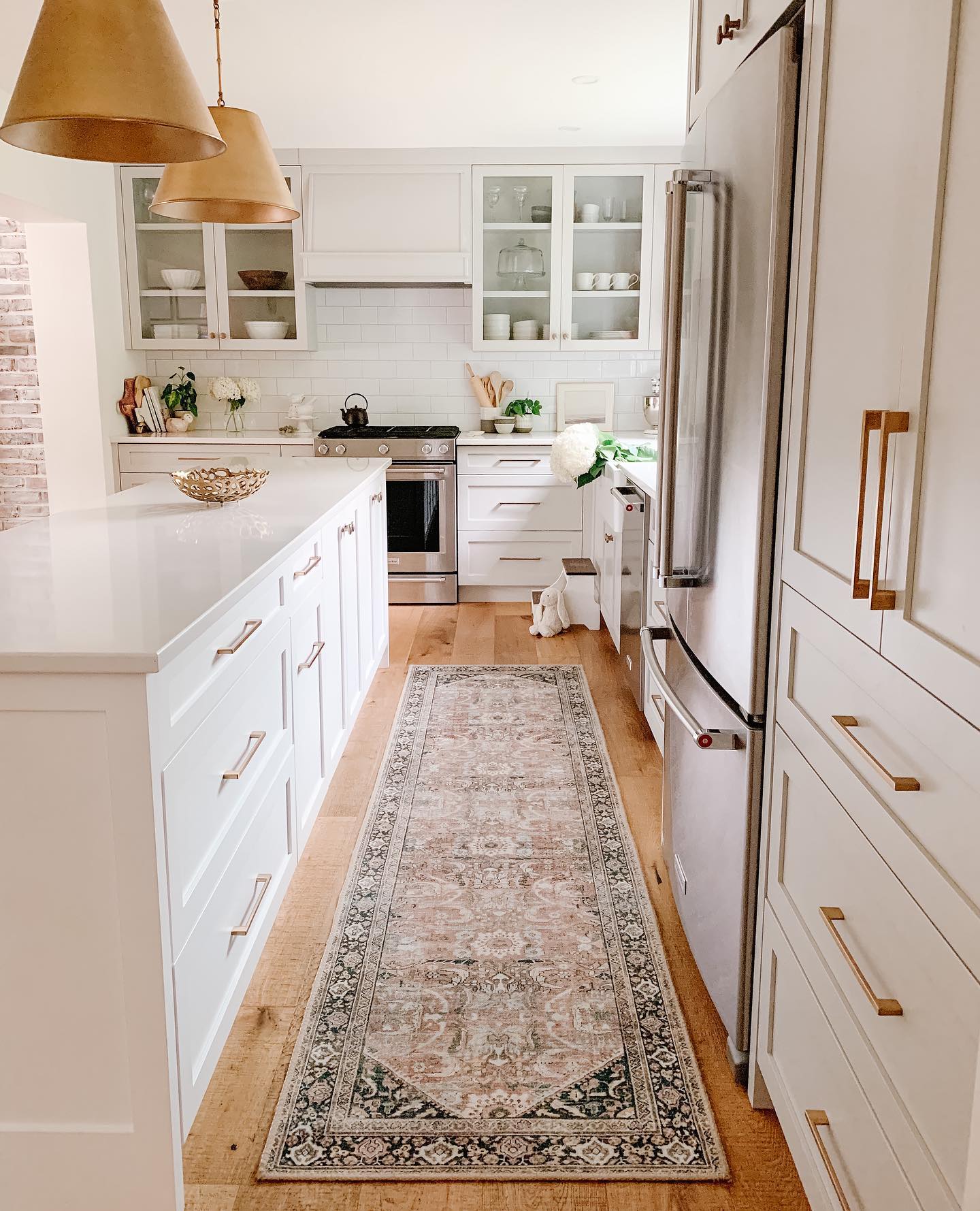
Image Source: image1.rugs-direct.com
Why Put a Runner in the Kitchen?
Kitchens are busy spots. You stand a lot to cook, wash dishes, or prepare food. A kitchen runner rug offers a few good things.
- Comfort: Standing on a rug is softer than standing on a hard floor. This can help your feet and back feel better, especially if you spend a lot of time in the kitchen.
- Safety: Some rugs have non-slip backs. This helps stop slips and falls on wet or messy floors.
- Floor Cover: Rugs protect your floor from spills, drops, and foot traffic. They can hide spots or wear on the floor.
- Style: A runner adds color, texture, and pattern to your kitchen. It can make the room feel warmer and more complete.
Runners are long and narrow. They are great for areas where you walk or stand often. This makes them perfect for kitchen use.
Standard Kitchen Runner Lengths
Rug makers offer runners in common sizes. Knowing these standard kitchen runner lengths helps you start your search.
Typical kitchen runner sizes you will see often include:
- 2 feet x 6 feet (about 60 cm x 180 cm): Good for small spaces or in front of a single spot like the sink.
- 2 feet x 8 feet (about 60 cm x 240 cm): Works well in front of a longer counter area or in a smaller galley kitchen.
- 2 feet x 10 feet (about 60 cm x 300 cm): Suits longer counters or bigger galley kitchens.
- 2 feet x 12 feet (about 60 cm x 360 cm): For very long spaces, like extended counters or long, narrow kitchens.
Sizes can change a little by maker. Some offer custom sizes too. These typical kitchen runner sizes are just a starting point. You still need to measure your space carefully.
How to Measure for Kitchen Runner
Getting the right size runner rug needs careful steps. Knowing how to measure for kitchen runner helps you avoid mistakes.
Here is a simple way to measure:
- Decide where the rug will go. Will it be in front of the sink? Along an island? Down a main path?
- Measure the length of that spot. Use a tape measure. Measure the total length you want the rug to cover. For example, if you want it in front of your sink and dishwasher, measure from one end to the other.
- Think about space around the rug. You do not want the rug to go edge-to-edge against cabinets or walls. Leave some floor showing around the rug.
- Aim for at least 4-6 inches (10-15 cm) of floor on both ends of the runner.
- Aim for about 6 inches (15 cm) of floor on the sides, between the runner and cabinets or counters.
- Subtract space from your total measurement. If your sink area is 7 feet long, and you want 6 inches free on each side, you need a rug about 6 feet long (7 feet minus 6 inches minus 6 inches = 6 feet).
- Measure the width if you are unsure. Most runners are about 2 feet wide. Make sure this width works in your space. It should not block doors or drawers. It should not make the path too narrow.
Write down your needed length and width. This helps when you shop. Measuring twice is a good idea to be sure.
Kitchen Runner Size Recommendations
Giving exact kitchen runner size recommendations is tricky without seeing your kitchen. But we can give tips for common kitchen layouts and spots.
These are general kitchen runner length guidelines. Your space might need something a little different.
Runner Rug Placement Kitchen
Where you place the runner changes the length you need. Think about the main walking paths or standing areas.
Common places for kitchen runners include:
- In front of the sink.
- Along a kitchen island.
- Down a narrow galley kitchen path.
- In front of a stove or cooking zone.
- Along a main walkway in a larger kitchen.
Each spot needs its own careful measuring and thought about size.
Runner Rug in Front of Kitchen Sink Size
This is a very popular spot for a runner. You stand here often to wash dishes or prepare food.
For a runner rug in front of kitchen sink size, consider the length of your sink area.
- Measure the length of the sink itself.
- If you have a dishwasher or trash pull-out right next to the sink, measure that length too.
- Your runner should be at least as long as your sink.
- It is often best if the runner runs the length of the work zone. This means covering the sink, and maybe the dishwasher area next to it.
- Leave 4-6 inches of floor showing on each end of the runner.
- A common size for a sink area might be 6 feet or 8 feet long. This fits many standard sink and dishwasher setups.
So, a 2×6 or 2×8 runner is often a good fit here. It depends on how wide your sink and nearby counter space is.
Size Runner Rug Galley Kitchen
Galley kitchens are long and narrow. They have cabinets or counters on one or both sides, with a path down the middle.
Choosing the size runner rug galley kitchen needs thinking about the whole path.
- Measure the length of the main walkway from one end to the other.
- You want the runner to fill a good part of this path.
- It does not have to go wall-to-wall. Leave space at the start and end of the kitchen. Maybe leave 12-18 inches (30-45 cm) at each end.
- Leave floor space on the sides too (about 6 inches). This keeps drawers clear and looks better.
- A longer runner works well here. An 8-foot, 10-foot, or even 12-foot runner might be right.
- The width is also key. Most runners are 2 feet wide. In a narrow galley kitchen, make sure a 2-foot wide runner leaves enough room to walk comfortably on the sides or beside the runner. The path should not feel blocked.
Think about how much of the path you want covered. Do you want it from sink to fridge? Or just down the main work zone? Measure that specific section.
Choosing Kitchen Runner Size
Picking the right size involves more than just measuring. Think about the flow of your kitchen and how you want the rug to look and feel.
When choosing kitchen runner size, ask yourself:
- What is the main goal? Is it comfort at the sink? Protecting a high-traffic path? Adding style?
- Where are the main work zones? Sink, stove, prep area. Your runner should likely cover at least one of these.
- How much of the floor do you want to cover? Some people like just a small rug at the sink. Others want a long runner covering a main path.
- How much floor space should show around the rug? This space gives the rug room to breathe and looks neat.
Kitchen runner length guidelines suggest leaving space around the rug. This prevents a “wall-to-wall” carpet look which is not good for kitchens. It also helps air flow and makes cleaning edges easier.
Aim for balance. The runner should feel like it belongs in the space. It should not look too small and lost. It should not look too big and crowded.
Best Size Kitchen Runner for Different Spaces
Let’s look at more examples to help you find the best size kitchen runner.
In Front of an Island
If your island has seating or is a main prep area, a runner can go in front of it.
- Measure the length of the island where people stand or sit.
- Your runner should be a bit shorter than this length. Leave 6 inches or more on each end.
- If the island is very long, you might need a 10 or 12-foot runner.
- If it is a short island, maybe a 6 or 8-foot runner is enough.
The runner helps define the work or seating zone around the island.
Along a Counter Section
Maybe you have a long stretch of counter where you do a lot of prep.
- Measure the length of this specific counter section.
- Pick a runner length that covers most of this section, leaving space at the ends.
- This could be an 8-foot or 10-foot runner, depending on your counter length.
In a U-Shaped or L-Shaped Kitchen
These kitchens have counters on two or three walls. You might want a runner in the main open area or along one busy section.
- Main Area: If you want a runner in the middle, consider the open floor space. A runner might go down the longest path you walk. Measure that path.
- Specific Section: If you spend a lot of time at the sink or stove area in one part of the ‘U’ or ‘L’, measure that section and follow the sink/counter advice.
Sometimes, two smaller runners work better than one long one in these layouts. For example, one at the sink and one at the stove. This depends on the layout and how much space is between the zones.
Fathoming Kitchen Runner Length Guidelines
Let’s sum up the main kitchen runner length guidelines to make them clear.
- Measure Your Specific Spot: Never guess. Measure the length you want the runner to cover.
- Subtract for End Space: Leave 4-6 inches (10-15 cm) of floor showing at each end of the runner. This means your rug should be shorter than the total length of the space.
- Subtract for Side Space: Leave about 6 inches (15 cm) of floor showing on the sides, between the runner and counters/cabinets. This means a standard 2-foot wide runner works if your path is at least 3 feet wide.
- Cover the Work Zone: The runner should cover the area where you stand the most, like in front of the sink or stove.
- Consider Flow: The runner should not block doorways or make the path feel cramped.
- Think About Your Kitchen Shape: Galley kitchens often need longer runners than L-shaped kitchens.
Following these tips helps you choose a size that fits well and works best in your kitchen.
Typical Kitchen Runner Sizes and Their Use
Looking again at typical kitchen runner sizes helps match them to common needs.
| Typical Size | Metric Size | Good For | Notes |
|---|---|---|---|
| 2 ft x 6 ft | 60 cm x 180 cm | Small sink areas, short counters, small paths | Good for single work spots. |
| 2 ft x 8 ft | 60 cm x 240 cm | Standard sink + dishwasher areas, smaller galleys | Common size for average kitchens. |
| 2 ft x 10 ft | 60 cm x 300 cm | Longer counters, medium to large galleys | Fills more space in longer paths. |
| 2 ft x 12 ft | 60 cm x 360 cm | Very long counters, large galleys | For significant lengths in bigger kitchens. |
These are general uses. Always measure your space!
Deciphering Runner Rug Placement Kitchen Details
Good placement makes a big difference. It is not just about length. It is also about positioning.
- Centering: In front of a sink or stove, center the runner on the feature. This looks balanced.
- Paths: In a walkway like a galley kitchen, center the runner in the middle of the path. Leave equal floor space on both sides if possible.
- Clearing Doors and Drawers: Make sure the rug’s thickness does not stop doors from opening or drawers from pulling out. Some rugs are thicker than others.
- Using a Rug Pad: A non-slip rug pad is a must in the kitchen. It keeps the runner from sliding, making it much safer. It also adds a little cushion and can help the runner last longer.
Place the pad first, then put the runner on top, making sure the edges of the runner do not go past the pad.
Choosing Kitchen Runner Size: More Tips
Still unsure about choosing kitchen runner size? Here are a few more things to think about.
- High-Traffic Zones: Where do people walk most often in your kitchen? Place the runner there to protect the floor and offer comfort.
- Visual Weight: A long, dark runner in a small kitchen might make it feel smaller. A lighter or shorter runner might work better. Think about how the rug will look in the space.
- Cleaning: Kitchens get messy. Choose a runner material that is easy to clean. Low pile rugs are often easier to clean than thick, shaggy ones. The size you choose should be easy to remove and clean as needed. A very large runner might be hard to handle.
- Multiple Runners: Sometimes, using two runners is better than one. For example, one at the sink and one at the stove area in an L-shaped kitchen. Just make sure they match or look good together.
The goal is for the runner to be helpful and look good without getting in the way.
Comprehending How Size Impacts Kitchen Function
The size of your runner affects how you use your kitchen daily.
- Too Short: A runner that is too short for your work zone means you step off the rug when you move along the counter. This can be annoying and defeats the purpose of comfort or floor protection for the whole area.
- Too Long: A runner that is too long might go into a doorway, block a vent, or look awkward by running into a wall or cabinet end without enough space.
- Too Wide: A runner that is too wide makes the path feel narrow. It might even stop drawers or appliance doors (like a dishwasher) from opening fully.
- Too Narrow: A runner that is too narrow might not cover enough of the standing area, leaving your feet partly on the hard floor.
Getting the kitchen runner size recommendations right means finding a balance. The runner should cover the area you need it to cover comfortably, while respecting the space around it.
Getting the Best Size Kitchen Runner
Finding the best size kitchen runner is a mix of math and judgment.
- Measure the Area: Start with the length of the spot you want to cover.
- Subtract for Ends: Plan for 4-6 inches free space at each end.
- Check the Width: Make sure a standard 2-foot width works, leaving about 6 inches free space on the sides. If your path is narrow, check if a 2-foot runner fits without blocking things or making the path too tight.
- Look at Standard Sizes: Compare your needed length to standard kitchen runner lengths. Pick the standard size that is closest without being too long. If your needed length is between standard sizes, decide if you prefer it slightly shorter or slightly longer, keeping the end space rule in mind.
- Consider Your Kitchen Layout: Think about flow, work zones, and the overall shape of your kitchen.
- Visualize: If possible, use masking tape on the floor to mark out the size you are thinking of. Walk around it. Does it feel right? Does it get in the way?
This process helps you move from just measuring to choosing kitchen runner size that truly fits your kitchen’s needs and look.
Maintaining Your Runner’s Look and Place
Once you have the perfect length runner, keeping it in place is key.
- Rug Pad: We already talked about this, but it is worth saying again. A non-slip rug pad stops the runner from moving. This is super important in a busy kitchen where slips can happen. Choose a pad slightly smaller than the runner so it is not seen.
- Regular Cleaning: Kitchen runners catch crumbs, spills, and foot traffic dirt. Vacuum regularly. Spot clean spills right away. Check the rug’s label for deeper cleaning instructions. Keeping it clean helps it look good and last longer.
- Dealing with Corners: Sometimes rug corners can curl up, creating a trip hazard. A good rug pad helps prevent this. You can also use rug tape on the corners or weigh them down for a bit to flatten them.
Proper placement and care ensure your runner stays a helpful and nice-looking part of your kitchen.
Kitchen Runner Length Guidelines in Summary
Let’s make the kitchen runner length guidelines super simple.
- Goal: Cover your main standing/walking area comfortably.
- Method: Measure the area, then choose a runner shorter than that measurement to leave space at the ends (4-6 inches).
- Width: Check that a 2-foot width works, leaving space on the sides (about 6 inches).
- Placement: Put it where you stand or walk most. Center it on features if possible. Use a pad!
Following these basic rules will guide you to the right size for your space.
Runner Rug Size Recommendations – A Quick Look
Here is a quick list of runner rug size recommendations for common spots:
- In front of a standard single sink: Likely a 2×6 foot or 2×8 foot runner.
- In front of a sink plus dishwasher/prep area: Likely a 2×8 foot or 2×10 foot runner.
- In a short galley kitchen (under 10 feet path): Likely a 2×8 foot or 2×10 foot runner.
- In a long galley kitchen (10-14 feet path): Likely a 2×10 foot or 2×12 foot runner.
- Along a standard length island (6-8 feet): Likely a 2×6 foot or 2×8 foot runner.
- Along a longer island (8-10 feet): Likely a 2×8 foot or 2×10 foot runner.
These are just starting points. Always measure your space! Your specific kitchen dimensions are the final guide.
Choosing the best size kitchen runner is not hard if you measure and think about how you use your kitchen. A well-sized runner adds comfort, safety, and style. It makes your kitchen a nicer place to be. Take your time to measure carefully and pick a rug you love.
Frequently Asked Questions
h4> Can I use two runners in my kitchen?
Yes, you can. Using two runners works well in larger kitchens or L-shaped/U-shaped kitchens. You might place one at the sink and another at the stove or a main prep area. Make sure they are the same style or look good together.
h4> Should the runner touch the cabinets?
No, it is best not to have the runner touch the cabinets or counters. Leave at least 6 inches (15 cm) of floor showing on the sides. This looks better and keeps the rug clean where it meets the cabinet base.
h4> What is the most common size for a kitchen runner?
The most common standard kitchen runner lengths are 2 feet by 6 feet and 2 feet by 8 feet. These sizes fit many common kitchen areas like in front of sinks or smaller island sections.
h4> How do I stop my kitchen runner from moving?
Use a good quality non-slip rug pad designed for hard floors. Place the pad under the runner. This is very important for safety in a kitchen.
h4> How much space should be at the end of the runner?
Aim to leave 4-6 inches (10-15 cm) of clear floor space at each end of the runner. This keeps the runner from looking crammed into the space. It also helps define the rug area nicely.
h4> Does the runner width matter as much as length?
Yes, the width matters too. Most runners are 2 feet wide. Make sure this width fits your walkway or space without blocking anything or making the path too narrow to walk comfortably beside the rug. Measure your path width if you are unsure.
h4> My kitchen is very long, can I use a single long runner?
If your kitchen path is very long, measure the full length. You might need a 10-foot or 12-foot standard runner. For very long spaces, custom sizes are also an option. Ensure you still leave space at the ends.
h4> What material is best for a kitchen runner?
Choose durable, easy-to-clean materials. Low-pile synthetic rugs (like nylon or polypropylene) are good because they handle spills and traffic well. Cotton can be washed easily but might stain more. Avoid high-pile or shaggy rugs which trap dirt and are hard to clean in a kitchen. Wool is durable but can be harder to clean quickly.
h4> Should the runner go under the kitchen appliances?
No, a kitchen runner should not go under appliances like the dishwasher or stove. It should be placed in front of them, covering the area where you stand.
h4> My kitchen is small, should I still get a runner?
Yes, even in a small kitchen, a runner can add comfort and style. Choose a shorter runner, like a 2×6, and place it just in front of your sink or main work spot. Make sure it does not make the space feel smaller or block walkways.
h4> How do I clean a kitchen runner?
Vacuum the runner often to remove crumbs and dirt. For spills, blot them up right away. Check the rug’s care label for specific cleaning instructions. Some small runners can be machine washed, while larger ones might need spot cleaning or professional cleaning.
h4> Can a runner help with cold floors?
Yes, a runner adds a layer of insulation. It can make standing on a cold kitchen floor (like tile) much more comfortable, especially in cooler months.
h4> Is a runner rug a good idea in a kitchen with kids or pets?
Yes, a runner can be great. It offers a softer landing for falls and can protect the floor from spills and scratches. Choose a durable, easy-to-clean material. A non-slip pad is extra important with kids and pets.
h4> Where can I buy kitchen runners?
You can find kitchen runners at many places: home goods stores, department stores, rug stores, and online retailers. Look for indoor/outdoor rugs or rugs made for high-traffic areas, as these are often good for kitchens.
h4> Are there specific runner rug size recommendations for very wide kitchens?
Kitchen runners are typically narrow (2 feet wide). In a very wide kitchen with a large open area, you might place a runner down a specific path (like from the fridge to the stove) or use larger area rugs in other zones instead of a runner. Runners work best in narrower walkways or in front of specific, linear work zones.
h4> What is the difference between a rug and a runner?
A rug can be any size or shape. A runner is a specific type of rug that is long and narrow. They are designed for hallways, stairs, or long, narrow spaces like kitchen paths or in front of counters.