A KitchenAid dishwasher should get dishes clean on both the top and bottom racks. If you notice your dishes on the top rack are still dirty, or you see a Kitchenaid dishwasher upper spray arm no water issue, it likely means the top spray arm isn’t spinning or spraying water right. You can often fix a Kitchenaid dishwasher top sprayer not working problem yourself by checking simple things first, like cleaning clogs, and then looking at parts like the filter, spray arm, diverter valve, and water path. These steps can help solve Kitchenaid dishwasher poor wash performance top rack issues. This guide will walk you through checking and fixing these common problems.
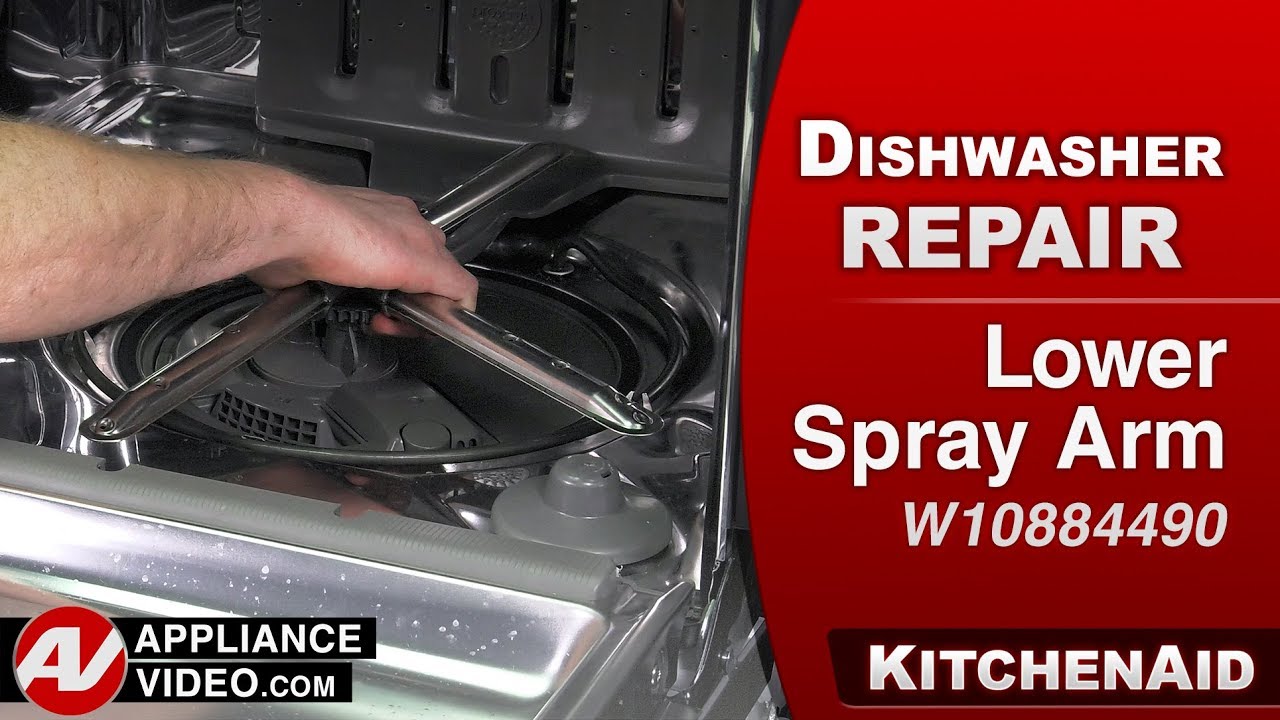
Image Source: i.ytimg.com
Stay Safe While You Work
Working on appliances needs care. Always put safety first. Before you start any check or fix, do these two things:
- Turn off the power. Find the breaker box in your home. Turn off the breaker that controls the kitchen or the dishwasher. Make sure the dishwasher lights are off. You can also unplug the dishwasher if you can reach the cord.
- Turn off the water. Find the water shut-off valve for the dishwasher. It is usually under the sink or behind the dishwasher. Turn the handle to stop the water flow. If you cannot find a valve just for the dishwasher, you might need to turn off the main water supply to your house.
Initial Checks: The Quick Look
Sometimes, the fix is easy. Check these simple things first.
Is the Water Supply On?
Your dishwasher needs enough water pressure to work well. If the main water valve to the dishwasher is not fully open, or if the water line behind the dishwasher is bent or kinked, it can cause Kitchenaid dishwasher water pressure low issues. This means not enough water gets into the dishwasher, or the water does not spray with enough force, especially on the top rack which is furthest away.
- Check the valve under the sink or behind the unit. Make sure it is turned all the way on.
- Gently pull the dishwasher out a bit if needed (after turning off power and water) to look at the water hose. Make sure it is not bent sharp.
Is the Door Closed Tight?
The dishwasher will not spray water if the door is not locked properly. The latch tells the dishwasher it is safe to run.
- Push the door shut firmly. Listen for the latch clicking.
- Sometimes the latch itself can fail. If the door feels loose even when shut, the latch might need checking or replacing.
Did You Pick the Right Wash Cycle?
Some wash cycles use less water or might not run the top spray arm as much during certain parts of the wash.
- Check your user manual. Make sure the cycle you picked uses all the spray arms for cleaning the top rack.
- Try running a normal or heavy cycle to see if the top spray arm works then.
Grasping How Water Reaches the Top
Water does not just appear at the top spray arm. It travels a path. Knowing this path helps you find where the problem is.
Water comes into the dishwasher and fills the bottom tub. The main pump then pulls this water up. This pump is key to getting water everywhere. If the Kitchenaid dishwasher pump not working right, water won’t spray hard enough.
From the pump, water goes to a part called the diverter valve. The diverter valve is like a traffic cop for water. It decides if water goes only to the bottom spray arm, or to both the bottom and top spray arms. In some models, it might switch between them.
From the diverter valve, water meant for the top rack travels up a tube or pipe. This is often built into the back wall of the dishwasher tub or runs along the side. This part is sometimes called the manifold or conduit assembly.
Finally, the water reaches the top spray arm through this manifold. Pressure makes the arm spin and spray water onto the top rack dishes.
If the top sprayer has Kitchenaid dishwasher upper spray arm no water, the issue is likely somewhere along this path:
* Not enough water getting into the dishwasher (low pressure).
* Something is blocking the water flow.
* A part like the diverter valve is not sending water to the top.
* The pump is weak or not working.
Finding the Problem: Common Parts to Check
Let’s look at the parts that often cause the top sprayer to stop working. This involves some Kitchenaid dishwasher troubleshooting spray arm steps.
Clogged Spray Arm
This is one of the most common and easiest fixes. Small bits of food or debris can get stuck in the tiny holes (jets) on the top spray arm. If many holes are blocked, water pressure drops, and the arm won’t spin or spray right. This is a classic Kitchenaid dishwasher clogged spray arm issue.
How to Check and Clean the Top Spray Arm:
- Take it off: The top spray arm usually twists off or unclips from the manifold tube it connects to. Look at how it attaches. Twist it gently counter-clockwise or feel for release clips. Your manual might show you how.
- Look at the holes: Hold the spray arm up to a light. Can you see through all the small holes? Look inside the arm itself where it connects. Are there any food bits?
- Clean the holes: Use a toothpick, a small piece of wire (like from a paperclip), or a sewing needle to poke through each blocked hole. Push any debris back into the arm.
- Rinse the arm: Run water through the arm, maybe from the connection end first, then out the jets. Shake it to get bits out. You can also soak it in warm, soapy water for a while if it is really dirty.
- Put it back: Attach the clean spray arm the way you took it off. Make sure it clicks or tightens into place firmly. Give it a gentle spin by hand to check it moves freely.
Clogged Filter
All dishwashers have filters to catch food bits. If the filter is dirty or clogged, it limits how much water the pump can pull and spray. This can cause Kitchenaid dishwasher water pressure low throughout the machine, affecting the top arm most. Cleaning the filter is a key part of Kitchenaid dishwasher filter cleaning for good performance.
How to Check and Clean the Filter:
- Find the filter: It’s almost always in the bottom of the dishwasher tub. Look under the lower spray arm. It might be a single part or a few parts you twist and lift out.
- Remove the filter: Twist the filter unit counter-clockwise or unclip it. Lift it straight up to take it out. There might be two parts: a screen and a cup or cylinder below it. Remove both.
- Rinse the filter: Take the filter parts to the sink. Use running water to rinse away all food pieces and grease. A brush (like a soft toothbrush) can help scrub stubborn bits.
- Check the filter housing: Look down into the hole where the filter sat. Make sure there are no large food pieces or debris left in the bottom of the tub near the pump intake.
- Put the filter back: Put the filter parts back the way they came out. Twist or clip them firmly into place. Make sure it sits flat in the bottom of the tub. A loose filter can cause problems too.
Diverter Valve Issues
The diverter valve is a common cause for the top spray arm not getting water while the bottom one works fine. It changes where the water goes. If the Kitchenaid dishwasher diverter valve gets stuck, fails, or has debris in it, it might stop sending water up to the manifold for the top spray arm.
How to Check the Diverter Valve (Requires more effort):
- Listen: Run the dishwasher. During the wash cycle, listen for a change in the water sound. On many models, you can hear the diverter valve click or whir when it switches water flow between the lower and upper arms. If you never hear this sound, the valve might be stuck or the control board isn’t telling it to switch.
- Visual Check (Limited): The diverter valve is usually under the dishwasher, attached to the pump. You might need to tip the dishwasher back or remove a lower access panel to see it. Look for obvious damage or wires that look loose.
- Testing (Harder DIY): Truly testing the diverter valve often needs electrical checks or taking it apart, which can be complex. A sign it’s bad is if the lower arm always works, but the top arm never does, even after cleaning clogs and filter. This points strongly to the Kitchenaid dishwasher diverter valve not directing water upward. This might require Kitchenaid dishwasher diagnostic steps or a professional.
Manifold Assembly Problems
The manifold or conduit is the water path from the diverter valve up to the top spray arm. This part can also get clogged, though less often than the spray arm or filter. More likely, the seals where it connects might leak, causing low pressure at the top, or the tube itself could be blocked by a large piece of debris.
How to Check the Manifold:
- Inspect: Look at the tube running up the back or side wall of the dishwasher. Is it loose? Is there any visible debris inside?
- Check Connections: Feel where the manifold connects at the bottom (near the diverter) and at the top (where the spray arm attaches). Make sure these connections are secure.
- Look for Leaks: While the dishwasher runs (carefully, with access panels off if needed), look for water leaking from the manifold or its connections. Leaks here reduce water pressure at the top arm.
If the manifold is broken or blocked in a way you cannot clean, a Kitchenaid dishwasher manifold assembly replacement might be needed. This job can range from fairly easy to hard depending on your specific KitchenAid model, as the manifold is often built into the tub structure or hard to reach.
Water Inlet Valve
The water inlet valve is where water from your house supply enters the dishwasher. It controls when water comes in and how much. If the screen on this valve is clogged with sediment from your water lines, or if the valve itself is failing, it can cause Kitchenaid dishwasher water pressure low coming into the machine. If not enough water enters the tub, the pump cannot spray enough water everywhere, including the top arm.
How to Check the Water Inlet Valve:
- Location: The valve is usually found behind a kick plate at the very bottom front of the dishwasher, or sometimes behind the dishwasher. It’s where the water supply hose connects to the machine.
- Check the Screen: Turn off the water supply valve first! Disconnect the water hose from the dishwasher’s inlet valve. Look at the small screen filter inside the valve’s opening. If it is clogged with dirt or rust, clean it gently with a brush or rinse it.
- Listen: With the power and water on (but be careful if panels are off!), listen closely when the dishwasher is supposed to be filling with water. You should hear the valve open and water flowing in. If you hear a weak flow, or no sound, the valve might be bad or the pressure from your house is low.
Pump Issues
The circulation pump is what pushes water through the spray arms. If the Kitchenaid dishwasher pump not working correctly (it’s weak, humming but not pumping, or not running at all), it cannot create the pressure needed for good spray, especially for the top arm which is higher up.
Signs of a Pump Problem:
- Very low water pressure from all spray arms, not just the top one.
- A loud humming sound without much water spray.
- No water spraying at all, but the motor is running.
- Error codes on the control panel related to the pump or water circulation.
Checking and fixing the pump is usually a more advanced repair. It often involves tilting or pulling out the dishwasher and working underneath. If you suspect the pump is the issue, and you’ve checked everything else, you might need to call a repair person.
Step-by-Step Troubleshooting Guide
Here is a step-by-step approach to doing Kitchenaid dishwasher diagnostic and troubleshooting spray arm issues. Start with the simplest checks.
Step 1: Safety First
- Turn off power at the breaker.
- Turn off water supply valve.
Step 2: Basic External Checks
- Is the main water supply valve to the dishwasher fully open?
- Is the water hose behind the dishwasher kinked or bent?
- Is the door latch closing firmly?
- Did you select a wash cycle that uses the top spray arm?
Step 3: Check and Clean Spray Arm
- Remove the top spray arm.
- Look closely at all the spray holes for clogs.
- Use a tool (toothpick, wire) to clear any blocked holes.
- Rinse the arm well.
- Put the arm back, make sure it is secure and spins freely.
Step 4: Check and Clean Filter
- Remove the filter unit from the bottom of the tub.
- Rinse all filter parts under running water. Use a brush if needed.
- Check the filter housing area for large debris.
- Put the filter back correctly and securely.
Step 5: Check Water Inlet Valve Screen
- Turn water supply back on briefly to check house pressure (run kitchen faucet). Turn it off again.
- Disconnect the water hose from the dishwasher inlet valve.
- Look at the screen inside the valve opening.
- Clean any sediment from the screen.
- Reconnect the water hose firmly. Turn water supply back on.
Step 6: Test Run and Observe
- Restore power to the dishwasher.
- Run a short cycle (like Rinse Only) or a normal wash.
- Carefully open the door very briefly after the wash part starts (water is spraying). DO NOT OPEN THE DOOR DURING THE DRYING CYCLE – it is very hot. Just crack it during the wash cycle if possible, to see if the top arm is spinning and spraying. Be ready to close it fast, as water will splash. Some models pause when opened, so you might need to listen instead.
- Listen for the sound of the diverter valve switching during the cycle. It often clicks or changes motor sound when switching between lower and upper spray.
Step 7: Analyze Observations
- Top arm spinning/spraying weakly or not at all, but bottom arm works fine: Likely a clogged top spray arm, a blocked manifold, or a diverter valve issue.
- Very weak spray from all arms: Could be low incoming water pressure (inlet valve screen, house plumbing), a very clogged filter, or a weak circulation pump.
- No water spray at all, but pump motor hums: Pump is trying but cannot move water (major clog somewhere, or pump failure).
- Hear diverter valve clicking/switching sound: The valve is likely trying to work, maybe it is blocked or faulty internally.
- Don’t hear diverter valve sound: Valve is stuck, failed, or not getting signal from control board.
| Symptom | Most Likely Cause(s) | Recommended Action Steps |
|---|---|---|
| Kitchenaid dishwasher upper spray arm no water, bottom works | Clogged Top Spray Arm, Blocked Manifold, Diverter Valve Issue | Clean Spray Arm, Inspect Manifold, Listen for Diverter, Consider Diverter/Manifold Check |
| Kitchenaid dishwasher poor wash performance top rack, bottom is clean | Clogged Top Spray Arm, Clogged Filter, Low Water Pressure, Diverter Valve Issue, Blocked Manifold | Clean Spray Arm, Clean Filter, Check Water Inlet, Listen for Diverter, Inspect Manifold |
| Water pressure low from all arms | Clogged Filter, Low Incoming Water Pressure, Weak Pump | Clean Filter, Check Water Inlet Screen, Check House Plumbing, Consider Pump Check |
| Dishwasher runs but no water sprays | Water not entering (Inlet Valve), Pump not working, Major Clog | Check Water Supply/Inlet Valve, Listen for Pump, Check for Error Codes |
| Kitchenaid dishwasher clogged spray arm confirmed | Clear all holes in the spray arm. | Clean Spray Arm thoroughly. |
| Suspicion of Kitchenaid dishwasher diverter valve problem | Top works, bottom doesn’t; or neither works sometimes; or only one works consistently. | Listen for switching sound. Test valve if comfortable (advanced DIY). |
| Suspicion of Kitchenaid dishwasher manifold assembly issue | Visible damage or blockage in the water tube going up the back/side. | Inspect manifold for clogs/damage. Consider Kitchenaid dishwasher manifold assembly replacement if damaged. |
| Kitchenaid dishwasher pump not working symptoms | Humms but no spray, or doesn’t run. | Check for clogs near pump intake (after filter). May need professional help. |
More Advanced Fixes
If cleaning the spray arm and filter does not work, and you suspect a specific part like the diverter valve or manifold, you might need to replace it. These steps are for those comfortable with DIY repairs. Make sure power and water are off before starting!
Replacing the Diverter Valve
This part is often located under the dishwasher, near the pump. Accessing it usually requires pulling the dishwasher out or tilting it back.
- Find the valve: Look near where the manifold tube connects at the bottom of the tub.
- Disconnect: You will need to disconnect wires and hoses/tubes attached to the valve. There might be clips or clamps. Be ready for some water to leak out.
- Remove: The valve is usually held in place by screws or clips.
- Install New Valve: Put the new valve in the same spot. Connect hoses/tubes and wires firmly. Make sure clamps are tight to prevent leaks.
- Test: Run a cycle and check for leaks and if the top arm now sprays water.
Replacing the Kitchenaid dishwasher diverter valve can solve the issue if the old one was stuck or broken inside.
Replacing the Manifold Assembly
The manifold is the water channel going up the back. Its replacement difficulty varies greatly by model. Sometimes it’s a separate tube; other times it’s part of the tub molding.
- Access: You might need to remove internal parts like racks and maybe access panels on the back or side of the dishwasher tub.
- Disconnect: Disconnect the spray arm at the top and the manifold from the diverter valve at the bottom.
- Remove Old Manifold: Unclip or unscrew the old manifold from the tub wall.
- Install New Manifold: Fit the new part into place. Secure it and connect the ends firmly to the spray arm and diverter valve. Ensure seals are seated correctly to prevent leaks.
A Kitchenaid dishwasher manifold assembly replacement is needed if the original is cracked, leaking, or cannot be cleared of a clog.
Keeping Your Dishwasher Spraying Right
Simple care helps prevent problems like a Kitchenaid dishwasher upper spray arm no water issue.
- Scrape Plates: Remove large food chunks before loading dishes. This reduces what goes into the filter and spray arms.
- Clean the Filter Often: Get into a habit of cleaning your filter every week or two, especially if you wash often or don’t scrape well. Regular Kitchenaid dishwasher filter cleaning is the best defense against clogs.
- Check Spray Arms: Every now and then, give the spray arms a spin by hand to make sure they move freely. Look quickly at the holes to see if any seem blocked.
- Use Good Detergent: Use the right amount of quality dishwasher detergent. Too little might leave food bits; too much can cause buildup. Using a rinse aid helps water drain better, reducing spots and maybe leaving less residue to clog things.
- Clean Inside: Run a dishwasher cleaner product or a cycle with vinegar periodically to help remove grease and mineral buildup inside the tub, pipes, and parts like the diverter valve.
These steps help with overall Kitchenaid dishwasher troubleshooting spray arm issues and keep water pressure strong.
When to Call a Professional
DIY fixes can save money, but some problems are best left to experts. Call a repair person if:
- You cannot find the cause after doing basic checks and cleaning.
- The problem seems electrical (lights flashing strangely, control panel issues not linked to door latch).
- You suspect the Kitchenaid dishwasher pump not working or is damaged, as this can be a complex and wet repair.
- You need a Kitchenaid dishwasher diagnostic beyond simple visual checks and listening.
- You are not comfortable removing panels or replacing parts under the unit.
- Replacing the diverter valve or manifold assembly seems too difficult for your skill level.
- You checked the water inlet valve screen and it’s clean, and your house water pressure seems fine, but the dishwasher still has Kitchenaid dishwasher water pressure low symptoms.
A professional has the tools and knowledge to quickly diagnose more complex issues and safely replace parts.
Frequently Asked Questions
Q: Why is my KitchenAid dishwasher top rack not getting clean?
A: This often happens because the top spray arm isn’t spraying water. This can be due to a clog in the spray arm itself, a blocked filter, low water pressure, a faulty diverter valve not sending water up, or a blockage in the manifold tube leading to the top.
Q: How do I know if my Kitchenaid dishwasher diverter valve is bad?
A: A common sign is if the bottom spray arm works fine but the top one gets little or no water. You might also not hear the valve click or change motor sound during the wash cycle when it should be switching water flow.
Q: Can I clean my Kitchenaid dishwasher filter myself?
A: Yes, cleaning the filter is one of the easiest and most effective DIY maintenance tasks. It’s usually located at the bottom of the tub and twists or unclips out for rinsing.
Q: What causes low water pressure in my KitchenAid dishwasher?
A: Low water pressure can be caused by a kinked water supply hose, a clogged screen on the water inlet valve, a very dirty filter, or a weak circulation pump. Sometimes, low pressure in your home plumbing also affects the dishwasher.
Q: How do I clear a Kitchenaid dishwasher clogged spray arm?
A: Remove the spray arm and use a small pointed object like a toothpick or paperclip wire to push out debris stuck in the spray holes. Then rinse the arm under running water.
Q: Is Kitchenaid dishwasher manifold assembly replacement a hard DIY job?
A: The difficulty varies. On some models, the manifold is easy to reach and replace. On others, it’s built into the tub or requires significant disassembly, making it a harder job. Check your specific model’s service manual if possible.
Q: My Kitchenaid dishwasher upper spray arm has no water, and the pump sounds strange. What could it be?
A: A strange sounding pump, or a pump that hums but doesn’t spray water well (or at all), points to a Kitchenaid dishwasher pump not working issue. The pump might be failing, or there could be a major clog blocking the pump intake. This is often a repair for a professional.
Q: How often should I do Kitchenaid dishwasher filter cleaning?
A: It’s best to check and rinse your filter regularly, like once a week or every other week, especially if you don’t pre-rinse dishes thoroughly.
Summing Up
Dealing with a Kitchenaid dishwasher top sprayer not working or Kitchenaid dishwasher poor wash performance top rack can be annoying. But often, the fix is simple. Start by checking the easiest things: make sure the water supply is fully on and the door is closed tight. Then, move on to cleaning the top spray arm and the filter – these are very common causes of Kitchenaid dishwasher upper spray arm no water and low pressure.
If cleaning does not solve the problem, you might have an issue with the water path itself – the diverter valve or the manifold assembly. Checking these parts or listening for the diverter’s operation are the next steps in Kitchenaid dishwasher troubleshooting spray arm issues. For those comfortable with tools, replacing a faulty diverter valve or a blocked manifold assembly (Kitchenaid dishwasher manifold assembly replacement) is possible.
Remember that low incoming water pressure (check the inlet valve screen) or a problem with the main circulation pump (Kitchenaid dishwasher pump not working symptoms) can also cause water pressure issues affecting the top spray arm.
By following these steps, starting with basic cleaning and moving to checking specific parts, you can likely find and fix why your KitchenAid dishwasher top sprayer is not working and get your dishes clean again. If you hit a wall or feel unsure, calling a qualified appliance repair person is always a good choice.