How can you stop falls in the kitchen? Keeping your kitchen safe is important. Many falls happen there. You can prevent falls by keeping the floor dry and clear. Use good lighting and wear shoes that grip. Make sure things are easy to reach. These simple kitchen safety tips help lower the risk of falling.
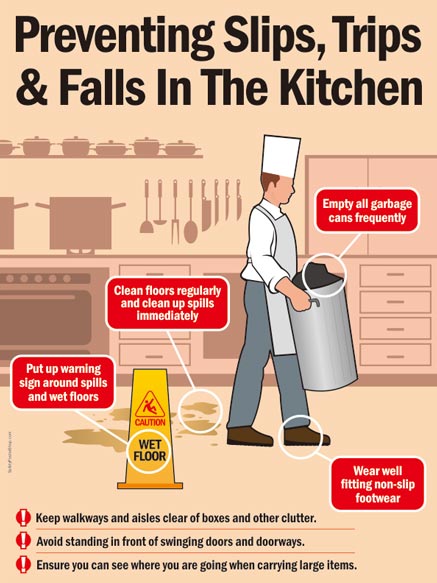
Image Source: www.safetypostershop.com
Grasping Why Kitchen Falls Happen
The kitchen is a busy place. People cook, clean, and move around a lot. This makes it a common spot for falls. Many things in a kitchen can make you fall. Knowing what these things are helps you prevent falls. These are the main kitchen hazards.
Falling can cause bad injuries. Older people are more likely to get hurt from a fall. That’s why senior fall prevention kitchen tips are extra important. But anyone can fall. Making the kitchen safer helps everyone in the house.
Tackling Slippery Kitchen Floors
Slipping on the floor is a top reason for falls in the kitchen. Water, oil, and food bits can make floors very slippery kitchen floors.
How Floors Get Slippery
- Spills: Water from washing dishes, oil from cooking, or dropped food make wet spots.
- Cleaning: Floors are wet right after you wash them.
- Leaks: Water might leak from the sink or fridge.
- Foot traffic: People walking in can track in water or mud.
Slippery kitchen floors are a big risk. You need to act fast to make them safe again.
Cleaning Up Spills Fast
This is one of the most important kitchen safety tips. If something spills, clean it up right away. Don’t wait even a minute.
- Get a cloth or paper towel fast.
- Wipe up the spill completely.
- Dry the spot well.
- If the spill was sticky or oily, you might need soap and water. Then dry again.
- Put a cone or sign out if it’s a big spill in a public kitchen. In a home kitchen, just clean it up quickly.
Always have paper towels or cloths handy in the kitchen. Keep them where you can grab them fast. This helps you clean up spills before someone walks through them.
Picking The Right Floor Covers
Some floors are naturally less slippery than others. But even the best floor can be dangerous when wet.
Non-Slip Kitchen Mats
Putting down mats can help. Non-slip kitchen mats give your feet better grip.
- Where to put them: Place mats in areas where spills are common. By the sink is a must. By the stove is another good spot.
- What kind to get: Look for mats with a rubber backing. This stops the mat from sliding on the floor. The top should be easy to grip, even if a little wet.
- Keep them clean: Mats can get dirty and wet. Clean them often. A wet mat won’t help you.
Mats add a layer of safety. They make standing for long times more comfortable too. This can also help prevent falls from getting tired feet.
Choosing Floor Materials
If you are getting a new kitchen floor, think about safety.
- Bad choices: Smooth tiles can be very slippery when wet. Polished wood can also be slick.
- Better choices: Floors with texture offer more grip. Vinyl, linoleum, or textured tiles are often safer. Look for floors with a high slip-resistance rating.
No matter the floor type, keeping it dry is key. But the right material helps.
Shining A Light On Safety
You need to see well to be safe. Proper kitchen lighting helps you see spills, clutter, and changes in the floor level.
Types of Kitchen Lights
- Overall light: This lights up the whole room. Lights in the ceiling work well.
- Task light: This light helps you see better where you are working. Lights under cabinets shine on your counter tops. A light over the stove helps you see your cooking.
- Accent light: This is more for looks. It’s not as important for safety, but it can help you see edges.
Make sure all these lights work well.
Why Good Light Matters
- Seeing hazards: You can spot spills, dropped food, or things left on the floor easily.
- Walking safely: You can see where you are going. This is very important if you have stairs near the kitchen or changes in floor level.
- Working safely: Good light helps you use knives and other tools without cutting yourself. This isn’t about falls, but it’s part of overall kitchen safety tips.
Make sure your kitchen is always bright enough. Turn on lights even during the day if it’s dim. Replace burnt-out bulbs fast. Good lighting is a simple way to prevent falls.
Clearing The Path: No More Kitchen Clutter
A messy kitchen is a dangerous kitchen. Things left lying around can make you trip. This is kitchen clutter.
What Counts As Clutter?
- Items on the floor: Bags, shoes, toys, pet bowls.
- Things on counters: Piled up dishes, too many small appliances, mail.
- Objects in walkways: Chairs pulled out, drying racks, step stools left open.
Kitchen clutter is a major tripping hazard.
How to Handle Clutter
- Clean as you go: Put things away right after you use them. Put ingredients back in the pantry. Put dishes in the sink or dishwasher.
- Have a place for everything: Know where things belong. This makes putting them away easy.
- Clear walkways: Make sure paths are clear. You should be able to walk from one side of the kitchen to the other without stepping over things.
- Deal with mail and papers: Don’t let them pile up on counters. Put them in a different spot or deal with them quickly.
Keeping the kitchen tidy is a big part of organizing kitchen for safety. A clear kitchen is a safe kitchen.
What To Wear: Safe Footwear In Kitchen
What you wear on your feet matters a lot in the kitchen. The wrong shoes can make you fall. Safe footwear in kitchen gives you grip.
Good Shoe Choices
- Closed-toe shoes: These protect your feet from dropped knives or hot spills.
- Shoes with good grip: Look for soles made of rubber. They should have a pattern that grips the floor well.
- Shoes that fit well: Shoes that are too big or too small can make you trip.
- Shoes that stay on: Slip-on shoes are okay, but shoes with laces or straps often offer more support and stay on better. Make sure laces are tied!
Bad Shoe Choices
- Socks only: Socks have no grip on hard kitchen floors. Very dangerous.
- Slippers: Most slippers don’t have good soles for gripping.
- High heels: They make you unstable.
- Shoes with smooth soles: Like dress shoes. They offer no grip on wet spots.
- Flip-flops or sandals: They don’t protect your feet and can cause you to trip or slip out of them.
Always wear shoes with good grip when working in the kitchen. This is a simple but effective way to improve your kitchen safety tips.
Organizing Kitchen For Safety
How you set up your kitchen affects safety. Organizing kitchen for safety means thinking about where things are.
Make Things Easy to Reach
- Heavy items: Store heavy pots, pans, and dishes on lower shelves. This means you don’t have to lift them from high up. Lifting heavy things from high places can make you lose balance.
- Often-used items: Keep things you use a lot close by. Store them at waist level or slightly higher. This stops you from bending down too much or reaching up too high.
- High shelves: Use high shelves for items you use rarely. Use a stable step stool to reach them. Don’t climb on counters or chairs!
Clear Pathways
- Walkways: Make sure the paths between your counters, sink, stove, and fridge are wide enough. There should be space to move freely.
- Appliance cords: Keep cords tucked away. Don’t let them trail across the floor where you can trip on them.
- Doors and drawers: Make sure you can open oven doors, dishwasher doors, and drawers fully without hitting something or blocking a path. Close them right away after using them.
Good organization reduces kitchen hazards and makes movement safer. It’s a key part of kitchen safety tips.
Extra Care For Seniors
Falls are a big worry for older adults. Making the kitchen safe is very important for senior fall prevention kitchen.
Specific Tips For Seniors
- Review the basics: All the tips above are extra important. Clean spills fast, use good mats, have bright lights, keep paths clear, wear good shoes.
- Use reaching tools: If bending or reaching is hard, use tools to help. A grabber tool can pick up dropped items.
- Install grab bars: Bars on the wall can offer support. They might be useful near the sink or anywhere you stand for a long time.
- Change floor levels: If there is a step into the kitchen, mark it clearly or add a ramp if possible.
- Move slowly: Take your time moving around the kitchen. Don’t rush.
- Get help: Don’t try to lift heavy things by yourself if it’s hard. Ask for help.
- Think about seating: Having a stool or chair in the kitchen can be helpful. You can sit while doing tasks that take a long time, like cutting vegetables. This saves energy and lowers the risk of getting tired and losing balance.
- Easy-open cabinets: Change cabinet handles to ones that are easy to grip. This stops you from having to pull too hard, which can make you lose balance.
- Use non-breakable dishes: If dishes are dropped, they won’t break into sharp pieces that are dangerous to clean up. While not directly a fall prevention, it’s part of making the kitchen safer overall, reducing hazards you might step on.
Senior fall prevention kitchen needs extra thought about mobility, strength, and balance. Small changes can make a big difference.
Spotting Other Kitchen Hazards
Besides slippery floors and clutter, other things can cause falls or injuries that lead to falls. Knowing all the kitchen hazards is key for kitchen safety tips.
Hot Surfaces and Liquids
Burns are painful. A bad burn can make you jump or move quickly, leading to a fall.
- Use oven mitts.
- Turn pot handles inwards on the stove.
- Be careful when carrying hot pots or liquids.
Sharp Objects
Knives and broken glass are hazards. Trying to catch a falling knife or stepping on glass can cause a fall.
- Use a good cutting board.
- Cut away from your body.
- Clean up broken glass very carefully. Use a broom and dustpan, then maybe a wet paper towel for small bits.
Step Stools and Ladders
Reaching high things needs care.
- Use a stable step stool or ladder.
- Make sure all legs are flat on the floor.
- Don’t stand on the top step.
- Have someone hold it if possible, especially for higher reach.
- Never stand on chairs or unstable items.
Pet Hazards
Pet bowls, toys, or pets underfoot can cause trips.
- Put pet bowls out of the main path.
- Put pet toys away when not in use.
- Be aware of where your pet is when you are moving around.
Thinking about all these kitchen hazards helps create a safer space. It’s not just about the floor.
Reviewing Key Kitchen Safety Tips
Let’s look again at the main ways to prevent falls in the kitchen. These tips work together to make your kitchen much safer.
- Clean Spills Fast: Always wipe up any liquid or food spill the moment it happens.
- Keep Floors Dry: Dry the floor after cleaning. Fix any leaks.
- Use Non-Slip Mats: Place mats with good grip by the sink and stove.
- Have Good Lighting: Make sure the kitchen is bright so you can see clearly. Use both overhead and task lights.
- Clear Clutter: Keep floors and walkways free of anything you could trip over.
- Wear Safe Shoes: Always wear closed-toe shoes with good non-slip soles.
- Organize Smart: Store heavy items low. Keep often-used items easy to reach.
- Watch For Hazards: Be careful with hot items, sharp tools, and pets.
- Use Step Stools Safely: Use a stable stool to reach high things.
- Extra Care for Seniors: Consider grab bars and ways to sit while working for older adults.
These steps cover the most common causes of kitchen falls. Doing them helps you stay safe. Making these things a habit is the best way to prevent falls.
Planning For Safety: A Kitchen Checklist
Going through your kitchen and checking for risks can help. Use this checklist to see if your kitchen is safe.
| Safety Area | Check This | Safe? (Yes/No) | Action Needed |
|---|---|---|---|
| Floors | Are floors clean and dry? | ||
| Are there non-slip mats in key areas? | |||
| Is the floor material low-slip? (If applicable) | |||
| Lighting | Is the kitchen brightly lit everywhere? | ||
| Are lights over work areas (counters, stove)? | |||
| Are all light bulbs working? | |||
| Clutter & Paths | Are floors clear of items? | ||
| Are walkways wide enough? | |||
| Are appliance cords tucked away? | |||
| Storage | Are heavy items on low shelves? | ||
| Are often-used items easy to reach? | |||
| Footwear | Do I have safe, non-slip shoes for the kitchen? | ||
| Other Hazards | Is there a stable step stool? | ||
| Are sharp items stored safely? | |||
| Are pot handles turned inward on the stove? | |||
| Senior Specific | Are grab bars needed or present? | ||
| Is there a place to sit if needed? |
Go through this list in your own kitchen. Mark yes or no for each point. For any “No” answers, write down what you need to do. Then, make a plan to fix those things. This checklist is a good way to start organizing kitchen for safety. It helps spot kitchen hazards you might not see every day.
Learning To Be Safe In The Kitchen
Safety in the kitchen is not just about the physical space. It’s also about your habits. How you move and work in the kitchen matters.
Safe Movements
- Walk, don’t run: Always walk slowly and carefully in the kitchen. Never rush, especially if you are carrying something.
- Carry carefully: When carrying items, especially hot or heavy ones, make sure you can see where you are going. Hold things with both hands if needed.
- Close doors and drawers: Get into the habit of closing appliance doors (oven, dishwasher) and cabinet drawers right away. Don’t leave them open for someone to trip over.
- Turn on lights: Always turn on the kitchen lights before you enter, even if you think you know the layout.
Building Safety Habits
- Clean spills immediately: Make this your number one rule. It’s the quickest way to prevent falls on slippery kitchen floors.
- Put things away: After using something, put it back where it belongs. This stops clutter from building up.
- Check your shoes: Before you start cooking, make sure you have on safe footwear in kitchen.
- Regular checks: Look around your kitchen often. Is anything out of place? Is the floor clear? Is the lighting good?
Making these actions part of your routine greatly improves your kitchen safety tips score. Safe habits make a safe kitchen.
Why Bother With All This?
You might think falls won’t happen to you. But accidents can happen to anyone. Falls can cause broken bones, head injuries, and sprains. These can lead to long recovery times, pain, and loss of independence.
Taking steps to prevent falls is worth the effort. It keeps you and your family safe. It makes the kitchen a more pleasant place to be. It lowers stress because you don’t have to worry as much about accidents.
For seniors, preventing falls is crucial for staying independent. A fall can mean not being able to live at home anymore. So, senior fall prevention kitchen tips are vital.
Kitchen safety tips are simple things. Cleaning spills, using mats, good light, clearing clutter, wearing safe shoes, organizing well. These are all easy steps. Doing them regularly makes a big difference in preventing falls and avoiding kitchen hazards.
It’s like locking your doors. You do it every day as a habit to stay safe. Making your kitchen safe should also become a habit.
Start today. Look at your kitchen. Find one thing you can make safer. Maybe it’s clearing that pile of mail. Maybe it’s getting a non-slip mat for the sink. Maybe it’s just promising to clean up spills right away. Every small step helps.
Frequently Asked Questions (FAQ)
h4 What is the most common cause of falls in the kitchen?
The most common cause of falls in the kitchen is slipping on wet or slippery kitchen floors. Spills of water, oil, or food are the main culprits.
h4 Do non-slip kitchen mats really help prevent falls?
Yes, non-slip kitchen mats can help prevent falls. They provide a surface with better grip, especially in areas prone to spills like near the sink or stove. Make sure the mats have a non-slip backing.
h4 What kind of shoes are best for kitchen safety?
Closed-toe shoes with non-slip rubber soles are best for kitchen safety. They protect your feet and give you good grip on the floor. Avoid socks, slippers, sandals, or shoes with smooth soles.
h4 How often should I clean up spills in the kitchen?
You should clean up spills immediately. As soon as something spills, stop what you are doing and wipe it up right away. Then dry the area well.
h4 Is kitchen lighting really that important for preventing falls?
Yes, proper kitchen lighting is very important. Good light helps you see spills, clutter, and changes in the floor level. This helps you avoid tripping or slipping. Make sure the whole kitchen is well lit.
h4 How can I make my kitchen safer if I am an older adult?
For senior fall prevention kitchen, you can add grab bars for support, use tools to help you reach things, use a stable step stool, make sure paths are clear, and sit down for tasks if needed. All the basic kitchen safety tips are also extra important for seniors.
h4 Where should I store heavy pots and pans?
Store heavy pots, pans, and dishes on lower shelves or in low drawers. This avoids having to lift heavy items from high places, which can make you lose balance.
h4 What are some common kitchen hazards besides slippery floors?
Other common kitchen hazards include clutter on the floor, poor lighting, sharp objects like knives, hot surfaces, and unstable step stools. Pets and their items can also be tripping hazards.
Conclusion
Keeping your kitchen safe from falls is not hard. It just takes a little care and some simple habits. By focusing on slippery kitchen floors, cleaning up spills fast, using non-slip kitchen mats, making sure you have proper kitchen lighting, keeping kitchen clutter away, wearing safe footwear in kitchen, knowing about kitchen hazards, and organizing kitchen for safety, you greatly reduce the risk of falling. Pay extra attention to senior fall prevention kitchen if you or someone in your home is older. A safe kitchen is a happy kitchen. Make yours safe today.