When you plan a kitchen, you think about many things. One key thing is the size of the countertops. Many people ask, “How wide are kitchen countertops?” The most common size for kitchen countertops that come out from the wall is about 25 inches. This is a standard countertop depth. It fits well with standard kitchen cabinets. Let’s look closer at how big kitchen countertops usually are and why.
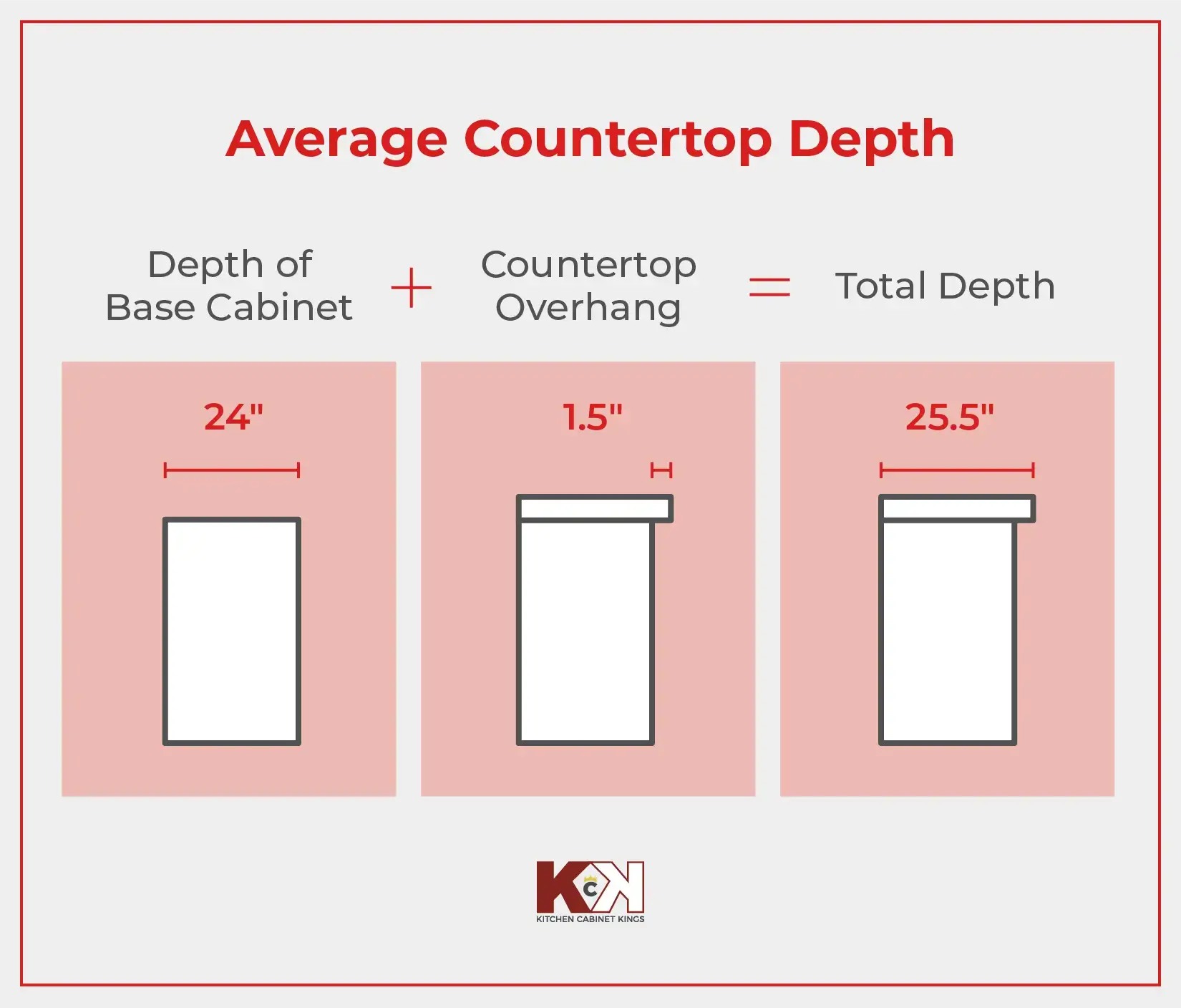
Image Source: cdn.kitchencabinetkings.com
Grasping Standard Sizes
Most kitchens use standard sizes for parts like cabinets and countertops. This makes building and planning easier and costs less. The size of your countertop is very important. It must fit your kitchen space and the cabinets below it.
What is Standard Countertop Depth?
The depth of a countertop is how far it sticks out from the wall. The standard countertop depth is usually 25 inches. This size works well with most standard kitchen cabinets. These cabinets are typically 24 inches deep. The extra inch on the countertop gives a small overhang in the front.
- Standard Countertop Depth: About 25 inches.
- Standard Cabinet Depth: About 24 inches.
- Purpose: Fits standard cabinets, gives a small front overhang.
Why is 25 inches standard? It’s all about fitting things together. Kitchen cabinets that go under the counter are usually 24 inches deep from the wall. This depth gives space for sinks, cooktops, and drawers. When you put a countertop on top, you want it to cover the cabinet and stick out a little bit.
Why Standard Sizes Are Important
Using standard sizes helps in many ways:
- Easier Planning: Designers and builders know these sizes well.
- Lower Cost: Materials are often cut or made for these sizes. This means less waste and lower prices.
- Faster Work: Standard parts fit together quickly.
- Simple Replacement: If a part breaks, it’s easier to find a standard size replacement.
These standard sizes are part of general kitchen design standards. They help make sure kitchens are safe, work well, and look good. Following these standards means cabinets line up, appliances fit, and there is enough space to work.
Base Cabinet Depth Standard
The size of the cabinets below the counter sets the stage. The base cabinet depth standard is almost always 24 inches. This depth is measured from the front of the cabinet box to the back against the wall. Doors and drawer fronts add a little bit to this depth, but the main box is 24 inches.
Your countertop sits right on top of these cabinets. Because the cabinets are 24 inches deep, the countertop needs to be deeper than that. This brings us back to the 25-inch standard countertop depth.
Deciphering the Countertop Overhang
The extra bit of countertop that goes past the cabinet doors or drawers is called the overhang. The countertop overhang measurement is usually about 1 inch in the front for standard countertops.
Why Have an Overhang?
An overhang might seem small, but it does a few important things:
- Protects Cabinets: It helps stop spills from going right down the front of the cabinets.
- Comfort: It gives you a little space to stand without kicking the cabinets. You can stand closer to your work surface.
- Looks: It gives the countertop a finished look. It creates a shadow line that makes the countertop look like it’s floating slightly above the cabinets.
- Hardware Space: It gives space for door and drawer pulls or knobs without hitting the countertop edge when you open them.
So, the standard countertop depth of 25 inches works with the base cabinet depth standard of 24 inches to give you that helpful 1-inch countertop overhang measurement in the front.
Typical Kitchen Countertop Size
When people talk about typical kitchen countertop size, they might mean the depth (how far it comes out) or the length (how long it runs along the wall). We’ve talked about the standard depth being 25 inches.
The length of a countertop depends a lot on your kitchen layout. There is no single standard length. Countertops are cut to fit the specific length of the cabinets along a wall.
Think about an average kitchen. It might have countertops along one or two walls.
- Countertops along a straight wall run the length of the cabinets there.
- Countertops in a corner kitchen often meet at a 90-degree angle, creating an L-shape.
- U-shaped kitchens have countertops along three walls.
The average countertop width (meaning depth from the wall) stays around 25 inches for these different shapes. The total size or area of countertops in a kitchen depends completely on the room’s size and shape.
How Layout Affects Size
Your kitchen layout dimensions play a big role in how much countertop you have.
- Small Kitchens: Less wall space means shorter countertop lengths. You might have just a few feet of counter.
- Large Kitchens: More wall space allows for many feet of countertop. You might have long stretches of counter space.
- Galley Kitchens: Long, narrow rooms often have countertops running along two opposite walls.
- Open Plan Kitchens: These might have countertops along walls and also large kitchen island dimensions.
So, while the depth is often standard (around 25 inches), the length varies greatly based on the kitchen layout dimensions. The total typical kitchen countertop size is a sum of these lengths at the standard depth.
Interpreting Kitchen Island Dimensions
Kitchen islands are a big part of many modern kitchens. The countertops on islands can have different sizes than those against a wall. Kitchen island dimensions vary a lot because islands can be many different shapes and sizes.
Island Countertop Depth
An island countertop doesn’t have a wall behind it. This means the depth can be whatever works best for the island’s use.
- Working Island: An island mainly for preparing food might have a depth similar to wall counters, maybe 25-30 inches, with cabinets below on one side.
- Island with Seating: Islands with seating need a larger overhang on one side for people’s legs. This could mean the countertop is 36 inches deep or even more. The overhang for seating is often 10-15 inches.
- Island with Cabinets on Both Sides: If an island has cabinets facing two directions, the countertop depth will be the depth of both sets of cabinets plus any needed overhangs. This could easily be 48 inches deep or more.
Island Countertop Length
The length of an island countertop also varies greatly. Small islands might be only 3-4 feet long. Large islands can be 8-10 feet long or even longer in big kitchens.
- Minimum Island Size: For a small island to be useful, it needs to be at least 4 feet long and about 2 feet deep (not including overhangs).
- Size Based on Seating: If you want seating, you need about 24 inches of length per person. So, seating for three people needs at least 6 feet of island length.
When planning kitchen island dimensions, you think about:
- How you will use the island (prep, cooking, eating, storage).
- How much space is needed around the island for walking (aim for at least 36-42 inches of walkway space).
- The total size of your kitchen.
The countertop for an island is a big part of its size. It needs to fit the base of the island and provide any needed overhangs.
Getting Custom Countertop Options
Sometimes, standard sizes just don’t work. Maybe you have an old house with odd sizes, a unique kitchen shape, or you want a special design. In these cases, you will need custom countertop options.
When You Need Custom Sizes
You might need custom sizes if:
- Your cabinets are not standard depth (e.g., older cabinets or custom-built ones).
- You want a deeper countertop on your main counters for more workspace (e.g., 30 inches deep instead of 25).
- You have a very large or unusually shaped kitchen island.
- You want extra-long sections of countertop without seams.
- You have walls that are not straight or corners that are not perfect 90 degrees.
- You are using a material that comes in unusual slab sizes.
Choosing custom countertop options means your countertops will be made specifically for your kitchen’s exact measurements.
How Custom Works
Getting custom countertops involves:
- Measuring: A professional will come to your home and measure your cabinets and walls very carefully. They use special tools to get exact sizes and angles.
- Choosing: You choose your material, color, edge style, and sink type.
- Making: The countertop is made in a workshop based on the exact measurements and your choices. This can take several weeks.
- Installing: The finished countertop pieces are brought to your home and installed.
Custom costs more than using standard sizes. It takes more time to measure and make. But it means your countertops will fit perfectly, even in tricky spaces.
How Kitchen Design Standards Guide Size
Kitchen design standards are like rules or best practices for building kitchens. They help make kitchens safe, easy to use, and comfortable. These standards cover many things, including countertop sizes.
Standards for Height and Depth
We’ve talked about standard depth (25 inches for wall counters). There are also standards for countertop height.
- Standard Counter Height: The top of the countertop is usually 36 inches from the floor. This height works well for most adults to stand and work comfortably. This height is set by the standard height of base cabinets (usually 34.5 inches tall) plus the thickness of the countertop material (often 1.5 inches).
These heights and depths are based on how people use kitchens. They are designed to reduce bending and reaching, making cooking and cleanup easier on your body.
Standards for Walkways and Space
Kitchen design standards also talk about the space around countertops and islands.
- Walkway Width: There should be enough space to walk past counters, open cabinet doors, and use appliances. A minimum walkway width is usually 36 inches.
- Work Aisle Width: In areas where you work, like between an island and a counter, the space should be wider. A good work aisle is 42 inches wide for one cook and 48 inches wide for two cooks.
These space rules affect how big your island or peninsula countertop can be. If a large island countertop makes the walkway too narrow, it doesn’t meet good design standards.
These standards are not always strict laws, but they are widely used by designers and builders. They help ensure that the kitchen layout dimensions create a functional and safe space.
Fathoming Kitchen Layout Dimensions and Countertops
The overall size and shape of your kitchen, meaning the kitchen layout dimensions, directly affect your countertops.
Planning Your Countertop Flow
When planning a kitchen, you think about zones:
- Prep Zone: Where you chop and mix food. Needs clear countertop space.
- Cooking Zone: Around the stove or cooktop. Needs space on both sides.
- Cleanup Zone: Around the sink. Needs space for stacking dishes and drying.
Your kitchen layout dimensions determine where these zones go and how much countertop space each can have.
- A small kitchen might combine zones.
- A large kitchen can have separate, large areas for each zone.
The lengths of your countertops are decided by the walls and the placement of appliances and sinks. You can’t put a long countertop where there’s a door or a window that goes down to the counter level.
Appliance and Sink Impact
Appliances like stoves, refrigerators, and dishwashers take up specific spots. Sinks and cooktops need holes cut in the countertop. These things break up long stretches of counter.
- Stove: A standard range usually sits between two pieces of countertop.
- Cooktop: A cooktop is set into the countertop, needing space around it.
- Sink: A sink is set into the countertop, needing space on both sides for prep and drying.
The position of these items is part of the kitchen layout dimensions and directly shapes the size and number of your countertop pieces.
Average Countertop Width Explained
Let’s circle back to average countertop width. As we discussed, in the kitchen world, “width” often means the depth from the wall. So, the average countertop width (depth) is 25 inches.
This typical kitchen countertop size (by depth) is found in most homes because it fits the standard cabinets used for many years.
However, if you think of “width” as the measurement along the wall (the length), then the average “width” would be harder to say. It depends completely on the kitchen size and design. A tiny kitchen might have only 5-10 feet of total countertop length, while a large kitchen could have 20-30 feet or more.
So, when you hear someone talk about countertop “width,” it’s usually safest to assume they mean the depth from the wall, which is commonly 25 inches. This is the most stable and standard measurement in countertops.
Adding the Countertop Overhang Measurement
We touched on the countertop overhang measurement in the front (about 1 inch). But there are other overhangs too.
Side Overhangs
- If a countertop ends at the end of a cabinet run (not against a wall or appliance), it usually has a small overhang on the side, often around 1 inch, just like the front. This makes the edge look finished.
- If the countertop ends next to a tall cabinet or pantry, it might just end flush or with a tiny overhang of maybe 1/8 inch to avoid hitting the taller cabinet.
Back Overhang
- Countertops against a wall usually have no overhang at the back. They are pushed right against the wall.
- Sometimes, there might be a small gap at the back if the wall is not perfectly straight. A backsplash is used to cover this gap.
Overhangs for Seating
As mentioned with kitchen island dimensions, overhangs for seating are much larger.
- Table-Height Seating (30 inches high): Needs about 18 inches of overhang depth for comfortable legroom.
- Counter-Height Seating (36 inches high): Needs about 15 inches of overhang depth.
- Bar-Height Seating (42 inches high): Needs about 12 inches of overhang depth.
These larger overhangs must be supported well, often with brackets or corbels, especially for heavy countertop materials like granite or quartz.
So, the countertop overhang measurement varies depending on which side of the countertop you are looking at and how that area is used.
Detailed Look at Standard Countertop Sizes
Let’s break down the typical kitchen countertop size into more detail for standard setups.
Standard Depth (Wall Counter)
- Cabinet Depth: 24 inches
- Countertop Depth: 25 inches
- Front Overhang: 1 inch
This 25-inch depth is the core standard countertop depth. It works for straight runs and corners.
Standard Corner Countertops
When two standard countertops meet in a corner, the piece that fits into the corner is often cut from a larger piece.
- A common way to handle a corner is with an L-shaped piece.
- Another way uses a diagonal corner cabinet, which might need a wider (deeper) countertop section in that one spot, maybe 36 inches deep, to fit the cabinet shape.
Even in corners, the parts that run along the walls usually keep the 25-inch depth.
Countertop Thickness
While not about “width” or “depth,” thickness is part of the typical kitchen countertop size.
- Common Thickness: 1.5 inches (This is often created by building up the edge of a thinner slab).
- Full Slab Thickness: 1.2 inches (3 cm) or 0.8 inches (2 cm). If using a thin slab, the edge is often made to look thicker.
- Thicker Edges: Some designs use edges that look 2 inches or even 3 inches thick for a different style.
The standard height of 36 inches from the floor includes the thickness of the countertop. So, standard base cabinets (34.5 inches tall) plus a 1.5-inch thick counter equals 36 inches total height.
Examining Custom Countertop Options Closer
Choosing custom countertop options gives you much freedom but requires careful planning.
Materials and Custom Sizes
The material you choose can affect custom options.
- Laminate: Comes in standard sheets. Custom cuts and shapes are possible, but very large or complex shapes might have visible seams. Deeper laminate counters (e.g., 30 inches) are available but cost more and might need special order.
- Solid Surface (like Corian): Can be made into almost any shape. Seams are nearly invisible. Great for custom shapes and sizes, including long, seamless runs or unusual island shapes.
- Engineered Stone (Quartz): Comes in large slabs. Good for large islands and long runs with fewer seams than natural stone. Custom cuts are common. Depths over 25 inches are easy to make from standard slabs.
- Natural Stone (Granite, Marble): Comes in unique slabs. Slab size can limit how long a piece can be without a seam. Custom cuts, shapes, and depths are easily made from slabs. Very large custom islands might need more than one slab, creating a seam.
- Wood (Butcher Block): Can be custom-made to any size or shape. Can be cut and shaped on site relatively easily.
- Concrete: Poured in place or pre-cast. Can be made to any size and shape. Very good for unique, custom designs.
When choosing custom countertop options, think about the size of your space, how you want to use the counter, and the properties of the material.
Cost of Custom
Custom usually costs more per square foot than standard sizes. You pay for:
- Exact measuring (templating).
- Cutting complex shapes or unusual sizes.
- More material waste compared to cutting standard shapes from a slab.
- Special installation needs.
But the benefit is a perfect fit and a look that is exactly what you want for your specific kitchen layout dimensions.
Aligning with Kitchen Design Standards
Making sure your countertop choices align with kitchen design standards helps create a kitchen that works well.
Work Triangle and Zones
Good design standards talk about the work triangle (the path between the sink, stove, and refrigerator) and work zones. Countertops are key to these zones.
- There should be enough countertop space next to the sink for drying and stacking.
- There should be space on both sides of the stove for setting down hot pans and prepping food.
- There should be landing space near the refrigerator to put items down when loading or unloading.
The length and depth of your countertops, along with your kitchen layout dimensions, determine if you can create these functional work areas according to standard practices. A standard countertop depth of 25 inches provides a good workspace depth for most tasks.
Accessibility Standards
Some design standards relate to accessibility.
- Lower countertop heights (around 32 inches) might be needed for wheelchair users.
- Providing knee space under a section of counter on an island or main run requires a custom setup and changes the typical base cabinet depth standard in that spot.
These are specific situations where custom countertop options and adjustments to kitchen design standards are needed to meet special requirements.
Connecting Kitchen Layout Dimensions and Countertop Size
Your kitchen layout dimensions are the starting point for deciding countertop sizes.
Measuring Your Space
Before ordering or even planning countertops, you need accurate measurements of your kitchen space and cabinets.
- Measure Cabinet Runs: Measure the total length of each section of base cabinets along the walls. This tells you the minimum length your countertop pieces need to be.
- Note Wall Issues: Check if walls are straight or if corners are exactly 90 degrees. Old houses often have walls that are not square, which impacts countertop fit.
- Mark Appliance Spots: Note where the sink, stove, cooktop, and refrigerator will be. These areas will affect the countertop lengths and cuts needed.
- Plan Island Location: If you have an island, mark its planned location and size on the floor. This helps figure out kitchen island dimensions and required walkway space.
These measurements, part of your overall kitchen layout dimensions, are given to the countertop supplier. For standard installations, they might just need cabinet lengths. For custom work, they will likely do their own detailed measurement (templating).
Size Based on Use
Think about how you use your kitchen.
- Do you cook a lot and need ample prep space? You might want a deeper counter (more than 25 inches) if your layout allows. This would be a custom countertop option.
- Do you bake often? A large, open island countertop could be perfect. The kitchen island dimensions would need to be generous.
- Is your kitchen small? You need to make the most of the standard countertop depth (25 inches) along the available wall lengths.
Matching countertop size to how you cook and live is key to a happy kitchen, fitting it into your kitchen layout dimensions.
The Role of Base Cabinet Depth Standard
The base cabinet depth standard of 24 inches is the main reason the standard countertop depth is 25 inches.
How Cabinets Support Countertops
Base cabinets do more than just hold items; they provide the main support for the countertop.
- The countertop rests on the top edges of the cabinet boxes.
- The cabinets must be level and strong to hold the weight of the countertop and anything placed on it.
Because the cabinets are 24 inches deep, the countertop needs to cover that depth and have an overhang. This is why 25 inches became the standard.
Deeper or Shallower Cabinets
While 24 inches is the standard, some base cabinets can be deeper or shallower.
- Deeper Cabinets (e.g., 30 inches): Sometimes used for special storage or in large kitchens. These require a deeper countertop, likely 31 inches or more. This moves you into custom countertop options.
- Shallower Cabinets (e.g., 12 inches): Used in tight spaces or on the back of an island. These require a shallower countertop, maybe 13-15 inches deep, which is also custom.
So, the size of your base cabinets directly controls the required depth of your countertop. The base cabinet depth standard sets the stage for the standard countertop depth.
Pulling Together Average Countertop Width and Typical Size
Let’s summarize the points on average countertop width and typical kitchen countertop size.
- Average “Width” (Depth from wall): 25 inches. This is the most common measurement people mean when asking about countertop width.
- Typical Depth: 25 inches. This standard depth fits the base cabinet depth standard (24 inches) and provides a useful 1-inch front countertop overhang measurement.
- Typical Length (Width along wall): Varies greatly. Depends on kitchen layout dimensions and the length of your cabinet runs.
- Typical Island Size: Varies a lot. Kitchen island dimensions depend on space and use, especially for seating. Depths can range from 25 inches to over 4 feet.
So, while the depth is quite standard, the overall size (length and total area) of countertops in a kitchen is highly variable, depending on the specific kitchen design and space.
Using kitchen design standards helps ensure that whatever size countertop you choose (standard or custom countertop options), it works well within your kitchen’s kitchen layout dimensions.
Knowing the standard countertop depth (25 inches) and why it’s standard is the first step in planning your kitchen countertops. It helps you understand the basics before looking at custom sizes or island needs.
Making Sense of All the Measurements
Putting it all together, understanding kitchen countertop sizes means looking at a few key numbers:
- 24 inches: The usual depth of the cabinets under the counter.
- 25 inches: The usual depth of the countertop itself (from the wall). This is the standard countertop depth.
- 1 inch: The usual countertop overhang measurement at the front.
- 36 inches: The usual height from the floor to the top of the counter.
- Variable: The length of the countertop pieces, based on the kitchen layout.
- Variable: Kitchen island dimensions, both length and depth, often larger than wall counters, especially with seating.
These numbers are the foundation for understanding typical kitchen countertop size. They are based on kitchen design standards and the practical needs of using a kitchen.
When you are getting new countertops, whether using standard sizes or custom countertop options, your supplier will need accurate measurements based on your kitchen layout dimensions and the base cabinet depth standard you are using.
It’s always a good idea to have a professional measure for countertops, especially for materials like stone or quartz where mistakes are costly. They know how to handle irregular walls and corners and how to plan for seams if your countertop pieces need to be joined.
By knowing the standard sizes and understanding why they are used, you can make better choices for your own kitchen project.
Frequently Asked Questions (FAQ)
Q: What is the standard depth of a kitchen countertop?
A: The standard depth is 25 inches. This is measured from the wall to the front edge of the countertop.
Q: Why are kitchen countertops 25 inches deep?
A: Countertops are 25 inches deep because standard base cabinets are 24 inches deep. The extra inch provides a small overhang in the front.
Q: How much overhang should a kitchen countertop have?
A: A standard countertop usually has a 1-inch overhang in the front. Overhangs for seating areas on islands are much larger, typically 10-15 inches for counter height.
Q: Can I get a deeper kitchen countertop than 25 inches?
A: Yes, you can get deeper countertops as a custom option. Some people choose 30-inch deep counters for more workspace. This requires custom fabrication and potentially deeper base cabinets.
Q: What is the standard width of base cabinets under a countertop?
A: The standard depth (often referred to as width) of base cabinets from front to back is 24 inches.
Q: How long can a single piece of countertop be?
A: The maximum length of a single piece of countertop depends on the material. Laminate might be limited by sheet size (around 12 feet). Natural stone and quartz are limited by slab size (often 10-12 feet long, but varies). Longer runs will require seams.
Q: Do kitchen islands use the same standard countertop size?
A: Kitchen island dimensions for countertops vary much more than wall counters. While some islands might use the 25-inch depth if they only have cabinets on one side, many islands have much larger depths, especially if they include seating overhangs.
Q: How does the kitchen layout affect countertop size?
A: The kitchen layout dimensions determine the total length and shape of the countertops needed. The size and placement of walls, windows, doors, and appliances limit where countertops can go and how long sections can be.
Q: What is the typical height of a kitchen countertop?
A: The typical height from the floor to the top of the countertop is 36 inches.
Q: Are there specific rules for countertop sizes in kitchen design standards?
A: Yes, kitchen design standards recommend standard depths (25 inches for wall counters) and heights (36 inches). They also provide guidelines for clearance space around counters and islands.
Knowing these standard sizes and measurements will help you plan your kitchen remodel or build with more confidence.