Image Source: cdn.kitchencabinetkings.com
How Wide Are Kitchen Counters: Guide to Standard Sizes
So, how wide are kitchen counters? The most common width you’ll see for a kitchen counter against a wall is about 25 inches (roughly 63.5 cm). This width is based on the standard cabinet size underneath. It usually gives you a small bit of extra space in front.
Knowing Standard Sizes
When you plan a kitchen, sizes matter a lot. The sizes of your counters connect directly to the sizes of your cabinets below. Standard sizes make building kitchens easier and less costly. Most times, counters are about 25 inches wide from the wall. This width works with what’s called the standard base cabinet size.
Why Standard Sizes Started
Builders and cabinet makers agreed on sizes a long time ago. This made it simple to mass-produce cabinets and countertops. It meant parts from different companies could often fit together. Think of it like building with Lego bricks – standard sizes just make sense.
The Standard Depth
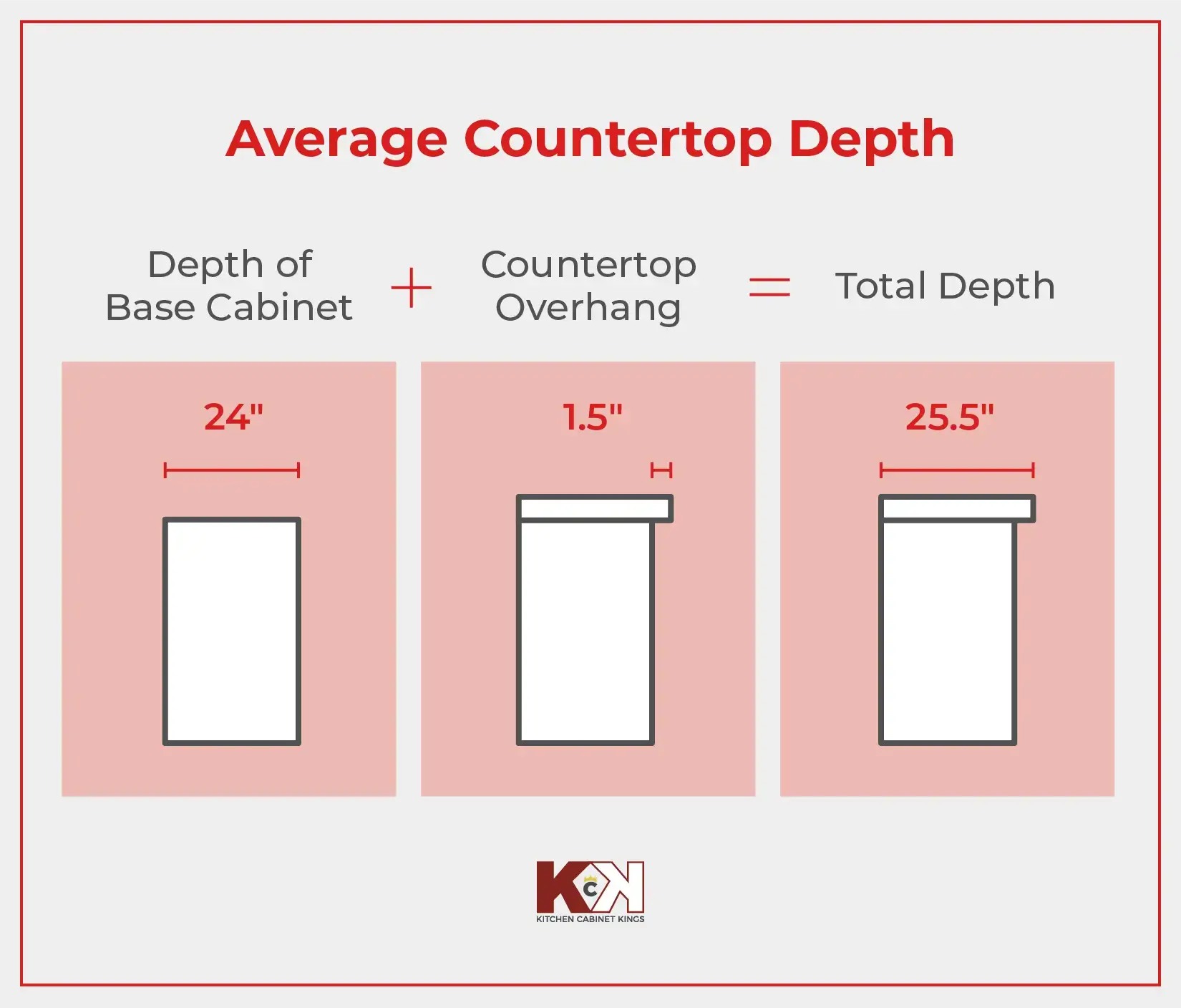
Let’s talk about depth first. The standard depth of a kitchen countertop is usually 25 inches (about 63.5 cm). This is measured from the wall to the front edge.
Why 25 inches? It matches the standard kitchen cabinet depth. Most standard base cabinet boxes are 24 inches deep (about 61 cm). The counter needs to stick out a little bit in front of the cabinet doors. This extra bit is called the overhang.
The Countertop Overhang Explained
That little bit that the countertop sticks out in front is the countertop overhang. It’s typically about 1 inch (2.5 cm). So, if your cabinet is 24 inches deep, the 25-inch countertop gives you that 1-inch overhang.
Why have an overhang?
* It protects the cabinet doors and fronts from spills. Liquids hit the floor, not the wood.
* It creates a small lip. This can help stop things from rolling off the counter.
* It gives you a comfortable place to stand. Your feet can tuck slightly under the overhang instead of hitting the cabinets.
* It helps with the look. A small overhang often looks better than a counter that is perfectly flush with the cabinets.
Overhangs can also be on the sides of counters, especially if the counter ends not against a wall or appliance. This side overhang is also often around 1 inch.
Fitting Counters on Standard Base Cabinets
Your countertop doesn’t float. It sits right on top of the standard base cabinet boxes. These cabinets are the units that make up the lower part of your kitchen storage.
Standard Base Cabinet Depth
As we noted, the standard base cabinet depth is 24 inches (61 cm). This is the box itself. The doors or drawer fronts are added to the front of this box.
So, when you put a 25-inch deep countertop on a 24-inch deep cabinet, you get that helpful 1-inch overhang at the front.
Putting it Together
Imagine stacking blocks. The cabinet is the base block, 24 inches deep. The countertop is the top block, 25 inches deep. The extra inch on the front of the top block is the overhang.
This simple setup works for most kitchen layouts against a wall. It gives you enough workspace and protects your cabinets.
Kitchen Layout Dimensions and Counters
The overall shape and size of your kitchen space affect how many counters you need and where they go. Kitchen layout dimensions include walls, doors, windows, and appliance spots.
Standard counter widths (meaning the 25-inch depth from front to back) are designed to fit easily along straight walls. But kitchens aren’t always just straight lines. They have corners, bumps, and open spaces.
Corners
Kitchen corners need special countertop pieces. Standard corners are usually 25 inches deep along each wall they touch. The counter material is cut and joined to make an L-shape or a U-shape. This ensures you have a continuous work surface in the corner area.
Spaces for Appliances
Standard openings for appliances like dishwashers and ranges are 24 inches deep. Since your cabinets are 24 inches deep and your counter is 25 inches deep with an overhang, this works well. The appliance fits neatly under the 25-inch deep counter edge. The range depth usually matches the cabinet depth so its front sits flush or slightly proud of the cabinets and counter overhang.
Average Counter Width in a Kitchen
When people talk about the total amount of counter space, they often talk about the average counter width in linear feet. A typical small kitchen might have around 10-15 linear feet of counter space. A larger kitchen could have 20-30 linear feet or more, especially with an island.
Each “linear foot” of counter usually refers to a 1-foot section that is 25 inches deep. So, more linear feet means more total work surface area in your kitchen layout dimensions.
Kitchen Island Dimensions and Counters
Kitchen islands are central work spots. The countertop on an island often has different needs than counters against a wall.
Island Counter Depth
Island counters can be many depths. They aren’t limited by a wall or standard 24-inch deep cabinet on one side.
If your island is made from standard 24-inch deep base cabinets back-to-back, the cabinet structure is 48 inches deep (24 + 24). The countertop on top might be around 51-54 inches deep. This extra depth allows for overhangs on both working sides, or a larger overhang on one side for seating.
Island Overhangs
Island overhangs are super important, especially if you want bar stools. A comfortable seating overhang needs more space than the standard 1 inch.
For seating, an overhang of at least 12 inches (30 cm) is recommended for knees and comfort. So, if you use 24-inch deep cabinets on one side of an island and want seating on the other, the countertop needs to be at least 24 inches (cabinets) + 12 inches (seating overhang) + maybe 1 inch (front overhang) = 37 inches deep total. Many islands are much deeper to allow seating on one side and still have decent workspace on the other.
Island Counter Width (Length)
The “width” or length of an island counter can vary hugely. It depends on the size of your kitchen layout dimensions and how much island you want. A small island might be 4 feet long, while a large one could be 8-10 feet or more.
Kitchen island dimensions are very flexible. They can be square, rectangular, or even oddly shaped. The countertop size just needs to match the cabinet base plus any desired overhangs for seating or looks.
Tables: Standard Kitchen Dimensions
Here are some common standard dimensions to keep in mind:
| Item | Standard Depth (Front-to-Back) | Standard Height (Floor-to-Top) | Common Widths (Side-to-Side) |
|---|---|---|---|
| Standard Base Cabinet Box | 24 inches (61 cm) | 34.5 inches (87.6 cm) | Varies (e.g., 12″, 18″, 24″) |
| Kitchen Countertop | 25 inches (63.5 cm) | 36 inches (91.4 cm) | Varies by kitchen length |
| Countertop Overhang (Front) | 1 inch (2.5 cm) | N/A | N/A |
| Countertop Overhang (Seating) | 12+ inches (30+ cm) | N/A | N/A |
| Kitchen Island Base | Varies (often 24″, 48″) | 34.5 inches (87.6 cm) | Varies |
| Kitchen Island Countertop | Varies widely | 36 inches (91.4 cm) | Varies widely |
Note: Countertop height of 36 inches is the standard finished height after putting the 1.5-inch thick countertop on the 34.5-inch tall cabinet.
When Standards Don’t Fit: Custom Size Countertops
Sometimes, a standard 25-inch deep counter just won’t work. This is where custom size countertops come in. You might need custom sizes if:
- Your kitchen layout dimensions are unusual. Maybe the walls aren’t straight, or the room is a strange shape.
- You want extra deep counters for more workspace or to fit specific appliances.
- You have a very large or uniquely shaped kitchen island dimensions planned.
- You are using older cabinets that aren’t standard sizes.
- You just prefer a different look or feel.
Going Deeper Than Standard
Many people choose deeper counters. A depth of 30 inches (76 cm) is common for a deeper custom size. Why go deeper?
* More workspace: An extra 5 inches across your counter run adds a lot of usable surface.
* Better fit for deep appliances: Some large refrigerators or ranges stick out past standard counters. Deeper counters can make them look more built-in.
* Space behind range: A deeper counter lets you have space for spice racks or outlets behind your range.
* Looks: Some kitchen styles look great with deeper, more substantial counters.
Going shallower is less common for main work areas. You might see shallower counters in a laundry room, mudroom, or a small wet bar area.
Measuring for Custom Sizes
If you need custom size countertops, measuring is super important. You need to measure kitchen counters very carefully.
Here are basic steps to measure kitchen counters:
1. Draw a plan: Sketch your kitchen layout from above. Show all walls, windows, doors, and appliance spots.
2. Measure cabinet boxes: Measure the depth of your actual base cabinets. Do they really stick out 24 inches from the wall? Walls aren’t always perfectly straight.
3. Measure length: Measure the length of each straight section of cabinets where a counter will go. Measure from the wall to the end of the cabinet run, or from cabinet end to cabinet end.
4. Measure corners: For corners, measure along each wall coming into the corner. Countertop makers have specific ways to measure corner pieces, so ask your supplier how they need it.
5. Note appliance widths: Write down where your sink, range, dishwasher, etc., will go. Note their widths.
6. Decide overhangs: Think about where you want overhangs (front, sides, back). Specify the exact depth you want for each section. For an island, decide the depth needed for seating overhangs.
7. Check for uneven walls: Use a straight edge to see if your walls are straight. If they curve or bow, a standard rectangular counter won’t fit tight against the wall. You might need the counter cut to fit the wall’s shape.
Always double-check your measurements. It’s also a great idea to have the countertop supplier do a final measure before they cut the material. They are experts and know how to handle tricky spots.
Countertop Thickness Matters Too
Besides depth and length (or “width” in the title’s sense), countertop thickness is another dimension to consider.
Common Thicknesses
The most common countertop thickness is 1.5 inches (about 3-4 cm). This is often created by building up a thinner material edge or using a solid slab of this thickness.
Other common thicknesses include:
* 0.75 inches (2 cm): Sometimes used for a sleeker look, often requires a strong base.
* 1.25 inches (3 cm): A popular thickness for stone slabs like granite or quartz.
* 2 inches or more (5+ cm): Used for a very chunky, substantial look. This is usually done by building up the edge.
How Thickness Affects Things
- Height: A 1.5-inch thick counter placed on 34.5-inch tall cabinets results in the standard counter height of 36 inches. If you use a thicker or thinner counter, the final height will change slightly unless the cabinets are adjusted.
- Look: Thickness greatly impacts the style. A thin counter looks modern and sleek. A thick counter looks solid and traditional or rustic.
- Material Use: Some materials like solid stone (granite, quartz) are often sold in 1.25-inch or 0.75-inch slabs. A thicker edge (like 1.5 inches) is often made by gluing a strip of the material along the front edge. Laminate counters are typically 1.5 inches thick using this built-up edge method.
- Cost: Thicker solid slabs of expensive materials will cost more. Building up an edge can sometimes be less expensive than using a very thick solid piece.
Choosing the Right Dimensions
When planning your kitchen, think about how you use the space.
Think About Workflow
Where do you prep food? Where do you put groceries down? Where do dirty dishes go? Your counter depth and layout should help these tasks flow smoothly. Deeper counters can be great for spreading out ingredients or small appliances.
Consider Appliances
Make sure your counter dimensions work with your chosen appliances. Will your fridge stick out far? Do you need space behind your range? Will a large stand mixer fit under upper cabinets if stored on the counter? (Though counter height is usually fixed at 36 inches, sometimes upper cabinets are installed lower, making counter space under them shorter).
Measure Your Space
Use your kitchen layout dimensions to decide what’s possible. Don’t try to fit a huge island with deep seating overhangs into a small kitchen. Measure kitchen counters and the whole space carefully.
Think About Seating
If you want an island or peninsula with seating, plan enough overhang. People need knee space. As mentioned, 12 inches is a good minimum, but 15 inches is even better for comfort.
Summary Table of Key Dimensions
| Dimension Area | Standard Size | Common Variation / Notes |
|---|---|---|
| Countertop Depth | 25 inches (63.5 cm) | 30 inches (76 cm) for custom, deeper counters. |
| Base Cabinet Depth | 24 inches (61 cm) | Box size, counter sits on top. |
| Countertop Overhang | 1 inch (2.5 cm) at front | 12+ inches (30+ cm) for seating areas on islands. |
| Countertop Height | 36 inches (91.4 cm) | Standard finished height including counter. |
| Countertop Thickness | 1.5 inches (3-4 cm) | Also 0.75″, 1.25″, or thicker built-up edges. |
| Kitchen Island Depth | Varies widely | Depends on cabinet setup (e.g., 24″ or 48″) + overhangs. |
Comprehending Counter Materials and Size
The material you choose for your countertop can also sometimes affect the usable width or depth or at least how it’s fabricated.
- Laminate: Made by gluing a thin layer of plastic laminate onto particleboard. Standard depths (like 25 inches) are readily available pre-formed with an edge and backsplash. Custom shapes and depths are possible but might not have the seamless front edge of standard pieces.
- Solid Surface (like Corian): Can be cut and joined seamlessly. This makes custom size countertops very easy to create in any shape or depth. Seams are nearly invisible.
- Natural Stone (Granite, Marble): Come in large slabs. Your counter pieces are cut from these slabs. The depth and length are limited by the slab size. Seams are visible where pieces are joined, especially on long runs or in corners. Standard thicknesses are 1.25 inches (3 cm) or 0.75 inches (2 cm), often with a built-up edge for a 1.5-inch or thicker look.
- Engineered Stone (Quartz): Similar to natural stone, comes in slabs. Cut and fabricated much the same way. Offers consistent color and pattern. Standard thickness usually 1.25 inches (3 cm) or 0.75 inches (2 cm) with built-up edges common.
- Wood/Butcher Block: Can be ordered in standard or custom sizes. Can be cut and finished on site more easily than stone. Can be made in any practical thickness.
- Concrete: Poured in place or pre-cast. Highly customizable in shape, depth, and thickness. Can be formed to fit unusual kitchen layout dimensions perfectly.
The choice of material affects seams, edge options (like bevels, bullnoses), and how easily you can get very specific custom size countertops beyond the standard countertop depth.
Thinking About Flow and Ergonomics
Grasping the standard sizes helps, but think about how the counter depth affects how you work.
A 25-inch depth is usually enough for chopping, using small appliances like a coffee maker, and putting down groceries.
If you often have multiple people cooking, or you use large appliances (like a big stand mixer, bread maker, or pasta machine) right on the counter, deeper counters (30 inches) can be a game-changer. They give you more elbow room and keep the back of the counter from feeling cluttered.
However, a counter that is too deep can be hard to clean the back of, especially if you have upper cabinets. Reaching that far back can be a stretch. So, while more depth can be good, extreme depth might not be practical for everyone.
How Kitchen Layout Dimensions Impact Width/Depth Choices
The overall size and shape of your kitchen guide your choices.
* Galley Kitchen: Often has two parallel counter runs. Standard 25-inch deep counters are usually best to leave enough walking space between the two sides (a minimum of 36 inches, but 42-48 inches is better).
* L-Shaped Kitchen: Uses standard counters along two walls meeting in a corner. The corner piece needs careful planning and measurement.
* U-Shaped Kitchen: Counters along three walls. Again, standard depth works well, with special corner pieces. Space between the legs of the U needs to be wide enough (at least 60 inches ideally) for comfortable movement, which limits how deep your counters can be on the parallel sides if they face each other.
* Kitchen with Island: Allows flexibility. Counters against walls are likely standard depth. The island offers the chance to add deeper counters and seating overhangs. The size and placement of the island are critical kitchen layout dimensions to get right. It needs enough clearance around it for walking and opening appliance doors.
Installing and Joining Counters
Countertops, especially stone or thick materials, are heavy. Installation is usually done by professionals.
Seams
Most kitchens need more than one piece of countertop. Where pieces join, you have a seam. The location and quality of seams matter for looks and function.
- Laminate counters often have seams that are more visible or have a small lip.
- Solid surface and quartz/granite have tighter seams, but they are still there. Placement often happens at sink cutouts, appliance openings, or in corners to hide them better.
Measuring Precisely
This brings us back to why you need to measure kitchen counters so accurately, especially for custom sizes or complex layouts. The fabricator (the company that cuts your counter material) relies on these measurements to cut the pieces correctly. A mistake means the counter won’t fit, or the seams will be in the wrong spot or won’t join properly.
Getting professional measurements done after your cabinets are installed is highly recommended for materials like stone or quartz.
Thinking About Edge Profiles
While not about width or depth directly, the edge profile you choose affects the final look of the countertop’s “width” or edge thickness seen from the front.
- Straight/Eased: A simple, slightly rounded edge. Shows the full thickness of the material.
- Bevel: A angled cut off the top edge.
- Bullnose (Full or Half): Rounded edge. Full bullnose is completely rounded; half bullnose is rounded only on the top. These can sometimes make the edge look thicker depending on how they are done, especially if the edge is built up.
- Ogee: An S-shaped curve profile. More decorative.
- Waterfall: The countertop material drops vertically down the side of the cabinet or island all the way to the floor, creating a continuous look. This uses a lot more material and affects surrounding dimensions.
The edge profile is part of the countertop design. It sits on that standard 25-inch deep or custom size countertop piece.
Maintenance and Durability
The standard depth and material thickness influence how easy your counter is to live with.
A standard 25-inch depth is easy to wipe clean from the front edge to the back.
A deeper counter means more surface to clean.
The thickness relates to durability. A thinner counter might seem more prone to chipping on the edge than a thicker one, depending on the material. Laminate edges can sometimes chip or wear down over time, while stone or quartz edges are very hard.
Cost Factors Related to Size
Countertop cost is usually calculated per square foot or per linear foot.
* The total length (“width” in linear feet) is a major cost driver.
* The depth also matters. A 30-inch deep counter costs more per linear foot than a 25-inch deep one because it uses more material.
* Custom size countertops often have a higher cost per square foot than standard sizes because they require more precise measurement, cutting, and potentially more material waste.
* Thicker materials or edges can also increase cost.
Planning within standard sizes where possible can help keep costs down. If you need custom sizes, getting detailed quotes based on accurate measure kitchen counters notes is vital.
Final Thoughts on Counter Dimensions
Knowing the standard countertop depth of 25 inches and how it relates to the standard base cabinet depth of 24 inches is the starting point for understanding kitchen counters.
This 1-inch countertop overhang is a key design feature.
While standards exist, kitchen island dimensions, custom size countertops, and varying kitchen layout dimensions mean counter sizes can change.
Measuring correctly is crucial for any project, especially when you step away from standard sizes. The thickness of the countertop also adds to the overall look and feel.
By paying attention to these dimensions – depth, length (width in linear feet), thickness, and overhang – you can plan a kitchen that is not only beautiful but also functional and fits your space perfectly.
Frequently Asked Questions (FAQ)
Q: What is the standard height for a kitchen counter?
A: The standard height from the floor to the top of the counter is 36 inches (91.4 cm). This is achieved by placing a standard countertop (usually 1.5 inches thick) on standard base cabinets (34.5 inches tall).
Q: Can kitchen counters be deeper than 25 inches?
A: Yes, definitely. While 25 inches is standard for counters against a wall, you can get custom size countertops that are deeper, often 30 inches or more, to suit your needs or kitchen layout dimensions. Island countertops are often much deeper than 25 inches.
Q: How much overhang should a kitchen island counter have for seating?
A: For comfortable seating at a kitchen island or peninsula, aim for a countertop overhang of at least 12 inches (30 cm). More is often better, like 15 inches.
Q: What is the purpose of the countertop overhang at the front?
A: The small 1-inch countertop overhang at the front protects the cabinet doors below from spills and drips, makes it more comfortable to stand close to the counter, and can look more finished.
Q: Do I need custom size countertops if my kitchen cabinets aren’t standard sizes?
A: Yes, if your base cabinets are not the standard 24 inches deep, you will likely need custom size countertops to fit correctly and have the right overhang. You will need to measure kitchen counters carefully based on your specific cabinet depth.
Q: How thick are kitchen countertops usually?
A: A very common finished thickness for kitchen countertops is 1.5 inches (about 3-4 cm). However, materials like stone slabs are often 1.25 inches (3 cm) or 0.75 inches (2 cm) thick, and the edge is often built up to look thicker. Thicker or thinner counters are also possible, especially with custom options.
Q: Where are seams usually placed in countertops?
A: Countertop seams are typically placed where they are less visible, such as at the center of a sink, above a dishwasher, in a corner, or in the least-used areas of the counter run. Placement depends on the material and the kitchen layout dimensions.
Q: How do I measure kitchen counters for ordering?
A: You measure the depth of your cabinets, the length of each section, note appliance locations, and decide on desired overhangs. For custom or complex jobs, it’s best to have the countertop fabricator take final measurements after cabinets are installed. Always sketch your kitchen layout dimensions first.