Can you stain a kitchen table? Yes, you absolutely can stain a kitchen table! Refinishing your kitchen table with stain is a fantastic way to give it a new look, protect the wood, and breathe new life into your dining space. This comprehensive guide will walk you through every step of the process, from preparing your wood to applying that final protective coat. Whether you’re looking to change the color, cover up scratches, or simply refresh the finish, table restoration can be a rewarding DIY project.
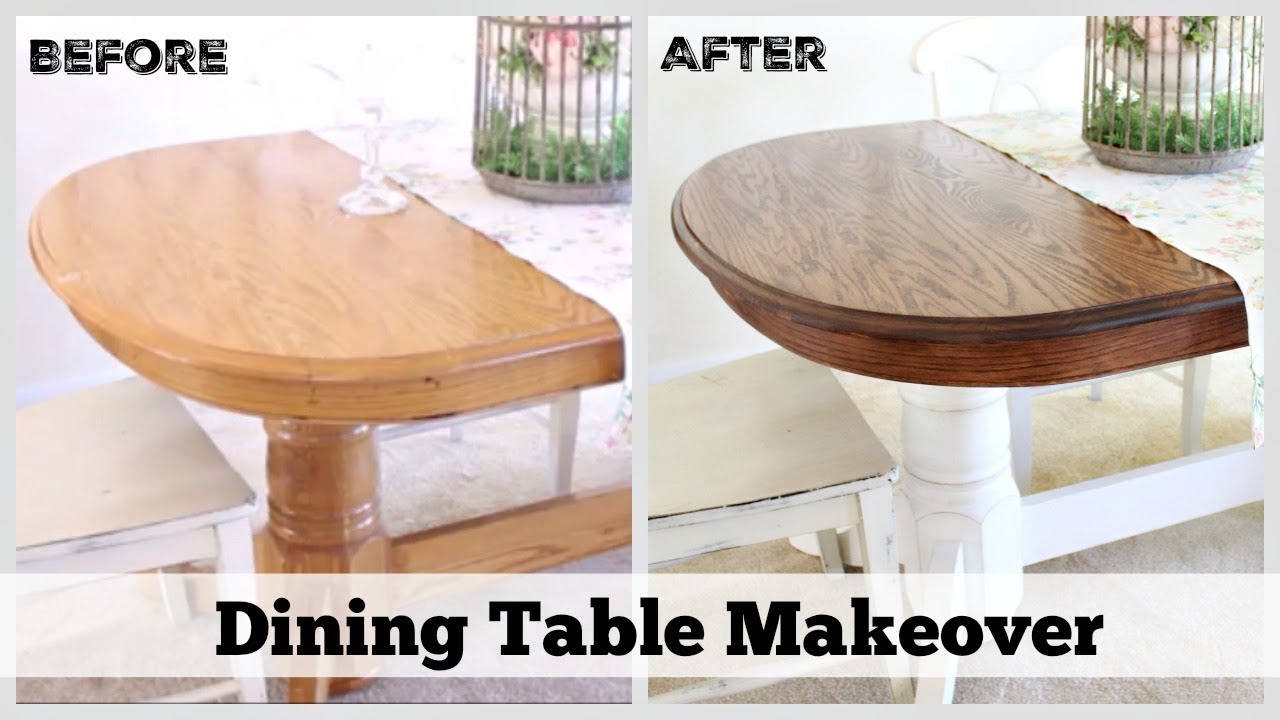
Image Source: i.ytimg.com
Deciding to Refinish Your Table
Before you dive in, it’s good to ask yourself if refinishing is the right choice for your table. Is the existing finish worn out? Are there deep scratches or water rings? If your table is made of solid wood, it’s an excellent candidate for refinishing table work. If it’s veneer, you need to be more careful during the sanding wood phase to avoid sanding through the thin layer of wood.
Gathering Your Supplies
Having all your tools and materials ready before you start makes the process much smoother. Here’s a list of what you’ll need for wood staining:
- Safety Gear:
- Safety glasses or goggles
- Respirator or dust mask (especially for sanding)
- Gloves (nitrile or chemical-resistant)
- Preparation Tools:
- Screwdriver (if you need to remove legs or hardware)
- Drop cloths or old newspapers to protect your workspace
- Vacuum cleaner with a brush attachment
- Clean rags or tack cloths
- Sanding tools:
- Orbital sander (optional but recommended for large flat surfaces)
- Sanding sponges (good for curves and edges)
- Sandpaper in various grits:
- 80-100 grit (for removing old finish)
- 120-150 grit (for smoothing after initial sanding)
- 180-220 grit (for final smoothing before staining)
- Optional: 320 grit for super-smooth finish
- Staining and Finishing Supplies:
- Wood cleaner or degreaser
- Wood filler (if you have deep gouges)
- Wood stain (choose your desired wood stain colors)
- Foam brushes or high-quality natural bristle brushes for stain application
- Clean, lint-free rags for wiping off excess stain
- Polyurethane finish or other topcoat (e.g., polycrylic, varnish, lacquer)
- Fine-grit sandpaper (220-320 grit) for between coats of finish
- Optional: Pre-stain wood conditioner (especially for soft woods like pine)
Step 1: Preparing the Wood for Stain
Proper wood preparation is crucial for a beautiful and lasting finish. This is arguably the most important part of furniture refinishing.
Disassembling the Table
If your table has removable legs or other parts, take them off. This makes it easier to access all surfaces and ensures an even stain application. Keep any hardware in a labeled bag so you don’t lose screws or bolts.
Cleaning the Table
Thoroughly clean the table surface. Use a damp cloth with a bit of mild soap to remove any grease, grime, or food residue. For stubborn spots, a wood cleaner or degreaser can be effective. Make sure the table is completely dry before proceeding.
Repairing Imperfections
Examine your table for any damage.
* Gouges and Dents: For deep scratches or gouges, use wood filler. Choose a filler that matches the wood color as closely as possible, or one that can be stained. Apply it according to the product instructions, letting it dry completely before sanding it smooth.
* Loose Joints: If any parts of the table are wobbly, tighten screws or use wood glue to reinforce joints.
Stripping Old Finish (If Necessary)
If the old finish is severely damaged, peeling, or if you’re making a drastic color change, you might need to strip the old finish.
* Chemical Strippers: These are effective but require good ventilation and protective gear. Follow the manufacturer’s instructions carefully.
* Sanding: For most situations, sanding wood is sufficient to remove the old finish and create a surface ready for stain.
Sanding Wood: The Key to a Smooth Finish
This is where the magic begins. Sanding wood removes the old finish, smooths out imperfections, and opens the wood grain to accept stain evenly.
- Start with a Coarser Grit: Begin with 80 or 100-grit sandpaper. This grit is effective at removing the old finish and minor imperfections. If you’re using an orbital sander, make sure the sandpaper is attached securely. Sand in the direction of the wood grain.
- Progress to Finer Grits: After removing the old finish, move to 120 or 150-grit sandpaper. This step smooths out the scratches left by the coarser grit.
- Final Smoothing: For the best results before staining, sand with 180 or 220-grit sandpaper. This creates a very smooth surface. For an exceptionally smooth finish, you can even use 320-grit.
- Sanding Edges and Details: Use sanding sponges or blocks for edges, corners, and any curved areas to ensure you don’t sand too aggressively in one spot.
- Clean Between Sanding Stages: After each grit, vacuum up all the dust and wipe the surface with a clean, damp cloth or a tack cloth. This prevents dust from being pushed around and creating new scratches.
Applying a Pre-Stain Wood Conditioner
Some woods, like pine, maple, and cherry, can absorb stain unevenly, leading to blotchy results. A pre-stain wood conditioner helps the wood absorb the stain more uniformly.
* Application: Apply the conditioner with a brush or rag, following the product’s directions.
* Drying Time: Let it sit for the recommended time (usually 15-30 minutes).
* Wiping Off: Wipe off any excess conditioner with a clean cloth. Do not let it dry completely on the surface, as it can create a barrier that prevents the stain from penetrating.
Step 2: Applying Wood Stain
Now for the exciting part – applying wood stain to transform your table!
Choosing Your Wood Stain Colors
Wood stain colors range from light natural tones to deep, rich hues. Consider the existing décor of your kitchen and the type of wood you have.
* Light Stains: Honey, natural, light oak – these can give a bright, airy feel.
* Medium Stains: Medium oak, walnut, cherry – classic choices that offer warmth.
* Dark Stains: Dark walnut, ebony, mahogany – for a sophisticated, dramatic look.
* Gray Stains: Modern and versatile, grays can complement many styles.
* White Washes: Offer a distressed or coastal look.
Test your chosen stain on an inconspicuous area of the table or on a scrap piece of the same wood to ensure you like the color and how it penetrates.
How to Apply Wood Stain
- Stir, Don’t Shake: Always stir your stain thoroughly before and during use. Shaking can create bubbles that will transfer to your wood.
- Application Methods:
- Brush: Use a high-quality natural bristle brush or a foam brush. Apply the stain in long, even strokes, following the direction of the wood grain.
- Rag: For a more controlled application or a lighter effect, apply the stain with a clean, lint-free rag. Work in sections.
- Work in Sections: Apply the stain to a manageable section of the table at a time. This prevents the stain from drying too quickly before you can wipe off the excess.
- Wipe Off Excess: After applying the stain, let it penetrate for the time recommended on the can (usually 5-15 minutes). Then, using a clean, lint-free rag, wipe off the excess stain, again following the wood grain. This step is crucial for controlling the depth of the color. The longer you leave the stain on, the darker the wood will become.
- Second Coat (Optional): If you want a deeper color, you can apply a second coat after the first has dried (typically 4-6 hours, but check the product instructions). Remember to wipe off the excess after the second coat as well.
- Drying Time: Allow the stain to dry completely according to the manufacturer’s instructions. This can take anywhere from 12 to 24 hours, or even longer, depending on the type of stain and humidity.
Stain Samples: A Crucial Step
It’s highly recommended to create stain samples. This is part of wood preparation that truly pays off.
1. Get small samples of different wood stain colors.
2. Find a scrap piece of wood identical to your table or a hidden area on the underside of the table.
3. Apply each stain sample, allowing it to penetrate for the same amount of time before wiping off the excess.
4. Let them dry completely.
5. This will give you a clear idea of how each color will look on your specific wood.
Step 3: Applying a Protective Topcoat
Once the stain is completely dry, you need to protect it with a topcoat. A polyurethane finish is a popular and durable choice for kitchen tables.
Choosing Your Topcoat
- Polyurethane: Available in oil-based and water-based formulas.
- Oil-based: More durable, offers a warmer amber tone, but has stronger fumes and takes longer to dry.
- Water-based (Polycrylic): Dries clearer, has less odor, and dries faster. It’s generally easier to work with for DIYers.
- Varnish: Very durable, often used for marine applications, but can be more difficult to apply.
- Lacquer: Dries very quickly and creates a hard finish, but requires a spray application and good ventilation.
For most kitchen tables, a water-based polycrylic or polyurethane is a good balance of durability, ease of application, and low odor.
Applying the Polyurethane Finish
- Light Sanding (Between Coats): Before applying any topcoat, and between coats, you’ll need to lightly sand the surface. Use 220-320 grit sandpaper or a sanding sponge. This step, often called “scuff sanding,” removes any dust nibs and creates a slightly rough surface for the next coat to adhere to, resulting in a smoother final finish.
- Clean Thoroughly: After sanding, vacuum the surface and wipe it down with a tack cloth to remove all dust. Dust is the enemy of a smooth finish!
- Brush Application:
- Use a high-quality synthetic brush for water-based finishes or a natural bristle brush for oil-based finishes. Foam brushes can also work but may leave tiny bubbles.
- Apply the topcoat in thin, even coats. Avoid applying too thickly, as this can lead to drips and an uneven finish.
- Work in the direction of the wood grain.
- For large flat surfaces, consider using a foam roller designed for smooth finishes.
- Multiple Coats: Most projects require 2-3 coats of polyurethane for adequate protection. Some may benefit from 4.
- First Coat: Apply evenly. Let it dry completely (check product instructions for drying times, often 2-4 hours for water-based, longer for oil-based). Lightly sand with fine-grit sandpaper and wipe clean with a tack cloth.
- Second Coat: Apply the second coat, ensuring even coverage. Let it dry. Lightly sand and wipe clean again.
- Third Coat (and beyond): Apply subsequent coats, sanding and cleaning between each. The final coat should not be sanded.
- Curing Time: Polyurethane needs time to “cure” to its full hardness. While it might feel dry to the touch within hours, it can take several days to a few weeks for the finish to fully harden. Be gentle with your table during this curing period. Avoid placing heavy or hot items on it.
Table Restoration: Tips for Success
Table restoration is a process that rewards patience and attention to detail.
Ventilation is Key
Always work in a well-ventilated area, especially when using stains or oil-based finishes. Open windows and doors, or work outdoors if weather permits. Use a fan to help circulate air.
Tack Cloths are Your Best Friend
Tack cloths are sticky cloths designed to pick up fine dust particles. They are essential for achieving a dust-free surface before staining and between coats of finish.
Don’t Rush the Drying Times
This is a common pitfall. Staining and finishing require patience. Rushing the drying or curing times can lead to a poor-quality finish that might be sticky, soft, or prone to damage.
Practice Makes Perfect
If you’re new to wood staining or furniture refinishing, practice on scrap pieces of wood first. This will help you get a feel for the application process and how the stain and finish behave.
Wood Type Matters
Different wood types absorb stain differently. Hardwoods like oak and maple tend to be more uniform, while softwoods like pine can be blotchy. Knowing your wood type can help you anticipate how the stain will look and if a pre-stain conditioner is needed.
Color Testing is Crucial
Never skip the stain test. What looks good in the can or on a swatch might look different on your actual table.
Frequently Asked Questions (FAQ)
Q: What is the best grit of sandpaper for preparing wood for stain?
A: For removing old finish and smoothing out major imperfections, start with 80-100 grit. Progress to 120-150 grit for initial smoothing, and finish with 180-220 grit for a surface ready to accept stain evenly. For an ultra-smooth finish, 320 grit can be used.
Q: Can I stain over an existing finish?
A: Generally, no. Stain needs to penetrate the wood to impart color. If there is an existing finish, it must be completely removed through sanding or stripping before you can stain.
Q: How many coats of stain should I apply?
A: One coat is often sufficient, but if you desire a deeper, richer color, a second coat can be applied. Always wipe off excess stain after each application.
Q: How do I prevent blotchiness when staining pine or other softwoods?
A: Use a pre-stain wood conditioner before applying the stain. This helps the wood absorb the stain more evenly. Always test your stain and conditioner on a scrap piece of wood first.
Q: Can I use a water-based polyurethane over an oil-based stain?
A: Yes, you can. However, if you used an oil-based stain, it’s generally best to use an oil-based polyurethane for maximum compatibility and durability. Always check the manufacturer’s recommendations.
Q: How long does it take for a table to cure after applying polyurethane?
A: While the finish may feel dry to the touch within a few hours, it typically takes 7 to 30 days for the polyurethane to fully cure and reach its maximum hardness. Avoid heavy use or placing hot items on the table during this period.
Refinishing your kitchen table is a rewarding project that can dramatically enhance the look and feel of your dining space. With careful preparation, the right materials, and a little patience, you can achieve professional-looking results and enjoy your beautifully stained and protected table for years to come. Happy refinishing!