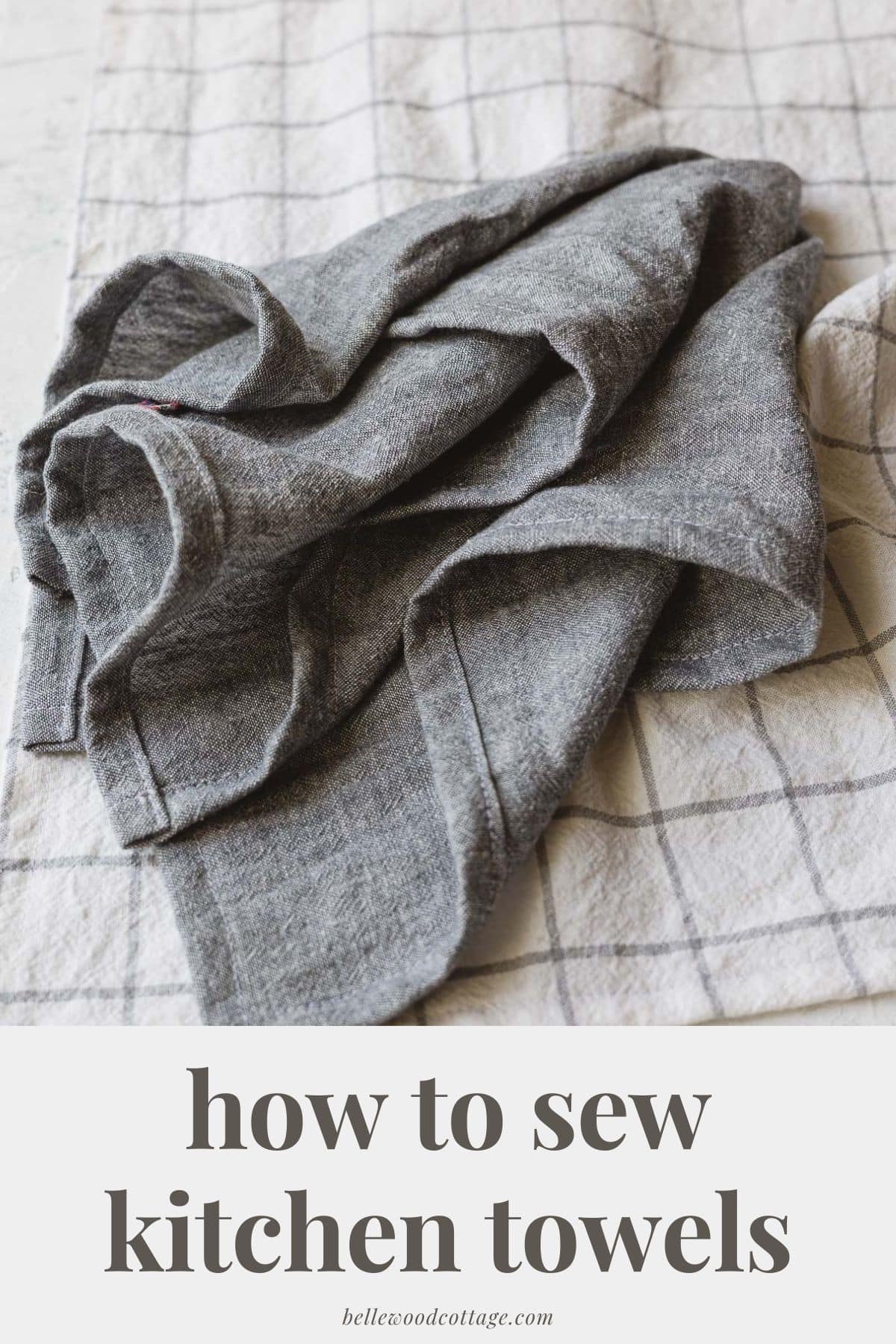
Image Source: bellewoodcottage.com
How to Sew Kitchen Towels: Easy DIY Guide for Beginners
Want to know how to sew kitchen towels? You absolutely can! Sewing your own kitchen towels is a rewarding and practical skill, perfect for beginners. You can easily create beautiful and functional kitchen essentials that match your decor. This guide will walk you through everything you need to know to get started sewing your very own diy kitchen towels.
Why Sew Your Own Kitchen Towels?
Making your own sewing tea towels offers a delightful blend of creativity and utility. Beyond the satisfaction of crafting something with your own hands, there are several compelling reasons to consider this project:
- Customization: You can choose the exact fabric, color, and size to perfectly complement your kitchen’s aesthetic. Tired of boring, mass-produced towels? Now you can have ones that truly reflect your style.
- Cost-Effectiveness: While high-quality kitchen towels can be pricey, you can often make several for the cost of one store-bought item, especially if you buy fabric on sale.
- Eco-Friendly: Reusing fabric scraps or choosing sustainable materials can make your sewing practice more environmentally conscious. Plus, homemade towels tend to last longer due to better construction.
- Gift Giving: Handmade kitchen towels make thoughtful and practical gifts for housewarmings, holidays, or just because. They show you put in extra effort and care.
- Skill Building: This is an excellent project for learning basic sewing techniques like hemming kitchen towels and sewing edges on towels. Mastering these skills opens the door to many other sewing projects.
- Quick Projects: Easy kitchen towel sewing is also considered one of the quick sewing projects kitchen enthusiasts love because you can often complete a towel in an hour or less once you get the hang of it.
What You’ll Need: Sewing Supplies for Towels
Before you start, gather your sewing supplies for towels. Having everything ready will make the process smooth and enjoyable.
Essential Sewing Supplies:
- Fabric: The best fabric for kitchen towels is absorbent and durable. (More on fabric choices below!)
- Sewing Machine: While you can hand sew, a sewing machine will make the process much faster and your stitches neater.
- Thread: All-purpose polyester thread is a good choice. Match your thread color to your fabric or use a contrasting color for a decorative effect.
- Scissors: Sharp fabric scissors are crucial for clean cuts.
- Pins: To hold your fabric in place while sewing.
- Iron and Ironing Board: Essential for pressing seams and hems, which gives your towels a professional finish.
- Measuring Tape or Ruler: For accurate fabric cutting.
- Fabric Marker or Chalk: To mark your cutting and folding lines.
- Rotary Cutter and Mat (Optional): For even faster and more precise cutting, especially for larger projects.
Fabric Choices: The Best Fabric for Kitchen Towels
Selecting the right fabric is key to creating functional and long-lasting kitchen towels. Here are the top choices:
| Fabric Type | Absorbency | Durability | Texture | Best For |
|---|---|---|---|---|
| Cotton | High | High | Soft, smooth, can vary (e.g., quilting cotton) | All-purpose kitchen towels, dishcloths, cleaning rags |
| Linen | Very High | Very High | Slightly rough, natural weave | High-end tea towels, dish towels, great for drying dishes streak-free |
| Cotton/Linen Blend | High | High | Soft with a subtle texture | A good balance of absorbency and softness, versatile for most kitchen needs |
| Terry Cloth | Extremely High | High | Looped, plush texture | Hand towels, dish drying, general cleaning |
| Flannel | Moderate | Moderate | Soft, fuzzy, napped surface | Gentle drying, polishing glassware, can be used as cleaning cloths |
Tip: For beginners, quilting cotton is often the easiest to work with. It’s stable, doesn’t fray too much, and is readily available in countless patterns.
Choosing Your Kitchen Towel Patterns
While you don’t strictly need a kitchen towel pattern for simple rectangular towels, understanding basic dimensions is helpful. Standard kitchen towel sizes are often around 16×26 inches or 18×28 inches. However, you can adapt these to your preference. For sewing tea towels, you might opt for slightly smaller or more decorative sizes.
If you’re looking for more decorative options, you can find free patterns online that might include:
- Hanging Loops: A small loop attached to the corner so you can hang the towel on a hook.
- Decorative Appliques: Adding small fabric shapes or embroidery for a unique touch.
- Pocket Towels: A pocket sewn onto the towel to hold your hands.
For your first few projects, sticking to a simple rectangle is the best way to learn the basics of easy kitchen towel sewing.
Getting Started: Preparing Your Fabric
Proper fabric preparation ensures your towels won’t shrink or warp after the first wash.
- Pre-wash Your Fabric: Always wash and dry your fabric before cutting. This removes any sizing agents and pre-shrinks the material. Use the same washing and drying settings you intend to use for your finished towels.
- Press Your Fabric: Once dry, give your fabric a good pressing with an iron. This removes wrinkles and makes accurate cutting much easier.
How to Sew Kitchen Towels: A Step-by-Step Guide
This guide focuses on the most common and easiest method: creating a double-folded hem on all four sides. This technique provides a clean, durable finish that prevents fraying.
Step 1: Cutting Your Fabric
- Decide on Size: Choose your desired finished dimensions (e.g., 16 inches x 24 inches).
- Add Seam Allowance: For a double-folded hem, you’ll need to add extra fabric to each side. A common hem allowance is 1 inch on each side.
- If your finished towel is 16″ x 24″, you’ll cut a piece of fabric that is (16″ + 1″ + 1″) x (24″ + 1″ + 1″) = 18″ x 26″.
- The extra 1 inch on each side will be folded twice to create a 0.5-inch finished hem.
- Cut Accurately: Use your ruler and fabric scissors (or rotary cutter) to cut your fabric to the calculated dimensions. Ensure your cuts are straight.
Step 2: Creating the Hem on the Shorter Sides (End Hems)
This is where you begin hemming kitchen towels. We’ll start with the shorter sides.
- First Fold: Take one of the shorter raw edges and fold it towards the wrong side of the fabric by 0.5 inches. Use your fabric marker to draw a line if needed.
- Press: Press this fold firmly with your iron. This crease will guide your next fold.
- Second Fold: Now, fold that same edge over again by another 0.5 inches, encasing the raw edge completely. You are essentially folding the fabric over itself.
- Press Again: Press this second fold firmly. You should now have a neat, double-folded hem along that shorter edge.
- Pin: Secure the hem in place with pins, placing them perpendicular to the folded edge.
- Repeat: Repeat these steps for the other shorter side of your fabric.
Step 3: Sewing the Shorter Side Hems
Now it’s time to sew the hems you just created.
- Set Up Your Machine: Thread your sewing machine with your chosen thread. Set your stitch length to a medium setting (around 2.5mm).
- Position the Fabric: Place the towel fabric under the presser foot with the pinned hem aligned with the edge of your sewing machine’s needle plate. Ensure the folded edge is facing the direction of travel.
- Start Sewing: Lower the presser foot. Backstitch for a few stitches to secure the beginning of your seam.
- Sew the Hem: Sew along the folded edge, keeping your stitch line about 1/8 inch from the folded edge. Try to sew a straight line.
- Finish Sewing: Continue sewing until you reach the end of the hem. Backstitch again for a few stitches to secure the end.
- Trim Threads: Lift the presser foot, pull the fabric out, and trim the excess threads.
- Repeat for the Other Side: Sew the hem on the other shorter side in the same manner.
After this step, both of your shorter sides should have neat, double-folded hems.
Step 4: Creating the Hem on the Longer Sides (Side Hems)
Now you’ll repeat the hemming process for the longer sides. This time, because the hems on the shorter sides are already sewn, you’ll be folding the fabric and tucking the raw edges of the side hems into the side hems. This creates a very clean finish where all raw edges are enclosed.
- First Fold: Take one of the longer raw edges. Fold it towards the wrong side of the fabric by 0.5 inches. Make sure this fold goes under the sewn hem of the shorter side.
- Press: Press this fold firmly.
- Second Fold: Fold the same edge over again by another 0.5 inches, encasing the raw edge completely. Again, ensure this fold tucks neatly under the sewn hem of the shorter side.
- Press Again: Press this second fold firmly. You should now have a neat, double-folded hem along the longer edge, with the raw ends neatly tucked under the existing hems.
- Pin: Secure the hem in place with pins.
- Repeat: Repeat these steps for the other longer side of your fabric.
Step 5: Sewing the Longer Side Hems
Finally, you’ll sew the hems on the longer sides.
- Position the Fabric: Place the towel under your sewing machine’s presser foot. Align the folded edge of the longer side with the needle plate.
- Start Sewing: Lower the presser foot. Backstitch to secure the beginning.
- Sew the Hem: Sew along the folded edge, about 1/8 inch from the fold. Make sure to sew through all layers of fabric.
- Corners: As you approach the corner where you’ve already sewn a hem, carefully pivot your fabric. You can lift the presser foot slightly, turn the fabric 90 degrees, lower the presser foot, and continue sewing. The goal is to have a clean corner where the side hem meets the end hem without any raw edges showing.
- Finish Sewing: Continue sewing until you reach the end of the hem. Backstitch to secure.
- Repeat for the Other Side: Sew the hem on the other longer side in the same manner, paying attention to creating neat corners.
- Trim Threads: Trim all loose threads.
- Final Press: Give your finished kitchen towel a final press with your iron. This really makes the seams look crisp and professional.
Congratulations! You’ve successfully sewn your first kitchen towel! This method of sewing edges on towels is a fundamental technique.
Variations and Decorative Touches
Once you’ve mastered the basic hem, you can explore variations:
Adding a Hanging Loop
A small loop is incredibly practical for hanging towels to dry.
- Cut a Strip: Cut a fabric strip approximately 1.5 inches wide and 6 inches long.
- Fold and Press: Fold the strip in half lengthwise, wrong sides together, and press. Then, open it up. Fold the raw edges in to meet the center crease, and press again. This creates a neat, double-folded strip.
- Fold Loop: Fold the strip in half again to form a loop.
- Attach to Corner: On one of the short ends of your towel, open up the sewn hem slightly. Insert the raw ends of your fabric loop into the fold of the hem, so the loop is sticking out where you want it.
- Sew Hem: Repin the hem and sew it as usual. The loop will be securely caught within the hem. You can also sew the loop to the outside of the hem for a decorative touch.
Decorative Top Stitching
Instead of a plain thread, use a contrasting color or a thicker decorative thread to add visual interest to your hems. You can also use a zigzag stitch or a decorative stitch on your sewing machine along the edge of the hem.
Adding Bias Tape
For a different look and a potentially easier way to finish edges, you can use bias tape.
- Prepare Bias Tape: You can buy pre-made bias tape or make your own from your fabric.
- Attach Bias Tape: Open one edge of the bias tape. Align the raw edge of the bias tape with the raw edge of your towel (on all four sides if you’re doing a continuous wrap around). Pin in place.
- Sew: Sew along the fold of the bias tape, attaching it to the towel.
- Fold and Topstitch: Fold the bias tape over the raw edge to the other side of the towel. Press. Topstitch the bias tape down, sewing close to the folded edge. This method is a great way to create easy kitchen towel sewing with a different finish.
Can I Make Kitchen Towels Without a Sewing Machine?
Yes, you can make no-sew kitchen towels using fabric glue or fusible hemming tape.
- Fabric Glue: Apply a thin, even line of fabric glue along the fold line. Press the fabric together and allow it to dry completely according to the glue manufacturer’s instructions.
- Fusible Hemming Tape: Place the hemming tape between the two folded layers of your hem. Use a hot iron to press over the tape, melting the adhesive and bonding the fabric. Follow the specific instructions for your hemming tape.
While these methods are faster, stitched hems are generally more durable and can withstand more frequent washing and use.
Frequently Asked Questions About Sewing Kitchen Towels
Here are some common questions beginner sewers have about making kitchen towels:
- Q: What is the best way to hem kitchen towels?
- A: The double-folded hem is widely considered the best method for kitchen towels. It encloses the raw edges, preventing fraying and creating a neat, durable finish.
- Q: Can I use a pinking shears to finish the edges?
- A: You can use pinking shears as a quick way to finish edges and reduce fraying, especially for towels intended for cleaning. However, it won’t create as clean or durable a finish as a double-folded hem, and the edges will still fray somewhat over time. It’s a good option for no-sew kitchen towels or if you’re in a real hurry.
- Q: How much fabric do I need for a standard kitchen towel?
- A: For a standard 16″ x 24″ finished towel with 0.5-inch double-folded hems, you’ll need to cut a piece of fabric measuring 18″ x 26″.
- Q: What if my stitches are uneven?
- A: Don’t worry! Uneven stitches are common for beginners. Practice on scrap fabric. Ensure your machine is threaded correctly, and try adjusting your stitch length and tension. Sometimes, using a walking foot can help feed the fabric more evenly.
- Q: How do I get perfectly straight hems?
- A: Accurate measuring, pressing your folds well, and using pins to secure them are key. You can also use a seam guide on your sewing machine or a quilting ruler to help you sew a consistent distance from the edge.
- Q: Can I make sewing tea towels from old bath towels?
- A: Yes, you can repurpose old, worn-out bath towels into smaller kitchen towels or cleaning rags. Just be sure to wash them thoroughly first. You’ll likely need to cut them down and create new hems.
Conclusion: Your Sewing Journey Begins!
Sewing your own kitchen towels is a fantastic entry point into the world of sewing. It’s a practical skill that yields beautiful and useful results. With the right fabric, a few simple tools, and this easy-to-follow guide, you’ll be creating a collection of diy kitchen towels in no time. Enjoy the process, embrace the learning curve, and happy sewing! These quick sewing projects kitchen enthusiasts love will quickly become a staple in your handmade repertoire.