Can you take out a Kitchenaid dishwasher yourself? Yes, you can often remove a Kitchenaid dishwasher by yourself if you have basic tools and follow safety steps. Is it hard? It can be tricky, but with careful planning and simple steps, most people can do it. This guide will show you how to safely remove your old Kitchenaid dishwasher. We will cover stopping the water, stopping the power, and taking out the machine. Doing it right helps you avoid leaks or electric shocks. It also makes it easier if you plan to replace Kitchenaid dishwasher with a new one.
Taking out an old dishwasher is needed for a few reasons. Maybe your old one is broken. Maybe you are changing your kitchen look. Maybe you need to fix something under the dishwasher. No matter the reason, knowing how to remove it is a useful skill. We will walk through each step clearly.
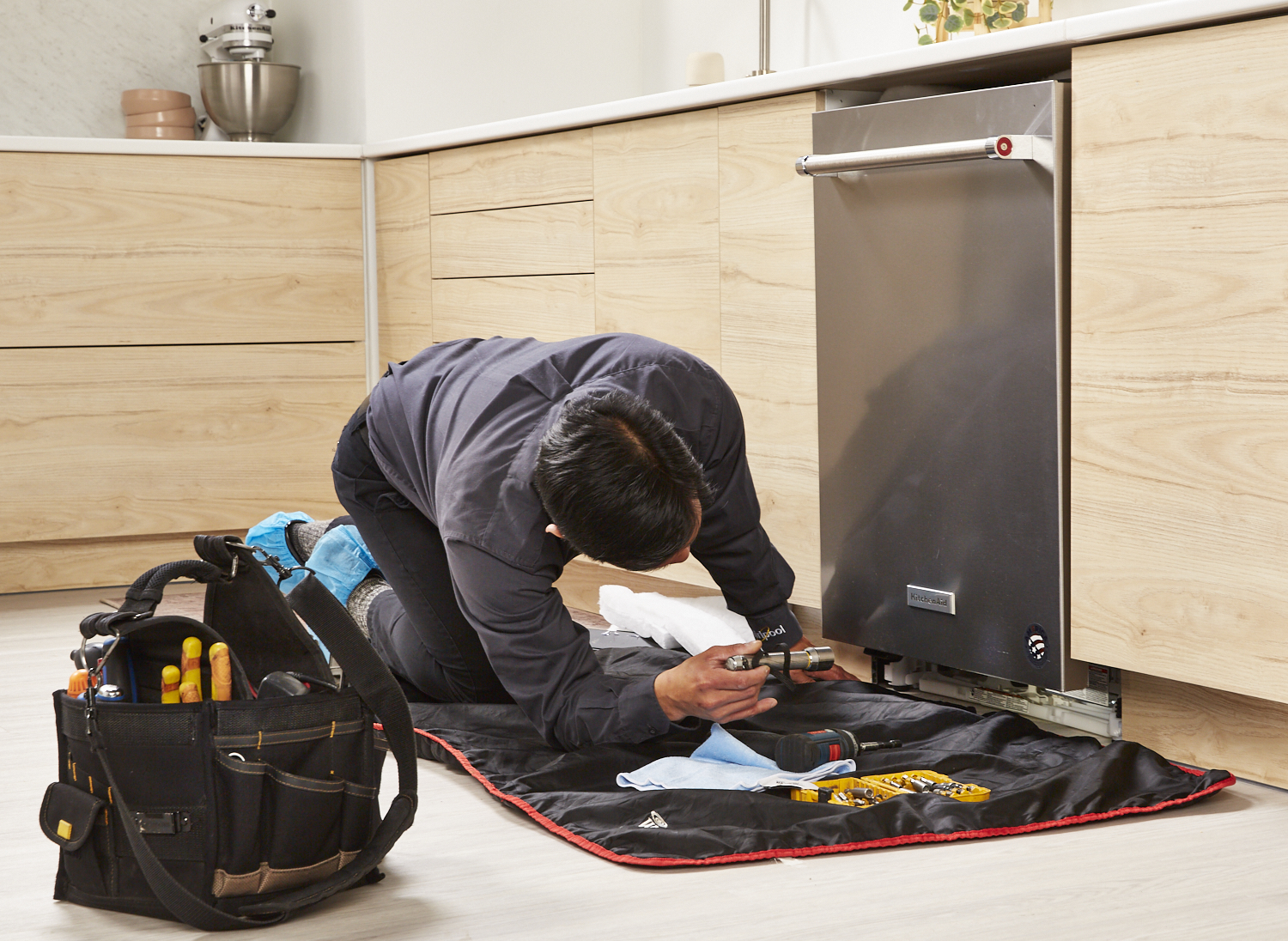
Image Source: theappliancepros.ca
Safety Comes First
Safety is the most important thing when you work on home appliances. Water and electricity are both needed for a dishwasher. Both can be dangerous if not handled right. Before you touch any part of the dishwasher itself, you must make sure the water and power are off.
Stopping the Water Flow
The first step is to turn off water supply to the dishwasher. If the water stays on, you will have a big mess. Water can ruin floors and cabinets.
Finding the Water Shut-Off
There is a small pipe that brings water to the dishwasher. This pipe should have a valve on it.
- Look under your kitchen sink. Many times, the valve for the dishwasher water is here. It might be near the valve for the sink faucet.
- It looks like a small handle or knob on a pipe. Turning it stops the water going to the dishwasher.
- Turn this valve all the way off. Clockwise usually means off.
- If you cannot find a valve just for the dishwasher, you might need to turn off the main water supply to your house. This valve is usually in the basement, garage, or outside your home.
- Turning off the main water stops water everywhere in your house. So, be ready for that.
Checking the Water is Off
How do you know the water is really off?
- Open the dishwasher door.
- Push the start button briefly. If the machine tries to fill with water, and no water comes in, or you only hear a pump sound but no water flow sound, the water is likely off.
- Be quick with this test. You do not want to run the pump for long without water.
- If you are unsure, it is safer to turn off the main water supply to your whole house.
Make sure the water is completely stopped before you go to the next step. Disconnect dishwasher water only when you are sure the supply is off.
Stopping the Power
After the water is off, you must turn off the electrical power. Working with electricity can cause serious injury or even death. This step is not optional.
Finding the Right Breaker
Dishwashers are connected to your home’s electrical system. They are usually on their own circuit breaker in your electrical panel.
- Your electrical panel is often in the basement, garage, or a utility closet.
- Open the panel door. You will see many switches or fuses. These are the circuit breakers.
- Each breaker controls power to a part of your house. There should be labels next to the breakers.
- Look for a label that says “Dishwasher,” “Kitchen,” or maybe an appliance number.
- If the labels are not clear, you might need to guess. Turn off the breaker you think is for the kitchen or the dishwasher.
Verifying the Power is Off
You must be sure the power is off before you touch any wires.
- Turn off the breaker you think is for the dishwasher. Flip the switch to the “Off” position.
- Go back to the kitchen.
- Try to turn the dishwasher on. Open the door, press buttons on the control panel.
- If the display lights do not turn on and nothing happens, the power is likely off.
- If you are unsure or if the labels are not clear, you can turn off the main breaker for the whole house. This is the largest breaker, usually at the top of the panel. Turning this off stops all power.
Using a non-contact voltage tester is a very good idea. This tool beeps or lights up if there is power in a wire. You can touch it to the power wires inside the dishwasher’s electrical box later to double-check.
Only disconnect dishwasher electrical when you are completely sure the power is off. Do not skip this check.
Gathering Your Materials
Before you start pulling things apart, get all your tools ready. Having the right tools for dishwasher removal makes the job easier and faster. It also helps prevent damage.
Basic Tools List
Here is a list of tools you will likely need:
| Tool | Why You Need It |
|---|---|
| Adjustable Wrench | To loosen water and drain hose connections. |
| Pliers | To hold pipes or loosen tight fittings. |
| Screwdriver Set | Both Phillips and flathead for fasteners and panels. |
| Nut Driver Set | For hex-head screws or nuts. |
| Bucket or Towels | To catch any leftover water. |
| Flashlight | To see in dark spaces under the counter. |
| Utility Knife | To cut tape or sealant if needed. |
| Safety Glasses | To protect your eyes. |
| Work Gloves | To protect your hands. |
| Dolly or Hand Truck | To move the heavy dishwasher. |
You might also need a voltage tester to check for power, as mentioned earlier. Having a helper is also a good idea. Dishwashers are heavy and awkward to move alone.
Readying the Work Area
Clear the space around the dishwasher. Take everything out from under the sink if you need to work there. Protect your floor.
Floor Protection
- Dishwashers can leak some water even after you drain them. They can also scratch your floor when you pull them out.
- Put down old towels, plastic sheeting, or cardboard in front of the dishwasher.
- This will catch water and protect your floor from scratches.
The Removal Steps
Now that water and power are off and you have your tools, you can start the physical work of taking the machine out. This involves disconnecting hoses, wires, and screws.
Step 1: Open the Dishwasher Door
Open the door wide so you can see the inside bottom and sides.
Step 2: Look for Mounting Screws
Dishwashers are held in place so they do not tip over when you open the door or pull out the racks. They are usually screwed to the countertop or to the cabinets on the sides.
- Look inside the top edge of the dishwasher frame. You might see screws going up into the underside of the countertop.
- Or, look along the sides of the dishwasher frame, just inside the door opening. You might see screws going into the side cabinets.
- These screws are key for under counter dishwasher removal. Find all of them. There are usually two screws.
Step 3: Remove the Mounting Screws
Use your screwdriver or nut driver to take these screws out. Keep them safe; you might need them for the new dishwasher if you plan to replace Kitchenaid dishwasher soon.
Step 4: Get Access to the Connections
The water pipe, drain hose, and electrical wires are usually connected to the dishwasher near the front, behind a kick plate or access panel at the very bottom.
- Look for a panel below the dishwasher door, near the floor. This is the kick plate.
- This panel is usually held on by two or three screws.
- Use your screwdriver to remove these screws.
- Take off the kick plate. Put it aside.
- Now you should see the parts where the water line, drain hose, and electrical cable connect to the dishwasher. You will also likely see the adjustable legs of the dishwasher.
Step 5: Disconnect the Water Line
This is where you will disconnect dishwasher water. Even though you turned off the valve, a little water might still come out. Have your bucket and towels ready.
- Find the water inlet connection on the dishwasher. It is usually a flexible hose or a copper pipe connected to a valve or fitting on the machine.
- Use your adjustable wrench to loosen the fitting that connects the water line to the dishwasher.
- Turn the nut counter-clockwise.
- Once it is loose, carefully pull the water line away from the dishwasher.
- Quickly put the end of the water line into your bucket to catch any water that might drip out.
- You might want to have a rag ready to wipe up spills.
Step 6: Disconnect the Electrical Wires
This is where you will disconnect dishwasher electrical. Double-check that the circuit breaker is off! Use your voltage tester if you have one.
- The electrical power cord or cable goes into a small metal box, called a junction box, on the front of the dishwasher frame, near the bottom.
- There is a cover on this box. It is usually held on by one or two screws.
- Remove the screws and take off the cover.
- Inside the box, you will see the wires connected with wire nuts. There should be three wires: black (hot), white (neutral), and green or bare copper (ground).
- Carefully untwist the wire nuts connecting the wires from the house cable to the wires on the dishwasher.
- Separate the wires.
- Sometimes the
dishwasher power cordmight be directly connected, or it might be a cable from the house that is hardwired. - Once the wires are separated, you have disconnected the power. Make sure no bare wire ends are touching anything. You might want to put wire nuts back on the individual house wires for safety, even though the breaker is off.
- The electrical cable or power cord usually goes through a clamp on the junction box. You might need to loosen a screw on this clamp to free the cable completely from the dishwasher.
Step 7: Dishwasher Drain Hose Removal
The drain hose carries dirty water out of the dishwasher. It connects to your sink drain pipe or garbage disposal.
- Follow the drain hose from the dishwasher back towards the sink. It might be tucked behind cabinets.
- The other end of the hose is connected to a fitting on your sink’s drain pipe (usually above the trap) or to a port on your garbage disposal.
- This connection is usually held on by a clamp. It might be a screw clamp (use a screwdriver or nut driver) or a squeeze clamp (use pliers).
- Loosen or squeeze the clamp and slide it back away from the connection point.
- Wiggle the hose end off the fitting.
- Some water will likely drain out of the hose. Have your bucket ready to catch it.
- Keep the end of the hose upright as you pull the dishwasher out to stop water from spilling. The hose runs from the dishwasher, usually up high under the sink (this is called a high loop, which prevents dirty water from flowing back into the dishwasher), and then down to the drain connection. There will be water in the low part of this loop.
Step 8: Lower the Dishwasher Legs
Dishwashers have legs that can be screwed up or down to level the machine and help support the countertop. Before you pull the dishwasher out, you need to lower these legs as much as possible.
- Look at the legs at the front of the dishwasher (you saw them when you took off the kick plate). There are usually two front legs. Some models might have rear legs adjusted from the front.
- Use a wrench or pliers (or sometimes you can just turn them by hand) to unscrew the legs upwards, making the dishwasher lower.
- Lowering the legs creates a small gap between the top of the dishwasher and the underside of the countertop. This gap makes it much easier to slide the dishwasher out.
Step 9: Slide the Dishwasher Out
Now you are ready to pull the dishwasher out from under the counter.
- Make sure the floor protection is in place.
- Gently pull the dishwasher straight out from its space.
- It might catch on the drain hose or water line that are still attached to the house plumbing. Carefully guide these through the cabinet opening.
- The dishwasher is heavy. Pull slowly and steadily. If you have a helper, one person can pull while the other guides hoses or wires.
- Do not lift the front. Slide it along the floor. This is why the floor protection is important.
- Pull it out just far enough so you can work behind it or remove it completely from the area.
Step 10: Final Checks
Once the dishwasher is out, double-check everything.
- Make sure the ends of the water supply line and drain hose are secure and not leaking. You might want to put a cap on the water line if you are not connecting a new appliance right away.
- Ensure the electrical wires from the wall are safely tucked away and that the breaker is still off.
The old dishwasher is now removed from its spot.
After Removal: What’s Next?
You have successfully completed the under counter dishwasher removal. What happens now depends on why you took it out.
Getting Ready to Replace
If you plan to replace Kitchenaid dishwasher with a new one, the space is ready. Keep the mounting screws from the old dishwasher in case the new one uses similar ones. Make sure the water valve and electrical box from the house are in good condition for connection to the new machine. Reviewing dishwasher installation steps for your new unit will help you prepare the opening properly. The size of the opening is important for the new machine to fit well.
Getting Rid of the Old Dishwasher
Old dishwashers are large and heavy. You cannot just put them out with regular trash.
- Check with your local trash service. They often have special days or rules for picking up large appliances.
- Scrap metal yards might take them, especially if you remove plastic parts.
- Some appliance stores might take your old one when they deliver a new one.
- Look for local recycling programs for appliances.
Tips for Making it Easier
- Take Pictures: Before you disconnect anything, take pictures of how the water, drain, and electrical lines are connected. This helps you remember how things should look. This is very helpful if you are doing future dishwasher installation steps.
- Label Wires: If you are not replacing the dishwasher right away, put tape labels on the electrical wires (black, white, ground) from the house.
- Clean Up: Have rags and paper towels ready. Removing a dishwasher is often a bit wet and dirty job.
- Have Patience: Things might not come apart easily. Connections can be tight or stuck. Take your time and do not force things too much.
Problems You Might Face
Even with good planning, you might run into issues.
Water Valve Won’t Turn Off
- Valves can get old and stuck. Do not force a valve too hard, as it might break and cause a bigger leak.
- If a valve is stuck, you might have no choice but to turn off the main water supply to your house.
- Consider replacing old valves when the dishwasher is out.
Connections Are Stuck
- Water or drain fittings can be tight, especially if they have been in place for a long time.
- Using a second wrench to hold the pipe steady while you turn the nut can help.
- Be careful not to bend or break pipes.
Dishwasher Won’t Slide Out
- Did you remove both mounting screws? Double-check.
- Are the legs lowered all the way? Check the front legs again.
- Is something catching behind the machine, like a hose or wire bundle? Look and see.
- Sometimes the floor is uneven, or the cabinet opening is tight. Gentle wiggling and pulling are needed. Do not pull with all your strength; this could damage the floor or cabinets.
Wrapping It Up
Removing a Kitchenaid dishwasher is a job you can do yourself. The most important parts are turning off the water and power safely before you start touching any connections. Get your tools ready, clear your work area, and follow the steps to disconnect the water line, the electrical power, and the drain hose. Then, take out the mounting screws and slide the old machine out. Being careful and patient will help you get the job done without problems. This frees up the space, maybe for a new machine, and gets you ready for future kitchen projects.
Questions People Ask
Is it okay if a little water leaks out?
Yes, it is normal for a little water to drip from the water line and drain hose when you disconnect them. This is why you use towels and a bucket. But you should not have a lot of water gushing out if you turned off the supply correctly.
How heavy is a Kitchenaid dishwasher?
Dishwashers are heavy, usually weighing between 60 to 150 pounds. They are also awkward to lift. This is why sliding it out is best, and having a helper or a dolly makes moving it much easier.
Do I need an electrician to disconnect the power?
If you are comfortable identifying and turning off the correct circuit breaker and checking for power with a tester, you can disconnect the power wires inside the junction box. However, if you are not sure or feel unsafe, it is always wise to call an electrician. Safety comes first.
Can I just unplug the dishwasher?
Most dishwashers are hardwired directly to the electrical system inside a junction box, not plugged into an outlet using a dishwasher power cord. You must turn off the breaker and disconnect the wires in the box. Some portable models might have a plug, but built-in under counter dishwashers usually do not.
What if the drain hose is hard to remove from the garbage disposal?
The hose connection to the garbage disposal or sink drain often has a clamp. Make sure the clamp is loose or removed completely. The hose end might be stuck with old debris or just suction. Wiggle it firmly but carefully. Do not pull so hard that you break the disposal or drain pipe fitting.
What should I do with the old water line and drain hose?
If you are installing a new dishwasher, it is usually best to use the new hoses and connections that come with it or buy new ones recommended by the maker. Old hoses can be old and might leak later. Discard the old hoses with the old dishwasher.
Do all dishwashers remove the same way?
Most built-in under counter dishwashers remove in a similar way: disconnect water, power, and drain, remove mounting screws, and slide out. Specific connection points or screw locations might vary slightly between brands and models, but the basic process for under counter dishwasher removal is much the same.
How long does it take to remove a dishwasher?
For someone doing it for the first time, it might take 1 to 3 hours. With experience, it can take less than an hour. It depends on how easy the connections are to reach and loosen.
Is there a special tool for adjusting the legs?
Sometimes the legs have flat spots for a wrench. Other times they have holes for a Phillips screwdriver or can be turned by hand. Check your Kitchenaid manual if you have it, or just look at the legs closely to see what tool fits. An adjustable wrench or pliers often work.