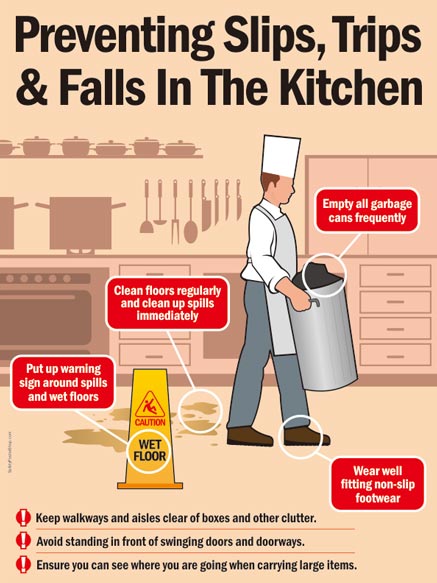
Image Source: www.safetypostershop.com
How To Prevent Kitchen Falls Avoid Slips and Injuries
What makes people fall in the kitchen? Kitchen falls happen for many reasons. Wet floors make you slip. Food spills create slick spots. Wearing the wrong shoes can be risky. Poor light hides dangers. Clutter on the floor is a trip hazard. Not cleaning floors well leaves them unsafe. These simple things cause most falls in the kitchen. But you can stop many of these falls from happening. This guide tells you how to make your kitchen safer. It shares simple kitchen safety tips to help you stay on your feet.
Fathoming Kitchen Floor Safety
Your kitchen floor is where falls start most often. A safe floor is key. You need a floor that is not slippery. Think about the material your floor is made of. Some floors are naturally safer than others.
Deciphering Floor Materials and Slip Risks
Different floor types have different slip risks.
- Tile: Can be very slippery, especially when wet. Choose tiles with texture. Avoid smooth, glossy tiles in the kitchen.
- Hardwood: Less slippery than tile usually. But wet spots can be very dangerous. Keep hardwood floors dry.
- Vinyl: Can be a good choice. Many vinyl floors have a little texture. This helps prevent slips.
- Laminate: Like hardwood, it can be okay when dry. Wet spots are very risky.
- Concrete: Often used in modern kitchens. Can be sealed for protection. Sealing can make it smooth and slippery. Add grit to the sealer for more grip.
No matter the floor material, keeping it clean and dry is the main thing for kitchen floor safety.
Grasping the Value of Non-Slip Mats
Putting mats in the right spots is a smart move. Non-slip kitchen mats add grip where you need it most.
Picking the Right Spots for Mats
Think about where you stand the most. These are high-risk areas.
- Near the sink: Water splashes here often. A mat catches drips.
- In front of the stove: Grease or food can spill. A mat provides a safer standing area.
- Near the fridge: Ice or liquids can drop when opening the freezer.
- Work areas: Any spot where you chop or prepare food can get messy.
Mats should have a non-slip backing. This stops the mat itself from sliding. The top surface should also offer good grip, even if it gets a little wet or dusty.
Types of Non-Slip Mats
There are different kinds of mats you can use.
- Rubber Mats: Durable and offer good grip. Easy to clean.
- Foam Mats: Offer comfort when standing a long time. Can have non-slip surfaces.
- Fabric Mats with Rubber Backing: Can look nice. Make sure the fabric isn’t too smooth.
Make sure the edges of mats lie flat. Rolled edges are trip hazards. Mats should be the right size for the space. Too small might not cover the danger zone. Too big might get in the way. Using non-slip kitchen mats is a simple way to boost safety.
Interpreting the Importance of Preventing Spills
Avoiding spills in kitchen spaces is much easier than cleaning them up later. Spills are the number one cause of slips. So, preventing them is very important.
Simple Ways to Avoid Spills
Think about how you move liquids and food.
- Do not overfill pots or pans: Leave space at the top when carrying them.
- Use trays: Carry multiple items on a tray. This makes one trip safer.
- Clean as you cook: Wipe small drips right away before they become big spills.
- Use lids: Put lids on pots when carrying them, especially hot liquids.
- Pour carefully: Go slowly when pouring liquids from one container to another. Use funnels for small openings.
- Keep kids and pets away: They can bump into you and cause spills.
Being mindful of spills while working helps a lot. A little care goes a long way in preventing slips in the kitchen.
Cleaning Kitchen Floors Safely
Spills will happen no matter what you do. Cleaning kitchen floors safely is critical. How you clean is as important as cleaning itself.
Fast Action on Spills
The moment something spills, stop what you are doing.
- Get paper towels or a cloth right away: Do not leave a spill waiting.
- Cover the spill if you cannot clean it instantly: Put a towel or mat over it. Warn others.
- Clean from the outside in: This stops the spill from spreading.
- Dry the area completely: A wet spot is still a slip risk.
Safe Mopping Practices
Mopping cleans the floor but makes it wet. This creates a temporary hazard.
- Use “Wet Floor” signs: If you have them, use them. If not, tell everyone the floor is wet.
- Mop one section at a time: Do not wet the whole floor at once. Clean one part, let it dry a bit, then do the next.
- Use just enough water/cleaner: Too much makes drying take longer.
- Rinse and wring mop well: A dripping mop leaves too much water.
- Dry the floor after mopping: Use a dry mop or towels to speed drying. Open windows or use fans if possible.
- Clean up cleaning spills: Buckets can spill. Mops can drip. Clean these up too.
Using the right cleaning products matters. Some cleaners leave a slick film. Read labels. Make sure the cleaner is okay for your floor type and does not leave a slippery residue. Cleaning kitchen floors safely means removing the hazard without creating a new one.
Proper Footwear for Kitchen Work
What you wear on your feet in the kitchen matters a lot. Proper footwear for kitchen tasks gives you better grip and protects your feet.
What Makes Shoes Good for the Kitchen?
Look for shoes with certain features.
- Non-slip soles: This is the most important thing. Soles should have a good tread pattern. They should be made of rubber or a similar material that grips well on wet or greasy floors.
- Closed-toe: Protects your feet from dropped knives, hot spills, or heavy items.
- Good fit: Shoes that are too big or too small can make you trip.
- Supportive: Helps reduce tiredness if you stand a lot. Tired feet can lead to being less careful.
Avoid wearing certain types of shoes in the kitchen.
- Slippers or socks: No grip at all. Very dangerous on hard floors.
- Open-toe shoes: Offer no protection.
- Shoes with smooth, worn soles: The grip is gone.
- High heels: Make you unstable.
Think of kitchen shoes like safety gear. Choosing proper footwear for kitchen time is a simple but key part of kitchen safety tips.
Adequate Kitchen Lighting
Can you see clearly? Good light helps you spot spills, dropped items, and tripping hazards. Adequate kitchen lighting is a must for safety.
Making Sure Your Kitchen is Bright Enough
Check different areas of your kitchen.
- Overall light: Is the main room light bright enough? Does it light up the whole space evenly?
- Task lighting: Do you have lights over work areas? Lights over the counter or stove help you see what you are doing clearly. This helps prevent spills when chopping or pouring.
- Light over the sink: Essential for washing up and seeing wet areas.
Shadows can hide dangers. Make sure lights do not create dark spots on the floor or work surfaces. If your kitchen feels dark, add more light sources. This could be extra ceiling lights, under-cabinet lights, or even a floor lamp in a corner if it is safe. Adequate kitchen lighting helps your eyes see potential risks before you step into them.
Organizing Kitchen for Safety
A messy kitchen is a dangerous kitchen. Things left out can be trip hazards. Organizing kitchen for safety means putting things away and keeping paths clear.
Keeping Paths Clear
Think about the routes you take most often.
- Walkways: Are the paths between your sink, stove, fridge, and counters clear?
- Doors and drawers: Can they be opened fully without hitting anything?
- Underfoot: Are there bags, boxes, toys, or pets under your feet?
Make a habit of putting things back as soon as you finish using them. A quick tidy-up prevents clutter from building up.
Storing Items Safely
Where you store things also affects safety.
- Heavy items: Store heavy pots, pans, or appliances in lower cabinets. Lifting heavy things from high shelves is risky and can make you lose balance.
- Items you use often: Keep these within easy reach. Avoid needing to stretch or use a step stool constantly.
- Sharp items: Store knives safely in a block or drawer organizer.
- Cleaning supplies: Keep them stored safely, away from food, and not on the floor where they could be knocked over.
A well-organized kitchen reduces the chances of tripping over things or having items fall on you. It is a major part of kitchen safety tips.
Special Steps for Senior Kitchen Fall Prevention
Falls are a bigger risk for older adults. Injuries can be more serious. Taking extra steps for senior kitchen fall prevention is very important.
Making the Kitchen Easier and Safer for Seniors
Many of the tips above are even more critical for seniors.
- Floors: Absolutely must be non-slip. Use non-slip kitchen mats in all key areas. Avoid rugs that are easy to trip over (thin, with edges that curl).
- Spills: Clean spills instantly. Do not wait even a moment.
- Footwear: Encourage wearing proper footwear for kitchen activities at all times.
- Lighting: Make sure the kitchen is very bright. Add night lights if seniors get snacks or drinks at night.
- Organization: Keep the kitchen super tidy. Remove all clutter. Make sure paths are wide and clear.
- Reacher tools: Use tools to grab items from high shelves or the floor instead of stretching or bending.
- Easy-reach storage: Move frequently used items to lower shelves or counters.
- Sturdy step stools: If a step stool is needed, make sure it is very stable with a handrail. Use it with caution. Better yet, rearrange so step stools are rarely needed.
- Handles and knobs: Make sure cabinet and drawer handles are easy to grip.
- Appliances: Use appliances that are easy to use and clean.
Falling can cause fear. This fear might make seniors less active. Making the kitchen safe helps seniors stay independent and confident in their homes. Senior kitchen fall prevention involves looking at the kitchen through their eyes and removing potential dangers. This adds layers to general preventing slips in the kitchen advice.
Table: Quick Kitchen Safety Checklist
Use this table as a fast check on kitchen fall risks.
| Safety Area | Check Item | Yes / No | Notes |
|---|---|---|---|
| Floor Condition | Is the floor material suitable? | Is it very smooth or slippery? | |
| Are there any cracks or uneven spots? | Fix them. | ||
| Mats | Are non-slip kitchen mats in place? | Sink, stove, work areas? | |
| Do mats have non-slip backing? | Do they slide? | ||
| Are mat edges flat? | No trip hazards? | ||
| Spills | Is there a plan to clean spills fast? | Paper towels/cloths ready? | |
| Are steps taken to avoiding spills? | Not overfilling, using trays? | ||
| Cleaning | Are floors dried fully after cleaning? | No wet spots left? | |
| Are “Wet Floor” signs used when mopping? | Or is everyone warned? | ||
| Do cleaning products leave a residue? | Use appropriate cleaners. | ||
| Footwear | Is proper footwear worn in the kitchen? | Non-slip soles, closed toes? | |
| Are worn-out shoes avoided? | Soles still have grip? | ||
| Lighting | Is there adequate kitchen lighting? | Main light bright? Task lights sufficient? | |
| Are there dark spots or shadows? | Need more light sources? | ||
| Organization | Is the kitchen organized for safety? | Paths clear of clutter? | |
| Are heavy items stored low? | Items used often within reach? |
Use this list often. Regular checks help you catch problems before they cause falls.
The Link Between Cleaning and Safety
We talked about cleaning spills and mopping. But general cleanliness also affects safety. A clean kitchen is less likely to have hidden slip risks.
Removing Grease and Grime
Grease builds up on floors near the stove. This grease can be very slippery. Regular cleaning removes this build-up. Use a degreaser if needed for areas near the stove. Follow product instructions carefully.
Dealing with Dust and Crumbs
Even dry things can cause slips. A layer of dust or crumbs can make a smooth floor slick. Sweep or vacuum the kitchen floor often. This removes small bits that can make you lose grip.
Keeping it Clear
A clean kitchen is also less likely to have random items on the floor. Cleaning often means you are also tidying up. This helps with organizing kitchen for safety.
So, cleaning kitchen floors safely is not just about spills. It is about regular cleaning to remove anything that could cause a slip or trip.
Composing a Safer Kitchen Environment
Making your kitchen safer is a process. It involves many small steps. Each step helps lower the risk of falls. We have covered many important areas:
- Kitchen floor safety: Choosing the right floor and caring for it.
- Non-slip kitchen mats: Placing mats strategically for extra grip.
- Avoiding spills in kitchen: Taking care when moving food and liquids.
- Cleaning kitchen floors safely: Acting fast on spills and mopping correctly.
- Proper footwear for kitchen: Wearing shoes that grip and protect.
- Adequate kitchen lighting: Making sure you can see clearly.
- Organizing kitchen for safety: Keeping clutter away and storing items well.
- Senior kitchen fall prevention: Adding extra layers of safety for older adults.
All these points are part of a bigger picture. They are all kitchen safety tips aimed at preventing slips in the kitchen.
Think about your kitchen right now. Where are the risks? Is the floor slippery? Are there dark spots? Do you wear the right shoes? Is it easy to spill things? Are there items on the floor?
Start with one or two changes. Maybe get non-slip kitchen mats. Or commit to cleaning spills the second they happen. Or decide to only wear shoes with good grip in the kitchen. Small changes add up.
Making the kitchen a safe space is important for everyone using it. Falls can cause serious pain and injury. They can make simple tasks hard. By taking steps to prevent falls, you protect yourself and your family. Use this guide to find ways to make your kitchen safer today. Being proactive is key to preventing slips in the kitchen and enjoying your time cooking and preparing food without worry.
Frequently Asked Questions about Kitchen Falls
h4. Are all kitchen floor types equally safe?
No. Some kitchen floors, like smooth tile or polished concrete, are more slippery, especially when wet. Textured tiles, vinyl, or properly treated wood/laminate can offer better grip. However, any floor can be dangerous if wet or dirty.
h4. Can wearing socks in the kitchen cause falls?
Yes, absolutely. Socks offer very little grip on hard kitchen floors like tile, wood, or laminate. Wearing socks is a major fall risk in the kitchen. Always wear shoes with good non-slip soles. This is part of having proper footwear for kitchen safety.
h4. How quickly should I clean a kitchen spill?
You should clean a spill immediately. The longer a spill stays on the floor, the higher the risk of someone slipping on it. Have paper towels or a cloth ready nearby for fast action. Quick cleaning is a key step in avoiding spills in kitchen problems.
h4. Where are the best places to put non-slip kitchen mats?
Put non-slip mats where water or spills are most likely. The best spots are in front of the sink, near the stove, and any main food prep area. These mats add grip where you stand often and where messes happen.
h4. How does poor lighting affect kitchen safety?
Poor or adequate kitchen lighting makes it hard to see hazards. You might not see a spill, a dropped item, or a change in the floor surface. Good light helps you spot these risks so you can avoid them.
h4. What is the most important thing for senior kitchen fall prevention?
For seniors, making sure floors are non-slip is critical. This means using non-slip kitchen mats, ensuring floors are always dry, and making sure footwear has good grip. Removing all clutter and ensuring very bright light are also top priorities.
h4. Does organizing kitchen for safety really help prevent falls?
Yes. A messy kitchen with items on the floor or paths blocked is a trip hazard. Organizing means keeping walkways clear and storing things safely. This reduces the chance of tripping over something. It is a core part of kitchen safety tips.
h4. How often should I clean my kitchen floor to prevent slips?
Sweep or vacuum often, perhaps daily depending on use, to remove crumbs and dust. Mop floors regularly to remove grease and grime build-up that makes surfaces slick. Always clean spills right away as part of cleaning kitchen floors safely.
h4. Are special non-slip treatments available for floors?
Yes, some treatments or sealers can add grit or change the surface texture to improve grip. This might be an option for very slippery floors like smooth tile or polished concrete. Look into products designed for kitchen floor safety.
h4. Besides floors, what else causes slips in the kitchen?
Wet or greasy spots from spills are the main cause. But other things include: wearing slippery shoes, poor lighting hiding hazards, clutter on the floor, uneven surfaces, and rushing or not paying attention. Preventing slips in the kitchen means looking at all these factors.