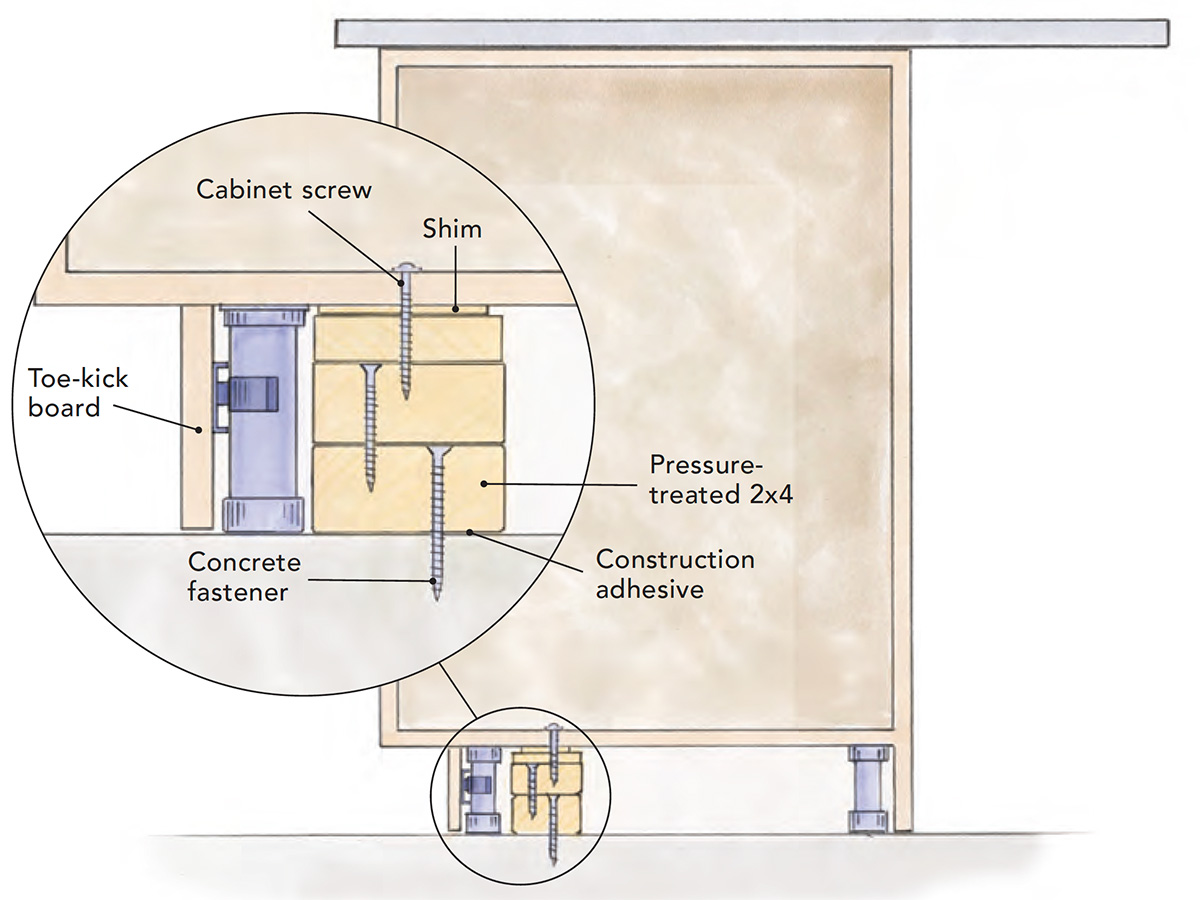
Image Source: images.finehomebuilding.com
How To Attach Kitchen Island To Floor: Secure DIY Steps
Can you attach a kitchen island to the floor? Yes, you absolutely can, and it’s a highly recommended step for both safety and stability, especially for larger or permanent kitchen islands. Permanently attaching your kitchen island provides crucial kitchen island stability, preventing it from shifting or tipping, which is a significant safety concern in any busy kitchen. This guide will walk you through the essential steps for kitchen island anchoring and securing kitchen island units to your floor, ensuring your island remains a safe and functional centerpiece for years to come.
Why Anchor Your Kitchen Island?
Many homeowners wonder if anchoring their kitchen island is truly necessary. The answer is a resounding yes, for several compelling reasons:
- Safety: This is paramount. A heavy, unsecured island can become a tipping hazard, especially in households with children or pets, or during seismic activity. Kitchen island anchoring prevents accidental movement.
- Stability: Islands that are not secured can wobble or shift when leaned on or when heavy items are placed on them. Securing a kitchen island ensures it remains solid and dependable for food preparation, dining, or storage.
- Durability: A firmly attached island is less likely to suffer damage from everyday use or accidental bumps. It also protects your flooring from scuffs and scratches caused by dragging or shifting.
- Aesthetics: For a truly integrated look, kitchen island fixing can make it appear as if the island is a built-in part of your kitchen cabinetry, contributing to a more cohesive design.
- Building Codes: In some areas, local building codes may even require permanent installation for certain types of kitchen islands, especially those with built-in plumbing or electrical components.
Assessing Your Kitchen Island Type
Before diving into the installation, it’s crucial to identify the type of kitchen island you have. This will influence the best method for island floor mount and attaching kitchen island cabinet components.
- Freestanding Islands: These are often the most straightforward to secure. They usually have a cabinet base that can be directly attached to the floor.
- Islands with Wheels: If your island has wheels for mobility, but you want to make it permanent, you’ll need to ensure the wheels can be locked securely or, ideally, removed and replaced with a fixed base for better island base attachment.
- Custom-Built Islands: These may require more tailored kitchen island fixing methods, depending on their construction and weight.
Gathering Your Tools and Materials
To successfully attach your kitchen island to the floor, you’ll need a specific set of tools and materials. Having everything ready before you begin will make the process smoother and more efficient.
Essential Tools:
- Tape Measure
- Pencil
- Drill/Driver (cordless is ideal)
- Drill Bits (various sizes, including pilot bit and appropriate size for screws)
- Screwdriver Bits
- Stud Finder (electronic or magnetic)
- Level (4-foot or longer is recommended for accuracy)
- Safety Glasses
- Work Gloves
- Sanding Block or Sandpaper (if any rough edges need smoothing)
- Caulk Gun (if using caulk for a finished look)
- Hammer (for tapping in shims if needed)
Materials for Securing:
- Mounting Brackets: L-brackets or specialized island mounting brackets are commonly used. Ensure they are heavy-duty and made of sturdy metal.
- Screws:
- Wood Screws: For attaching to wooden subfloors or joists. Choose screws long enough to go through your flooring, underlayment, and securely into the subfloor or joists.
- Lag Bolts: For very heavy islands or when attaching to concrete, lag bolts are a more robust option.
- Concrete Anchors: If you have a concrete floor, you’ll need appropriate concrete anchors and screws.
- Shims: Thin pieces of wood or composite used to level the island if the floor is uneven.
- Wood Filler or Caulk: To fill screw holes and create a seamless finish.
- Subfloor Adhesive (Optional): For an extra layer of security, especially if your island has a solid base.
Step-by-Step Guide to Attaching Your Kitchen Island
This section details the process of attaching island to subfloor and ensuring your island is permanently fixed.
Step 1: Prepare the Work Area
- Clear the Space: Remove everything from the island and the surrounding area. This includes countertops, drawers, and any items stored within. You’ll likely need access to the island’s base from all sides.
- Position the Island: Move the kitchen island to its final desired location.
- Level the Island: Use your level to ensure the island is perfectly plumb and level in all directions (front to back, side to side, and even diagonally). If the island is not level, use shims placed discreetly under the base until it sits perfectly flat. This is a critical step for a professional finish and proper kitchen island stability.
Step 2: Locate the Subfloor and Joists
This is one of the most crucial steps for effective kitchen island anchoring.
- Examine Your Flooring: Determine what type of flooring you have (e.g., hardwood, tile, laminate, vinyl). You’ll need to go through this layer to reach the subfloor.
- Find the Studs/Joists:
- For Wood Subfloors: Use a stud finder to locate the wooden joists beneath the subfloor. Mark the joist locations with your pencil. For maximum security, you want to screw into these joists whenever possible. If direct joist attachment isn’t feasible in every spot, ensure you’re screwing into solid subfloor material.
- For Concrete Floors: If you have a concrete slab, you won’t be screwing into joists. Instead, you’ll be using concrete anchors. You’ll need to drill holes into the concrete for these anchors.
Step 3: Mark Drilling Locations
Once the island is positioned and leveled, and you know where your subfloor joists are (or concrete is), it’s time to mark where you’ll drill.
- Access the Island Base: If your island has a solid base or toe-kick, you might need to remove a section or a front panel to access the bottom edge for island base attachment. Sometimes, you can drill through the toe-kick, but this might not be strong enough for heavy islands.
- Mark Bracket Placement:
- Using Brackets: Place your L-brackets or specialized island mounting brackets against the inside or outside corners of the island’s base where it meets the floor. Ensure the brackets are positioned to go into the subfloor joists or solid subfloor. Mark the screw hole locations on both the island base and the floor.
- Direct Attachment (if applicable): If your island has a solid base that can be directly screwed into, mark the screw locations on the bottom edge of the island’s base, ensuring these align with the joists or solid subfloor.
- Pilot Holes: It’s good practice to drill pilot holes in the island’s base at your marked locations. This prevents the wood from splitting when you drive the screws.
Step 4: Drill into the Floor
Now you’ll make the actual holes for your fasteners.
- Drilling into Wood Subfloor:
- Through Flooring: If you’re drilling through finished flooring (like hardwood or tile), you might need to use a specific drill bit designed for that material to prevent cracking or chipping. Drill a pilot hole through the flooring at your marked locations.
- Into Subfloor/Joists: Switch to a drill bit that is the correct size for your screws (slightly smaller than the screw diameter). Drive the drill bit through the pilot hole in the flooring and into the subfloor and joists. You want to drill deep enough to accommodate the full length of your screws.
- Drilling into Concrete:
- Marking: With the island temporarily moved aside, use a hammer drill and a masonry bit (the size specified by your concrete anchor manufacturer) to drill holes at your marked locations.
- Insert Anchors: Once the holes are drilled, insert the concrete anchors into the holes, tapping them gently with a hammer if necessary until they are flush with the concrete surface.
Step 5: Secure the Island
This is the moment of truth for securing kitchen island units.
- Attach Brackets (if used):
- To the Floor: Place the brackets back in their marked positions, aligning the screw holes with the holes you drilled in the floor (or the anchors in the concrete). Drive the appropriate screws through the brackets and into the subfloor/joists or concrete anchors.
- To the Island: Position the island back over the secured brackets. Drive screws through the island’s base and into the pre-drilled holes in the brackets.
- Direct Attachment:
- To the Floor: If you are screwing directly into the island base and then into the floor, align the island precisely over your drilled floor holes. Drive your chosen screws through the island base and into the subfloor/joists or concrete anchors.
- Screw Length and Type:
- Wood: For wood subfloors, use screws that are long enough to penetrate at least 1 to 1.5 inches into the subfloor or joist. A common screw size for this purpose is #10 or #12 x 2.5 to 3 inches.
- Concrete: Use the screws recommended for your specific concrete anchors. These are usually machine screws or lag screws designed to thread into the anchor.
- Tighten Securely: Ensure all screws are tightened firmly but do not overtighten, which could strip the threads or damage the wood. The goal is a snug, secure fit that eliminates any wobble.
Step 6: Reinforce and Finish
- Add Additional Brackets: For added kitchen island stability, consider adding brackets in multiple locations, especially on longer islands. The goal is to create a strong, rigid connection.
- Check for Movement: Once secured, gently try to rock or push the island. It should feel solid and unmoving. If there’s any give, double-check your screws and bracket placement, and consider adding more fasteners if necessary.
- Fill Holes: If you drilled through a toe-kick or want a cleaner look, you can fill any visible screw holes on the island itself with wood filler. Once dry, sand smooth and touch up with paint or stain to match.
- Caulk (Optional): For a very professional finish, you can apply a bead of paintable caulk along the base of the island where it meets the floor, especially if there are any slight gaps. This hides any minor imperfections and gives a sealed, built-in look.
Specific Scenarios and Considerations
- Attaching Island to Subfloor Directly: If your island has a very solid, thick base, you might be able to screw directly through the island’s base and into the subfloor or joists without external brackets. This requires careful alignment to ensure screws hit studs or solid subfloor.
- How to Secure a Movable Island Permanently: If you have an island on wheels that you now want to make permanent, the best approach is usually to remove the caster wheels and replace them with stationary feet or a solid base that can then be secured to the floor using the methods described above. Alternatively, you can install heavy-duty, lockable casters, but this won’t provide the same level of kitchen island stability as bolting it down.
- Granite/Marble Countertops: If your island has a heavy stone countertop, this adds significant weight, making kitchen island anchoring even more critical. The weight of the countertop helps keep the island in place, but it doesn’t negate the need for secure floor attachment.
- Plumbing and Electrical: If your island includes a sink or electrical outlets, ensure that any drilling or fastening does not interfere with existing plumbing or wiring. If you’re unsure, consult a professional plumber or electrician.
- Flooring Types:
- Tile: You’ll likely need to drill through the tile and into the subfloor. Use a tile drill bit. If you’re concerned about cracking the tile, consider drilling through the grout lines if possible, though this can be more challenging.
- Laminate/Vinyl: These are typically installed over a subfloor. You’ll drill through the laminate/vinyl and into the subfloor below.
- Hardwood: Drill through the hardwood and into the subfloor. Be mindful of expansion and contraction of hardwood floors when choosing screw placement.
Table: Choosing the Right Fasteners
| Floor Type | Subfloor Type | Recommended Fasteners | Considerations |
|---|---|---|---|
| Wood/Laminate/Vinyl | Wood Joists | Heavy-duty L-brackets with #10 or #12 x 2.5-3 inch wood screws | Ensure screws penetrate joists by at least 1-1.5 inches. Pilot holes are crucial for wood. |
| Wood/Laminate/Vinyl | Solid Wood Subfloor | Heavy-duty L-brackets with #10 or #12 x 2.5-3 inch wood screws | If joists are not accessible, secure firmly into the solid subfloor. |
| Tile | Wood Joists | Heavy-duty L-brackets with #10 or #12 x 2.5-3 inch wood screws | Use a tile drill bit to start holes. Aim for grout lines if possible to minimize tile damage. |
| Tile | Concrete Slab | Heavy-duty L-brackets with appropriate concrete anchors and screws | Follow anchor manufacturer’s instructions for drilling and installation. |
| Concrete | Concrete Slab | Heavy-duty L-brackets with appropriate concrete anchors and screws | Use a hammer drill with a masonry bit. Ensure anchors are rated for the load. |
| Engineered Wood | Wood Joists/Subfloor | Similar to solid wood, but use caution not to over-tighten. | Engineered wood can be less forgiving. Pilot holes are essential. |
Frequently Asked Questions (FAQ)
Q1: Do I need to anchor every kitchen island?
A1: While not strictly required for every single island, anchoring is highly recommended for safety and stability, especially for larger, heavier, or permanent installations. Islands with wheels, even if they have brakes, are less stable than anchored units.
Q2: Can I attach my island to the floor without drilling into joists?
A2: If your subfloor is made of thick, solid plywood or OSB (Oriented Strand Board) and your island is not excessively heavy, you might be able to secure it by screwing directly into the subfloor. However, attaching island to subfloor by screwing into joists provides significantly more strength and is the preferred method for robust kitchen island stability.
Q3: What if my island has a solid base rather than a cabinet frame?
A3: If your island has a solid base, you can often drill directly through the bottom of this base and into the floor using appropriate screws and anchors. Ensure the base is thick enough to provide a secure hold for the fasteners. This method is excellent for attaching kitchen island cabinet components that form a continuous base.
Q4: How do I prevent my island from damaging my existing flooring?
A4: When securing kitchen island units, use drill bits appropriate for your flooring type to avoid chips or cracks. If you are concerned about aesthetics or wear, consider drilling through the island’s base and using brackets that can be partially or fully hidden. Filling any visible screw holes with wood filler or caulk also provides a cleaner finish.
Q5: Is it possible to anchor a kitchen island in a rental property?
A5: Anchoring an island in a rental property can be tricky, as you’ll want to avoid permanent damage. Look for solutions that are less invasive. You might use heavy-duty clamps that attach to the island base and the floor, or consider islands that come with their own integrated, secure base that might have fewer attachment points. Always check your lease agreement and discuss any modifications with your landlord before proceeding.
Q6: What is the best way to ensure my island is permanently fixed and stable?
A6: The most effective way to achieve a permanent kitchen island and ensure kitchen island stability is through robust kitchen island anchoring. This involves using heavy-duty brackets and long screws or lag bolts that firmly connect the island’s base to the floor joists or a concrete slab. Proper leveling with shims before securing is also crucial.
By following these detailed steps, you can confidently anchor your kitchen island, transforming it into a safe, stable, and integral part of your kitchen design. This DIY project enhances both the functionality and the overall safety of your home.