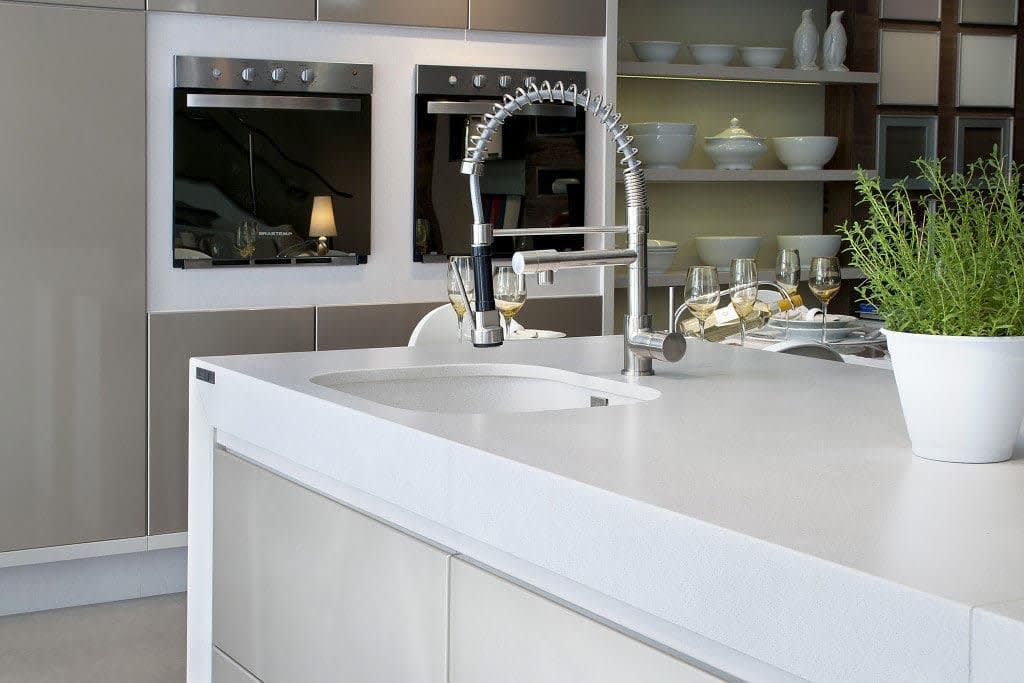
Image Source: images.ctfassets.net
Your Guide: How Thick Is A Kitchen Countertop Explained
The thickness of your kitchen countertop matters a lot. It changes how your kitchen looks. It affects how strong the counter is. It also impacts how much it costs and how it is put in. The average countertop thickness you see in many homes is about 1.5 inches. But this is not the only choice. There are many different thicknesses for many different materials. Knowing these options helps you pick what is best for your home project.
Fathoming Countertop Depth
Think about your kitchen counter. It is more than just a flat top. Its depth, or thickness, plays a big role. This depth is measured from the top surface down to the bottom edge. This measurement affects many things. It changes the look, from thin and modern to thick and strong. It also changes how durable the counter is. Thicker counters can sometimes handle more weight or impact.
The thickness also affects the weight. Heavy, thick counters need strong cabinets below them. Lighter counters are easier to move and put in place. So, understanding the thickness helps with planning and installation.
Standard Countertop Measures
What is the most common size? The standard kitchen countertop thickness is often 1.5 inches. This measurement is about 3 centimeters. You see this size very often in many kitchens. Builders and cabinet makers plan for this size. It works well with standard cabinet heights and sizes.
Why is 1.5 inches so popular?
* It looks good in many kitchens. It is not too thin and not too thick.
* It is a good balance of strength and weight for many materials.
* Many countertop materials come in this thickness or can be made to look this thick.
* It fits well with common sink and appliance sizes.
This thickness has become the standard for a good reason. It is practical. It looks nice. And it is easy to work with for most kitchen setups. While it is the standard, it is not the only choice available. There are thinner and thicker options, depending on what you like and the material you pick.
Interpreting Thickness of Different Countertop Materials
The material you choose for your counter greatly affects its thickness. Different materials are made in different ways. This leads to different common sizes. Let’s look at the thickness of different countertop materials.
Granite and Marble Measures
Granite countertop thickness and marble thickness are usually the same. These are natural stones. They are cut from large pieces of rock. The most common thickness for granite and marble counters is 1.25 inches (about 3 cm). Sometimes, they are cut to 0.75 inches (about 2 cm).
- 1.25 inches (3 cm): This is very common. It is strong enough on its own for most spans over cabinets. It looks solid and classic.
- 0.75 inches (2 cm): This is less common for full counters. It is often used for backsplashes. If used for a counter, it usually needs a strong base layer of plywood underneath for support. This 0.75-inch stone is often used to create a thicker edge look.
Using 1.25-inch slabs is popular because they are strong and look substantial. The weight needs strong cabinets, but the look is classic and timeless.
Quartz Surface Dimensions
Quartz counters are made from stone bits and resin. This process allows more control over the size. Quartz countertop thickness options are often 1.25 inches (3 cm) and 0.75 inches (2 cm). These are the same common sizes as granite.
- 1.25 inches (3 cm): Like granite, this is a standard and strong choice. It looks just like 1.25-inch granite or marble. It is very popular.
- 0.75 inches (2 cm): Also available. Again, this thinner option might need more support underneath. It is sometimes used to create a thicker edge look, just like with granite.
Quartz also sometimes comes in a 0.5-inch thickness (about 1.2 cm). This is one of the thin countertop styles. It is very light. It almost always needs a full base layer for support. This size is often used for modern, sleek designs.
Laminate Sheet Depths
Laminate is a very common material. It is made from layers of paper or plastic bonded together over a core material. The core is usually particleboard or MDF (medium-density fiberboard). The laminate countertop thickness depends on this core.
The standard laminate thickness is typically 1.5 inches (about 4 cm). This is the thickness of the particleboard base. The thin layers of laminate on top add very little to the total thickness. This 1.5-inch thickness matches the standard kitchen countertop thickness mentioned earlier. It fits standard cabinets perfectly.
- 1.5 inches (4 cm): Very common and fits standard kitchen designs.
- Other thicknesses exist, but 1.5 inches is the most widely used for base counters.
Laminate is lighter than stone or quartz. This makes it easier to install. The standard thickness gives it enough strength for normal kitchen use.
Solid Surface Depths
Solid surface materials are made from acrylic or polyester resins and fillers. They are non-porous and easy to shape. Solid surface counters often come in thicknesses like 0.5 inches (1.2 cm) or 0.75 inches (1.9 cm).
- 0.5 inches (1.2 cm): This is a common slab thickness. Like thin quartz, it needs a full base support, usually plywood.
- 0.75 inches (1.9 cm): A bit thicker, but still often needs some support.
Solid surface is often fabricated with a built-up edge to create the look of a thicker counter, like 1.5 inches. The thin slab is glued to a strip around the edge. This strip makes the edge look solid and thick.
Butcher Block Dimensions
Butcher block counters are made from strips of wood glued together. The thickness of butcher block depends on how it is made and what it is used for. Common butcher block thickness options range widely.
- 0.75 inches (1.9 cm): This can be a thin option, often used for backsplashes or lighter uses. It needs full support.
- 1.5 inches (3.8 cm): This is a very common butcher block thickness. It is strong enough for most counter uses on its own. It matches the standard counter depth.
- 2 inches (5 cm) or more: Thicker options are popular for islands or areas used for actual chopping. The extra thickness adds weight, strength, and a substantial look. It can also make the counter last longer and handle more wear.
Butcher block is a popular choice for its warm look. The thickness adds to its look and how you can use it. A thicker butcher block feels very solid and high-quality.
Other Material Depths
Other materials also have different common thicknesses.
* Tile: Tile itself is thin (e.g., 0.25 to 0.5 inches). It is installed over a cement board base, usually on a plywood deck. The total thickness of a tile counter, including base, mortar, and tile, often ends up around 1.5 inches or slightly more.
* Concrete: Concrete counters are usually cast about 1.5 inches to 2 inches thick. They need strong support and frames underneath. They are very heavy.
* Stainless Steel: Stainless steel is a thin sheet of metal (maybe 16-gauge, which is about 0.06 inches). It is wrapped and glued over a core base material, usually particleboard. The final stainless steel countertop thickness is typically 1.5 inches, based on the core material.
* Porcelain/Sintered Stone: These are new, very strong materials. They can be very thin, like 0.25 inches (6 mm) or 0.5 inches (12 mm). They are part of the thin countertop styles trend. They need full support underneath or are used with built-up edges to look thicker.
Here is a simple look at common thicknesses:
| Material | Common Thicknesses (approx.) | Notes |
|---|---|---|
| Granite/Marble | 1.25 inches (3 cm) | 0.75 inches (2 cm) also used (needs support) |
| Quartz | 1.25 inches (3 cm), 0.75 inches (2 cm) | 0.5 inches (1.2 cm) for thin styles |
| Laminate | 1.5 inches (4 cm) | Uses a particleboard core |
| Solid Surface | 0.5 inches (1.2 cm), 0.75 inches (1.9 cm) | Often built up to look thicker |
| Butcher Block | 1.5 inches (3.8 cm), 2+ inches (5+ cm) | Varies widely |
| Tile | ~1.5 inches (4 cm) total | Base plus tile |
| Concrete | 1.5 – 2 inches (4-5 cm) | Very heavy |
| Stainless Steel | 1.5 inches (4 cm) total | Thin metal over core |
| Porcelain/Sintered | 0.25 inches (6 mm), 0.5 inches (12 mm) | Thin styles, need support/built-up edge |
This table shows the range of thickness of different countertop materials you might find.
Grasping Countertop Thickness Standards
Are there official rules for how thick a counter must be? Not exactly official laws for homes. But there are countertop thickness standards that are common in the building world. These standards are based on what works well and what is expected.
The 1.5-inch thickness is a kind of standard because cabinets are often made for it. Cabinet tops are usually set up to hold a counter that is about this thick. This height makes the total counter surface about 36 inches from the floor, which is a comfortable height for most people.
Using a thickness that matches these standards makes planning easier. It makes installation easier. It also makes sure your counter fits well with standard appliances like dishwashers that slide under the counter edge.
However, designers and homeowners often choose other thicknesses for looks. Thin countertop styles are popular now for a modern look. Very thick counters give a look of strength and luxury. So, while there are standards, they are more like common practices than strict rules.
Deciphering Countertop Edge Profiles Thickness
The edge of your counter can make the counter look thicker or thinner than it really is. This is where countertop edge profiles thickness comes in. Many materials, especially stone, quartz, and solid surface, can have different edge shapes. Some edges are simple, like a straight edge. Others are curved, like a bullnose or ogee edge.
For materials that come in thinner slabs (like 0.75 inch or 1.25 inch), a thicker look is often created by adding an extra strip of the material under the edge. This strip is glued to the main slab edge. This is called a “laminated” or “built-up” edge.
Look at this example:
* You have a 0.75-inch thick stone slab.
* You glue a 0.75-inch wide strip of the same stone around the edge, standing it up.
* The edge now looks 1.5 inches thick (0.75 + 0.75).
This built-up edge technique is very common. It lets you use a thinner, lighter slab for the main part of the counter. But it still gives you the popular 1.5-inch thick look at the edge. This saves weight and cost compared to using a full 1.5-inch or thicker slab of stone.
Edge profiles themselves also have a thickness. A rounded edge (bullnose) or a fancy S-curve (ogee) takes up space. The thickness of the edge profile is the full thickness of the material at that edge point. If you build up the edge, the edge profile will be cut into the combined thickness.
| Edge Profile Example | Description | How it affects perceived thickness |
|---|---|---|
| Straight/Eased | Simple 90-degree or slightly rounded corner | Shows the true thickness clearly |
| Bullnose | Fully rounded top and bottom edge | Can make counter look slightly softer/less sharp |
| Half Bullnose | Rounded top edge, straight bottom edge | Similar to straight, rounded feel |
| Bevel | Cut at an angle (e.g., 45 degrees) | Can make edge look thinner or add a distinct line |
| Ogee | S-shaped curve | Adds detail, can make edge look substantial |
| Built-up Edge | Extra strip added underneath edge | Makes counter look much thicker |
The thickness of the countertop edge profiles thickness is key to the final look. A thin slab with a built-up edge can look just like a thick slab.
Interpreting Thicker and Thinner Options
Beyond the standard, why choose a different thickness?
Thin Countertop Styles
Thin counters are popular in modern and minimalist kitchen designs.
* Thickness: Often 0.5 inches (1.2 cm) to 0.75 inches (2 cm).
* Materials: Can be achieved with thin quartz, solid surface, porcelain, or even thin stone with full underlayment.
* Look: Clean, sleek, light, airy. Can make a small kitchen feel bigger.
* Pros: Lighter weight (sometimes), modern look, can be lower cost for materials sold by the slab (like thin quartz).
* Cons: May need full underlayment for support. Less impact resistance compared to thicker tops of the same material. Some edge profiles are harder to create.
Thin counters are a clear move away from the thick, heavy look often seen in traditional or transitional styles. They require careful installation planning to ensure they are properly supported across cabinet gaps.
Very Thick Countertops
Counters thicker than the standard 1.5 inches make a strong statement.
* Thickness: Often 2 inches (5 cm), 3 inches (7.5 cm), or even more.
* Materials: Butcher block is commonly thick (2+ inches). Stone or quartz can be made to look very thick using significant built-up edges. Concrete is naturally thick.
* Look: Substantial, strong, luxurious, traditional, or very custom. Draws attention.
* Pros: Looks very solid, can be a design feature, very durable (especially thick butcher block or stone).
* Cons: Very heavy (needs strong cabinets), more expensive (more material or complex fabrication), harder to install.
A very thick counter, especially on an island, can be the focal point of the kitchen. It feels solid and well-built.
Composing the Right Thickness Choice
Picking the right countertop thickness depends on several things.
- Your Style: Do you want a modern, thin look or a classic, solid feel? Thin countertop styles fit modern designs. Thick counters fit more traditional or bold designs.
- Material Choice: Some materials are naturally thinner or thicker. Granite and quartz are usually 1.25 inches. Laminate and stainless steel are often 1.5 inches on a core. Butcher block varies widely. Porcelain is often thin. Your material choice limits your options or requires special fabrication (like built-up edges) to get a different thickness look.
- Budget: Thicker natural stone or quartz slabs cost more per square foot. Building up edges adds fabrication cost, but might be cheaper than a full thick slab. Laminate and stainless steel on standard cores are often more budget-friendly.
- Structural Support: Thicker counters are heavier. Make sure your cabinets can support the weight, especially for granite, quartz, or concrete. Thinner counters might need full plywood support decks.
- How You Use the Kitchen: If you plan to chop directly on a counter (like butcher block), a thicker top can be refinished more times. For most materials, thickness doesn’t change how you use the surface much, but it can impact durability against heavy impacts.
- Installation: Very thick or very heavy counters are harder and cost more to install. They might need more people or special equipment.
Think about these points when deciding. Do you need the actual strength of a thick slab? Or do you just like the look of a thick edge? The built-up edge trick is a common way to get the look without the full weight and cost of a thick slab.
Complicating Factors: Support and Overhangs
The thickness affects how much support your counter needs.
- 1.25 inch (3 cm) Stone/Quartz: These are usually strong enough to span standard cabinet openings (around 2 feet) without extra support. They can have overhangs for seating (like on an island) up to a certain limit (often 10-12 inches) before needing brackets or corbels underneath.
- 0.75 inch (2 cm) Stone/Quartz/Solid Surface: These usually require a full plywood sub-deck over the cabinets for complete support. They cannot span gaps or have large overhangs without significant support.
- Thin Slabs (0.5 inch or less): Definitely need full, continuous support underneath.
- 1.5 inch Laminate/Butcher Block/Stainless Steel: The core material provides the strength. These can span cabinet openings and have standard overhangs like stone, often up to 10-12 inches before needing support.
- Very Thick (2+ inch) Counters: These are often very strong and can handle larger overhangs or spans. However, their weight is a major factor. They need very sturdy cabinets.
Understanding the relationship between material, thickness, and support is vital for a safe and lasting installation. Countertop thickness standards relate to how much support is typically needed for different materials and sizes.
Evaluating Countertop Thickness Standards
Let’s circle back to countertop thickness standards. While not laws, these common sizes are based on years of building practice.
* 1.5 inches: Standard for laminate and many solid surfaces using built-up edges. Fits perfectly with standard base cabinet height for a 36-inch total counter height.
* 1.25 inches: Standard for full granite and quartz slabs. Often used with standard cabinets, resulting in a slightly lower (by 0.25 inches) counter height, or cabinets are adjusted slightly.
* 0.75 inches: Standard thickness for stone tiles and often used as the base slab for stone/quartz built-up edges. Requires full support as a countertop surface.
These de facto standards guide manufacturers and installers. When you choose a non-standard thickness (like a very thin 0.5-inch porcelain or a very thick 3-inch butcher block), the installation process and needs might change significantly. You might need custom cabinets or special installation methods.
Thin Countertop Styles Explained More
Thin counters (under 1 inch) are a modern design choice. They offer a sleek, low-profile look.
* Aesthetics: Creates a minimalist feel. Can make bold materials look even more striking due to the thin line. Works well in contemporary or European-style kitchens.
* Materials: Porcelain, ultra-compact surfaces (like Dekton), thin engineered quartz, thin solid surface. Sometimes thin natural stone with full backing.
* Challenges: Need full support base (usually plywood). More prone to edge chipping or damage from heavy objects dropped near the edge if not strong material. Requires skilled installation.
The popularity of thin countertop styles shows that design trends heavily influence thickness choices, moving beyond just structural needs.
Final Thoughts on Depth
The thickness of your kitchen countertop is a key design element and a practical consideration. From the standard kitchen countertop thickness of 1.5 inches, to the common granite countertop thickness and quartz countertop thickness options at 1.25 inches, to the specific laminate countertop thickness and butcher block thickness variations, options abound.
The thickness of different countertop materials is not just a random number. It affects weight, strength, look, and cost. Countertop thickness standards guide many choices, but thin countertop styles and very thick designs offer ways to customize your kitchen’s appearance. Remember that countertop edge profiles thickness can visually change how thick a counter appears, often allowing you to achieve a desired look with a thinner base slab.
Choosing the right thickness means balancing your desired style, the properties of the material you love, your budget, and the structural needs of your kitchen. Take time to look at samples and pictures of different thicknesses in real kitchens. This helps you see how the depth changes the overall feel of the space.
Frequently Asked Questions About Countertop Thickness
Is a 2cm or 3cm Countertop Thicker?
A 3cm countertop is thicker.
* 3 cm is about 1.25 inches.
* 2 cm is about 0.75 inches.
So, 3cm is significantly thicker than 2cm.
Does Countertop Thickness Affect the Price?
Yes, usually.
* For natural stone or quartz, a thicker full slab (like 1.25 inch vs 0.75 inch) costs more per square foot because it uses more material.
* Creating a thick look using a built-up edge on a thinner slab adds labor cost for fabrication.
* Very thick options (2+ inches) are often more expensive due to material volume and complex installation.
Is a Thicker Countertop More Durable?
Generally, a thicker slab of the same material can be more resistant to breaking across spans or impacts compared to a thinner slab without support. However, the material itself is the biggest factor in durability. For instance, thick laminate isn’t necessarily more durable against scratches than thin laminate; the surface layer is the key. Thick stone is stronger than thin stone.
Can I Mix Different Countertop Thicknesses in One Kitchen?
Yes, definitely. This is a popular design trend.
* You might use a standard 1.25 inch or 1.5 inch counter along the walls.
* Then, use a much thicker counter (2+ inches) on an island to make it stand out as a focal point.
* This mix adds visual interest and defines different work zones in the kitchen.
Do Thin Countertops Break Easily?
Thin countertops (like 0.5 inch or 0.75 inch) made of strong materials like quartz or porcelain are durable on their surface. However, their edges can be more prone to chipping from heavy impacts compared to thicker edges. Proper installation with full underlayment support is essential to prevent thin counters from cracking.
How Thick Should My Countertop Overhang Be?
The thickness of the counter affects how far it can overhang without support.
* 1.25-inch stone/quartz can typically overhang 10-12 inches.
* 1.5-inch core materials (laminate, stainless steel) or thick butcher block can also manage similar overhangs.
* Thinner materials (0.75 inch or less) require support close to the edge of the cabinet or full underlayment extending to the edge of the overhang.
* For longer overhangs (more than 10-12 inches, or whatever the material manufacturer recommends), you always need corbels, brackets, or legs for support, regardless of thickness.
What is the Best Countertop Thickness?
There is no single “best” thickness. The best thickness for you depends on:
* Your design style goals (modern thin vs. classic thick).
* Your chosen material (some materials are naturally thinner or thicker).
* Your budget.
* The needed strength and support for your layout.
* Personal preference for the feel and look of the counter depth.
The standard 1.5 inches is a good balance, but other thicknesses offer different looks and practical features.