The standard kitchen counter height is generally 36 inches from the finished floor to the top of the counter. This is the average counter height that most homeowners and professional builders adhere to for a comfortable and functional kitchen workspace. This measurement accounts for the height of base cabinets, a standard countertop thickness, and often a small overhang. When considering kitchen countertop dimensions, this 36-inch mark is the most common benchmark.
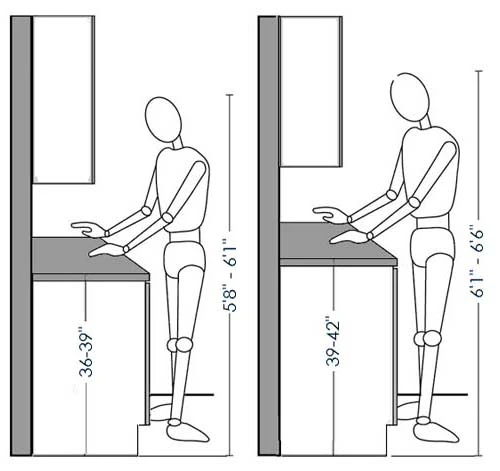
Image Source: www.regattaexports.com
Deciphering the Depth: Standard Countertop Measurements
When we talk about kitchen countertop dimensions, we’re not just talking about height. Depth is equally important for usability. The standard counter depth for kitchen countertops is typically 25 inches. This measurement refers to the depth from the front edge of the counter to the back, against the wall or backsplash. This depth provides ample space for appliances like stand mixers, blenders, and ample room for food preparation without feeling cramped.
Why 36 Inches is the Benchmark: A Look at Ergonomics
The prevalence of the 36-inch countertop height for kitchens is deeply rooted in ergonomics and user comfort. This height is designed to accommodate the average adult’s stature, allowing for efficient and comfortable work without excessive bending or reaching.
The Science Behind the Stature
The 36-inch kitchen counter height inches measurement is not arbitrary. It’s a result of extensive research into human physiology and biomechanics. This height allows most individuals to stand and chop vegetables, knead dough, or assemble meals with their elbows at roughly a 90-degree angle. This posture minimizes strain on the back, shoulders, and wrists, promoting a healthier and more enjoyable cooking experience.
Historical Context: Evolution of Kitchen Heights
While 36 inches is the current standard, it’s interesting to note that kitchen counter heights haven’t always been this way. Early kitchens often featured much lower work surfaces, reflecting different cooking methods and the general stature of people in earlier eras. As kitchens evolved from purely functional spaces to the heart of the home, the focus shifted towards comfort and efficiency, leading to the adoption of the current typical kitchen counter height.
Factors Influencing Your Ideal Counter Height
While the 36-inch standard kitchen counter height is widely adopted, it’s not a one-size-fits-all solution. Several factors can influence what constitutes a truly comfortable counter height for your specific needs and the individuals who will be using the kitchen most.
Your Own Stature: Measuring Up for Comfort
The most significant factor in determining your ideal counter height is your own height and that of the primary users of the kitchen.
- For taller individuals: If you or the main cook are particularly tall, a slightly higher counter might be more comfortable. Raising the counter by even an inch or two can make a noticeable difference in reducing the need to stoop.
- For shorter individuals: Conversely, if the primary users are on the shorter side, a lower counter might be preferred. This can prevent the need to overreach and strain.
Activities You Perform: Tailoring to Your Tasks
Consider the primary tasks you perform at your kitchen counters.
- Baking and Dough Work: If you spend a lot of time kneading dough or rolling out pastry, a slightly lower counter might be beneficial. This allows you to use your body weight more effectively for these tasks.
- Chopping and Prep Work: For general chopping and food preparation, the standard 36 inches is usually ideal.
- Appliance Use: Think about the height of frequently used appliances. For example, if you often use a stand mixer, ensure the counter height allows for comfortable access.
Accessibility Needs: Designing for Everyone
For kitchens that need to accommodate individuals with mobility issues or those who use wheelchairs, adjustable or lower counter heights become crucial. Designing with accessibility in mind ensures the kitchen is functional and safe for everyone.
Beyond the Standard: Exploring Custom Heights
The beauty of a kitchen renovation or custom build is the ability to deviate from the norm and create a space that perfectly suits your lifestyle. This is where exploring custom counter heights can be incredibly beneficial.
The Benefits of a Custom Height
- Enhanced Ergonomics: A custom height precisely matches the user’s needs, leading to superior comfort and reduced physical strain.
- Improved Workflow: A height tailored to your primary tasks can streamline your cooking and preparation processes.
- Personalized Comfort: It simply feels better to work at a surface that is at the right height for you.
When to Consider Custom Heights
- Significant Height Differences: If there’s a substantial height difference between the primary users of the kitchen.
- Specific Physical Needs: For individuals with back problems, arthritis, or other conditions that affect posture and movement.
- Dedicated Workstations: If you plan to have specific workstations for particular tasks, like a pastry station, you might consider varying counter heights within the kitchen.
Kitchen Island Height: A Related Consideration
The kitchen island height often mirrors the standard kitchen counter height of 36 inches. This creates a cohesive and functional workspace within the kitchen. However, islands can also incorporate varied heights for different purposes.
Island Functions and Height Adaptations
- Seating Areas: If your island includes a seating area for bar stools, the counter height for the seating portion might be higher (e.g., 42 inches for a counter-height bar or 30 inches for a table-height seating area).
- Baking Stations: As mentioned earlier, a portion of an island could be designed at a slightly lower height for dedicated baking tasks.
- Appliance Integration: The height of integrated appliances, such as cooktops or warming drawers, will also influence the overall island design and countertop height in those specific areas.
Standard Island Dimensions
While height is important, don’t forget standard counter depth when planning your island. A typical island depth is 36 inches, but can extend to 42 inches or more to accommodate seating or appliances. The length will vary greatly depending on the kitchen size and layout.
Countertop Thickness and Its Impact on Height
The thickness of your chosen countertop material can also subtly affect the final countertop height for kitchens. While the base cabinets are typically 34.5 inches tall, the countertop material itself adds to this measurement.
Common Countertop Materials and Their Thicknesses
- Laminate: Often thinner, typically around 1/4 inch to 3/8 inch.
- Solid Surface (e.g., Corian): Usually around 1/2 inch to 3/4 inch thick.
- Granite, Quartz, Marble: These natural and engineered stones are generally thicker, ranging from 3/4 inch to 1 1/4 inches, or even 2 inches for a more substantial look.
- Butcher Block: Can vary significantly, from 1 1/2 inches to 4 inches or more.
Calculating Total Height
To achieve the target 36-inch counter height, you add the thickness of your countertop material to the height of your base cabinets. For example:
- Base Cabinet Height: 34.5 inches
- Granite Countertop Thickness: 1.5 inches
- Total Counter Height: 34.5 + 1.5 = 36 inches
If you opt for a thicker countertop material, the base cabinets might need to be slightly shorter to maintain the desired overall kitchen counter height inches.
Standard Kitchen Counter Depth: More Than Just a Number
The 25-inch standard counter depth provides a good balance of workspace and cabinetry storage. However, there are instances where adjusting this depth might be considered.
When to Consider a Deeper Countertop
- Larger Appliances: If you plan to install deeper appliances that will sit flush with the counter, such as certain professional-grade ranges or refrigerators.
- Increased Prep Space: For serious cooks or bakers who require a more expansive work surface.
- Aesthetic Preferences: Some designers opt for deeper counters for a more substantial and luxurious feel.
Implications of Deeper Counters
- Increased Material Cost: Deeper countertops will require more material, increasing the overall cost.
- Kitchen Layout Impact: Deeper counters can encroach on walkway space, so careful consideration of your kitchen’s layout is essential.
- Cabinetry Adjustments: Deeper counters will necessitate deeper base cabinets, which can also impact storage and cost.
Achieving a Comfortable Counter Height: Practical Tips
Whether you’re designing a new kitchen or remodeling an existing one, focusing on achieving a comfortable counter height is key to creating a functional and enjoyable space.
Planning and Measurement
- Measure the Primary Users: Have the main cooks in your household stand naturally at their usual prep height and measure from the floor to their bent elbow. This can be a good starting point for custom heights.
- Consider Task-Specific Heights: Think about what tasks you do most often and where. If you frequently bake, try out different heights to see what feels best for kneading.
- Mock-Ups are Your Friend: If you’re uncertain, you can temporarily stack boxes or furniture to simulate different counter heights in your kitchen space to get a feel for what works.
Working with Professionals
- Consult Your Cabinet Maker: Experienced cabinet makers can advise on base cabinet heights and how to achieve your desired typical kitchen counter height.
- Discuss with Your Contractor: Your general contractor will be familiar with building codes and common practices, ensuring your chosen heights are practical and up to code.
- Talk to Your Designer: Kitchen designers specialize in optimizing space and ergonomics, and they can offer invaluable insights into achieving the perfect counter height.
Frequently Asked Questions About Kitchen Counter Height
Here are some common questions people have about kitchen counter heights:
Q1: Can I have different counter heights in my kitchen?
A1: Absolutely! Many modern kitchens feature multiple counter heights to accommodate different tasks and users. For example, a lower baking station or a higher island seating area are common design choices.
Q2: What is the ideal kitchen counter height for someone who is 5’2″?
A2: For someone 5’2″, a standard 36-inch counter might feel a bit high. You might consider lowering your countertops to around 34-35 inches. It’s best to measure from your natural elbow height when standing.
Q3: What is the kitchen island height if it has seating?
A3: For a kitchen island with seating, there are a few options:
* Counter Height (36 inches): This is the most common and versatile. It works well with counter-height stools.
* Bar Height (42 inches): This is for a more casual bar seating area, typically paired with bar-height stools.
* Table Height (30 inches): If you want a dining area integrated into your island, this lower height works with standard dining chairs.
Q4: Is there a minimum standard counter depth?
A4: While 25 inches is standard, some areas might have building codes that specify minimum clearances. However, for functionality, 25 inches is generally considered the practical minimum for usable counter space.
Q5: How do I choose the right countertop thickness?
A5: Countertop thickness is often an aesthetic choice as well as a practical one. Thicker countertops (like 2-inch mitered edges on granite) can offer a more substantial look, but you must factor this into your overall counter height calculation to ensure it meets your ergonomic needs.
Q6: What if my kitchen has a significant slope?
A6: If your kitchen floor has a noticeable slope, it can affect the perceived counter height. You’ll need to ensure your base cabinets are installed level and account for the slope when measuring to the finished floor. Some homeowners opt to level the floor before installing cabinets for a perfectly uniform counter height.
By considering these details, you can ensure your kitchen’s counter height and dimensions contribute to a space that is not only beautiful but also highly functional and comfortable for all who use it.