So, how tall are kitchen cabinets? Most kitchen cabinets come in standard sizes to fit average people and kitchen layouts. For lower cabinets, called base cabinets, the common height is 34.5 inches. This height includes the cabinet box itself and the toe kick area at the bottom. When a countertop is added, usually 1.5 inches thick, the total standard kitchen cabinet height from the floor to the top of the counter becomes 36 inches. Upper cabinets, or wall cabinets, are usually placed 18 inches above the countertop. Their height can vary a lot, from 12 inches up to 42 inches, depending on the ceiling height and design. These cabinet measurements help make kitchens useful and comfortable for daily tasks like cooking and washing dishes.
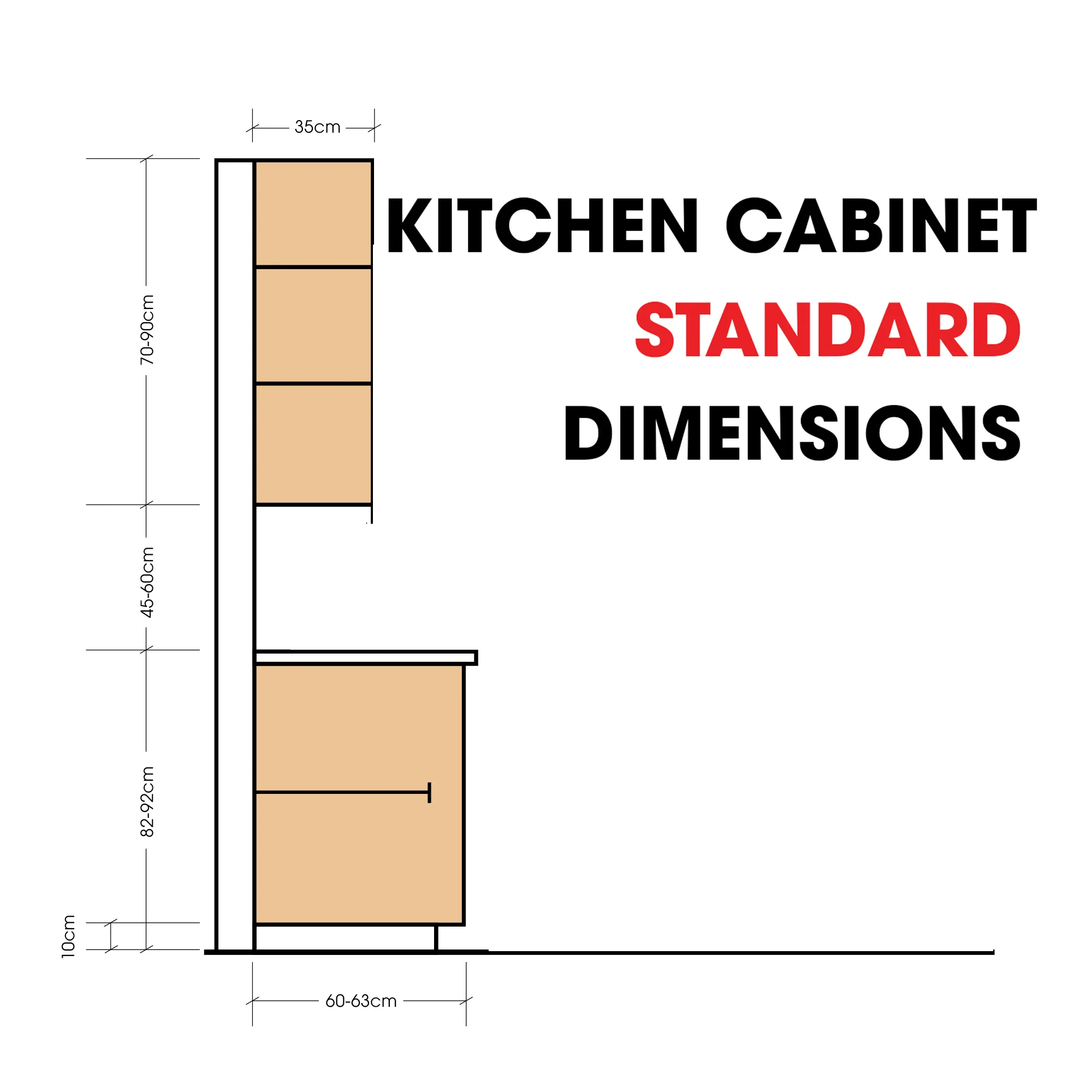
Image Source: guilincabinets.com
Deciphering Why Standard Heights Exist
Kitchen cabinets are not just boxes on walls and floors. Their size and placement are carefully thought out. There are good reasons why cabinets have standard heights and depths. These reasons help make kitchens work well for most people. They also follow rules for building homes safely and make sure appliances fit properly.
Here are some main reasons for these standard sizes:
- Comfort for People: Most people are comfortable working at a counter that is about 36 inches high. This height lets you chop food, mix things, and wash dishes without bending too much or reaching too high.
- Fitting Appliances: Many kitchen appliances like dishwashers, stoves, and refrigerators are made to fit with standard cabinet sizes. A dishwasher, for instance, is typically about 24 inches wide and fits perfectly under a 36-inch high counter.
- Safety Rules: Building codes have rules about how far cabinets must be from stoves and ovens. This is to prevent fires. Standard cabinet heights help meet these safety rules easily.
- Easy to Make and Install: Making cabinets in standard sizes makes them cheaper to build. It also makes them easier for workers to put in your kitchen. This saves time and money.
- Good Use of Space: Standard sizes help use the kitchen space well, from the floor to the ceiling.
Knowing these reasons helps you see why standard sizes are important. They are based on making kitchens safe, useful, and comfortable for daily life.
Grasping Base Cabinet Dimensions
Base cabinets are the cabinets that sit on the floor. The counter rests on top of them. Their size is very important for the height of your kitchen counter.
The most common base cabinet dimensions are:
- Height: 34.5 inches. This is the height of the cabinet box itself, including the toe kick space.
- Toe Kick Height: The space at the very bottom, where your feet go when you stand at the counter, is usually 4.5 inches high. This lets you stand closer to the counter without hitting your toes.
- Depth: The standard cabinet depth for base cabinets is 24 inches, not including the door or drawer front. With the door, it might be closer to 25 inches. This depth provides good storage space and allows room for plumbing behind sinks.
- Width: Base cabinets come in many widths, starting from 9 inches and going up to 48 inches or more in steps of 3 inches (like 9″, 12″, 15″, 18″, etc.).
Let’s look closer at the height. The 34.5-inch height is chosen so that when you add a standard countertop, which is usually 1.5 inches thick, the total height from the floor to the top of the counter is 36 inches.
Here is a simple breakdown:
- Cabinet Box Height (including toe kick): 34.5 inches
- Plus Countertop Thickness: 1.5 inches (typical)
- Equals Total Counter Height from Floor: 36 inches
This 36-inch height is seen as the most comfortable working height for cooking and preparing food for most adults. It’s not too high for shorter people and not too low for taller people.
Why 36 Inches for the Counter?
Think about chopping vegetables or kneading dough. If the counter is too low, you have to bend over, which can hurt your back. If it’s too high, you have to lift your arms up more, which can be tiring. 36 inches is a good middle ground for most people to work without strain.
Also, kitchen sinks are placed in base cabinets. At 36 inches high, reaching into the sink to wash dishes is comfortable for most people.
Appliances like dishwashers and slide-in ranges are also designed to fit under a 36-inch counter. This ensures a smooth look across the bottom cabinets.
Examining Wall Cabinet Dimensions
Wall cabinets hang on the wall above the base cabinets. They are used to store things like dishes, glasses, and food. Their height is different from base cabinets, and they come in more height options.
Common wall cabinet dimensions include:
- Height: Wall cabinets come in heights like 12 inches, 15 inches, 18 inches, 24 inches, 30 inches, 36 inches, and 42 inches. The height you choose often depends on the height of your kitchen ceiling and how much storage you need.
- Depth: The standard cabinet depth for wall cabinets is usually 12 inches. Sometimes they are 15 inches or even 24 inches deep (like over a refrigerator). A 12-inch depth is good for storing plates and cups without sticking out too far.
- Width: Like base cabinets, wall cabinets come in many widths, often in 3-inch steps, from 12 inches up to 36 inches or wider.
How High Do Wall Cabinets Go?
The height of wall cabinets affects how much storage space you have.
- 12 to 24 inches high: These are often used over refrigerators, microwaves, or sinks. They might also be used in kitchens with very low ceilings or where you want less storage high up.
- 30 inches high: This is a very common height for wall cabinets. In a kitchen with 8-foot ceilings, 30-inch cabinets placed 18 inches above the counter will leave some space above the cabinet tops, which can be filled with trim or left open.
- 36 inches high: These are used in kitchens with 8-foot or 9-foot ceilings to get more storage space.
- 42 inches high: These are often used in kitchens with 9-foot or taller ceilings. They can reach almost to the ceiling, giving you a lot of storage.
The choice of upper cabinet height depends on several things:
- Your ceiling height.
- How much storage you need.
- How you want the kitchen to look.
- If you want space above the cabinets or want them to go to the ceiling.
Interpreting the Space Above the Counter
The space between the top of the counter and the bottom of the wall cabinets is very important. This is the height between counter and upper cabinets.
The most common minimum height above counter is 18 inches.
Why 18 inches?
- Space for Appliances: Many small kitchen appliances, like coffee makers, blenders, toasters, and stand mixers, are designed to fit under an 18-inch clearance.
- Working Space: 18 inches gives you enough room to work on the counter without feeling closed in by the cabinets above. You can easily see what you are doing.
- Safety: Building codes often require a certain distance between cooktops/stoves and anything flammable above them, like cabinets. 18 inches (or sometimes more over a range) helps meet these safety rules. Check local rules as they can vary.
Sometimes this space can be a little less or more than 18 inches, but 18 inches is the standard most kitchen designers use. If you make it much smaller, some appliances might not fit, and the counter might feel cramped. If you make it much larger, it might be harder to reach things on the lowest shelf of the wall cabinets, and the kitchen might look odd.
A Glimpse at Other Cabinet Sizes
While base and wall cabinets are the main types, there are other cabinet types with their own standard heights and sizes.
Tall Cabinets
Tall cabinets, sometimes called pantry cabinets or utility cabinets, go from the floor up towards the ceiling. They offer a lot of storage space.
Common heights for tall cabinets are:
- 84 inches (7 feet)
- 90 inches (7.5 feet)
- 96 inches (8 feet)
These heights are made to fit under standard ceiling heights. An 84-inch tall cabinet fits in a room with an 8-foot ceiling, leaving space for trim above. A 96-inch cabinet can go almost floor-to-ceiling in an 8-foot room.
Tall cabinets are often used for:
- Food storage (pantry)
- Storing cleaning supplies
- Holding built-in ovens or microwaves
The depth of tall cabinets is usually the same as base cabinets, 24 inches, to match the depth of appliances and base counters.
Appliance Garages
These are small cabinets that sit on the counter. They are usually placed in a corner or against a wall. They hide away small appliances like toasters or mixers.
Their height varies, but they are typically around 12 to 18 inches tall to fit under the wall cabinets above them. Their depth is often around 12 inches.
Visualizing Cabinet Sizes with a Chart
Looking at a chart can help understand the different cabinet measurements and how they fit together. Here is a basic kitchen cabinet sizes chart showing common dimensions.
| Cabinet Type | Common Height (inches) | Common Depth (inches) | Common Widths (inches) | Notes |
|---|---|---|---|---|
| Base Cabinet | 34.5 | 24 (box) / ~25 (door) | 9, 12, 15, 18, 21, 24, …, 48+ | Counter adds 1.5″ for 36″ total height |
| Toe Kick | 4.5 | 3 | Full width of base cabinet | Part of base cabinet height |
| Wall Cabinet | 12, 15, 18, 24, 30, 36, 42 | 12 (sometimes 15, 24) | 12, 15, 18, 21, 24, …, 36+ | Hung above counter |
| Tall Cabinet | 84, 90, 96 | 24 | 12, 15, 18, 21, 24, …, 36+ | Floor to ceiling storage / appliance host |
Note: These are standard sizes. Custom cabinets can be made to any size.
The chart shows the main sizes you will find when buying cabinets. Remember that the 34.5-inch height for base cabinets is key because it leads to the 36-inch counter height. The upper cabinet height options (12″ to 42″) give flexibility depending on your room. The height between counter and upper cabinets is usually 18 inches. The toe kick height (4.5″) is part of the base cabinet’s 34.5″ height. The standard cabinet depth is usually 24″ for bases and 12″ for walls.
Composing Your Kitchen Layout with Standard Sizes
Using standard kitchen cabinet dimensions makes planning your kitchen easier. It’s like using building blocks that fit together.
Here’s how it works:
- Start with Base Cabinets: Plan where your sink, stove, dishwasher, and refrigerator will go. Base cabinets fill the space along the floor.
- Place Wall Cabinets: Decide where wall cabinets are needed for storage. Remember to leave 18 inches of space above the counter. Choose wall cabinet heights that work with your ceiling and storage needs.
- Add Tall Cabinets: If you need a pantry or a spot for a built-in oven, find a place for a tall cabinet.
- Check Measurements: Always double-check the space available in your kitchen. Measure the walls, windows, and doorways. Make sure the standard cabinets you want will fit.
Using standard sizes helps keep costs down because these cabinets are mass-produced. It also makes it easier if you need to replace a cabinet later.
Considering Variations from Standard Sizes
While standard sizes work for many kitchens, sometimes you might need or want something different.
Custom Cabinets
Custom cabinets are made specifically for your kitchen space. You can choose any size, shape, material, or color.
Reasons for choosing custom cabinets:
- Your kitchen space is not standard (uneven walls, odd angles).
- You want a unique look.
- You need cabinets taller or shorter than standard.
- You have specific storage needs that standard cabinets don’t meet.
Custom cabinets cost more because they are made one by one. But they can make the best use of difficult spaces.
Semi-Custom Cabinets
Semi-custom cabinets start with standard sizes but offer more options for depth, width in smaller steps (like 1.5 inches), and door styles. They are a middle ground between standard and full custom cabinets.
Different Counter Heights
While 36 inches is standard, some people choose different counter heights:
- Higher Counters (38-39 inches): Good for very tall people to avoid bending.
- Lower Counters (around 32 inches): Useful for a baking area, or for people who use a wheelchair.
- Split-Level Counters: Having counters at different heights for different tasks (e.g., 36″ for cooking, 32″ for baking, 42″ for a breakfast bar).
If you change the counter height, you might need non-standard base cabinets (height 34.5″ + countertop thickness = total height). Or, you might adjust the height of the toe kick or the cabinet box itself.
Adjusting Wall Cabinet Placement
While 18 inches above the counter is standard, this can also be changed:
- Lower (e.g., 15 inches): Makes items easier to reach for shorter people. However, it reduces the space under the cabinet for appliances and might affect safety clearances over a stove.
- Higher (e.g., 20-24 inches): Gives more open space and can look good with very tall ceilings. But it makes the top shelves harder to reach without a step stool.
Changing the height between counter and upper cabinets affects how high your wall cabinets start. If your ceiling is 8 feet (96 inches) and you use 30-inch wall cabinets:
- Standard: 36″ counter + 18″ space + 30″ cabinet = 84″ from floor to top of cabinet. Leaves 12″ space above (96 – 84 = 12).
- Lower wall cabinets: 36″ counter + 15″ space + 30″ cabinet = 81″ from floor to top. Leaves 15″ space above.
- Higher wall cabinets start: 36″ counter + 20″ space + 30″ cabinet = 86″ from floor to top. Leaves 10″ space above.
This shows how the space between the counter and upper cabinets affects the overall layout and the space left near the ceiling.
Taking Accurate Cabinet Measurements
Knowing how to measure is key when planning a kitchen or buying cabinets. You need to measure your space and the cabinets themselves.
Here are some tips for taking good cabinet measurements:
- Measure the Room: Measure the length of each wall where cabinets will go. Measure from corner to corner. Measure windows and doorways. Note where plumbing (sink) and electrical outlets (stove, fridge, small appliances) are located.
- Measure Height: Measure the height from the floor to the ceiling in several spots. Ceilings are often not perfectly flat.
- Measure Existing Cabinets (if replacing): If you are replacing old cabinets and want to keep a similar layout, measure the height, depth, and width of each old cabinet box.
- Use a Good Tape Measure: A metal tape measure that is at least 16 feet long is best. Make sure it is straight when measuring.
- Write Everything Down: Draw a simple picture of your kitchen walls and write down all the measurements clearly. Double-check every number.
- Note Appliances: Write down the width, height, and depth of your major appliances (fridge, stove, dishwasher, microwave) to make sure the new cabinets will fit around them or above them.
Knowing the exact dimensions of your room and planning where the standard kitchen cabinet height and depths will go helps you choose the right cabinets. It ensures that the base cabinet dimensions fit along the floor, the wall cabinet dimensions fit above, and there is enough height between counter and upper cabinets.
Understanding the Toe Kick Area
The toe kick height is a small but important part of the standard kitchen cabinet height. It’s the recessed space at the bottom of base cabinets.
- Standard Height: 4.5 inches
- Standard Depth (recess): 3 inches
Why do cabinets have a toe kick?
- Comfort: When you stand at the counter to work, the toe kick space lets you stand closer to the cabinet base without your feet hitting the cabinet. This allows you to lean slightly forward, which is a more comfortable position for chopping or working at the sink.
- Looks: It gives the cabinets a finished look and makes them seem slightly less blocky.
- Cleaning: It slightly lifts the main cabinet box off the floor, which can help keep the base cleaner, though the toe kick area itself needs cleaning.
The 4.5-inch height of the toe kick is included in the total 34.5-inch height of the base cabinet box. So, the main part of the cabinet box above the toe kick is 30 inches tall (34.5 – 4.5 = 30). Then the 1.5-inch counter sits on the 30-inch box, making the counter height 31.5 inches from the floor. This is incorrect. Let me rephrase to be simpler and accurate.
Corrected explanation of height:
- The toe kick height is usually 4.5 inches.
- The cabinet box sits on top of or behind the toe kick area.
- The total height of the base cabinet box (including the toe kick space at the bottom) is 34.5 inches.
- So, the part of the cabinet box above the toe kick is 30 inches tall.
- When the countertop is added (about 1.5 inches thick), the total height from the floor to the top of the counter is 36 inches.
Toe kick panels are often separate pieces that are clipped or screwed onto the cabinet legs or base after the cabinets are in place.
Deciding on Standard Cabinet Depth
The standard cabinet depth is also set for good reasons.
- Base Cabinet Depth: 24 inches (box) + door/drawer front (about 1 inch) = about 25 inches total.
- Why 24 inches? This depth is deep enough for most pots, pans, and kitchen items. It also leaves space behind the sink cabinets for plumbing pipes. It works well with standard appliance depths.
- Wall Cabinet Depth: 12 inches (box) + door front (about 1 inch) = about 13 inches total.
- Why 12 inches? This depth is good for storing plates, cups, and glasses. It does not stick out so far that you hit your head on it while working at the counter. It also does not make the kitchen feel too narrow.
Sometimes, wall cabinets above a refrigerator or pantry might be made 24 inches deep to match the depth of the tall unit below them. This provides more storage in that specific spot.
Using standard cabinet depth helps maintain good workflow in the kitchen. You can reach items easily in a 12-inch deep wall cabinet. You have enough storage in a 24-inch deep base cabinet.
Keeping Readability in Mind
The goal of this guide is to be easy for everyone to read and understand. Complex topics like building measurements and rules can be hard. By using short sentences and simple words, we make sure the information is clear. We avoid jargon where possible or explain it simply.
For example, instead of saying “Utilize optimal ergonomic principles,” we say “Use what feels comfortable for your body.” Instead of “Facilitate integration of disparate components,” we say “Help things fit together.”
This approach makes the information about standard kitchen cabinet height, base cabinet dimensions, wall cabinet dimensions, upper cabinet height, kitchen cabinet sizes chart, cabinet measurements, minimum height above counter, height between counter and upper cabinets, toe kick height, and standard cabinet depth easy to grasp.
Making the language simple does not mean the information is less complete. It just means it is presented in a way that more people can use it to plan their kitchen.
Fathoming How Ceiling Height Matters
Your kitchen ceiling height plays a big part in choosing upper cabinet height.
- 8-Foot Ceilings (96 inches): This is a common ceiling height.
- With 30-inch wall cabinets placed 18 inches above the counter (36″ high), the top of the cabinets is 84 inches from the floor (36 + 18 + 30 = 84). This leaves 12 inches of space between the cabinet tops and the ceiling (96 – 84 = 12). This space is often filled with decorative trim or molding.
- With 42-inch wall cabinets, the top of the cabinets is 96 inches from the floor (36 + 18 + 42 = 96). These cabinets go all the way to an 8-foot ceiling, giving you the most storage.
- 9-Foot Ceilings (108 inches):
- With 30-inch wall cabinets, there is a lot of space above (108 – 84 = 24 inches). You might add a second row of smaller cabinets on top or use very tall trim.
- With 36-inch wall cabinets (36 + 18 + 36 = 90 inches from floor to top), you still have 18 inches above (108 – 90 = 18).
- With 42-inch wall cabinets (36 + 18 + 42 = 96 inches from floor to top), you have 12 inches above (108 – 96 = 12).
As you can see, the upper cabinet height you choose depends on your ceiling height and how you want to use the space near the ceiling. Do you want more storage, or do you prefer open space or decorative molding?
Tall cabinets (84″, 90″, 96″) are also chosen based on ceiling height to fit nicely in the room.
Integrating Universal Design Ideas
Universal design means making spaces that work for as many people as possible, including those with different needs or abilities.
While standard kitchen cabinet height and cabinet measurements work for many, some ideas from universal design can be used:
- Adjustable or Varied Counter Heights: As mentioned before, having counters at different heights can help people of different heights or those using wheelchairs.
- Pull-out Shelves and Drawers: Instead of deep, fixed shelves in base cabinets, pull-out shelves make it easier to reach items at the back without bending or reaching far in.
- Lower Wall Cabinets: Placing some wall cabinets lower than the standard 18 inches above the counter can make them easier to reach. However, you must still follow safety rules, especially near the stove.
- Open Shelving: Some open shelves mixed with cabinets can make items very easy to access.
These are just some ways to think about how cabinet heights and types can make a kitchen more useful for everyone.
Summarizing Standard Cabinet Sizes
Let’s quickly look again at the most important standard kitchen cabinet height and dimensions:
- Base Cabinet Height: 34.5 inches (box)
- Toe Kick Height: 4.5 inches (part of the 34.5″)
- Counter Height: 36 inches (34.5″ cabinet + 1.5″ counter)
- Base Cabinet Depth: 24 inches (box)
- Wall Cabinet Height: 12, 15, 18, 24, 30, 36, 42 inches
- Wall Cabinet Depth: 12 inches (most common)
- Height Between Counter and Upper Cabinets: 18 inches (standard)
- Tall Cabinet Height: 84, 90, 96 inches
These numbers form the basis of most kitchen designs. They are used by cabinet makers and kitchen designers everywhere. When you see a kitchen cabinet sizes chart, these are the numbers you will find. Knowing these cabinet measurements helps you plan your own kitchen project.
Frequently Asked Questions (FAQ)
Here are some common questions people ask about kitchen cabinet heights and sizes.
h4 How tall should kitchen cabinets be?
h5 The standard kitchen cabinet height for counters is 36 inches from the floor. This comes from a 34.5-inch base cabinet with a 1.5-inch countertop. Wall cabinets hang above the counter, typically starting 18 inches up. Their height varies, often 30 or 42 inches, depending on ceiling height.
h4 What is the standard height of base kitchen cabinets?
h5 The standard height of the base cabinet box itself, including the toe kick space, is 34.5 inches. When the counter is added, the total height is 36 inches.
h4 How high are upper kitchen cabinets usually placed?
h5 Wall cabinets are usually placed so their bottom edge is 18 inches above the top of the counter.
h4 What is the typical space between the counter and upper cabinets?
h5 The height between counter and upper cabinets is most commonly 18 inches. This provides space for small appliances and comfortable workspace.
h4 How tall is the toe kick on a kitchen cabinet?
h5 The toe kick height is usually 4.5 inches. It is the recessed space at the bottom front of the base cabinet.
h4 What is the standard depth for kitchen cabinets?
h5 The standard cabinet depth for base cabinets is 24 inches (not including doors). For wall cabinets, it is usually 12 inches (not including doors).
h4 Can kitchen cabinets be taller or shorter than standard?
h5 Yes, you can get custom or semi-custom cabinets made to any size you need. This is helpful for very tall or short people, or for kitchens with unusual shapes.
h4 How does ceiling height affect cabinet choice?
h5 Ceiling height helps you choose the best upper cabinet height (like 30″, 36″, or 42″) and tall cabinet height (like 84″, 90″, or 96″). You pick sizes that fit the room and give you the storage and look you want, either reaching the ceiling or leaving space above.
h4 Where can I find a chart of kitchen cabinet sizes?
h5 Many cabinet makers’ websites and kitchen design guides include a kitchen cabinet sizes chart showing standard heights, depths, and common widths for different types of cabinets. You can also find examples like the one in this guide.
h4 Why are kitchen cabinets 36 inches high with the counter?
h5 36 inches is seen as the most comfortable working height for most adults when doing kitchen tasks like prepping food or washing dishes. It helps reduce back strain.
Understanding these standard sizes and why they exist can help you plan your kitchen layout effectively. Whether you use standard cabinets or choose custom sizes, knowing the usual cabinet measurements is a great starting point.