The most common height for kitchen base cabinets is 34.5 inches, which, when combined with a standard 1.5-inch countertop, results in a comfortable 36-inch working surface. This standard height is designed for optimal ergonomics and workflow in most kitchens.
When planning your kitchen renovation or building a new home, one of the most fundamental questions you’ll ask is: “How tall are kitchen base cabinets?” This seemingly simple query unlocks a world of design possibilities and ergonomic considerations that significantly impact your kitchen’s functionality and aesthetic. Let’s delve deep into the world of kitchen cabinet dimensions, focusing primarily on base cabinets, to help you make informed decisions. We’ll cover standard sizes, essential measurements, and how these elements contribute to a well-designed kitchen layout.
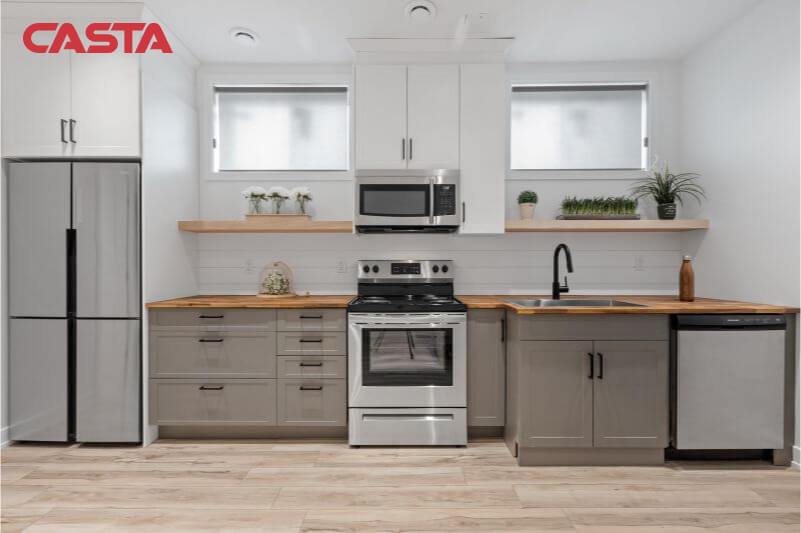
Image Source: castacabinetry.com
The Foundation: Standard Base Cabinet Dimensions
Base cabinets form the backbone of your kitchen’s storage and workspace. Their height is critical for comfortable use, ensuring everything from food preparation to appliance installation is practical and efficient.
Standard Height: The 34.5-Inch Rule
As mentioned, the industry standard for the kitchen cabinet height of base cabinets is 34.5 inches. This measurement refers to the cabinet box itself, before any countertop is added. This height is not arbitrary; it’s a carefully considered ergonomic figure.
Why 34.5 inches?
- Countertop Pairing: This height is precisely engineered to work with standard countertops. When a typical 1.5-inch thick countertop is installed on top of a 34.5-inch base cabinet, the resulting countertop height reaches 36 inches from the floor. This 36-inch height is widely considered the ideal ergonomic height for most adults for tasks like chopping vegetables, kneading dough, or simply resting their arms while working.
- Appliance Integration: Many standard-sized kitchen appliances, such as dishwashers and certain oven ranges, are designed to fit beneath a 36-inch countertop. The 34.5-inch base cabinet height allows for these appliances to be installed seamlessly, maintaining a flush appearance with the surrounding cabinetry.
- Accessibility: This height provides good reach for a majority of the population, reducing strain and improving comfort during prolonged kitchen activities.
Variations on the Standard
While 34.5 inches is the norm, there can be slight variations:
- Framed vs. Frameless Cabinets: The cabinet box height might differ slightly between framed and frameless (European-style) cabinets, though the overall finished height with a countertop typically remains consistent.
- Manufacturer Differences: While most manufacturers adhere to the standard, minor discrepancies can occur. Always confirm dimensions with your specific supplier.
Deciphering Other Crucial Base Cabinet Dimensions
Beyond height, several other dimensions are vital for a functional kitchen design. These measurements influence storage capacity, workflow, and the overall spatial feel of your kitchen.
Base Cabinet Depth: Maximizing Storage and Accessibility
The depth of a base cabinet is as important as its height for storage potential and ease of access.
- Standard Depth: The most common base cabinet depth for the main cabinet box (excluding door and drawer fronts) is 24 inches. This provides substantial storage space for pots, pans, small appliances, and dry goods.
- Countertop Overhang: When you factor in the countertop, which typically extends 1 to 1.5 inches beyond the cabinet box, the total depth of your base cabinet run reaches approximately 25 to 25.5 inches. This overhang offers a comfortable space to work on the counter without bumping your shins on the cabinet front.
- Pull-Out Shelves and Drawers: A 24-inch depth is ideal for accommodating most pull-out shelves, drawers, and organizers, allowing you to access items stored at the back of the cabinet with ease.
Table: Standard Base Cabinet Depths
| Component | Typical Dimension | Notes |
|---|---|---|
| Cabinet Box Depth | 24 inches | Main storage area. |
| Countertop Depth | 25-25.5 inches | Includes cabinet box + overhang. |
| Standard Wall Depth | 12-14 inches | For comparison with wall cabinets. |
Base Cabinet Width: The Building Blocks of Your Kitchen Layout
Base cabinets come in a wide array of widths, allowing for flexibility in designing your kitchen layout dimensions. Common widths include:
- Standard Modular Widths: 9″, 12″, 15″, 18″, 21″, 24″, 27″, 30″, 33″, and 36″.
- Corner Cabinets: These are specifically designed to fit into corners and often have larger dimensions (e.g., 36″x36″ or 42″x42″) to maximize usable space.
- Appliance Garage Cabinets: These can be wider to accommodate specific appliances.
The selection of widths is crucial for fitting standard appliances, creating functional work zones, and achieving a balanced aesthetic.
The Toe Kick: Ergonomics at the Base
The toe kick is the recessed area at the very bottom of a base cabinet, designed to provide space for your feet.
- Standard Toe Kick Height: Typically, the toe kick is 4 inches high.
- Toe Kick Depth: It usually extends about 2 inches back from the cabinet face.
- Importance: This small detail significantly improves comfort by allowing you to stand closer to the countertop while working, reducing bending and strain. It also helps protect the base of your cabinets from kicks and scuffs.
Beyond the Standard: Customization and Special Cases
While standard dimensions are prevalent, the beauty of kitchen design lies in its adaptability. Many situations call for custom cabinet sizes.
When Standard Doesn’t Fit
- Unusual Kitchen Footprints: L-shaped kitchens, galley kitchens, or kitchens with oddly placed windows or structural elements may require custom-sized cabinets to optimize space.
- Specific Appliance Needs: If you have an oversized range, a unique refrigerator, or a built-in appliance that doesn’t conform to standard dimensions, custom cabinets might be necessary.
- Aesthetic Preferences: Some homeowners opt for custom heights to achieve a specific look or to cater to particular accessibility needs. For instance, raising the countertop height can be beneficial for taller individuals.
Specialized Base Cabinets
- Sink Base Cabinets: These are specifically designed to house a kitchen sink. They are often wider than standard base cabinets (e.g., 30″, 36″, or 42″) and have an open front, as the sink occupies the entire width. The height remains standard at 34.5 inches.
- Corner Base Cabinets: As mentioned, these are engineered to fit into corner spaces, maximizing storage. They come in various configurations like “L-shaped” or with “pull-out lazy Susans.”
- Appliance Garages: These are designed to conceal appliances like toasters or mixers. Their dimensions will vary based on the appliance they are intended to house.
How Base Cabinet Height Relates to Other Kitchen Elements
The height of your base cabinets is interconnected with other critical dimensions in your kitchen.
Wall Cabinet Height: A Complementary Dimension
While this article focuses on base cabinets, it’s worth noting how wall cabinet height complements them. Standard wall cabinets typically come in depths of 12 to 14 inches and heights of 30, 36, or 42 inches.
- The Gap: The space between the countertop (formed by the base cabinets) and the bottom of the wall cabinets is crucial for usability. This space, known as the backsplash area, is typically 18 inches. This allows ample room for comfortable food preparation without feeling cramped by overhead cabinets.
- Clearance: Maintaining adequate cabinet clearance between your base and wall cabinets is essential for safe and comfortable movement. The standard 18-inch gap is a guideline that works well for most people.
Kitchen Island Height: A Distinctive Design Choice
Kitchen island height can be a bit more flexible than standard base cabinets.
- Standard Kitchen Island Height: Many kitchen islands are built to the same standard countertop height of 36 inches, aligning with the main kitchen work surfaces for a cohesive feel and ease of use.
- Variations: However, islands can also be designed with:
- Bar Height: Around 42 inches, suitable for bar stools.
- Counter Height: The standard 36 inches.
- Table Height: Around 30 inches, creating a more casual dining space.
- Integrated Components: If your island incorporates a sink or cooktop, its base cabinet dimensions will need to accommodate these features, potentially influencing its overall height.
Planning Your Kitchen with Cabinet Dimensions in Mind
Successfully designing a kitchen involves careful consideration of how all the pieces fit together.
Creating an Efficient Kitchen Layout
- Work Zones: The placement and dimensions of base cabinets help define work zones: the prep area, cooking zone, and cleaning zone. Standard dimensions facilitate the creation of these zones.
- Traffic Flow: Ensure ample cabinet clearance and walkway space. Standard base cabinet depths (24 inches plus countertop overhang) are factored into these calculations.
- Appliance Placement: Always consider appliance dimensions when planning cabinet layouts. A standard dishwasher requires roughly a 24-inch wide opening, fitting perfectly under a standard base cabinet.
Visualizing the Impact of Cabinet Height
The kitchen cabinet height is not just about practicality; it influences the perceived scale and balance of your kitchen.
- Taller Cabinets: While less common for base cabinets, if you were to opt for a custom height, consider how it would impact the proportions of the room, especially in relation to ceiling height and wall cabinets.
- Lower Cabinets: Conversely, very low base cabinets might make the countertop feel disproportionately small and could hinder comfortable working.
Frequently Asked Questions About Kitchen Base Cabinet Heights
Here are answers to some common questions regarding kitchen base cabinet dimensions.
Q1: Can I install a countertop that is higher or lower than 36 inches?
Yes, you can. While 36 inches is the standard countertop height, you can achieve different heights by using custom-height base cabinets or by installing thicker or thinner countertops. For example, using a 30-inch base cabinet with a 2-inch countertop would result in a 32-inch surface. However, be mindful of appliance compatibility and general ergonomic comfort.
Q2: What is the standard depth for a kitchen base cabinet?
The standard base cabinet depth is 24 inches for the cabinet box itself. With a typical 1.5-inch countertop overhang, the total depth becomes about 25 to 25.5 inches.
Q3: Are all kitchen base cabinets the same height?
No, while 34.5 inches is the most common kitchen cabinet height for the base cabinet box, custom cabinet sizes are available. You might also find slight variations depending on the manufacturer or cabinet construction style (framed vs. frameless).
Q4: How much space should there be between my base cabinets and wall cabinets?
The recommended cabinet clearance between the countertop (formed by base cabinets) and the bottom of wall cabinets is typically 18 inches. This provides ample working space and accommodates most backsplash installations.
Q5: What is the standard height for a kitchen island?
While kitchen island height can vary for different functional purposes (like bar seating), the most common height that matches standard kitchen countertops is 36 inches, achieved with 34.5-inch base cabinets and a 1.5-inch countertop.
Q6: Does toe kick height affect countertop height?
No, the toe kick height is part of the base cabinet’s overall structure and does not directly influence the final countertop height. The countertop height is determined by the total height of the base cabinet plus the thickness of the countertop.
By carefully considering these standard dimensions and exploring your customization options, you can ensure your kitchen base cabinets are not only functional and comfortable but also contribute beautifully to your overall kitchen design.