Replacing kitchen countertops costs money. The average cost kitchen countertops falls somewhere between \$1,500 and \$4,500 for a standard kitchen. This price can go up or down a lot. Many things change the final cost. These include the type of material you pick, how big your kitchen is, how hard the job is, and who does the work. You pay for the new tops, putting them in, and taking the old ones out.
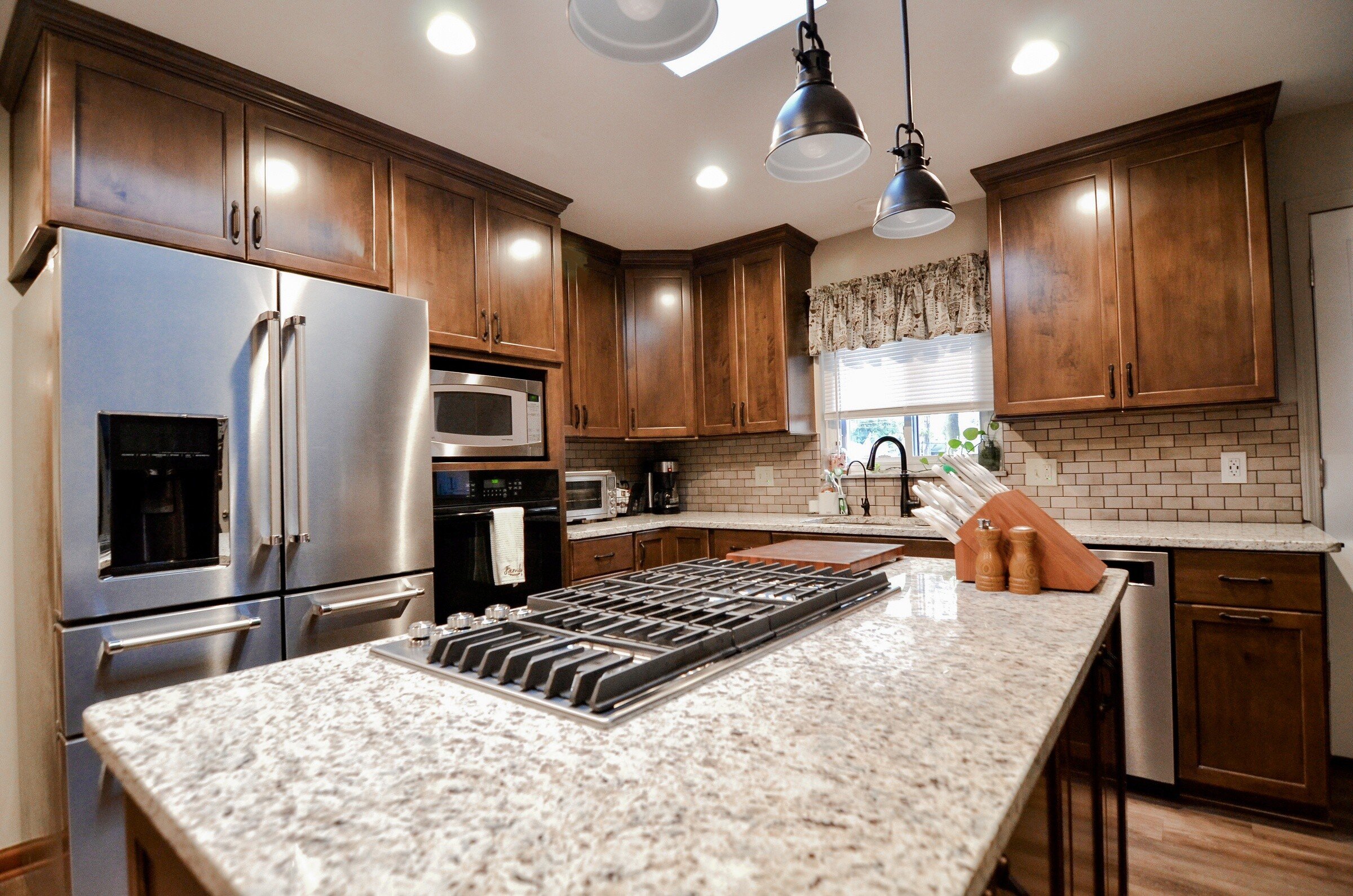
Image Source: www.jsbhomesolutions.com
Deciphering the Total Cost
Knowing the full price means looking at all the parts. It is not just the new top itself. You pay for the material, the work to put it in, and other small things. Thinking about all these helps you plan.
Costs break down into a few main areas:
- The stuff the top is made from (countertop material costs)
- The work to put the new top in (kitchen countertop installation cost)
- The work to take the old top out (cost to remove old countertops)
- Other things like sinks or faucets
- Small extra costs
Seeing What Changes the Price Tag
Many things make the price go up or down. It helps to know what they are. Then you can make choices that fit your wallet.
Here are big factors:
- Material Choice: This is the biggest part. Some materials cost much more than others.
- Kitchen Size: More tops mean more material and more work. The size of your kitchen matters a lot.
- Edge Style: Simple edges cost less than fancy ones.
- Cutouts: Holes for sinks or stoves add cost. More holes mean more work.
- Old Countertop Type: Some old tops are harder to take out than others.
- Labor Costs: The company or person you hire charges for their time and skill. Prices vary by place.
- Location: Where you live changes costs. Work and material prices are higher in some areas.
- Plumbing/Electrical: Sometimes you need a plumber or electrician. This adds to the cost.
- Extra Features: Things like a new sink, faucet, or backsplash cost more money.
Examining Material Costs: What Tops Cost
The stuff your new top is made of is the main driver of expense. Different materials have very different prices. Prices are often shown as a cost per square foot countertops. This helps compare them evenly.
Laminate Countertops
Laminate is made from layers of paper and plastic. It is put over particleboard or wood. It is the cheapest choice.
- Cost per square foot: \$10 to \$30
- Pros: Very cheap, many colors and looks, easy to clean, simple to put in.
- Cons: Can scratch, burn, or chip. Hard to fix. Water can cause problems if it gets under the edges.
Laminate countertop installation cost is low. The material is light and easy to cut. This makes the work cost less too.
Butcher Block Countertops
Butcher block is made from pieces of wood glued together. It looks warm and natural.
- Cost per square foot: \$20 to \$60 (can go higher for fancy woods)
- Pros: Looks good, can be fixed by sanding, fairly easy to put in.
- Cons: Needs sealing often, can get water stains, can scratch or burn easily.
Installation is not too hard, adding to the total cost but not as much as stone.
Solid Surface Countertops
Solid surface is made from plastic acrylic or polyester. Corian is a well-known brand. It looks smooth and has no seams.
- Cost per square foot: \$30 to \$70
- Pros: No seams, easy to fix scratches, many colors, not porous (does not stain easily).
- Cons: Can scratch or burn, can look fake compared to stone.
Putting solid surface in needs special tools and skills. This makes the kitchen countertop installation cost for solid surface higher than laminate or wood.
Granite Countertops
Granite is a natural stone. Each piece is different. It is very popular for kitchens.
- Cost per square foot: \$40 to \$100+ (some rare types cost much more)
- Pros: Very strong, heat resistant, scratch resistant, looks unique and high-end, adds home value.
- Cons: Needs sealing once a year, can chip at edges, heavy (needs strong cabinets), is porous if not sealed.
The granite countertop replacement cost includes the stone, making templates, cutting the stone, and putting it in. This requires experts and special tools.
Quartz Countertops
Quartz is an engineered stone. It is made from ground-up quartz rock and resin. It looks like natural stone but is more uniform.
- Cost per square foot: \$50 to \$120+
- Pros: Very strong, does not scratch easily, does not need sealing, many colors and patterns, not porous (very stain resistant).
- Cons: Can be slightly less heat resistant than granite, edges can chip, can be expensive.
The quartz countertop price is often similar to or higher than granite. The process to put it in is like granite. It is heavy and needs experts.
Marble Countertops
Marble is a natural stone, known for its beauty. It has classic patterns.
- Cost per square foot: \$50 to \$150+
- Pros: Beautiful, classic look, heat resistant.
- Cons: Very soft, stains easily, scratches easily, needs sealing often, expensive.
Marble is softer than granite or quartz. This can make it easier to cut, but it still needs careful handling and expert work. The cost is high because of the material’s price and the care needed.
Quartzite Countertops
Quartzite is a natural stone, different from quartz (the engineered one). It is hard and looks like marble but is stronger.
- Cost per square foot: \$60 to \$100+
- Pros: Looks like marble but is much harder and more durable, heat resistant, resists scratching.
- Cons: Pricey, needs sealing, can be porous, very heavy.
Like granite and marble, quartzite needs experts to measure, cut, and install. The kitchen countertop installation cost for quartzite is high.
Porcelain Countertops
Porcelain is a newer choice for countertops. It is made from clay and minerals fired at high heat.
- Cost per square foot: \$50 to \$100
- Pros: Very hard, heat resistant, scratch resistant, stain resistant, non-porous, many looks (can copy stone, wood).
- Cons: Can be brittle (can chip or break if hit hard), installation is complex and needs special tools and skilled workers.
Porcelain slabs are large but thin. They need special frames or bases. The installation is tricky, adding to the price.
Table: Material Cost Comparison
Here is a quick look at how material costs stack up per square foot. This is just for the material itself.
| Material | Average Cost Per Square Foot | Notes |
|---|---|---|
| Laminate | \$10 – \$30 | Cheapest, easy to scratch/burn |
| Butcher Block | \$20 – \$60 | Warm look, needs care |
| Solid Surface | \$30 – \$70 | Seamless look, can scratch |
| Granite | \$40 – \$100 | Popular stone, needs sealing |
| Quartz (Eng.) | \$50 – \$120 | Durable, no sealing, engineered |
| Marble | \$50 – \$150 | Beautiful but soft, stains easily |
| Quartzite (Nat.) | \$60 – \$100 | Hard like granite, looks like marble |
| Porcelain | \$50 – \$100 | Very durable, complex install |
Remember, these are just average costs for the material. Your actual total price will include labor and other things.
Figuring Out Labor Costs
Putting in new countertops is work. You pay people for their time and skill. This labor cost replace countertops is a big part of the total price. It often includes taking out the old tops and putting in the new ones.
Cost to Remove Old Countertops
Before new tops go in, the old ones must come out. This takes time and effort. The cost to remove old countertops depends on what they are made of and how they are attached.
- Laminate or tile tops are often easier to remove.
- Heavy stone tops like granite or quartz need more workers and tools. They are much harder and cost more to remove safely.
- Sometimes, removing the old top can cause small damage to walls or cabinets. Fixing this adds cost.
Removing old tops can cost anywhere from \$100 to \$400 or more. This is often part of the total installation price, but ask to be sure.
Kitchen Countertop Installation Cost Details
The main labor cost is putting in the new tops. This involves several steps:
- Measuring: The company measures your cabinets precisely. For stone or solid surface, they make a template (a copy of the shape). This must be perfect.
- Fabrication: For stone, quartz, or solid surface, the tops are cut and shaped in a workshop based on the template. Edges are made, and sink/stove holes are cut. This is skilled work.
- Delivery: Getting the new tops to your home. Heavy stone tops need several people.
- Installation: Workers place the new tops on the cabinets, make sure they are level, and secure them. They join seams if needed. For stone/quartz, seams are often glued and blended.
- Finishing: Workers might do final sealing (for granite/marble) or polish seams (for solid surface/quartz).
The kitchen countertop installation cost varies greatly. It depends on the material (stone/quartz is much harder to install than laminate) and the complexity of your kitchen shape. A simple straight kitchen costs less than one with many corners or angles.
Labor costs can range from \$20 to \$80 per square foot, or even more for complex jobs or high-end materials. This price is separate from the material cost. Sometimes companies give you one price for the material plus installation. Make sure you know what you are paying for.
Table: Estimated Labor Costs
Here is a rough idea of labor costs per square foot.
| Material Type | Estimated Labor Cost Per Square Foot |
|---|---|
| Laminate | \$10 – \$25 |
| Butcher Block | \$15 – \$30 |
| Solid Surface | \$20 – \$40 |
| Granite | \$35 – \$80+ |
| Quartz (Eng.) | \$35 – \$80+ |
| Marble | \$40 – \$90+ |
| Quartzite (Nat.) | \$40 – \$90+ |
| Porcelain | \$40 – \$100+ |
This table shows that labor for stone and engineered materials is much higher. They need special care, tools, and skill. Laminate and wood are easier to work with, so labor is cheaper.
Adding Other Potential Costs
Replacing countertops can touch other parts of your kitchen. You might need to pay for these too.
- Sink and Faucet: Often, you get a new sink and faucet when you change tops. Prices vary a lot for these items. Installing a new sink and faucet adds plumber costs.
- Plumbing: A plumber is needed to unhook your old sink and hook up the new one. This is typically a few hundred dollars.
- Electrical: If you have outlets in your countertop or change where your stove is, you might need an electrician.
- Backsplash: Many people replace the backsplash at the same time. This adds material and labor costs.
- Permits: In some places, you might need a permit for kitchen work. Check local rules.
- Disposal: You might need to pay to have the old countertops hauled away.
These extra costs can add hundreds or even thousands of dollars to the total project price.
Grasping Your Kitchen Renovation Budget
Replacing countertops is often part of a bigger plan. Thinking about your kitchen renovation budget helps you decide. How much can you spend in total?
If your budget is small, laminate or butcher block might be best. These have lower countertop material costs and lower kitchen countertop installation cost.
If you have more to spend, you might choose granite, quartz, or solid surface. These cost more for the material and the work, but they can last longer and look higher-end.
Think about the value the new tops add to your home. High-end tops can make your kitchen look much better and might help if you sell your home later. But do not overspend for your neighborhood.
Tips for Budgeting
- Get Multiple Quotes: Ask at least three different companies for a price. This helps you see average costs in your area. Make sure quotes include everything: material, removal, installation, edge style, sink cutouts.
- Be Specific: Know exactly what material, color, and edge style you want when getting quotes. Prices can change based on these details.
- Ask About Everything: Does the quote include taking out the old tops? Hooking up the sink? Taxes? Ask about all possible extra charges.
- Have a Cushion: Always plan to spend 10-20% more than the quote. Unexpected things can happen, like finding damage when the old tops come off.
Exploring Different Edge Styles and Their Costs
The edge of your countertop can be shaped in different ways. Some shapes are simple and cost little extra. Others are fancy and cost more because they need more work to create.
- Standard/Basic Edges: Straight (eased), bevel, or bullnose. These are common and often included in the main price. They add little to the cost per square foot countertops.
- Mid-Range Edges: Ogee, cove, or waterfall. These take more shaping and cost a bit extra, maybe \$10 – \$20 per linear foot.
- High-End/Fancy Edges: Multiple steps, detailed shapes. These take much more work and can add \$20 – \$50+ per linear foot.
Choosing a simple edge can save you money on the labor cost.
Considering Backsplashes
Often, new countertops mean a new backsplash. A backsplash is the material on the wall above the counter. It protects the wall from water and food.
- Cost per square foot: Varies a lot by material (tile, stone, laminate, etc.). Tile can range from \$2 to \$50+ per square foot for the material.
- Installation Cost: Putting up a backsplash, especially tile, takes time and skill. Labor can add \$10 to \$30+ per square foot.
Adding a backsplash significantly increases the total cost of your project. You might plan for \$500 to \$2,000 or more for a backsplash, depending on its size and the material.
Deciphering the Process: What Happens
Knowing the steps helps you plan. Here is a simple look at how countertops are replaced:
- Choose Material: You pick the type of countertop you want (granite, quartz, laminate, etc.) and the color/pattern.
- Get Quotes: You contact companies and get prices.
- Measure/Template: A pro comes to measure your kitchen. For stone/solid surface, they make a precise copy (template) of your cabinets.
- Fabrication: The new tops are cut and finished in a shop. This takes time (days to weeks for stone/quartz).
- Removal: Workers come to take out your old countertops. This can be quick for laminate, longer for stone. They might disconnect your sink.
- Installation: The new tops are brought in and put in place. This can take a few hours for laminate, a full day or more for stone/quartz (especially with seams).
- Plumbing: A plumber hooks up your sink and faucet again.
- Cleanup: The workers clean up the work area.
The time from picking your material to having new tops can be fast (a few days for laminate) or slow (2-4 weeks for stone or quartz, sometimes longer).
Ways to Save Money
Want new tops but need to keep costs down? Here are some ideas:
- Choose Cheaper Materials: Laminate or butcher block are budget-friendly options.
- Look at Less Common Colors: For granite or quartz, standard colors are often less expensive than rare ones. Ask about remnants (smaller pieces) if you have a small area like a bathroom vanity.
- Pick a Simple Edge: Basic edges cost less labor.
- Keep Your Sink: If your old sink works well and fits with the new tops, reuse it.
- Do Some Work Yourself: If you are handy, you might remove the old countertops yourself to save on the cost to remove old countertops. Be careful, especially with heavy or glued-down tops. Do NOT try to cut or install stone yourself unless you are a pro.
- Wait for Sales: Sometimes stores or companies offer deals on materials or installation.
- Simplify the Design: Fewer corners, angles, or cutouts mean less work and lower cost.
Saving money often means making smart choices about materials and labor.
Figuring Out the Overall Kitchen Renovation Budget Impact
Replacing countertops is a big part of a kitchen update. It can change the whole look. When planning your total kitchen renovation budget, think about how the countertop cost fits in.
For a full kitchen gut job, tops might be 10-20% of the total cost. For a smaller update (paint, tops, backsplash), they could be 30-50% or more of the cost.
Knowing the average cost kitchen countertops and breaking it down helps you see where your money is going. Countertop material costs are the biggest part, followed by the labor cost replace countertops.
Be realistic about your budget. Do not pick a material that costs too much if you cannot afford the whole project. It is better to pick a less expensive material you can afford than to start a project you cannot finish.
Frequently Asked Questions
H5 How long does it take to replace kitchen countertops?
This depends on the material. Laminate can take just one day for removal and installation. Stone or quartz takes longer. First, you need time for measuring and making the tops (1-3 weeks). Then, removal and installation take 1-2 days.
H5 Can I replace kitchen countertops myself?
You can remove old countertops yourself if you are careful, especially if they are laminate. Installing new countertops, especially stone or solid surface, needs special skills, tools, and often several people because they are very heavy. It is best to hire a pro for these materials. Laminate or butcher block installation is easier and something a skilled DIYer might try. But mistakes can be costly.
H5 Does replacing countertops require a plumber?
Yes, usually. A plumber is needed to disconnect your old sink and faucet before the old tops are removed. They are also needed to hook up your new sink and faucet after the new tops are put in.
H5 What is the most durable countertop material?
Quartz (engineered stone) and porcelain are very durable. They resist scratches, stains, and heat well. Granite is also very durable but needs yearly sealing.
H5 How much does it cost to replace granite with granite?
The granite countertop replacement cost will be similar to putting in granite for the first time. You still pay for the new granite slabs (material cost) and the labor to remove the old granite and install the new granite. Removing old granite costs more than removing laminate because it is heavier and harder to handle.
H5 Does the type of sink affect countertop cost?
Yes. An undermount sink (where the sink edge is below the counter) costs more for stone or solid surface tops. The cutout needs to be polished very smoothly because you can see the edge. Drop-in sinks (where the sink edge sits on top of the counter) are simpler cutouts and cost less. For laminate, only drop-in sinks work.
Knowing the costs helps you plan your kitchen update. By looking at materials, labor, and extra fees, you can figure out the price and make choices that work for you and your home.