You need space around your kitchen island. How much room? The standard kitchen design guidelines suggest at least 36 inches (about 3 feet) of kitchen walkway width on all sides of the island. But this is just the minimum kitchen island spacing. More room is often better. You might need up to 48 inches (about 4 feet) for comfortable use, especially in busy kitchens or where appliances are located. This needed space around your kitchen island is often called kitchen island clearance or kitchen aisle width. It is key for safe and easy movement. It lets you open cabinets and appliances fully. It ensures good flow in your kitchen.
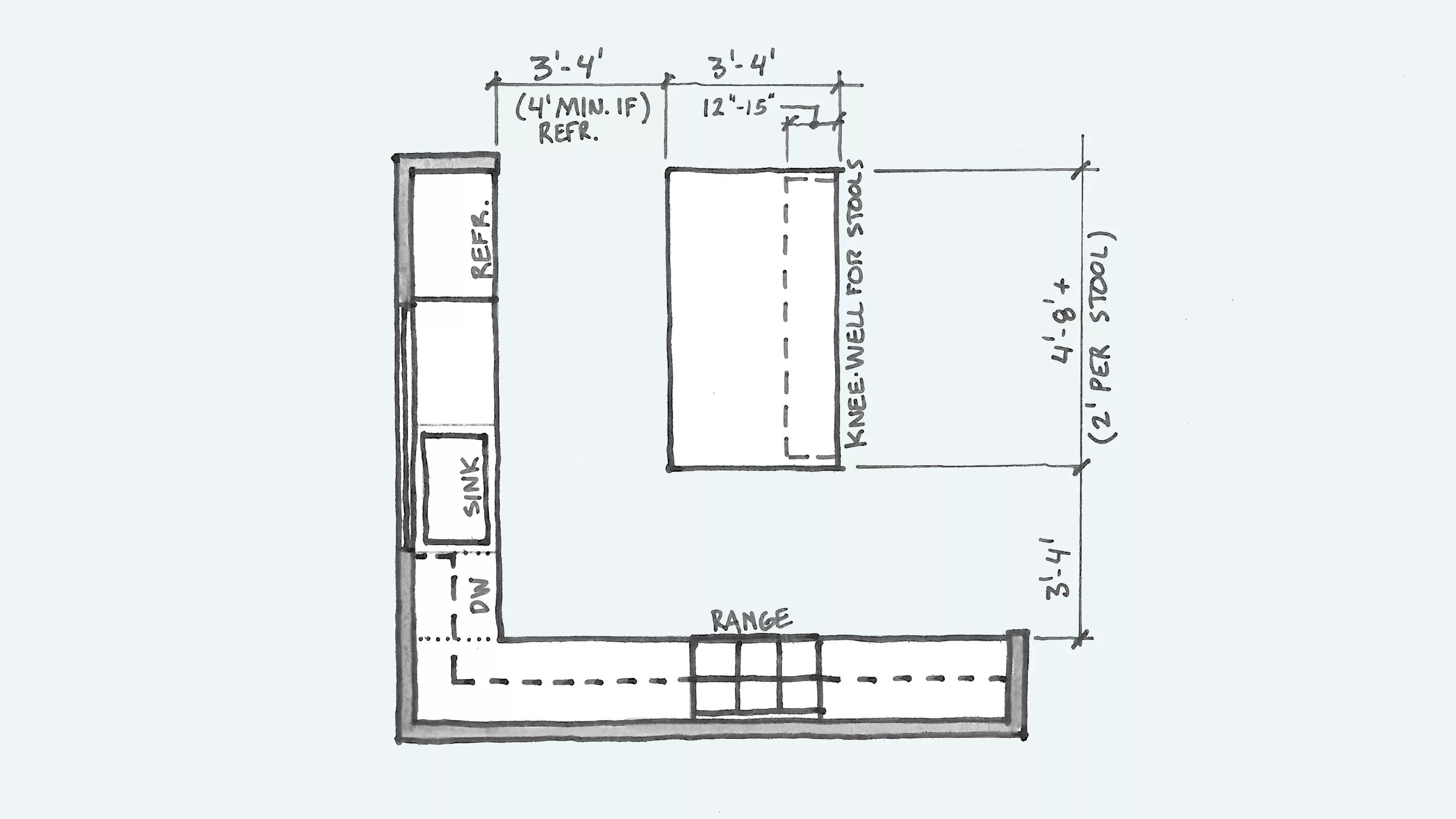
Image Source: www.boardandvellum.com
Why Kitchen Island Clearance Matters
Space is very important in a kitchen. It is not just about how big your island is. It is also about the room needed around the kitchen island. This room makes your kitchen work well. It keeps people safe.
Think about working at your counter. You need to move freely. You need to open drawers and doors. You need to get things from the oven or dishwasher. If there is not enough space between island and counter or between the island and walls, these simple tasks become hard.
Bad spacing can cause problems. You might bump into things. Two people might not fit. Appliance doors might not open all the way. This makes cooking stressful. It makes cleanup difficult. Good kitchen island clearance prevents these issues. It creates a smooth flow. It makes your kitchen a nice place to be.
Grasping Key Clearance Measurements
Different parts of your kitchen need different space. The space near cabinets is one thing. The space near appliances is another. The space where people sit needs extra thought.
Here are some key numbers:
- Walkway Space: This is the space you use to walk past the island. Or to walk between the island and another counter or wall.
- Working Space: This is the space in front of appliances like the stove, oven, or dishwasher. You need more room here. You have to stand there to use the appliance. You might need to bend down or open a door.
- Seating Space: If your island has seats, you need room behind them. People sit there. Other people need to walk behind them.
Getting these spaces right is part of good kitchen design guidelines island. It makes your kitchen work for you. It makes it safe for everyone.
Setting the Scene: Minimum Kitchen Island Spacing
The smallest amount of space you should have is 36 inches. This is the minimum kitchen island spacing. It is the space between the island and the closest edge. That edge could be a counter, a wall, or an appliance.
Why 36 inches? It is seen as enough room for one person to walk by. It is also enough space for one person to work at a counter or appliance edge near the island.
But this 36 inches is tight. Imagine someone is standing at the counter. Someone else wants to walk past behind them, between the counter person and the island. 36 inches makes this hard. One person might have to move.
So, while 36 inches is the minimum, it is often not the best choice. It works best in small kitchens. Or in areas of the kitchen that do not get much traffic. It is okay if only one person cooks at a time.
For most homes, especially where the kitchen is busy, you need more space. You need more than the minimum kitchen island spacing.
How Much Kitchen Walkway Width?
Let’s talk more about the space for walking. This is the kitchen walkway width. It is the clear path around your island.
36 Inches: This is the narrowest walk space. It works for a path that no one stops in. Like a hallway. But in a kitchen, people stop. They work. They open doors. So, 36 inches is really only for low-traffic areas. Or for the side of the island that faces a wall with no cabinets or appliances.
42 Inches: This is a much better width. It gives one person plenty of room to work or walk comfortably. If someone is at the counter or island, another person can squeeze by carefully. This is a good target for the working side of an island. The working side faces your main counter, stove, or sink.
48 Inches: This is the ideal kitchen walkway width. It allows two people to pass each other easily. It gives plenty of space to work. It makes opening large appliance doors (like an oven or dishwasher) easy. This width is best in larger kitchens. It is great for areas with lots of traffic. It is best when your island has appliances in it (like a sink or cooktop).
Choosing the right kitchen walkway width depends on your kitchen use. How many people cook? How many people are usually in the kitchen at once? Is the path around the island a main path through your home? More people or more use means you need more width. Aim for 42 inches or 48 inches if you can.
Space Between Island and Counter: The Working Aisle
The area between your island and your main kitchen counter is very important. This is often called the working aisle. It is where you move between key work areas. Like from the sink to the stove with a pot of water. Or from the fridge to the counter to put away groceries.
The space between island and counter needs to be wide enough for your tasks. It needs room for opening oven doors. Room for pulling out dishwasher racks. Room for standing at the sink or stove.
- Minimum Space (36 inches): As mentioned, this is the tightest. It works for small kitchens. It works if the counter facing the island has no main appliances (just cabinets).
- Recommended Space (42 inches): This is good for a one-cook kitchen. You have space to open most appliance doors. You have room to stand and work. Someone can pass behind you, but it might be a squeeze.
- Ideal Space (48 inches): This is best for kitchens with two cooks. It is best if the counter or island has major appliances. You can open appliance doors fully. Two people can work side-by-side or pass easily. This width makes your kitchen highly functional.
When planning the space between island and counter, think about your appliances. Measure how far the oven door or dishwasher rack comes out. Make sure you can stand in front of that open door comfortably. You still need room to move or for someone to pass. This often means you need more than just the door depth. That is why 42 or 48 inches is often necessary.
Kitchen Aisle Width: All Sides Matter
The term “kitchen aisle width” really means the space around the whole island. Not just the working side. Every side needs enough space.
- Aisle facing main counter/appliances: This is the working aisle. Needs 42-48 inches usually.
- Aisle facing a wall: If it is just a blank wall, 36 inches might be okay for walking. But if there are wall cabinets, you need space to open them. 36 inches is usually fine for this.
- Aisle facing another counter/cabinets: This is another working aisle. Needs 42-48 inches.
- Aisle facing an entryway or main path: This area sees a lot of foot traffic. You need ample room for people to walk through. 42 inches is a good minimum here. 48 inches is better if it’s a main hallway through the kitchen.
The kitchen aisle width should be consistent if possible. Having a wide aisle on one side and a narrow one on another can feel awkward. It can create choke points. Good kitchen design guidelines island suggest keeping aisles as consistent as possible. But the most important aisles are the working ones and the high-traffic ones. Prioritize width there.
Island Seating Clearance: Making Room for Guests
If your island has seats, you need extra room behind them. This is called island seating clearance. People sitting at the island take up space. They need space to pull their chair out. Other people need to walk behind them.
The amount of island seating clearance depends on how the space behind the seats is used.
-
24 inches (about 2 feet): This is the minimum island seating clearance behind a seated person if there is NO traffic path behind them. This space just lets the person pull out their stool or chair and sit down. No one can really walk behind them easily. This is only okay if the space behind the island seating is a wall, and the seats are rarely used or in a very small kitchen. It is not recommended for active kitchens.
-
36 inches (about 3 feet): This is the standard island seating clearance. It allows someone to be seated and another person to carefully walk behind them. It is good for islands that are not in a main traffic path. It gives enough room to get in and out of the seat easily.
-
48 inches (about 4 feet): This is the ideal island seating clearance. It is needed if the space behind the island seating is a main walkway in your kitchen or home. It allows people to sit comfortably. It lets others walk past freely, even with someone seated. This is the best option for busy kitchens or islands in open-plan homes.
When figuring out island seating clearance, remember to measure from the edge of the island’s overhang (where the seat is) or the back of the stool/chair when it’s pulled out, to the next obstacle (wall, counter, furniture). Also, consider the type of seating. Stools that tuck completely under the island might need less clearance when not in use, but you still need space for the person to sit and for traffic when they are there. Chairs with backs take up more space.
Kitchen Island Overhang for Seating and Space
The design of your island’s seating area impacts the needed space. How much does the countertop stick out? This is the kitchen island overhang for seating. It gives knee room.
- Counter Height (about 36 inches tall): Needs about 12 inches of overhang for comfortable knee space.
- Table Height (about 30 inches tall): Needs about 15 inches of overhang.
- Bar Height (about 42 inches tall): Needs about 9-10 inches of overhang.
This overhang means the edge of your island is further into the room. The island seating clearance is measured from this overhang edge. So, a bigger overhang might mean you need a slightly larger island overall to maintain aisle widths, or you sacrifice some aisle width. It is a balance. The overhang is important for comfort, but you must still leave enough room behind the seats.
Room Needed Around Kitchen Island: Putting It All Together
So, how much room is really needed around kitchen island? It depends on how you use your kitchen.
Scenario 1: Small Kitchen, One Cook
* Working aisle (island to counter/appliances): Minimum 36 inches. Better 42 inches.
* Other aisles (island to wall/cabinets): Minimum 36 inches.
* Island with seating: Minimum 36 inches behind seats if no traffic. 42 inches if light traffic.
* Goal: Make space usable for one person.
Scenario 2: Standard Kitchen, One or Two Cooks, Some Traffic
* Working aisle: 42 inches recommended. Better 48 inches.
* Other aisles: 36 inches minimum. 42 inches is better for flow.
* Island with seating: 36 inches behind seats for standard use. 48 inches if it’s a main path.
* Goal: Allow one person to work easily, two people to work carefully, some traffic flow.
Scenario 3: Large Kitchen, Multiple Cooks, High Traffic, Island with Appliances
* Working aisle: 48 inches essential. Especially if island has sink/cooktop or faces oven/dishwasher.
* Other aisles: 42 inches minimum for good flow. 48 inches is ideal.
* Island with seating: 48 inches behind seats, especially if it’s a main path.
* Goal: Allow multiple people to work together. Handle heavy traffic. Make appliance use easy and safe.
These guidelines for room needed around kitchen island help you plan. Measure your space carefully. Think about how you move. Think about how your family uses the kitchen. Do kids run through? Do guests gather? All these things affect the space you need.
Deciphering Kitchen Design Guidelines Island
Official kitchen design guidelines often come from groups like the National Kitchen and Bath Association (NKBA). These groups set standards. These standards help make kitchens safe and functional.
Their guidelines confirm the space rules we have talked about:
- Minimum walkway/aisle: 36 inches (non-working side)
- Minimum working aisle (one cook): 42 inches
- Minimum working aisle (multiple cooks or major appliance): 48 inches
- Seating clearance: Depends on traffic, starting at 36 inches.
These kitchen design guidelines island are there to help you. They prevent common mistakes. They make sure you do not build an island that makes your kitchen smaller and harder to use. They stress that good flow is key. The space around the island is just as important as the island itself.
When planning, draw your kitchen layout to scale. Draw the island. Then draw the needed clearance spaces around it. This helps you see if it fits. It helps you see if you have enough room for aisles, appliances, and seating.
Standard Island Dimensions Kitchen and Clearance
People often ask about standard island dimensions kitchen. How big should an island be? There is no one-size-fits-all answer. The size of your island depends on the size of your kitchen. And it depends on the needed space around kitchen island.
- A small island might be just 2 feet wide by 4 feet long.
- A medium island might be 3 feet wide by 6 feet long.
- A large island can be much bigger, even 4 feet wide by 8 feet long or more.
But the island size is limited by the space around it. For example, if your kitchen is 12 feet wide, and you want a 48-inch working aisle on both sides of the island, that uses 96 inches (48+48). That leaves only 48 inches (4 feet) for the island width (144 inches total width – 96 inches aisle = 48 inches island).
Total Kitchen Width = Aisle Width 1 + Island Width + Aisle Width 2
Or if one side is a wall with a 36-inch minimum aisle:
Total Kitchen Width = 48 inches (working aisle) + Island Width + 36 inches (wall aisle)
If your kitchen is 12 feet (144 inches) wide: 144 = 48 + Island Width + 36 -> Island Width = 144 – 48 – 36 = 60 inches (5 feet).
So, standard island dimensions kitchen are not fixed numbers. They are guided by how much space you need around the island. Start with the needed clearance. Then see how much space is left for the island itself. The island must fit comfortably within your kitchen’s space envelope, while still allowing for proper kitchen island clearance.
The Impact of Appliances and Storage
Appliances near the island need special consideration for space.
- Dishwasher: Needs full space to open. Needs space to stand and load/unload. Put it across from a 42 or 48 inch aisle.
- Oven/Range: Needs space for oven door. Needs space to stand and cook. If across from island, needs 42 or 48 inch aisle.
- Refrigerator: Needs door opening space. Needs space to stand and load/unload groceries. If across from island, needs 42 or 48 inch aisle.
- Microwave Drawer: Needs space to open and load.
Also, think about drawers and cabinets. You need to open them fully to access storage. Make sure the kitchen island clearance allows this. The corner space where cabinets meet the island can be tricky. Ensure doors and drawers do not crash into the island.
Including an island in your kitchen design guidelines island plan means thinking about all these elements. It is not just placing a box in the middle of the room. It is designing the space around the box too.
Tables for Quick Reference
Here is a simple table for key clearance numbers:
| Area Around Island | Minimum Space | Recommended Space | Best Space (High Use) | What It’s For |
|---|---|---|---|---|
| Walkway/Aisle (no work) | 36 inches | 42 inches | 48 inches | General path, wall side |
| Working Aisle (1 cook) | 36 inches* | 42 inches | 48 inches | Between island and counter/appliance |
| Working Aisle (2+ cooks) | 42 inches* | 48 inches | 48+ inches | Between island and counter/appliance, high use |
| Island Seating (no traffic) | 24 inches* | 36 inches | — | Behind seated person, wall behind |
| Island Seating (light traffic) | 36 inches | 42 inches | 48 inches | Behind seated person, some movement needed |
| Island Seating (main path) | 42 inches* | 48 inches | 48+ inches | Behind seated person, high traffic area |
Note: These minimums are often tight and not ideal for functionality or comfort in most homes. Always aim for recommended or best space if your kitchen size allows.
Here is a table for kitchen island overhang for seating:
| Island Height | Recommended Overhang |
|---|---|
| Table Height (30″) | 15 inches |
| Counter Height (36″) | 12 inches |
| Bar Height (42″) | 9-10 inches |
This kitchen island overhang for seating space is needed for knees. It lets people sit comfortably. Remember to add this overhang to your island depth when figuring out total space needed. The island’s footprint on the floor stops before the overhang starts. But the clearance is measured from the edge of the overhang.
Thinking About Flow and Function
Beyond the numbers, think about how people move. Where do you take food from the fridge to the sink? Where do you prep food? Where is the trash can?
Your kitchen island clearance affects these paths. A well-placed island with good clearance makes these tasks easy. A poorly placed island with too little space makes them hard. It creates traffic jams.
Imagine this: You are at the stove. Someone needs to get milk from the fridge past you and the island. If your working aisle is 48 inches, it is easy. If it is 36 inches, someone has to move.
Consider your family’s habits. Do kids help? Do guests hang out in the kitchen? Do you host parties where people gather around the island? More people mean you need more room needed around kitchen island.
Good flow means:
* Easy paths between sink, stove, and fridge (the “kitchen triangle”).
* Clear space in front of appliances.
* Enough room for people to pass each other.
* Seats at the island that do not block main walkways.
Using kitchen design guidelines island helps you think about these things. It helps you plan for real-life use. Not just how the kitchen looks empty.
Building Your Island Plan
Here are steps to plan your island and its space:
- Measure your kitchen: Get exact sizes of the room, doors, windows, and current cabinets/appliances.
- Mark key zones: Where is the sink? Stove? Fridge? These need good access.
- Decide island purpose: Is it just for work? Storage? Seating? Cooking? A sink?
- Figure out needed clearance: Based on use and traffic, decide on your target kitchen island clearance (e.g., 42″ working aisle, 48″ main path, 36″ seating clearance).
- Draw it out: Sketch your kitchen floor plan to scale. Add the needed clearance zones around where you want the island.
- See how big the island can be: The space left after adding clearance is the maximum size for your island (including any base cabinets, but not the countertop overhang).
- Add the overhang: If you want seating, add the needed kitchen island overhang for seating to the island dimensions. Remember the clearance behind the seats starts from the edge of this overhang.
- Check door/drawer swings: Make sure island does not block cabinets or appliance doors.
- Adjust as needed: If the island is too small after planning for clearance, maybe the island is not right for your space. Or maybe you need to use the minimum kitchen island spacing in low-traffic spots only.
It is a process of fitting the island into the space while keeping the flow. The standard island dimensions kitchen are not as important as the space around the island. The room needed around kitchen island makes the kitchen work.
Other Factors Affecting Island Placement
Think about things like:
- Lighting: Will the island block light from windows? Do you need extra lighting over the island and in the aisles?
- Flooring: The flooring plan might be simpler if the island does not cross flooring boundaries.
- Electrical/Plumbing: If you put a sink or cooktop in the island, you need plumbing and electrical lines there. This affects cost and planning. Make sure you have clearance around these working areas.
- Island shape: A square, rectangle, L-shape, or other shape will affect the surrounding space differently. A curved island might need more space for clearance.
All these parts of kitchen design guidelines island work together. The space around the island is key to making all parts function well.
Recap: Finding the Right Balance
Getting the kitchen island clearance right is finding a balance. You want the biggest island possible for work surface, storage, or seating. But you need enough room around it for safety and function.
- 36 inches: The absolute minimum. Use only when necessary in low-traffic, non-working areas.
- 42 inches: Good for one-cook working aisles, or moderate traffic paths.
- 48 inches: Best for multi-cook working aisles, heavy traffic paths, and aisles facing major appliances.
- Island seating clearance: 36 inches standard, 48 inches for main paths.
- Kitchen island overhang for seating: Add 9-15 inches depending on height.
- Standard island dimensions kitchen: Depends on the space left after planning clearance.
Do not ignore the minimum kitchen island spacing rules. They are there to prevent problems. But also, do not feel stuck by the minimums. More space is almost always better for how a kitchen feels and works. A little extra kitchen walkway width can make a huge difference in daily use.
The room needed around kitchen island is not wasted space. It is crucial space. It allows your kitchen to breathe. It allows you to move. It allows you to cook and gather safely and comfortably. It makes your kitchen functional and enjoyable.
Frequently Asked Questions about Island Space
h4. What is the smallest space I can have around a kitchen island?
The smallest space allowed is usually 36 inches. This is the minimum kitchen island spacing. It is for walking past. It is tight. It works best in areas that do not get much use.
h4. How much room do I need between my island and my counter with the stove?
This is a working aisle. You need more space here. The minimum is 42 inches for one cook. For two cooks, or if it is a main path, 48 inches is much better. This space lets you use the stove safely. It lets you open the oven door.
h4. If my island has seating, how much space is needed behind the seats?
If there is no traffic behind the seats (like facing a wall), a minimum of 24 inches lets people sit. But 36 inches is better for comfort. If there is traffic, like a path behind the seats, you need at least 36 inches. If it is a main path, you need 48 inches. This is the island seating clearance.
h4. How wide should the walkway around my island be?
This is the kitchen walkway width. 36 inches is the minimum. 42 inches is good for standard kitchens. 48 inches is best for busy kitchens or main paths.
h4. Does the island overhang for seating affect the space needed?
Yes. The island seating clearance is measured from the edge of the overhang. If you add a 12-inch overhang, the seating area extends 12 inches further into the room. You need to plan the clearance space from that point.
h4. Are there official rules for kitchen island spacing?
Yes. Groups like the NKBA have kitchen design guidelines island. They recommend minimum and preferred clearances. These help ensure kitchens are safe and work well.
h4. Can I put an island in a small kitchen?
Maybe. You must check if you can keep the minimum 36-inch kitchen island clearance on all sides. If the room is too narrow, an island might block the space. A peninsula might work better in a small kitchen.
h4. How does a dishwasher near the island affect space?
A dishwasher door opens outwards. You need space to stand and load it. If the dishwasher is across from the island, you need at least 42 inches between the island and the dishwasher. 48 inches is easier. This is part of planning the space between island and counter in a working zone.
h4. What is the ideal room needed around kitchen island?
There is no single ideal number for all kitchens. It depends on how you use your kitchen. Aim for 42-48 inches for working aisles and main paths. Aim for 36-48 inches behind island seating depending on traffic. More space is generally better if your layout allows.
h4. Does the size of the island matter for clearance?
Yes. The bigger the island, the more space it takes up in the room. This leaves less space for the aisles around it. You must balance the standard island dimensions kitchen with the needed kitchen island clearance. The clearance should come first.
h4. What if my kitchen is an unusual shape?
Measure carefully. Draw the shape. Then draw the needed clearances. Make sure you can still move easily between the sink, stove, and fridge. Ensure you can open all doors and drawers. The principles of needed space around kitchen island still apply, but the layout might be tricky.