What is the standard kitchen island overhang? What is the minimum island overhang you need for seating? How much countertop overhang depth is right for your kitchen island? The standard kitchen island overhang needed for comfortable seating is usually about 12 inches deep. This minimum island overhang gives enough space for knees for most people. Getting the right countertop overhang depth is key for how you use your island, whether it’s for eating, working, or just extra counter space.
When planning your kitchen island, one small detail makes a big difference: the overhang. This is the part of the countertop that sticks out past the base cabinets or support structure. It might seem like a minor thing, but the amount of overhang impacts comfort, function, and even the look of your island. It’s not just about having a place to put drinks; it’s about making a space where people can gather comfortably. The recommended island overhang changes based on how you plan to use the island.
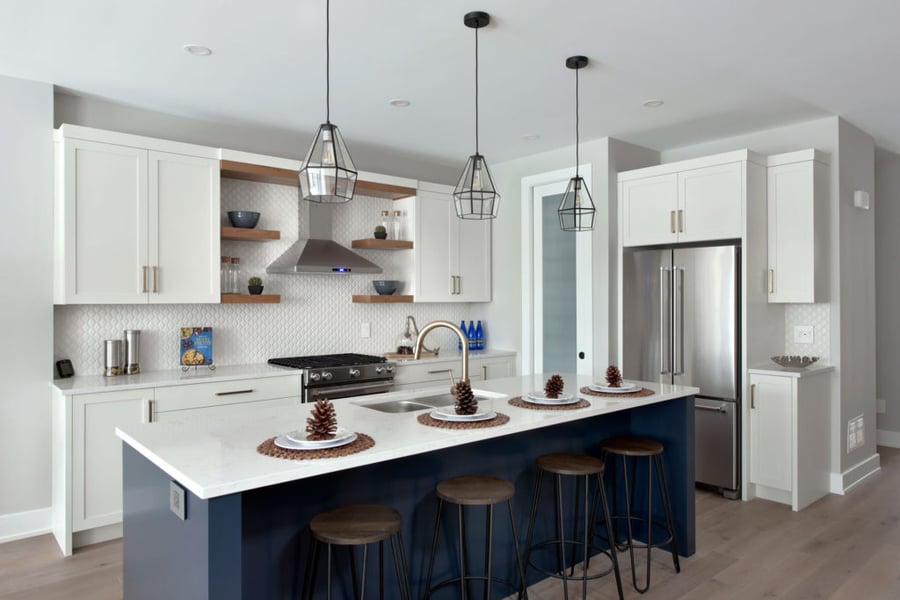
Image Source: www.deslaurier.com
Deciphering Kitchen Island Overhang
What exactly is overhang on a kitchen island? It is simply the part of the counter that hangs over the edge of the island’s cabinet or support structure. Think of it like a lip around the edge. This lip can be just a tiny bit, maybe 1 inch, or it can be quite large, like 15 inches or more. The amount it hangs over is the countertop overhang depth.
Why does this matter so much? A good overhang makes the island useful for more than just food prep. It creates space for stools, making the island a spot for quick meals, homework, or chatting while someone cooks. The right seating overhang dimensions are key to comfortable island seating. If the overhang is too small, knees bump into the cabinets. If it’s too big without proper support, the countertop could break. Island countertop overhang rules, while not always strict codes, are important guidelines for design and safety.
Standard Kitchen Island Overhang: A Starting Point
There are common sizes people use for island overhang. These sizes work well for most situations. The standard kitchen island overhang is often cited as 12 inches for seating. This amount gives a good balance of knee space for average-sized adults and doesn’t require major extra support for most common countertop materials like granite or quartz up to a certain thickness.
- No Seating: If you don’t plan to sit at your island, the overhang can be much smaller. A small overhang, say 1 inch or 1.5 inches, protects the cabinets below from spills and adds a finished look. This is sometimes called a “drip edge.”
- Counter-Height Seating (about 36 inches high): This is the most common height for a kitchen island. For this height, the recommended island overhang for comfortable seating is typically 12 inches. Some people might find 10 inches okay, but 12 inches is generally better.
- Bar-Height Seating (about 42 inches high): If you have a raised section on your island for seating, this section is usually higher than the main counter. Because your legs hang down more at this height, you don’t need as much knee space. A kitchen island breakfast bar overhang at bar height can be slightly less, often 9 to 10 inches, though 12 inches is still generous and comfortable.
So, while 12 inches is a very common number for seating at counter height, the exact standard kitchen island overhang can vary based on design and use. It’s more of a guideline based on providing comfortable island seating.
Minimum Island Overhang for Comfort
While 12 inches is recommended, what is the minimum island overhang you can get away with for seating? This is an important question if space is tight.
For comfortable island seating at counter height (36 inches), most design experts agree that 9 inches is the absolute minimum island overhang. At 9 inches, an average adult’s knees will likely touch the back of the cabinet or wall under the island, but it might still be usable for short periods or for smaller individuals. Anything less than 9 inches at counter height for seating is generally considered uncomfortable for adults.
For bar-height seating (42 inches), the minimum island overhang is often cited as 6 inches. Again, this provides minimal space, and more is usually better for truly comfortable island seating.
Important Note: These minimums provide knee space. They don’t necessarily provide the most comfortable experience, especially for longer periods or for larger individuals. When planning kitchen island design seating, aiming for the recommended amounts is always better if space allows. The countertop overhang depth directly affects how pleasant it is to sit at the island.
Comfortable Island Seating: More Than Just Overhang
Getting the seating overhang dimensions right is crucial for comfortable island seating, but it’s not the only factor.
- Height: Make sure the counter height matches the stool height. Counter-height stools (seat around 24-26 inches) go with 36-inch counters. Bar-height stools (seat around 28-30 inches) go with 42-inch bar tops.
- Width per Person: Allow enough width for each person sitting at the island. The standard is 24 inches per person. So, for three stools, you need at least 72 inches of island length with the appropriate overhang.
- Clearance: Make sure there is enough space behind the stools for people to pull them out and walk by. A walkway of at least 36 inches is recommended, but 42-48 inches is much better for comfort and flow.
- Footrests: Stools with footrests make sitting for longer periods much more comfortable.
When you consider kitchen island design seating, think about how people will use the space. Will they just perch for a moment, or will they sit for full meals or long work sessions? This helps you decide if the minimum island overhang is enough or if you need the full recommended island overhang.
Deep Dive into Countertop Overhang Depth
The term countertop overhang depth is a general one that applies to all counter edges, not just islands. On perimeter countertops (those against walls), the standard overhang is usually 1.5 inches. This small overhang is mostly for looks, covering the top edge of the cabinet doors or drawers and providing a slight lip to catch spills.
On an island, the countertop overhang depth can vary greatly depending on the function.
- Work Space Only: If the island is only for preparing food and has no seating, a small 1-1.5 inch overhang is typical, just like perimeter counters.
- Casual Seating/Breakfast Bar: This is where you need significant overhang for comfortable island seating. The standard kitchen island overhang of 12 inches for counter height or 9-10 inches for bar height falls into this category. This is the typical kitchen island breakfast bar overhang.
- Dining Table Height Seating (around 30 inches high): Some islands or attached tables are at dining table height. For this height, you need even more knee space. A minimum of 18 inches of overhang is recommended for comfortable dining table height seating, and 20-24 inches is even better. This depth allows room for legs and feet under the table portion.
So, the right countertop overhang depth is entirely dependent on the island’s planned use and height. Don’t just think “overhang”; think “overhang for…” (seating, working, etc.).
Kitchen Island Breakfast Bar Overhang Specifics
The kitchen island breakfast bar overhang is one of the most common reasons for needing a significant overhang. This area is meant for people to sit and eat or hang out. As mentioned, for a standard 36-inch high breakfast bar (counter height), 12 inches is the widely recommended island overhang for comfortable seating.
Why 12 inches?
* It allows space for an adult’s knees and thighs to fit under the counter without hitting the back wall or cabinet.
* It lets you pull a stool in close enough to the counter to eat or work comfortably.
* It provides enough depth for people to rest their arms on the counter.
If your breakfast bar is raised to 42 inches (bar height), the required kitchen island breakfast bar overhang is slightly less, typically 9 to 10 inches. This is because your legs hang down more, needing less horizontal space under the counter.
If you are tight on space, remember the minimum island overhang for counter-height seating is 9 inches. But for a true breakfast bar experience where people will spend more than just a few minutes, the recommended 12 inches is much better for comfortable island seating. Always check the seating overhang dimensions relative to your chosen stool height and the height of the counter.
Support for Island Overhang: Keeping It Safe and Strong
Once your countertop overhang depth gets past a certain point, it needs support. You can’t just let a heavy stone slab hang out too far without something holding it up. Why? Gravity! Without support for island overhang, the stone or other material can crack or even break off where it extends past the base. Island countertop overhang rules often relate to how much unsupported overhang is allowed.
How much overhang needs support? This depends on the countertop material.
- Granite and Quartz (typically 3 cm or 1 1/4 inches thick): For these common stone materials, most fabricators and industry guidelines suggest that any overhang greater than 10 inches needs support. Some might say up to 12 inches is okay without support if the stone is thick enough and properly installed, but 10 inches is a safer general rule. If your desired countertop overhang depth is 12 inches or more, plan for support for island overhang.
- Marble: Marble can be more fragile than granite or quartz. It often needs support for overhangs greater than 6-8 inches.
- Solid Surface (like Corian): This material is less brittle. It can often overhang up to 12 inches without support, but check the manufacturer’s guidelines.
- Laminate: Laminate countertops are usually supported by particleboard or MDF. They often need support for overhangs over 6 inches.
- Wood: Wood thickness and type affect how much overhang is possible. Thick butcher block can often overhang quite a bit, but thinner wood tops need support sooner.
Always check with your countertop fabricator or installer about their specific support for island overhang requirements for the material you choose. They know the limits of the product they are working with.
Types of Support for Island Overhang
There are several ways to provide support for island overhang:
- Brackets or Corbels: These are L-shaped supports that attach to the island base and extend out under the overhang. They can be made of wood, metal, or decorative materials. Corbels are often visible and can add a design element. Brackets can be less visible if tucked just under the counter.
- Steel Internal Supports (Flat Metal Straps): These are flat steel bars that are routed into the underside of the countertop and anchored to the island structure. They sit flush or recessed, making them almost invisible from above and below. This is a popular choice for a clean, modern look when you don’t want visible brackets. These are often recommended for larger countertop overhang depth, especially 12 inches or more in stone.
- Columns or Legs: If the overhang is very deep, you might use decorative columns or simple legs placed at the outer edge of the overhang to support the countertop. This creates a table-like extension of the island. This is common for overhangs 15 inches or deeper, often for dining table height seating.
- Continuous Knee Wall: Sometimes, the island structure itself extends partway under the overhang, forming a partial wall or box frame that supports the counter. This limits the open knee space slightly but provides solid support.
The type of support for island overhang you choose depends on your island design, the amount of overhang, and your desired look. Invisible supports like steel straps are great for a sleek design. Visible corbels can match traditional or rustic styles.
Recommended Island Overhang: Balancing Use and Space
Let’s summarize the recommended island overhang based on use. This is what designers and builders often suggest for a good balance of function and comfort.
| Island Use Case | Counter Height (36″) Recommended Overhang | Bar Height (42″) Recommended Overhang | Dining Height (30″) Recommended Overhang | Minimum Overhang for Seating | Support Needed? (for stone) |
|---|---|---|---|---|---|
| No Seating (Workstation only) | 1 – 1.5 inches | N/A | N/A | N/A | Usually No |
| Casual Seating / Breakfast Bar | 12 inches | 9 – 10 inches | N/A | 9 inches (counter) | Likely Yes (>10″) |
| Comfortable Dining | N/A | N/A | 18 – 24 inches | 18 inches (dining) | Definitely Yes |
This table shows that the desired seating overhang dimensions heavily influence the necessary countertop overhang depth. A significant overhang, like the standard kitchen island overhang of 12 inches or the deeper dining overhang, almost always requires planning for support for island overhang.
When thinking about kitchen island design seating, don’t just pick a number. Think about who will use it (adults, kids?), how long they will sit there, and what they will be doing. A 12-inch overhang might be fine for a quick breakfast, but for working on a laptop for hours, a deeper overhang might be more comfortable.
Island Countertop Overhang Rules (General Guidelines)
While there aren’t always strict building codes governing residential island overhangs (unless structural changes are involved), there are widely accepted guidelines and best practices that act like island countertop overhang rules. These rules are based on comfort, safety, and material limitations.
- Know Your Material’s Limits: As discussed, different countertop materials can handle different amounts of unsupported overhang. Always follow the manufacturer’s or fabricator’s recommendations. This is the most important “rule.”
- Support Overhangs > 10-12 Inches: For standard stone (granite, quartz) that is 3 cm thick, plan for support for island overhang if it goes beyond 10-12 inches. For other materials or thicknesses, this threshold might be lower.
- Provide Adequate Knee Space: For seating, ensure the overhang meets or exceeds the minimum island overhang (9 inches for counter height, 6 inches for bar height) and ideally meets the recommended island overhang (12 inches for counter, 9-10 inches for bar, 18+ inches for dining).
- Ensure Sufficient Support for Weight: The support system must be strong enough to hold the weight of the countertop, plus anything placed on it, and handle force from someone leaning on the edge. This is part of planning support for island overhang.
- Consider Building Codes for Structure: If your island requires new electrical outlets or major structural framing, building codes will apply to those aspects. While the overhang itself might not have a specific code number, the structure supporting it must be code compliant.
These guidelines help ensure your island is not only beautiful but also functional, safe, and durable. Ignoring the need for support for island overhang on deep overhangs can lead to costly damage down the road.
Kitchen Island Design Seating: Integrating Overhang into Your Plan
Thinking about kitchen island design seating from the start is key to getting the overhang right. Don’t just design the island shape and then try to add seating. Decide how many people you want to seat and at what height first.
- Number of Seats: This tells you how long your island countertop needs to be. Allow at least 24 inches of width per person.
- Seating Height: This tells you how high the counter needs to be (36″ counter, 42″ bar, 30″ dining) and directly impacts the required seating overhang dimensions.
- Location in the Room: Where will the island be? Will it be a freestanding piece or attached to a wall? How much space is around it? This affects how much room you have for the overhang itself and for the stools and walkways behind them. A large overhang needs more room in the kitchen.
If you want seating on two sides of the island (e.g., an L-shape or on the end), you need to plan the overhang on those specific sides. This adds complexity to the support needed. You might need special corner supports or careful placement of legs or columns.
Sometimes, kitchen island design seating requires compromises. If your kitchen is small, you might have to settle for the minimum island overhang instead of the recommended 12 inches, or perhaps only seat two people instead of three. It’s about finding the best balance for your space and needs.
Factors Influencing Your Overhang Decision
Many things affect the best countertop overhang depth for your island:
- Available Space: This is often the biggest limit. A large overhang eats up floor space. Measure your kitchen carefully.
- Intended Use: Casual seating, formal dining, just prep space? This dictates how much overhang you need for comfortable island seating.
- Countertop Material: Different materials require different support for island overhang, which affects how deep you can go safely without visible supports or with certain support types.
- Budget: Adding extensive support for island overhang or using certain materials can increase costs.
- Aesthetics/Design Style: Do you want visible brackets (traditional, farmhouse) or a clean, floating look (modern)? This impacts the type of support for island overhang and can influence the overhang depth you choose.
- User Height: While 12 inches is standard, very tall people might prefer a bit more overhang for better knee space.
Consider all these factors together when deciding on the right overhang. Don’t just focus on the standard kitchen island overhang; think about what works best for your kitchen and your family.
The Impact of Material on Overhang Possibilities
As mentioned earlier, the countertop material plays a big role in determining the safe countertop overhang depth.
- Natural Stone (Granite, Marble, Quartzite): These are heavy and can be brittle. They are prone to cracking if unsupported over a certain distance (often 10-12 inches for granite/quartz, less for marble). This is why proper support for island overhang is critical with stone. The thickness of the stone also matters; 3 cm (1 1/4 inches) is stronger than 2 cm (3/4 inch).
- Engineered Stone (Quartz): Similar to granite in weight and strength for overhang purposes. The 10-12 inch rule before needing support generally applies.
- Solid Surface (Acrylic): More flexible and less prone to cracking than stone. Can often handle larger overhangs without support, sometimes up to 15 inches, depending on thickness. Always check the manufacturer specs.
- Laminate: Least expensive but also requires the most support. Overhangs typically need support every 6-10 inches. The particleboard base isn’t strong enough to span large distances unsupported.
- Wood/Butcher Block: Strength depends heavily on the wood type and thickness. Thick maple butcher block can span decent distances, but thinner or softer woods need more frequent support. Overhang limits vary widely.
- Concrete: Very heavy and needs substantial support. Overhang limits depend on the thickness and whether rebar or other reinforcement is used. Support is almost always required for seating-depth overhangs.
When choosing your material, ask your fabricator about their specific island countertop overhang rules and support requirements. This helps you plan the island structure correctly from the start.
Avoiding Common Overhang Mistakes
Planning the overhang correctly saves headaches later. Here are common mistakes to avoid:
- Not Enough Overhang for Seating: This is perhaps the most common mistake. People pick a small overhang (like 6 inches) thinking it’s enough for a stool, only to find it’s very uncomfortable because knees hit the back. Always aim for at least the minimum island overhang (9″) and ideally the recommended island overhang (12″) for counter-height seating.
- Too Much Unsupported Overhang: Letting heavy stone overhang too far without support. This risks cracking or breaking the countertop, which is expensive to fix. Always follow the guidelines for support for island overhang.
- Not Accounting for Stool Clearance: Designing a deep overhang but not having enough space behind the island for people to actually sit on stools and move around. Remember that 36-48 inch walkway space is needed.
- Ignoring the Island’s Structure: The island’s base structure must be built to handle the weight of the countertop and any people leaning on the overhang. Don’t just add a big overhang to a flimsy cabinet box.
- Not Planning for Outlets: If your island will have outlets (often required by code), make sure the overhang design doesn’t make them awkward to access or impossible to install.
- Choosing the Wrong Stools: Make sure the stools are the correct height for your counter and can be tucked under the overhang when not in use, if desired.
Careful planning about the countertop overhang depth and support for island overhang prevents these issues and ensures your island is functional and safe.
Planning and Measuring for Your Overhang
How do you figure out the right measurements for your overhang?
- Decide on Use: Will there be seating? What height? How many people? This determines your target seating overhang dimensions.
- Check Space: Measure the available floor space around where the island will go. How much room can you give up for the overhang and stools/walkway?
- Choose Material: Select your countertop material. Get the specific island countertop overhang rules and support requirements from the supplier or fabricator.
- Determine Overhang Depth: Based on use, space, and material, select your final countertop overhang depth. Aim for recommended island overhangs if space allows, or use the minimum island overhang if necessary.
- Plan Support: If your chosen overhang depth exceeds the material’s limit for unsupported span, plan the type and placement of support for island overhang (brackets, steel, legs). This needs to be part of the island base design.
- Consider Island Base Depth: The depth of your island’s cabinet or support structure affects the total island depth. A standard cabinet is 24 inches deep. If you add a 12-inch overhang, the total countertop depth will be around 36 inches (24 + 12). A deeper island base might allow for storage on one side and overhang on the other.
Think about the total size of the island top, including the overhang on all sides. A typical island might have a small overhang (1.5 inches) on the working side and a large overhang (12+ inches) on the seating side.
Conclusion
Choosing the right overhang for your kitchen island is more than just a design detail; it’s a functional necessity. The standard kitchen island overhang for comfortable seating at counter height is 12 inches, but the minimum island overhang is 9 inches. For a kitchen island breakfast bar overhang at bar height, 9-10 inches is recommended.
Always consider the countertop overhang depth required for comfortable island seating and the need for support for island overhang, especially when going beyond 10-12 inches with stone. Following basic island countertop overhang rules and planning your kitchen island design seating carefully from the start will help you create an island that is both beautiful and a truly comfortable and useful hub for your home. Take the time to measure, plan, and consult with professionals to ensure your island functions perfectly for your needs.
Frequently Asked Questions (FAQ)
h4 How much overhang for a 36 inch high island?
For a kitchen island that is 36 inches high (counter height), the recommended island overhang for comfortable seating is 12 inches. The minimum island overhang for seating at this height is 9 inches, though 12 inches is much more comfortable.
h4 Do I need support for a 12 inch granite overhang?
Yes, for most 3 cm (1 1/4 inch) thick granite or quartz countertops, any overhang greater than 10 inches typically requires support. So, a 12-inch granite overhang will need support, such as steel straps, brackets, or corbels, to prevent cracking or breaking.
h4 How much space is needed behind island seating?
You need enough space behind the stools for people to sit down, get up, and walk by. A minimum of 36 inches of clear space is needed if there is no traffic behind the seating area. If there is a walkway or traffic flow behind the island, 42 to 48 inches of clear space is recommended for comfortable movement.
h4 Can a kitchen island overhang be too big?
Yes, an overhang can be too big if it takes up too much valuable kitchen floor space, makes the island look unbalanced, or is not properly supported, creating a safety risk. The maximum practical overhang for seating without needing full table-like legs is usually around 15-18 inches, and anything over 10-12 inches (depending on material) requires careful planning for support.
h4 Does overhang depth include the edge profile?
Yes, the countertop overhang depth is measured from the edge of the cabinet or support structure to the furthest point of the countertop edge, including any decorative edge profile.
h4 How wide should an island be for seating?
To comfortably seat people, you need to allow enough width per person along the overhang. The standard is 24 inches of width per person. So, to seat three people side-by-side, the island overhang section needs to be at least 72 inches wide.