Achieving the perfect, rich, and inviting brown color in your homemade gravy can sometimes feel like a culinary tightrope walk. You want that deep, appetizing hue, but how do you get there without making your gravy taste bitter or too thin? This is where Kitchen Bouquet for gravy truly shines. So, how much Kitchen Bouquet to use in gravy? A little goes a long way, typically starting with just a few drops to a quarter teaspoon per cup of gravy, adjusting for your desired shade.
For many home cooks, the dream of a deeply colored, flavorful gravy is synonymous with holiday feasts and comforting meals. While the foundation of good gravy lies in good stock, pan drippings, and proper thickening, the visual appeal is equally important. That’s where a gravy browning sauce like Kitchen Bouquet comes into play. It’s a secret weapon for many, but like any powerful ingredient, using it correctly is key.
This comprehensive guide will delve into everything you need to know about adding Kitchen Bouquet to gravy, from its purpose to the exact quantities that will transform your gravy into a visually stunning masterpiece. We’ll explore how to achieve that coveted dark gravy color, the nuances of using Kitchen Bouquet for browning other dishes, and the simple yet effective ways to integrate it into your cooking for the best results.
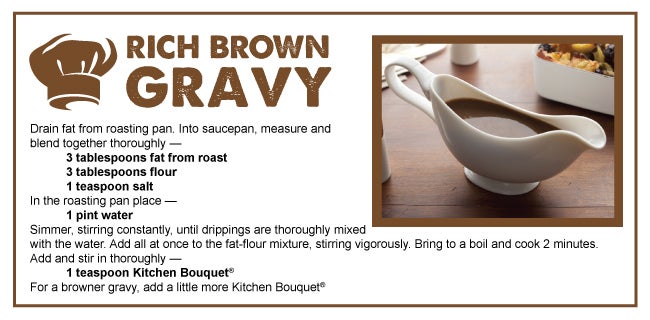
Image Source: www.thecloroxcompany.com
The Magic Behind Kitchen Bouquet: More Than Just Color
Kitchen Bouquet is a liquid caramel coloring, seasoned with a blend of vegetable extracts. It’s not just about adding a pretty color; it contributes a subtle depth of flavor that complements savory dishes. Its primary purpose in gravy is to provide a consistent and controllable color of gravy with Kitchen Bouquet. Unlike natural browning methods, which can be unpredictable, Kitchen Bouquet offers a reliable way to achieve that desired dark, rich mahogany hue.
What Exactly is in Kitchen Bouquet?
While the exact recipe is a closely guarded secret, the main ingredients are:
- Caramel Coloring: This is the primary component responsible for the deep brown color.
- Vegetable Extracts: These add a subtle savory note, enhancing the overall flavor profile of your gravy.
- Water: Acts as the base for the liquid.
It’s important to note that Kitchen Bouquet is not a thickener. Its sole purpose is to enhance the visual appeal of your gravy.
Why Does Gravy Need a Browning Sauce?
Naturally, gravy gets its color from the browned bits left in the pan after cooking meat (fond), good quality stock, and sometimes from browning flour or butter. However, several factors can lead to a lighter-than-desired gravy:
- Leaner Meats: Meats with less fat might not leave as much deeply browned fond.
- Pale Stocks: Using homemade stocks that are not deeply colored can result in pale gravy.
- Browning Flour: While browning the flour (making a roux) contributes to color, if it’s not browned sufficiently, the gravy will be lighter.
- Dietary Restrictions: Some cooking methods or ingredients might be avoided for health or dietary reasons, impacting the natural browning process.
This is where Kitchen Bouquet for gravy becomes invaluable, offering a quick and easy solution to achieve that rich, appealing color.
Getting the Color Right: How Much Kitchen Bouquet to Use
The golden rule when adding Kitchen Bouquet to gravy is to start small and build up. It’s far easier to add more than to take away. The goal is to achieve a beautiful dark gravy color without imparting any unwanted taste.
The Starting Point: A Few Drops
For a standard batch of gravy, say 2-3 cups, begin with just 2 to 5 drops of Kitchen Bouquet. Stir thoroughly after each addition. Observe the color change. You’re looking for a gradual deepening of the brown.
Gradual Addition for Precision
Once you’ve added the initial few drops, let the gravy simmer for a minute or two. This allows the color to fully meld. If the color is still too light for your liking, add another 1-2 drops. Repeat this process until you achieve the desired color of gravy with Kitchen Bouquet.
What About Thicker Gravy?
If you are making a Kitchen Bouquet gravy recipe that requires a thicker consistency, you’ll be adding thickeners like flour or cornstarch. The thickening process itself doesn’t significantly alter the need for Kitchen Bouquet. You still add it for color. The amount of Kitchen Bouquet remains the same, regardless of the thickening agent used.
Factors Influencing the Amount Needed
The exact how much Kitchen Bouquet question also depends on:
- Your Starting Base: If your pan drippings or stock are already quite dark, you’ll need less Kitchen Bouquet.
- Desired Darkness: Some people prefer a light brown gravy, while others aim for a deep, almost black hue.
- Type of Meat: Beef and lamb drippings tend to create a darker base than chicken or turkey drippings, influencing how much browning sauce you might need.
Table 1: Suggested Kitchen Bouquet Amounts for Gravy
| Gravy Volume | Initial Drops | Maximum Drops (approx.) | Desired Color |
|---|---|---|---|
| 1 Cup | 1-2 | 4-6 | Light to Medium Brown |
| 2 Cups | 2-3 | 6-8 | Medium to Dark Brown |
| 4 Cups | 3-5 | 8-12 | Rich, Deep Brown |
Note: These are approximate starting points. Always adjust to your preference and the base color of your gravy.
The Best Way to Use Kitchen Bouquet for Gravy
The best way to use Kitchen Bouquet is to incorporate it towards the end of the gravy-making process. This allows you to see the final color and make precise adjustments.
Step-by-Step Integration
- Prepare Your Gravy Base: Make your gravy as usual, using your pan drippings, stock, and drippings. Thicken it to your desired consistency.
- Assess the Color: Once your gravy is thickened and at a gentle simmer, assess its current color.
- Add Kitchen Bouquet (Gradually!): Add just a few drops of Kitchen Bouquet. Stir well.
- Simmer and Observe: Let the gravy simmer for another minute or two. This allows the color to fully develop and distribute evenly.
- Adjust as Needed: If the color is still not dark enough, add another drop or two, stir, and simmer again. Continue this process until you achieve your ideal dark gravy color.
- Taste Test: Always taste your gravy after adding Kitchen Bouquet. While it’s designed to enhance, overdoing it can lead to a slightly metallic or bitter taste. The goal is a richer flavor and color, not a dominant, artificial one.
Avoiding Common Mistakes
- Adding Too Much at Once: This is the most common error. Start with minimal amounts.
- Not Stirring Enough: Ensure the Kitchen Bouquet is fully incorporated to avoid streaks of darker color.
- Adding Too Early: While not detrimental to safety, adding it too early means you might not be able to gauge the final color as accurately, especially if you’re reducing your gravy further.
- Mistaking it for a Thickener: Remember, Kitchen Bouquet is a gravy color enhancer, not a thickening agent.
Kitchen Bouquet Beyond Gravy: Using It for Browning Other Dishes
The versatility of using Kitchen Bouquet for browning extends beyond gravy. It’s a fantastic tool for adding a rich, appealing color to a variety of savory dishes.
Roasts and Meats
A few drops of Kitchen Bouquet brushed onto a roast (beef, pork, lamb) before cooking can help achieve a beautifully browned exterior, even if the meat itself doesn’t naturally brown as deeply. It’s particularly useful for poultry or when you want a uniformly attractive crust.
Stews and Soups
Much like with gravy, Kitchen Bouquet can deepen the color of stews and hearty soups, giving them a more appetizing appearance. Add a few drops during the simmering process.
Sauces and Marinades
For savory sauces and marinades, Kitchen Bouquet can add a touch of color that makes them look more sophisticated and appetizing.
Mashed Potatoes and Other Sides
In some cases, a tiny drop can be added to mashed potatoes or other vegetable dishes for a subtle color enhancement. Use sparingly here, as the goal is often a creamy white or natural vegetable color.
Important Considerations When Using Elsewhere:
- Flavor Profile: While subtle, the vegetable extracts can contribute a slight flavor. Be mindful of this, especially in lighter dishes.
- Caramelization: Kitchen Bouquet doesn’t caramelize like sugar or meat drippings do. It provides color, not the Maillard reaction.
Popular Kitchen Bouquet Gravy Recipes and Tips
Many classic Kitchen Bouquet gravy recipe variations exist. The core principle remains the same: use it to achieve the perfect hue.
Classic Turkey Gravy
After making your turkey gravy with pan drippings, flour, and turkey stock, add 3-5 drops of Kitchen Bouquet for a rich brown color.
Beef Gravy
For a robust beef gravy, you’ll likely start with beef drippings and beef stock. Add 4-6 drops of Kitchen Bouquet to achieve a deep, savory brown that complements the richness of the beef.
Pork Gravy
When making gravy from pork drippings, Kitchen Bouquet can add a lovely golden-brown hue that enhances the pork’s natural flavor. Start with 3-4 drops.
Tips for Success:
- Quality Stock is Key: Kitchen Bouquet enhances, but it doesn’t replace the need for good stock.
- Don’t Overdo the Flour: Too much flour can make gravy pasty. Use the correct ratio for your desired thickness.
- Strain Pan Drippings: For a smoother gravy, strain your pan drippings to remove any burnt bits before starting.
- Taste, Taste, Taste: This cannot be stressed enough. Your palate is the ultimate guide.
Frequently Asked Questions (FAQ)
Q1: Can I use Kitchen Bouquet if my gravy is already dark enough?
A1: If your gravy already has the perfect color, there’s no need to add Kitchen Bouquet. It’s an enhancer, not a necessity for all gravies.
Q2: Will Kitchen Bouquet make my gravy taste bad?
A2: If used in the recommended small quantities, Kitchen Bouquet should not negatively impact the taste of your gravy. Overuse, however, can lead to a slightly metallic or bitter flavor. Always start with a few drops and taste as you go.
Q3: Is Kitchen Bouquet the same as browning sauce?
A3: Yes, Kitchen Bouquet is a type of browning sauce, specifically designed to add color to savory dishes.
Q4: How long does Kitchen Bouquet last?
A4: Once opened, Kitchen Bouquet typically lasts for several years if stored in a cool, dark place. The color may slightly fade over extended periods, but it remains effective.
Q5: Can I use Kitchen Bouquet in vegetarian gravy?
A5: Absolutely! Vegetarian gravies often benefit from Kitchen Bouquet to achieve a richer color, especially when made with vegetable stock and mushroom drippings.
Q6: What’s the difference between Kitchen Bouquet and soy sauce for gravy color?
A6: Soy sauce adds both color and a distinct savory, salty flavor. Kitchen Bouquet primarily adds color with a very subtle savory undertone. If you want color without altering the flavor significantly, Kitchen Bouquet is the preferred choice. If you want to add umami and color, soy sauce can be an option, but use it cautiously as it’s much saltier.
Q7: Is Kitchen Bouquet gluten-free?
A7: Yes, Kitchen Bouquet is generally considered gluten-free. Always check the product label for the most current ingredient information, as formulations can sometimes change.
Q8: How much Kitchen Bouquet to use for a very dark gravy?
A8: For a very dark gravy, you might need to use slightly more, perhaps up to 8-12 drops per 4 cups, depending on your base. Continue to add incrementally and taste as you go to avoid a bitter flavor.
By following these guidelines and understanding the subtle art of adding Kitchen Bouquet to gravy, you can confidently elevate your culinary creations, ensuring every spoonful is as visually appealing as it is delicious. The key to a beautiful dark gravy color lies in patience, observation, and a light hand with this powerful gravy color enhancer.