Resurfacing kitchen cabinets can significantly update your kitchen’s look. The cabinet refinishing cost varies widely. Generally, you can expect to spend between $3,000 and $10,000 to resurface kitchen cabinets professionally. The kitchen cabinet painting price might be on the lower end, while cabinet refacing cost can go higher. Many homeowners ask, “What is the average cost to resurface kitchen cabinets?” The answer depends on the method chosen, the size of your kitchen, and whether you hire a professional or go the DIY route.
Revitalizing your kitchen cabinets is a fantastic way to give your kitchen a fresh, new feel without the hefty price tag of a full remodel. But before you dive in, you need a clear picture of the financial commitment. This guide will break down everything you need to know about the cabinet resurfacing prices, helping you create a realistic budget for cabinet resurfacing.
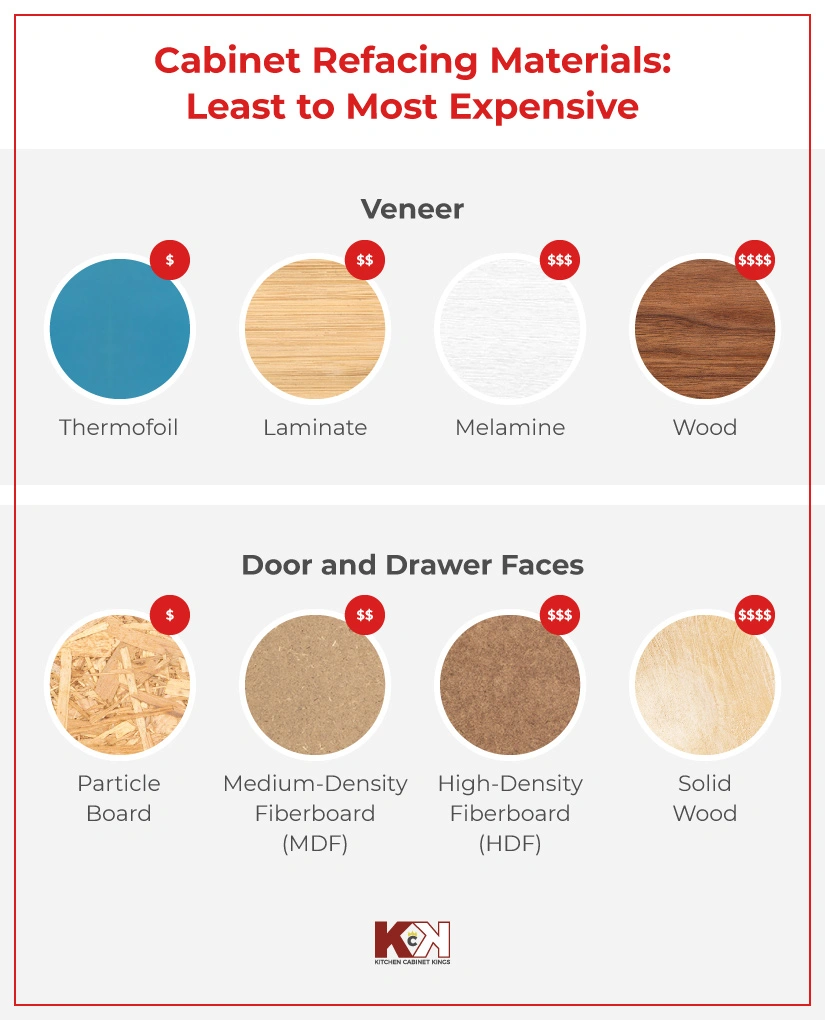
Image Source: cdn.kitchencabinetkings.com
Deciphering Cabinet Resurfacing Options
When we talk about “resurfacing,” it can encompass a few different methods. Each has its own set of pros, cons, and price points. It’s important to know what you’re getting into before you start.
1. Cabinet Painting
This is often the most budget-friendly option. It involves cleaning, prepping, priming, and painting your existing cabinet doors and frames.
What it involves:
- Cleaning: Thoroughly degreasing all surfaces.
- Sanding: Lightly sanding for primer adhesion.
- Priming: Applying a quality primer to ensure even color and durability.
- Painting: Applying several coats of durable cabinet paint (often lacquer or enamel).
- Top Coat (Optional): For extra protection.
Pros:
- Most affordable option.
- Wide range of color choices.
- Can significantly change the look of your kitchen.
Cons:
- Labor-intensive if done DIY.
- Durability depends heavily on prep work and paint quality.
- Can chip or scratch over time if not done well.
Typical Kitchen Cabinet Painting Price:
The kitchen cabinet painting price can range from $2,000 to $6,000 for a standard-sized kitchen when hiring a professional. This can be much lower if you choose the DIY route, potentially just $300 to $1,000 for materials.
2. Cabinet Refacing
This method involves replacing the existing cabinet doors and drawer fronts with new ones. The cabinet boxes (carcasses) are typically covered with a new veneer or laminate to match the new doors.
What it involves:
- Removing old doors and drawer fronts.
- Measuring for new doors and drawer fronts. These can be ordered in various materials (wood, MDF, thermofoil) and styles.
- Applying veneer or laminate to the cabinet boxes.
- Installing new hardware (handles, knobs).
- Attaching new doors and drawer fronts.
Pros:
- Gives a brand-new cabinet look.
- More durable than painting.
- Faster than replacing cabinets entirely.
- You can choose from a vast array of styles and finishes.
Cons:
- More expensive than painting.
- The internal structure of the cabinets remains the same.
Cabinet Refacing Cost:
The cabinet refacing cost typically falls between $4,000 and $10,000 for an average-sized kitchen. The price is heavily influenced by the material chosen for the new doors and drawer fronts. Solid wood doors will be more expensive than MDF or thermofoil.
3. Cabinet Refinishing (Stripping and Refinishing)
This is a more intensive process than painting. It involves stripping away the old finish (paint or stain), sanding the cabinets down to the bare wood, and then applying a new stain or paint finish.
What it involves:
- Stripping: Removing the old finish using chemical strippers or sanding.
- Sanding: Meticulous sanding to achieve a smooth surface.
- Staining or Painting: Applying a new stain or paint.
- Sealing: Applying protective topcoats (polyurethane, varnish).
Pros:
- Restores cabinets to a like-new condition.
- Can significantly enhance the wood’s natural beauty if staining.
- Often more durable than a simple repaint if done correctly.
Cons:
- Most labor-intensive and time-consuming process.
- Can be messy and involve strong chemicals if using strippers.
- Requires skill and patience.
Cabinet Stripping and Refinishing Cost:
The cabinet stripping and refinishing cost can be between $3,000 and $8,000 for professional services. This cost reflects the significant labor involved.
4. Cabinet Renewal (Restoration)
This is a broader term that can include a combination of the above or more detailed cosmetic repairs, such as fixing minor damage, replacing hardware, and applying a fresh coat of protective finish without a full strip and refinish.
What it involves:
- Deep cleaning.
- Minor repairs (filling gouges, fixing dings).
- Light sanding and touch-ups.
- Applying a new clear coat or a glaze.
- Hardware updates.
Kitchen Cabinet Renewal Cost:
A kitchen cabinet renewal might cost anywhere from $1,000 to $4,000, depending on the extent of the work needed. It’s a good option if your cabinets are structurally sound but just looking a bit tired.
Factors Influencing Cabinet Resurfacing Costs
Several key elements will determine the final price you pay for your kitchen cabinet resurfacing project.
Kitchen Size and Cabinet Quantity
This is perhaps the most straightforward factor. More cabinets and a larger kitchen mean more materials and more labor, leading to a higher overall cost. Professionals often quote based on linear feet of cabinets or the number of doors and drawers.
- Small Kitchen (10-15 cabinets): May cost $2,000 – $4,000 for painting.
- Medium Kitchen (15-25 cabinets): May cost $3,000 – $6,000 for painting.
- Large Kitchen (25+ cabinets): May cost $5,000 – $8,000+ for painting.
These are estimates for professional painting. Refacing or refinishing will naturally add to these figures.
Material Choices
The type of material used for doors, drawer fronts, or veneers significantly impacts the price.
- Paint: Generally the cheapest material cost if done DIY, but professional application adds labor costs.
- Laminate/Thermoil: A more affordable refacing option, often mimicking wood grain.
- Veneer: Thin layers of real wood applied to the cabinet boxes. Can be a mid-range option.
- Solid Wood: The most expensive option for refacing, offering the most premium look and durability. Popular wood types include maple, cherry, oak, and alder.
Finish Type
The desired finish also affects the price.
- Paint: Different paint types (latex, enamel, lacquer) have varying costs. High-quality cabinet paints are more expensive but offer better durability.
- Stain: The type of wood and the stain color can influence the price, especially if special wood conditioners or multi-step staining processes are needed.
- Glazes and Specialty Finishes: These add an extra layer of complexity and cost.
Labor Costs (Professional vs. DIY)
This is a major cost determinant.
Professional Cabinet Refinishing Cost
Hiring professionals ensures a high-quality, durable finish. Their expertise in preparation, application, and finishing techniques often leads to superior results. However, their services come at a premium.
What to expect from professional services:
- Skilled labor: Experienced painters or cabinet makers.
- Quality materials: Use of professional-grade paints, primers, and sealants.
- Warranty: Many professionals offer warranties on their work.
- Convenience: They handle all the work, saving you time and effort.
The professional cabinet refinishing cost will be significantly higher than DIY, primarily due to the labor involved. For a full kitchen, expect to pay anywhere from $3,000 to $10,000 depending on the method and complexity.
DIY Cabinet Refinishing Cost
If you have the time, patience, and a knack for DIY projects, you can save a considerable amount of money.
DIY Cabinet Refinishing Cost:
The DIY cabinet refinishing cost is mainly the cost of materials. This can range from $300 to $1,500 for a full kitchen, depending on the quality of paints, primers, sandpaper, and other supplies you purchase.
Pros of DIY:
- Significant cost savings.
- Sense of accomplishment.
- Complete control over the process.
Cons of DIY:
- Time-consuming and labor-intensive.
- Requires learning new skills and techniques.
- Risk of costly mistakes if not done properly.
- Results may not be as professional-looking.
Complexity of Cabinet Design
Intricate cabinet door styles, decorative moldings, or cabinets with glass inserts can increase the labor time and complexity, thus raising the cost.
Hardware Replacement
While not directly part of the resurfacing process, many people choose to update their cabinet hardware (knobs and pulls) at the same time. This adds to the overall project cost. New hardware can range from a few dollars per piece to $20 or more per piece.
Breaking Down the Costs: A Sample Budget
Let’s consider a mid-sized kitchen with 20 cabinet doors and 5 drawer fronts. We’ll look at estimates for painting.
| Service/Material | Estimated Cost (DIY) | Estimated Cost (Professional) | Notes |
|---|---|---|---|
| Cabinet Painting | |||
| Primer | $50 – $100 | Included | High-quality primer for adhesion and coverage. |
| Cabinet Paint | $100 – $300 | Included | Durable enamel or lacquer-based paints. |
| Sandpaper, Brushes, Rollers | $50 – $100 | Included | Assorted grits for sanding, quality brushes/rollers. |
| Degreaser, Cleaner | $20 – $40 | Included | Essential for proper preparation. |
| Drop cloths, Painter’s Tape | $30 – $60 | Included | Protecting surrounding areas. |
| Labor (Professional) | N/A | $1,500 – $4,000+ | Based on hourly rates and project complexity. |
| Cabinet Refacing (Doors Only) | |||
| New Doors & Drawer Fronts | $800 – $2,500+ | $2,000 – $6,000+ | Varies greatly by material (MDF, wood, thermofoil). |
| Veneer/Laminate for Boxes | $200 – $500 | $500 – $1,000 | For covering cabinet frames. |
| Labor (Professional Refacing) | N/A | $1,000 – $3,000+ | Installation of new doors and drawer fronts. |
| Cabinet Refinishing | |||
| Stripper, Sandpaper, Tools | $100 – $250 | Included | More abrasive and chemical-resistant supplies for DIY. |
| Stain or Paint | $80 – $200 | Included | High-quality wood stains or paints. |
| Sealant/Topcoat | $50 – $100 | Included | Durable protective finishes. |
| Labor (Professional Refinishing) | N/A | $2,000 – $5,000+ | Significant labor for stripping and careful application. |
| Hardware (Optional) | $100 – $500+ | $100 – $500+ | Knobs, pulls. |
| Contingency (10-15%) | $100 – $300 | $300 – $1,000 | For unexpected issues or material needs. |
| Total Estimated Cost | $1,730 – $4,200 | $3,000 – $10,000+ | Wide range reflects method, quality, and labor. |
Note: This table provides general estimates. Actual costs can vary significantly based on your specific location, contractor rates, and the exact scope of work.
Fathoming the Process: Key Steps in Resurfacing
Whether you DIY or hire a pro, the underlying steps for a quality cabinet resurfacing are similar, especially for painting or refinishing.
Preparation is Paramount
This is the most critical phase. Skipping or rushing preparation is the fastest way to a poor finish.
- Empty Cabinets: Remove all contents from your cabinets.
- Remove Doors and Drawers: Carefully label each door and drawer so you know where it belongs.
- Clean Thoroughly: Use a good degreaser to remove grease, grime, and any residue.
- Sanding: Lightly sand all surfaces to create a surface for the primer or paint to adhere to. Use fine-grit sandpaper. For cabinet stripping and refinishing cost, this step is much more intensive.
- Repair Imperfections: Fill any holes, dents, or scratches with wood filler. Sand smooth once dry.
- Masking: Protect areas you don’t want to paint or finish (walls, countertops, appliances) with painter’s tape and drop cloths.
Priming for Success
A good primer is essential for a smooth, durable finish.
- Apply Even Coats: Apply one or two thin, even coats of a quality primer specifically designed for cabinets.
- Allow Proper Drying Time: Let the primer dry completely according to the manufacturer’s instructions.
- Light Sanding: After priming, lightly sand again with very fine-grit sandpaper and wipe away dust. This creates an even smoother surface for the paint.
Painting or Staining Application
This is where the transformation happens.
- Thin Coats are Key: Apply multiple thin coats of paint or stain rather than one thick coat. This prevents drips and ensures even coverage.
- Use the Right Tools: For painting, a high-quality foam roller or a sprayer can provide the smoothest finish. For staining, use a good quality brush or an applicator pad.
- Drying Between Coats: Always allow adequate drying time between coats as recommended by the product manufacturer.
- Topcoat for Protection: For painted cabinets, consider a durable topcoat or glaze for added protection against wear and tear. For stained cabinets, multiple coats of a protective sealant like polyurethane or varnish are crucial.
Reassembly and Finishing Touches
Once everything is dry and cured, it’s time to put it all back together.
- Reattach Hardware: Install new or existing hinges, knobs, and drawer pulls.
- Rehang Doors and Reinsert Drawers: Carefully reattach all doors and drawers to their original locations.
- Clean Up: Remove all masking tape and drop cloths, and give your newly resurfaced cabinets a final wipe-down.
Comprehending Different Cabinet Resurfacing Costs: A Comparison
Let’s look at how the different methods stack up in terms of cost and outcome.
Painting vs. Refacing vs. Refinishing
| Feature | Cabinet Painting | Cabinet Refacing | Cabinet Refinishing (Stripping) |
|---|---|---|---|
| Average Cost | $2,000 – $6,000 (Pro) | $4,000 – $10,000 (Pro) | $3,000 – $8,000 (Pro) |
| DIY Cost | $300 – $1,000 (Materials) | $1,000 – $3,000+ (Materials for doors) | $500 – $1,500 (Materials) |
| Look/Feel | Can look great if done professionally; color variety. | Like new cabinets; many styles and materials. | Restores original wood beauty; high-end finish possible. |
| Durability | Moderate; can chip or scratch with poor prep. | High; new materials are durable. | High; when done with quality finishes and proper prep. |
| Time Involved | Moderate (Pro), High (DIY) | Moderate (Pro) | High (Pro), Very High (DIY) |
| Best For | Budget-conscious updates, changing color. | Updating style, good cabinet boxes, changing look. | Restoring old wood cabinets, achieving a high-quality finish. |
Frequently Asked Questions (FAQ)
Q1: How much does it cost to repaint kitchen cabinets professionally?
The cost to repaint kitchen cabinets professionally typically ranges from $2,000 to $6,000 for an average-sized kitchen. This price includes labor, materials (primer, paint, sealants), and preparation.
Q2: Is cabinet refacing worth the cost?
Cabinet refacing is generally considered worth the cost if your existing cabinet boxes are in good condition but you want a completely new look. It’s a significant upgrade from painting and a more budget-friendly alternative to full cabinet replacement. The cabinet refacing cost can provide a like-new appearance for a fraction of the price of new cabinets.
Q3: Can I save money by doing cabinet refinishing myself?
Yes, the DIY cabinet refinishing cost can be substantially lower than hiring professionals. However, this method is labor-intensive and requires significant time, skill, and attention to detail. If you don’t have the experience, you risk a poor finish or damaging the cabinets.
Q4: What is the cheapest way to update kitchen cabinets?
The cheapest way to update kitchen cabinets is usually through painting them yourself. The DIY cabinet refinishing cost for paint can be as low as a few hundred dollars for materials. Cleaning and replacing hardware can also offer a budget-friendly refresh.
Q5: How long does resurfaced cabinetry last?
With proper care and quality materials, resurfaced cabinets can last anywhere from 10 to 20 years or even longer. Professional painting and refinishing with durable finishes tend to have the longest lifespan. Refacing with high-quality materials also offers excellent longevity.
Q6: What does “kitchen cabinet renewal” typically include?
Kitchen cabinet renewal is a broader term. It can involve deep cleaning, minor repairs, touch-ups, applying a new clear coat or glaze, and updating hardware. It’s less intensive than full refinishing or refacing and aims to refresh rather than completely transform the cabinets.
Conclusion
Resurfacing your kitchen cabinets is a rewarding project that can dramatically improve your kitchen’s aesthetic appeal and value. By carefully considering the different options – painting, refacing, or refinishing – and understanding the factors that influence cabinet resurfacing prices, you can make an informed decision that aligns with your budget and desired outcome. Whether you choose the affordability of DIY painting or the premium finish of professional refacing, a well-executed cabinet resurfacing project will breathe new life into your kitchen for years to come. Remember to factor in a contingency for any unexpected issues and always prioritize quality materials and thorough preparation for the best results.