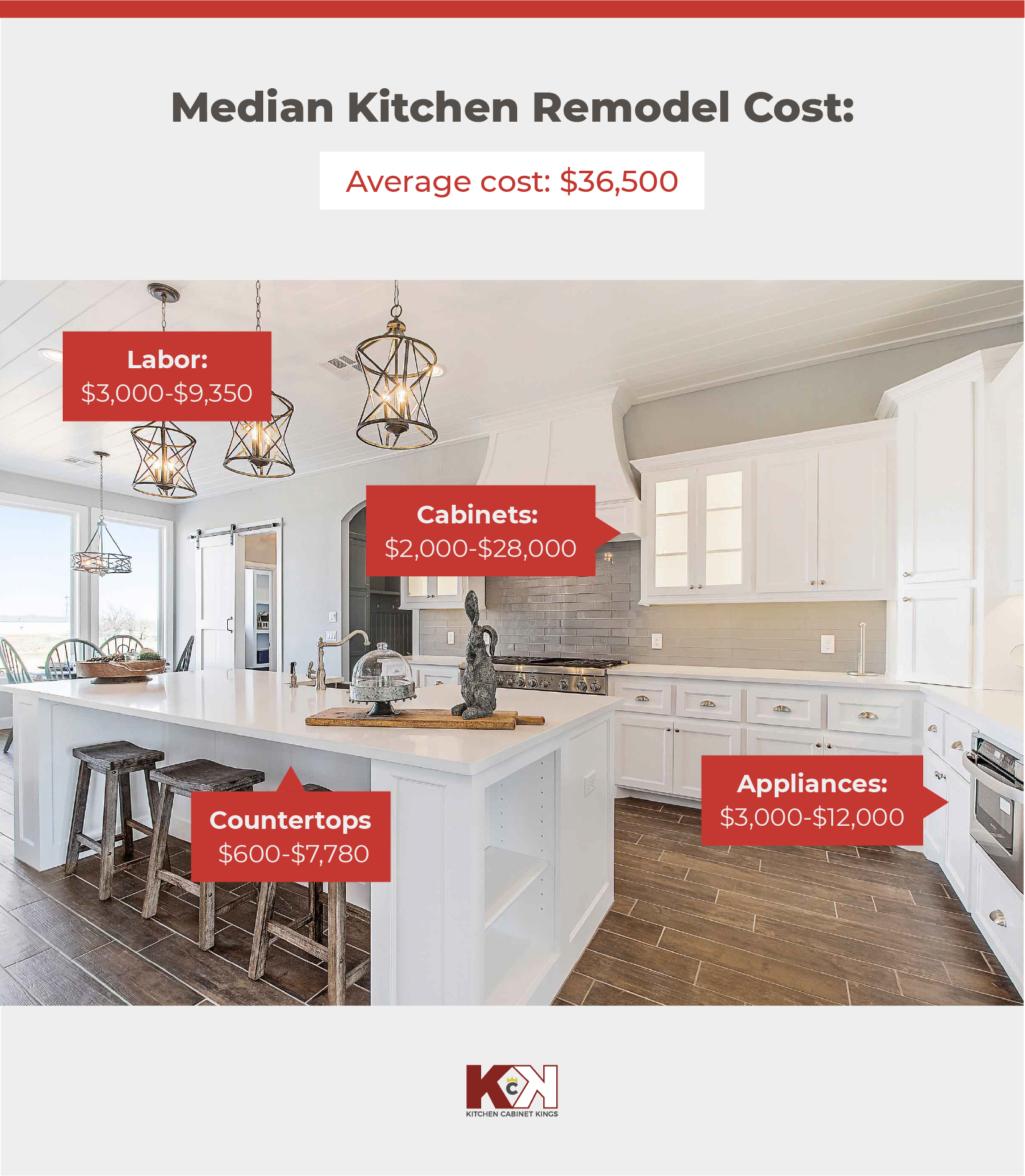
Image Source: cdn.kitchencabinetkings.com
Your Guide To How Much Does It Cost To Redo A Kitchen Cabinets
Putting new life into your kitchen cabinets can make your whole kitchen feel fresh. But how much money will it take? Redoing kitchen cabinets can cost anywhere from a few hundred dollars if you do it yourself by painting, to tens of thousands of dollars for a full cabinet replacement. The price changes a lot depending on what you do – paint them, refinish them, reface them (put new fronts on), or get all new ones. This guide will help you see the costs for each choice.
Deciphering Your Cabinet Options and Their Costs
When you want to change how your kitchen cabinets look, you have a few main choices. Each choice has a different price tag and takes different amounts of work.
Let’s look at the most common ways to redo cabinets and what they generally cost. We will talk about painting, refinishing, refacing, and full replacement.
The Cost to Paint Kitchen Cabinets
Painting your kitchen cabinets is often the cheapest way to give them a new look. It’s a popular choice for many homeowners who want a change without spending a lot.
Painting works best if your cabinets are in good shape but just have an outdated color or finish. It won’t fix cabinets that are falling apart or have serious damage.
What Painting Involves
Painting cabinets is more than just brushing paint on. It needs careful steps to look good and last.
Steps usually include:
- Taking off doors and drawers.
- Removing all hardware (knobs, pulls, hinges).
- Cleaning everything very well to remove grease and dirt.
- Sanding the surfaces to help paint stick.
- Fixing small dents or scratches.
- Applying a good primer.
- Putting on two or more thin coats of paint.
- Putting hardware back on.
- Putting doors and drawers back.
DIY Painting Cost
If you paint the cabinets yourself, your main costs are materials. You will need things like:
- Cleaner
- Sandpaper or a sander
- Wood filler
- Painter’s tape
- Primer
- Paint (special cabinet paint is best)
- Brushes, rollers, or a paint sprayer
- Drop cloths
- New hardware (if you want to change it)
For a small to average-sized kitchen, the materials for DIY painting might cost anywhere from $150 to $600. This cost depends on the quality of paint and supplies you buy. A paint sprayer will cost more upfront but can give a smoother finish.
The biggest cost for DIY is your time and effort. Painting cabinets the right way takes many hours, often several days, especially with drying times between coats.
Professional Cabinet Painting Cost
Hiring someone to paint your cabinets will cost more, but it saves you a lot of work. Professionals often have better tools, like sprayers, and more experience to get a smooth, factory-like finish.
Professional cabinet painting cost depends on the size of your kitchen and how many doors and drawers you have.
- Average range: $30 to $60 per door or drawer front.
- Total cost for a small kitchen: $1,500 to $3,000.
- Total cost for a medium to large kitchen: $3,000 to $7,000 or more.
Factors affecting the professional cost:
- Number of cabinets.
- Current finish (is it hard to paint over?).
- How much prep work is needed (cleaning, repairs).
- Where you live (costs are higher in some areas).
- If they spray or brush/roll the paint.
While more expensive than DIY, professional painting is still one of the lower-cost ways to redo your cabinets compared to refacing or replacing. It’s a significant part of the overall cost to paint kitchen cabinets if you hire help.
The Cost to Refinish Kitchen Cabinets
Refinishing cabinets is different from painting. Painting covers the wood grain. Refinishing usually means stripping off the old finish and applying a new stain or clear coat. This works well if you like the wood look and the wood is in good condition.
What Refinishing Involves
Refinishing is often more work than painting, especially if you need to strip the old finish.
Steps usually include:
- Taking off doors and drawers.
- Removing all hardware.
- Stripping off the old finish (stain or clear coat). This can be messy.
- Sanding down to bare wood.
- Fixing any small issues.
- Applying new stain (if changing color).
- Applying several coats of a new protective finish (like polyurethane or varnish).
- Putting hardware and cabinet parts back.
DIY Refinishing Cost
DIY refinishing costs for materials are similar to painting materials, maybe a bit more for quality stripping products and stains.
- Materials cost: $200 to $700.
Again, your time is the biggest investment. Stripping is a difficult step and takes a lot of patience and ventilation. Getting an even stain can also be tricky.
Professional Cabinet Refinishing Cost
Hiring professionals for refinishing costs more than painting because stripping the old finish takes more time and skill.
- Average range: $40 to $70 per door or drawer front.
- Total cost for a small kitchen: $2,000 to $4,000.
- Total cost for a medium to large kitchen: $4,000 to $9,000 or more.
The total cost to refinish kitchen cabinets professionally depends heavily on the condition of the current finish and the size of the kitchen. It’s a mid-range option for changing the look while keeping the existing cabinet structure and material.
The Cost to Reface Kitchen Cabinets
Cabinet refacing is a popular choice for homeowners who want a dramatic change in style without the high cost of full replacement. It’s like giving your cabinets a facelift.
With refacing, you keep the existing cabinet boxes, but you replace the doors and drawer fronts with new ones. You also cover the exposed parts of the cabinet boxes (the sides) with new veneer or matching material.
What Refacing Involves
Refacing changes the style more than painting or refinishing.
Steps include:
- Taking off old doors and drawer fronts.
- Removing all hardware.
- Applying new veneer or matching material to the cabinet boxes.
- Installing brand new doors and drawer fronts in your chosen style, material, and color.
- Putting on new hardware.
- Often, new hinges are installed too, sometimes upgrading to soft-close.
DIY Refacing Cost
DIY refacing is possible but much harder than DIY painting or refinishing. It requires precise measurements, cutting skills (for veneer), and careful installation to look right.
- DIY kits or materials: $500 to $1,500+. This depends heavily on the materials chosen (laminate, wood veneer, solid wood doors).
Unless you are very skilled with tools and home improvement, DIY refacing can lead to mistakes that are costly to fix. It’s usually a job best left to pros.
Professional Cabinet Refacing Cost
Professional cabinet refacing cost is a significant jump from painting or refinishing but much less than full replacement. It offers a look like new cabinets at a lower price point.
- Average range: $150 to $400 per opening (an opening is where a door or drawer goes).
- Total cost for a small kitchen: $4,000 to $8,000.
- Total cost for a medium to large kitchen: $8,000 to $15,000 or more.
Cabinet refacing cost varies based on:
- Size of the kitchen.
- Material for new doors and veneer (laminate, thermofoil, wood veneer, solid wood).
- Style of doors (simple flat panel is cheaper than detailed raised panel).
- Added features (new drawers, pull-out shelves, etc.).
- Complexity of the kitchen layout.
Refacing is a good middle ground. It gives you a brand new look and style without the mess and expense of ripping out all the old boxes.
The Cost of Kitchen Cabinet Replacement
Replacing your kitchen cabinets is the most expensive option, but it gives you a completely new kitchen layout if needed, new cabinet styles, and potentially better function (like deeper drawers, pull-out shelves, etc.).
You tear out the old cabinets down to the walls and put in all new ones.
What Replacement Involves
This is the biggest job and causes the most disruption.
Steps include:
- Removing old cabinets and countertops.
- Dealing with plumbing or electrical if the layout changes.
- Prepping walls and floors.
- Installing new cabinet boxes.
- Installing new doors and drawer fronts.
- Installing new hardware.
- Installing new countertops (usually needed if you replace cabinets).
- Finishing work (trim, touch-ups).
DIY Cabinet Replacement Cost
DIY kitchen cabinet cost for replacement involves buying the cabinets and possibly installation materials. Installation is very difficult and needs carpentry skills. Cabinets must be level, plumb, and securely attached.
- Cost of new cabinets (materials only): $100 per linear foot (basic stock) to $1,000+ per linear foot (custom).
DIY installation is possible if you have the skills, but mistakes can be costly.
Professional Kitchen Cabinet Replacement Cost
This is the highest cost way to redo cabinets. The cost includes buying the new cabinets and paying for the installation labor.
- Average cost for cabinets (materials): $100 to $1,000+ per linear foot.
- New kitchen cabinet installation cost (labor): $50 to $200+ per linear foot.
The total kitchen cabinet replacement cost for materials and installation varies hugely based on the cabinet type:
- Stock Cabinets: Ready-made sizes, lowest cost.
- Materials: $100 – $300 per linear foot.
- Installed: $150 – $500 per linear foot.
- Total for medium kitchen: $3,000 – $10,000.
- Semi-Custom Cabinets: Some size options and more styles.
- Materials: $300 – $600 per linear foot.
- Installed: $350 – $800 per linear foot.
- Total for medium kitchen: $7,000 – $16,000.
- Custom Cabinets: Built to fit your exact space, any size or style. Highest quality and cost.
- Materials: $600 – $1,000+ per linear foot.
- Installed: $700 – $1,200+ per linear foot.
- Total for medium kitchen: $14,000 – $30,000+.
The average cost of kitchen cabinets, installed, for a medium-sized kitchen usually falls between $5,000 and $15,000. This is a big part of any kitchen remodel cost breakdown. High-end custom cabinets can push the total cost much higher.
| Method | DIY Cost Range (Materials) | Professional Cost Range (Labor & Materials) | Notes |
|---|---|---|---|
| Painting | $150 – $600 | $1,500 – $7,000+ | Cheapest facelift, needs good structure |
| Refinishing | $200 – $700 | $2,000 – $9,000+ | Renews wood finish, needs good wood |
| Refacing | $500 – $1,500+ | $4,000 – $15,000+ | New look, keeps boxes, mid-range cost |
| Full Replacement | $100 – $1,000+ per linear foot | $3,000 – $30,000+ (Total Cabinet Cost) | Most expensive, full change possible |
Note: These are average ranges. Actual costs can be higher or lower based on many factors.
Grasping the Factors That Change the Cost
Many things affect how much you will pay to redo your cabinets. Knowing these helps you guess your own costs better.
Size of Your Kitchen
This is simple: more cabinets mean more cost. The size is often measured by the number of linear feet of cabinets or the number of doors and drawers.
The Method You Choose
As shown above, painting is cheapest, then refinishing, then refacing, then full replacement is the most expensive.
Materials Used
- Paint/Finish Quality: Better paints and finishes cost more but last longer and look better.
- Refacing Materials: Laminate is cheapest, then thermofoil, wood veneer, solid wood doors are most expensive.
- Replacement Cabinets: Stock cabinets use simpler materials (particleboard, MDF, basic wood). Semi-custom use better materials. Custom use high-quality wood and construction.
Condition of Existing Cabinets
If cabinets are very dirty, greasy, or have lots of damage, prep work (cleaning, sanding, repairs) takes more time and costs more, especially for painting or refinishing.
Labor Costs
- DIY vs. Professional: Doing it yourself saves labor costs but takes your time. Hiring a professional includes labor, which is a big part of the cost.
- Professional Experience: Highly experienced or specialized cabinet painters/refacers/installers may charge more.
- Location: Labor costs are higher in areas with a higher cost of living.
Added Features
- New Hardware: Changing knobs and pulls adds to the cost, anywhere from $2 to $30+ per piece.
- Internal Upgrades: Adding pull-out shelves, lazy Susans, organizers, or soft-close hinges costs extra, especially with refacing or replacement.
- Countertops: If you replace cabinets, you almost always need new countertops and possibly a sink and faucet, adding significantly to the total kitchen renovation budget.
Complexity of the Job
- Detailed Doors: Painting or refinishing doors with lots of nooks and crannies takes longer than flat doors.
- Layout Changes: If replacing cabinets involves changing the kitchen layout, this adds costs for moving plumbing, electrical, or HVAC.
DIY vs. Professional: Which Is Right for You?
Thinking about DIY kitchen cabinet cost involves more than just money. It’s about skill, time, and how perfect you want the result to be.
Doing It Yourself (DIY)
Pros:
- Lowest cost for materials.
- You control the timeline (though it often takes longer than planned).
- Sense of accomplishment.
Cons:
- Requires significant time and effort.
- Need space to work on doors and drawers.
- Requires specific skills (painting, sanding, potentially carpentry).
- Results may not be as durable or smooth as professional work.
- Mistakes can be costly or hard to fix.
- Can be messy.
DIY is best for painting if you are patient and detailed. It’s riskier for refinishing and much harder for refacing or replacement unless you have strong carpentry skills.
Hiring a Professional
Pros:
- Saves you time and effort.
- Likely to get a higher-quality, more durable finish.
- Professionals have the right tools and techniques (like spray booths for painting).
- They handle the difficult parts and cleanup.
- They often finish faster than a DIYer.
- Warranties on work or materials.
Cons:
- Higher cost (professional cabinet painting cost, new kitchen cabinet installation cost, etc., include labor).
- Less control over the timeline.
- Need to find and trust a good contractor.
Hiring a pro is usually recommended for refacing and replacement. For painting or refinishing, it’s a choice between saving money (DIY) or getting a better, faster result (Pro).
Fitting Cabinets Into Your Kitchen Renovation Budget
Redoing or replacing cabinets is often the biggest part of a kitchen renovation budget, outside of major layout changes or high-end appliances.
Here’s a general idea of how much cabinets fit into the total cost:
- Small Refresh (Paint/Refinish): Cabinets might be 10-20% of the total project if you also change hardware, maybe paint walls. Total project might be a few thousand dollars.
- Mid-Range Remodel (Reface/Stock-Semi Custom Replace): Cabinets are often 30-40% of the total budget. Total project could be $15,000 – $40,000.
- Major Remodel (Semi-Custom-Custom Replace): Cabinets can be 40-50%+ of the total budget. Total project could be $40,000 – $80,000+.
Knowing the average cost of kitchen cabinets and installation helps you set a realistic budget for the whole kitchen project. When looking at a kitchen remodel cost breakdown, cabinets are always a main line item.
If your budget is small, painting is a great option. If you have a bit more, refacing offers a big visual change. If your cabinets are old or the layout doesn’t work, replacement is the way to go, but be ready for the higher kitchen cabinet replacement cost.
Calculating Your Potential Costs
To get a better idea of your costs, follow these steps:
- Count: Count the number of doors and drawer fronts you have. Measure the linear feet of cabinets.
- Choose: Decide which method you want: paint, refinish, reface, or replace.
- Decide: Will you DIY or hire a professional?
- Research:
- For DIY: Look up prices for quality paints, stains, veneer kits, or stock cabinets at local stores.
- For Professional: Get quotes from several local contractors (painters, refacers, cabinet companies). Be specific about what you want.
- Add Extras: Don’t forget costs for new hardware, potential sink/faucet changes (with replacement), and any other related work.
- Buffer: Always add 10-20% extra to your budget for unexpected issues.
Getting specific quotes from professionals is the best way to know the real cost for your kitchen. Prices vary greatly by location and contractor.
Fathoming the Pros and Cons of Each Method
Each way to redo cabinets has good points and bad points.
Painting / Refinishing
- Pros: Cheapest options, significant visual change for the money (especially painting), can often DIY.
- Cons: Doesn’t change the style of the doors, doesn’t fix structural issues, finish may not be as durable as factory, messy process. Refinishing requires good underlying wood.
Refacing
- Pros: Less expensive than replacement, can dramatically change the style, less messy than replacement, often faster than replacement.
- Cons: Keeps the existing layout and internal function (unless you add pull-outs etc.), doesn’t fix structural issues with boxes, limited by existing box sizes. Cost can add up depending on materials. Usually needs professional help.
Full Replacement
- Pros: Completely new look and style, can change layout, can improve function (better drawers, storage), best durability, adds most value to the home (if done well).
- Cons: Most expensive option (high kitchen cabinet replacement cost), causes the most disruption and mess, takes the longest, often requires new countertops, plumbing, etc.
Frequently Asked Questions
- Q: Is it cheaper to paint or refinish cabinets?
- A: Painting materials are often slightly cheaper than refinishing materials. DIY painting is generally the cheapest option overall. Professional painting costs can be similar to or less than professional refinishing, depending on the condition of the old finish.
- Q: Can you reface any type of cabinet?
- A: You can usually reface cabinets if the boxes themselves are sturdy and in good condition. You cannot reface cabinets that are falling apart. The layout must also work for you, as refacing doesn’t change the layout.
- Q: How long does it take to redo cabinets?
- A: DIY painting can take a week or two with drying times. Professional painting/refinishing might take 3-7 days. Refacing typically takes 3-7 days. Full cabinet replacement can take one to several weeks, especially if plumbing, electrical, or countertop work is involved.
- Q: Does repainting or refinishing cabinets lower home value?
- A: If done well, painting or refinishing can increase home value or at least make the kitchen more appealing. A poor, DIY job can look bad and might hurt value. Professional work generally provides a better return.
- Q: What is the average cost of kitchen cabinets when replacing?
- A: The average cost of the cabinets themselves ranges from $100 per linear foot for basic stock cabinets to $1,000+ per linear foot for high-end custom ones. Installation labor is extra.
- Q: What is included in the new kitchen cabinet installation cost?
- A: Installation cost typically includes removing old cabinets, assembling (if needed), placing and leveling new cabinet boxes, installing doors, drawers, and basic hardware. It usually does not include plumbing, electrical, countertop installation, or complex trim work unless specified.
- Q: How much should I budget for my kitchen renovation?
- A: A general rule is that kitchen renovations cost between 5% and 15% of your home’s value, depending on the scope. Cabinets are a large portion of this, often 30-50%. Knowing the kitchen remodel cost breakdown helps in budgeting.
Redoing your kitchen cabinets is a big step that can greatly improve the look and feel of your home. By understanding the different options and their costs – from the simple cost to paint kitchen cabinets yourself to the full kitchen cabinet replacement cost with professional installation – you can choose the best path for your budget and your vision. Get quotes, compare options, and pick the method that fits your needs and budget.