So, how long should a kitchen runner be? A kitchen runner should be long enough to cover the main spots where you stand. Think about the sink or the stove. It should also fit the space well, leaving some floor showing around it. Generally, leave about 6 to 12 inches of hard floor on each side of the runner. This helps the rug look like it fits the room, not like it’s trying to be wall-to-wall carpet. Picking the right size is key for comfort and for how your kitchen looks. We will look at Kitchen runner length guidelines to help you pick the perfect one.
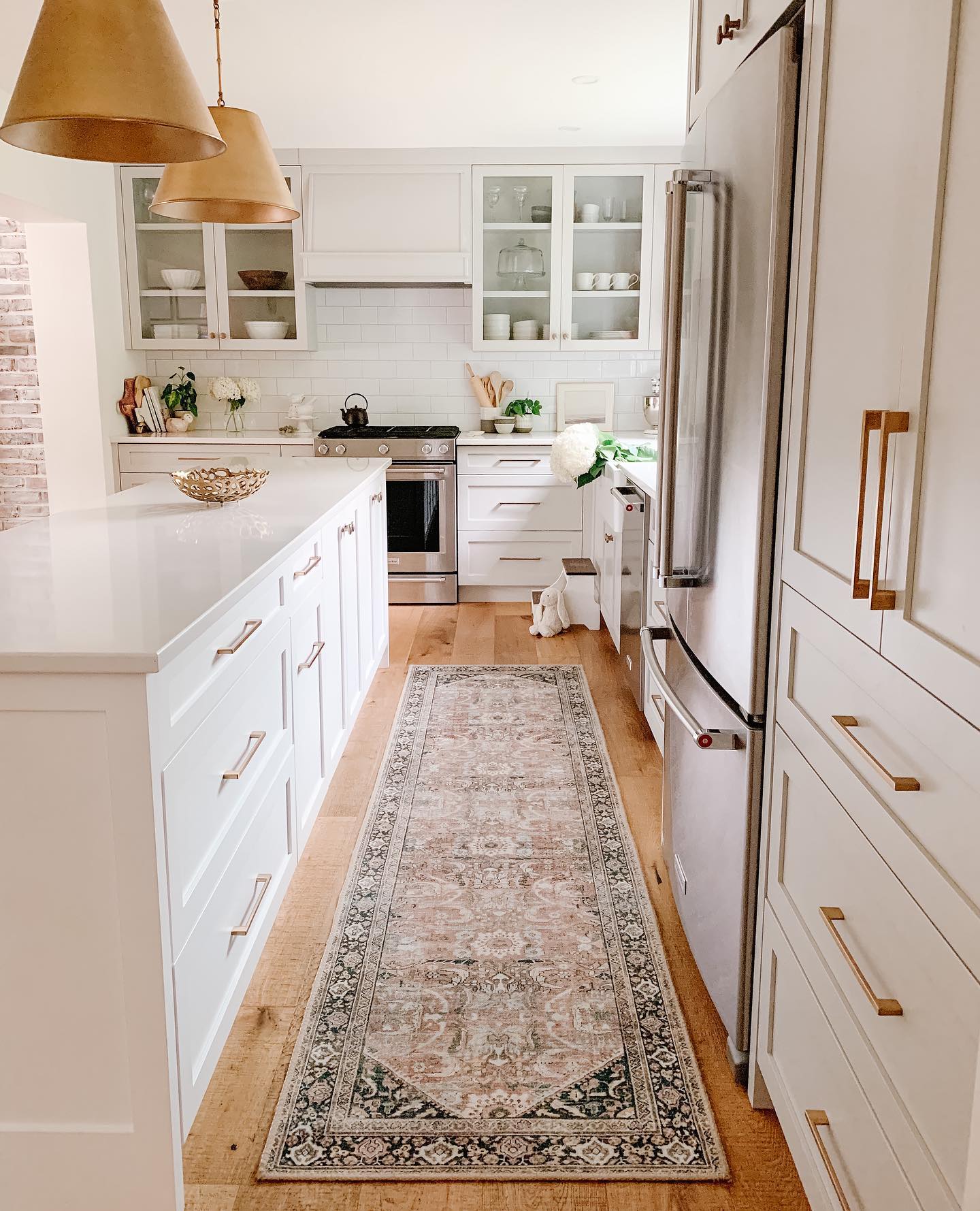
Image Source: image1.rugs-direct.com
Grasping Why Size Matters
Picking the right size for your kitchen runner is more important than you might think. It’s not just about looking good. It’s also about safety and how you use your kitchen every day.
Safety First
A rug that is too big can be a trip danger. If it bumps into cabinets or walls, the edges might curl up. This makes it easy to catch your foot and fall. A rug that is too small might shift around a lot, which can also cause slips. A runner that fits just right stays in place better, especially with a good rug pad. It makes your kitchen a safer place to walk and work.
Comfort While You Work
Think about how much time you stand in your kitchen. You stand at the sink to wash dishes. You stand at the stove to cook. You stand at the counter to chop food. A runner gives a soft spot for your feet. It can help ease leg and back tiredness. But only if it covers the right spots. A runner that is too short won’t help when you step to the side at the sink. A runner that is too narrow won’t give you much room to move your feet while standing. The right length means comfort where you need it most.
Making Your Kitchen Look Good
The size of a runner changes how your kitchen feels. A runner that is too small can look lost in the space. It might make the room feel bigger in a way that doesn’t look nice. A runner that is too big can make the kitchen feel crowded. It might hide too much of your lovely hard floor. The right size helps to make the kitchen feel put together. It adds color, pattern, and texture in a way that makes the room feel warm and finished. It helps define areas like the cooking zone or a walkway. Getting the size right is a big part of making your kitchen look its best.
Different Kitchen Shapes and Runner Needs
Kitchens come in many shapes. Each shape works best with certain rug sizes and placements. Thinking about your kitchen’s layout helps you decide on the Ideal kitchen runner length.
Runner Needs for Galley Kitchens
A galley kitchen is long and narrow. It usually has counters and cabinets on two sides. There is a walkway down the middle. A runner is perfect for a galley kitchen. It fits right into that walkway.
- Placement: The runner should go down the center of the walkway.
- Length: How long should it be? It should fill most of the walkway length. But not all of it. You still want to see some floor at each end. This helps the kitchen feel open. It also stops the rug from blocking doorways if they are at the ends of the galley.
- Width: The runner should be narrower than the walkway. Leave space on both sides. Aim for 6 to 12 inches of floor showing on the left and right of the runner. This guides your eye down the length of the kitchen. It makes the walkway feel clear and open, not blocked by the rug touching the cabinets.
- Sizing: So, for a Runner rug for galley kitchen size, measure the length of your walkway. Subtract 1 to 2 feet (12-24 inches total) from that length. This is a good target length for your runner. Then, measure the width of the walkway. Subtract 1 to 2 feet from that width. This tells you the right width for your runner. Many galley kitchens use runners that are 2 or 3 feet wide. The length could be anywhere from 6 feet to 12 feet or more, depending on how long the kitchen is.
Runner Needs in Open Plan Kitchens
Open plan kitchens connect to other rooms like living or dining areas. Rugs help define areas in these large spaces.
- Placement: In an open plan kitchen, you usually put runners in specific work zones. The most common spot is in front of the kitchen island. Another spot is in front of the sink or the stove.
- Length: The length depends on the zone. If it’s in front of a sink, it should cover the length of the sink area. If it’s by an island, it should run most of the length of the island.
- Width: The width should be good for where you stand. A standard runner width (like 2 or 3 feet) usually works well. It gives enough space to stand comfortably.
- Sizing: For a Kitchen island runner size, measure your island length. A runner that is 1 to 2 feet shorter than the island is a good rule. For a sink or stove area, measure that section of counter or appliance. The runner should be about the same length, perhaps slightly shorter, again leaving some floor on the ends.
Runner Needs for L-Shaped and U-Shaped Kitchens
These kitchens have counters and cabinets on two (L-shaped) or three (U-shaped) walls. They often have a wider central area or a walkway between parallel counters.
- Placement: You can place a runner in the main work zone. This is often in front of the sink and possibly reaching towards the stove. Or, if there’s a main walkway through the “U” or “L,” a runner can go there.
- Length: If covering the sink/stove area, measure that length. The runner should match it, leaving floor space. If covering a walkway, measure the walkway length.
- One Runner or Two? In some large L or U shapes, one long runner might not work. It might look odd going around a corner. You could use two runners. One in front of the sink, one in front of the stove or main prep area. Make sure they are the same style and similar sizes if possible. They should not touch. There should be floor space between them.
- Sizing: Measure the main standing or walking zone. Use the 6-12 inch rule for edges. Decide if one runner covers enough area or if two separate rugs make more sense for your layout.
Key Kitchen Runner Length Guidelines
There are some simple rules to follow when picking the length of your kitchen runner. These rules help make sure the rug looks right and works well in your space. Following these Kitchen runner length guidelines makes Sizing a kitchen runner much easier.
How Much Space Around the Edges?
We talked about this a bit, but let’s be clear. This is a key rule.
- Sides: Leave 6 to 12 inches of hard floor showing on the long sides of the runner. If the runner is in a walkway, this space is between the runner and the cabinets or walls. If the runner is in front of an island, this space is between the runner and anything next to it (like bar stools or another walkway).
- Ends: Leave 6 to 12 inches of hard floor showing on the short ends of the runner. This space is between the end of the runner and the start of a cabinet run, a wall, or a doorway.
Why is this rule important?
- It makes the space look balanced. The rug feels like it belongs, not just dropped anywhere.
- It lets you see your nice kitchen floor.
- It makes cleaning easier around the rug.
- It helps prevent tripping hazards. The rug ends are not right where people step into the space.
So, when you measure your space, subtract this amount from the total length you want to cover. For example, if you want the rug to cover a 10-foot area in front of your counter, you might look for an 8-foot or 9-foot runner (10 feet minus 1-2 feet for the ends). This helps find the Ideal kitchen runner length.
Covering Your Work Zones
Your runner should be placed where you stand the most. The length should cover that standing area.
- Sink Area: If your sink area is 3 feet wide (just the sink basin), a runner needs to be longer than that. You move side to side while washing dishes. A 5 or 6-foot runner is a good start for many sink areas. It covers the space in front of the sink and a little on each side.
- Stove Area: Similar to the sink. You stand in front of the burners and the oven door. A runner should cover this main standing spot.
- Prep Area: If you have a long counter where you chop and get food ready, you might stand in different spots along it. A longer runner can cover more of this area.
The length of your runner should match the length of the work zone you want to cover, plus a little extra room for moving feet, but still leaving space at the ends of the entire counter run or walkway.
Length Relative to Walkways
If the runner is in a main walkway, its length helps guide the eye.
- A runner that is too short in a long walkway looks odd. It stops suddenly.
- A runner that is almost the full length of the walkway feels more natural. It leads you through the space.
- Remember the 6-12 inch rule for the ends here too. Don’t let the runner hit the walls or doorways at the ends of the walkway.
By keeping these simple rules in mind, you can figure out the best size for your kitchen runner based on your kitchen’s shape and where you need the rug most.
Checking Standard Kitchen Runner Sizes
Runner rugs come in common sizes. Knowing these helps you pick from what is usually available. It also gives you a starting point when Sizing a kitchen runner. These are often called Standard kitchen runner sizes. You can find these sizes listed as Runner rug dimensions kitchen.
Common Lengths and Widths
Here are some sizes you will see often:
-
Widths:
- 2 feet (about 24 inches) – This is very common. Good for narrower walkways or smaller spaces.
- 2.5 feet (about 30 inches) – A little wider.
- 3 feet (about 36 inches) – Also common. Good for wider walkways or in front of islands.
- Some runners come wider, like 4 feet, but these are less common for typical kitchen walkways or in front of standard counters.
-
Lengths:
- 4 feet (about 48 inches) – Shorter runner. Might work for just a sink area if it’s small.
- 6 feet (about 72 inches) – A very popular length. Good for many standard sink areas or shorter islands.
- 8 feet (about 96 inches) – Also very popular. Works for longer sink/stove areas, medium islands, or shorter galley kitchens/walkways.
- 10 feet (about 120 inches) – Good for longer islands or longer galley kitchens/walkways.
- 12 feet (about 144 inches) – For very long kitchens or walkways.
Using a Simple Kitchen Rug Size Chart
Here is a simple chart to show common sizes and where they might fit. Remember, these are guides. Always measure your own space! This is like a basic Kitchen rug size chart.
| Common Runner Size (Width x Length) | Approx. Inches (Width x Length) | Good Spots for This Size | Notes |
|---|---|---|---|
| 2 ft x 6 ft | 24 in x 72 in | Standard sink area, Short island (under 8 ft), Shorter galley section | Classic, fits many basic needs |
| 2 ft x 8 ft | 24 in x 96 in | Longer sink/stove area, Medium island (8-10 ft), Shorter galley walkway | Very popular length |
| 2 ft x 10 ft | 24 in x 120 in | Long island (10-12 ft), Medium galley walkway | Covers more ground |
| 3 ft x 8 ft | 36 in x 96 in | Wider walkway, In front of larger island (8-10 ft) | Wider, feels more substantial |
| 3 ft x 10 ft | 36 in x 120 in | Wider, longer walkway, In front of long island (10-12 ft) | For bigger spaces |
This chart helps you see what sizes are easy to find. You can measure your kitchen space first, then look at this chart to see which standard size is closest to your needs, keeping the 6-12 inch rule in mind. For example, if you measure a 9-foot area in front of your sink and counter that you want to cover, an 8-foot runner might be a good fit (leaving about 6 inches on each end). If you have a 10-foot island, an 8 or 9-foot runner is likely the best Kitchen island runner size from standard options.
Simple Steps to Size Your Space
Okay, enough rules and charts! Let’s get real. How do you actually figure out what size runner to buy for your kitchen? It’s easy! You just need a few simple steps. This is about Sizing a kitchen runner.
Step 1: Get Your Tools Ready
You only need two things:
- A tape measure. A long one is best, like 25 feet. But any tape measure will work.
- Something to write with (pencil or pen) and something to write on (paper or your phone).
Step 2: Decide Where the Runner Will Go
Think about your kitchen layout. Where do you need the runner the most?
- Is it in front of the sink?
- Is it along the stove?
- Is it in a walkway?
- Is it in front of the kitchen island?
Maybe you need one runner for just the sink area. Or maybe you want a long one for a galley kitchen walkway. Know the exact spot you want to put it.
Step 3: Measure the Length You Want to Cover
Stand where the runner will start. Imagine the runner lying there. Where do you want it to end?
- If it’s in front of the sink/counter: Start measuring at one end of the section you want to cover (like where the counter starts or ends). Measure all the way to the other end of that section. Keep the tape measure straight along the floor. Write down this total length.
- If it’s in a walkway: Start measuring at one end of the walkway. Measure all the way to the other end where the walkway stops or hits a wall/doorway. Write this down.
- If it’s in front of an island: Start at one end of the island. Measure all the way to the other end of the island. Write this down.
This is the total length of the space you are working with.
Step 4: Think About the Edges (Subtract for Fit!)
Now, remember our rule about leaving space? You need to subtract that space from the total length you just measured.
- Decide how much floor you want to show at each end of the runner. Maybe 6 inches on one end and 6 inches on the other? That’s 12 inches total (1 foot). Or maybe 12 inches on each end? That’s 24 inches total (2 feet).
- Subtract that total edge space from the length you measured in Step 3.
- Example: You measured a 10-foot (120 inch) area in front of your counter. You want to leave 9 inches of floor at each end. That’s 18 inches total (9 + 9). 120 inches – 18 inches = 102 inches.
- Example: Your galley walkway is 15 feet long. You want to leave 1 foot (12 inches) at each end. That’s 2 feet total (24 inches). 15 feet – 2 feet = 13 feet.
The number you get after subtracting is the target length for your runner.
Step 5: Measure the Width of Your Space (If Needed)
For walkways or spaces where the width is important, measure that too.
- If it’s a walkway: Measure the distance between the cabinets or walls on each side.
- If it’s in front of an island: Measure the distance from the island to the opposite counter or wall (if it’s tight).
- Decide how much floor you want to show on the long sides of the runner (again, 6 to 12 inches is good). Subtract that amount from the total width measurement (subtract from both sides, so 12 to 24 inches total). This gives you your target width.
Step 6: Compare Your Target Size to Standard Sizes
Now you have a target length and maybe a target width. Look back at the Standard kitchen runner sizes or the Kitchen rug size chart. Find the standard size that is closest to your target size without going over your maximum space.
- Example: Your target length is 102 inches (about 8.5 feet). An 8-foot (96 inch) runner is a good standard size that is close but leaves slightly more than your planned 9 inches on each end (it would leave about 12 inches on each end if centered). A 10-foot (120 inch) runner would be too long.
- Example: Your target length is 13 feet. A 12-foot runner is a good standard size.
- Example: Your walkway is 4 feet wide (48 inches). You want to leave 9 inches on each side (18 inches total). Your target width is 48 – 18 = 30 inches. A 2.5-foot (30 inch) wide runner is a perfect match! A 2-foot (24 inch) wide runner would also work, leaving a bit more floor. A 3-foot (36 inch) runner would be too wide, leaving only 6 inches on each side.
Write down the standard size that seems best for your spot. You have now figured out the best Runner rug dimensions kitchen for your needs.
Best Kitchen Runner Rug Placement
Knowing the right size is great, but putting the rug in the best spot is also key. Kitchen runner rug placement matters for looks and use.
Centering in a Walkway
If your runner is in a straight walkway (like a galley kitchen or a path between counters), center it.
- Measure the width of the walkway.
- Measure the width of the runner.
- Subtract the runner width from the walkway width. This tells you the total amount of floor space left over.
- Divide that number by two. That’s how much floor space you should leave on each side of the runner.
- Move the runner until it has that equal amount of space on both sides.
This makes the walkway look balanced and neat.
Placing in Front of Sink or Stove
If the runner is meant for a work zone like the sink or stove, place it right in front of the appliance or main section of counter.
- The goal is for your feet to be on the rug when you are standing at that spot.
- Center the runner on the sink or stove area.
- Make sure the length covers the area where you move side to side.
- Remember to leave 6-12 inches of floor at the ends of the counter run or the walkway leading to this spot. Don’t put the rug right against a wall or cabinet side if you don’t have to.
Placing Along an Island
A runner by an island usually runs the length of the island.
- Centered: Center the runner in the walkway area in front of the island, just like centering in a regular walkway.
- Length: As we talked about for Kitchen island runner size, the runner length should be close to the island length, maybe 1-2 feet shorter total, leaving space at the ends of the island. Place the runner so it is centered along the island’s length. This means roughly equal space showing on the floor at both ends of the island next to the runner.
Handling Doorways
Be careful if your runner goes near a doorway.
- Make sure the runner does not block the door from opening and closing easily.
- The end of the runner should be far enough from the doorway that the door swings freely over the hard floor, or at least over the very thin edge of the rug. A thick rug near a door is a problem. This is another reason the 6-12 inch space rule is good near doorways.
Using Multiple Runners
In large or oddly shaped kitchens (like a big L or U shape), you might use two runners.
- Place them in different work zones, like one at the sink and one at the stove.
- Make sure they are the same style, color, and ideally, width. Their lengths can be different if needed for the space.
- Leave clear floor space between the two runners. They should not touch or overlap. This keeps the look clean and avoids trip spots.
Good placement makes your chosen runner size work its best for your kitchen.
More Than Just Length: Other Things to Think About
While length is the main focus, other things about the runner matter too. These aren’t about the size rules, but they help you pick the overall Best size runner for kitchen.
Width Matters Too
We mentioned width when measuring walkways. But even if your space is wide open, the runner’s width changes things.
- A 2-foot wide runner in a very large kitchen might look too narrow. It might feel like a path instead of a zone.
- A 3-foot wide runner feels more substantial. It takes up more floor space and can make a bigger statement.
- Think about how much side-to-side room you need when standing at the counter. Do you shift your feet a lot? A wider runner gives you more space to do that while staying on the rug.
Material and Thickness
The material of the runner affects how it feels and how easy it is to clean. But it can also slightly affect placement.
- A thick, plush runner might feel great on your feet. But it can be a problem near doors that swing low.
- A very thin runner might move around more unless you use a good rug pad.
- Think about how easy the material is to clean, especially in a kitchen where spills happen!
Don’t Forget a Rug Pad!
A rug pad is almost a must-have for a kitchen runner.
- It stops the rug from slipping. This is huge for safety.
- It adds cushioning, making the rug feel softer under your feet.
- It helps protect your floor from scratches.
- It can help the rug lie flatter and prevent edges from curling.
- Make sure the rug pad is slightly smaller than the runner (about 1 inch shorter on all sides is good).
Style: Color, Pattern, and Texture
Once you have the size right, pick a style you love!
- A bold pattern can hide spills and add energy.
- A solid color can make the kitchen feel calmer.
- Texture adds interest.
The style doesn’t change the size you need, but finding a rug you love in the right size makes your kitchen feel more like you.
Making Your Final Choice
Picking the perfect kitchen runner comes down to putting all these pieces together.
- Know your space: Measure the area where the runner will go. This is the most important step. Use our simple measuring steps.
- Think about placement: Where exactly will it sit? Will it be in a walkway, by an island, or in front of the sink? Picture it there.
- Apply the rules: Remember to leave 6 to 12 inches of floor around the runner, especially at the ends. This gives you your target length and width.
- Check standard sizes: Look at the Standard kitchen runner sizes or Kitchen rug size chart. Find the size closest to your target size without being too big for your space.
- Consider other factors: Think about width, material, and needing a rug pad.
- Pick your favorite style: Find a runner in the right size that looks great with your kitchen.
By following these steps, you will find the Best size runner for kitchen that is safe, comfy, and looks wonderful in your home. Runner rug dimensions kitchen should match your measured space, not just a guess! Getting the size right makes a big difference. It makes the rug work with your kitchen, not against it. It makes your kitchen feel finished and put together.
What If Your Kitchen Is Different?
Sometimes, standard sizes just don’t seem to fit perfectly. What can you do then?
Runner is Too Long
You measured and the closest standard size is a little too long for your ideal space.
- Can you use it anyway? Maybe. But be careful. If it hits a wall or cabinet and bunches up, it’s a trip risk. If it blocks a door, it won’t work.
- Can you fold an end? Usually, this is not a good idea. Folding a runner can make a thick hump that is very easy to trip over. It also usually doesn’t look good.
- Is there another spot? Maybe the runner works better in a different part of the kitchen, or even another room?
- Look for less common sizes: Some stores might carry sizes like 7 feet or 9 feet long. Look online for more options.
Runner is Too Short
You found a runner you love, but it’s a bit shorter than your ideal length.
- Can you live with it? If it still covers the main standing area (like the sink), it might be okay. It just means you’ll have more floor showing at the ends.
- Use two runners? As we talked about, in a very long space, two runners might work better than one too-short one.
- Look for custom sizes: Some rug companies can make runners to your exact size. This usually costs more, but it guarantees a perfect fit. This is great if standard Runner rug dimensions kitchen don’t work for you.
Very Wide Walkway
If your kitchen has a very wide walkway, maybe 5 or 6 feet across, a standard 2 or 3-foot runner might look lost.
- Use a wider runner: Look for runners that are 4 feet wide or more.
- Use two runners side-by-side: This is tricky and often doesn’t look great in a kitchen. It can create a seam down the middle. It’s usually better to find one wider rug or accept that a standard runner only covers part of the width.
- Center the standard runner: If you use a standard width runner, make sure it is perfectly centered in the wide walkway. Leave plenty of space on both sides.
Getting the exact right size can be hard. It’s okay if it’s not perfect down to the inch. The goal is to get as close as possible to the ideal size for safety, comfort, and looks, following the main guidelines.
Simple Questions About Kitchen Runners (FAQ)
Here are answers to some common questions people ask about kitchen runners.
Q: Can I use two runners in my kitchen?
A: Yes, you can use two runners. This works well in long galley kitchens or large L or U-shaped kitchens. Place them in separate work zones, like one at the sink and one at the stove. Make sure they look good together and have floor space between them.
Q: Should the runner touch the cabinets or walls?
A: No, it’s generally best not to have the runner touch the cabinets or walls. Leave some floor showing around it. Aim for 6 to 12 inches of hard floor on all sides. This helps the rug look neat and makes cleaning easier.
Q: How much space should be around a kitchen runner?
A: A good rule is to leave about 6 to 12 inches of hard floor showing on the long sides and the short ends of the runner.
Q: Does the runner material affect what size I should choose?
A: Mostly, no. The size (length and width) rules are based on your space and where you stand. However, a very thick rug might need extra thought near doorways or low cabinets.
Q: What is the most common size for a kitchen runner?
A: Common sizes are 2 feet by 6 feet and 2 feet by 8 feet. These fit many standard kitchen layouts and work zones like in front of a sink or a standard-length island.
Q: My kitchen is small. Can I still use a runner?
A: Yes! Even in a small kitchen, a runner can add comfort and style. A 2×6 foot runner is a good size to start with for a smaller space, placed in the main work zone like the sink area. Just make sure it fits the walkway without making it feel crowded.
Q: How do I stop my kitchen runner from slipping?
A: Always use a non-slip rug pad under your kitchen runner. This is the best way to keep it safely in place on hard floors.
Putting It All Together
Choosing the right length for your kitchen runner is a simple process once you know what to look for. It starts with measuring your space and deciding where the rug will go. Follow the Kitchen runner length guidelines to make sure the rug fits well. Leave space around the edges – aim for 6 to 12 inches of floor showing. Think about your kitchen’s shape, whether it’s a galley, open plan, or L/U shaped. Use the Standard kitchen runner sizes and the Kitchen rug size chart to find a size that works for you.
Remember to measure the areas where you stand the most, like the sink or island. This helps you find the Ideal kitchen runner length. By paying attention to these details and considering Runner rug dimensions kitchen carefully, you will pick the Best size runner for kitchen. This makes your kitchen safer, more comfortable, and looking its very best. Don’t guess – measure! It makes all the difference.