How high is a kitchen counter? What is the standard kitchen counter height? The most common or standard height for a kitchen countertop in many parts of the world, especially North America, is 36 inches. This is the average countertop height found in most homes and is considered a typical kitchen counter dimension. This height includes the cabinet base and the countertop material that sits on top.
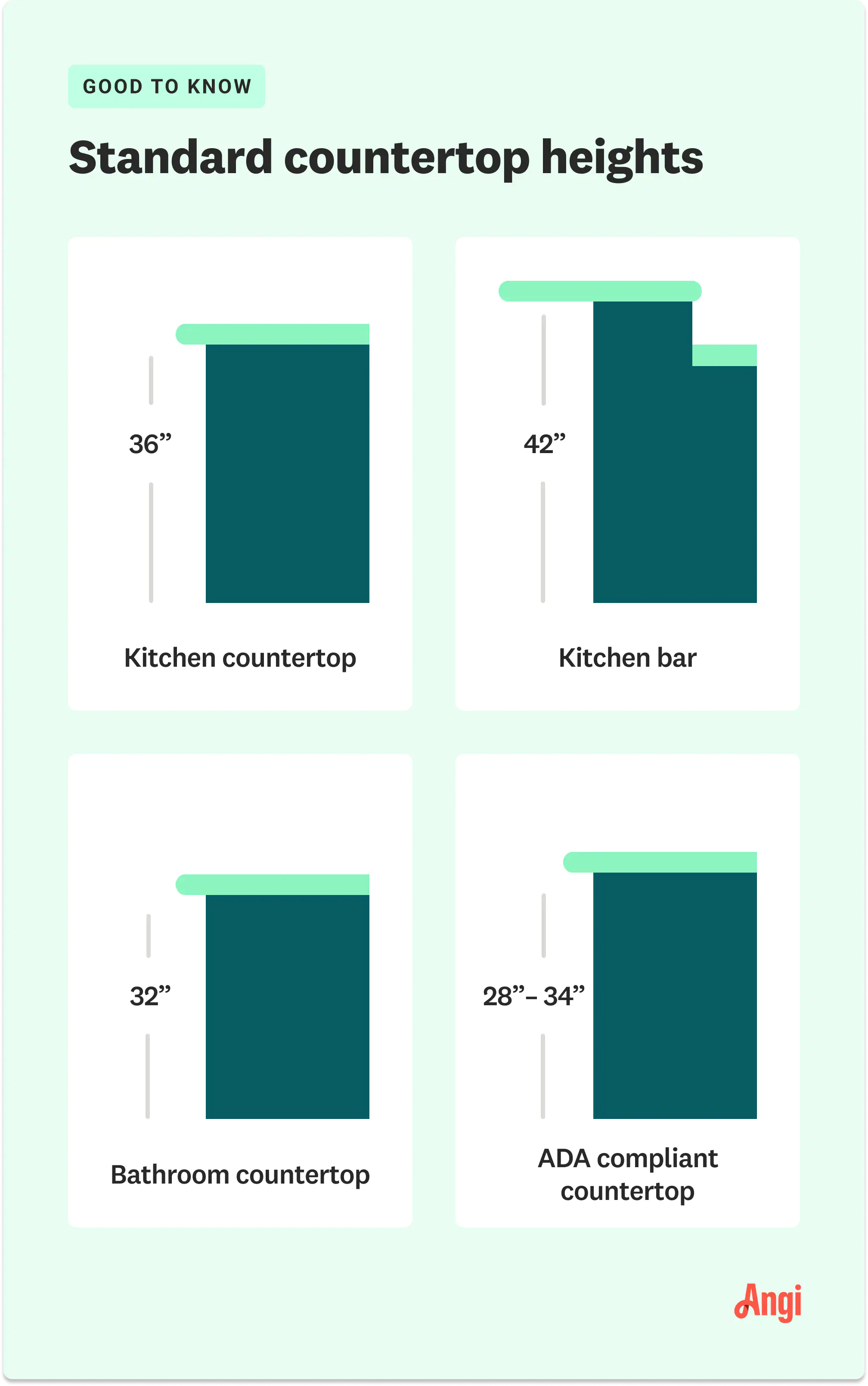
Image Source: media.angi.com
Exploring the Standard Height: Why 36 Inches?
Kitchen counter height did not just happen by chance. It came about over many years. Builders and designers thought a lot about how people use their kitchens. They watched how people cooked, cleaned, and prepared food. They looked at how tall the average person is.
Think about someone standing at a counter to chop vegetables. If the counter is too low, they have to bend over. This can hurt their back. If the counter is too high, they have to reach up. This can strain their shoulders and arms.
The 36-inch height was found to be the most comfortable for most adults. It allows them to stand and work with a slight bend in their elbows. This is the natural position for many kitchen tasks. It helps reduce stress on the body during things like cutting, mixing, and washing dishes. It’s a height that feels natural for the hands and arms when working over the surface. This standard height was chosen because it works well for the largest number of people. It is a key part of kitchen design standards height.
This standard became widely used. It made building kitchens simpler. It also meant kitchen tools and appliances could be designed to fit this common height. This consistency helps make kitchen planning easier for everyone. When someone talks about the average countertop height, they usually mean 36 inches.
Measuring the Standard: Inches and Centimeters
The standard kitchen counter height is mainly measured in inches. This is the most common unit in countries like the United States. The standard is 36 inches.
But what about other countries? Many places use the metric system. In the metric system, lengths are measured in centimeters or meters.
The standard 36 inches equals about 91.44 centimeters. So, if you are in a country using centimeters, the standard height might be listed as around 91.5 cm. Some standard guidelines in metric countries might round this slightly to 90 cm or even 92 cm. These small differences are usually not a big problem for most people. They are very close to the 36-inch standard.
Knowing both the standard counter height inches and kitchen counter height cm is helpful. It matters if you are using plans from different countries or buying materials from different places.
Here is a look at the numbers:
Standard Measurements
| Measurement Type | Inches | Centimeters |
|---|---|---|
| Standard Counter Height | 36 | 91.44 |
This table shows the main standard height. It helps you see the size in both common units. When you see kitchen plans or buy cabinets, check if they use inches or centimeters. This helps make sure everything will fit together at the right height. The 36-inch mark is the base point for typical kitchen counter dimensions.
The Right Fit: How Standard Height Helps You Work
The reason 36 inches became standard is linked to how our bodies work. This is called ergonomics. Ergonomic kitchen counter height means designing the counter to fit the person using it well. It aims to make kitchen tasks easier and safer for your body.
At 36 inches, the counter is usually just below the elbow for the average person standing upright. This position is good for many tasks.
- Chopping and Cutting: When you chop vegetables or meat, you press down slightly. A counter that is too high makes this hard. A counter that is too low makes you hunch over. At 36 inches, your elbows can bend naturally. Your back stays straighter. This puts less stress on your wrists, elbows, and back.
- Washing Dishes: Standing at a sink for a while can be tiring. The sink is usually set into the counter. This means the bottom of the sink is lower than the counter top. At a 36-inch counter height, leaning over the sink feels more natural for most people. It helps avoid straining your back while you scrub pots and pans.
- Mixing and Stirring: Tasks like mixing batter or stirring a pot require some arm movement and often force. A counter at the right height lets you use your body weight better. This makes the work feel less tiring.
- General Workspace: For placing ingredients, reading recipes, or just setting things down, 36 inches is a comfortable level to reach and see across.
While 36 inches works well for most people, it is based on averages. People who are much taller or much shorter than average might find it less ideal. For example, someone very tall might still need to bend more than is comfortable. Someone very short might need to reach up slightly. This is why thinking about your own height and needs is important, even with the standard height.
The standard height is a great starting point because it fits the largest group of people reasonably well. It helps reduce common body pains linked to kitchen work for many users. This focus on comfort and efficiency is key to ergonomic kitchen counter height.
Other Heights to Think About
While 36 inches is standard for main kitchen counters, not all surfaces in a kitchen are this height. Other heights serve different purposes. Thinking about these different levels is part of typical kitchen counter dimensions and overall kitchen design standards height.
Kitchen Island Heights
A kitchen island is a piece of counter that stands alone in the kitchen. Islands are very popular. They can have different heights depending on what they are used for.
- Standard Height Island: Many islands are built at the standard 36 inches high. These islands are often used as extra workspace for chopping, mixing, and preparing food. They act like another section of counter. Sometimes, they have a sink or stove top in them. These are great for prepping food with others.
- Multi-Level Island: Some islands have sections at different heights. Part might be standard 36 inches for working. Another part might be higher or lower for seating or other tasks.
- Table Height Island: Some islands are lower, like a table. Table height is usually around 30 inches (about 76 cm). These islands are good for sitting at on chairs, like a dining table. They are also sometimes used as a lower prep area, which can be better for tasks like rolling dough.
The height of a kitchen island depends on how you want to use it. A kitchen island height designed for prepping food will likely be 36 inches. One designed for casual eating might be higher or lower.
Bar Height Counters
Bar height is a popular choice for islands or for counters that separate the kitchen from another room. A bar height countertop is taller than the standard kitchen counter.
- Typical Bar Height: Bar height is usually about 42 inches (about 107 cm). This is 6 inches taller than the standard counter.
- Why Use Bar Height?
- Seating: It is the right height for sitting on tall bar stools. This creates a casual eating spot or a place for guests to sit and chat while you cook.
- Visual Separation: The extra height creates a visual barrier. It can hide mess on the lower kitchen counter side from people sitting on the other side.
- Defining Space: It helps separate the kitchen area from a living room or dining room in an open plan home.
Bar height counters are not meant for standing and prepping food for a long time. They are usually too high for comfortable chopping. Their main purpose is seating and creating a distinct area. So, while bar height countertop is a kitchen counter type, it serves a different function than the standard 36-inch work surface.
Counters for Everyone: Making Kitchens Easy
Not everyone can comfortably use a standard 36-inch counter. Some people need kitchens designed with their specific needs in mind. This is called accessible design. Accessible kitchen counter height focuses on making the kitchen usable for people with disabilities, such as those who use wheelchairs.
- Lower Heights: Accessible counters are typically lower than standard. They are often between 30 to 34 inches high (about 76 to 86 cm).
- Knee Space: A key part of accessible design is having open space underneath the counter. This allows a wheelchair user to roll underneath and get close to the work surface. Standard cabinets go all the way to the floor, blocking this space. Accessible counters need knee space, often 27 to 30 inches high and at least 30 inches wide.
- Other Features: Accessible kitchens might also have features like roll-under sinks with shallow bowls and controls at the front, and pull-out shelves in cabinets.
Accessible kitchen counter height is a vital consideration in modern kitchen design. It ensures that more people can use the kitchen independently and safely. It is important to follow guidelines, like those from the Americans with Disabilities Act (ADA) in the US, when designing accessible kitchens. These guidelines provide clear measurements and requirements.
Picking the Right Height: What Matters
Choosing the best counter height for your kitchen is a big decision. While the standard is a good starting point, thinking about how you live and work is key. This is where kitchen design standards height becomes personal. Many factors should guide your choice beyond just the standard 36 inches.
Things to Think About
- How Tall Are You? This is perhaps the most important personal factor. The 36-inch standard works well for people of average height (around 5’3″ to 5’10”).
- If you are significantly taller (say, over 6 feet), a 37 or 38-inch counter might feel more comfortable. It could reduce how much you need to bend.
- If you are significantly shorter (say, under 5’2″), a counter slightly lower than 36 inches might be better. Even 35 or 34 inches could make a difference. It would help you reach the back of the counter more easily and work without straining your shoulders.
- The best way to check is to stand at a counter or table of a certain height. See how it feels when you pretend to chop or mix. Your elbows should have a relaxed bend.
- What Do You Do Most in the Kitchen?
- If you do a lot of chopping and prep work while standing, the standard 36 inches (or slightly adjusted for your height) is usually best.
- If you love baking, especially rolling dough, a slightly lower section (maybe 30-32 inches) can be very helpful. It lets you use your body weight better and reduces strain on your wrists.
- If you entertain a lot, a bar height counter for guests to gather might be important.
- Who Else Uses the Kitchen?
- Is the kitchen used by just one person? Then you can totally customize for their height.
- Are there multiple adults of different heights? The 36-inch standard is often the best compromise. Or, consider having different height zones, perhaps with an island or a separate prep area at a different level.
- Do children help in the kitchen? While you won’t build a counter just for them, thinking about lower areas or sturdy step stools is part of the design.
- Do elderly family members or those with mobility issues use the kitchen? Accessible heights and designs become very important here.
- How is Your Kitchen Set Up?
- If you have an open plan, using different counter heights (like a standard counter and a bar height island) can help define different areas without walls.
- The layout can affect flow. Making sure heights work well together for moving from one task area to another is part of good design.
- Accessibility Needs: As discussed earlier, if anyone in the home uses a wheelchair or has other mobility challenges, planning for accessible counter heights (30-34 inches with knee space) is necessary. It might be the entire kitchen, or just a dedicated section.
- Your Style and How it Looks: While function is key, the look matters too. Different counter heights can add visual interest to a kitchen. But make sure the look doesn’t get in the way of being able to use the kitchen easily.
Thinking through these points helps you move from the general average countertop height to the specific height that will make your kitchen most comfortable and useful for you. It involves looking at typical kitchen counter dimensions not just as numbers, but as they relate to the people using the space.
Getting it Right: How to Measure and Plan
Once you have an idea of the height or heights you want, you need to measure and plan carefully. The final height of your counter is made up of two main parts: the height of the base cabinets and the thickness of the countertop material.
- Cabinet Height: Standard base cabinets without a countertop are typically around 34.5 inches tall (about 87.6 cm).
- Countertop Thickness: Countertop materials come in different thicknesses.
- Laminate counters are often around 1.5 inches thick.
- Stone (like granite or quartz) or solid surface counters are commonly 1.25 inches (3 cm) or 1.5 inches thick. Sometimes they are built up to look thicker.
- Thinner materials like some ultra-compact surfaces might be less than an inch thick.
- Butcher block can range from 1.5 inches to much thicker if custom made.
To get the final counter height, you add the cabinet height and the countertop thickness.
Example: 34.5 inches (cabinet) + 1.5 inches (countertop) = 36 inches (total height).
Planning Steps
- Decide on Your Ideal Height: Based on your height and how you use the kitchen, decide on the target finished counter height(s).
- Consider Cabinet Height: If you are buying standard cabinets, they will likely be around 34.5 inches.
- Choose Countertop Material: Pick the material you want. Find out its standard thickness.
- Calculate Final Height: Add the cabinet height and the countertop thickness to see if you reach your target height.
- Adjustments:
- If the sum is too low or too high, you might need to adjust.
- Sometimes, cabinets are placed on a low platform called a toekick or base. The height of this base adds to the total. Adjusting the toekick height is one way to fine-tune the final counter height.
- Sometimes shims are used under the cabinets to slightly raise them and make them level. This can also affect the height slightly.
- If you need a height significantly different from the standard, you might need custom-height cabinets. This costs more but gives you the exact height you want.
- Test the Height: Before you commit, try to simulate the height. Stack boxes or books to the planned height. Stand at it. Pretend to chop or mix. See how it feels. This is the best way to know if the height is right for you.
Careful measurement and planning ensure that the standard counter height inches (or your chosen height) is actually achieved in your finished kitchen. It is important to get these typical kitchen counter dimensions right before installation starts.
Putting it Together: A Quick Look at Install
Knowing how counters are put in place helps you see why the cabinet height and countertop thickness matter. The process is usually like this:
- Cabinets Go In: The base cabinets are installed first. They are placed on the floor and secured. They are leveled so the top surface is flat. The height of these installed cabinets (including any base or toekick below them) is the base height.
- Countertop Goes On Top: Once the cabinets are secure and level, the countertop material is placed on top of them. This material is cut to fit the space. It is secured to the cabinets using screws or glue, depending on the material.
The total height, measured from the floor to the very top surface of the finished countertop, is the final measurement you care about. This confirms you reached the standard counter height or the specific height you planned for.
Good Reasons for the Right Height
Getting the counter height right is more important than you might think. It affects how you feel and work in your kitchen every day. Choosing the correct ergonomic kitchen counter height has many benefits.
Why It Matters
- You feel better when you cook: Working at a comfortable height means less stress on your body. You are less likely to finish cooking with a sore back or tired arms. This makes spending time in the kitchen more enjoyable.
- Your back hurts less: Hunching over a low counter is a common cause of back pain. Reaching up to a high counter can strain your shoulders. The right height helps you maintain better posture.
- You can work faster: When you are comfortable, you can work more efficiently. Tasks like chopping, mixing, and cleaning become easier and quicker.
- Moving around the kitchen is easier: When the main work surfaces are at a good height, moving between tasks feels more natural. There is less bending and reaching involved in your overall movement.
- It is safer to work: Counters that are too low or too high can increase the risk of accidents. A too-low counter might make you less stable while applying force (like chopping). A too-high counter could make it harder to control tools or lift heavy pots. The right height improves stability and control.
- The kitchen works for you: Instead of you having to adjust your body awkwardly to the kitchen, the kitchen works with your body. This is the core idea behind ergonomic design.
Choosing the right height goes beyond just looks. It is about making your kitchen a functional, comfortable, and healthy place to be. It directly impacts your daily experience in the heart of your home. This is why kitchen design standards height considers both usability and looks.
Things to Avoid When Picking Height
Even with the standard height known, people sometimes make mistakes when choosing or planning their kitchen counter heights. Knowing these common pitfalls can help you avoid them.
Mistakes to Skip
- Don’t just use the standard height without thinking: The 36-inch standard is great, but it is not perfect for everyone. Blindly following it without considering your own height and needs can lead to discomfort. Always test what height feels best for you personally.
- Don’t forget the counter material adds height: Remember that the final height is cabinets plus the countertop thickness. If you only plan based on cabinet height, your counter will end up too low. Make sure to factor in the thickness of your chosen stone, laminate, wood, etc.
- Make sure appliances fit under the counter: Standard dishwashers and ranges are designed to fit under a 36-inch counter. If you choose a significantly lower height, you need to make sure your appliances will still fit correctly underneath.
- Think about everyone who uses the kitchen: If you share the kitchen with others, try to find a height that is a good compromise. Or, design different areas at different heights if the layout allows. A height that is perfect for one person might be terrible for another.
- If someone needs help, make sure the counter works for them: Ignoring accessibility needs if a family member or frequent guest could benefit from them is a big mistake. Planning for accessible kitchen counter height, even in part of the kitchen, can make a huge difference in someone’s ability to use the space.
- Not Mocking Up the Height: Relying only on numbers is not enough. Standing at a simulated counter height is the best way to truly feel if it is comfortable for you. Use boxes, adjustable tables, or temporary setups to test.
Avoiding these common errors helps ensure that your new kitchen counter height is truly the right fit for you and your household, going beyond just typical kitchen counter dimensions.
What’s Next for Counter Heights
Kitchen design keeps changing. While the 36-inch standard kitchen counter height will likely stay the most common, we are seeing some new ideas and focuses.
- More Mix-and-Match Heights: Kitchens are becoming more flexible. Islands or long counters might have sections at different heights – maybe a standard 36-inch work area next to a 42-inch bar or even a 30-inch table section. This allows for many uses in one space.
- Focus on Personal Fit: More people are realizing that “standard” isn’t always “best” for them. There is a growing interest in customizing parts of the kitchen, including counter height, to perfectly fit the main user. Ergonomic kitchen counter height is becoming a bigger selling point.
- Accessibility Matters More: Designing kitchens that can be used by people of all abilities is becoming more standard, not just a special request. Accessible kitchen counter height options are more widely available.
- Smart Kitchens: Technology might play a role in the future. Imagine counters that can adjust height with the push of a button to suit different users or tasks. While not common yet, this shows how design can evolve.
The standard 36 inches remains the foundation, but kitchen design standards height is also about making kitchens more personal, flexible, and usable for everyone. The future of countertop height will likely involve more choices and more focus on individual needs.
Questions People Ask Often
Here are answers to some common questions about kitchen counter height.
Is 36 inches the only standard height?
No, 36 inches is the most common standard height for main work counters. It is the widely accepted average countertop height. But other standard heights exist for specific purposes, like 42 inches for bar height counters or lower heights (30-34 inches) for accessible kitchen counter height. Many homeowners also choose slightly different heights based on their personal comfort.
How does countertop thickness affect the final height?
The countertop thickness adds to the height of the base cabinet. Standard base cabinets are usually around 34.5 inches tall. If you add a 1.5-inch thick countertop, the final height is 36 inches (34.5 + 1.5 = 36). So, the thickness of your chosen material (stone, laminate, etc.) is a necessary part of the calculation to reach the standard counter height inches or your desired height.
What is the difference between counter height and bar height?
Counter height usually refers to the standard work surface height, which is typically 36 inches (about 91.44 cm). This height is best for standing tasks like preparing food. Bar height refers to a taller surface, usually around 42 inches (about 107 cm). This height is made for sitting on tall bar stools and is often used for casual eating or socializing, not for heavy prep work while standing. Bar height countertop is different in purpose from standard counter height.
Can I have counters at different heights in my kitchen?
Yes, absolutely! Having counters at different heights is a popular design choice. Kitchen islands are often used to create different height zones. You could have a standard 36-inch height island for prep, a 42-inch bar height section for seating, or even a 30-inch table height area. This allows different people to use the kitchen comfortably at the same time for different tasks. It is part of flexible kitchen design standards height.
What height is best for someone short or tall?
The 36-inch standard is a starting point. If you are significantly shorter or taller than average, the standard might not be the most comfortable.
* For shorter people (e.g., under 5’2″), a slightly lower counter (34 or 35 inches) might improve reach and reduce shoulder strain.
* For taller people (e.g., over 6 feet), a slightly higher counter (37 or 38 inches) might reduce back strain from bending.
The best way to find your ideal ergonomic kitchen counter height is to test it. Simulate different heights at home and see what feels most natural for your body while doing kitchen tasks.
Finding Your Perfect Height
The standard kitchen counter height is 36 inches. This average countertop height works well for many people and is a common measurement in typical kitchen counter dimensions. It is set at this height because it supports ergonomic kitchen counter height principles for the average adult, making tasks like chopping and washing more comfortable.
However, the best height for your kitchen is the one that works best for you. Think about your height, the height of others who use the kitchen, the tasks you do most often, and any needs for accessible kitchen counter height.
Remember that the final height comes from adding the cabinet height and the countertop thickness. Plan carefully, measure everything, and try to test different heights before you build or remodel.
By looking beyond just the standard number and thinking about your own needs, you can create a kitchen counter height that makes your kitchen a more comfortable, efficient, and enjoyable place to work and live. This is the real goal of good kitchen design standards height.