So, how high is a kitchen cabinet? The exact height of kitchen cabinets can vary quite a bit depending on where the cabinet is in your kitchen. However, there are standard heights used across the industry for base cabinets (which sit on the floor), wall cabinets (which hang above the counter), and tall cabinets (like pantries). A standard kitchen cabinet height for a base cabinet, including the countertop, is typically 36 inches from the floor. Wall cabinets hang above this, and their height is often 30, 36, or 42 inches, starting at least 18 inches above the counter. Tall cabinets are usually 84, 90, or 96 inches high.
Kitchen cabinets are important in any kitchen. They store dishes, food, pots, and pans. Knowing the standard sizes helps you plan your space well. It affects how your kitchen looks and how easy it is to use. Standard heights make designing, buying, and putting in cabinets simpler. Let’s look closely at these common kitchen cabinet measurements.
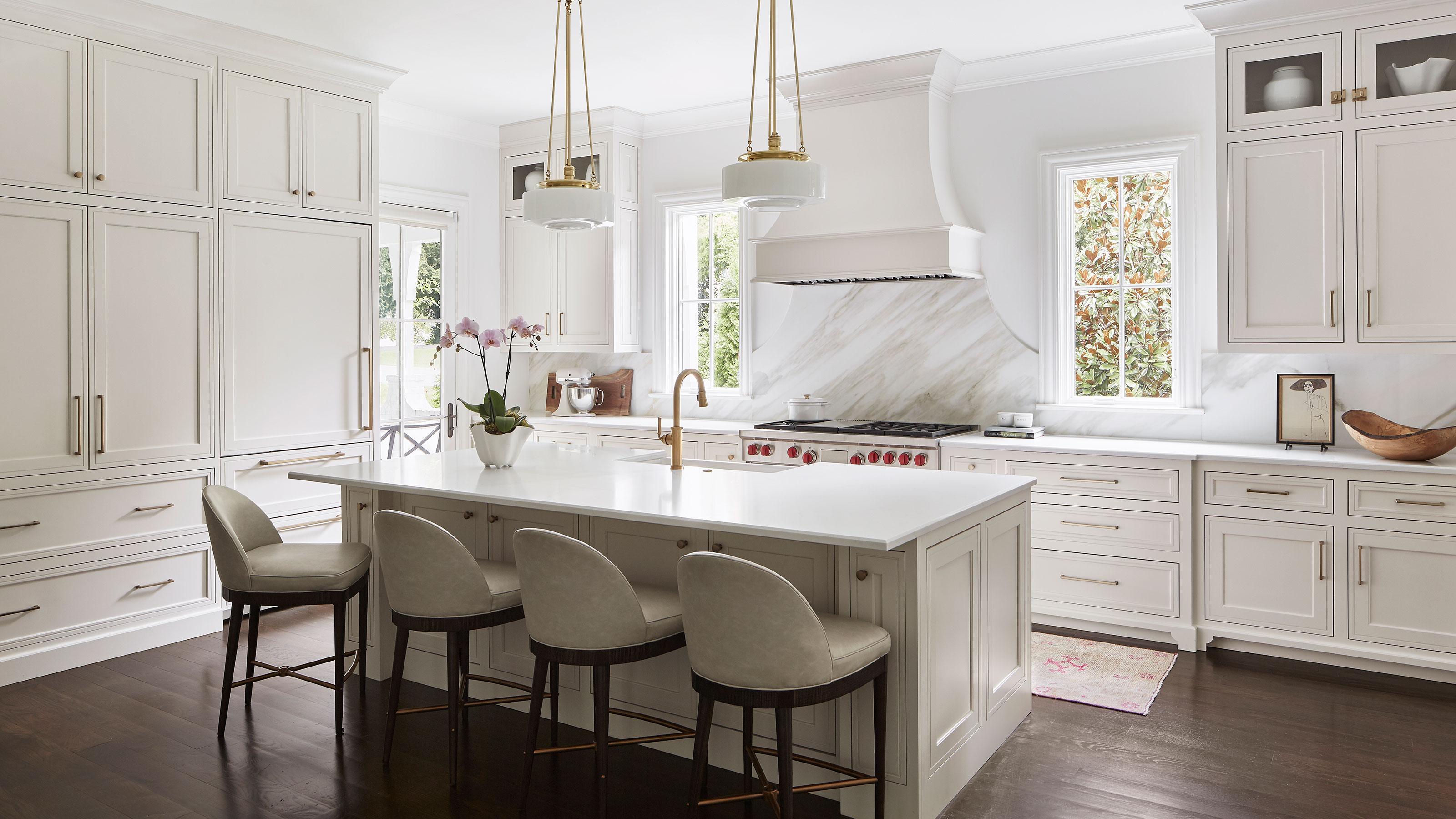
Image Source: cdn.mos.cms.futurecdn.net
Learning About Base Cabinet Height
Base cabinets are the ones that sit on the floor. They support your countertop. These cabinets are key to your kitchen workspace.
Checking Out the Standard Base Cabinet Size
The most common height for a standard base cabinet box is 34.5 inches. This measurement is from the floor to the top edge of the cabinet box itself, before the countertop is put on.
Why 34.5 inches? This height, with a typical 1.5-inch thick countertop added, makes the finished counter surface 36 inches from the floor. This 36-inch height is standard because it works well for most people. It’s a comfortable height for standing and working at the counter, like chopping vegetables or mixing ingredients.
More Base Cabinet Measurements
Besides height, base cabinets have standard depths and widths.
- Standard Depth: The common depth for base cabinets is 24 inches, not counting the door or drawer front. This depth gives you good storage space and is deep enough to fit most large appliances that sit on the counter.
- Standard Widths: Base cabinets come in many widths. Standard widths usually increase in steps of 3 inches. Common widths start at 9 or 12 inches and go up to 36 or 48 inches for single cabinets. Wider cabinets might have two doors instead of one.
The Toe Kick Area
Base cabinets don’t sit flat on the floor. They have a cut-out space at the bottom called a toe kick or kick plate.
- Standard Toe Kick Height: This space is usually 4.5 inches high.
- Standard Toe Kick Depth: It is typically 3 inches deep.
The toe kick lets you stand closer to the counter. Your toes can go into the space. This makes it more comfortable to lean slightly against the counter while working. It stops you from having to bend over as much.
Seeing How Base Height Works
Let’s break down the standard 36-inch counter height from the floor:
* Toe Kick: 4.5 inches
* Cabinet Box: 30 inches (34.5 inches total height – 4.5 inch toe kick)
* Countertop: 1.5 inches (This can vary, but 1.5 inches is common for laminate or standard stone with edge profile).
Total: 4.5 + 30 + 1.5 = 36 inches.
This standard base cabinet height and toe kick design are key parts of kitchen cabinet design standards. They help make kitchens easy and comfortable to use for most adults.
Deciphering Wall Cabinet Height
Wall cabinets, also called upper cabinets, hang on the wall above the base cabinets and countertop. They provide storage for things you need often, like dishes, glasses, and spices.
Checking Out Upper Kitchen Cabinet Dimensions
Wall cabinets have standard depths, widths, and heights.
- Standard Depths: Common depths for wall cabinets are 12 inches and 15 inches. Some might be deeper, up to 18 or 24 inches, but 12 inches is very common. A 12-inch depth keeps the cabinet from sticking out too far. It lets you reach the back easily.
- Standard Widths: Like base cabinets, wall cabinets come in widths that usually increase in 3-inch steps. They match base cabinet widths so you can line them up if needed.
- Standard Heights: Wall cabinets come in several standard heights. The most common are 30 inches, 36 inches, and 42 inches.
Figuring Out Height Above Counter
This is a very important measurement for wall cabinets. The space between the countertop and the bottom of the wall cabinets matters a lot.
- Minimum Cabinet Height Above Counter: Standard kitchen cabinet design standards say there should be at least 18 inches of space between the top of the countertop and the bottom of the wall cabinets.
Why 18 inches?
* Workspace: It gives you enough room to work comfortably on the counter.
* Appliances: Many small kitchen appliances, like coffee makers, blenders, and mixers, need this much space or more to fit under the cabinets.
* Visibility: It helps keep your workspace under the cabinets well-lit.
While 18 inches is the minimum standard, this space can sometimes be 20 inches or even 24 inches, especially if there are no cabinets over a certain section, or for design reasons. However, going much higher than 24 inches might make the upper shelves in the wall cabinets hard to reach for many people.
How Wall Cabinet Height Connects to Ceiling Height
The height of your wall cabinets (30, 36, or 42 inches) often depends on the height of your ceiling. Here’s how it usually works:
-
8-Foot Ceilings (96 inches):
- Base cabinet height (including counter): 36 inches
- Space above counter: 18 inches (minimum)
- This leaves 42 inches of space above the 18-inch gap (96 – 36 – 18 = 42).
- You can use 42-inch wall cabinets if you want them to go all the way to the ceiling (18″ gap + 42″ cabinet = 60″ from counter top to top of cabinet, which starts 36″ from floor, so 36+60 = 96″). This gives a clean look with no gap above the cabinets.
- Or, you could use 30-inch wall cabinets (18″ gap + 30″ cabinet = 48″ from counter top to top of cabinet). This leaves a 12-inch space above the cabinets (42 – 30 = 12). This space is often filled with crown molding or left open.
- Using 36-inch wall cabinets (18″ gap + 36″ cabinet = 54″ from counter top to top of cabinet) leaves a 6-inch space above the cabinets (42 – 36 = 6). This 6-inch space is perfect for adding decorative crown molding right up to the ceiling. This is a very common look.
-
9-Foot Ceilings (108 inches):
- Base cabinet height: 36 inches
- Space above counter: 18 inches
- This leaves 54 inches of space above the 18-inch gap (108 – 36 – 18 = 54).
- You could use 42-inch wall cabinets (18″ gap + 42″ cabinet = 60″ from counter top to top of cabinet). This leaves 12 inches above the cabinets (54 – 42 = 12). This space can be left open, used for decor, or filled with larger crown molding.
- For a look where cabinets go higher, you might stack cabinets (e.g., a 42-inch cabinet with a smaller 12-inch or 18-inch cabinet box on top, possibly with glass doors). This uses more of the vertical space.
-
10-Foot Ceilings (120 inches) or Higher:
- You have even more space. You would likely stack cabinets to reach closer to the ceiling or use very tall custom cabinets.
Choosing the right wall cabinet height involves looking at your ceiling height, how much storage you need, and the look you want. Using standard wall cabinet height options makes planning easier.
Grasping Tall Kitchen Cabinet Dimensions
Tall cabinets are the giants of the kitchen. They usually go from the floor up to near the ceiling. They are often used as pantry cabinets for food storage, utility cabinets for brooms and mops, or cabinets built around ovens or refrigerators.
Checking Out Standard Tall Cabinet Sizes
Tall cabinets have standard heights that align with common kitchen layouts.
-
Standard Heights: Common heights for tall cabinets are 84 inches, 90 inches, and 96 inches.
- An 84-inch tall cabinet reaches the same height as the top of 30-inch wall cabinets with an 18-inch space above the counter on 8-foot ceilings (36″ base + 18″ gap + 30″ wall = 84″).
- A 90-inch tall cabinet reaches the same height as the top of 36-inch wall cabinets with an 18-inch space above the counter on 8-foot ceilings (36″ base + 18″ gap + 36″ wall = 90″). This is a very common setup.
- A 96-inch tall cabinet goes right up to the ceiling in a standard 8-foot high room (96 inches). This is common for pantry cabinets that maximize storage.
-
Standard Depths: Tall cabinets can have different depths. A common depth is 24 inches, matching base cabinets. This is good for pantries that need deep storage or for cabinets around standard-depth refrigerators or ovens. Some tall cabinets might be 12 inches deep, matching wall cabinets. This is good for shallow pantry storage where items don’t get lost in the back.
-
Standard Widths: Common widths for tall cabinets are 18 inches, 24 inches, and 30 inches. Wider sizes are available but less common as single units.
Tall kitchen cabinet dimensions are chosen based on ceiling height, storage needs, and what appliances they might be next to or built around. They provide lots of vertical storage.
Interpreting Cabinet Height Above Stove
The area around your stove or cooktop needs special attention because of heat and steam. Building codes and appliance instructions have rules about how close cabinets can be.
Minimum Cabinet Height Above Counter Near the Stove
While the standard minimum cabinet height above counter elsewhere is 18 inches, this is often not enough clearance directly over a stove or cooktop.
Cabinet Height Above Stove Requirements
- Hood Space: A range hood or microwave/hood combo is usually placed above the stove. This hood needs space to work well and be safe.
- Clearance Needed: Appliance manufacturers and building codes typically require more space above the cooking surface.
- For a standard electric or gas range, the minimum clearance from the cooking surface to the bottom of unprotected cabinets above is usually 30 inches.
- If you have a range hood, the hood itself usually needs to be mounted 24 to 30 inches above the cooktop surface for good airflow. Check your hood’s instructions.
- Cabinets Above the Hood: Any cabinets placed directly above the range hood must be high enough to clear the hood. If your hood is 24 inches tall and mounted 30 inches above the cooktop, the bottom of the cabinet above the hood would need to be at least 54 inches above the cooktop (30 + 24 = 54).
It is very important to check the installation instructions for your specific stove, cooktop, and range hood. Also, check your local building codes. These rules are for safety, to prevent fires and make sure your appliances work right.
Cabinets next to the stove but not directly above it still need some clearance, but the rules are often different. The sides of cabinets next to the stove might need to be a certain distance away or protected with heat shields. Again, check appliance manuals and codes.
Fathoming Kitchen Cabinet Design Standards
Standard kitchen cabinet height and dimensions are not just random numbers. They are based on principles of good kitchen design, focusing on how people use the space. These are often called kitchen cabinet design standards.
Why Standards Matter
- Ergonomics: Standard heights, like the 36-inch counter height, are designed to be comfortable for the average adult when standing and working. The 18-inch space above the counter allows for easy access to wall cabinets without hitting your head.
- Function: Standard sizes make it easy to fit standard appliances (dishwashers, ranges, refrigerators) and kitchen items (plates, glasses, mixing bowls) into cabinets.
- Cost & Availability: Cabinets made to standard sizes are much easier to buy, cost less to make, and are widely available from many suppliers. Custom sizes cost more.
- Planning: Designers and homeowners can easily plan a kitchen layout using standard kitchen cabinet measurements. Software and tools are built around these sizes.
- Modularity: Standard cabinets are like building blocks. You can combine different standard widths and types (base, wall, tall) to fit almost any kitchen shape.
These standards provide a baseline. They work well for most people and most kitchens. However, sometimes standard sizes aren’t perfect.
When You Might Need Custom Kitchen Cabinet Height
While standard cabinets are great, sometimes you need something different. This is where custom kitchen cabinet height comes in.
Reasons for Custom Heights
- Very High or Low Ceilings: If your ceilings are much higher than 9 or 10 feet, or lower than 8 feet, standard wall or tall cabinets might not fit well. You might need cabinets that are taller, shorter, or designed to be stacked in a specific way to fill the vertical space.
- User Height: If the main users of the kitchen are much taller or shorter than average, a standard 36-inch counter might not be comfortable. Taller people might prefer a 38-inch or even 40-inch counter height. Shorter people might need a lower counter or easier-to-reach wall cabinets.
- Accessibility Needs: For people using wheelchairs or with other mobility issues, counter heights need to be lower (often around 30-32 inches). Wall cabinets might need to be mounted lower, or pull-down shelves might be added. Custom cabinets are essential for creating an accessible kitchen.
- Unique Appliances: Some special appliances, like extra-tall refrigerators, commercial-style ranges, or built-in specialty ovens, might require cabinets built to non-standard dimensions to fit around them correctly.
- Matching Existing Features: In a remodel, you might want new cabinets to match the height of existing windowsills, bulkheads, or soffits that are not at standard heights.
- Specific Design Vision: Sometimes, a unique design idea might call for varied cabinet heights or depths that are not standard. For example, wall cabinets of different heights next to each other for a stepped look.
Choosing Custom
Getting custom kitchen cabinet height gives you flexibility. You can make the kitchen fit your exact needs and your home’s specific space. However, custom cabinets cost more money and take longer to build than standard or semi-custom options.
Putting the Standard Heights Together
Let’s picture a standard kitchen using the measurements we’ve discussed:
- You stand on the floor.
- Your feet are in the 4.5-inch toe kick space.
- The base cabinet box is 30 inches above the toe kick.
- The countertop sits on top, adding 1.5 inches.
- Your comfortable working surface is 36 inches from the floor.
- Above the countertop, there’s a clear space of at least 18 inches. This is where you put your coffee maker or mix ingredients.
- Above that space, starting 54 inches from the floor (36 + 18), hang the wall cabinets. If you have standard 8-foot ceilings and used 36-inch wall cabinets, the tops of these cabinets would be 90 inches from the floor (54 + 36).
- The 6 inches of space between the top of the wall cabinets (90 inches) and the 8-foot ceiling (96 inches) might have crown molding.
- A tall pantry cabinet stands from the floor (0 inches) all the way up to 90 or 96 inches, lining up with the tops of the wall cabinets or going to the ceiling.
This uses standard kitchen cabinet height rules to create a functional and common kitchen layout.
Checking Your Kitchen Cabinet Measurements
Before you buy cabinets, measure your kitchen space carefully. Don’t just assume standard sizes will fit perfectly everywhere. Walls might not be straight, floors might not be level, and corners might not be square.
- Measure the height from the floor to the ceiling in several spots. Note the lowest and highest points. This helps you pick the right wall or tall cabinet height.
- Measure the length of each wall where cabinets will go. Measure at counter height and also near the ceiling.
- Mark the location and size of windows, doors, outlets, light switches, and plumbing. Note their distance from corners and the floor.
- Note the size and location of your appliances (stove, refrigerator, dishwasher, sink). Standard cabinets are designed to fit standard appliances, but double-checking is always good.
Knowing your exact kitchen cabinet measurements helps you choose the right standard cabinets or figure out if you need custom sizes.
Summary of Standard Kitchen Cabinet Dimensions
Here is a quick look at the most common standard kitchen cabinet measurements:
| Cabinet Type | Common Height (Box Only) | Common Total Height (with Counter) | Common Depth (Box Only) | Common Widths | Notes |
|---|---|---|---|---|---|
| Base Cabinet | 34.5 inches | 36 inches (with 1.5″ counter) | 24 inches | 9″ to 48″ (in 3″ steps) | Sits on floor, has 4.5″ toe kick area |
| Wall Cabinet | 30, 36, 42 inches | Varies based on placement | 12 or 15 inches | 9″ to 48″ (in 3″ steps) | Hangs above counter, usually 18″ up |
| Tall Cabinet | 84, 90, 96 inches | Same | 12 or 24 inches | 18″, 24″, 30″ | Floor to near ceiling, often used for pantry |
And key standard clearances:
- Minimum Cabinet Height Above Counter (general): 18 inches
- Minimum Cabinet Height Above Stove (to unprotected cabinet): 30 inches (check appliance manual and local code, hoods often require 24-30″ space)
Using these standard sizes is a great starting point for planning any kitchen project.
Frequently Asked Questions (FAQ)
Q: Can wall cabinets go all the way to the ceiling?
Yes, they can, especially in kitchens with standard 8-foot ceilings. Using 42-inch wall cabinets with an 18-inch space above the counter results in the cabinet tops reaching 96 inches (8 feet), which is the ceiling height. In rooms with higher ceilings, you might use taller cabinets or stack cabinets to reach the ceiling if desired. This gives a clean look with no space above the cabinets.
Q: What if my ceiling is lower than 8 feet?
If your ceiling is lower, you might need shorter wall cabinets, like 30-inch ones placed 15 or 16 inches above the counter, or even shorter ones if the ceiling is very low. You will need to calculate the needed cabinet height: Ceiling Height – Base Cabinet Height (36″) – Space Above Counter (e.g., 18″) = Maximum Wall Cabinet Height. If this result is less than standard wall cabinet heights, you might need custom sizes or different design choices, like less space above the counter (if code allows) or shorter cabinets with more space above.
Q: Can I mix cabinet heights in my kitchen design?
Absolutely! While standard kitchen cabinet height provides a base, mixing heights, especially for wall cabinets, is a common design trend. You might use taller cabinets around a window or over a focal point like a sink, with shorter cabinets elsewhere. This can add visual interest. However, ensure the minimum cabinet height above counter and above stove clearances are still met for safety and function.
Q: Is a 36-inch counter height required?
No, it’s a standard height that works well for most people. For those significantly taller or shorter, or for accessibility needs, custom base cabinet height might be better for comfort and ease of use. Building codes don’t usually require a specific countertop height for regular use, but they do have rules about clearances (like above the stove).
Q: Does the countertop thickness change the base cabinet height?
The standard base cabinet box height is 34.5 inches. The countertop sits on top of this box. So, a thicker or thinner countertop will change the final height of your counter surface from the floor, even if you use a standard 34.5-inch base cabinet box. A standard 1.5-inch thick counter makes the total 36 inches. If you use a thicker 3-inch counter edge, your total counter height would be 37.5 inches.
Understanding these standard kitchen cabinet height and dimensions is a great first step in planning your kitchen project, whether you’re remodeling or starting from scratch.