What is the standard height for kitchen cabinets? How high are standard kitchen cabinets? Standard kitchen cabinets have set heights to make kitchens work well for most people. The standard height for base cabinets, which sit on the floor, is about 34.5 inches. This measurement is from the floor to the top of the cabinet box itself. When you add the countertop, the total height usually reaches about 36 inches. Standard wall cabinets, which hang on the wall above the counter, often come in heights like 30, 36, or 42 inches. The space between upper and base cabinets is typically 18 inches. These kitchen cabinet height standards help people plan their kitchens easily using standard cabinet sizes.
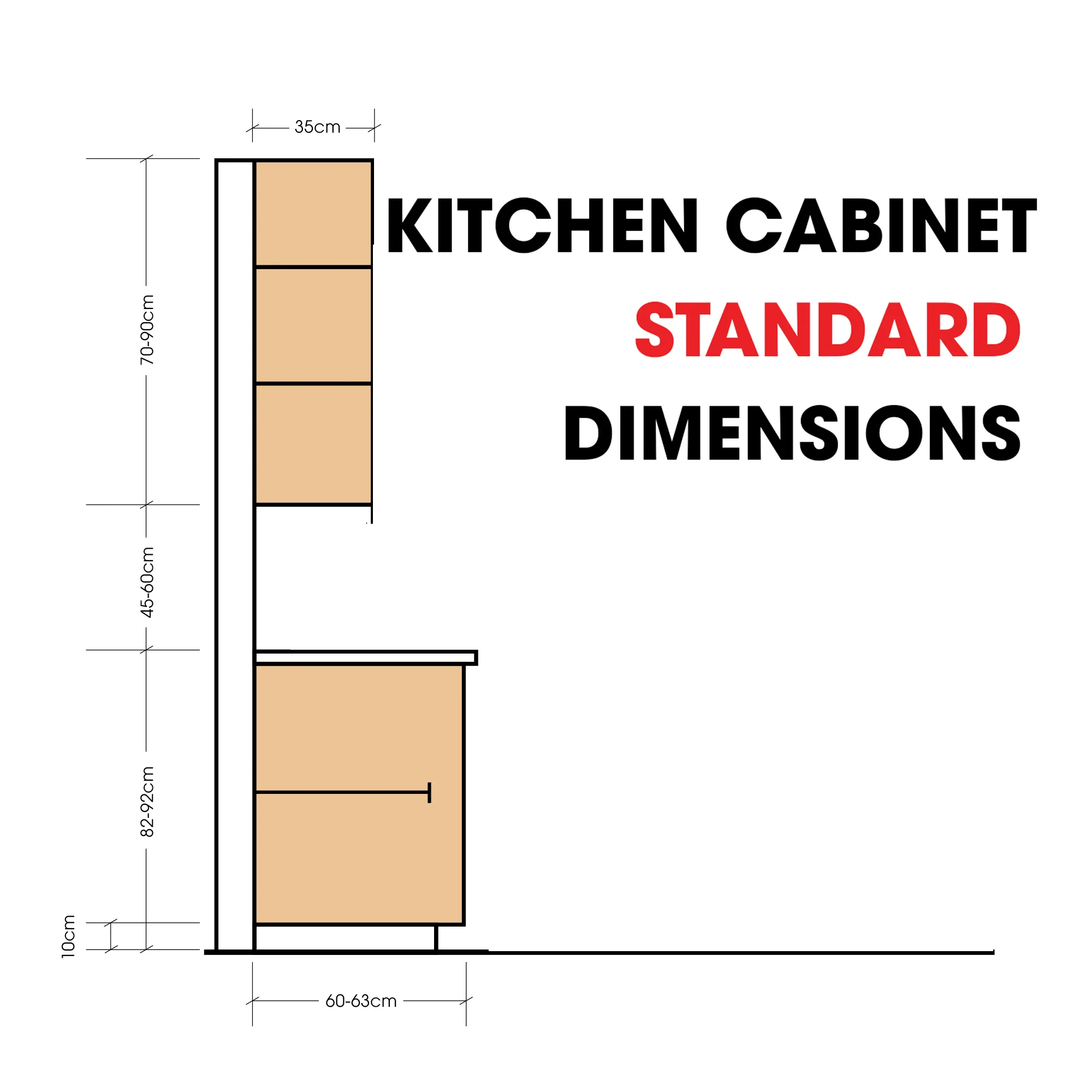
Image Source: guilincabinets.com
Why Cabinet Heights Matter
Picking the right cabinet height is a big deal. It affects how your kitchen looks. It also changes how easy it is to use. Cabinets that are too high or too low can make cooking hard. They can make storing things a problem. Standard heights help make kitchens easy to use for most adults. They also help when putting in appliances.
Getting the average kitchen cabinet height right is key. It’s not just about the base cabinets on the floor. It’s also about the upper kitchen cabinet height. And it’s about the space between them. Knowing these kitchen cabinet dimensions helps you plan your room. It helps you pick the right cabinets. It helps you use your space well.
Grasping Base Cabinet Heights
Base cabinets are the ones that sit on the floor. They hold up your countertop. They are a major part of your kitchen. The height of these cabinets is very important. It sets the main working height in your kitchen.
How Tall Are Standard Base Cabinets?
The most common height for a standard base cabinet is 34.5 inches. This is the height of the cabinet box only. It does not include the countertop. Countertops sit on top of these cabinets. They add more height. Most countertops are about 1.5 inches thick.
So, if you add the 34.5-inch cabinet height to a 1.5-inch countertop, what do you get? You get a total height of 36 inches. This 36-inch height is the typical kitchen cabinet height at counter level. It’s a comfortable height for most adults to work at. It’s good for chopping food. It’s good for preparing meals.
This 36-inch height is very common. It’s used in almost all standard kitchens. It’s the height kitchen designers plan around. It’s the height appliance makers use. It works well for dishwashers. It works well for ranges.
Why 36 Inches?
Why is 36 inches the standard counter height? It’s based on how people work. This height lets most people stand at the counter without bending too much. It helps prevent back strain. It makes working in the kitchen more comfortable.
Think about washing dishes. Think about kneading dough. Think about chopping vegetables. Doing these things at 36 inches is easy for many. It’s not too high. It’s not too low. It’s just right for most people.
Of course, not everyone is the same height. But 36 inches is a good average. It works for the biggest number of people. This is why it became the standard base cabinet height with the countertop.
What About the Toe Kick?
Base cabinets don’t sit flat on the floor. They have a space underneath. This space is called the toe kick. It’s a recessed area at the very bottom. It goes back a few inches.
The standard height for the toe kick is about 4.5 inches. It goes back about 3 inches. This toe kick space is very useful. It lets you stand closer to the cabinet. Your toes have a place to go. This means you don’t have to lean forward as much. It makes working at the counter more comfortable.
So, the 34.5-inch cabinet height includes the toe kick area. The cabinet box itself above the toe kick is about 30 inches tall. Then you have the 4.5-inch toe kick below that. Totaling 34.5 inches for the cabinet box height. Then add the countertop for the final 36 inches working height.
Standard Base Cabinet Depth
Base cabinets also have a standard depth. This is how far they stick out from the wall. The most common depth is 24 inches. This measurement is from the front of the cabinet box to the back. It doesn’t include the door or drawer front.
The countertop will be a bit deeper. It usually hangs over the front of the cabinet. This overhang is usually about 1 inch. So, the total depth of the countertop is usually around 25 inches. This little overhang protects the cabinet fronts from spills. It also provides a small lip.
So, standard base cabinet dimensions are:
* Height (cabinet box): 34.5 inches
* Height (with standard countertop): 36 inches
* Depth (cabinet box): 24 inches
* Depth (with standard countertop overhang): Around 25 inches
* Toe kick height: 4.5 inches
* Toe kick depth: 3 inches
These standard sizes help in kitchen design. They make it easy to fit appliances. They make it easy to plan the layout.
Checking Out Wall Cabinet Heights
Wall cabinets hang on the wall. They are above the base cabinets and the counter. They give you storage up high. Their height is also standard, but there are more choices than base cabinets.
How Tall Are Standard Wall Cabinets?
Standard wall cabinet height comes in a few common sizes. The most typical heights are:
* 30 inches
* 36 inches
* 42 inches
These heights are from the bottom of the cabinet to the top. They do not sit on the floor. They are attached to the wall.
Which height you choose often depends on your ceiling height. It also depends on how much storage you need.
-
30-inch wall cabinets: These are a common choice for standard 8-foot ceilings. When placed above the typical counter with the standard space between upper and base cabinets (18 inches), the top of a 30-inch cabinet reaches 7.5 feet (90 inches) from the floor. (36 inches counter height + 18 inches space + 30 inches cabinet height = 84 inches = 7 feet). Wait, let’s recalculate this simply. Counter height is 36 inches. Space above counter is 18 inches. So the bottom of the wall cabinet is at 36 + 18 = 54 inches from the floor. If the wall cabinet is 30 inches tall, the top is at 54 + 30 = 84 inches from the floor. This is 7 feet. In an 8-foot room, this leaves one foot (12 inches) of space above the cabinets. This space is often covered with molding or trim.
-
36-inch wall cabinets: These work well with 8-foot ceilings too. Or they can be used with slightly higher ceilings. If the bottom is 54 inches from the floor, a 36-inch cabinet reaches up to 54 + 36 = 90 inches from the floor. This is 7.5 feet. In an 8-foot room, this leaves 6 inches of space above the cabinets. This is a small space, good for simple trim. These offer more storage space because they are taller.
-
42-inch wall cabinets: These are best for kitchens with higher ceilings, like 9-foot ceilings or more. If placed with the bottom at 54 inches from the floor, a 42-inch cabinet reaches up to 54 + 42 = 96 inches from the floor. This is 8 feet. In a 9-foot room (108 inches), this leaves 12 inches of space above the cabinets. These cabinets give the most storage height. They can make a kitchen look more grand.
So, when people ask about upper kitchen cabinet height, the answer is usually 30, 36, or 42 inches. The standard wall cabinet height depends on the ceiling and design choice.
Standard Wall Cabinet Depth
Wall cabinets don’t stick out as far as base cabinets. This is because you need space to work on the counter below. The most common depth for wall cabinets is 12 inches. This depth is from the front of the cabinet box to the back. It does not include the door front.
Some wall cabinets might be slightly deeper, like 15 or 18 inches. But 12 inches is the typical depth. This depth allows you to easily reach things inside. It also keeps the cabinets from feeling like they are in your face while you work at the counter.
Deciphering the Space Between Cabinets
This is a very important measurement. It’s the space between the top of your countertop and the bottom of your wall cabinets. This space is often called the backsplash area.
What is the Standard Space?
The standard space between upper and base cabinets is 18 inches. This measurement is from the top of the finished countertop to the bottom edge of the wall cabinets.
Why 18 Inches?
The 18-inch space is standard for good reasons.
1. Appliance Clearance: Many small kitchen appliances need this space. Think about your coffee maker. Think about a toaster. Think about a blender. Most standard models fit comfortably under a cabinet with 18 inches of clearance above counter. Without this space, you couldn’t use them on your counter.
2. Workspace: This height provides a good amount of workspace. It doesn’t feel cramped. You can easily chop, mix, and prepare food. Your hands and arms have room to move freely.
3. Light: It allows enough space for under-cabinet lighting. This lighting is very useful. It lights up your work area. It makes cooking safer and easier.
4. Backsplash: This height is also good for installing a standard backsplash. Backsplashes protect the wall from spills and splashes. They are usually about 18 inches tall to fill this space.
So, the 18-inch space is a key part of kitchen cabinet height standards. It ensures your kitchen works well for daily tasks. It allows for typical appliances and lighting.
Putting It All Together: Kitchen Layout Heights
Let’s look at the standard heights all together. Imagine a kitchen wall.
- Floor to top of base cabinet/counter: 36 inches (This is the work surface height)
- Space above counter: 18 inches (This is the backsplash area)
- Bottom of wall cabinet: 36 inches (counter height) + 18 inches (space) = 54 inches from the floor.
- Top of wall cabinet: This depends on the wall cabinet height you choose.
- If 30-inch wall cabinets: 54 inches (bottom) + 30 inches (height) = 84 inches from the floor (7 feet).
- If 36-inch wall cabinets: 54 inches (bottom) + 36 inches (height) = 90 inches from the floor (7.5 feet).
- If 42-inch wall cabinets: 54 inches (bottom) + 42 inches (height) = 96 inches from the floor (8 feet).
This shows the typical stack of kitchen cabinet heights. It goes from the floor up. Base cabinet + space + wall cabinet. This arrangement uses standard cabinet sizes. It follows kitchen cabinet height standards.
Summary of Standard Kitchen Cabinet Dimensions
Here is a quick look at the most common kitchen cabinet dimensions for height and depth. Widths vary a lot based on the specific cabinet you need (sink base, drawer base, wall cabinet, etc.), so we will focus on standard heights and depths here.
| Cabinet Type | Dimension | Standard Size | Notes |
|---|---|---|---|
| Base Cabinet | Height | 34.5 inches | Box height only |
| Height | 36 inches | With standard 1.5″ countertop | |
| Depth | 24 inches | Box depth only | |
| Depth | ~25 inches | With standard countertop overhang | |
| Toe Kick | 4.5 inches (height) | Recessed area at bottom | |
| Toe Kick | 3 inches (depth) | Recessed area at bottom | |
| Wall Cabinet | Height | 30, 36, or 42 inches | Common choices |
| Depth | 12 inches | Most common depth | |
| Depth | 15 or 18 inches | Less common, sometimes available | |
| Clearance | Height | 18 inches | Space between counter and wall cabinets |
This table gives you a good idea of typical kitchen cabinet height and other important sizes. These are the numbers you will see most often when looking at standard cabinet sizes.
When Heights Can Change
While there are standard heights, kitchens are not always standard. Sometimes, cabinet heights are different. Why does this happen?
Custom Cabinets
If you get custom cabinets, you can choose any height you want. This is good if you are very tall or very short. You can make the counter height perfect for you. You can make wall cabinets lower to reach them better. Or higher to fit more storage. Custom cabinets let you break free from standard cabinet sizes.
Higher Ceilings
If you have very high ceilings (over 9 feet), you might use taller wall cabinets than 42 inches. Or you might stack cabinets. You could have a row of 36-inch cabinets with smaller cabinets (like 12 or 18 inches tall) on top. This uses the vertical space. It can look very nice. It also gives you lots of storage, even if the highest cabinets are hard to reach.
Accessibility Needs
Sometimes, kitchens are designed for people with special needs. For example, someone using a wheelchair. In these kitchens, the standard base cabinet height of 36 inches is too high. Counters might be lower, maybe 30 or 32 inches from the floor. Wall cabinets might be mounted lower down so they can be reached. Cabinet clearance above counter might be different too. These are important changes to make a kitchen usable for everyone.
Below-Standard Ceilings
Older homes might have lower ceilings. If your ceiling is lower than 8 feet, 42-inch or even 36-inch wall cabinets might not fit well. You might need to use 30-inch wall cabinets. Or you might need to mount the cabinets closer to the counter, reducing the space between upper and base cabinets. This is less ideal for appliance clearance, but sometimes necessary.
Special Design Choices
Sometimes, people just choose a different look. They might lower the wall cabinets slightly for a certain style. Or use open shelves instead of wall cabinets. These choices change the typical kitchen cabinet height layout.
So, while standards exist, your kitchen might be different. It depends on your home, your needs, and your style. But knowing the standard gives you a starting point. It helps you see how your kitchen is similar or different.
Planning Your Kitchen Layout
Knowing standard kitchen cabinet height standards is very helpful when planning a new kitchen or updating an old one.
Measure Your Space
Before you do anything, measure your kitchen.
* Measure the total length of your walls where cabinets will go.
* Measure the height of your ceiling. Measure it in a few spots. Ceilings can be uneven.
* Mark where windows and doors are. Note their height and width.
* Mark where water pipes (sink), gas lines (stove), and electric outlets are. Note their height from the floor.
These measurements help you know what standard cabinet sizes will fit.
Think About What You Need
- How much storage do you need? This helps decide wall cabinet height (30, 36, or 42 inches).
- How tall are the people using the kitchen? If everyone is very tall, you might want a slightly higher counter. If someone is shorter, sticking to the standard 36 inches or planning lower pull-out shelves might be better.
- What appliances do you have? Make sure the cabinet clearance above counter (the 18-inch space) is enough for your coffee maker, mixer, etc.
Using Standard Sizes
Most cabinet companies sell standard sizes. Buying standard cabinets is often cheaper than custom. It’s also faster. If your kitchen fits standard kitchen cabinet dimensions, it makes planning easier. You can use online tools or graph paper. Draw your kitchen shape. Then draw in standard size cabinets.
Remember the typical layout:
* Base cabinets on the floor (34.5 inches tall, making the counter 36 inches).
* 18 inches of space above the counter.
* Wall cabinets starting 54 inches from the floor.
* Wall cabinets are 30, 36, or 42 inches tall. The top will be at 84, 90, or 96 inches from the floor.
Where to Place Cabinets
When planning, think about appliance spots.
* The dishwasher goes next to the sink base cabinet. It fits under the 36-inch counter.
* The range (stove and oven) usually fits between base cabinets. The cooking surface is at counter height (36 inches). Wall cabinets or a range hood go above it. Check the needed cabinet clearance above the range top – this is often more than 18 inches for safety.
* The refrigerator spot needs enough width and height. Check your fridge size.
Planning with standard sizes helps everything fit. It makes sure your appliances line up well. It makes sure you have good work areas.
Learning About Cabinet Parts
Understanding a few key terms helps when talking about kitchen cabinets.
- Base Cabinet: Sits on the floor, supports the counter. Standard height 34.5 inches. Standard depth 24 inches.
- Wall Cabinet (or Upper Cabinet): Hangs on the wall above the counter. Common heights 30, 36, 42 inches. Standard depth 12 inches.
- Toe Kick: The recessed area at the bottom of base cabinets. Standard 4.5 inches high, 3 inches deep.
- Countertop: The work surface on top of base cabinets. Adds about 1.5 inches to the base cabinet height, making the standard counter height 36 inches.
- Filler Strip: A narrow piece of wood used to fill small gaps between cabinets or between a cabinet and a wall. This helps make everything look finished and plumb.
- Backsplash: The material on the wall between the countertop and the wall cabinets. Protects the wall and adds style. Usually fills the 18-inch space.
Knowing these parts helps you understand how standard kitchen cabinet height works in the whole kitchen. It helps you talk to cabinet sellers or installers.
Finding the Right Heights for You
Standard sizes work for many. But what if you are different?
- Tall People: If you are very tall, the standard 36-inch counter might feel low. You might want a counter that is 38 or 39 inches high. This means getting custom height base cabinets (maybe 36.5 or 37.5 inches tall before the counter). This makes chopping and working more comfortable. For wall cabinets, the standard heights (30, 36, 42) placed with the bottom at 54 inches might be fine. Or you might place them slightly higher if you have the ceiling space.
- Shorter People: If you are shorter, a 36-inch counter is usually okay, but reaching the back of it might be hard. Making it lower can help, but it makes appliance fitting harder. Wall cabinets can be a bigger issue. Standard wall cabinets placed at 54 inches from the floor might be too high to reach. You might choose 30-inch cabinets instead of 42-inch ones. You might also ask for the wall cabinets to be mounted lower. Instead of an 18-inch space above the counter, you might have a 15-inch space. This lowers the bottom of the wall cabinet from 54 inches to 51 inches from the floor (36 + 15 = 51). This makes reaching the lowest shelf easier. But remember, a smaller space above the counter means some appliances might not fit. You might also need step stools. Pull-down shelves inside cabinets can also help reach things up high.
Thinking about who uses the kitchen helps you decide if standard kitchen cabinet dimensions are right for you. It helps you see if you need to change anything.
Kitchen Cabinet Height Standards and Your Kitchen
The standard heights are guidelines. They are based on averages.
* Standard base cabinet height aims for a 36-inch counter surface.
* Standard wall cabinet height gives options (30, 36, 42 inches) for different needs and ceiling heights.
* The 18-inch space between upper and base cabinets is key for usability and appliances.
These standard sizes work together. They create a functional and comfortable kitchen for most people. When you see kitchen cabinet dimensions listed, you will see these numbers often. They are the typical kitchen cabinet height and depth measurements you find in most homes and stores. Using these standards makes kitchen design and buying cabinets simpler.
Frequently Asked Questions About Cabinet Heights
Here are some common questions people ask about how high standard kitchen cabinets are.
Q1: What is the standard counter height in a kitchen?
The standard counter height is 36 inches from the floor. This is achieved with a standard 34.5-inch base cabinet and a 1.5-inch thick countertop.
Q2: How much space is needed between the counter and wall cabinets?
The standard space between the countertop and the bottom of the wall cabinets is 18 inches. This provides enough clearance for most small appliances.
Q3: What are the common heights for wall cabinets?
Standard wall cabinets most commonly come in heights of 30 inches, 36 inches, and 42 inches.
Q4: How high should kitchen cabinets be from the floor?
Base cabinets sit on the floor, and their top is 36 inches from the floor with a counter. Wall cabinets are mounted on the wall, with their bottom typically 54 inches from the floor (36-inch counter height + 18-inch space above counter).
Q5: Can I install my wall cabinets lower or higher than standard?
Yes, you can. Lowering them might make things easier to reach but reduces the space above the counter for appliances. Raising them uses more vertical space but makes them harder to reach. The standard 18-inch space and 54-inch bottom height are recommended for best function.
Q6: What is the standard depth of kitchen base cabinets?
The standard depth for kitchen base cabinets is 24 inches, not counting the door or drawer front.
Q7: What is the standard depth of kitchen wall cabinets?
The most common standard depth for wall cabinets is 12 inches, not counting the door front.
Q8: Does the toe kick height count in the cabinet height?
Yes, the standard base cabinet height of 34.5 inches includes the toe kick, which is usually 4.5 inches high.
Q9: Why are kitchen cabinets different heights?
Kitchen cabinets are different heights (base vs. wall) because they serve different purposes. Base cabinets provide a working surface (counter), while wall cabinets provide overhead storage. Standard wall cabinets also come in different heights (30, 36, 42 inches) to fit different ceiling heights and storage needs.
Q10: Are there taller base cabinets for tall people?
Standard base cabinets are 34.5 inches. If you need a higher counter (e.g., 38 or 39 inches), you would need custom cabinets made taller than the standard 34.5 inches.
Q11: What is cabinet clearance above counter?
Cabinet clearance above counter refers to the vertical space between the top of the kitchen countertop and the bottom of the wall cabinets. The standard clearance is 18 inches.
Q12: Do standard cabinet sizes mean they will fit my kitchen perfectly?
Standard sizes are made to fit typical kitchen layouts and dimensions. However, kitchens often have unique shapes, corners, windows, and appliance needs. You might need filler strips or some customization to make standard cabinets fit perfectly in your specific space. Always measure carefully!
Knowing the answers to these questions gives you a solid base. You can plan your kitchen better. You can choose cabinets that fit your space and your needs. Standard kitchen cabinet height is a key part of making a kitchen work well.