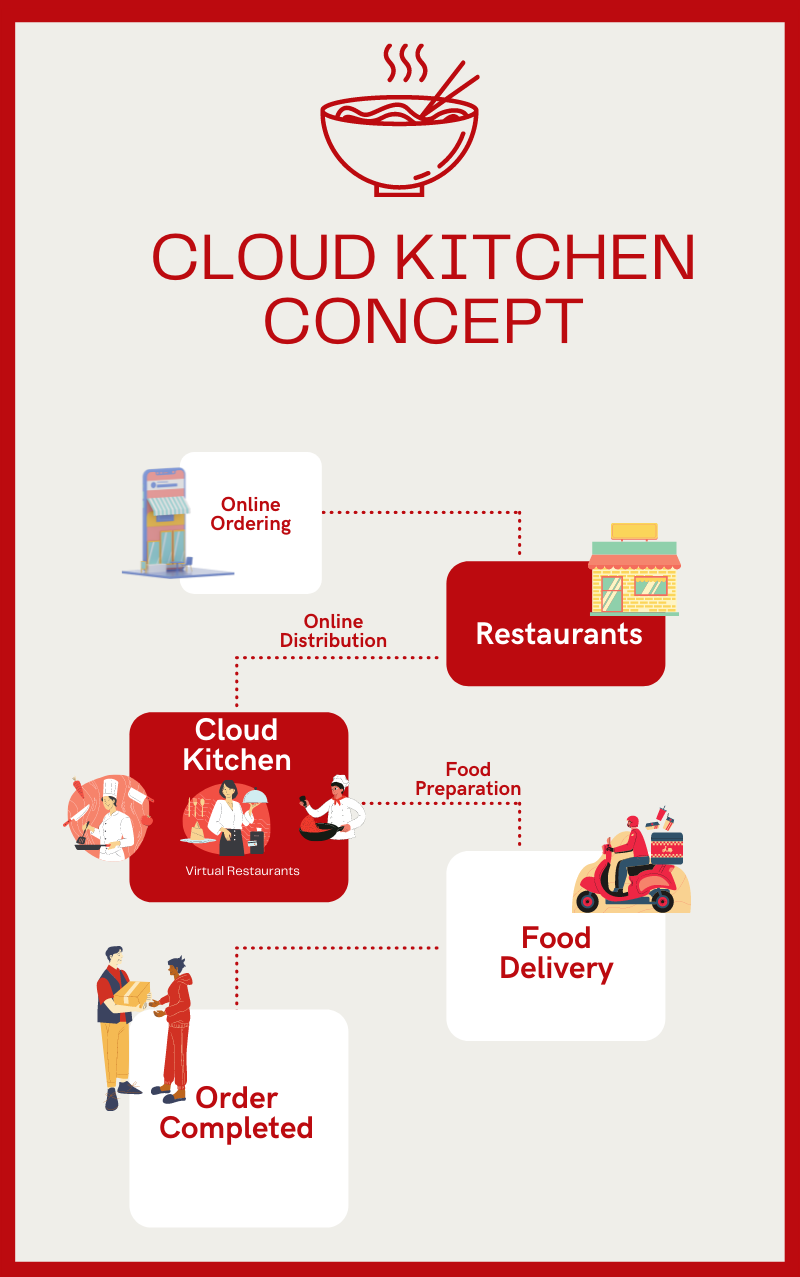
Image Source: www.code-brew.com
How Does Cloud Kitchen Work: The Secret Behind Delivery
A cloud kitchen works as a cooking space that makes food only for delivery. It is not open to people walking in or dining inside. Think of it as a kitchen just for online orders. These kitchens often partner with food delivery apps and platforms.
Cloud kitchens are changing how we get our meals. They are sometimes called ghost kitchen operations or a Delivery-only restaurant model. This model is simple: cook food in a kitchen and send it straight to the customer’s door. There are no tables, no waiters, and no storefront in a busy street. The focus is completely on making food and getting it delivered fast and hot. This focus is a big part of the secret behind the speedy delivery many people now expect.
Grasping the Virtual Restaurant Concept
What exactly is a virtual restaurant concept? It’s a food business that only exists online. It might be one brand cooking in a cloud kitchen, or a single kitchen space cooking food for several different virtual brands.
These businesses don’t need a prime location with lots of foot traffic. Their customers find them through websites, mobile apps, and especially through food delivery apps integration. The entire customer experience happens through a screen. You browse the menu, place your order, and pay online. The kitchen then gets the order and cooks the food. A delivery driver picks it up and brings it to you.
This setup cuts out many costs that traditional restaurants have. They save money on:
- Rent in expensive areas.
- Decorating a dining room.
- Hiring front-of-house staff like hosts and servers.
- Printed menus and table setup.
This allows them to focus more on the kitchen part – making the food well and quickly.
The Core of Cloud Kitchen Operations
At the heart of the cloud kitchen is the cooking space itself. Unlike a standard restaurant kitchen attached to a dining area, a cloud kitchen is purely functional. It’s built for efficiency and volume.
Often, cloud kitchens are housed in large, shared spaces. This is known as a centralized kitchen space. In these spaces, several different food businesses or virtual restaurant brands might rent separate kitchen areas. This sharing model is often tied to commercial kitchen rental. Instead of building a whole kitchen from scratch, businesses can rent a ready-to-use space. This lowers the starting cost a lot.
Let’s break down the typical physical setup:
- Shared Facility: A large building divided into smaller kitchen units.
- Individual Units: Each brand or business has its own cooking area within the building. These units have stoves, ovens, sinks, ventilation, and storage.
- Common Areas: There might be shared spaces for receiving supplies, waste disposal, and potentially even a dispatch area for delivery drivers.
- Location: These facilities are usually in areas with lower rent, like industrial parks or less busy parts of town. They need to be easy for delivery drivers to get to and from.
This shared or rental model makes it easier and cheaper for new food businesses to start. They don’t need a huge amount of capital upfront. They can focus their money on food quality, marketing their online brand, and technology.
Deciphering the Online Ordering Process
The journey for a customer ordering from a cloud kitchen starts online. There is no physical menu outside a building. Everything happens digitally.
The online ordering process is key. Customers typically use one of two ways:
- The Brand’s Own Platform: Some virtual restaurants have their own website or app for ordering. This gives them more control and avoids fees from third-party apps.
- Food Delivery Apps (Aggregators): Most cloud kitchens list their menus on popular food delivery apps integration platforms like DoorDash, Uber Eats, Grubhub, Deliveroo, and others. These platforms act as marketplaces. Customers browse many restaurants in one place.
The ordering process flows like this:
- Customer Browses: The customer opens an app or website and looks at the menu. Pictures and descriptions are very important here because the customer cannot see the food or kitchen.
- Customer Orders: They add items to a virtual cart and proceed to checkout.
- Payment: Payment is made online, usually by card or digital wallet.
- Order Sent: The order is sent electronically to the cloud kitchen.
For the cloud kitchen, getting orders means connecting with these online platforms. This is where Food aggregator partnerships are vital. These partnerships bring customers. In return, the cloud kitchen pays the aggregator a fee or commission for each order.
Having good food delivery apps integration is crucial. The kitchen needs a reliable system to receive orders quickly and accurately from all the platforms they work with. This prevents mistakes and speeds up the cooking process.
Grasping Kitchen Workflow Automation
Inside the cloud kitchen, efficiency is king. With no dining room, the focus is purely on cooking and packaging orders quickly. This often involves kitchen workflow automation.
Automation and smart systems help manage the flow of orders from the screen to the finished package ready for delivery.
Here’s how it might work:
- Order Receiving: Orders from different platforms (aggregator apps, own website) come into a central system. This might be a tablet or computer screen.
- Kitchen Display System (KDS): Instead of printed paper tickets, orders appear on screens in the kitchen sections (e.g., hot line, prep station). This is a form of automation. It helps cooks see orders clearly and tracks how long an order takes.
- Order Prioritization: The system might help prioritize orders based on promised delivery times or order complexity.
- Inventory Tracking: Some systems link orders to inventory, helping the kitchen know when to reorder supplies.
- Printer Automation: Even simple things like automated label printers for order tickets and delivery bags help speed things up and reduce errors.
The goal of kitchen workflow automation is to make the process from receiving an order to handing it to the driver as smooth and fast as possible. This means less wasted time, fewer mistakes, and quicker delivery times. It helps manage the high volume of orders that a successful cloud kitchen can receive.
Interpreting Order Fulfillment Logistics
Once the food is cooked and packaged, it needs to get to the customer. This is where order fulfillment logistics come into play. It’s the science of getting the right package to the right person at the right time.
For cloud kitchens, this process usually involves third-party delivery drivers, often those working for the same food aggregator apps that sent the order.
Here are the steps in order fulfillment logistics:
- Packaging: The food is carefully put into containers suitable for transport. These containers need to keep food at the right temperature and prevent spills.
- Bagging and Labeling: Orders for a single customer are bagged together. A label is attached, clearly showing the order number, customer name, and delivery address. Accuracy here is critical.
- Driver Notification: The delivery platform notifies a nearby driver that an order is ready for pickup at the kitchen’s location.
- Driver Pickup: The driver arrives at the cloud kitchen, provides the order number, picks up the correct bag(s).
- Transport: The driver transports the food to the customer’s address, often using insulated bags to maintain food temperature.
- Customer Handover: The driver hands the food to the customer. The platform often confirms the delivery is complete.
Managing the handover to drivers efficiently is key in a Delivery-only restaurant model. If drivers have to wait a long time, it slows down all deliveries and can make both drivers and customers unhappy. Cloud kitchens often have a dedicated area for drivers to pick up orders quickly.
Effective order fulfillment logistics depends heavily on the connection between the kitchen’s system and the delivery platforms. Delays or errors at any point can ruin the customer experience, even if the food is perfect.
Exploring Food Aggregator Partnerships
As mentioned, Food aggregator partnerships are essential for most cloud kitchens. Aggregator apps like DoorDash, Uber Eats, Grubhub, Deliveroo, Zomato, Swiggy, etc., are the main way customers find and order from these virtual restaurants.
Why are these partnerships so important?
- Customer Access: Aggregators have millions of users already using their apps to order food. This gives cloud kitchens instant access to a massive customer base without having to build their own from scratch.
- Delivery Network: Aggregators have large networks of drivers. This solves the complex problem of setting up and managing a delivery fleet. The kitchen just needs to make the food; the app handles finding a driver and getting it to the customer.
- Online Presence: The aggregator app is the cloud kitchen’s storefront. It provides the menu display, the online ordering process, payment processing, and customer service interface (for order issues).
- Marketing: While brands should do their own marketing, being listed on popular apps gives them visibility they wouldn’t otherwise have.
However, these partnerships come at a cost. Aggregators charge commission fees on each order, which can be a significant percentage of the order total. Cloud kitchens must carefully manage their pricing and costs to be profitable while paying these fees.
Building strong relationships with aggregators involves ensuring smooth operations from order receipt to driver pickup. A kitchen that is fast and reliable is valued by aggregator platforms.
Deciphering Different Cloud Kitchen Models
Not all cloud kitchens are exactly the same. The ghost kitchen operations model has several variations:
- Single-Brand Cloud Kitchen: A kitchen that only cooks for one virtual restaurant brand. This is like a traditional restaurant kitchen, but without the dining area.
- Multi-Brand Cloud Kitchen: A single kitchen space cooking food for several different virtual restaurant brands under the same ownership. For example, one kitchen might operate a burger brand, a pizza brand, and a salad brand, all from the same equipment and staff. This is efficient as they can use shared resources.
- Commissary or Shared Kitchen Space: This is the centralized kitchen space model mentioned earlier. A large facility is divided into individual kitchen units, and different, independent businesses or virtual brands rent these units. This is basically a commercial kitchen rental space designed specifically for delivery-only businesses.
- Hybrid Model: A traditional restaurant that also operates one or more virtual brands out of its existing kitchen during off-peak hours or using separate equipment. They serve dine-in customers under one brand name and delivery-only customers under different virtual brand names.
Each model has its pros and cons in terms of cost, flexibility, and potential for growth. The centralized kitchen space model is popular for new ventures due to lower startup costs from commercial kitchen rental. The multi-brand model is great for maximizing the use of one kitchen space.
How Technology Powers the Delivery-Only Restaurant Model
Technology is the backbone of the entire Delivery-only restaurant model. Without it, none of this would work.
Key technology areas include:
- Ordering Platforms: Websites, mobile apps, and aggregator integrations handle the online ordering process.
- Kitchen Management Systems: Software and screens (KDS) manage orders within the kitchen, helping with timing, tracking, and workflow. This contributes to kitchen workflow automation.
- Integrations: The ability for different systems to talk to each other – for example, orders from an aggregator app going straight to the kitchen display system.
- Data Analytics: Cloud kitchens can collect vast amounts of data on popular dishes, order times, delivery speed, customer location, etc. This data helps them make smart decisions about menus, staffing, and operations.
- Inventory Management Software: Helps track ingredients and supplies, reducing waste and ensuring items are available.
- Customer Relationship Management (CRM): Even though interaction is digital, tracking customer preferences and feedback is important for repeat business.
This technology needs to be robust and reliable. Any downtime in the food delivery apps integration or kitchen system can mean lost orders and unhappy customers. The smooth flow of information from customer click to food leaving the kitchen is crucial for successful ghost kitchen operations.
Order Flow in a Cloud Kitchen: A Step-by-Step Look
Let’s walk through a typical order’s journey in a cloud kitchen powered by food aggregator partnerships:
- Customer Places Order: A customer uses a food delivery app (like Uber Eats) or the brand’s website to choose items and pay online. This is the start of the online ordering process.
- Order Received: The order instantly appears on the kitchen’s main screen or management tablet, thanks to food delivery apps integration. It includes order details, items, and customer address.
- Order Acknowledged: The kitchen system confirms receipt of the order. It might add it to a queue on the KDS screen.
- Preparation Begins: Kitchen staff see the order on their station’s KDS and start preparing the dishes. Kitchen workflow automation helps here by displaying prep times or order priority.
- Cooking: The food is cooked according to standard procedures.
- Packaging: Cooked food is placed into appropriate containers. Items for one order are grouped together.
- Labeling: A printed label with order details is attached to the bag. This is part of kitchen workflow automation if done automatically.
- Quality Check: Staff quickly verify the order is complete and correctly packaged.
- Ready for Pickup: The order is placed in a designated area for drivers. The system might notify the delivery platform that the order is ready. This is a key part of order fulfillment logistics.
- Driver Assignment: The aggregator app assigns a driver to pick up the order based on location and availability.
- Driver Arrives: The driver comes to the centralized kitchen space or specific kitchen unit.
- Order Handover: The driver confirms the order number and picks up the labeled bag.
- Delivery: The driver transports the order to the customer’s address.
- Completion: The driver delivers the food, and the order status is updated as complete on the app.
This entire process, from order click to handover, needs to be fast and accurate. The efficiency of ghost kitchen operations relies on each step happening smoothly, supported by technology and clear procedures.
Why the Delivery-Only Model is Growing
The rise of the Delivery-only restaurant model isn’t just a fad. It’s a response to changes in how people eat and shop, and the availability of technology and infrastructure.
Here’s why it’s becoming so popular:
- Changing Customer Habits: More people are comfortable ordering food online and having it delivered, rather than dining out or picking up. Convenience is a major driver.
- Growth of Delivery Apps: The widespread use and sophisticated logistics of food delivery apps integration have made delivery easier and more reliable than ever before.
- Lower Startup Costs: Using commercial kitchen rental in a centralized kitchen space is much cheaper than building a traditional restaurant. This lowers the barrier to entry for new food entrepreneurs.
- Lower Operating Costs: No dining room means less staff, lower rent, lower utility bills (less space to heat/cool).
- Flexibility: It’s easier to change menus, try new concepts (virtual restaurant concept), or open in new locations quickly without the commitment of a physical storefront. A multi-brand kitchen can test several concepts at once.
- Scalability: If a concept is successful, it’s easier to open another cloud kitchen unit in a new area than to find and build a new traditional restaurant.
- Focus on Food and Efficiency: With no front-of-house distractions, the entire operation can focus on food quality, preparation speed, and kitchen workflow automation.
- Data Insights: The digital nature of the business provides rich data on customer preferences, allowing for better menu engineering and targeted marketing.
This model is particularly appealing in busy urban areas where rent is high and delivery density is strong. The secret behind their ability to offer fast delivery is this relentless focus on efficiency within the kitchen and seamless order fulfillment logistics through delivery partners.
Challenges in Ghost Kitchen Operations
While the Delivery-only restaurant model offers many benefits, it also comes with unique challenges for ghost kitchen operations:
- Dependence on Aggregators: Relying heavily on food delivery apps integration means paying high commission fees and being subject to the platform’s rules and algorithms. Building a direct customer relationship is harder.
- Brand Visibility: Without a physical presence, building brand recognition is difficult. Marketing has to be purely digital (social media, online ads) and rely on being visible on aggregator apps. This is a challenge for the virtual restaurant concept.
- Competition on Apps: Aggregator apps show many restaurants side-by-side, making it hard to stand out. Customers often choose based on photos, price, and reviews.
- Quality Control for Delivery: Ensuring food quality remains high during transport is crucial. Packaging and order fulfillment logistics must be excellent. Food that sits too long or gets tossed around will disappoint customers.
- Logistical Hub Management: Managing driver traffic at the kitchen pickup point can be challenging, especially during peak hours. Smooth order fulfillment logistics require space and clear processes.
- Staffing for Efficiency: The kitchen needs staff who can work quickly and accurately under pressure, focused purely on order output. Kitchen workflow automation helps, but skilled staff are still necessary.
- Food Costs and Profit Margins: High commission fees from food aggregator partnerships put pressure on profit margins. Careful menu pricing and cost management are essential.
- Technical Reliance: Any failure in the online ordering system, kitchen display, or internet connection can halt operations.
Successfully running ghost kitchen operations requires strong management of technology, kitchen processes, and relationships with delivery partners.
The Future of Cloud Kitchens
The cloud kitchen model is likely to keep growing and evolving. We might see:
- More specialized kitchen facilities for commercial kitchen rental, designed specifically for delivery volume.
- Increased use of advanced kitchen workflow automation, potentially including robotics for certain tasks.
- New technologies to improve order fulfillment logistics, like drone delivery or automated pickup points.
- More direct ordering options from brands, perhaps using subscription models or loyalty programs to reduce reliance on food aggregator partnerships.
- Cloud kitchens popping up in more locations, getting closer to residential areas to enable faster delivery.
- The rise of “dark stores” or “micro-fulfillment centers” that combine groceries and ready-to-eat meals from cloud kitchens.
The virtual restaurant concept allows for rapid testing of new food ideas and expansion into new markets with less risk than traditional restaurants. As technology improves and customer demand for convenient delivery continues, cloud kitchens will remain a significant part of the food service landscape.
They represent a fundamental shift in the restaurant industry, proving that you don’t need a fancy dining room to serve great food; you just need an efficient kitchen and a way to get that food to people’s homes quickly and reliably. The secret behind their success and the speed of delivery is this intense focus on the back-of-house operation, enabled by technology and strategic partnerships.
Fathoming the Business Side: Costs and Revenue
Running a successful Delivery-only restaurant model isn’t just about cooking. It’s a business that needs careful financial planning.
Key cost areas include:
- Commercial Kitchen Rental: The cost of renting space in a centralized kitchen space or dedicated facility. This is usually lower than high-street retail rent.
- Equipment: While renting space might include basic setup, specialized equipment needs to be bought or leased.
- Food Costs: The cost of ingredients.
- Labor: Wages for kitchen staff. Fewer staff are needed compared to a full-service restaurant, but skilled cooks are vital.
- Packaging: Containers, bags, labels, etc., designed for delivery. This cost is higher than for dine-in.
- Technology: Costs for ordering systems, kitchen software, and maintaining food delivery apps integration.
- Marketing: Digital advertising to get found online, especially important for a virtual restaurant concept.
- Aggregator Commissions: The fees paid to food aggregator partnerships for each order. These can be 20-30% or more of the order value.
- Utilities: Gas, electricity, water for the kitchen.
Revenue comes from food sales through online orders. The key challenge is managing costs, especially aggregator fees, to achieve profitability. Success often relies on high sales volume and optimizing every step of the kitchen workflow automation and order fulfillment logistics to reduce waste and improve speed.
FAQs About Cloud Kitchens
Q: What is the main difference between a cloud kitchen and a regular restaurant?
A: The main difference is that a cloud kitchen has no dining area or physical space for customers to visit. It exists only to fulfill delivery and sometimes pickup orders placed online. A regular restaurant serves customers in a dining room and may also offer takeout and delivery.
Q: Do cloud kitchens cook food for multiple different restaurants?
A: Yes, often. Some cloud kitchens are owned by one company operating several different virtual restaurant brands from the same kitchen space (multi-brand model). Others are shared facilities where different independent businesses rent separate kitchen units (commissary model / centralized kitchen space).
Q: How do customers order from a cloud kitchen?
A: Customers order online, usually through popular food delivery apps integration platforms like Uber Eats, DoorDash, etc., or sometimes through the cloud kitchen brand’s own website or app. This is the standard online ordering process for these businesses.
Q: Are cloud kitchens cheaper for the customer?
A: Not necessarily. While cloud kitchens save on some costs, they have others like packaging and high commission fees from food aggregator partnerships. The price the customer pays includes the food cost, the kitchen’s operating costs, and the cost of delivery (which might be a separate fee or included in the food price or service fee).
Q: How does delivery work from a cloud kitchen?
A: Most cloud kitchens rely on the delivery networks provided by their food aggregator partnerships. When an order is ready, a driver from the delivery platform is dispatched to the centralized kitchen space or specific kitchen unit to pick up the order and take it to the customer. This is managed through order fulfillment logistics.
Q: Is the food quality from a cloud kitchen as good as a traditional restaurant?
A: Food quality depends on the specific business, not just the model. A well-run cloud kitchen with skilled staff and good ingredients can produce excellent food. The challenge is ensuring that the food travels well and arrives in good condition, which requires careful packaging and fast order fulfillment logistics.
Q: What kind of food is best suited for cloud kitchens?
A: Food that travels well is ideal. This includes many types of cuisine, but dishes that get soggy easily or require complex plating might be more challenging. Think burgers, pizza, curries, pasta, salads, bowls, etc.
Q: How do cloud kitchens handle health and safety inspections?
A: Just like traditional restaurants, cloud kitchens operate under health and safety regulations. They are inspected by local health authorities based on standard commercial kitchen requirements, even if they are in a shared or commercial kitchen rental space.
Cloud kitchens are redefining convenience in the food industry, making it easier for businesses to start and for customers to get their favorite meals delivered right to their door. Their focus on efficient ghost kitchen operations and streamlined order fulfillment logistics is truly the secret behind the speed and availability of modern food delivery.