Image Source: www.worldcoppersmith.com
Your Questions Answered: How Does A Kitchen Hood Work
How does a kitchen hood work? A kitchen hood, also called a range hood, is a key part of a good kitchen ventilation system. Its main range hood function is to clean the air above your stove. It works by pulling in air that has smoke, grease, heat, and steam from cooking. It sends this dirty air through special filters. These filters trap grease and other bits. The cleaned air is then either sent outside the building or filtered more and put back into your kitchen. This process is vital for removing smoke and grease and keeping your kitchen air fresh and clean.
The Basics of Kitchen Hood Operation
A kitchen hood is a simple machine that does a big job. It sits above your cooktop. When you cook, smoke, steam, and smells rise. The hood catches these things before they spread.
What a Kitchen Hood Does
Think about what happens when you fry food. Lots of smoke and grease float into the air. Without a hood, this mess goes everywhere. It lands on walls, cabinets, and even the ceiling. It also makes the air hard to breathe.
A range hood stops this. It sucks up the dirty air right where it starts. This stops smoke alarms from going off. It keeps your kitchen cleaner. It makes the air healthier for you and your family. This is the core idea of cooking ventilation explained. It is about controlling the air around your cooking area.
Key Kitchen Hood Components
A hood might look simple, but it has several important parts. Each part plays a role in removing smoke and grease and cleaning the air.
- Fan or Blower: This is the engine of the hood. It is like a powerful fan. It creates suction. This suction pulls air up from your stove into the hood. Stronger fans can pull more air.
- Capture Area or Canopy: This is the part you see. It’s the space under the hood. It hangs over your stove. Its shape helps catch the rising smoke and steam. It directs the dirty air towards the fan.
- Filters: These are super important. They sit inside the hood. All the air pulled in must go through them. They catch grease, food bits, and sometimes smells. We will talk more about how range hood filters work soon.
- Lights: Most hoods have lights. These shine down on your cooktop. They help you see what you are cooking better.
- Controls: These are the buttons or switches. They let you turn the fan on or off. You can change the fan speed. You can also turn the lights on or off.
These kitchen hood components work together. They make sure your kitchen air stays clean while you cook.
Grasping the Airflow
The main job of a kitchen hood is to move air. It needs to move the dirty air away from your cooking space. It does this by controlling how air flows.
How Air Gets Pulled In
The fan inside the hood is key. When it spins, it pulls air up into the canopy. This action creates lower air pressure inside the hood. The air pressure outside the hood is higher. Air naturally moves from higher pressure to lower pressure.
So, the dirty air above your stove is pushed and pulled into the hood. The shape of the canopy helps guide this air. It forms a capture zone. This is the area directly under the hood. It is where the hood works best. Smoke and steam rise into this zone. The fan grabs them there.
Think of it like a big vacuum cleaner for your stove. It sucks up all the floating bits before they escape.
Air Circulation Kitchen Hood (Ductless Type)
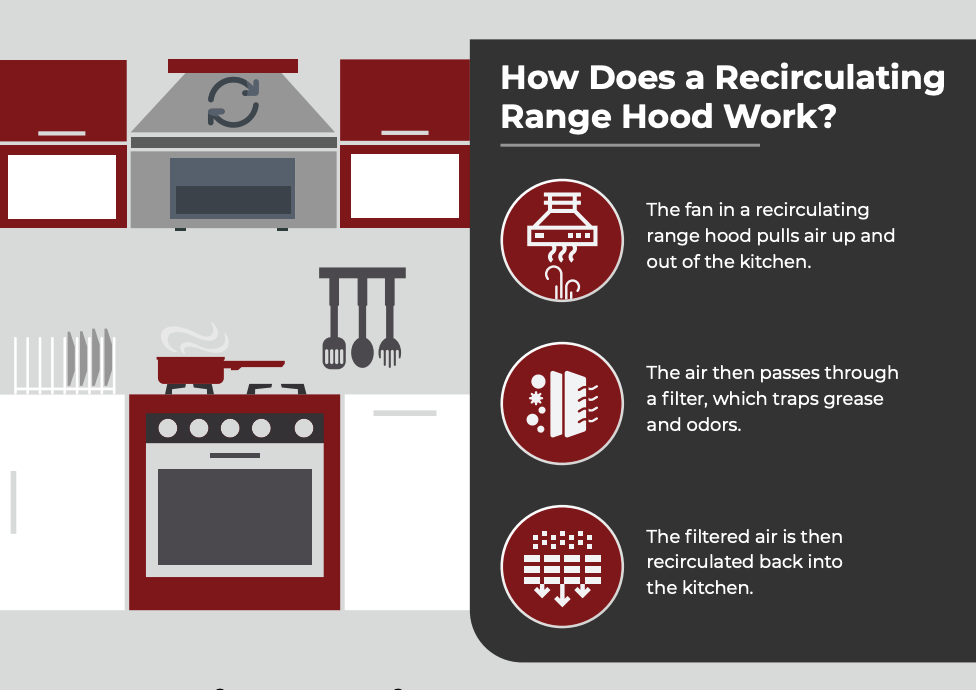
Some hoods do not send air outside. They clean the air and put it back in the kitchen. These are called ductless or recirculating hoods.
These hoods still pull air in with a fan. The air goes through filters. But after filtering, the air goes back into the kitchen. This is a form of air circulation kitchen hood. It moves the same air around. It just tries to clean it first. This is different from sending the dirty air away completely.
Decoding the Filters: How Range Hood Filters Work
Filters are the cleaning crew inside your hood. They catch the bad stuff in the air. Different types of filters do different jobs. How range hood filters work depends on the filter type.
Grease Filters Explained
Every kitchen hood has grease filters. Grease from cooking rises with heat and steam. Without a filter, this grease would coat the inside of the hood. It would get into the fan. It would build up in ducts. This is a fire risk. Grease filters stop this.
There are two main types of grease filters:
- Mesh Filters: These are common. They look like thin metal screens layered together. The layers have tiny holes. When greasy air goes through, the grease hits the metal mesh. It sticks to the metal. The layers trap the grease. Cleaned air passes through. These filters need regular cleaning. You can often wash them in the dishwasher or by hand. Keeping your grease filter kitchen hood clean is very important. If they are blocked with grease, air cannot pass through easily. The hood will not work well.
- Baffle Filters: These are usually made of metal, like aluminum or stainless steel. They have angled strips or baffles. These strips create winding paths for the air. As greasy air turns corners, the grease is thrown against the metal strips. Gravity pulls the grease down into trays. Baffle filters are very good at trapping grease. They are often used in professional kitchens. They are also easy to clean. The grease drips down, making them less likely to clog than mesh filters quickly.
Both types of grease filters do the same job. They protect the fan and ductwork from grease buildup. They also stop grease from getting back into your kitchen air. This makes removing smoke and grease much more effective.
Carbon Filters (for Ductless Hoods)
Ductless hoods cannot send smells and tiny smoke particles outside. They use extra filters for this. These are called carbon filters.
Carbon filters contain activated charcoal. This charcoal has been specially treated. It has tiny pores. These pores can trap smell molecules and small smoke particles. As air passes through the carbon filter, the charcoal grabs these things. This helps clean the air that is put back into the kitchen.
Carbon filters do not remove grease well. They are used after the grease filter. The grease filter gets the big stuff. The carbon filter gets the smells and fine particles.
Unlike grease filters, carbon filters cannot be washed. The charcoal gets full of trapped smells. They need to be replaced regularly. How often depends on how much you cook. It might be every few months. If your ductless hood starts leaving smells in the kitchen, it is likely time to change the carbon filter.
Knowing how range hood filters work helps you care for your hood. Clean grease filters often. Replace carbon filters when needed. This keeps your hood working its best.
Ducted vs Ductless Kitchen Hoods: A Comparison
There are two main ways a kitchen hood handles the air it pulls in. It either sends it outside or cleans and recirculates it. This leads to ducted vs ductless kitchen hoods. Each has its pros and cons. The choice affects the range hood venting and overall performance.
Range Hood Venting Outside (Ducted)
A ducted hood is connected to a system of pipes or ducts. These ducts go through walls, ceilings, or cabinets. They lead outside your house.
Here is how it works: The fan pulls air from above the stove. This air goes through the grease filter. Then, the fan pushes the air through the ductwork. The dirty air is blown out of your house. It leaves through a vent cap on an outside wall or on the roof.
-
Pros of Ducted Hoods:
- Best Performance: Ducted hoods are the most effective at removing smoke and grease. They get rid of all the pollutants, heat, and moisture from your kitchen.
- Removes Smells: They take cooking smells completely outside.
- No Filter Replacement (for smells): You only need to clean or replace the grease filter. There is no carbon filter to change.
- Reduces Heat: They vent heat from cooking outside. This keeps your kitchen cooler.
- Better for Heavy Cooking: If you do a lot of frying or high-heat cooking, a ducted hood is usually the better choice.
-
Cons of Ducted Hoods:
- Installation Complexity: Installing a ducted hood is harder and costs more. You need to install the ductwork. This might involve cutting holes in walls or ceilings.
- Needs Outside Access: You must have a way to vent the air outside. This is not always possible in every kitchen layout or building.
- May Affect Home Air Pressure: A powerful ducted hood pulls a lot of air out of the house. This can create negative air pressure. You might need a makeup air system to bring fresh air back into the house, especially with very powerful hoods.
This type of range hood venting is seen as the gold standard for kitchen ventilation.
Air Circulation Kitchen Hood (Ductless/Recirculating)
A ductless hood does not connect to the outside. It cleans the air and sends it back into the kitchen.
Here is how it works: The fan pulls air from above the stove. This air goes through the grease filter (to catch grease). Then, it goes through a carbon filter (to catch smells and small particles). After passing through both filters, the cleaned air is released back into the kitchen. This is the air circulation kitchen hood principle. The air just cycles through the hood and back into the room.
-
Pros of Ductless Hoods:
- Easier Installation: Ductless hoods are much easier and cheaper to install. You just hang them and plug them in (or wire them). No ductwork is needed.
- No Outside Vent Needed: You do not need access to an outside wall or roof. This makes them suitable for more kitchen layouts.
- Good for Renters: If you rent, a ductless hood is often the only option if there is no existing ductwork.
-
Cons of Ductless Hoods:
- Less Effective: They are not as good as ducted hoods at removing smoke and grease entirely. They clean the air, but they do not remove heat or moisture from the kitchen. Some smells and very fine particles may not be fully captured.
- Requires Filter Replacement: The carbon filters must be replaced regularly. This adds ongoing cost and effort.
- Does Not Remove Heat/Moisture: Heat and steam from cooking stay in the kitchen. This can make the kitchen hotter and more humid.
- Slightly Noisier: The fan has to push air through two filters (grease and carbon), which can sometimes make them a bit noisier than a comparable ducted hood.
Choosing between ducted vs ductless kitchen hoods depends on your cooking habits, kitchen setup, and budget. For the best kitchen ventilation system, ducted is preferred if possible. If not, a ductless hood is better than no hood at all.
Why Proper Kitchen Ventilation System Matters
Having a good hood is more than just stopping smoke alarms. It is important for your health and your home. A good kitchen ventilation system does a lot more than just removing smoke and grease.
Health Benefits
Cooking releases more than just steam and delicious smells. It also creates pollutants.
- Better Air Quality: Frying, searing, and even boiling can release particles into the air. Gas stoves produce nitrogen dioxide. These things can be bad for your lungs. A hood pulls these pollutants away. This improves the air you breathe in your kitchen and home. Removing smoke and grease directly helps your respiratory health.
- Reduces Carbon Monoxide: If you have a gas stove, cooking can produce small amounts of carbon monoxide. A hood helps vent this potentially harmful gas outside (if ducted).
- Less Humidity: Boiling and steaming add moisture to the air. Too much moisture can lead to mold growth. A ducted hood removes this humid air, helping to keep your home drier.
Investing in a good kitchen ventilation system is investing in healthier air for your family.
Protecting Your Home
Cooking mess does not just float in the air. It settles.
- Prevents Grease Buildup: Grease can coat surfaces. Over time, it builds up on walls, cabinets, and even ceilings. This greasy film is hard to clean. It can also attract pests. A hood captures grease before it lands everywhere.
- Protects Cabinets and Walls: Heat and moisture from cooking can damage cabinets and paint. Wood can warp. Paint can peel. A hood removes heat and moisture, protecting your kitchen finishes.
- Keeps Kitchen Cleaner: Overall, a working hood means less dust and grease settling on surfaces. This makes your kitchen easier to keep clean.
So, the range hood function of removing smoke and grease helps keep your home cleaner and prevents damage.
Choosing the Right Hood
Selecting a kitchen hood involves more than just looks. You need one that works well for how you cook and the size of your stove.
Size and Power
The hood needs to be at least as wide as your cooktop. A wider hood captures more rising smoke and steam. Some experts suggest the hood should be 6 inches wider on each side than the cooktop for the best capture.
The power of the fan is measured in CFM (Cubic Feet per Minute). This tells you how much air the hood can move in one minute. How much CFM do you need? It depends on your stove.
- Electric Stoves: A common rule is 100 CFM for every 10,000 BTUs of heat output (though electric stoves are measured differently, a common guideline is 100 CFM per linear foot of stove width, or use a general rule like 400-600 CFM for typical residential cooking).
- Gas Stoves: Gas stoves produce more heat and pollutants. A common rule is 100 CFM for every 10,000 BTUs your gas stove produces. Add up the BTUs of all your burners to find the total. Divide by 100 to get a minimum CFM. Many recommend higher CFM for gas stoves, like 600 CFM or more, especially for high-output burners or wok cooking.
If you cook a lot of stir-fries or fried foods, you will need more power. Choosing the right CFM ensures your kitchen ventilation system can keep up with your cooking.
Style and Features
Hoods come in many styles to fit your kitchen design:
- Under-Cabinet: These fit neatly under existing cabinets. They are common and save space.
- Wall-Mount: These attach to the wall above the stove. They are often more powerful and can be a design feature.
- Island: These hang from the ceiling above a kitchen island cooktop. They need strong support and are often very powerful.
- Insert/Liner: These are built inside a custom-made hood cover (like wood or plaster).
- Downdraft: These rise from behind the cooktop or are built into the cooktop itself. They pull air down instead of up. They are less common and often less effective than overhead hoods.
Other features to consider:
- Fan Speeds: Most hoods have multiple speeds (low, medium, high). You use higher speeds for heavy cooking.
- Lights: LED lights are energy efficient and bright.
- Heat Sensors: Some hoods turn on automatically when they sense heat.
- Timer Shut-Off: The hood can turn off after a set time.
- Noise Level: Measured in Sones. Lower Sones means a quieter hood. Powerful hoods are often noisier. Look for models with good noise ratings if noise is a concern.
Think about how you cook and how your kitchen looks when choosing a hood. The right hood provides effective cooking ventilation explained simply: it works well and fits your space.
Keeping Your Hood Working Well
A kitchen hood needs care to keep doing its job well. Regular cleaning and checks are important for your kitchen ventilation system.
Cleaning Filters (Grease Filter Kitchen Hood)
This is the most important task. Grease filters get dirty quickly. A clogged grease filter kitchen hood cannot trap grease well. It also blocks airflow. This makes the fan work harder and reduces its power. It is a fire risk if grease builds up too much.
- How to Clean: Most mesh and baffle filters can be washed. Check your hood’s manual. You can wash them in a sink with hot, soapy water and a brush. Or, many can go in the dishwasher. Use a strong detergent. Let them dry fully before putting them back.
- How Often: Clean grease filters every 1-4 weeks. How often depends on how much you cook and what you cook. Frying and oily cooking means cleaning more often.
Checking Vents (Range Hood Venting)
If you have a ducted hood, check the outside vent cap now and then. Make sure it is not blocked. Birds or pests can build nests in them. Snow or ice can block them. A blocked vent means air cannot leave your house. This stops the hood from working right.
Also, check the ductwork inside if you can. Look for leaks or damage. Ducts should be smooth and straight with as few bends as possible for best airflow.
When to Replace
- Carbon Filters: If you have a ductless hood, replace the carbon filters when they stop removing smells. This is usually every 3-6 months, depending on use. The manual will give a guide.
- Grease Filters: Metal grease filters are usually very durable. You only need to replace them if they get damaged or warped.
- The Hood Itself: A well-maintained hood can last many years. You might replace it if it breaks, if you remodel your kitchen, or if you need a more powerful hood for a new stove.
Proper care ensures your range hood function stays effective. It protects your home and your health.
Summary: Cooking Ventilation Explained
To wrap up cooking ventilation explained: a kitchen hood is a vital tool in your kitchen. It uses a fan to pull air from above your stove. This air goes through filters. The range hood function is to capture smoke, steam, heat, and grease.
If it is a ducted hood, the air is sent outside through range hood venting. This is the most effective kitchen ventilation system for removing smoke and grease completely.
If it is a ductless hood, the air is filtered (grease and carbon filters) and put back into the kitchen. This provides air circulation kitchen hood action, cleaning the air but not removing heat or moisture from the room. How range hood filters work is key to both types, especially the grease filter kitchen hood part. Carbon filters are specific to ductless models.
Choosing the right hood size and power, and keeping it clean (especially the filters), ensures your hood works effectively. It protects your health by improving air quality and protects your home from grease damage.
Frequently Asked Questions
H4: Can I install a ducted hood if I only have a ductless one now?
Yes, often you can. But it requires adding ductwork. This means cutting holes and installing pipes. It is a bigger job and may need a professional.
H4: How noisy should a range hood be?
Hoods make noise because of the fan moving air. The noise level is measured in Sones. Lower Sones means quieter. Powerful hoods often make more noise. Look for hoods with lower Sone ratings if noise matters to you.
H4: What is CFM?
CFM stands for Cubic Feet per Minute. It is a measure of how much air a hood fan can move in one minute. Higher CFM means more powerful airflow.
H4: How often should I clean my grease filter kitchen hood?
Clean grease filters every 1-4 weeks depending on how much and what you cook. More frying means more often. A simple rule is to clean them when they look greasy.
H4: Do I need a makeup air system?
Very powerful ducted hoods (usually over 400 CFM or 600 CFM, check local codes) can pull a lot of air out of a house. This can cause problems. A makeup air system brings fresh air into the house to balance the air pressure. This is often required by building codes for high-CFM hoods.
H4: Are ductless hoods completely useless?
No, they are not useless. A ductless hood is much better than no hood at all. They do filter grease and some smells. They are a good option where ducted venting is not possible. But they do not remove heat, moisture, or all pollutants like a ducted hood does.
H4: Where does the grease go when the filter catches it?
The grease is held on the filter material. For baffle filters, some may drip into a collection tray. This is why cleaning is so important. You are removing the trapped grease.
H4: Does a hood remove heat?
A ducted hood removes heat by venting the hot air outside. A ductless hood cleans the air but puts the heat back into the kitchen.