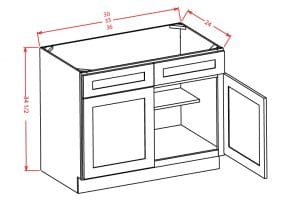
Image Source: www.cabinetcorp.com
What is Standard: How Deep Are Base Kitchen Cabinets?
How deep are base kitchen cabinets? The typical or standard depth for base kitchen cabinets is 24 inches. This measurement goes from the front face of the cabinet box to the back of the cabinet box. This depth sets a key part of the layout in most kitchens. It works with standard appliances and allows for common countertop depth standard. Knowing this standard kitchen cabinet depth is vital when planning any kitchen project.
Why 24 Inches Became Standard
Why is 24 inches the typical cabinet depth for base cabinets? This depth is not just a random number. It became the norm for several practical reasons over time.
- Fits Appliances: Many standard kitchen appliances, like dishwashers, ranges, and ovens, are designed to fit or sit in front of base cabinets with this depth. A 24-inch deep cabinet allows these units to align well with the cabinet fronts, creating a smooth line across the kitchen.
- Works with Countertops: Most kitchen countertops are about 25 inches deep. This extra inch lets the countertop hang over the front of the cabinet by about an inch. This overhang protects the cabinet doors and drawers from spills and drips. It also gives a comfortable edge to lean against or work at. The countertop depth standard relies directly on the standard kitchen cabinet depth.
- Storage Space: A 24-inch depth offers good storage space. You can fit many items inside, from pots and pans to small appliances. It balances storage needs with easy access. Items aren’t usually lost in the back, which can happen with deeper cabinets.
- Ergonomics: This depth is seen as a good fit for most people when standing and working at a counter. It allows comfortable reach to the back of the counter while providing space for sinks and cooktops.
This typical cabinet depth is a foundation for kitchen design. It affects everything from how appliances fit to how the countertops look and work.
Looking at Standard Base Cabinet Dimensions
While depth is key, base cabinet dimensions include height and width too. Knowing all these sizes helps when designing or buying cabinets.
- Height: Standard base cabinets are usually 34.5 inches tall. This height is measured from the bottom of the cabinet to the top edge of the cabinet box.
- Why 34.5 inches? When a standard countertop that is about 1.5 inches thick is added on top, the total height reaches about 36 inches. This 36-inch height is the common working height for kitchen counters. It works well for most adults doing tasks like chopping or washing dishes.
- Depth: As we know, the standard kitchen cabinet depth is 24 inches for the box itself.
- Remember, the total depth with the door/drawer front is slightly more, maybe 24.5 inches. And the countertop depth standard brings the usable surface depth to about 25 inches.
- Width: Base cabinet widths vary a lot. They come in standard sizes, usually in 3-inch steps. Common widths include:
- 9 inches
- 12 inches
- 15 inches
- 18 inches
- 21 inches
- 24 inches
- 27 inches
- 30 inches
- 33 inches
- 36 inches
- 42 inches
- 48 inches
- These widths allow designers to piece together cabinets to fit different kitchen wall lengths. Wider cabinets offer more storage but might mean heavier drawers or doors. Narrower ones fit smaller spaces or work well near corners.
Understanding these standard kitchen cabinet dimensions is key to using a kitchen cabinet sizes chart. It shows how cabinets are measured and how they fit together in a kitchen layout.
Comparing Base Depth to Wall Cabinet Depth
Kitchens have base cabinets and wall cabinets. They have different depths because they serve different roles and are at different heights.
- Base Cabinets: Sit on the floor. Their depth is standard kitchen cabinet depth, usually 24 inches. They hold heavy items and provide the base for the countertop workspace.
- Wall Cabinets: Hang on the wall above the base cabinets. Their depth is much less.
- Wall cabinet depth is typically 12 inches.
- Some wall cabinets might be 15 or 18 inches deep, especially those over refrigerators or pantries. But 12 inches is the most common typical cabinet depth for wall units.
Why are wall cabinets shallower?
- Head Room: A shallower depth keeps them from sticking out too far and hitting your head while you work at the counter.
- Reach: It’s easier to reach items in a 12-inch deep cabinet when it’s above your head compared to reaching into a 24-inch deep cabinet.
- Weight: Wall structures need to support the weight of the cabinet and its contents. Shallower cabinets tend to be lighter than deeper ones.
- Visual Balance: Shallower wall cabinets make the kitchen feel more open and less crowded, especially when placed over deeper base cabinets.
So, while standard kitchen cabinet depth for base units is 24 inches, wall cabinet depth is commonly 12 inches. This difference is part of the standard kitchen cabinet specifications that help kitchens work well and look good.
Grasping Kitchen Cabinet Specifications
When you look at kitchen cabinet specifications, you see more than just height, width, and depth. These specs cover details about how the cabinets are made, their materials, and features. The standard kitchen cabinet depth is just one piece of the puzzle.
Specifications tell you:
- Construction: What the cabinet boxes are made of (like plywood, particleboard, MDF). How they are put together (dovetail drawers, dado joints, etc.). This affects how strong and durable the cabinets are.
- Materials: What the doors and drawer fronts are made of (solid wood, veneer, thermofoil). What finishes are used (paint, stain).
- Hardware: What kind of hinges (soft-close, self-closing) and drawer slides (full-extension, epoxy coated) are included.
- Features: Things like pull-out shelves, trash can inserts, lazy susans, spice racks. These features are built into cabinets that have standard depths and widths.
- Finish: The color and type of paint or stain.
Understanding the full kitchen cabinet specifications helps you know the quality of the cabinets you are buying. It ensures the base cabinet dimensions and other sizes fit your needs and budget. The standard kitchen cabinet depth is a key spec, but it’s part of a larger set of details that define the cabinet.
Using a Kitchen Cabinet Sizes Chart
A kitchen cabinet sizes chart is a handy tool. It lists the common widths available for standard height and depth cabinets. This chart is essential for kitchen designers and DIYers.
The chart usually shows widths for:
- Base Cabinets: Often range from 9 inches to 48 inches in 3-inch steps. This is where the 34.5-inch height and 24-inch depth standard apply.
- Wall Cabinets: Typically range from 12 inches to 48 inches wide, also in 3-inch steps. These will show different heights (like 30″, 36″, 42″) and the typical cabinet depth of 12 inches.
- Tall Cabinets (Pantries/Oven): These are usually 84, 90, or 96 inches tall. Their depths are often 24 inches (like base cabinets) or 12-18 inches (like wall cabinets), depending on their use. Widths vary, commonly 18, 24, 30, or 36 inches.
Using a kitchen cabinet sizes chart helps you:
- Plan Layout: You can see what sizes are available to fill the walls in your kitchen design.
- Estimate Needs: Figure out how many cabinets of each size you might need.
- Check Compatibility: Ensure the base cabinet dimensions you plan to use match standard offerings.
- Budget: Standard sizes are usually less expensive than custom cabinet depth or widths.
The chart makes it easy to see the range of standard kitchen cabinet dimensions available. It confirms that 24 inches is the regular depth for base units, while 12 inches is typical for wall units.
When You Might Need Custom Cabinet Depth
The standard kitchen cabinet depth of 24 inches works for most kitchens. But sometimes, you might need custom cabinet depth. This happens when standard sizes don’t fit your space or specific needs.
Reasons for needing custom cabinet depth:
- Shallow Spaces: Your kitchen layout might have a spot that is less than 24 inches deep where a standard cabinet won’t fit. A custom cabinet depth could be 18 or 21 inches to solve this.
- Deeper Spaces: You might have a wall that is extra deep. You could use custom cabinet depth cabinets that are 27 or 30 inches deep to use that space better. This is less common for base cabinets but can happen.
- Specific Appliances: While most appliances fit 24-inch deep cabinets, some special appliances might need a different depth for a perfect fit.
- Unique Sinks: Very large or unusually shaped sinks might require custom cabinet depth in the sink base cabinet to fit properly while leaving room for plumbing.
- Design Preferences: Some people simply prefer a different look or feel. Maybe they want shallower cabinets to make the kitchen feel bigger, even if space isn’t an issue. Or deeper ones for maximum storage.
- Matching Old Cabinets: In a remodel, you might want new cabinets in one area to match the depth of existing cabinets elsewhere in the kitchen, if the old cabinets weren’t a standard kitchen cabinet depth.
Choosing custom cabinet depth usually costs more than using standard kitchen cabinet dimensions. Custom cabinets take more time to build and require more planning. However, they offer the best fit for unusual spaces or very specific design goals. A cabinet depth guide would explain when standard works and when custom is needed.
Interpreting the Cabinet Depth Guide
A cabinet depth guide helps you understand the different depths available and when to use them. It breaks down the options beyond just the standard kitchen cabinet depth.
Key points in a cabinet depth guide:
- Base Cabinet Depths:
- Standard: 24 inches (box depth). This is the most common. Works with countertop depth standard (25 inches) and standard appliances.
- Less Common Standard: Some manufacturers offer 21-inch deep base cabinets. These are good for tight spaces like hallways or where a standard 24-inch depth would block traffic. They are sometimes called “utility” or “laundry” cabinets.
- Custom: Any depth needed that isn’t standard, such as 18, 27, or 30 inches. Used for specific needs or spaces.
- Wall Cabinet Depths:
- Standard: 12 inches. This is the most common wall cabinet depth. Fits most items like dishes, glasses, and food cans.
- Deeper Standard: 15 or 18 inches. Used over refrigerators or pantries, or sometimes throughout the kitchen for more storage if space allows and head clearance isn’t an issue.
- Custom: Any other depth. Less common for wall cabinets unless part of a fully custom design.
- Tall Cabinet Depths:
- Standard: Usually match base (24 inches) or wall (12-18 inches) depths. Pantry cabinets are often 24 inches deep for maximum food storage, while oven cabinets are 24 inches deep to fit standard ovens. Some shallow pantry cabinets are 12 inches deep.
The guide stresses that typical cabinet depth refers to the most common sizes. But other standard options exist, and custom cabinet depth is always an option for unique situations. It helps people understand the kitchen cabinet specifications related to depth for all cabinet types. Following a good cabinet depth guide ensures you select the right cabinets for your kitchen’s layout and function.
Fathoming Standard Kitchen Cabinet Dimensions
Delving deeper into standard kitchen cabinet dimensions helps paint a full picture of what is ‘standard’ in kitchen design. It’s not just the 24-inch depth. It’s a system of sizes that work together.
- Consistent Heights: Standard base cabinets are 34.5 inches tall. Standard wall cabinets come in set heights like 30, 36, or 42 inches. Tall cabinets are typically 84, 90, or 96 inches. These fixed heights create predictable lines and make planning easier.
- Modular Widths: Cabinets are made in standard widths, usually in 3-inch increments. This modular system means you can combine different width cabinets to fill walls of almost any length. For example, a 60-inch wall space could fit a 36-inch and a 24-inch cabinet, or two 30-inch cabinets, or a 30-inch, a 15-inch, and a 15-inch. This flexibility is key to using standard kitchen cabinet dimensions.
- Standard Depth Pairs: The 24-inch standard kitchen cabinet depth for base units is paired with the 34.5-inch height. The 12-inch wall cabinet depth is paired with the standard wall cabinet heights. These pairings are fundamental to the system.
- Relationship to Appliances and Fixtures: Standard kitchen cabinet dimensions are designed to work with standard sized appliances (like 30-inch or 36-inch ranges) and standard sinks. The cutouts needed for sinks or cooktops fit within the frames of standard cabinets of certain widths.
- Framed vs. Frameless: While dimensions are standard, the construction style (framed or frameless) affects the usable space inside slightly. Framed cabinets have a face frame that can reduce opening width slightly compared to frameless cabinets of the same external width. However, the external base cabinet dimensions, including the 24-inch depth, remain standard.
Understanding the whole set of standard kitchen cabinet dimensions shows how the 24-inch depth fits into a system built for efficiency, compatibility, and ease of planning in most kitchens. It’s why stock and semi-custom cabinets are widely available in these sizes.
Getting into the Details: Kitchen Cabinet Specifications and Depth
Let’s look closer at how the 24-inch standard kitchen cabinet depth shows up in kitchen cabinet specifications. When you buy cabinets, the specs give you the exact numbers.
For a standard base cabinet, the specifications will list:
- Overall Height: 34.5 inches (not including countertop).
- Overall Depth: 24 inches (box depth). Sometimes they will add “plus door thickness” which might be about 0.75 inches. So, total depth including the door front is around 24.75 inches.
- Overall Width: One of the standard widths (9″, 12″, 15″, etc.).
- Box Construction: How the main cabinet box is made. Specs might say 1/2″ plywood, 3/4″ particleboard, etc. The depth of the box sides is 24 inches.
- Back Panel: How the back is made (often thinner material like 1/8″ or 1/4″). This back panel sits at the back of the 24-inch deep box.
- Drawer Box Depth: Specs might also list the depth of the drawers themselves. While the cabinet is 24 inches deep, the drawer boxes might be slightly less deep (e.g., 21 inches) to allow space for the drawer slides and cabinet back.
- Shelf Depth: Shelves inside the cabinet will also be cut to fit the 24-inch depth, minus any space needed for the face frame or door clearance.
Checking the kitchen cabinet specifications confirms the standard kitchen cabinet depth and how it affects the internal parts like drawers and shelves. It ensures you are getting a true 24-inch deep cabinet and not a shallower version labeled incorrectly. This detail is important for planning storage and making sure appliances will fit in front properly. It’s part of the cabinet depth guide that helps you make informed choices.
How Depth Affects Countertop Choice
The standard kitchen cabinet depth has a direct impact on your countertop. As mentioned, the countertop depth standard is usually around 25 inches. This allows for a small overhang past the 24-inch cabinet box.
- Overhang: The typical 1-inch overhang at the front is crucial. It creates a drip edge, protecting the cabinet faces below from spills. It also provides a comfortable edge.
- Backsplash Space: The remaining depth at the back (usually about an inch behind the 24-inch cabinet) is where the backsplash often sits or where electrical outlets are placed.
- Sink Cutouts: Standard sink sizes are made to fit within the width and depth of standard base cabinets and countertops. A 24-inch deep cabinet supports the installation of most standard kitchen sinks within a 25-inch deep countertop.
- Appliance Fit: Ranges and cooktops are often installed into cutouts in the countertop that align with the space between base cabinets. The 24-inch depth ensures there’s enough space behind the appliance for gas lines or electrical connections while the appliance front sits flush with the cabinet faces.
If you use custom cabinet depth that is shallower or deeper than 24 inches, you may need a custom countertop depth to match. A shallower cabinet (e.g., 18 inches deep) would typically get an 19-inch deep countertop for the same 1-inch overhang. A deeper cabinet (e.g., 27 inches deep) might get a 28-inch deep countertop. This shows how the standard kitchen cabinet depth and the countertop depth standard are closely linked.
What About Appliance Depth?
The 24-inch standard kitchen cabinet depth is designed with standard appliances in mind.
- Ranges: Freestanding ranges typically have a body depth of about 24-25 inches, allowing them to slide between standard 24-inch deep base cabinets and sit relatively flush with the front of the cabinets (or slightly proud, depending on the model and door thickness). The oven door and handle will extend further out.
- Dishwashers: Dishwashers are also built to fit into a 24-inch deep space between cabinets. Their actual body depth is usually just under 24 inches.
- Built-in Ovens and Cooktops: These are installed within cabinet boxes or countertops. The cabinets built to house them (like oven base cabinets or cooktop base cabinets) are designed with the standard kitchen cabinet depth of 24 inches to fit the appliance body and necessary connections behind it.
- Refrigerators: While refrigerators vary greatly in depth, many “counter-depth” models are designed so their body (not including doors and handles) is around 24 inches deep. This allows them to align better with the front of 24-inch deep base cabinets for a more built-in look. Standard depth fridges are much deeper.
Using the standard kitchen cabinet depth makes selecting and installing standard appliances much easier. The kitchen cabinet specifications often detail how appliances fit. Deviating with custom cabinet depth might require checking appliance specs carefully to ensure everything lines up or fits. This confirms the importance of the 24-inch depth in the overall kitchen system, guided by a comprehensive cabinet depth guide.
The History of Standard Cabinet Dimensions
The sizes we think of as standard kitchen cabinet dimensions today weren’t always the norm. Early kitchens had freestanding pieces of furniture or built-in site-built cabinets that varied greatly.
The idea of modular, standard-sized cabinets gained popularity in the early to mid-20th century. This shift happened for several reasons:
- Efficiency: Building cabinets in a factory in set sizes was faster and cheaper than building them all custom on site.
- Mass Production: Standard sizes allowed for mass production, making cabinets more available and affordable for average homeowners.
- Emergence of Standard Appliances: As kitchen appliances like ranges and refrigerators became common, cabinet sizes had to adapt to accommodate them or sit next to them logically.
- Design Principles: Designers started creating layouts based on these modular units, leading to the fitted kitchen concept we know today.
- Ergonomics Research: Studies on how people use kitchen spaces helped define comfortable working heights and depths. The 36-inch counter height (based on the 34.5-inch cabinet + 1.5-inch top) and the 24-inch depth were found to be suitable for most tasks and people.
Over decades, these sizes became widely accepted and used by most cabinet manufacturers. They became the typical cabinet depth and standard dimensions that designers, builders, and homeowners expect. While styles and materials change, the core base cabinet dimensions and wall cabinet depth standards have mostly stayed the same because they work well. This history shows why the 24-inch depth is not just a number, but the result of evolving needs and practical design.
Understanding Usable Cabinet Depth
When we say the standard kitchen cabinet depth is 24 inches, we mean the depth of the cabinet box itself. The usable depth inside the cabinet can be slightly less.
Factors affecting usable depth:
- Face Frame: Cabinets with a face frame (a solid wood frame around the front opening) will have the frame thickness reducing the opening size and slightly impacting how far items can easily slide to the very edges inside.
- Back Panel Thickness: The back panel takes up a small amount of space.
- Drawer Slides: In drawer base cabinets, the drawer slides are mounted to the sides of the cabinet box, taking up some room. The drawer box itself is often made slightly smaller than the interior width and depth of the cabinet box to fit the slides. A common drawer box depth for a 24-inch deep base cabinet might be around 21 inches.
- Hinges and Door Clearances: While less impactful on depth, internal hardware can slightly affect how shelves or items sit near the front.
So, while the external standard kitchen cabinet depth is 24 inches, remember the internal, usable depth might be closer to 23 inches for the main cabinet space and around 21 inches for drawer boxes. Kitchen cabinet specifications often provide details on internal dimensions or drawer box sizes, which helps in planning storage. This is an important detail in a complete cabinet depth guide.
Planning with Standard Depths
Using standard kitchen cabinet dimensions makes kitchen planning much simpler than working with custom cabinet depth.
Steps for planning with standard depths:
- Measure Your Space: Get accurate measurements of your kitchen walls, windows, doors, and appliance locations.
- Locate Key Areas: Decide where the sink, range, and refrigerator will go. These often dictate the layout.
- Use a Kitchen Cabinet Sizes Chart: Refer to a chart from a cabinet maker or design software. See what standard widths are available.
- Fit Cabinets to Walls: Start placing standard width cabinets along the walls, keeping the standard kitchen cabinet depth (24″) in mind for base cabinets and wall cabinet depth (12″) for uppers.
- Remember to leave space for appliances (like 30″ or 36″ for a range, 24″ for a dishwasher).
- Plan for corner cabinets, which have specific dimensions and access needs.
- Leave fillers (small strips of wood) where needed to fill gaps at the ends of runs or in corners, allowing doors and drawers to open without hitting walls or other cabinets.
- Account for Overhangs: Remember the countertop depth standard is typically 25 inches, extending past the 24-inch base cabinet.
- Consider Walkways: Ensure that with the 24-inch deep base cabinets and 25-inch deep countertops, you still have enough clear space in front of them for people to move around comfortably (at least 36-42 inches is recommended).
Planning with standard kitchen cabinet dimensions and referring to a cabinet depth guide helps avoid costly mistakes and ensures compatibility with standard appliances and countertops. It’s the most common and often most budget-friendly way to design a kitchen. Only when standard sizes truly won’t work should custom cabinet depth be considered.
The Look and Feel of Standard Depth
The standard kitchen cabinet depth of 24 inches also plays a role in the overall look and feel of the kitchen.
- Proportion: The 24-inch base depth, paired with the 34.5-inch base height and the shallower 12-inch wall cabinet depth, creates a balanced look that is familiar and comfortable in most homes.
- Visual Lines: The standard depths allow for smooth, continuous lines across the bottom cabinets and a clear separation between the base cabinets/countertop and the wall cabinets. This layered effect is a hallmark of classic kitchen design.
- Countertop Presence: The 25-inch countertop depth standard provides a substantial work surface that looks and feels right in proportion to the cabinets below. A much shallower or deeper countertop might look unusual.
- Appliance Integration: When standard appliances fit well within the standard cabinet depths, the kitchen has a clean, built-in appearance, even if using freestanding appliances.
While custom cabinet depth can be used for specific design effects, the typical cabinet depth contributes to a sense of harmony and functionality that is proven over time. It’s the foundation for the look of millions of kitchens. The kitchen cabinet specifications detailing these dimensions are key to achieving this standard look.
Summary: The Core of Base Cabinet Depth
To sum up, the answer to “How deep are base kitchen cabinets?” points to a key standard in kitchen design. The standard kitchen cabinet depth for base units is 24 inches.
This 24-inch depth is the typical cabinet depth because it:
- Works with standard appliances.
- Provides the right base for the countertop depth standard (25 inches).
- Offers good storage capacity and access.
- Fits standard ergonomic needs for working at a counter.
These base cabinet dimensions, along with standard heights and widths listed in a kitchen cabinet sizes chart, form the basis of most kitchen layouts. Kitchen cabinet specifications confirm these sizes and details.
While wall cabinet depth is usually 12 inches, and custom cabinet depth can be used for unique situations, the 24-inch base depth is the bedrock. Understanding this cabinet depth guide helps you plan a functional and attractive kitchen.
Frequently Asked Questions (FAQ)
H5 How deep are standard kitchen cabinets from the wall?
Standard base kitchen cabinets are 24 inches deep from the back of the cabinet box to the front. When installed against a wall, this means they stick out 24 inches from the wall structure. Remember to add the door/drawer front thickness (about 0.75 inches) and the countertop overhang (about 1 inch) when figuring out the total space needed. The usable countertop depth will be about 25 inches out from the wall.
H5 What is the standard depth for kitchen sink base cabinets?
Sink base cabinets follow the standard kitchen cabinet depth of 24 inches, just like other base cabinets. Their width varies depending on the sink size (common widths are 30″, 33″, 36″). The 24-inch depth allows enough space for standard sinks to be installed within the countertop above and leaves room behind for plumbing connections near the wall.
H5 Can base cabinets be shallower than 24 inches?
Yes, base cabinets can be shallower. While 24 inches is the standard kitchen cabinet depth, some manufacturers offer shallower standard options like 21 inches for tighter spaces. You can also order custom cabinet depth base cabinets in any size needed, though this costs more. Shallower cabinets provide less storage and require shallower countertops.
H5 What is the standard depth of wall cabinets?
The standard kitchen cabinet depth for wall cabinets is typically 12 inches. This is much shallower than base cabinets. Some wall cabinets might be 15 or 18 inches deep, especially those used over refrigerators or as pantry tops. The shallower depth prevents you from hitting your head and makes items easier to reach.
H5 How does cabinet depth affect countertop depth?
The standard kitchen cabinet depth directly sets the stage for the countertop depth standard. Standard base cabinets are 24 inches deep. Standard countertops are usually 25 inches deep. This extra inch creates a necessary overhang at the front of the cabinet, protecting the doors and drawers and providing a working edge. If you use a non-standard cabinet depth, your countertop depth will likely need to be custom to match, keeping that 1-inch overhang.
H5 Are bathroom cabinet depths the same as kitchen?
No, bathroom vanity cabinet depths are often different from kitchen cabinet depths. While standard kitchen cabinet dimensions for base units are 24 inches deep, standard bathroom vanities are commonly 21 inches deep. Some bathroom vanities might be even shallower (18 inches) or deeper (24 inches, like kitchen cabinets), but 21 inches is a very common standard depth for bathrooms.
H5 What are typical cabinet depth dimensions?
Typical cabinet depth usually refers to the most common standard sizes:
* Base Cabinets: 24 inches deep (box)
* Wall Cabinets: 12 inches deep
These are the most widely used depths found in kitchen cabinet sizes chart lists and kitchen cabinet specifications.