Choosing the right trash bag size for your kitchen can seem simple, but picking the perfect fit makes life easier. So, what size trash bag do I need for my kitchen? Most kitchens use a tall kitchen trash can. These usually hold around 13 gallons. This means you will likely need 13 gallon trash bags. But many other sizes exist for different needs. This guide helps you figure out the best size for your home.
Picking the correct bag size stops bags from slipping down or bursting. It also helps you use each bag fully. Let’s look at how trash bag sizes work.
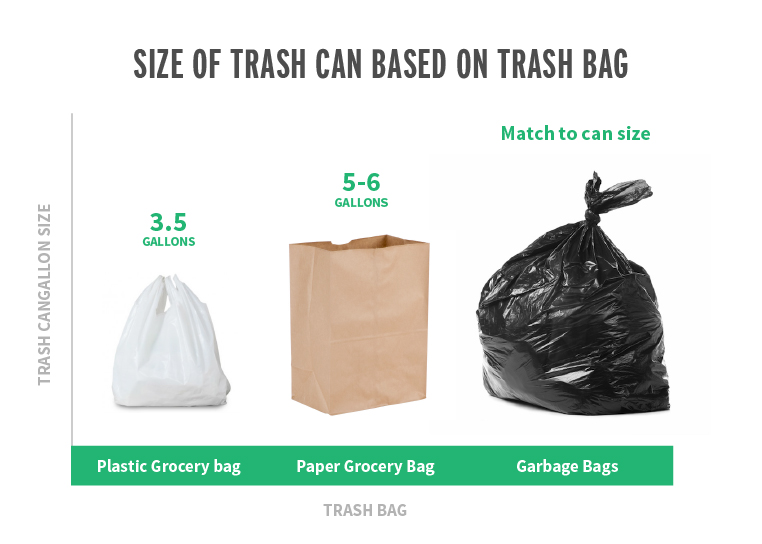
Image Source: trashcansunlimited.com
Measuring Bag Size in Gallons and Liters
Trash bag sizes are often measured in gallons in the United States. This tells you how much waste the bag can hold, or its waste bag volume. A gallon is a unit of liquid measure, but it is used here to show capacity.
You will see numbers like 13 gallons, 30 gallons, or even 55 gallons. The bigger the number, the more the bag can hold.
In many other parts of the world, garbage bag liters are used instead of gallons. Liters also measure volume. One gallon is about 3.785 liters. So, a 13 gallon trash bag holds about 49.2 liters.
Knowing both trash bag gallon sizes and garbage bag liters helps when shopping. You might see bags marked with both numbers. This helps everyone find the right size.
Common Kitchen Trash Bag Sizes
Kitchen trash cans come in many sizes. But one size is very common for families. This is the tall kitchen can.
Tall Kitchen Bag Capacity: The 13 Gallon Standard
The most common size for kitchen trash cans is about 13 gallons. These cans are often tall and slim. They fit well in kitchens. The bags made for these cans are called tall kitchen bags. So, the typical tall kitchen bag capacity is 13 gallons.
Why are 13 gallon trash bags so popular?
* They fit the most common kitchen cans.
* They are big enough for a few days of kitchen waste for many homes.
* They are not too heavy to carry when full.
* They are widely available in stores.
Because 13 gallon trash bags are so popular, you will find many types. They come with different strengths, smells, and closures.
Other Kitchen Trash Bag Sizes
While 13 gallons is standard, some kitchens use different sizes.
* Smaller bins under the sink or in a pantry might use 4-gallon or 8-gallon bags.
* Larger kitchens or homes with more people might use larger cans. These could need 15-gallon, 20-gallon, or even 30-gallon bags.
Choosing the size depends on your kitchen trash can size. Always check the size of your can before buying bags. The bag size should match or be slightly larger than the can size.
Looking at Bag Shape and Size
Trash bag capacity in gallons or liters is important. But the actual shape and size of the bag also matter. This is where standard garbage bag dimensions come in.
A trash bag is flat when you buy it. It has a width and a length (or height). When you open it, it forms a cylinder or box shape. The size it can hold depends on these flat dimensions.
Let’s think about a 13 gallon trash bag. It might be about 24 inches wide and 27 inches tall when flat. These dimensions let it open up to fit inside a tall 13-gallon can. If the bag is too narrow, it won’t fit around the rim. If it’s too short, it will fall into the can.
How Dimensions Fit Your Can
Kitchen trash cans are not all the same shape. Some are tall and thin. Some are shorter and wider. The standard garbage bag dimensions need to work with your can’s shape.
To check if a bag will fit, you need to know your can’s measurements:
1. Height: Measure from the bottom inside to the top rim. The bag’s height must be greater than this. Allow extra for the bag to fold over the rim.
2. Circumference: Measure around the outside of the can just below the rim. This is like the waistline of the can. The bag’s width (when flat) needs to be at least half of the can’s circumference. For a good fit, many bags have a flat width that is a bit more than half the circumference. This lets the bag open up easily. A common guide is that the bag’s flat width should be roughly the circumference divided by two, plus a few inches for ease of fitting.
So, standard garbage bag dimensions like width and height are key to a good fit. Don’t just look at the gallon size. Look at the bag’s measurements on the box.
Features That Affect Bag Size and Fit
Trash bags come with different features. These can change how the bag fits or how easy it is to use.
Drawstring Trash Bag Size and Fit
Many kitchen trash bags have a drawstring. This string is built into the top of the bag. It makes closing and carrying the bag much easier.
Does a drawstring change the bag size? The listed gallon capacity (like 13 gallons) is for the total space the bag can hold. The drawstring is at the very top. It doesn’t really change the main waste bag volume.
However, the drawstring area might take up a little bit of space at the very top rim of the can. This is usually not a big issue. What matters more is how the drawstring area helps the bag fit around the can’s rim.
A drawstring trash bag size might feel slightly tighter around the rim than a standard bag without a drawstring. This is because the drawstring channel uses some of the bag’s material at the top. But bag makers account for this. The overall standard garbage bag dimensions for a drawstring bag are designed to fit the stated can size.
When choosing a drawstring trash bag size, make sure it’s meant for your can size. A 13 gallon drawstring bag is made for a 13-gallon can. The drawstring just adds a handy way to close it.
Other Closure Types
Besides drawstrings, bags might have:
* Flaps: These are simple ties built into the bag’s top corners. You tie them together to close the bag.
* Twist ties: These are separate wires with paper or plastic coating. You gather the bag top and twist the tie around it.
* Handle ties: These are like the handles on a shopping bag. You tie the two handles together.
These closure types mainly affect how you close and carry the bag. They don’t change the waste bag volume much. The bag’s stated gallon size is the main measure of its capacity.
Comparing Trash Bag Sizes
Let’s look at some common trash bag sizes and where they are used. This helps in comparing trash bag sizes for different jobs.
| Bag Size (Gallons) | Approximate Liters | Common Use | Typical Kitchen Can Size | Notes |
|---|---|---|---|---|
| 4 Gallon | ~15 Liters | Small bathroom cans, office bins, car trash | 4-6 Gallons | Good for small spaces. |
| 8 Gallon | ~30 Liters | Medium bathroom cans, smaller kitchen bins | 7-9 Gallons | Used in some smaller kitchens or pantries. |
| 13 Gallon | ~49 Liters | Standard kitchen trash cans | 10-14 Gallons | Most popular kitchen size. Tall & slim. |
| 20 Gallon | ~75 Liters | Larger kitchen cans, outdoor small bins | 15-20 Gallons | For bigger needs or larger cans. |
| 30 Gallon | ~113 Liters | Large kitchen cans, outdoor bins, yard waste | 25-35 Gallons | For big families or less frequent emptying. |
| 55 Gallon | ~208 Liters | Large outdoor trash cans, drum liners | 40-60 Gallons | Not typical for inside kitchen use. |
This table shows common trash bag gallon sizes and their garbage bag liters equivalents. It helps understand the range of sizes.
When comparing trash bag sizes, think about:
* Your kitchen trash can size. This is the main point.
* How much trash your household makes. If you make a lot, a slightly larger bag might mean emptying the can less often.
* How often you want to take out the trash. A smaller bag might mean taking it out daily, which can help with smells.
* What you throw away. If you have bulky items, the shape of the bag matters.
Finding Your Kitchen Trash Can Size
Knowing your kitchen trash can size is the first step to finding the right bag. Most cans have the size printed on the bottom or the side. It might say “13 Gallon” or “49 Liter”.
If your can doesn’t have the size marked, you can measure it.
* For round cans: Measure the height inside. Measure the diameter (across the middle) or the circumference (around the outside). You can use online calculators to find the volume from these measurements.
* For square or rectangle cans: Measure the height inside, the length of one side, and the width of another side. Multiply these three numbers (Height x Length x Width) to get cubic inches or cubic feet. Then, convert that to gallons or liters. (1 gallon is about 231 cubic inches; 1 liter is about 61 cubic inches).
Measuring helps you know for sure what size bag you need. Don’t guess!
Why Getting the Size Right Matters
Using the wrong size trash bag causes problems.
Bag is Too Small
- It won’t fit over the rim of the can.
- It will fall down into the can as you put trash in.
- It won’t hold as much trash as the can could fit, wasting space.
- It might break easily if overfilled.
Bag is Too Big
- Too much extra plastic hanging over the rim.
- This extra plastic can get in the way.
- Wastes material and costs more money over time.
- The bag might be too heavy to carry when full.
Getting the size right means the bag fits well. It stays up, holds the most it can, and is easy to take out. This leads to using the full waste bag volume it offers.
What Size Trash Bag Do I Need? A Step-by-Step Guide
Let’s go through how to pick the best size bag for your kitchen.
Step 1: Find Your Can Size.
Look for the gallon or liter size on your kitchen trash can. If you can’t find it, measure the can’s height and circumference (for round) or height, length, and width (for square/rectangle). Convert measurements to gallons or liters if needed.
Step 2: Match the Bag Size to the Can Size.
If your can is 13 gallons, buy 13 gallon trash bags. If it’s 8 gallons, buy 8-gallon bags. If it’s 30 gallons, buy 30-gallon bags. Choose bags with the same or very close gallon size as your can.
Step 3: Check the Bag Dimensions (Optional but Helpful).
Look at the bag’s flat width and height printed on the box. Compare these to your can’s measurements.
* Bag height should be more than the can’s height, plus several inches to fold over the rim.
* Bag flat width should be roughly half the can’s circumference (for round cans) or half the perimeter (for square/rectangle cans), plus extra inches for stretch and fit.
Checking dimensions is especially useful if your can has an unusual shape or if you are unsure about the gallon size.
Step 4: Consider Bag Type and Strength.
Do you want a drawstring trash bag size for easy closing? Do you need a strong bag (thicker plastic, measured in ‘mil’) for heavy or sharp trash? While strength doesn’t change the volume, it affects how well the bag holds up. Thicker bags (higher mil number) are stronger. Standard kitchen bags are often around 0.9 mil to 1.2 mil thick. Heavy-duty bags can be 2 mil or more.
Step 5: Think About Waste Type and Volume.
How much trash do you make? If your 13-gallon can fills up too slowly, maybe you could use a smaller can and bag in a different spot (like under the sink for recycling). If your 13-gallon can fills up too fast and is always overflowing, maybe you need a bigger kitchen trash can size, like 20 or 30 gallons, and the matching bags. Think about the total waste bag volume you deal with regularly.
Step 6: Look at Bag Features.
Do you want odor control? Scented bags? These features don’t change the size but affect your experience.
By following these steps, you can make sure you are buying the right trash bag gallon sizes for your needs.
Different Types of Trash Bags and Size
While we focus on kitchen bags, other bags exist for different uses. Their sizes are also measured in gallons or liters.
- Small Liner Bags: Used in bathrooms, cars, or small office bins. Sizes are often 4 gallon or 8 gallon.
- Kitchen Bags: The main topic! Often 13 gallon, but can be smaller or larger depending on the can.
- Contractor Bags: Very large and thick bags for heavy construction waste or cleanups. Sizes are usually 42 gallon or 55 gallon. They are very strong.
- Yard Waste Bags: Designed for leaves, grass clippings, and branches. Often 30 gallon or 33 gallon. Can be plastic or paper.
Understanding these different types helps when comparing trash bag sizes. You wouldn’t use a 4-gallon bathroom bag in a tall kitchen can. And a 55-gallon contractor bag is too big for most homes.
Reaffirming 13 Gallon Trash Bags
It is worth repeating that 13 gallon trash bags are the go-to choice for most kitchens. They are made specifically for the tall, slim cans commonly found in kitchens.
When shopping, you will see many brands offering 13 gallon trash bags. They might vary in strength (thickness), scent, color, and closure type (drawstring trash bag size vs. flap tie). But the core size, the tall kitchen bag capacity, is built around that 13-gallon standard.
If you just moved or got a new kitchen trash can and don’t know the size, buying a small pack of 13 gallon trash bags is a good first step. There’s a high chance they will fit a standard kitchen can. But checking your can’s size is always best.
The Importance of Waste Bag Volume
Thinking about waste bag volume helps you manage trash better. If your bag is always overflowing before trash day, you need more volume. This means a bigger bag and a bigger can.
If you live alone and cook little, a 13-gallon can might be too big. You might not fill the bag for a week or more, leading to smells. A smaller 8-gallon can and bags could be better. This means less waste bag volume per bag, but you might take it out more often.
Consider the volume of trash your home creates in a day or two. This gives you an idea of the minimum bag size you need before the bag gets too full or heavy. Matching the bag size to the can size lets you use the can’s full potential waste bag volume.
Conclusion: Finding the Right Fit
Finding the right size kitchen trash bag boils down to a few main points:
* Know your kitchen trash can size, usually in gallons or liters. Look on the can itself.
* Match the bag size to the can size (e.g., 13 gallon trash bags for a 13-gallon can).
* Consider the bag’s flat dimensions to ensure it fits over the can’s rim and shape.
* Think about how much waste bag volume your household creates.
* Choose features like drawstring trash bag size or strength based on your needs.
Comparing trash bag sizes means looking beyond just the gallon number. It involves thinking about your can, your habits, and the actual bag dimensions.
By taking a moment to check your can size and needs, you can easily find the best size trash bag. This small step makes dealing with trash a smoother task in your home. No more bags slipping or tearing!
Frequently Asked Questions (FAQ)
h4: What is the most common kitchen trash bag size?
The most common size for kitchen trash bags in the United States is 13 gallons. These are known as tall kitchen bags.
h4: How do I know what size trash bag my can needs?
Look for a size number (like 13 Gallon or 49 Liter) printed on the bottom or side of your kitchen trash can. If there is no size listed, you can measure the can’s height and circumference or dimensions to figure out its volume.
h4: Is a 13 gallon trash bag the same as a tall kitchen bag?
Yes, generally. The term “tall kitchen bag” refers to the standard bag size designed to fit the typical tall kitchen trash can, which is usually 13 gallons in capacity.
h4: Can I use a larger bag in a smaller trash can?
Yes, you can use a larger bag, but it’s not ideal. A bag that is too big will have excess plastic that needs to be folded over the rim. This wastes material and can get in the way. It’s best to match the bag size to the can size for a proper fit and full use of the can’s capacity.
h4: Can I use a smaller bag in a larger trash can?
No, you should not use a smaller bag. A bag that is too small will not fit over the rim of the can. It will fall down inside as you fill it. It also won’t hold the full volume of trash the can is made for.
h4: What do the dimensions on the trash bag box mean?
The dimensions usually show the bag’s flat width and height in inches or centimeters. For example, “24 in x 27 in”. These dimensions tell you the physical size of the bag before it is opened. You can use these numbers to help see if the bag will fit around the rim and reach the bottom of your specific trash can.
h4: Does a drawstring affect the bag’s size?
A drawstring primarily adds a way to close and carry the bag easily. It is part of the top edge of the bag. The listed gallon size (like 13 gallons) still tells you the main waste bag volume the bag is designed to hold. A drawstring trash bag size is made to fit the same can size as a non-drawstring bag of the same gallon capacity.
h4: What is the difference between gallons and liters for trash bags?
Gallons and liters are both units used to measure volume or capacity. They tell you how much a bag can hold. Gallons are commonly used in the US, while liters are used in many other countries. One gallon is equal to about 3.785 liters. Trash bag gallon sizes and garbage bag liters show the same capacity using different units.
h4: My trash can size is not a standard size like 13 gallons. What should I do?
If your can is an unusual size, measure its dimensions (height and circumference/perimeter). Look for trash bag boxes that list dimensions. Find a bag whose flat width is at least half the can’s circumference/perimeter plus a few inches, and whose height is more than the can’s height plus enough to fold over the rim. Sometimes, a size slightly larger than your can’s volume is the best fit. For example, a 15-gallon can might use 20-gallon bags for a better fit around the rim.
h4: How can I figure out the waste bag volume I need?
Think about how quickly your current trash can fills up. If it overflows often, you need more volume per bag, which means a bigger can and matching bags. If it takes a very long time to fill, maybe a smaller can and bag would be better to avoid old trash sitting too long. This helps you judge the right waste bag volume for your household’s habits.
h4: Does the thickness (mil) of the bag affect the size?
No, the thickness (measured in ‘mil’) affects the bag’s strength and durability, not its size or volume capacity. A thicker bag (higher mil) is stronger and less likely to tear or puncture, but a 13-gallon bag is still 13 gallons, regardless of its thickness.
h4: Where can I find comparing trash bag sizes information?
You can find this information on product packaging, store websites, and in guides like this one. Look at the stated gallon or liter size, the bag’s dimensions, and notes about what size can the bag is designed for (like “Fits 13 Gallon Cans”).