So, how big are kitchen cabinets? Kitchen cabinets come in standard sizes. These sizes make planning easier. Standard kitchen cabinet dimensions are very common. But the exact sizes can differ a bit depending on who made them. These typical cabinet sizes help fit appliances, sinks, and worktops just right. They also make sure cabinets are comfortable to use. In this guide, we will look at the common sizes you will find. This includes base, wall, and tall cabinets. Knowing these sizes is key when planning your kitchen.
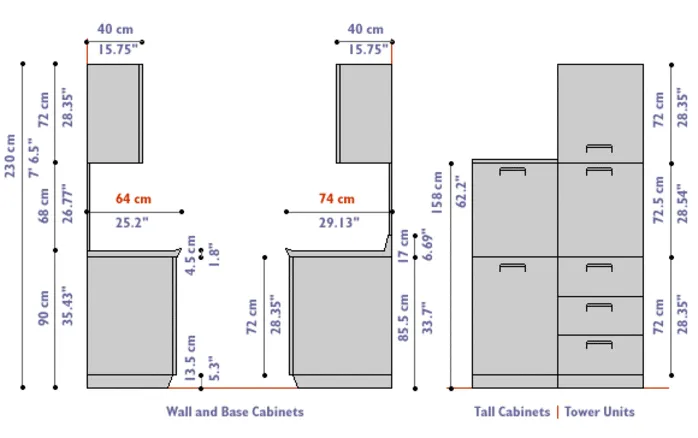
Image Source: guilincabinets.com
Why Standard Sizes Matter
Think about building with blocks. If the blocks were all different sizes, it would be hard to build anything straight or steady. Kitchen cabinets work the same way. Standard sizes are like standard blocks. They make building a kitchen much simpler.
Here’s why standard sizes are helpful:
- Fits Appliances: Ovens, dishwashers, and fridges are made in standard widths and heights. Cabinets are sized to fit around them.
- Fits Countertops: Standard base cabinet heights mean countertops end up at a comfortable height, usually 36 inches from the floor.
- Fits People: Heights and depths are set so most people can reach things inside cabinets easily without hurting their backs or bumping their heads.
- Easier Design: When you use standard sizes, planning your kitchen layout is much faster. You pick from set options instead of designing every single box from scratch.
- Lower Cost: Making the same sizes over and over is cheaper for companies. This means cabinets cost less for you.
- Easier to Replace: If one standard cabinet gets damaged, it’s easier to find a replacement that matches the size.
Knowing standard kitchen cabinet dimensions is the first step in any kitchen project. It helps you figure out how many cabinets you need and where they will fit.
Deciphering Base Cabinet Dimensions
Base cabinets sit on the floor. The countertop goes on top of them. They are the workhorses of the kitchen. They hold heavy pots, pans, and often include drawers for utensils. Understanding base cabinet dimensions is vital because they set the height of your workspace.
Let’s look at the usual measurements for base cabinets:
- Height: The most common height for a base cabinet box is 34.5 inches. This might seem odd, but it is done on purpose. When you add a standard countertop, which is usually 1.5 inches thick, the total height from the floor to the top of the counter is 36 inches. This 36-inch height is thought to be the most comfortable for most adults to work at.
- Depth: The standard depth for base cabinets is 24 inches. This depth is measured from the front of the cabinet box to the back. This depth gives you enough counter space to work on. It also fits common appliances like dishwashers that sit next to them. Some base cabinets might be slightly deeper, like 27 or 30 inches, but 24 inches is the typical cabinet size.
- Width: Base cabinets come in many different widths. This is so you can fill any length of wall. Common widths go up in steps of 3 inches. They often start small and get bigger. Typical widths are:
- 9 inches
- 12 inches
- 15 inches
- 18 inches
- 21 inches
- 24 inches
- 27 inches
- 30 inches
- 33 inches
- 36 inches
You might also find wider base cabinets, sometimes up to 48 inches or more, especially for things like sink bases or special uses. The average kitchen cabinet width for base cabinets might fall somewhere in the 24 to 36-inch range, as these are common sizes used for sink bases, drawer banks, and standard cabinets.
Table of Common Base Cabinet Sizes
Here is a simple kitchen cabinet size chart for standard base cabinets:
| Measurement | Standard Size | Common Variations | Notes |
|---|---|---|---|
| Height | 34.5 inches | – | Creates 36″ counter height with 1.5″ top. |
| Depth | 24 inches | 27, 30 inches | Box depth, not including doors/drawers. |
| Widths | 9, 12, 15, 18, 21, | Up to 48+ inches | Increments usually by 3 inches. |
| 24, 27, 30, 33, 36 |
The Toe Kick
Base cabinets don’t go straight down to the floor. They have a space at the bottom called a toe kick. The standard toe kick height is 4.5 inches. The standard toe kick depth (how far it goes back) is 3 inches. This space is there so you can stand closer to the counter. It lets your toes go under the cabinet so you can lean in slightly while you work without hitting your feet.
Different Types of Base Cabinets
Within the standard base cabinet dimensions, there are different types for different jobs:
- Standard Base Cabinets: These have a door or doors, maybe with a drawer above. Widths: 9 to 36 inches.
- Drawer Base Cabinets: These have only drawers. Great for storing utensils, pots, and pans. Widths: 12 to 36 inches.
- Sink Base Cabinets: These are designed to fit a sink. They have no shelves inside and might have fake drawer fronts above the doors. Widths: 24 to 36 inches are common, sometimes up to 48 inches for wider sinks.
- Corner Base Cabinets: These fit into corners. They come in special shapes like blind corners or lazy Susan cabinets to make the corner space easy to use. Their sizes are more complex and depend on the corner setup.
- Appliance Pull-out Cabinets: These are narrower, like 9 or 12 inches wide, made for things like spice racks or trash cans that pull out.
Knowing these base cabinet dimensions helps you plan the layout on the floor level of your kitchen. Remember to account for the countertop thickness on top of the 34.5-inch cabinet height.
Grasping Wall Cabinet Height and Sizes
Wall cabinets hang on the wall above the base cabinets. They are also called upper cabinets. They are used for storing things like dishes, glasses, and food items that you need to reach easily. Upper kitchen cabinet sizes are just as standard as base cabinets, but they have more options in terms of height.
Let’s look at the usual measurements for wall cabinets:
- Depth: The standard depth for wall cabinets is 12 inches. This depth is measured from the front to the back of the cabinet box. 12 inches is a good depth because it keeps the cabinet from sticking out too far. This way, you don’t bump your head on it while working at the counter. It also leaves enough counter space clear below it. Some wall cabinets, especially those meant to go over a refrigerator, can be deeper, like 15, 18, or even 24 inches. But 12 inches is the most common standard cabinet depth for uppers.
- Width: Like base cabinets, wall cabinets come in many widths, usually in 3-inch steps. Common widths are:
- 12 inches
- 15 inches
- 18 inches
- 21 inches
- 24 inches
- 27 inches
- 30 inches
- 33 inches
- 36 inches
Again, wider cabinets might exist for special uses. The average kitchen cabinet width for wall cabinets is often between 18 and 30 inches, as these sizes are versatile.
- Height: This is where wall cabinets offer more choices than base cabinets. The wall cabinet height you choose often depends on the height of your kitchen ceiling and how much space you want above the cabinets. Common wall cabinet heights are:
- 30 inches
- 36 inches
- 42 inches
Choosing the right wall cabinet height affects the overall look and storage space in your kitchen.
How Wall Cabinet Height Works with Base Cabinets
Wall cabinets are typically hung 18 inches above the kitchen countertop. This 18-inch space is a standard clearance. It allows space for small appliances like coffee makers or toasters to sit on the counter. It also meets building codes in many places for clearance above ranges or cooktops.
Let’s see how different wall cabinet heights work with this standard 18-inch space and the 36-inch counter height (which is the 34.5-inch base cabinet plus 1.5-inch counter):
- If you use 30-inch high wall cabinets: The top of the wall cabinet will be 30 inches (cabinet height) + 18 inches (space below) + 36 inches (counter height) = 84 inches from the floor. This leaves 12 inches of space between the top of the cabinets and an 8-foot (96-inch) ceiling. This space can be left open or filled with decorative trim or soffits.
- If you use 36-inch high wall cabinets: The top of the wall cabinet will be 36 inches + 18 inches + 36 inches = 90 inches from the floor. This leaves 6 inches of space between the top of the cabinets and an 8-foot (96-inch) ceiling. This is often used with simple crown molding trim.
- If you use 42-inch high wall cabinets: The top of the wall cabinet will be 42 inches + 18 inches + 36 inches = 96 inches from the floor. These cabinets go all the way to an 8-foot ceiling, giving a clean, built-in look with minimal space above.
For kitchens with ceilings higher than 8 feet, you might stack cabinets or use taller custom cabinets. But for standard kitchens, 30, 36, or 42 inches are the main wall cabinet height options.
Table of Common Wall Cabinet Sizes
Here is a simple kitchen cabinet size chart for standard wall cabinets:
| Measurement | Standard Sizes | Common Variations | Notes |
|---|---|---|---|
| Height | 30, 36, 42 inches | – | Chosen based on ceiling height and desired look. |
| Depth | 12 inches | 15, 18, 24 inches | Standard depth for uppers. |
| Widths | 12, 15, 18, 21, 24, 27, 30, | Up to 48+ inches | Increments usually by 3 inches. |
| 33, 36 inches |
Knowing these upper kitchen cabinet sizes helps you plan the storage space and look of the upper part of your kitchen walls.
Interpreting Tall Cabinet Dimensions
Tall cabinets are the giants of kitchen cabinetry. They usually go all the way from the floor up towards the ceiling. They are used for pantries or to house built-in ovens and microwaves. Understanding tall cabinet dimensions helps you plan for significant storage or appliance spots.
Let’s look at the usual measurements for tall cabinets:
- Height: Tall cabinets are designed to align with typical door frames or ceiling heights. The most common heights are:
- 84 inches (7 feet)
- 96 inches (8 feet)
An 84-inch tall cabinet usually goes to the top of a standard doorway. A 96-inch tall cabinet typically reaches an 8-foot ceiling. Sometimes, manufacturers offer taller cabinets or extensions to go even higher.
- Depth: Tall cabinets that function as pantries often match the standard base cabinet depth. The standard cabinet depth is 24 inches. This depth provides deep storage space. Some pantry cabinets might be shallower, like 12 or 18 inches deep. These shallower pantries are good for seeing items better, as things don’t get lost in the back. Tall cabinets designed for built-in ovens or refrigerators are typically 24 inches deep.
- Width: Tall cabinets come in fewer widths than base or wall cabinets. Common widths are:
- 18 inches
- 24 inches
- 30 inches
- 36 inches
An average kitchen cabinet width for a tall pantry might be 24 or 30 inches. Oven cabinets are sized to fit standard oven widths.
Table of Common Tall Cabinet Sizes
Here is a simple kitchen cabinet size chart for standard tall cabinets:
| Measurement | Standard Sizes | Common Variations | Notes |
|---|---|---|---|
| Height | 84, 96 inches | Taller options | Aligns with doors or ceilings. |
| Depth | 24 inches | 12, 18 inches | 24″ is common; shallower for pantries. |
| Widths | 18, 24, 30, 36 inches | – | Fewer width options than base/wall. |
Knowing these tall cabinet dimensions is important if you plan to include a large pantry or built-in appliances in your kitchen layout.
Getting Started: Measuring Kitchen Cabinets and Your Space
Planning your kitchen starts with knowing the space you have. Measuring kitchen cabinets that might already be there or measuring the empty space is a key step. You need to know the size of the room before you can pick the right standard kitchen cabinet dimensions.
Here are tips for measuring your kitchen space:
- Draw the Room: Get some graph paper or plain paper. Draw the shape of your kitchen walls.
- Measure Walls: Measure the length of each wall where cabinets will go. Write these numbers on your drawing. Measure from corner to corner.
- Mark Features: Draw in windows, doors, and vents on your plan.
- Measure Windows and Doors: Measure the width of the window or door frame. Also, measure the distance from the corner of the room to the edge of the frame. Measure the distance from the floor to the bottom of the window. Measure from the top of the window to the ceiling.
- Mark Appliances: Draw in where your fridge, stove, dishwasher, and sink are or will be. Note their widths and depths if you know them.
- Mark Utilities: Note where outlets, light switches, water pipes, and gas lines are. Cabinets need to be planned around these things.
- Measure Ceiling Height: Measure the height from the floor to the ceiling in a few spots. Ceilings can be uneven. Use the shortest height you find.
- Double Check: Measure everything twice to be sure.
If you are replacing cabinets, you can measure the old ones, but focus more on the space they fit into. Knowing the space lets you pick new cabinets using standard sizes.
This measuring process gives you a map of your kitchen. You can then use a cabinet dimensions guide or kitchen cabinet size chart from a cabinet maker to see which standard cabinet sizes will fit into your plan.
Using a Cabinet Dimensions Guide
Once you have your kitchen measurements, you can start planning your layout. This is where a cabinet dimensions guide comes in handy. Cabinet makers provide charts or lists showing all the standard sizes they offer for base, wall, and tall cabinets.
Here is how to use a cabinet dimensions guide:
- Get the Guide: Find the guide or catalog from the cabinet company you like. This will list their specific standard kitchen cabinet dimensions. While sizes are standard, there can be tiny differences between brands (like 1/8 inch), so use the guide for the cabinets you plan to buy.
- Look at Cabinet Types: Guides usually separate base, wall, and tall cabinets. Find the section you need.
- Check Available Sizes: Look at the tables or lists of sizes. They will usually be listed by width x height x depth (W x H x D). For example, a base cabinet might be listed as 24″ W x 34.5″ H x 24″ D.
- Fit Cabinets into Your Plan: Look at your kitchen drawing with your measurements. Start placing standard cabinet sizes into your plan.
- Often, you start with fixed points like the sink base (needs to be under the window or where the plumbing is) and appliance spots.
- Then, use standard width cabinets (9, 12, 15, etc.) to fill the wall lengths between corners, appliances, and doors/windows.
- For wall cabinets, decide on your wall cabinet height (30, 36, or 42 inches) based on your ceiling height and desired look. Then pick widths to go above your base cabinets.
- Consider Fillers: You will often have small gaps left after placing standard width cabinets. This is normal. These gaps are filled with “filler” strips. Fillers are just plain cabinet pieces, usually 3 or 6 inches wide, that are cut to size on site to fill the exact space. They make the cabinets look built-in and also ensure doors and drawers can open without hitting a wall or appliance.
- Use Design Tools: Many cabinet companies and home improvement stores have kitchen design software or offer design services. These tools use the standard cabinet dimensions from their kitchen cabinet size chart to help you create a 3D layout and see how everything fits.
Knowing the typical cabinet sizes and how to use a cabinet dimensions guide makes planning much easier. It lets you see how you can combine different standard cabinets to fit your unique kitchen space.
Accounting for Variations and Getting a Perfect Fit
While we talk a lot about standard kitchen cabinet dimensions, it’s important to know that not every kitchen is perfectly square, and sometimes standard sizes just aren’t quite right.
- Small Variations: As mentioned, one brand’s “24-inch” cabinet might be slightly different from another’s. Always check the specific cabinet dimensions guide for the line you are interested in.
- Filler Strips: We talked about fillers. They are essential for achieving a good fit. Don’t plan your layout expecting standard cabinets to perfectly equal the exact length of your wall. Always leave room for a few inches of filler here and there.
- Scribe Strips: Sometimes, walls aren’t perfectly straight. A scribe strip is a thin piece of wood attached to the edge of a cabinet that meets a wall. It can be sanded or “scribed” to follow the exact wavy line of the wall, making the cabinet look like it fits perfectly flush. This is often used where the cabinet side or back meets a wall.
- Semi-Custom and Custom: If standard cabinet dimensions truly don’t work, or you have a unique space, you can look at semi-custom or custom cabinets. Semi-custom cabinets offer standard sizes but with more options for changing heights, depths, or widths in small ways. Custom cabinets are built one by one to your exact specifications, meaning they can be made to fit any space, but they cost more.
For most kitchen remodels or new builds using stock or ready-to-assemble (RTA) cabinets, understanding and using the standard cabinet depth, height, and average kitchen cabinet width options, along with fillers, is how you get a good result.
Fathoming the Cabinet Puzzle
Planning a kitchen can feel like putting together a puzzle, but knowing the standard sizes of the pieces makes it much easier. You have your base cabinets forming the bottom layer and holding the countertop. Above them, you have wall cabinets for easy-to-reach storage. Tall cabinets provide pantry space or house built-in appliances.
The standard kitchen cabinet dimensions for base, wall, and tall cabinets – the common heights, depths, and widths – are designed to work together in a functional kitchen layout. The 36-inch counter height is standard for comfortable work. The 18-inch space between the counter and wall cabinets is standard for usability and safety.
Using a kitchen cabinet size chart from a manufacturer is like having the key to the puzzle pieces. It shows you all the typical cabinet sizes you have to work with. Measuring kitchen cabinets and your space carefully gives you the board to place the pieces on.
Whether you are planning a small refresh or a full kitchen gut job, taking the time to learn about standard cabinet dimensions will help you make smart choices. It ensures your layout is functional, looks good, and fits your space and appliances correctly. It empowers you to talk confidently with designers or contractors about your needs.
So, how big are kitchen cabinets? They come in a range of standard sizes designed for comfort, function, and ease of planning. By getting to know these sizes – the standard cabinet depth, the different wall cabinet height options, the various base cabinet dimensions, and the typical widths of each type – you are well on your way to creating a great kitchen.
Common Questions About Cabinet Sizes
Here are some questions people often ask about kitchen cabinet sizes:
What is the standard height for base kitchen cabinets?
The standard height for the cabinet box is 34.5 inches. This makes the top of the counter 36 inches from the floor when you add a standard countertop (usually 1.5 inches thick).
How deep are standard kitchen cabinets?
Standard base cabinets are 24 inches deep. Standard wall cabinets are 12 inches deep. Tall cabinets are usually 24 inches deep, but some pantry types can be 12 or 18 inches deep. These depths do not include the doors or drawer fronts, which add a little more.
What are the most common widths for kitchen cabinets?
Widths vary a lot. Base and wall cabinets often come in steps of 3 inches, from as narrow as 9 or 12 inches up to 36 inches or more. Tall cabinets are typically 18, 24, 30, or 36 inches wide.
Can I mix different wall cabinet heights?
Yes, you can. While it’s common to use one height (like all 36-inch cabinets) for a clean look, mixing heights (e.g., using taller cabinets over a fridge or shorter ones over a window) is a design choice that can add visual interest.
What is the standard space between the kitchen counter and the wall cabinets?
The standard space is 18 inches. This allows room for small appliances and meets safety codes for clearance above cooking surfaces.
Why are cabinet widths in steps of 3 inches?
Using standard increments like 3 inches makes it easier to manufacture cabinets and easier for designers to fill different lengths of wall space by combining various standard widths.
What are cabinet fillers for?
Fillers are strips of wood, usually 3 or 6 inches wide, that are used to fill small gaps between standard size cabinets and walls, appliances, or other cabinets. They are cut to the needed size during installation to make the cabinets fit perfectly and allow doors/drawers to open properly.
Do all kitchen cabinet brands have the exact same standard sizes?
They are very close, but there can be small differences, maybe 1/8 or 1/4 of an inch, especially with face frames. Always check the specific kitchen cabinet size chart or cabinet dimensions guide for the brand you plan to buy from.
How do I measure for kitchen cabinets?
You need to measure the length of your walls, the height of your ceiling, and the size and location of windows, doors, and appliances. Measure everything twice! This helps you figure out which standard cabinet dimensions will fit your space.
Knowing these standard sizes and terms makes the process of designing or updating your kitchen much easier and helps you make sure everything will fit just right.