Yes, you can paint tile floors in the kitchen, but it is not a simple task like painting a wall and requires specific materials and careful preparation for it to last. Painting kitchen tile floors is an option many people look into when they want to update their kitchen look without the cost and mess of replacing the tile. It can give old, worn-out, or just plain ugly tiles a fresh, new life. However, the success and longevity of painting tile floors depend heavily on doing the job right, picking the best paint for kitchen tile floors, and understanding that painted floors face much more wear and tear than painted walls.
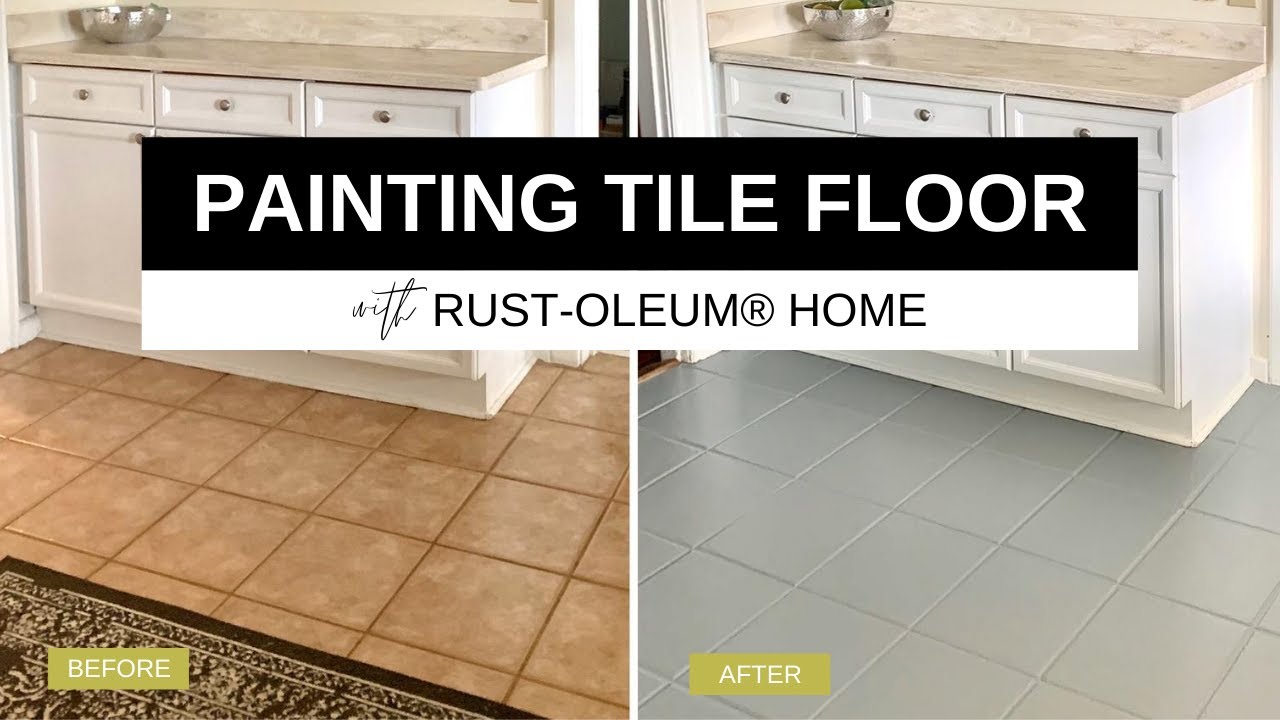
Image Source: i.ytimg.com
Why People Think About Painting Kitchen Tile
Painting kitchen tile floors is often seen as a quick and budget-friendly way to change the feel of a kitchen. Maybe the tile is an outdated color, has stubborn stains, or doesn’t match new cabinets or counters. Taking out old tile and putting in new tile is a big job. It costs a lot of money, takes a lot of time, and makes a huge mess. Painting offers a different path. It costs less, takes less time, and causes less disruption. It’s a way to get a fresh look without a major home renovation.
The Good and Bad Sides of Painting Kitchen Tile Floors
Like any home improvement project, painting kitchen tile floors has its good points and bad points. Looking at the pros and cons of painting kitchen tile floors helps you decide if it is the right choice for your home.
The Good Things About Painting
- Lower Cost: The cost to paint kitchen tile floor is much lower than the cost to remove and replace it. You only need paint, primer, sealer, and some tools. Replacing tile involves buying new tile, mortar, grout, and possibly paying for labor, which adds up fast.
- Faster Project: Painting takes less time than tiling. Once the floor is clean and ready, applying paint and sealer happens much faster than setting tiles and grouting. You can often paint a kitchen floor in a weekend, though you must wait for it to dry and cure properly.
- New Look: Painting completely changes the color and style of your floor. You can pick almost any color you want. This can make a dated kitchen feel modern and new.
- Covers Up Flaws: Paint can hide small cracks, stains, or uneven colors in the old tile.
- Temporary Fix: If you plan to fully renovate in the future, painting is a good short-term fix to make the floor look better until you’re ready for the big project.
The Bad Things About Painting
- Not Very Durable: This is the biggest drawback. The durability of painted kitchen floor tile is not the same as the durability of the original tile or new tile. Kitchens are busy places. People walk on the floor all day. Things get dropped. Chairs scrape. This constant use can cause the paint to scratch, chip, or wear away, especially in high-traffic areas.
- Relies on Prep Work: How well the paint sticks and lasts depends almost entirely on how well you prepare the tile floor for painting kitchen. Skipping steps here means the paint will likely fail fast. Prep work is hard and takes a lot of time.
- Challenges with Grout: Painting grout lines on kitchen floor tile can be tricky. The grout is lower than the tile. Painting over it can look uneven or make the floor feel flat. You also need to make sure the paint sticks to both the tile and the grout.
- Looks Different: A painted tile floor will not look exactly like a new tile floor. It loses the texture and depth of grout lines unless you put in extra effort to paint them differently.
- Requires Touch-Ups: Because it’s not as durable, you may need to touch up painted areas that get scuffed or chipped over time.
- Hard to Reverse: Once you paint, it’s very hard to go back to the original tile look without replacing the floor completely.
Choosing the Right Paint for Kitchen Tile Floors
Picking the right paint is very important for success. You can’t just use regular wall paint. You need a paint that can handle foot traffic, moisture, and cleaning. The best paint for kitchen tile floors is tough and made for floors or high-wear surfaces.
Types of Paint to Consider
- Epoxy Paint: Epoxy paint for kitchen floors tile is often seen as the top choice. Epoxy is very durable and resistant to stains, chemicals, and abrasion. It dries to a very hard finish. However, epoxy can be harder to work with than other paints. It often comes in two parts you mix together, and you must work quickly before it hardens. Proper ventilation is key because it has strong fumes.
- Latex Enamel or Acrylic Latex Floor Paint: Some high-quality latex or acrylic floor paints designed for porches, patios, or floors can work. Look for terms like “floor paint” or “porch and patio paint.” These are easier to apply than epoxy but are generally less durable than epoxy. They offer good adhesion and wear resistance compared to standard wall paint.
- Specialty Tile Paint Kits: Some companies sell kits specifically for painting tile. These kits often include a special primer, paint, and sometimes a sealer. They are formulated to stick well to tile surfaces. Follow the kit instructions closely.
Important Paint Features
No matter the type, look for paint that is:
* Durable: Designed for floors or high-traffic areas.
* Adhesive: Formulated to stick to slick surfaces like tile.
* Water-Resistant: Can handle spills and cleaning.
* Scratch-Resistant: Helps prevent marks from furniture or pets.
* Low VOC (Volatile Organic Compounds): Better for air quality, although epoxy often has higher VOCs.
Getting the Floor Ready to Paint
The most critical step for painting kitchen tile is preparing the surface. If you don’t prepare the tile floor for painting kitchen the right way, the paint will not stick, and it will chip or peel off quickly.
Step 1: Deep Cleaning
The floor must be perfectly clean. Any grease, dirt, or soap scum will stop the paint from sticking.
* Sweep or vacuum up all loose dirt.
* Use a strong tile and grout cleaner and a stiff brush to scrub the entire floor, especially the grout lines.
* Rinse the floor completely with clean water many times to remove all cleaning solution.
* Let the floor dry completely. This might take 24 hours or more. Use fans to speed it up.
* If there is old wax or sealer on the tile, you might need a special stripper to remove it.
Step 2: Repairing the Floor
Check for any damaged tiles or grout.
* Fix any loose tiles by re-gluing them with tile adhesive.
* Fill any cracks or chips in the tiles with epoxy filler made for tile or concrete.
* Repair damaged grout or fill in missing spots with new grout.
* Let all repairs dry fully according to the product directions.
* Lightly sand any repaired areas smooth once dry. Clean up all dust.
Step 3: Making the Surface Ready for Paint (Sanding or Deglossing)
Tile surfaces are often smooth and non-porous, which makes it hard for paint to stick. You need to create a surface the paint can grab onto.
* Sanding: You can lightly sand the tile surface using medium-grit sandpaper (like 150-grit or 220-grit). This creates tiny scratches the primer can grip. You don’t need to remove the glaze, just scuff it up. Use an orbital sander for a large area. Be careful not to sand the grout down too much. Wear a dust mask.
* Liquid Deglosser: An alternative to sanding is using a liquid deglosser or chemical etcher made for tile. Apply it according to the product instructions. This product chemically dulls the surface. It’s often easier than sanding in tight spots but involves strong chemicals.
* After sanding or deglossing, clean up all dust or residue completely. Vacuum, then wipe with a damp cloth, then let it dry again.
Step 4: Priming
Applying the right primer is essential. Primer helps the paint stick to the smooth tile surface.
* Use a high-adhesion bonding primer specifically made for slick surfaces like tile, glass, or laminate. Epoxy primers or primers made for difficult surfaces work well.
* Apply a thin, even coat of primer using a roller (with a nap suitable for smooth surfaces) or a brush for edges.
* Make sure the primer covers both the tile and the grout lines.
* Let the primer dry completely according to the product instructions. This is very important for proper adhesion. Some primers need several hours or even overnight to cure.
How to Paint Kitchen Tile Floors Step by Step
Once the floor is clean, repaired, prepped, and primed, you are ready to paint. Taking your time and following these steps will help you get the best possible result.
Step 1: Gather Your Supplies
- Chosen floor paint (epoxy, acrylic floor paint, or tile kit paint)
- Applicator (roller, brush, or paint pad)
- Paint tray
- Painter’s tape
- Drop cloths
- Extension pole for roller
- Brush for edges and grout lines
- Safety gear (gloves, eye protection, mask, especially for epoxy)
Step 2: Prepare the Area
- Make sure the room is well-ventilated. Open windows or use fans.
- Tape off baseboards, cabinets, and anything else you don’t want to get paint on using painter’s tape.
- Cover nearby appliances or furniture with drop cloths.
Step 3: Mix the Paint (if needed)
- If using epoxy paint, mix the two parts together exactly as the manufacturer’s instructions say. Work quickly once mixed, as it has a limited “pot life” before it starts to harden.
- If using other types of paint, stir it well.
Step 4: Apply the First Coat of Paint
- Start painting in a back corner and work your way toward the exit so you don’t paint yourself into a corner.
- Use a brush to paint around the edges and any tricky areas.
- Use a roller or paint pad to apply a thin, even coat over the main tile area and grout lines. Use an extension pole for the roller to save your back.
- Avoid applying the paint too thickly, as this can cause issues with drying and adhesion. Thin, even coats are better.
- Let the first coat dry completely. This drying time depends on the paint type and humidity. Check the manufacturer’s instructions. Drying might take several hours.
Step 5: Apply the Second Coat
- Once the first coat is fully dry (not just dry to the touch, but ready for recoating as per instructions), apply a second thin, even coat in the same way.
- A second coat usually provides better color coverage and adds more durability.
- Let the second coat dry completely according to the paint directions. This is very important before sealing.
Step 6: Painting Grout Lines on Kitchen Floor Tile (Optional)
- Some people prefer to make the grout lines a different color after the main tile paint is dry. This takes a lot more time and effort.
- You can use a small brush or a grout pen designed for this purpose.
- Paint carefully along each grout line.
- If you get paint on the tile, wipe it off quickly while wet.
- This step significantly increases the work involved. Many people choose to paint the tile and grout the same color for simplicity.
Sealing the Painted Tile Floor Kitchen
After the paint is fully dry and cured (check the paint can for recoating and curing times), you must apply a clear, durable sealer. Sealing painted tile floor kitchen adds a layer of protection against scratches, wear, and moisture.
Choosing a Sealer
- Use a clear, non-yellowing, water-based or oil-based polyurethane or epoxy sealer designed for floors.
- Make sure the sealer is compatible with the type of paint you used. Check the paint and sealer product labels.
- Polyurethane is easier to apply but may not be as durable as some epoxy sealers. Epoxy sealers are very tough but can be more challenging to work with.
Applying the Sealer
- Make sure the painted floor is completely clean and free of dust.
- Apply a thin, even coat of sealer using a clean roller (often a foam roller for a smooth finish) or a brush.
- Work from the back of the room towards the exit.
- Avoid creating puddles or thick spots.
- Let the first coat dry completely according to the sealer’s instructions. This usually takes several hours.
- Apply a second coat for extra protection. Some high-traffic areas might benefit from a third coat.
- Let the final coat of sealer dry completely before walking on the floor. This “dry to touch” time is different from “cure time.”
Curing Time is Key
This is perhaps the most overlooked step. Painted and sealed floors need time to cure, which means reaching their maximum hardness and durability.
* Check the paint and sealer cans for the full cure time. This can range from a few days to a week or even longer, especially for epoxy.
* Avoid heavy foot traffic, moving furniture, or getting the floor wet during the curing period.
* Putting heavy items or rugs on the floor too soon can damage the finish.
How Long Will It Last? Durability and Longevity
The durability of painted kitchen floor tile and its longevity of painted kitchen tile floors depend heavily on several factors:
- Preparation: Excellent preparation is the most important factor. If the floor wasn’t cleaned, prepped, or primed correctly, the paint will fail fast.
- Paint and Sealer Quality: Using high-quality, durable paint (like epoxy paint for kitchen floors tile) and a strong sealer makes a big difference. Cheap or incorrect products will not last.
- Traffic Level: A kitchen with heavy foot traffic, kids, and pets will show wear much faster than a low-traffic kitchen.
- Maintenance: How you clean the floor matters. Harsh chemicals or abrasive scrubbers can damage the finish. Using gentle cleaners is best.
- Care: Avoiding dragging heavy items or dropping sharp objects helps protect the painted surface.
Generally, you might expect a painted kitchen tile floor to last anywhere from 1 to 5 years before showing significant wear that requires touch-ups or repainting. An epoxy system done perfectly in a low-traffic area might last longer. A less durable paint or poor prep might start failing within months. It’s not a permanent solution like new tile.
The Cost Comparison: Paint vs. Replace
Let’s look at the cost to paint kitchen tile floor compared to replacing it. Costs vary by location and project size, but here’s a general idea:
| Item | Painting Tile Floor (DIY Estimate) | Replacing Tile Floor (DIY Estimate) | Replacing Tile Floor (Pro Estimate) |
|---|---|---|---|
| Materials | $100 – $300 (Cleaners, primer, paint, sealer, tape, etc.) | $500 – $1500+ (New tile, mortar, grout, backer board, tools) | Included in labor cost |
| Tool Rental/Purchase | Minor (Scraper, maybe sander) | Moderate (Tile cutter, trowels, mixer) | Included in labor cost |
| Labor Cost | Your time! | Your time! | $1000 – $4000+ (Depends on size, tile complexity) |
| Disposal Fees | Minimal | Moderate (Hauling away old tile/debris) | Often included |
| Total Estimated Cost | $100 – $400 | $500 – $2000+ | $1500 – $6000+ |
Note: These are rough estimates for an average-sized kitchen. Costs can be higher or lower.
As you can see, the cost to paint kitchen tile floor is much lower upfront. However, you must consider the potential need to redo it every few years and the effort involved each time. Replacing tile costs more initially but is a longer-lasting solution.
When Painting Might Not Be The Best Idea
Painting tile floors isn’t always the answer. It might not be the best choice if:
- Your floor has major damage: Large cracks, many loose tiles, or unevenness. These issues should be fixed properly, which can be costly and might mean replacement is better.
- It’s a very high-traffic area: If your kitchen floor gets constant, heavy use, paint might not hold up well for long.
- The area is often wet: While sealers offer protection, standing water or constant moisture can weaken the paint’s bond over time.
- You want a permanent, maintenance-free solution: Painted floors require care and potential touch-ups. New tile is much more durable and easier to maintain long-term.
- You have very specific tile types: Some tiles, like quarry tile or unglazed porous tiles, might require different prep or paint types. Know what kind of tile you have.
Taking Care of Your Painted Tile Floor
Proper care helps extend the longevity of painted kitchen tile floors.
* Clean spills quickly.
* Use soft cloths or mops for cleaning.
* Use gentle, non-abrasive cleaners. Avoid harsh chemicals, bleach, or ammonia.
* Don’t use abrasive scrubbing pads.
* Put felt pads on the bottom of chairs and furniture to prevent scratches.
* Avoid dragging heavy appliances or furniture across the floor.
* Consider using rugs in high-traffic areas or in front of the sink and stove.
Frequently Asked Questions
Can I paint over ceramic tile?
Yes, ceramic tile can be painted. Its smooth, non-porous surface needs thorough cleaning, sanding or deglossing, and a bonding primer for paint to stick properly.
Can I paint over grout?
Yes, you paint over the grout lines when you paint the tile. The challenge is making it look good, as grout lines are recessed. You can paint the grout and tile the same color, or try to paint the grout a different color using a small brush after the main color dries, which is time-consuming.
Does painted tile peel easily?
Painted tile can peel easily if the surface is not prepared correctly. Poor cleaning, skipping primer, or using the wrong type of paint means the paint won’t bond well to the slick tile surface and will likely chip or peel, especially with traffic and moisture.
Is painting tile better than replacing it?
It depends on your goals. Painting is much cheaper and faster, offering a temporary aesthetic update. Replacing tile is more expensive and takes longer but provides a much more durable and long-lasting finish that can last for decades.
How long does painted tile take to dry?
Drying time varies depending on the paint and sealer used, as well as humidity and temperature. Paint might be dry to the touch in a few hours, but you usually need to wait 24 hours before applying a second coat or sealer. Full cure time, when the floor is ready for regular use, can take several days to a week or more.
What kind of primer should I use on tile floors?
You need a high-adhesion bonding primer made for slick or non-porous surfaces. Look for primers specifically designed for tile, laminate, or challenging surfaces. Epoxy primers or specialized bonding primers are good choices.
Final Thoughts
Painting kitchen tile floors is a doable project that can significantly improve the look of your kitchen on a budget. However, it is not a simple shortcut. The success and how long it lasts come down to careful preparation, using the best paint for kitchen tile floors (like a durable epoxy paint for kitchen floors tile or high-quality floor enamel), properly sealing painted tile floor kitchen, and managing your expectations about the durability of painted kitchen floor tile and the longevity of painted kitchen tile floors. While it offers a lower cost to paint kitchen tile floor compared to replacement, you must be ready for the hard work of preparing the surface and the possibility that the finish may not last as long as new tile, requiring touch-ups or repainting down the road. Weigh the pros and cons of painting kitchen tile floors, consider the how to paint kitchen tile floors step by step process carefully, and decide if it’s the right path for your kitchen update.