Yes, kitchen exhaust can indeed be recirculating. This means the air pulled from your kitchen is filtered and then sent back into the room, instead of being vented outside through a duct. A recirculating range hood, also called a ductless range hood, uses a system of filters to clean the air before releasing it back into your kitchen space. This is a common choice when running ductwork outside is difficult or impossible.
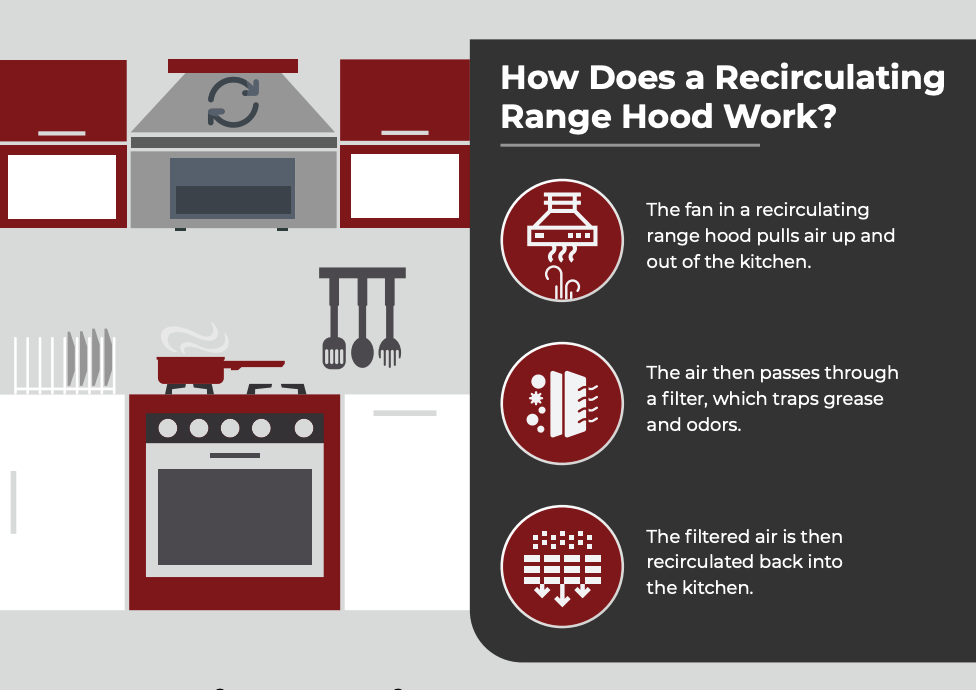
Image Source: www.worldcoppersmith.com
What Recirculating Kitchen Exhaust Means
When you cook, smoke, steam, grease particles, and cooking smells fill the air. A kitchen ventilation system is designed to handle this. There are two main types: ducted and recirculating.
A ducted system pulls the air from the kitchen, filters out some grease, and then pushes the air through pipes (ducts) outside the house. This is the most effective way to remove all cooking byproducts.
A recirculating system, however, does not send air outside. It pulls the air up, filters out grease and smells, and then blows the cleaned air back into the kitchen. This is like recycling the air within the room.
Grasping How Recirculating Hoods Function
A recirculating range hood works using a specific process involving filters. It’s a closed-loop system for air.
Here is how it generally works:
- Air Intake: The hood fan pulls the smoky, greasy, smelly air from above the cooktop.
- Grease Filtration: The air first passes through a grease filter. This filter catches grease particles. These are usually metal mesh filters you can clean. These grease filters for kitchen hoods are essential for stopping grease from coating the fan and other parts.
- Odor and Smoke Filtration: After the grease filter, the air goes through another type of filter, most commonly a charcoal filter. Charcoal filters for range hoods are designed to absorb smoke and odors. Activated charcoal has many tiny pores that trap smell molecules.
- Air Return: Once filtered, the now cleaner air is pushed back out into the kitchen through vents on the hood.
This process helps to remove some of the unwanted elements from the air, making the kitchen more comfortable during and after cooking.
Ducted Versus Ductless Hood Performance: A Look
Choosing between a ducted and a ductless range hood involves looking at how well each type works. Ducted hoods are generally better at removing pollutants entirely. They vent everything outside. This means all the smoke, grease, moisture, and smells are gone from your home.
Recirculating hoods, on the other hand, clean the air but don’t remove moisture or heat. They also don’t remove 100% of grease, smoke, or odors. Some small particles and persistent smells might remain in the air. Think of it like filtering water instead of sending it down the drain. The water is cleaner, but it’s still in the room.
Here is a simple look at how they stack up:
| Feature | Ducted Hood System | Recirculating (Ductless) Hood System |
|---|---|---|
| Air Handling | Removes air from house | Filters and returns air to house |
| Pollutant Removal | Excellent (removes smoke, grease, moisture, odors completely) | Good (filters grease and odors, leaves moisture and heat) |
| Installation | More complex (needs outside vent) | Simpler (no outside vent needed) |
| Cost (Installation) | Higher (ductwork needed) | Lower |
| Filter Type | Mostly grease filters | Grease filters + Charcoal filters |
| Maintenance | Cleaning grease filters, checking duct | Cleaning grease filters, replacing charcoal filters |
| Effectiveness | More effective overall | Less effective overall, but still helps |
Ducted vs ductless hood performance shows that if top performance is the main goal, a ducted system is the winner. However, if installing ducts is too hard or costly, a recirculating hood is a helpful option for improving air quality compared to having no hood at all.
When a Kitchen Hood Without External Vent Is the Choice
Sometimes, you just cannot install a duct to the outside. This is common in several situations:
- Apartment Buildings: Running new ductwork might not be allowed or possible in the building structure.
- Kitchen Location: The kitchen might be in the center of the house, far from an outside wall or roof where a duct could easily go.
- Building Structure: The way the house is built might make installing ducts very difficult or expensive (e.g., solid concrete walls, complex ceiling structures).
- Rental Properties: Landlords may not allow structural changes like installing ductwork.
- Cost: The cost of installing ductwork can be high, making a ductless option more budget-friendly upfront.
In these cases, a kitchen hood without external vent, meaning a recirculating range hood, becomes the practical solution. While not as powerful as a ducted system, it still offers benefits by capturing some grease and smells right at the source, which is better than letting everything spread through the house.
Interpreting the Benefits of Recirculating Exhaust
Choosing a recirculating range hood offers specific advantages:
- Easier Installation: The biggest plus is installation simplicity. You don’t need to cut holes in walls or ceilings for ductwork. This saves time, effort, and money.
- Flexibility in Placement: Since no duct is needed, the hood can often be placed more freely above the cooktop, regardless of where external walls are.
- Lower Upfront Cost: Generally, the purchase price and installation cost of a recirculating hood are lower than a ducted system.
- Good for Certain Situations: As mentioned, they are ideal for apartments, older homes where ducting is hard, or kitchens located centrally.
- Better Than Nothing: Having a recirculating hood is much better for kitchen air quality than having no hood at all. It still captures a good amount of grease and helps reduce odors and smoke compared to letting them drift freely.
These benefits make recirculating range hoods a popular choice for many homeowners and renters facing installation challenges.
Examining the Drawbacks of Recirculating Exhaust
While there are benefits, it is important to know the downsides of recirculating kitchen exhaust:
- Less Effective Air Cleaning: They filter the air but don’t remove heat, moisture, or all pollutants. Steam from cooking can increase humidity in the kitchen. Heat stays in the room. Fine smoke particles and strong odors might not be fully captured by the filters.
- Filter Maintenance: Recirculating hoods require more filter maintenance. The charcoal filters need regular replacement (often every 3-6 months depending on cooking habits) because they get full of absorbed smells. Grease filters also need cleaning. If filters are not maintained, the hood’s performance drops significantly.
- Reduced Airflow: The process of pushing air through dense charcoal filters can reduce the overall airflow rate (CFM – cubic feet per minute) of the hood compared to the same fan motor used in a ducted setup. This means it might not pull up smoke and steam as quickly.
- Noise: Sometimes, the fan can be louder as it works harder to push air through the filters.
- Not Ideal for Heavy Cooking: If you do a lot of frying, searing, or cooking that produces a lot of smoke and grease, a recirculating hood may struggle to keep the air clean.
Weighing these drawbacks against the benefits is important when deciding if a recirculating system is right for you.
Comprehending Different Recirculating Hood Styles
Recirculating technology is available in various range hood styles to fit different kitchen designs and layouts.
Under Cabinet Recirculating Hoods
An under cabinet recirculating hood is one of the most common types. These hoods are installed directly underneath kitchen cabinets above the stove. They are often compact and fit snugly, saving space. Many under cabinet hoods can be set up for either ducted or recirculating operation. If you choose recirculating, they will have vents on the top or front to release the filtered air back into the kitchen. This style is popular in smaller kitchens or where cabinet space is valuable. An under cabinet recirculating hood is a straightforward choice for many standard kitchen setups.
Island Hood Recirculation
Kitchen islands with cooktops require overhead ventilation. If running ductwork up through the ceiling and across to an external wall or the roof is complicated or too costly, an island hood recirculation kit is needed. Island hoods designed for recirculation contain the same grease and charcoal filters as other ductless hoods. They pull air up, filter it within the hood structure, and then push the clean air back into the kitchen from vents located around the top or sides of the hood canopy. Island hood recirculation solutions allow for ventilation over an island cooktop without the need for disruptive duct installation. These hoods often have a more prominent design as they are a focal point in the kitchen.
Other Recirculating Options
Recirculating systems are also found in:
- Wall-Mount Hoods: Installed against a wall above the range, these can often be configured for ductless use with a recirculation kit.
- Downdraft Systems: These units rise from behind the cooktop or within the countertop. Some downdraft systems can also be set up to recirculate air, although this is less common and generally less effective than overhead hoods.
- Over-the-Range Microwaves: Many microwaves designed to go over the stove come with a built-in fan that can often be set up for either ducted or recirculating ventilation.
The availability of recirculating options across different hood styles means you can likely find a ductless solution that fits your kitchen’s specific design and your needs for a kitchen hood without external vent.
Mastering Filter Maintenance
Maintaining the filters in a recirculating range hood is critical for it to work properly. Unlike ducted hoods which mainly rely on grease filters, recirculating hoods use both grease and charcoal filters.
Grease Filters for Kitchen Hoods
These are the first line of defense. They catch grease particles before they can reach the fan motor or the charcoal filter. Most grease filters are made of layers of metal mesh or baffles.
- Maintenance: Grease filters should be cleaned regularly. How often depends on how much you cook, but weekly or bi-weekly cleaning is a good idea for most people.
- Cleaning: Many metal grease filters are dishwasher safe. Check the manual. Otherwise, they can be washed by hand in hot, soapy water. Make sure they are completely dry before putting them back.
- Replacement: Metal grease filters usually do not need replacing unless they are damaged.
Keeping grease filters clean helps air flow freely through the hood and protects the charcoal filter from getting clogged with grease too quickly.
Charcoal Filters for Range Hoods
These filters are responsible for trapping odors and smoke. They contain activated carbon granules or pads.
- Maintenance: Charcoal filters cannot be cleaned. Once they are full of absorbed smells and particles, they stop working effectively. They must be replaced.
- Replacement Frequency: This varies based on cooking habits, but a common guideline is to replace them every 3 to 6 months. If you cook often or cook food with strong smells, you might need to change them more often.
- Signs They Need Replacing: You will notice that cooking smells linger in the kitchen longer than they used to if the charcoal filter is used up.
- Range Hood Filter Replacement: Replacing the charcoal filter is usually a simple process. The filters are typically located behind the grease filters. Check your hood’s manual for specific instructions on how to access and replace them.
Neglecting filter maintenance is the fastest way to make your recirculating hood ineffective. Regular cleaning and range hood filter replacement for the charcoal filters ensure the hood continues to provide the best possible air cleaning it can.
Deciphering Ducted vs Ductless Hood Performance Further
Let’s look a bit deeper into the performance difference, especially for removing different types of cooking byproducts.
- Grease: Both types of hoods use grease filters. A ducted hood sends the filtered grease particles (and anything that gets past the filter) outside. A recirculating hood catches grease but sends any tiny particles that pass the filter back into the kitchen air. Well-maintained grease filters are crucial for both, but especially for recirculating models to protect the charcoal filter.
- Smoke: Ducted hoods remove smoke completely by sending it outside. Recirculating hoods rely on the charcoal filter to absorb smoke particles. Charcoal filters are good, but they can get saturated and less effective over time. Very thick smoke might not be fully captured.
- Odors: Similar to smoke, odors are vented outside by ducted hoods. Recirculating hoods trap odors in the charcoal filter. The effectiveness depends entirely on the charcoal filter’s condition. Strong smells (like frying fish or strong spices) can be harder for recirculating hoods to handle fully, and they can saturate the filter quickly.
- Moisture and Heat: This is a major difference. Ducted hoods remove steam and heat generated by cooking, helping to keep the kitchen cooler and preventing moisture buildup on surfaces (which can lead to mold over time). Recirculating hoods do not remove moisture or heat. They put it right back into the room. This can be a concern in humid climates or if you do a lot of steaming or boiling.
So, while a recirculating range hood is a valid part of many kitchen ventilation systems, it is important to have realistic expectations about its performance compared to a ducted system. It improves air quality but does not achieve the same level of removal for all pollutants.
Weighing the Cost Aspect
The cost difference between ducted and recirculating range hoods is not just in the unit price but mainly in the installation.
- Unit Price: The price of the hood itself can vary widely based on style, brand, and features. Recirculating-only models might be slightly less expensive than comparable ducted models, but many models are designed to be convertible (usable as either ducted or recirculating with a kit). The cost difference for the unit itself is often not the biggest factor.
- Installation Cost: This is where the major difference lies. Installing a ducted hood requires labor to cut holes for the ductwork, run the ducts, and connect to an external vent cap. This can be expensive, especially if the path for the duct is complex (e.g., going through cabinets, walls, ceilings, or multiple floors). Installing a recirculating range hood typically only involves mounting the hood to the wall or cabinet and connecting the power. No ductwork means much lower labor costs and no materials for ducts or vents.
- Ongoing Costs: Recirculating hoods have ongoing costs for replacing the charcoal filters. Ducted hoods typically only require cleaning or occasional replacement of grease filters. Over many years, the cost of charcoal filter replacements can add up, which can offset some of the initial installation savings.
When budgeting for a kitchen hood, consider both the upfront costs of the unit and installation, as well as the long-term maintenance costs, especially range hood filter replacement for recirculating models.
Fitting Recirculating Hoods Into Kitchen Design
Recirculating range hoods come in almost every style available for ducted hoods, ensuring you don’t have to sacrifice design for functionality when ducting isn’t an option.
- Under Cabinet: As discussed, these are compact and integrate well into existing cabinetry.
- Wall Mount: These hoods attach to the wall and can be a design feature themselves. Recirculating versions vent air back into the kitchen usually from the top of the chimney or canopy.
- Island Hoods: Designed to hang from the ceiling over an island cooktop, these are often statement pieces. Island hood recirculation kits allow them to function without ceiling ductwork, making them a viable option for island cooking in many homes.
- Insert/Liner Hoods: These fit inside a custom-built canopy or cabinet over the cooktop. Recirculating versions are available, maintaining the clean look of custom millwork.
The availability of various styles means a recirculating range hood can be chosen to match the aesthetic of your kitchen, whether you need an under cabinet recirculating hood for a small space or an island hood recirculation system for a central cooking area. The design might incorporate visible vents where the filtered air returns to the room.
Considerations for Installation and Use
Even though installation is simpler for a ductless range hood, there are still things to consider:
- Proper Mounting: The hood must be securely mounted to the wall or cabinet structure according to the manufacturer’s instructions.
- Power Source: Like any range hood, it needs access to an electrical outlet or wiring.
- Air Return: Make sure the vents where the filtered air returns are not blocked by cabinets or other objects. Free airflow is needed for the hood to work well.
- Proximity to Cooking: The hood should be installed at the correct height above the cooktop (check the manual) to effectively capture grease, smoke, and steam. Too high, and it won’t capture much; too low, and it can be a hazard.
- Room Size and Air Circulation: While the hood filters air, it doesn’t bring in fresh air. Good overall kitchen ventilation systems, such as having a window you can open or a separate exhaust fan, can complement a recirculating hood, especially for managing moisture and heat.
A ductless range hood is a part of your kitchen ventilation systems. While it handles local pollutants above the stove, overall air quality in the kitchen and surrounding areas might still benefit from other forms of ventilation, like opening a window after cooking.
Summarizing the Recirculating Choice
Choosing a recirculating range hood, or a kitchen hood without external vent, is often a practical decision driven by installation constraints. It offers a way to improve kitchen air quality by filtering grease and odors at the source when traditional ducting isn’t feasible.
Key takeaways for interpreting this option:
- They filter air using grease and charcoal filters and return it to the room.
- Installation is much simpler and cheaper than ducted systems.
- They are ideal for apartments, certain building structures, or when cost is a major factor.
- They require regular replacement of charcoal filters and cleaning of grease filters.
- They are less effective than ducted hoods at removing all pollutants, especially moisture and heat.
- Performance depends heavily on filter maintenance.
- Available in many styles, including under cabinet recirculating hood and island hood recirculation options.
While they don’t provide the ultimate air purification of a ducted system, a well-maintained recirculating range hood significantly improves the kitchen environment compared to having no ventilation at all.
Frequently Asked Questions About Recirculating Hoods
Here are answers to some common questions about kitchen hoods that recirculate air:
Q: How often should I replace the charcoal filters for range hoods?
A: This usually depends on how often and what you cook. A common guideline is every 3 to 6 months. If you cook greasy or strong-smelling foods often, you may need to replace them more frequently. You will notice smells lingering if they need changing.
Q: Can I clean the charcoal filters?
A: No, charcoal filters are designed to absorb and trap odors and smoke particles. Once they are full, they cannot be effectively cleaned and must be replaced.
Q: Are recirculating hoods noisy?
A: Noise levels vary greatly between models. Sometimes, the fan on a recirculating hood might sound louder than a ducted version because it’s working harder to push air through the filters. Look at the decibel (dB) rating when buying a hood if noise is a concern.
Q: Do recirculating hoods help with moisture from cooking?
A: No, recirculating hoods filter grease and odors but do not remove moisture or heat from the air. Steam from cooking will remain in the kitchen.
Q: Can a ducted hood be converted to recirculating?
A: Many range hoods are designed to be convertible. They can be installed either ducted or recirculating, usually by adding a specific recirculation kit that includes the necessary charcoal filters and sometimes a different vent cover. Always check the product specifications before buying.
Q: Are recirculating hoods up to code?
A: Building codes vary by location. In many areas, a recirculating hood is considered acceptable kitchen ventilation, especially where ducting is not possible or required. However, it’s always best to check local building codes or consult with a building professional if you are unsure. Some codes may require a certain level of ventilation that a recirculating hood might not meet for certain types of cooking appliances.
Q: What are grease filters for kitchen hoods made of?
A: Most are made of metal mesh (aluminum or stainless steel) or baffles (metal plates arranged to direct airflow). These metal filters are usually washable. Some older or very basic hoods might use disposable paper or fabric grease filters, but metal filters are more common now.
Q: How do I know which range hood filter replacement I need?
A: Check your range hood’s manual. It will specify the exact model number for the grease filters and the compatible charcoal filters. You can also often find this information on the manufacturer’s website based on your hood’s model number. Make sure to get filters designed specifically for your hood.
Q: Is an under cabinet recirculating hood less powerful than an island hood recirculation system?
A: Not necessarily because of the style, but possibly because of the size and fan power of the specific model. Island hoods are often larger and may have more powerful fans to deal with the open air above an island, but fan power (measured in CFM) is a specification you need to check for any hood model, regardless of whether it’s under cabinet, wall mount, or island style, or whether it’s ducted or recirculating. The effectiveness of the recirculating aspect will depend on the filter system and fan strength of that specific model.
Q: Can a kitchen hood without external vent remove all cooking smells?
A: No, while the charcoal filter traps many odor molecules, it’s unlikely to capture 100% of all cooking smells, especially very strong or lingering ones. Its effectiveness decreases as the filter becomes saturated. A ducted hood that vents outside is generally more effective for complete odor removal.
Q: Are there other types of kitchen ventilation systems besides ducted and recirculating hoods?
A: Yes. Besides overhead hoods, other types include downdraft vents built into the cooktop or countertop, and dedicated kitchen exhaust fans (like bathroom fans) that might be installed in a wall or ceiling, although these are often less effective at capturing grease and smoke directly from the cooktop compared to a range hood.