Thinking about a new granite kitchen counter? One big question is about its size, specifically how thick it is. Most often, the standard granite countertop thickness you will find in kitchens is 3 centimeters (cm). This is roughly equal to 1.2 inches. While 3 cm is the most common size, other options exist, like 2 cm (about 3/4 inch). Choosing the right thickness matters for how your counter looks and how it works in your home.
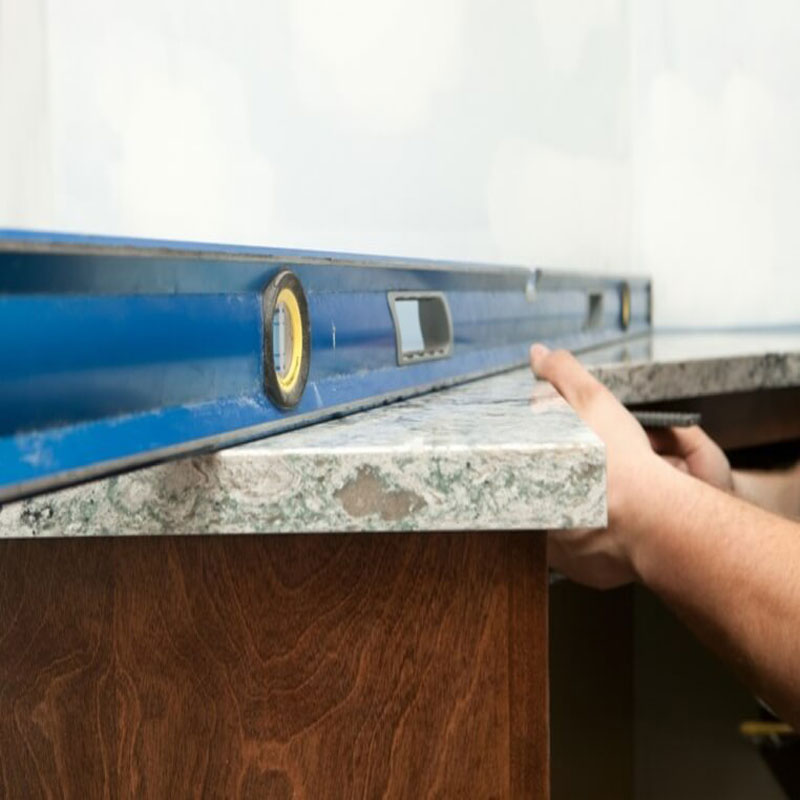
Image Source: www.signaturemarbleandgranite.com
Figuring Out Thickness
Knowing the thickness of your granite counter is key. It affects its strength. It changes how it looks. It also plays a role in how it is put in place.
Granite is a natural stone. Workers cut it from big pieces found deep in the earth. These big pieces are called slabs. These slabs come in different sizes. They also come in different thicknesses right from the start.
The thickness picked for your kitchen counter comes from these starting slab sizes. Fabricators, the people who cut and shape the stone, work with these slabs. They turn them into the exact shapes needed for your kitchen.
Standard Granite Countertop Thickness Explored
Let’s talk more about the usual thickness. As mentioned, the standard granite countertop thickness in many places, especially in North America, is 3 cm.
Why is 3 cm so popular? There are several good reasons.
* It is strong on its own. A 3 cm thick piece of granite is strong enough. It does not need a full plywood layer under it for support in most cases. It can span longer distances between cabinets without breaking.
* It looks nice. The 3 cm size gives the counter a solid, weighty look. It feels important and strong. This look is popular in modern kitchen designs.
* It is widely available. Because it is the standard, many stone yards keep lots of 3 cm slabs. This means more choices for you. It also means fabricators are very used to working with this size.
When people talk about common granite countertop measurements, they often mean the 3 cm thickness. It is the most asked-for size by homeowners.
Other Granite Slab Thickness Options
While 3 cm is standard, it is not the only choice. Another common size is 2 cm (about 3/4 inch).
Granite slab thickness options usually include:
* 2 cm (about 3/4 inch)
* 3 cm (about 1.2 inches)
Sometimes you might find thicker slabs, like 4 cm or more. But these are not common for regular kitchen counters. They are often used for special looks or in places where extra strength is needed.
Comparing 2 cm and 3 cm
Let’s look at the two main sizes side-by-side.
| Feature | 2 cm Granite (approx. 3/4 inch) | 3 cm Granite (approx. 1.2 inches) |
|---|---|---|
| Strength | Needs more support, often a plywood base. | Stronger on its own, needs less extra support. |
| Look | Looks thinner, lighter. | Looks solid, thick, substantial. |
| Cost | Often costs less per square foot for the slab. | Often costs more per square foot for the slab. |
| Fabrication | May need edge built up to look thicker. | Edge profile is cut directly from the slab. |
| Popularity | Common in some areas (like parts of Europe, CA). | Most common in many areas (like much of the US). |
| Installation | Needs a strong, flat base across the cabinets. | Can span gaps between cabinets more easily. |
Common Granite Countertop Measurements in Use
Where do you see these different sizes?
Common granite countertop measurements are used in different places based on need and style.
* Residential kitchens: This is where you see the 3 cm size most often. It works well for the needs of a home kitchen. It is strong enough for everyday use.
* Residential bathrooms: Bathroom counters sometimes use 2 cm granite. The pieces are often smaller here. They might not need as much strength.
* Commercial places: Restaurants, hotels, or shops might use granite. The thickness here depends on how much wear and tear the counter will get. Busy spots might use 3 cm or even thicker stone.
* Outdoor kitchens: Granite used outside might also be 3 cm. This size offers good strength against weather and use.
The choice of thickness in different settings comes down to:
* How much weight or force the counter needs to hold.
* How long the counter pieces are between supports.
* The overall look the designer wants to create.
* The budget for the project.
Grasping Residential Granite Thickness
For most homeowners, the focus is on residential granite thickness. As we’ve seen, the 3 cm size is the top choice here.
Why is this size so fitted for homes?
* Daily Use: Kitchen counters in homes get used a lot. They hold heavy pots. Things get chopped on them (on a board, hopefully!). Dishes are moved around. The 3 cm thickness can handle this daily use without worry.
* Appliance Weight: Heavy mixers, blenders, and other kitchen tools sit on the counter. A 3 cm slab gives a strong base for these items.
* Sink Support: Kitchen sinks are often heavy, especially when full of water and dishes. They are cut into the granite. The 3 cm thickness around the sink cut-out keeps the stone strong in this area.
* Appearance in Homes: The look of a thick, solid counter fits well with many home kitchen styles. It gives a feeling of quality and lasting value.
While 2 cm is sometimes used in homes, it is less common for the main kitchen counters. If 2 cm is used, fabricators often build up the edge. This makes the edge look like it is 4 cm thick. We will talk more about this later.
Interpreting Granite Thickness in Inches
Most stone workers and fabricators use the metric system (centimeters) when talking about slab thickness. But for many people, thinking in inches is easier.
Let’s convert the main sizes:
* 2 cm is about 0.787 inches. This is often called 3/4 inch.
* 3 cm is about 1.181 inches. This is often called 1.2 inches or even 1 and 1/4 inches for simplicity.
So, when someone mentions granite thickness in inches, they are likely talking about 3/4 inch or 1.2 inches. The difference might seem small. But 1.2 inches is one and a half times thicker than 3/4 inch. This extra thickness makes a big difference in strength.
It’s good to know both ways of measuring. Suppliers might list thicknesses in cm. Fabricators work in cm. But you might find it easier to picture the size using inches.
Decoding Minimum Granite Countertop Thickness
Is there a size that is too thin for a kitchen counter? Yes.
The minimum granite countertop thickness that is generally safe and strong enough for a kitchen is 2 cm (3/4 inch), provided it has full support underneath. If there is no support underneath, or if it needs to span gaps between cabinets, 2 cm is usually too thin unless the edge is built up significantly or other support methods are used.
Using stone thinner than 2 cm for a kitchen counter is risky.
* It would be much weaker.
* It could break more easily under weight.
* It would need a very strong, complete base layer (like thick plywood) over all the cabinets.
* Even with support, thin stone can crack if something heavy is dropped on it in the wrong spot.
So, while thinner slabs exist, 2 cm is seen as the practical minimum for kitchen counters. And even at 2 cm, extra support is needed across the whole area. This is why 3 cm is preferred. It provides strength from the stone itself.
Comprehending the Thickness of Granite for Kitchens
The specific needs of a kitchen are why a certain thickness is best. The thickness of granite for kitchens must handle:
* Weight: Holding heavy items, even people sitting on the edge (though not recommended!).
* Spans: Going over dishwashers, sinks, or cabinet gaps without bending or breaking.
* Cut-outs: Remaining strong even when large holes are cut for sinks and cooktops.
* Edges: Allowing for different decorative edge styles without weakening the stone too much.
The 3 cm thickness meets these needs well. It has enough material to be strong across spans. It keeps strength around sink cut-outs. It allows fabricators to shape nice edges directly from the slab.
Using a thinner stone like 2 cm for kitchen counters means you have to think more about support. Plywood must cover the entire cabinet top area before the granite goes on. This adds cost and steps to the installation.
Fathoming Typical Granite Thickness
When people talk about typical granite thickness, they usually mean the thickness you see in most homes and showrooms today.
This typical size is 3 cm (about 1.2 inches).
It has become typical because it offers a good balance:
* Strength vs. Weight: It is strong but not so heavy that it is impossible to work with. Thicker stones (4 cm+) are much heavier and harder to handle.
* Cost vs. Performance: It is more expensive than 2 cm per square foot. But it often saves on installation costs by needing less under-support. Its strength is better. This makes the overall value good for most homeowners.
* Aesthetics: The look is popular. It shows the quality and substance of the stone.
While 2 cm was more typical in some places or times, 3 cm is now the typical granite thickness in many parts of the world for residential kitchens.
Zeroing in on 3cm Granite Thickness
Let’s focus more on the 3cm granite thickness. This is the champ of kitchen counters.
Key points about 3 cm granite:
* Actual Measurement: It is designed to be 30 millimeters thick. Slight variations are normal (more on that with specifications).
* Weight: It is heavy! A square foot of 3 cm granite weighs about 18-20 pounds. A whole kitchen counter can weigh hundreds or even thousands of pounds. This is why installation needs skilled workers.
* Installation: It can be set directly on top of the cabinets. Supports are needed where there are gaps (like over dishwashers). But a full sheet of plywood underneath is not usually required across all cabinets.
* Edge Options: Fabricators can create many different edge profiles directly on the 3 cm stone. Simple eased edges, bevels, bullnoses, ogees – all are possible without building up the edge.
The strength of 3cm granite thickness means it is less likely to crack during transport or installation compared to 2 cm slabs. This can reduce problems during your project.
Deciphering Granite Countertop Specifications
When you buy granite, there are details about its quality and size. These are called granite countertop specifications. Thickness is a key part of these specs.
Specifications will list the intended thickness, like 3 cm or 2 cm. But they also allow for some difference. No natural stone slab is exactly the same thickness everywhere.
There are standards set by groups like the Marble Institute of America (now part of the Natural Stone Institute). These standards say how much the thickness can vary.
For a 3 cm slab, the acceptable thickness might be listed as 3 cm plus or minus a certain amount, like 2mm or 3mm. So, a 3 cm slab could be anywhere from about 2.7 cm to 3.3 cm thick in places.
Why does this matter?
* Flatness: If the slab thickness varies too much, the top surface of your counter won’t be perfectly flat. There might be slight bumps or dips. Good specs limit this variation.
* Seams: If two pieces of granite meet (at a corner, for example), their edges must match up. If one piece is thicker than the other, the seam will not be smooth. Fabricators work hard to hide seams. Consistent thickness helps a lot.
* Installation: Large variations in thickness can make it harder to set the counter level. Installers might need to add shims (thin pieces of material) under parts of the stone to make it level.
So, while you ask for a specific thickness like 3 cm, knowing about granite countertop specifications helps you understand that a perfect, unvarying thickness is not possible with natural stone. The skill of the fabricator helps manage these natural differences.
Making Thinner Granite Look Thicker: Laminated Edges
What if you want the look of a thick counter but bought 2 cm stone? Or maybe your favorite stone color only comes in 2 cm?
Fabricators can make a 2 cm slab look much thicker at the edge. This is called laminating the edge or building up the edge.
How does it work?
* They take a strip of the same granite stone.
* This strip is usually cut from the same slab you are using for your counter.
* They glue this strip underneath the outer edge of the 2 cm slab.
* The width of the strip is cut to match the height of the edge they want to create.
* If they use a strip that is 2 cm wide, the edge will look 4 cm thick (2 cm main slab + 2 cm strip underneath).
* They then shape the edge profile (like an eased edge or bullnose) across both layers of stone.
* With a good fabricator, the seam where the strip is glued is very hard to see.
This technique lets you have the popular thick look (like 4 cm or even more) even with a thinner main slab. It’s a common way to use 2 cm stone in a kitchen and get a substantial look.
Using a laminated edge affects the granite countertop specifications for the edge area. The main slab is 2 cm, but the edge profile will be shaped on a 4 cm (or thicker) built-up section.
Factors Guiding Your Thickness Choice
Deciding between 2 cm and 3 cm (or considering a built-up edge) involves thinking about several things:
- Budget: 2 cm slabs are often cheaper per square foot than 3 cm slabs. However, a 2 cm counter might need a full plywood underlayment, which adds cost. A laminated edge also adds cost for the extra material and labor. Sometimes the finished cost for 2 cm with a laminated edge is similar to 3 cm, or even more. Get quotes for both options.
- Aesthetics: Do you like the look of a thinner, sleeker counter (2 cm)? Or do you prefer the solid, weighty feel of a thick counter (3 cm or laminated 2 cm)? Your design style matters.
- Structural Support: How are your cabinets built? Can they easily support heavy stone? Are there long spans over appliances? 3 cm offers better self-support over gaps. 2 cm requires a full, strong sub-base over the entire cabinet area.
- Edge Profile: What kind of edge do you want? Simple edges work well on 2 cm and 3 cm. More complex or deep edges (like some ogees) are often easier or look better on 3 cm stone or a built-up edge.
- Slab Availability: The stone color you love might only be readily available in one thickness in your area. This might limit your choice.
Thinking about these points helps you decide which granite slab thickness options are best for your kitchen project.
Installation Differences Based on Thickness
The thickness of the granite greatly affects how it is put in.
-
3 cm Installation:
- Cabinets must be strong and level.
- Support is needed over gaps wider than a certain amount (check with your fabricator, but maybe over 18-24 inches depending on the stone). This support might be steel bars or plywood strips.
- The heavy slabs are lifted and set directly onto the cabinets and supports.
- Sections are joined with epoxy glue at seams.
-
2 cm Installation (without laminated edge):
- Cabinets must be strong and level.
- A layer of sturdy plywood (usually 5/8 inch or 3/4 inch thick) must be installed over all the cabinet tops first. This creates the necessary full support base.
- The 2 cm stone is then glued or set onto the plywood base.
- The plywood edge is often hidden by a trim piece or a thin strip of granite.
-
2 cm Installation (with laminated edge):
- Similar to 2 cm without the edge, a full plywood base is usually needed for overall support, especially over gaps.
- The laminated edge pieces are often glued to the main slab either before or during installation.
- The total weight of the stone plus the plywood base can be significant.
The need for a full plywood base for 2 cm stone adds labor and material cost. This is why, even though the 2 cm slab might be cheaper, the final cost for 2 cm installed can be close to or sometimes more than 3 cm installed. This reinforces why 3 cm is often seen as the standard and best value for many kitchens.
Understanding these installation steps helps you appreciate why the typical granite thickness of 3 cm is so popular. It simplifies the support structure needed under the counter.
A Look at the Evolution of Standard Thickness
Why did 3 cm become the standard granite countertop thickness in many places?
Years ago, thinner stones and other materials like tile counters were more common. As granite became more popular, different thicknesses were used.
In some parts of the world, like Europe, 2 cm granite was, and still is, very common. They often use the build-up edge technique more widely to get a thicker look.
In North America, the trend moved towards thicker, more substantial-looking counters. 3 cm slabs became more available and less expensive than they were initially. Fabricators got skilled at working with this size. Homeowners liked the look and felt of a thick, solid counter.
This led to 3 cm being adopted as the de facto residential granite thickness. It offered a great mix of look, strength, and ease of installation compared to building up every edge of a thinner slab.
Today, when you ask about thickness of granite for kitchens, 3 cm is almost always the first answer you will hear. It is the baseline against which other options are measured.
How Thickness Affects Counter Performance
The thickness of your granite doesn’t just change how it looks or is installed. It also impacts how it performs over time.
- Durability: A thicker slab is less likely to crack from impacts or stress. If you drop a heavy pot, a 3 cm counter has more material to absorb the shock than a 2 cm one.
- Heat Resistance: While granite is very heat resistant, extreme, sudden temperature changes can still potentially cause problems. A thicker slab can handle heat a bit better as the heat spreads through more material.
- Vibration: Thicker stone feels more solid. It might vibrate less if you use a powerful mixer or food processor on it.
- Lifespan: Properly cared for, both 2 cm (with support) and 3 cm granite counters can last a lifetime. But the inherent strength of 3 cm adds an extra layer of durability against accidents or shifts in the cabinet structure below.
These performance factors contribute to why 3 cm is the typical granite thickness chosen for the demanding environment of a kitchen.
The Importance of Correct Measurements
Getting the thickness right is part of the overall granite countertop specifications. When measuring your kitchen for new counters, the thickness plays a role.
- Overlap: If you choose a thickness that is different from your old counter, the overlap over cabinets or the reveal (how much cabinet face shows below the stone) might change.
- Appliance Fit: Make sure the thickness doesn’t interfere with pull-out shelves or drawers that might come close to the underside of the counter.
- Backsplash: If you are adding a backsplash, its thickness plus the counter thickness determines how far it sticks out from the wall.
Your fabricator will take precise measurements and consider the thickness you choose to ensure everything fits perfectly. They work with the specific common granite countertop measurements and the thickness you select.
Is Thicker Always Better?
For kitchen counters, while 3 cm offers great benefits over 2 cm without full support, going much thicker isn’t always needed or better for a home kitchen.
- Slabs thicker than 3 cm (like 4 cm+) are much heavier. This makes them harder to transport and install. It requires very strong cabinets and possibly extra floor support downstairs.
- They are often more expensive because less stone can be cut from a block.
- They might look too bulky or heavy for a standard home kitchen design.
So, while thicker stone exists, 3 cm provides the needed strength and a popular look without the challenges of extremely heavy stone. It’s the sweet spot for residential granite thickness.
Final Thoughts on Thickness
Choosing the right thickness for your granite counter is an important step in planning your kitchen update. The standard granite countertop thickness of 3 cm is standard for good reasons: its strength, its look, and its ease of installation compared to thinner options without full support.
While granite slab thickness options like 2 cm exist, especially in certain markets or when paired with a laminated edge for a thicker look, the typical granite thickness you will find in most new kitchen projects in many areas is 3 cm.
Understanding the different common granite countertop measurements, the benefits of residential granite thickness, the meaning of granite thickness in inches and centimeters, the concept of minimum granite countertop thickness, and the specific needs related to the thickness of granite for kitchens helps you make an informed choice.
Work closely with your fabricator. They can show you examples of different thicknesses, explain the costs, and discuss the installation needs based on your kitchen layout and the granite countertop specifications of the slabs you like.
Whether you choose the popular 3cm granite thickness or another option, your new granite counter will bring beauty and function to your kitchen for many years.
Frequently Asked Questions
Here are some common questions people ask about granite thickness:
H4: What is the most common granite thickness for kitchens?
The most common thickness is 3 centimeters (cm), which is about 1.2 inches.
H4: Is 2 cm granite strong enough for a kitchen counter?
Yes, 2 cm granite can be strong enough, but it usually needs a full layer of plywood or a similar strong material installed over the cabinets for complete support. Without this full support, it is generally not recommended for kitchen counters.
H4: What is the difference between 2 cm and 3 cm granite in terms of look?
3 cm granite looks thicker and more substantial. 2 cm granite looks thinner and sleeker. You can make 2 cm granite look thicker by building up the edge (laminating).
H4: Does thicker granite cost more?
Generally, yes. 3 cm granite slabs cost more per square foot than 2 cm slabs. However, installation costs can vary. 2 cm often requires a full plywood base and potentially edge lamination, which adds labor and material costs. Sometimes, the total installed cost is similar.
H4: Do I need plywood under 3 cm granite?
In most cases, a full sheet of plywood underlayment is not required for 3 cm granite. It is strong enough to span typical cabinet gaps on its own, though specific supports may be needed over wider openings like dishwashers or sink bases. Always follow your fabricator’s advice.
H4: Can granite thickness vary within one slab?
Yes, natural stone slabs are not perfectly uniform. There are acceptable variations in thickness listed in granite countertop specifications, usually a few millimeters. Skilled fabricators manage these variations for a level finished counter and smooth seams.
H4: How much does granite weigh per square foot based on thickness?
Approximate weights are:
* 2 cm granite: about 12-13 pounds per square foot
* 3 cm granite: about 18-20 pounds per square foot
This shows why 3 cm is much heavier and requires careful handling and strong cabinets.
H4: What does a laminated edge mean?
A laminated edge is when a fabricator glues a strip of granite to the underside of a thinner slab’s edge (like 2 cm). This makes the edge look thicker, often 4 cm or more, blending the seam so it looks like one thick piece of stone.
H4: What is the minimum granite countertop thickness I should consider for a kitchen?
The practical minimum granite countertop thickness for a kitchen is 2 cm, but only if a strong, full sub-base (like plywood) is used for support across the entire cabinet area. Thinner than 2 cm is generally not suitable for kitchen counters.
H4: Are there specific standards for granite thickness?
Yes, industry groups like the Natural Stone Institute publish standards that include acceptable ranges for granite countertop specifications, including thickness tolerance (how much the thickness can vary from the stated size). Fabricators work within these guidelines.