Image Source: webtk.sfastservices.com
How Much Cost Of Modular Kitchen: A Quick Guide
So, how much does a modular kitchen cost? It’s not a simple number. The modular kitchen price range changes a lot. It depends on many things. You might pay anywhere from ₹50,000 to ₹5 lakh or even more. A small kitchen with basic materials will cost less. A big kitchen with fancy finishes and features will cost more.
Grasping the Cost of Modular Kitchens
A modular kitchen is different from a normal one. It uses ready-made parts or ‘modules’. These parts fit together to build your kitchen. Think of it like big Lego blocks for your kitchen. This makes setting it up faster and easier. But the cost is a big question for most people. Knowing what affects the price helps you plan your money.
What Makes Prices Change: Factors Affecting Modular Kitchen Cost
Many things change the final price you pay. It’s not just one thing. Let’s look at the main reasons.
Kitchen Size and Shape
This is perhaps the biggest factor. A bigger kitchen needs more cabinets and parts. This means more material and more work. The shape matters too.
* Straight Kitchen: All units in one line. Usually costs less because it’s simple.
* L-Shaped Kitchen: Units along two walls. Very common. Cost is moderate.
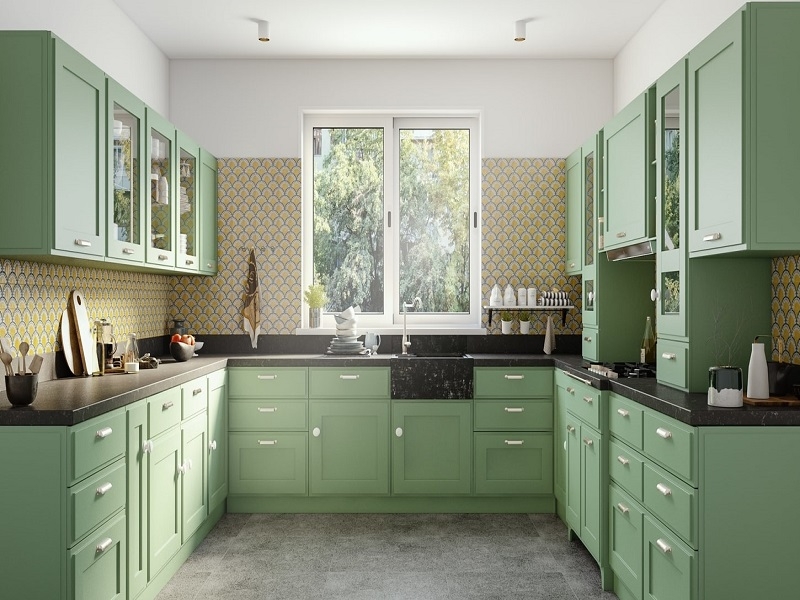
* U-Shaped Kitchen: Units along three walls. Needs more cabinets, so costs more.
* Parallel or Gallery Kitchen: Units along two opposite walls. Cost is similar to L-shaped.
* Island Kitchen: Has an extra counter area in the middle. This adds cost.
A small modular kitchen cost will naturally be lower than a large one. For example, a tiny straight kitchen might start at the lower end of the modular kitchen price range. A large U-shaped kitchen with an island will be at the higher end.
Materials Used
The stuff your kitchen is made from changes the price a lot. There are two main parts to material cost:
1. The Inside Stuff (Carcass)
This is the box part of the cabinets.
* Particle Board: Cheapest. Not very strong. Bad with water.
* MDF (Medium-Density Fibreboard): Better than particle board. Smoother surface. Okay strength. Not great with water.
* HDF (High-Density Fibreboard): Stronger and better with water than MDF. Costs a bit more.
* Plywood: Most popular and strongest. Very good with water (especially BWP – Boiling Water Proof grade). Costs the most among these options.
2. The Outside Stuff (Shutters/Finishes)
This is what you see – the cabinet doors and drawer fronts.
* Laminate: Most common. Many colours and textures. Durable and easy to clean. Lowest cost finish.
* PVC Foil / Membrane: Applied by heat and pressure. Seamless edges. Can lift over time. Moderate cost.
* Acrylic: Gives a high-gloss, mirror-like look. Very popular for modern style. More expensive than laminate. Can scratch.
* PU Paint (Polyurethane): Painted finish. Smooth and high-end look. Many colour options. Can be glossy or matte. Very expensive. Needs careful handling.
* Veneer: Thin layer of real wood over a base material. Gives a natural wood look. Needs polishing. Moderate to high cost depending on wood type.
* Solid Wood: Most expensive and durable. Needs good care.
The combination of the carcass material and the finish makes a big difference to the modular kitchen material costs. Plywood with acrylic or PU finish will be much more expensive than particle board with laminate.
Hardware and Accessories
This includes handles, hinges, drawer slides, and fancy pull-outs.
* Hinges: Basic hinges are cheap. Soft-close hinges (which stop doors from banging) cost more.
* Drawer Slides: Basic slides are simple. Telescopic slides (drawers pull out fully) cost more. Tandem boxes (metal drawers with built-in slides, often soft-close) are the most expensive.
* Handles: Simple knobs are cheap. Fancy designer handles cost more. Handleless designs (using channels or push-to-open) can also add cost.
* Accessories: This is where costs can really jump. Pull-out shelves for pots/pans, spice racks, corner solutions (like magic corners), tall units for storage, cutlery trays, dustbin holders, etc. These make your kitchen more useful but add significantly to the price.
Choosing simple hardware keeps the cost down. Adding lots of internal accessories increases the price.
Countertop Material
While often not included in the modular part, the countertop is a big kitchen cost.
* Laminate: Cheapest. Not heat or scratch resistant.
* Engineered Quartz: Very popular. Durable, non-porous, many colours. Moderate to high cost.
* Granite: Natural stone. Durable, heat resistant. Price varies hugely based on colour/rarity. Moderate to very high cost.
* Marble: Beautiful but porous and stains easily. High cost.
Brand Name
Just like cars or phones, the brand you choose affects the price. Big, well-known modular kitchen companies often cost more than smaller, local workshops. They might offer better design, service, and warranty, but you pay for the name.
Labour and Installation
Designing, making, and putting together the kitchen needs skilled people. The modular kitchen installation cost is part of the total price. Some companies include it, others charge extra. It can be a fixed fee or a percentage of the kitchen cost (often 10-15%).
Location
Where you live matters. Costs for materials, labour, and transport are different in different cities or regions. Getting a modular kitchen in a big metro city is usually more expensive than in a smaller town.
Breaking Down the Numbers: Cost Estimates
It’s hard to give one exact number. But we can look at common ways costs are talked about and typical ranges.
Cost of Modular Kitchen Per Sq Ft: Is It Useful?
Many people ask about the cost of modular kitchen per sq ft. This is the total cost divided by the floor area of the kitchen or the wall area covered. While it gives a rough idea, it’s not the best way to compare quotes.
Why? Because a square foot of floor space doesn’t tell you how many cabinets are there, how tall they are, or what’s inside them. Two kitchens of the same size might have very different costs per square foot based on:
* How many wall cabinets vs. base cabinets.
* The height of cabinets.
* If there are fancy corner units or tall pantry units.
* The materials and accessories used (the biggest cost drivers).
So, using cost of modular kitchen per sq ft just gives a very general starting point. A basic laminate kitchen might cost ₹800 – ₹1,500 per sq ft of kitchen area. A high-end acrylic or PU kitchen could be ₹2,500 – ₹4,000+ per sq ft. But always look at the detailed quote, not just the per sq ft price.
Average Modular Kitchen Price Ranges
Let’s look at typical costs based on size and basic materials. These are just rough numbers and can change a lot based on the factors listed before.
| Kitchen Size (Approx. Area) | Type | Basic Cost (Laminate Finish) | Mid-Range Cost (Acrylic/Membrane Finish) | High-End Cost (PU/Veneer Finish) |
|---|---|---|---|---|
| Small (6×8 ft = 48 sq ft) | Straight | ₹60,000 – ₹1,00,000 | ₹1,00,000 – ₹1,80,000 | ₹1,80,000 – ₹3,00,000+ |
| Medium (8×10 ft = 80 sq ft) | L-Shaped | ₹1,20,000 – ₹2,00,000 | ₹2,00,000 – ₹3,50,000 | ₹3,50,000 – ₹5,50,000+ |
| Large (10×12 ft = 120 sq ft) | U-Shaped | ₹1,80,000 – ₹3,00,000 | ₹3,00,000 – ₹5,00,000 | ₹5,00,000 – ₹8,00,000+ |
| Large (with Island) | U/L + Island | ₹2,50,000 – ₹4,00,000 | ₹4,00,000 – ₹7,00,000 | ₹7,00,000 – ₹10,00,000+ |
Note: These prices usually include cabinets, shutters, basic hardware, and installation. They often DO NOT include countertops, appliances (like chimney, hob, oven), sink, faucet, electrical work, or civil work (like tiling or wall changes). Always check what is included in the quote.
The average modular kitchen price for a typical Indian home (say, a medium-sized L-shaped kitchen with laminate finish) might fall in the ₹1.5 lakh to ₹2.5 lakh range. But adding accessories or changing to a glossy finish can quickly push this higher.
Modular Kitchen Material Costs in Detail
Let’s look closer at how materials stack up in terms of cost. This table compares common options from lower cost to higher cost.
| Component | Material Option | Relative Cost | Notes |
|---|---|---|---|
| Carcass | Particle Board | Lowest | Weak, poor water resistance |
| MDF | Low | Better, but still sensitive to water | |
| HDF | Medium | Good strength, better water resistance | |
| Commercial Plywood | Medium | Strong, moderate water resistance | |
| BWP/BWR Plywood | High | Strongest, best water resistance, standard | |
| Shutters/Finish | Laminate | Lowest | Durable, easy to clean, many designs |
| PVC/Membrane Foil | Low-Medium | Seamless edges, can lift | |
| Veneer | Medium-High | Natural wood look, needs polish | |
| Acrylic | High | High gloss, modern look, scratches | |
| PU Paint | Highest | Smooth finish, custom colours, durable | |
| Hardware | Basic Hinges/Slides | Lowest | Simple function |
| Soft-close Hinges | Low-Medium | Prevents slamming | |
| Telescopic Slides | Medium | Drawers pull out fully | |
| Tandem Boxes | High | Integrated soft-close drawer system | |
| Accessories | Cutlery Tray (Plastic) | Low | Basic drawer organizer |
| Plate Rack, Cup Holder | Low-Medium | Simple internal fittings | |
| Pull-out Baskets (Wire) | Medium | Simple storage for vegetables etc. | |
| Tandem Pantry Unit | High | Tall pull-out unit for food storage | |
| Magic Corner Unit | High | Pull-out system for corner cabinets | |
| Integrated Dustbin, Detergent Holder | Medium-High | Specific functional units |
Mixing and matching these can help control costs. For example, using sturdy plywood for the carcass but choosing a cost-effective laminate finish. Or using basic hardware but splurging on one or two useful pull-out units.
Figuring Out Your Budget: Modular Kitchen Budget Estimator
How can you figure out how much your kitchen will cost? You can use a kind of modular kitchen budget estimator. It’s not usually an online tool that gives an exact number, but a process of thinking through your needs and choices.
Here are the steps:
- Measure Your Space: Get accurate measurements of your kitchen walls, height, door/window positions, and existing points (like water pipes, drains, electrical sockets).
- Choose Your Layout: Based on your space, decide on the shape (straight, L, U, etc.). This determines the total length of cabinets needed.
- Think About Your Needs: How much storage do you need? What appliances will you have? Do you want a separate pantry unit? Do you need specific accessories? Make a list of ‘must-haves’ and ‘nice-to-haves’.
- Select Materials and Finishes: This is key for the modular kitchen material costs. Decide on the carcass material (Plywood is recommended for durability) and the shutter finish (Laminate is budget-friendly, Acrylic/PU are higher cost).
- Consider Hardware and Accessories: Decide on the level of hardware (basic or soft-close) and which internal fittings you want. Start with essential ones like cutlery trays and maybe one pull-out for frequently used items.
- Get Quotes: Contact 2-3 modular kitchen providers (brands or local fabricators). Give them your measurements, layout idea, and your choices for materials/finishes/hardware/accessories. Ask for a detailed quote that breaks down costs for each cabinet module, material, hardware, accessory, and the modular kitchen installation cost.
- Compare Quotes: Don’t just look at the total price. Compare what materials they are using, the brand of hardware, and what is included (like the countertop or specific accessories).
Using this process acts like a modular kitchen cost calculator. By getting detailed quotes based on your specific choices, you get a much more accurate idea of the final price than using a simple per sq ft number.
Specific Cost Scenarios
Small Modular Kitchen Cost
If you have a small apartment or kitchen area, your small modular kitchen cost will be significantly lower than average.
* Typical Size: Often a single wall (straight kitchen), maybe 6-8 feet long.
* Layout: Straight or a small L-shape.
* Cabinets: Fewer cabinets needed.
* Cost Range: Using laminate and basic hardware, a small kitchen might cost ₹50,000 – ₹1 lakh. Even with better finishes, it’s unlikely to exceed ₹2-2.5 lakh unless you pack it with expensive accessories.
* Focus: Maximize storage in a small space with smart internal fittings, but be selective to keep costs down.
Modular Kitchen Renovation Cost
If you are replacing an old kitchen with a new modular one, you need to consider the modular kitchen renovation cost. This can include extra steps and costs compared to a new home installation:
* Demolition: Taking out the old kitchen cabinets, countertop, and possibly old tiles. This adds labour cost.
* Civil Work: You might need to re-do wall plaster, tile the walls, or change plumbing/electrical points to fit the new layout. These are separate costs, often handled by civil contractors, not the modular kitchen company.
* Potential Issues: Finding unexpected plumbing problems or wall damage after demolition can add costs and delays.
So, while the modular units themselves might cost the same, the total modular kitchen renovation cost can be 15-25% higher due to these extra steps. Always get quotes for the demolition and civil work separately.
Keeping Costs in Check: Tips for Your Budget
Building a modular kitchen is a big spend. Here are ways to manage your modular kitchen budget estimator:
- Prioritize Plywood for Carcass: Even if you are on a tight budget, using BWP grade plywood for the cabinet boxes is a wise investment. It makes the kitchen last much longer, especially in Indian conditions with water use. Save money on finishes or accessories instead.
- Choose Laminate Finish: Laminate offers the best value. It’s durable, easy to clean, and comes in many styles. You can achieve a modern look without the high cost of acrylic or PU paint.
- Mix and Match Hardware: You don’t need soft-close on every door and drawer. Use them on main drawers or heavy doors, but use basic hinges elsewhere.
- Be Smart with Accessories: Select only the most useful accessories for your cooking style. A cutlery tray is basic and needed. A pull-out for oil bottles might be useful. Do you really need a fancy magic corner if a regular shelf works okay? Accessories add up fast.
- Consider the Countertop Separately: Get the modular kitchen quote without the countertop first. Then buy the countertop (like granite or quartz) directly from a stone dealer and hire a mason for installation. This can sometimes be cheaper than buying it through the modular kitchen company.
- Get Multiple Quotes: Always get quotes from at least 2-3 different providers. Compare them carefully, line by line. Ask questions about materials, hardware brands, and warranty.
- Check What’s Included: Make sure the quote clearly lists everything included – specific cabinet modules, materials, hardware, accessories, transport, and the modular kitchen installation cost. Know what is NOT included (like sink, faucet, appliances, civil work).
- Think Long-Term: Spending a little more on better materials (like plywood) and good hardware can save you money on repairs and replacement down the road. The cheapest option might not be the best value over time.
- Negotiate: Sometimes, especially with local fabricators, there might be room to negotiate on the price or get small extras included.
Delving into Design and Cost Connection
How your kitchen looks and works is tied to its cost. Simple designs are cheaper. More complex designs cost more.
- Tall Units: Pantry units or appliance garages (for ovens) are tall cabinets. They look great and offer lots of storage but cost more per running foot than base or wall cabinets.
- Open Shelves: Replacing some wall cabinets with open shelves can reduce cost and give an airy feel. However, they show dust and need more cleaning.
- Glass Shutters: Adding glass doors to some cabinets adds a decorative touch but increases cost compared to solid shutters.
- Curved Units: Cabinets with curved doors or shelves look very stylish but are much more expensive to make than straight ones.
The designer you work with also plays a role. An experienced designer can help you balance your needs, wants, and budget. They can suggest cost-saving ideas without giving up key features.
The Process: From Plan to Finish
Knowing the steps helps you understand the cost.
- Design Meeting: You meet the designer, they measure your kitchen, you talk about your needs and style. They might show you options for layouts, materials, and accessories.
- Getting the Quote: The designer prepares a detailed design plan (often 3D drawings) and a cost estimate. This is your specific modular kitchen cost calculator output based on their design.
- Changes and Finalizing: You review the design and quote. You might make changes to fit your budget or preferences. This goes back and forth until you approve the final plan and price.
- Manufacturing: Once you pay an advance, the kitchen parts are made in a factory. This takes time, usually 4-8 weeks depending on the company and complexity.
- Delivery: The finished parts are brought to your home.
- Installation: The installation team assembles the modular units in your kitchen space. This is the modular kitchen installation cost part of the process. It usually takes 3-7 days depending on the kitchen size and complexity.
- Finishing Touches: The countertop is installed (if included or done separately), appliances are fitted into their slots, and final checks are done.
Each step adds to the overall cost and timeline. Delays or changes during manufacturing or installation can sometimes add extra costs.
Beyond the Cabinets: Other Kitchen Costs
Remember that the modular kitchen cost is just one part of setting up your kitchen. You will also have costs for:
- Countertop: (As discussed, sometimes separate)
- Sink and Faucet: Needs to be bought and installed.
- Appliances: Hob, chimney, oven, microwave, refrigerator, dishwasher. These are significant costs separate from the modular units.
- Lighting: Under-cabinet lights, ceiling lights.
- Tiling: Wall tiles or floor tiles if you are changing them.
- Painting: Repainting the kitchen walls.
- Electrical Work: Adding or moving power points for appliances.
- Plumbing Work: Moving water pipes or drains.
When planning your overall kitchen budget, make sure to think about ALL these costs, not just the modular kitchen price range.
Modular Kitchen vs. Carpenter-Made Kitchen Cost
How does a modular kitchen cost compare to one made by a local carpenter?
- Carpenter-Made: Often cheaper initially because the carpenter’s labour is less per day, and they might use simpler methods or materials. However:
- Finish quality might be lower (especially inside cabinets).
- Uses more hand work on site, which can be messy and take longer.
- Designs might be less precise or modern.
- Materials bought piece by piece, quality can vary.
- Hardware options might be limited.
- Less likely to get a formal warranty.
- Modular Kitchen: Higher initial cost due to factory production, branded materials, and organized teams. However:
- Factory finish is very precise and uniform.
- Faster and cleaner installation on site.
- Access to modern designs, hardware, and accessories.
- Standardized quality control.
- Usually comes with a warranty (often 5-10 years).
For a similar look and function, a modular kitchen might cost 20-40% more than a carpenter-made one. But many people feel the benefits of finish, speed, and warranty make the extra average modular kitchen price worth it.
Final Thoughts on Cost
Figuring out the cost for your modular kitchen takes time and research. Don’t rush. Use the steps for the modular kitchen budget estimator. Understand what affects the price, especially the modular kitchen material costs and your choices in hardware and accessories. Get detailed quotes and compare them carefully.
While the cost of modular kitchen per sq ft can give a very rough starting point, focusing on the detailed breakdown in quotes is much more helpful. A small modular kitchen cost will be lower, while a large, complex one with premium finishes will be much higher. Remember to factor in the modular kitchen installation cost and any potential modular kitchen renovation cost if you are replacing an old kitchen.
By doing your homework, you can plan a beautiful and functional modular kitchen that fits your needs and stays within your budget.
Frequently Asked Questions (FAQ)
Q: What is the minimum cost for a modular kitchen?
A: The minimum cost for a very basic, small straight modular kitchen (around 6 feet long) with laminate finish and simple hardware can start from ₹50,000 to ₹70,000. This would use cost-effective materials like MDF or commercial plywood for the carcass.
Q: Does the modular kitchen cost include appliances?
A: No, the quoted cost for modular kitchen cabinets usually does not include appliances like the hob, chimney, oven, refrigerator, etc. These need to be bought separately.
Q: Is the countertop included in the modular kitchen price?
A: Sometimes, but not always. Many modular kitchen providers quote for cabinets, shutters, and basic hardware only. The countertop material (like granite or quartz) and its installation are often separate costs. Always confirm this in your quote.
Q: How long does it take to install a modular kitchen?
A: Once the parts are manufactured and delivered, the installation usually takes 3 to 7 days for an average-sized kitchen. This can vary based on the kitchen size, complexity, and the installation team’s speed.
Q: What is the difference between BWP and BWR plywood?
A: BWP stands for Boiling Water Proof, and BWR stands for Boiling Water Resistant. BWP is a higher grade plywood that offers better resistance to water and moisture than BWR. For kitchen cabinets, especially near the sink or water pipes, BWP grade plywood is strongly recommended for durability. It costs more than BWR or commercial plywood.
Q: Can I mix different finishes in my modular kitchen?
A: Yes, many people mix finishes for different parts of the kitchen. For example, you could use durable laminate for base cabinets and easier-to-clean acrylic for wall cabinets. Mixing finishes can also be a design choice and sometimes helps manage costs.
Q: Is soft-close hardware necessary?
A: It’s not necessary but is a very popular upgrade. Soft-close hinges and drawer slides prevent doors and drawers from slamming shut, reducing noise and wear and tear on the cabinets. It adds to the cost but many people find it worth the expense for the convenience.