Replacing kitchen drawers? You can do it! This guide shows you easy steps to swap out old drawers for new ones. You might do this because old drawers are broken. Maybe they do not roll smoothly anymore. Or maybe you just want a new look. This job needs some simple tools and new parts like drawer slides and a drawer box. Follow these steps to make your kitchen drawers work like new.
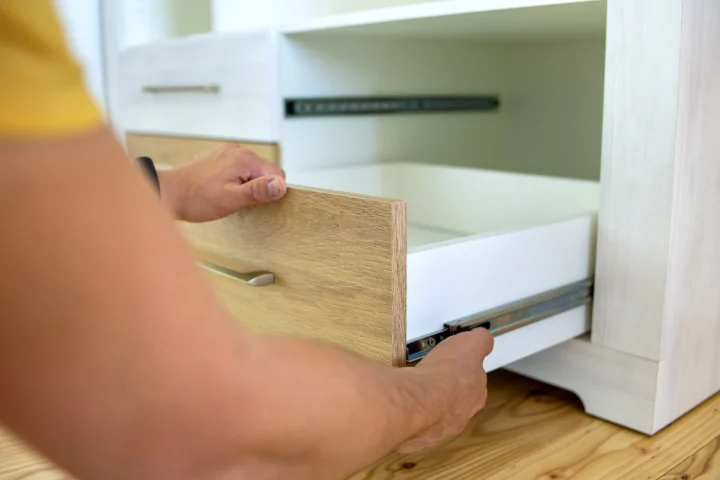
Image Source: www.shelfgenie.com
Why People Change Kitchen Drawers
Old kitchen drawers can cause problems. They might not open easily. Things can fall off broken drawer slides. Sometimes the bottom of the drawer box breaks. Water or time can damage wood drawers. Old drawer runners might be noisy. Getting new kitchen cabinet drawers makes using your kitchen much nicer. It can also make your kitchen look better inside the cabinets.
Getting Ready: Tools and Parts
You need a few things before you start. Make sure you have them ready. This makes the job go faster.
- Safety glasses: Protect your eyes.
- Tape measure: For getting the right sizes.
- Pencil: To mark spots.
- Drill and drill bits: For making holes and putting in screws.
- Screwdriver bits for your drill: Matching your screw heads (Philips usually).
- Level: To make sure slides are straight.
- New drawer slides: The parts that help the drawer move.
- New drawer box: The wooden box part of the drawer.
- New screws: Some slides come with screws. Check if you need more.
- Wood shims (small thin pieces of wood): Can help make things level or fit right.
- Pry bar or flathead screwdriver: To gently remove old parts.
- Marker or tape: To label parts if needed.
You will need to get the right size new drawer slides and a new drawer box. We will talk about how to measure later. These parts are key for your cabinet drawer replacement.
Looking at Your Old Setup
Before you take things apart, look closely at your current kitchen cabinet drawers. How do they work now? Most drawers use drawer slides. These are metal pieces that attach to the cabinet and the drawer.
- Check the slides: Do the drawer slides attach to the side of the drawer and the side of the cabinet? These are called side mount drawer slides.
- Check underneath: Do the slides attach to the bottom of the drawer box? And maybe run along the bottom of the cabinet opening? These might be undermount drawer slides.
- Look at the runners: Sometimes older drawers use simple wooden runners or metal pieces with wheels. These are also types of drawer runners or drawer glides.
Knowing what you have helps you pick new parts. You can often replace drawer glides with the same type. Or you can upgrade. Side mount slides are common. Undermount slides are hidden and offer a clean look.
Taking Out the Old Drawer
First, empty the drawer completely. Take out everything inside.
- Open the drawer: Pull the drawer out as far as it goes.
- Find the release levers: Many modern drawer slides have small levers or clips. They are usually plastic. Look on the sides of the slides near the back.
- Push or pull the levers: The levers tell you which way to go. One side might push down. The other side might push up.
- Pull the drawer out: While holding the levers, pull the drawer straight out. It should release from the slides in the cabinet.
- Older slides: If there are no levers, the drawer might just lift up when pulled out all the way. Some older slides might need you to tilt the drawer up or down sharply at the end of the pull.
- Wooden runners: If it is just wood sliding on wood, you can usually just pull the drawer out.
Put the old drawer box aside. You might need it to help you measure later.
Taking Off Old Drawer Slides and Runners
Now you need to remove the old hardware. This means taking the old drawer slides or runners off the cabinet and the old drawer box.
- Find the screws: Look for screws holding the slides to the cabinet sides. Also look for screws holding the slides to the old drawer box.
- Use your drill: Use your drill with the right screw bit to remove the screws. Turn the drill to unscrew (often counter-clockwise).
- Remove cabinet slides: Once all screws are out, the old drawer slides should come off the inside of the cabinet. Keep the screws if they are in good shape, but new slide kits usually come with screws.
- Remove drawer slides: Take the slides off the sides or bottom of the old drawer box.
- Wooden runners: If there are old wooden runners, they might be screwed or glued. Remove screws first. You might need the pry bar gently if they are stuck.
Clean the inside of the cabinet opening. Wipe away dust or old debris. This makes installing the new drawer slides easier.
Getting the Right Size: Measure Drawer Box and Cabinet Opening
This is a very important step for cabinet drawer replacement. You need to know what size new parts to get. You need to measure the space inside the cabinet and maybe your old drawer.
-
Measure the cabinet opening width:
- Use your tape measure.
- Measure the width of the opening where the drawer goes. Measure from the inside of one cabinet side to the inside of the other cabinet side.
- Measure this at the front, middle, and back of the opening. Use the smallest number if they are different.
- Write this number down clearly. Let’s call this “Opening Width.”
-
Measure the cabinet opening height:
- Measure the height of the opening. From the bottom of the opening to the top.
- Measure at the front, middle, and back. Use the smallest number.
- Write this number down. Let’s call this “Opening Height.”
-
Measure the cabinet opening depth:
- Measure how deep the opening is. From the front edge (where the drawer face sits) to the back wall inside the cabinet.
- Write this number down. Let’s call this “Opening Depth.”
-
Measure the old drawer box (if possible):
- If your old drawer box is in good shape, measure its width, height, and depth (not including the front decorative panel).
- Measure the box itself.
- This helps you compare sizes.
Linking Cabinet Size to Drawer Box Size:
New drawer slides need space. They fit between the drawer box and the cabinet sides.
* Side mount drawer slides usually need about 1/2 inch (or slightly more) space on each side of the drawer box.
* So, your new drawer box width will be smaller than your Opening Width.
* A common size for side mount slides means the drawer box width is about 1 inch less than the Opening Width (1/2 inch clearance on left + 1/2 inch on right = 1 inch total).
* Undermount drawer slides often need a specific width drawer box. You might buy a drawer box made for certain undermount slides. Undermount slides don’t use space on the sides the same way. They need space under the box.
Choosing New Drawer Slides:
- The length of the new drawer slides should match the Opening Depth as much as possible. Common lengths are 14, 16, 18, 20, 22 inches. Pick a length that fits the depth of your cabinet. It should not hit the back wall when closed.
- Decide on the type: Side mount drawer slides are easy to install and often cost less. Undermount drawer slides are hidden for a cleaner look but can be trickier to install and cost more. You might want to replace drawer glides with the same type you had.
Getting a New Drawer Box:
You can buy a new drawer box online or from a cabinet supply store.
* You will need the size you need based on your cabinet measurements and the type of drawer slides you picked.
* Remember the drawer box width calculation: Opening Width minus the space needed for the slides.
* The height of the drawer box should fit the opening height, leaving a little room at the top and bottom.
* The depth of the drawer box should match the length of the slides you chose.
Using your measure drawer box skills ensures the new parts fit perfectly for your cabinet drawer replacement.
Getting New Parts
Based on your measurements, order or buy your new parts.
* New drawer box (or parts to build one)
* New drawer slides (matching length and type to your choice)
* Screws for the slides (usually included)
Make sure you have the correct number of slide sets for the drawers you are replacing. Each drawer needs one set of drawer slides (one for the left side, one for the right side).
Installing New Drawer Slides (Cabinet Part)
Now you will install the new drawer slides inside the cabinet opening. Each slide set comes in two main parts: one part attaches to the cabinet, and one part attaches to the drawer box. Separate them.
- Identify cabinet part: One part of the slide will be longer or have more holes. This part usually goes into the cabinet. The other part goes on the drawer box.
- Mark the height: You need to install the slides at the correct height inside the cabinet.
- For side mount slides: They usually install about 1/2 inch up from the bottom of the opening. Or, look at where the old slides were. Mark a line using your level and pencil. Do this on both sides of the cabinet opening. Make sure the lines are level across the opening! This is important for the drawer to open smoothly.
- For undermount slides: These often have a special bracket or system. Follow the instructions that came with the slides exactly. The height is very specific.
- Position the slide: Line up the cabinet part of the drawer slide with your marked line. The front end of the slide should be just behind the front edge of the cabinet opening. You do not want the slide to stick out.
- Start screwing: Put one screw in a hole near the front of the slide. Do not tighten it all the way yet.
- Level it: Use your level to make sure the slide is perfectly level along the line you marked.
- Add more screws: Once it’s level, put screws in the rest of the holes along the slide. Now tighten all the screws, but be careful not to overtighten, especially in particleboard cabinets.
- Repeat on the other side: Install the slide on the opposite side of the cabinet opening. Make sure it is at the exact same height as the first one and level. Use your level to check that the front ends of both slides are lined up.
Properly installed drawer runners in the cabinet are key for smooth operation. Take your time to make sure they are level and parallel. This step is critical when you install drawer slides.
Installing New Drawer Slides (Drawer Part)
Now attach the other part of the drawer slides to your new drawer box. Remember, you separated the slide parts earlier.
- Identify drawer part: This is the shorter part, or the part that telescopes out from the cabinet part.
- Position on drawer box:
- For side mount slides: These attach to the outside side of the drawer box. The bottom edge of the slide usually lines up with the bottom edge of the drawer box side. The front end of the slide should be flush (even) with the inside of the drawer front (or where the front will attach).
- For undermount slides: These attach to the bottom sides of the drawer box, or use pins that go into the bottom edge. Again, follow the specific instructions for your slides. The position is very precise for undermount slides.
- Start screwing: Place the slide on the drawer box side. Use one screw in a hole near the front of the slide. Do not tighten fully yet.
- Check alignment: Make sure the slide is straight along the side of the drawer box. For side mount, check it aligns with the bottom edge.
- Add more screws: Put screws in the rest of the holes on the slide part attached to the drawer box. Tighten them all.
- Repeat on the other side: Attach the second slide part to the opposite side of the drawer box. Make sure it is in the exact same position as the first one.
You have now attached the drawer runners to both the cabinet and the drawer box. This is the core of how to install drawer slides correctly.
Putting the New Drawer In
With the new drawer box ready and the new drawer slides installed in the cabinet, it is time to put the two together.
- Extend cabinet slides: Pull the parts of the drawer slides that are in the cabinet all the way out. They should come out straight and stay level.
- Line up drawer slides: Take your new drawer box with its slides attached. Carefully line up the drawer part of the slides with the cabinet part of the slides. They need to connect.
- Insert the drawer: Gently push the drawer box into the cabinet slides.
- For many side mount slides, you just push them together until they click or feel seated.
- Undermount slides often need the drawer box to be lowered onto the pins or clips on the slides and then pushed back.
- Push it in: Once the slides are connected, slowly push the drawer all the way into the cabinet. It should slide smoothly.
- Pull it out: Pull the drawer all the way out again. It should extend fully without sticking or rubbing.
If the drawer does not go in easily, do not force it. Pull it back out and check how the slides are lining up. Are the slides in the cabinet level and parallel? Are the slides on the drawer box straight? Misalignment is the usual reason for sticking. This step completes the basic cabinet drawer replacement. Your kitchen cabinet drawers are almost done!
Making Small Changes and Testing
Once the drawer is in, open and close it several times.
- Does it slide easily?
- Does it feel smooth?
- Does it go in straight?
- Does it close all the way?
- Does it open all the way?
If it sticks, check the slides again. Make sure no screws are sticking out too far. Check if the slides in the cabinet are perfectly level. Even a small difference can cause problems. You might need to slightly adjust the screws on the slides in the cabinet.
Adding the Drawer Front (Optional)
Most kitchen cabinet drawers have a decorative front panel that attaches to the front of the drawer box. If you are replacing the whole drawer, you will need to attach your old front or a new one.
- Position the front: Place the drawer front against the front of the drawer box. Use small clamps to hold it in place temporarily. Use shims or small blocks to get the right gap around the drawer front compared to other drawers or the cabinet frame.
- Drill pilot holes: From inside the drawer box, drill small pilot holes through the drawer box front and into the back of the drawer front panel. Be careful not to drill all the way through the front panel!
- Attach with screws: Use screws that are long enough to go through the drawer box front and into the drawer front panel, but not so long they come out the front. Drive the screws from inside the drawer box into the front panel.
- Add pulls/knobs: If you are adding handles or knobs, mark their position on the front. Drill holes from the front, then attach the hardware.
Make sure the drawer front is straight before you tighten all the screws.
Solving Common Problems
Here are simple fixes for issues you might find with your new kitchen cabinet drawers.
- Drawer sticks or rubs:
- Check if the drawer slides in the cabinet are level. Use your level. If not, loosen screws, adjust, and retighten.
- Check if the slides on the drawer box are straight.
- Make sure the cabinet opening is clear. Nothing should be blocking the drawer or the slides.
- Drawer does not close all the way:
- Something might be hitting the back of the cabinet opening. Check for screws or debris.
- The slides might be slightly too long for the cabinet depth. Make sure the back of the slide is not hitting the back wall.
- Drawer does not open all the way:
- Check if the slides are fully extended.
- Something inside the cabinet might be blocking the drawer when it pulls out.
- Drawer front is crooked:
- Loosen the screws holding the drawer front to the drawer box. Adjust the front until it looks straight. Tighten the screws again.
- Make sure your screw holes for knobs/pulls are straight if you used those to line it up.
Using the right measure drawer box dimensions and careful installation of the drawer slides prevents most problems.
Keeping Your Drawers Working Well
Once your new kitchen cabinet drawers are installed and working, a little care helps them last.
- Do not overload drawers. Heavy items can damage the drawer box or bend the drawer slides. Check the weight limit on your new slides. Side mount drawer slides have different weight ratings. Undermount drawer slides also have limits.
- Keep the slides clean. Dust and dirt can make drawer runners sticky. Wipe them down now and then.
- You can put a tiny bit of lubricant (like silicone spray, check slide maker’s advice) on the metal runners if they ever start to feel less smooth, but often good quality slides do not need this.
Proper cabinet drawer replacement means having smooth, reliable drawers for a long time.
Final Thoughts
Replacing kitchen cabinet drawers is a home project you can do. It makes a big difference in how your kitchen works. By taking your time to measure drawer box sizes correctly, choose the right drawer slides, and carefully install drawer slides and drawer runners, you can update your kitchen cabinets easily. Whether you use side mount drawer slides or undermount drawer slides, the steps are similar: remove the old, measure, get new parts, install the new slides and drawer box. Replacing drawer glides is a key part of this update. Enjoy your smoothly working drawers!
Frequently Asked Questions About Replacing Kitchen Drawers
h4. What is the difference between side mount and undermount drawer slides?
Side mount drawer slides attach to the side of the drawer box and the side of the cabinet opening. They are usually visible when you open the drawer. Undermount drawer slides attach to the bottom sides of the drawer box and install underneath the drawer opening in the cabinet. They are hidden from view when the drawer is open, giving a cleaner look.
h4. How do I know what size drawer slides to buy?
Measure the depth of your cabinet opening from the front edge to the back wall. Choose drawer slides that are that length or slightly shorter. Common lengths are 14″, 16″, 18″, 20″, 22″. You also need to know the width of your cabinet opening to make sure the slides and the new drawer box fit together. Side mount slides need about 1/2 inch space on each side of the drawer.
h4. Can I replace old wooden drawer runners with new metal slides?
Yes, you can often upgrade old wooden drawer runners to new metal drawer slides. You will need to remove the old runners completely. Then, measure the cabinet opening and get a new drawer box and new drawer slides (like side mount drawer slides) that fit the space, allowing room for the slides on the sides.
h4. Do new drawer slides come with screws?
Most new drawer slides kits include the screws you need to install them. However, it is always a good idea to check the package before you start. You might need different screw lengths depending on your cabinet and drawer box material.
h4. How do I measure for a new drawer box?
First, measure the inside width of your cabinet opening. If you are using side mount slides that need 1/2 inch on each side, subtract 1 inch from your opening width to get the width for your new drawer box. Measure the opening depth to determine the drawer box depth (it should match the slide length). Measure the opening height to pick a suitable drawer box height.
h4. Is replacing kitchen cabinet drawers a difficult job?
Replacing kitchen cabinet drawers is a moderate difficulty job. It requires careful measuring and patient installation of the new drawer slides. If you can use a drill and a tape measure accurately, you can likely do this project. Taking your time on the measuring and slide installation steps is key to success.
h4. How long does it take to replace one kitchen drawer?
For a first-timer, replacing one drawer might take 1 to 3 hours, including removing the old parts, measuring, and installing the new ones. With practice, it gets faster. The total time also depends on how much preparation (like getting parts) you did beforehand.