What is the standard height for kitchen cabinets? What is the height of cabinets above the counter? Standard kitchen cabinet height is typically around 34.5 inches for base cabinets, which are the ones on the floor, and usually hung 18 inches above the counter for wall cabinets. These dimensions are the most common and work for most kitchens.
Getting your kitchen cabinet height right is important. It helps your kitchen look good. It also makes working in your kitchen comfortable. Cabinets store your food and tools. If they are too high or too low, it is hard to reach things. Standard sizes help make building and planning kitchens easier. They help keep costs down too. Let’s look at the common sizes you will see.
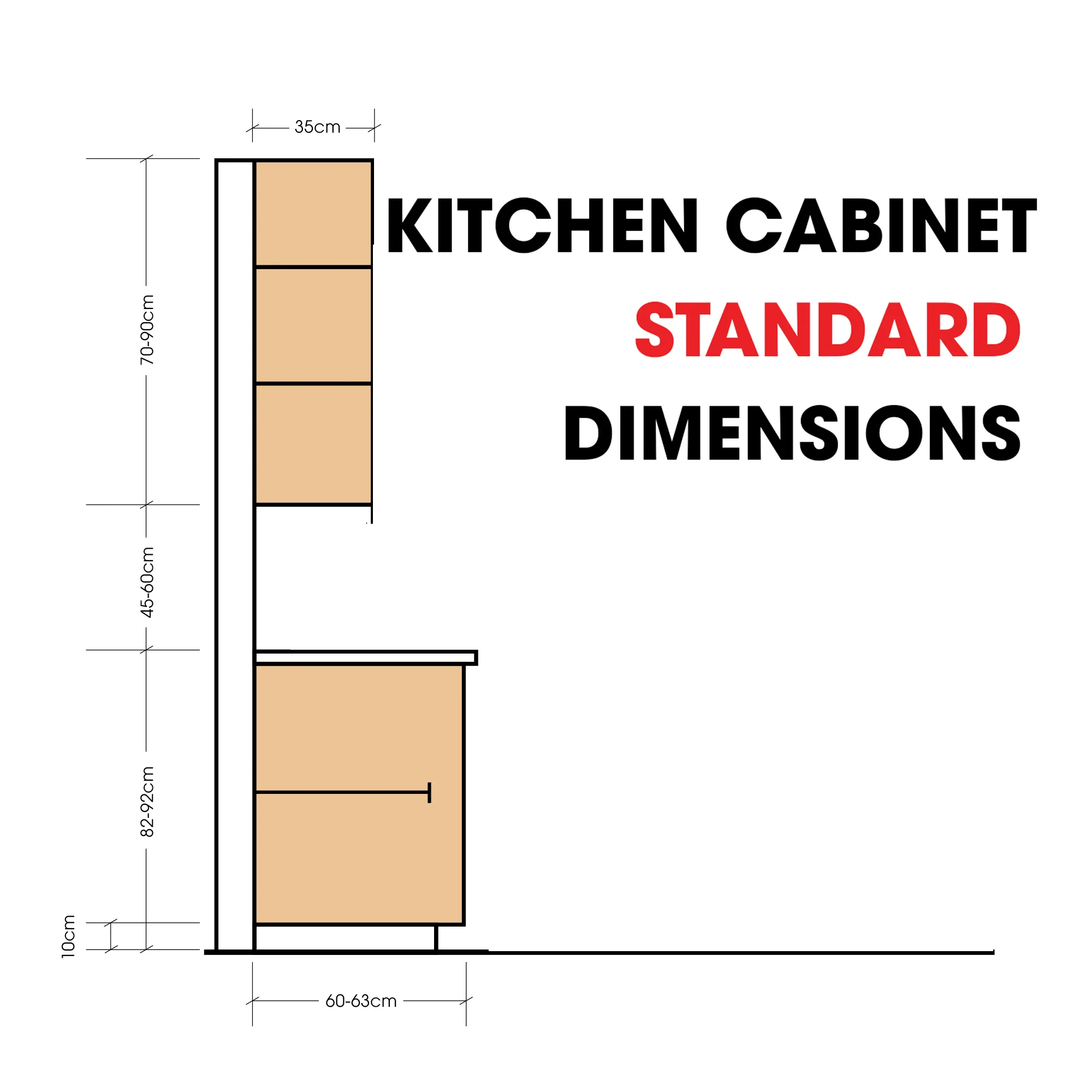
Image Source: guilincabinets.com
Grasping Base Cabinet Height
Let’s start with the cabinets on the floor. These are called base cabinets. They hold your countertop. Most base cabinets are a certain height.
- Standard base cabinet height is 34.5 inches.
- This height is from the floor to the top of the cabinet box.
- It does not include the countertop.
- The countertop adds more height.
Why is this height common? It works well for most people. When you stand at the counter, this height is good for chopping food. It is good for washing dishes. It helps your back feel okay. Your arms are at a good level.
This height includes a part at the bottom. This part is called the toe kick.
- The toe kick is a space under the cabinet front.
- It is set back from the cabinet door.
- It is usually about 4.5 inches high.
- It is about 3 inches deep.
The toe kick is important. It lets you stand close to the counter. Your feet have a place to go. This way, you do not have to lean over as much. Leaning less is better for your back and neck when you work for a long time.
So, the total height of a standard base cabinet is 34.5 inches. This is the box plus the toe kick space.
What about the countertop? The countertop sits on top of the 34.5-inch base cabinet.
- Countertops come in different thicknesses.
- A common thickness is 1.5 inches.
- Some are thicker, like 2 inches.
- Some are thinner, like 1 inch or less.
When you add the countertop height, the total height of the counter surface from the floor is usually:
- 34.5 inches (cabinet) + 1.5 inches (countertop) = 36 inches.
So, while the base cabinet box is 34.5 inches tall, the finished counter height is typically 36 inches. This 36-inch height is a key number in kitchen design. It is the working height for most people. It is what people mean when they talk about the finished height of kitchen counters.
Let’s look closer at the parts of the base cabinet height:
- Cabinet box height (above toe kick): About 30 inches.
- Toe kick height: About 4.5 inches.
- Total cabinet height (without top): 34.5 inches.
- Typical countertop thickness: 1.5 inches.
- Total counter height (from floor): 36 inches.
This standard base cabinet height of 34.5 inches, leading to a 36-inch counter height, is very common. Many appliances are made to fit this height. Dishwashers, ranges, and ovens are designed to line up with a 36-inch counter. This helps make your kitchen look smooth and finished.
Getting the base cabinet height right is step one in planning your kitchen layout. It sets the stage for where your counter will be. It affects how you will work at that counter.
Are there other base cabinet heights? Yes, but 34.5 inches is the most common. You might find base cabinets slightly taller or shorter. Sometimes older homes have different heights. For people who are much taller or shorter than average, they might choose a different counter height. But 36 inches is the widely used standard kitchen cabinet height for the working surface.
Inspecting Wall Cabinet Height
Now let’s think about the cabinets on the wall. These are also called upper cabinets. They hang above the counter. Their height is important too. It affects what you can store and how easy it is to reach things.
Wall cabinets come in different heights. The most common heights are:
- 30 inches
- 36 inches
- 42 inches
These heights refer to the height of the cabinet box itself. They do not include the space above or below the cabinet.
The choice of wall cabinet height often depends on:
- Ceiling height: Higher ceilings allow for taller cabinets.
- Desired space above the counter: This is the gap between the counter and the bottom of the wall cabinets.
- How much storage you need: Taller cabinets mean more storage space.
- How you want the kitchen to look: Taller cabinets can look more grand. Shorter cabinets might feel more open.
The most common hanging height for wall cabinets is above the countertop.
- The standard space between the counter surface and the bottom of the wall cabinets is 18 inches.
Why 18 inches? This distance is chosen for a few reasons:
- Appliance clearance: Many small appliances fit under this space. Think of coffee makers, toasters, or blenders. They usually fit comfortably under 18 inches.
- Workspace: It gives you enough room to work on the counter. You can chop vegetables or mix things without hitting your head or hands on the cabinets.
- Reaching things: For an average person, reaching into a cabinet that is 18 inches above the counter is still possible. You can reach the first shelf or two fairly easily.
So, let’s put the heights together:
- Floor to top of counter: 36 inches (this assumes standard base cabinets and countertop).
- Space between counter and wall cabinets: 18 inches.
- Floor to bottom of wall cabinets: 36 inches + 18 inches = 54 inches.
So, the bottom of a standard wall cabinet is usually 54 inches from the floor.
Now, let’s add the height of the wall cabinet itself.
-
If you use 30-inch tall wall cabinets:
- Bottom of cabinet is 54 inches from floor.
- Cabinet height is 30 inches.
- Top of cabinet is 54 + 30 = 84 inches from floor.
-
If you use 36-inch tall wall cabinets:
- Bottom of cabinet is 54 inches from floor.
- Cabinet height is 36 inches.
- Top of cabinet is 54 + 36 = 90 inches from floor.
-
If you use 42-inch tall wall cabinets:
- Bottom of cabinet is 54 inches from floor.
- Cabinet height is 42 inches.
- Top of cabinet is 54 + 42 = 96 inches from floor.
The height of the wall cabinet you choose affects how much space is left between the top of the cabinet and the ceiling.
- Standard ceiling height is often 96 inches (8 feet).
If you have an 8-foot ceiling (96 inches):
- Using 30-inch wall cabinets (top at 84 inches): Leaves 96 – 84 = 12 inches of space above the cabinets.
- Using 36-inch wall cabinets (top at 90 inches): Leaves 96 – 90 = 6 inches of space above the cabinets.
- Using 42-inch wall cabinets (top at 96 inches): The cabinets go all the way to the ceiling (no space above).
Many people choose 30-inch or 36-inch wall cabinets for standard 8-foot ceilings. The space above can be left open, decorated, or filled with trim pieces. Using 42-inch cabinets fills the space and gives maximum storage. This choice depends on your style and storage needs.
The wall cabinet height you pick affects the whole feel of your kitchen. It’s a big part of the kitchen cabinet dimensions you need to plan. The upper cabinet height should work with your ceiling height and how you use your counter space.
Sometimes, the height of cabinets above counter can be different from 18 inches.
- For very tall people, the cabinets might be hung higher. Maybe 20 inches or more above the counter. This gives more head room.
- For shorter people, the cabinets might be hung lower. Maybe 16 inches above the counter. This makes it easier to reach inside.
- If you have a very large appliance, like a commercial mixer, you might need more than 18 inches.
- Building codes in some places might have rules about the minimum distance. For example, above a stove, the distance is usually more than 18 inches for safety due to heat. It’s often at least 30 inches above a cooking surface, or even higher depending on the hood fan type.
So, while 18 inches is the standard space, it can change based on needs and rules. The kitchen cabinet minimum height above a heat source like a stove is higher than the general minimum over a counter.
Reviewing Pantry Cabinet Height
Pantry cabinets are tall cabinets. They usually go from the floor to near the ceiling. They are great for storing food, cleaning supplies, or other kitchen items. They are like a tall cupboard.
Pantry cabinets come in different heights, just like wall cabinets. Common heights for pantry cabinets are:
- 84 inches (7 feet)
- 90 inches (7.5 feet)
- 96 inches (8 feet)
These heights match the common finished heights of wall cabinets when installed on an 8-foot ceiling.
- An 84-inch pantry cabinet lines up with the top of a 30-inch wall cabinet when that wall cabinet is hung 18 inches above a 36-inch counter (which reaches 54 inches from the floor at the bottom + 30 inches height = 84 inches at the top).
- A 90-inch pantry cabinet lines up with the top of a 36-inch wall cabinet hung standard height (54 + 36 = 90 inches).
- A 96-inch pantry cabinet lines up with the top of a 42-inch wall cabinet hung standard height (54 + 42 = 96 inches).
This helps create a clean line across the top of your cabinets, even when mixing wall and pantry cabinets.
The pantry cabinet height is usually chosen to match the height of the adjacent wall cabinets or to go all the way to the ceiling for maximum storage.
Pantry cabinets are typically deeper than wall cabinets.
- Standard wall cabinet depth: 12 inches.
- Standard base cabinet depth: 24 inches.
- Standard pantry cabinet depth: Often 24 inches, matching base cabinets. This gives deep shelves for lots of storage.
The pantry cabinet height is a major feature in a kitchen. It takes up a lot of vertical space. Choosing the right height depends on your ceiling height and how much tall storage you need.
Standard Kitchen Cabinet Sizes in Summary
Let’s put the main standard kitchen cabinet sizes together. These are the sizes you will see most often.
Base Cabinets (Floor Cabinets)
- Height: 34.5 inches (cabinet box)
- Toe Kick Height: ~4.5 inches
- Common Countertop Thickness: 1.5 inches
- Finished Counter Height (from floor): 36 inches (34.5 + 1.5)
- Standard Depth: 24 inches (not including door/drawer front)
- Common Widths: 9, 12, 15, 18, 21, 24, 27, 30, 33, 36, 42, 48 inches (widths vary a lot)
Wall Cabinets (Upper Cabinets)
- Common Heights: 30 inches, 36 inches, 42 inches (cabinet box)
- Standard Depth: 12 inches (not including door front)
- Common Widths: 9, 12, 15, 18, 21, 24, 27, 30, 33, 36 inches (widths vary)
- Standard Height Above Counter: 18 inches (This is the empty space)
- Bottom of Cabinet Height (from floor): 54 inches (assuming 36-inch counter height and 18-inch space)
Pantry Cabinets (Tall Cabinets)
- Common Heights: 84 inches, 90 inches, 96 inches
- Standard Depth: 24 inches (not including door front)
- Common Widths: 18, 24, 30 inches (widths vary)
These are the key kitchen cabinet dimensions to know. They form the basis for most kitchen designs using standard cabinets. These sizes are made this way for good reasons. They fit common appliances. They work for most people’s bodies. They use building materials efficiently.
Deciphering Why Standards Matter
Why do we have standard kitchen cabinet sizes? It is not just by chance. These sizes came about over time because they work well for many things.
- Ergonomics: This is about how things fit the human body. The 36-inch counter height is comfortable for most adults to work at. The 18-inch space above the counter allows room for work and small machines. The toe kick lets you stand close. These standards make kitchens easier to use.
- Material Use: Cabinets are often made from standard size sheets of material, like plywood or particleboard. Common sheet sizes are 4 feet by 8 feet. Standard cabinet sizes are designed to cut from these sheets with less waste. This saves money.
- Appliance Fit: Fridges, stoves, dishwashers, and microwaves often fit into spaces based on standard cabinet sizes. For example, dishwashers are typically about 24 inches wide and made to slide under a 36-inch high counter.
- Ease of Building: Cabinet makers can build standard sizes in large numbers. This makes them cheaper and faster to produce than one-of-a-kind cabinets. Builders know how to install them easily.
- Planning and Design: With standard sizes, it is easier to plan a new kitchen layout. You can use standard cabinet pieces like building blocks. Designers and homeowners can quickly see how different cabinets will fit in a space.
- Replacement: If a standard cabinet gets damaged, it is easier to replace it with a new one of the same size.
Knowing the standard kitchen cabinet height and other dimensions helps you understand how kitchens are typically put together. It gives you a starting point for your own kitchen project.
Considering Ceiling Height
Ceiling height plays a big role in choosing wall and pantry cabinet heights.
- 8-foot ceilings (96 inches): This is very common. As we saw, you can use 30, 36, or 42-inch wall cabinets. 42-inch cabinets go to the ceiling. 30 or 36-inch cabinets leave space above.
- 9-foot ceilings (108 inches): With higher ceilings, you have more choices.
- You could still use standard height wall cabinets (30, 36, 42 inches) and have a larger gap above.
- You could stack cabinets. For example, a 42-inch wall cabinet might reach 96 inches from the floor. You could put a smaller cabinet (like 12 inches high) on top of it to get closer to a 9-foot ceiling. This is sometimes called stacked cabinetry.
- You can use taller pantry cabinet height options, or stack pantry cabinets too.
- Ceilings higher than 9 feet: These often require stacking cabinets or using custom kitchen cabinets height. Standard sizes might look too small in a very tall room.
When planning, look up! See how high your ceiling is. This will help you decide which standard wall and pantry cabinet heights make the most sense. Or if you need to think about stacking or custom options.
Custom Kitchen Cabinets Height Options
Sometimes, standard sizes just do not work. Maybe you have sloped ceilings. Maybe your family is very tall or very short. Maybe you have a special appliance that needs a unique space. In these cases, you might look into custom kitchen cabinets height.
Custom cabinets are built specifically for your kitchen. They are made to fit your exact space and your exact needs.
With custom kitchen cabinets height, you are not limited to 30, 36, or 42 inches for wall cabinets. You are not stuck with 34.5 inches for base cabinets.
- You can specify the base cabinet height to be higher or lower for better ergonomics. Maybe 38 inches for a very tall person, making the counter 39.5 inches high.
- You can get wall cabinets built to any height to fit perfectly between the counter space and a sloped ceiling, or to go exactly to a certain line around the room.
- Pantry cabinet height can be built to the inch to fit a tricky spot.
Benefits of custom heights:
- Perfect fit: Cabinets fit your space exactly. No wasted gaps.
- Better ergonomics: Designed for your height and comfort.
- Unique look: Can create a one-of-a-kind kitchen design.
- Fit for special needs: Can be built around specific appliances or features.
Drawbacks of custom heights:
- Higher cost: Custom work costs more than standard.
- Longer wait time: They are built just for you, which takes longer.
- Harder to replace: If a custom cabinet is damaged, replacing it can be difficult and costly.
Most kitchens use mostly standard sizes. But using a few custom height cabinets can solve tricky problems or add a special touch. Knowing the standard kitchen cabinet sizes helps you see where custom might be needed.
Kitchen Cabinet Minimum Height Above Counter
We talked about the standard 18 inches above the counter. Is there a kitchen cabinet minimum height above the counter?
For general counter space (not over a stove), there is often no strict building code minimum height unless you are near a heat source. However, kitchen designers and builders know that putting cabinets too low is not practical.
- If wall cabinets are hung too low (say, 12 inches above the counter), it is hard to work on the counter. You might hit your head. Small appliances might not fit. It would feel cramped.
- So, while there might not be a code that says “must be 18 inches”, practical design keeps cabinets at least 15-18 inches up. 18 inches is the comfortable and functional standard.
The main place a minimum height is required is above a cooking surface (range, cooktop).
- Building codes usually require a certain minimum vertical clearance above a stove or cooktop to the bottom of a cabinet or microwave/hood fan.
- This minimum is often 30 inches if the cabinet is combustible (made of wood or particleboard).
- If there is a non-combustible hood fan installed below the cabinet, the minimum might be less, maybe 24 inches, depending on the hood and local codes.
- Check your local building codes for exact rules.
So, for general counters, 18 inches is the practical standard. For above the stove, there is a higher, code-driven kitchen cabinet minimum height for safety.
This difference shows why the height of cabinets above counter is not just one number. It depends on where the cabinet is located in the kitchen.
Looking at Different Kitchen Cabinet Dimensions
While height is our main topic, it is good to see how other kitchen cabinet dimensions fit in.
- Depth: Base cabinets are usually 24 inches deep. Wall cabinets are usually 12 inches deep. This difference is for ergonomics. You need a deep counter to work on, but shallower upper cabinets make it easier to reach items in the back. Pantry cabinets are often 24 inches deep like base cabinets for maximum storage.
- Width: Cabinets come in many widths, usually in increments of 3 inches (like 9, 12, 15, 18 inches and so on). This allows designers to fill different length walls by putting together cabinets of various widths.
Knowing these other dimensions helps when planning. For example, the depth of the base cabinet affects how much counter space you have (along with the counter overhang). The width affects how many cabinets fit on a wall. But the height is the main factor in how the kitchen feels vertically and how easy it is to reach things.
The Range of Kitchen Cabinet Heights
Let’s summarize the range of typical heights you will encounter for different types of cabinets:
- Base Cabinets: The cabinet box is nearly always 34.5 inches for standard units, leading to a 36-inch counter height. Custom can be lower or higher.
- Wall Cabinets (Upper): Common heights are 30, 36, and 42 inches. They are usually hung with their bottom edge 54 inches from the floor (18 inches above a 36-inch counter).
- Pantry Cabinets (Tall): Common heights are 84, 90, and 96 inches.
These heights are the foundation of standard kitchen cabinet height. They are the starting point for most kitchen projects.
Remember, these are standard cabinet box heights (except for the finished counter height). When planning, you need to think about:
- The cabinet height itself (34.5″, 30″, 36″, 42″, 84″, 90″, 96″).
- The space below wall cabinets (standard 18″ above counter).
- The toe kick height (part of the base cabinet height).
- The countertop thickness (adds to base cabinet height).
- The space above wall or pantry cabinets (depends on ceiling height).
- Any trim or molding added to the top or bottom of cabinets (adds a little extra height).
All these factors together make up the total vertical layout of your kitchen cabinets.
Thinking about the standard kitchen cabinet sizes helps you budget. Standard sizes are cheaper than custom. They are faster to get.
If you are designing a new kitchen, measure your space carefully. Think about who uses the kitchen. Are they tall? Are they short? Do they have special needs? This helps you decide if standard heights will work. For most homes, standard heights are a great fit and offer good function and value.
Sometimes people ask about the kitchen cabinet minimum height. As we discussed, this usually applies to safety clearances, like above a stove. For everyday storage, there isn’t a strict minimum coded height, but practicality dictates that base cabinets need to be high enough for a comfortable counter (around 36 inches finished) and wall cabinets need enough space below them to work (around 18 inches).
The range of standard kitchen cabinet sizes gives many options. You can mix and match heights. For example, you might use 30-inch cabinets over a sink to make the window feel more open. Then use 42-inch cabinets in another area for maximum storage. This can add visual interest too.
Planning your cabinet heights is a key step in designing a kitchen that is both beautiful and easy to use.
Frequently Asked Questions About Cabinet Height
Here are some common questions people ask about how tall kitchen cabinets are.
h4 What is the most common height for kitchen cabinets?
The most common height for base cabinets (on the floor) is 34.5 inches, resulting in a 36-inch finished counter height with a standard countertop. For wall cabinets (on the wall), common heights are 30, 36, and 42 inches.
h4 How high should cabinets be above the counter?
The standard space between the top of the counter and the bottom of the wall cabinets is 18 inches.
h4 Can kitchen cabinets be higher than 36 inches?
Yes. While 36 inches is the standard finished counter height, custom kitchen cabinets height for base units can be made taller for very tall people. Also, wall cabinets and pantry cabinets are much taller than 36 inches.
h4 How tall are pantry cabinets usually?
Pantry cabinet height is typically 84, 90, or 96 inches. These heights often match the top line of standard wall cabinets or reach the ceiling in homes with 8-foot ceilings.
h4 What is the height of cabinets above the stove?
The kitchen cabinet minimum height above a stove or cooktop is usually higher than over a regular counter. It is often at least 30 inches to the bottom of a combustible cabinet, or less with a protective hood fan, depending on local building codes.
h4 Do all wall cabinets have to be the same height?
No. While some kitchens have all wall cabinets at the same height for a clean look, you can use different heights. For example, shorter cabinets over a window or sink and taller cabinets elsewhere for more storage or visual interest.
h4 What happens if my ceiling is higher than 8 feet?
With higher ceilings (like 9 or 10 feet), you can choose taller standard wall cabinets (like 42 inches), leave a larger space above the cabinets, or stack cabinets to fill the vertical space. Custom kitchen cabinets height is also an option.
h4 Does the countertop thickness affect cabinet height?
The countertop sits on top of the base cabinet. So, the thickness of the countertop adds to the 34.5-inch base cabinet height to get the final counter height, which is typically 36 inches.
h4 Are 42-inch wall cabinets standard?
Yes, 42 inches is one of the common standard kitchen cabinet sizes for wall cabinets, along with 30 and 36 inches. 42-inch cabinets are often used to reach the ceiling in homes with standard 8-foot ceilings.
Knowing these standard heights and dimensions is a great first step in planning your kitchen project. It helps you talk with designers or contractors and make good choices for your space.