Adding trim to kitchen cabinets is a simple way to make them look much better. It gives them a finished, custom look. Can you do this yourself? Yes, many homeowners add trim to their cabinets without needing a pro. It is a popular DIY project. This guide shows you how to add trim to your kitchen cabinets.
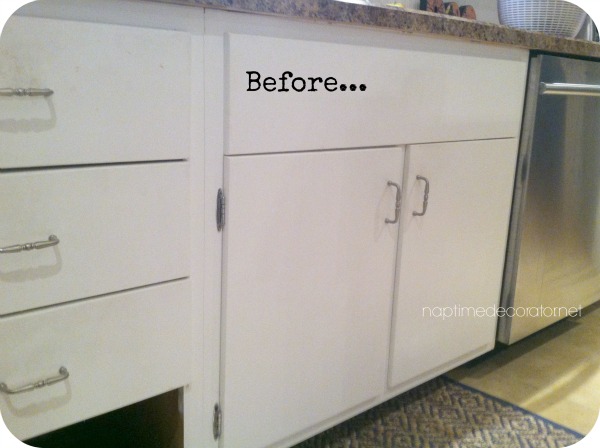
Image Source: www.naptimedecorator.net
Why Put Trim on Kitchen Cabinets?
Adding trim or molding to kitchen cabinets does more than just look nice. It covers up gaps between the cabinet tops and the ceiling. It hides small flaws. It can make cheap cabinets look expensive. It adds style and charm. Think of it as putting a frame around a picture; it completes the look. Updating kitchen cabinets with trim is a low-cost way to give your kitchen a big facelift.
It also helps in other ways:
- It hides ugly gaps.
- It protects cabinet edges.
- It makes cabinets look built-in.
- It adds a bit of your own style.
Interpreting Different Cabinet Trim Styles
There are many kinds of trim you can add. Each gives a different look. Knowing the options helps you pick the right one for your kitchen style. Here are some common types, offering various kitchen cabinet trim ideas:
H4 Crown Molding
This is the most popular type for the top of cabinets. It gives a grand, finished look. It bridges the space between the top of the cabinet and the ceiling. Crown molding comes in many sizes and shapes, from simple curves to fancy designs.
H4 Base Molding (or Skirt Molding)
This trim goes along the bottom of lower cabinets. It can hide the toe kick area or add a decorative touch near the floor. It works like baseboards in a room.
H4 Light Rail Molding
This trim goes on the bottom of upper cabinets. It helps hide under-cabinet lighting. It also gives a finished look to the bottom edge.
H4 Panel Molding (or Picture Frame Molding)
This molding is added to flat cabinet doors or the sides of cabinets. It creates a framed look, adding detail and depth. It turns a plain door into one with more style. Adding decorative molding to cabinets often uses this type.
H4 Scribe Molding
This is a small, thin piece of trim. It is used to cover small gaps where the cabinet meets a wall. Walls are rarely perfectly straight. Scribe molding bends a little to follow the wall’s shape, hiding the gap.
Choosing the right trim depends on:
* Your kitchen’s style (modern, traditional, farmhouse).
* The cabinet design.
* Your budget.
* What you want the trim to do (hide lights, cover gaps, add decoration).
You can mix different types of trim. For example, crown molding on top and light rail on the bottom of upper cabinets.
Planning the Cabinet Trim Project
Good planning makes any DIY job easier. For DIY cabinet trim molding, you need to plan carefully.
H4 Picking the Right Trim
Look at your kitchen. What style is it? Modern kitchens often use simple, clean trim. Traditional kitchens look good with more detailed crown molding. Farmhouse style might use simple or slightly rustic trim.
Think about the size of your kitchen and cabinets. Big, chunky trim can look too much in a small kitchen. Thin trim might get lost in a large space.
Hold up pieces of trim to your cabinets (if possible) to see how they look. Look at pictures online for inspiration.
H4 Measuring for Trim
Measure each section where you will add trim.
* For crown molding, measure the length of the top of each cabinet run that meets the ceiling or upper wall space.
* For base molding, measure along the bottom of lower cabinets.
* For light rail, measure the bottom of upper cabinets.
* For panel molding, decide how many frames you want on each door or panel. Measure the size needed for each frame.
Always buy more trim than you think you need. A good rule is to add 10-15% extra. This helps if you make wrong cuts. It also helps if you need short pieces for corners or ends. Trim pieces usually come in 8-foot or 12-foot lengths.
H4 Getting Materials
You will need the trim pieces themselves. You will also need things to attach and finish the trim.
Here is a list of things you might need:
- The trim pieces: Chosen style and length.
- Glue: A strong wood glue or construction adhesive works well. This helps hold the trim tight and stops gaps. We will talk more about the best glue for cabinet trim later.
- Fasteners: Nails or screws. Nails are common for trim. You can use a hammer and finish nails or a nail gun. A nail gun makes it much faster.
- Wood filler: To fill nail holes and small gaps.
- Caulk: Paintable caulk is great for filling gaps where the trim meets the cabinet or wall.
- Sandpaper: For smoothing wood filler and the trim edges.
- Primer: To prepare the trim for paint.
- Paint: Matching your cabinets or a new color. This is the paint cabinet trim step.
- Painter’s tape: To protect areas you don’t want to get paint on.
Tools You Will Need
Having the right tools for installing cabinet trim makes the job easier and gives better results.
Here are some key tools:
| Tool | Use | Notes |
|---|---|---|
| Tape Measure | Measuring cabinet lengths and trim pieces | Essential for accuracy |
| Pencil | Marking cut lines on trim | Dark pencil shows up well |
| Miter Saw | Cutting trim pieces at angles for corners | The best tool for clean, angled cuts |
| Hand Saw & Miter Box | A cheaper option for cutting angles if no miter saw is available | Slower but works for simple cuts |
| Nail Gun | Fastening trim quickly with brad nails or finish nails | Speeds up the job, leaves smaller holes |
| Hammer | If not using a nail gun, for driving finish nails | Need a nail punch too to set nail heads |
| Stud Finder | Finding cabinet frames or wall studs behind drywall (for securing) | Good if attaching long trim runs |
| Level | Ensuring trim is straight | Very important for good look |
| Caulk Gun | Applying caulk smoothly | Needed for filling gaps |
| Putty Knife | Applying wood filler | Small one is fine |
| Safety Glasses | Protecting your eyes when cutting or nailing | Always wear these! |
A miter saw is highly recommended, especially for crown molding, which uses complex angles. If you don’t own one, maybe you can rent one or borrow from a friend.
Comprehending Crown Molding Angles
Installing crown molding on cabinets is often seen as the hardest part of cabinet molding installation. This is because of the angles needed for inside and outside corners.
Crown molding sits at an angle, usually between 38 and 52 degrees, leaning back against the cabinet front and up towards the ceiling/wall area. When you cut it, you need to cut it upside down and backwards on a miter saw. Or you need to cope the inside corners.
H4 Simple Angles (Flat Trim)
If your trim is flat and just wraps around, like base trim or simple square trim, the cuts are easier.
* Outside Corner: You cut two pieces at a 45-degree angle. One piece angles left (like \ ), the other angles right (like / ). When you join them, they make a 90-degree outside corner.
* Inside Corner: The easiest way for flat trim is two pieces cut at 45 degrees. One piece angles left, the other right. They overlap and meet in the corner. A better way is coping (explained next).
H4 Grasping Coping Inside Corners
For inside corners, especially with shaped trim like crown or baseboard, coping gives the best result. A coped joint looks better and is more forgiving if the corner isn’t perfectly square.
How to cope an inside corner:
1. Cut one piece of trim straight (90 degrees) and fit it into the corner against the wall/cabinet side. This piece goes on the left if you are working right to left, or on the right if working left to right.
2. Take the piece that will butt against the first one. Cut a 45-degree inside corner angle on it (the wrong way!). This cut is just a guide.
3. Use a coping saw to cut along the line created by the angled cut. You are cutting away the material behind the face of the trim profile. Follow the edge of the profile.
4. Test fit the coped piece against the straight piece in the corner. The coped edge should fit snugly against the profile of the first piece. You might need to trim it a little.
This takes practice. But a well-coped joint looks seamless.
H4 Deciphering Crown Molding Angles
Crown molding angles are tricky because the trim sits at a tilt.
* Standard Angle: Most cabinet crown molding is installed at a spring angle (the angle it sits at on the cabinet) of 45 degrees or 52 degrees. Check your specific molding.
* Cutting on the Miter Saw: You usually lay the crown molding upside down on the miter saw. The bottom edge of the molding (that touches the cabinet top) rests against the saw fence. The top edge (that touches the ceiling/wall area) rests on the saw base.
* Inside Corner (Miter Saw): For a standard 90-degree corner: Set the miter saw angle to 31.6 degrees. Cut one piece with the blade tilted left, and the other with the blade tilted right. Test fit them. This makes a mitered inside corner. For a coped inside corner, cut one piece straight. Cut the second piece with a 45-degree inside corner cut (the wrong way), then cope it with a coping saw. Coping is often better for inside corners with crown molding.
* Outside Corner (Miter Saw): For a standard 90-degree corner: Set the miter saw angle to 31.6 degrees. Cut one piece with the blade tilted left and the other with the blade tilted right. Test fit them.
Note: The 31.6-degree setting is common for crown molding with a 38-degree spring angle. If your crown has a 45-degree spring angle, the miter saw cut angle is 22.5 degrees. Check the instructions for your specific crown molding or look up a crown molding angle chart.
It sounds confusing, but there are charts online. Also, many miter saws have special marks for crown molding angles. Practice cuts on scrap pieces first!
Step-by-Step Trim Installation
Here are the basic steps for cabinet molding installation. These steps apply generally, but we’ll look at specific trim types later.
H4 Step 1: Get Ready
- Clear the area around the cabinets. Move anything that will get in your way.
- Clean the surfaces where the trim will go. Dust and grease can stop glue from sticking well.
- Gather all your tools and materials.
- If painting the trim a different color than the cabinets, it’s often easier to prime and paint the trim pieces before you install them. You can do touch-ups later.
H4 Step 2: Measure and Mark
- Measure the length of the first piece of trim you will install.
- Mark the cut line clearly on the trim piece with a pencil. Remember which angle you need (straight, inside corner, outside corner).
H4 Step 3: Cut the Trim
- Put on your safety glasses!
- Take the trim piece to your saw. Make sure the saw is set to the correct angle. Double-check which side of the line you need to cut on (usually the waste side).
- Make the cut slowly and carefully.
- Test fit the piece in place before cutting the next piece. This is very important, especially for corners. It’s easier to adjust a cut on one piece than on two.
H4 Step 4: Attach the Trim
- Apply a thin bead of wood glue or construction adhesive along the back of the trim piece, where it will touch the cabinet. Don’t use too much; it will squeeze out.
- Place the trim piece in its spot.
- Use a level to make sure it is straight.
- Fasten the trim using your nail gun or hammer and finish nails. Place nails every 12-18 inches. Put nails into the cabinet frame if possible for a strong hold. For crown molding, aim nails into both the cabinet top and the wall/ceiling area if they meet.
- For corners, put a few nails close to the joint to hold it tight while the glue dries.
Best Glue for Cabinet Trim: For painted trim, yellow wood glue (like Titebond II or III) is a good choice. It dries hard and can be sanded. For strong hold on different materials or less-than-perfect surfaces, construction adhesive (like Liquid Nails or PL Premium) works well. Wood glue is usually enough if you are also using nails.
H4 Step 5: Add the Next Piece
- Measure and cut the next piece.
- Apply glue and place the piece, fitting it tightly against the first piece (at a corner, or a long straight run).
- Nail the second piece in place.
Work your way around the cabinets, fitting and attaching one piece at a time.
H4 Step 6: Fill and Smooth
- Once all the trim is attached, use wood filler to fill all the nail holes. Use a putty knife to press the filler in. Wipe away extra filler right away with a damp cloth.
- Let the wood filler dry completely. Drying time is on the package.
- Lightly sand the dried wood filler smooth so it is flat with the trim surface. Also, sand any rough spots on the trim or at cut ends.
- Use paintable caulk to fill any small gaps. Use caulk where the trim meets the cabinet, the wall, or the ceiling. Run a thin bead of caulk along the gap. Then, run a damp finger or caulk tool along the bead to smooth it and push it into the gap. Wipe away extra caulk.
Filling holes and gaps is key to a professional-looking finish.
H4 Step 7: Prime and Paint
This is the paint cabinet trim step.
* Once filler and caulk are dry, prime the trim. If you pre-painted the trim, just prime the filled holes and caulk lines. If the trim is raw wood, prime everything. Use a good primer made for wood.
* Let the primer dry. Lightly sand the primer if needed (check primer can for instructions). Clean off sanding dust.
* Paint the trim. Use paint that matches your cabinets or your desired trim color. Use a good brush for trim work. Apply thin, even coats.
* You will likely need two coats of paint. Let the first coat dry before applying the second.
* Remove painter’s tape (if used) while the last coat of paint is still slightly wet for a clean line.
Now let’s look at specific types of trim installation.
How to Install Crown Molding on Cabinets
Adding crown molding is one of the best ways of updating kitchen cabinets with trim. It hides the space above upper cabinets and adds elegance.
H5 Getting Ready for Crown
- Make sure the area above the cabinets is clean.
- Decide how the crown will attach. Will it only attach to the cabinet front? Or also to the wall/ceiling behind it? Most cabinet crown attaches to the cabinet face frame. If it reaches the ceiling, it might also attach there.
- Check if your cabinets have a flat surface on top to attach the crown to, or if you need to add a small wood strip first (a ledger board). Some crown molding sits right on top; others need a surface to rest against. Read the molding instructions.
H5 Cutting Crown Molding
This is the trickiest part.
* Use a miter saw.
* Set the saw angle correctly for the spring angle of your crown (usually 31.6 or 22.5 degrees for 90-degree corners).
* Place the crown molding upside down on the saw. The edge that rests on the cabinet top sits against the saw fence. The edge that points up sits on the saw base.
* For an inside corner, cut the first piece straight against the wall/cabinet side it meets. Cut the second piece with a 45-degree inside angle (wrong way), then cope it. Alternatively, use the miter saw settings (31.6 degrees, alternating left/right tilt) for both pieces of the inside corner. Coping is often easier to get a tight fit.
* For an outside corner, use the miter saw settings (31.6 degrees, alternating left/right tilt) for both pieces. Remember to cut so the longest point of the angle is on the outside face of the trim.
* Always cut a bit long if unsure, you can trim more. Better to be long than short.
H5 Attaching Cabinet Crown Molding
- Apply wood glue or construction adhesive to the back surfaces that touch the cabinet and wall/ceiling.
- Place the first piece. Use a level.
- Nail it into place. Aim nails into the cabinet face frame if possible for a solid hold. If the molding touches the ceiling, nail it there too (find studs or use anchors if needed, but usually nailing into the cabinet frame is enough).
- Attach the next piece, fitting the corner joint tightly. Nail it.
- Use painter’s tape across corner joints while the glue dries to help hold them tight.
H5 Finishing Crown Molding
- Fill nail holes with wood filler.
- Use paintable caulk to fill gaps where the crown meets the cabinet, wall, or ceiling.
- Sand smooth when dry.
- Prime and paint.
How to install crown molding on cabinets takes patience and practice cuts. Don’t rush the corner cuts.
How to Add Base Trim to Cabinets
How to add base trim to cabinets is much like installing baseboards in a room. It adds a finished look to the bottom of lower cabinets and can hide the toe kick area or gaps with the floor.
H5 Planning Base Trim
- Choose a base trim style that fits your kitchen look. It can match your floor baseboards or be simpler.
- Measure the lengths needed.
- Decide how to handle outside corners (like at the end of a cabinet run) and inside corners (where cabinets meet a wall). Miter cuts work fine for both inside and outside corners for most base trim. Coping is an option for inside corners if you want the best look.
H5 Cutting Base Trim
- Use a miter saw or miter box and hand saw.
- For outside corners, cut two pieces at 45 degrees (one / , one \ ).
- For inside corners, cut two pieces at 45 degrees (one / , one \ ) to overlap, or cope one piece.
- Cut pieces to length.
H5 Attaching Base Trim
- Apply glue to the back of the trim piece.
- Place the trim along the bottom of the cabinet.
- Nail it into the cabinet’s toe kick or base structure. Be careful not to nail through the side of the cabinet base. Nails every 12-18 inches are good.
- Fit and attach the next pieces, making sure corners meet tightly.
H5 Finishing Base Trim
- Fill nail holes with wood filler.
- Caulk gaps where the trim meets the cabinet or the floor.
- Sand smooth when dry.
- Prime and paint.
How to add base trim to cabinets is often simpler than crown molding because the angles are easier to handle.
Adding Panel Molding to Cabinet Doors
This is a great way of adding decorative molding to cabinets that have flat doors or side panels. It makes them look like more expensive paneled doors.
H5 Planning Panel Molding
- Decide on the layout. Will you make one big rectangle or two smaller ones on each door?
- Measure the door or panel area.
- Decide how far from the edge you want the molding to sit (e.g., 2 inches from all sides). This sets the size of your molding frame.
- Cut small pieces of scrap wood to the size of this distance (e.g., a 2-inch block). This helps you quickly mark the molding position on the door.
H5 Cutting Panel Molding
- Panel molding usually uses simple miter cuts (45 degrees) for the corners of the frame.
- Measure and cut the four pieces needed for the first frame. Cut the ends at 45 degrees so they meet to form a rectangle.
H5 Attaching Panel Molding
- Lightly mark the position of the frame on the cabinet door using your measuring tape and your spacer block.
- Apply wood glue to the back of one molding piece.
- Carefully place the piece on the door, lining it up with your marks.
- Use small brad nails from a nail gun (18 gauge or 23 gauge are good) to fasten the molding. Use just enough nails to hold it while the glue dries (e.g., 3-4 nails per piece depending on length). Too many nails can split thin molding or show through.
- Repeat for the other three pieces, making sure the corners meet tightly.
- Wipe away any glue squeeze-out right away with a damp cloth.
H5 Finishing Panel Molding
- Fill nail holes with wood filler (these will be small).
- Caulk the tiny gap between the molding and the cabinet door surface. This is key for a seamless look.
- Sand smooth when dry.
- Prime and paint the door and the new molding together for a unified look.
Adding decorative molding to cabinets this way is a simple change that has a big visual impact.
Fathoming the Finishing Touches
The finishing steps make all the difference between a DIY job that looks DIY and one that looks professional.
H5 Fixing Holes and Gaps
- Nail Holes: Use a good quality wood filler. For small holes from a brad nailer, you might not need much. Press it in firmly. Let it dry fully.
- Gaps at Joints/Corners: If your miter cuts aren’t perfect, you might have small gaps at corners. Wood filler can fix small ones. For slightly larger gaps, you might need to use sandable wood filler or even cut a tiny sliver of wood to fit, glue it, then fill.
- Gaps Against Cabinet/Wall: This is where paintable caulk is your best friend. Use it along any line where the trim meets another surface. It hides imperfections and makes the trim look like part of the cabinet. Use a damp cloth or finger to smooth the caulk line.
H5 Sanding
- Once filler and caulk are dry, sand the filled spots and any rough areas on the trim. Use fine-grit sandpaper (like 220 grit).
- You are just aiming for a smooth surface ready for paint. Don’t over-sand and change the shape of the trim profile.
- Clean off all sanding dust with a tack cloth or damp rag. Dust stops paint from sticking well.
H5 Priming
- Priming is important, especially on new wood trim or filled areas. Primer helps the paint stick evenly and covers stains or wood grain.
- Use a primer that works with your paint type.
H5 Painting
This is the final step to paint cabinet trim.
* Use good quality paint. Cabinet paint needs to be durable. Often the same paint used on the cabinets is used on the trim for a perfect match.
* Use a brush sized for your trim. Small brushes for small trim, larger for crown. An angled brush helps cut in clean lines.
* Apply thin, even coats. Two thin coats are better than one thick one. Thick paint can hide the trim details or drip.
* Let each coat dry completely as per the paint can instructions before applying the next.
* Pay attention to brush strokes. Try to brush in the direction of the wood grain or the length of the trim piece.
Take your time with finishing. It transforms a good install into a great one.
Tools and Materials Table
Here is a summary table of common tools and materials.
| Category | Item | Use | Notes |
|---|---|---|---|
| Tools | Tape Measure | Measuring | |
| Pencil | Marking | ||
| Miter Saw | Cutting angles | Highly recommended | |
| Nail Gun | Fastening trim quickly | Brad or finish nailer | |
| Hammer | Fastening if no nail gun | Need nail set | |
| Level | Checking straightness | ||
| Caulk Gun | Applying caulk | ||
| Putty Knife | Applying wood filler | Small size is fine | |
| Safety Glasses | Eye protection | Essential safety item | |
| Coping Saw | For coped inside corners | ||
| Sandpaper | Smoothing surfaces | Fine grit (220) | |
| Materials | Trim Molding | The decorative pieces | Choose style & buy extra (10-15%) |
| Wood Glue | Helps hold trim, strengthens joints | Yellow wood glue or construction adhesive | |
| Nails | Fastening trim | Brad nails or finish nails | |
| Wood Filler | Filling nail holes & small gaps | ||
| Paintable Caulk | Filling gaps at edges | ||
| Primer | Preparing trim for paint | Matches paint type | |
| Paint | Coloring the trim | Matches cabinets or new color | |
| Painter’s Tape | Protecting surfaces | For clean paint lines |
Remember, having the right tools for installing cabinet trim makes a big difference in how the project goes.
Budget and Time
How much does it cost? It depends on the type of trim you pick. Simple trim is cheap ($1-$3 per linear foot). Fancy crown molding can be $5-$10 or more per linear foot. Plus, you need to buy glue, nails, filler, caulk, primer, and paint.
A small kitchen might cost $100-$300 for materials. A large kitchen with fancy trim could cost $500-$1000+. It’s much cheaper than buying new cabinets.
How long does it take? This is a weekend project for many DIYers.
* Measuring and cutting: A few hours.
* Attaching: A few hours per section.
* Filling, sanding, caulking: Several hours, plus drying time.
* Priming and painting: Several hours, plus drying time between coats.
Expect it to take 1-3 full days of work, spread out over a weekend or a few evenings. The time spent on finishing (filling, sanding, caulking, painting) often takes longer than the actual installation (cabinet molding installation).
Troubleshooting Common Issues
- Gap at a Miter Corner: If the gap is small, fill it with wood filler or caulk. If large, you might need to re-cut one or both pieces. Practice cuts save material!
- Gap Against Wall/Ceiling: Use paintable caulk. This is very common because walls and ceilings are rarely straight.
- Trim Won’t Stay Put: Did you use glue? Are your nails long enough? Are you nailing into solid cabinet parts or wall studs? Add more fasteners if needed. Use painter’s tape to hold pieces while glue dries.
- Paint Not Smooth: Did you sand after filling? Did you clean off dust? Are you using a good brush and good paint? Is the paint too thick? Sand lightly and apply thinner coats.
Most problems can be fixed with filler, caulk, sanding, and careful painting.
Caring for Your New Trim
Once the paint is dry, care for your trim like you care for your cabinets. Clean it gently when cleaning the cabinets. Watch for dings or scuffs. Touch up paint as needed.
Frequently Asked Questions (FAQ)
H5 Q: Can I use Liquid Nails for cabinet trim?
Yes, construction adhesives like Liquid Nails or PL Premium work very well as a strong glue for cabinet trim. They bond to many surfaces and help hold the trim tightly, reducing the need for as many nails, especially for heavier trim or if nailing into thin material.
H5 Q: How do I cut crown molding corners?
You use a miter saw set to specific angles (often 31.6 degrees or 22.5 degrees, depending on the crown’s spring angle) and cut the molding while it’s placed upside down and backwards on the saw. For inside corners, coping is often easier than using angled miter cuts.
H5 Q: What’s the best way to fill nail holes?
Use a good quality wood filler. Press it firmly into the hole with a putty knife. Slightly overfill it, then scrape away the excess. Let it dry completely, then sand it smooth and flat with the trim surface.
H5 Q: Do I need to remove cabinet doors to add trim to the frame?
No, you usually do not need to remove the doors to add trim to the cabinet frames (like crown molding on top). However, if you are adding panel molding directly to the doors themselves, it is much easier to remove the doors and work on a flat surface like sawhorses.
H5 Q: Can I add trim to laminate or thermofoil cabinets?
Yes, you can add trim to these types of cabinets. The process is the same for measuring and cutting the trim. When attaching, make sure your glue is suitable for bonding wood trim to the cabinet material (construction adhesive is often better here). Also, use smaller brad nails to avoid splitting the cabinet’s thin outer layer. Sanding and painting require care with laminate/thermofoil surfaces around the trim area.
H5 Q: How do I match the paint color?
Take a cabinet door or drawer front to the paint store. They can scan the color and mix paint to match. Use a durable paint type meant for cabinets.
Conclusion
Adding trim to your kitchen cabinets is a rewarding DIY project. It might seem complex, especially cutting corners, but with careful planning, the right tools for installing cabinet trim, and patience, you can do it. From DIY cabinet trim molding basics to figuring out how to install crown molding on cabinets or how to add base trim to cabinets, this guide covers the key steps. Updating kitchen cabinets with trim not only makes them look better but also increases the value and style of your kitchen. It is a change you will see and enjoy every day.