You need to know how many can lights to put in your kitchen. There is no one single number that works for every kitchen. The right amount depends on the size of your kitchen, how bright you want it to be, and what tasks you do there. You figure out the right number by looking at the square footage kitchen lighting needs and calculating the total lumens needed kitchen. Then you divide that by how bright each light is.
Installing can lights, also known as recessed lights or pot lights, is a popular choice for kitchen lighting. They give a clean look on the ceiling. But getting the number and placement right is key to a bright, useful kitchen. Too few lights means dark spots. Too many lights waste energy and can feel harsh.
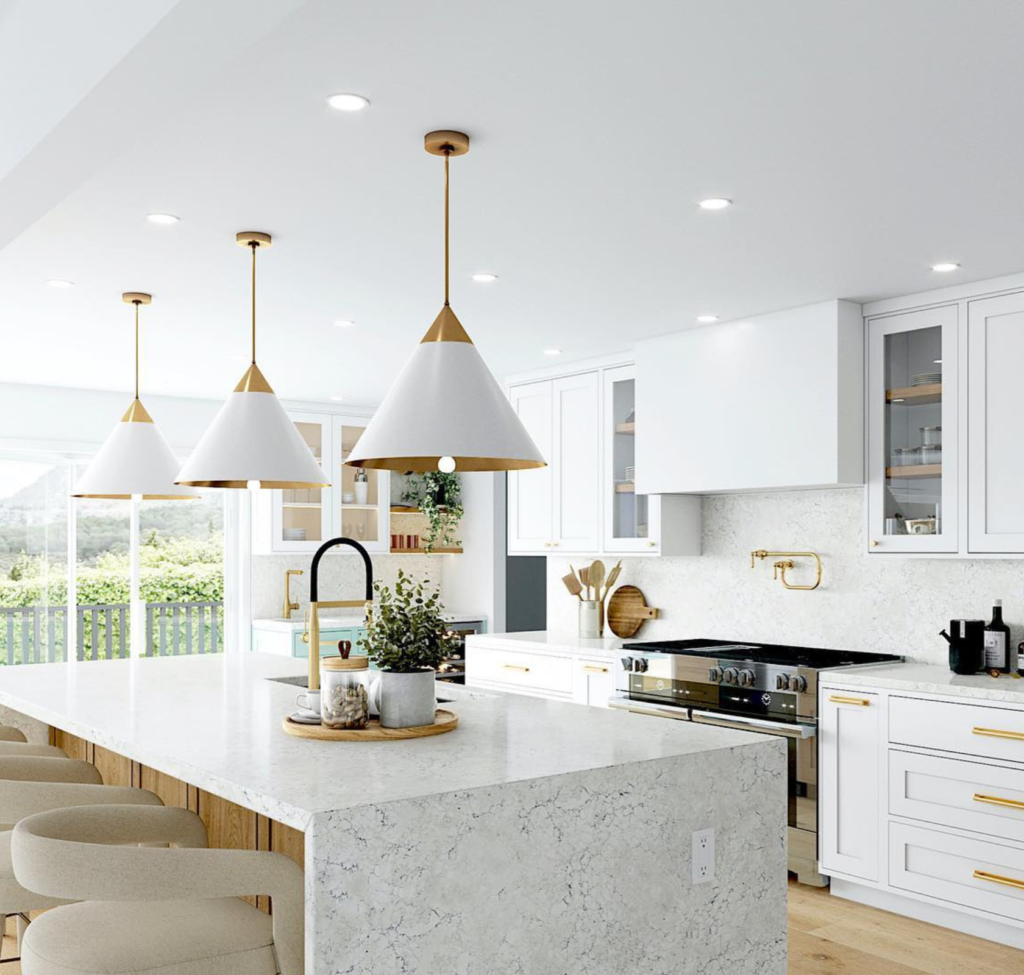
Image Source: blog.1800lighting.com
Why Can Lights Work Well in Kitchens
Recessed lights hide inside the ceiling. This gives a smooth, modern look. They provide overall light (ambient light) or focused light for working (task light). They can be part of a full kitchen lighting design.
Benefits of Recessed Lights
- They look clean and don’t hang down.
- They can give a lot of light.
- You can use them to light up different areas.
- They work with other types of lights, like pendant lights or under-cabinet lights.
Key Things That Change The Number
Many things affect how many can lights your kitchen needs. You must think about all of them.
Kitchen Size
This is the first step. A bigger kitchen needs more lights than a small one. You measure the length and width of your kitchen and multiply them to get the square footage kitchen lighting.
How Bright You Want It
Brightness is measured in lumens or foot-candles. A kitchen needs good light. Especially over work areas. You need enough light to see well and work safely. Knowing the recommended kitchen light levels helps plan this.
Ceiling Height
How high is your ceiling? Higher ceilings need lights that are brighter or spread light wider. The height also affects the recessed lighting spacing.
Kitchen Layout
Where are your counters, island, sink, and stove? These are task areas. They need brighter, focused light. The shape of your kitchen also matters. An L-shaped or U-shaped kitchen needs different light placement than a long, narrow one. The kitchen lighting layout is very important.
What The Lights Are For
Do you need light just for walking around? Or do you need bright light to chop vegetables? Most kitchens need both. This is called layered lighting. You need ambient light for the whole room and task lighting kitchen for work spots.
Type of Bulb
LED lights are common now. They use less energy and last a long time. Different LED lights give off different amounts of lumens. This affects how many fixtures you need.
Interpreting Lighting Measures: Lumens and Foot-Candles
To figure out how many lights you need, you must know what brightness means.
What Are Lumens?
Lumens measure the total light a bulb gives off. A bulb with more lumens is brighter. When planning kitchen lighting design, you plan for total lumens needed in the room. Then you pick lights that add up to that total.
What Are Foot-Candles?
Foot-candles (FC) measure how much light lands on a surface. One foot-candle is one lumen spread over one square foot. This is more helpful for recommended kitchen light levels in work areas. For example, you might want 50 FC on your counter.
Recommended Kitchen Light Levels
- General walking areas: 20-40 FC
- Counters and Task areas (sink, stove): 50-100 FC
- Dining area (if in kitchen): 20-40 FC (often dimmer)
These are just guides. Some people like a brighter kitchen, others like it softer.
Calculating The Number of Lights: A Step-by-Step Guide
Here is a simple way to estimate how many can lights you need. This process is similar to how a recessed light calculator kitchen tool works.
Step 1: Find Your Kitchen’s Square Footage
Measure your kitchen’s length and width in feet.
Multiply the length by the width.
Example: Kitchen is 10 feet long and 12 feet wide.
Area = 10 ft * 12 ft = 120 square footage kitchen lighting.
Step 2: Figure Out Total Lumens Needed
Kitchens generally need about 30-50 lumens per square foot for good overall light. Task areas need more focused light, which you handle with placement and extra lights. For the main number of can lights, use the general guideline.
Let’s use 40 lumens per square foot as an example.
Multiply your square footage by this number.
Example: 120 sq ft * 40 lumens/sq ft = 4800 total lumens needed kitchen for general light.
Step 3: Check How Bright Each Light Is
Look at the box or details for the can lights you want to use. It will tell you the lumen output for each fixture. LED lights often give 600 to 1000 lumens or more.
Example: Let’s say each light gives off 800 lumens.
Step 4: Divide to Get a Starting Number of Lights
Divide the total lumens needed by the lumens from one light.
Example: 4800 total lumens / 800 lumens per light = 6 lights.
So, based on size and brightness alone, you might need about 6 can lights for a 10×12 kitchen.
Important Note: This is a starting point. It doesn’t consider ceiling height, layout, or task lighting needs yet.
Interpreting Recessed Lighting Spacing
Once you have a rough number of lights, you need to know where to put them. This is where recessed lighting spacing comes in. It ensures light is spread evenly and avoids dark spots. The rule of thumb relates spacing to ceiling height.
The Basic Spacing Rule
A common rule is to space lights about half the ceiling height apart.
- If your ceiling is 8 feet high, space lights about 4 feet apart (8 / 2 = 4).
- If your ceiling is 9 feet high, space lights about 4.5 feet apart (9 / 2 = 4.5).
- If your ceiling is 10 feet high, space lights about 5 feet apart (10 / 2 = 5).
This pot light spacing kitchen rule creates a good grid of ambient light.
Refining The Spacing
This basic rule is for even, overall light. But kitchens are not just empty boxes. You have counters, cabinets, and work areas. You need to adjust the recessed lighting spacing based on your specific kitchen lighting layout.
- Lights over counters should be closer to the counter (often 2-3 feet away from the wall cabinets).
- Lights over an island or sink should be placed directly above them.
- Avoid placing lights directly overhead where you stand and work. This puts you between the light and your work, creating shadows. Place the light slightly in front of where you will stand.
Crafting The Kitchen Lighting Layout
Putting the lights in the right place is as important as having the right number. A good kitchen lighting layout mixes general light with focused light.
Planning The Ambient Layer
Start with the basic grid for overall light using the ceiling height rule for recessed lighting spacing. Draw this grid on a plan of your kitchen.
Adding Task Lighting
Next, place lights over the key work areas:
- Counters: Place can lights to shine onto the counter surface. A good spot is often 2-3 feet out from the wall with cabinets. If your ceiling is high, you might need larger lights or lights with a narrower beam angle to focus the light down.
- Island: Place lights to shine directly over the island surface. The number needed depends on the island size. Space them evenly over the island.
- Sink: Make sure there is a light directly over the sink.
- Stove: The range hood usually has a light. If not, ensure can lights nearby provide good light on the cooktop.
These specific task lighting kitchen spots might need extra lights beyond your initial number based on square footage alone. For example, if your calculation said 6 lights, but you have a large island and lots of counter space, you might end up needing 8 or 10 lights once you add task lighting.
Avoiding Shadows
The biggest layout mistake is putting lights where your head will cast a shadow on your work surface. Place lights so they shine onto the surface from slightly in front of you. For wall counters, this means putting the lights closer to the edge of the counter than the wall.
Designing Your Kitchen Lighting System
The total kitchen lighting design should work together. Can lights are often the main source of light, but other lights help too.
Layers of Light
A great kitchen uses different layers:
- Ambient: General light for the whole room (often from can lights).
- Task: Bright light for specific work areas (often from can lights, under-cabinet lights, or pendants).
- Accent: To highlight features, like artwork or a nice backsplash (sometimes smaller adjustable can lights).
- Decorative: Lights that look nice, like pendant lights or chandeliers (they also provide light).
Can lights can serve as both ambient and task lighting depending on their placement and how many you use in an area.
Using Dimmers
Put your kitchen lights on dimmers. This is a key part of modern kitchen lighting design. You can have bright light for cooking and then dim it for eating or relaxing. Dimmers help set the mood and save energy.
Applying Kitchen Lighting Guidelines
Here are some general kitchen lighting guidelines to keep in mind:
- Aim for enough brightness: Don’t under-light your kitchen. It’s better to have dimmers on bright lights than not enough light at all.
- Plan for task areas first: Make sure counters, sink, and island have good light. Then fill in the rest for general light.
- Consider ceiling height for spacing: Use the half-the-ceiling-height rule as a starting point for general areas.
- Place lights carefully: Avoid putting lights directly overhead where you will stand. Place them slightly in front to avoid shadows.
- Use the right size lights: Common sizes are 4-inch, 5-inch, or 6-inch diameter. Smaller lights are less noticeable but give less light individually. Larger lights give more light but need more space. The calculation based on lumens helps decide how many, and then you pick the size that fits the number and spacing.
- Think about the color of the light: Look at the Correlated Color Temperature (CCT), measured in Kelvin (K). 2700K-3000K is warm white (like old bulbs), good for a cozy feel. 3000K-4000K is neutral to cool white, good for task areas as it feels brighter and shows colors more truly. Kitchens often use 3000K or 4000K.
Using a Recessed Light Calculator Kitchen
Many lighting stores or websites have a recessed light calculator kitchen tool. These tools use the same ideas we discussed:
- You enter your kitchen size (square footage kitchen lighting).
- You select the ceiling height.
- You might pick the level of brightness you want (like ‘bright’ or ‘very bright’ based on recommended kitchen light levels).
- You might select the size of the can light you want.
The calculator uses built-in kitchen lighting guidelines and formulas to suggest:
- A total number of lights.
- A suggested recessed lighting spacing.
- Sometimes, a basic kitchen lighting layout grid.
While helpful, remember these are often basic. You still need to adjust the layout based on your actual kitchen counters, island, and work zones to ensure good task lighting kitchen and avoid shadows.
Putting It All Together: An Example Walkthrough
Let’s plan lighting for a kitchen that is 15 feet long and 10 feet wide, with 9-foot ceilings.
- Square Footage: 15 ft * 10 ft = 150 sq ft.
- Total Lumens Needed (General): Let’s aim for 40 lumens/sq ft. 150 sq ft * 40 lumens/sq ft = 6000 lumens.
- Number of Lights (Initial): Let’s use 800 lumen LED lights. 6000 lumens / 800 lumens/light = 7.5 lights. Round up to 8 lights for general coverage.
- Basic Spacing: Ceiling height is 9 ft. Basic recessed lighting spacing is 9 ft / 2 = 4.5 feet.
- Draw The Layout: Draw a 10×15 rectangle. Start placing 8 lights trying for 4.5 ft spacing. You might make a grid like 2 rows of 4 lights (8 total).
- Add Task Areas: Now, look at the kitchen plan. Where are the counters, sink, island?
- Suppose there’s an L-shaped counter on two walls and a sink under a window on the third wall.
- Suppose there’s an island in the middle.
- Adjust Layout for Task Lighting:
- Make sure the lights over the L-shaped counter are about 2.5 feet out from the wall cabinets, following the L-shape. This likely uses some of the 8 lights, but you might need to shift them or add one or two extra over a long counter run.
- Place a light directly over the sink.
- Place lights over the island. If it’s a 6-foot island, maybe two can lights spaced 3 feet apart over the island surface.
- Check placement: Are any lights right over where someone stands at the counter? Shift them slightly towards the front edge of the counter.
- Recalculate Number: After adjusting for task lighting and spacing, you might find you need 10 or 12 lights to cover all the areas well and maintain good pot light spacing kitchen between them, especially if you added lights for the island or extra task areas. The final number is usually higher than the initial calculation based on square footage alone.
- Final Review: Look at the plan. Is there good light everywhere you need it? Are there any areas that will have shadows? Adjust spacing (while trying to stay close to the 4.5 ft guide where possible for ambient light) and add or move lights as needed. This results in the final number of lights and your kitchen lighting layout.
This example shows how the number starts with size and brightness but is then refined by the actual kitchen lighting layout and need for task lighting kitchen. This is a more detailed way to plan than just using a simple recessed light calculator kitchen.
Common Mistakes to Avoid
Getting kitchen lighting right is tricky. Here are errors to watch out for:
- Too Few Lights: The most common mistake. Leads to a dim, hard-to-work-in kitchen with dark spots.
- Wrong Spacing: Lights are too far apart, creating pools of light with dark areas between them. Or too close, which is overkill and looks like a runway. Remember the recessed lighting spacing rules.
- Ignoring Task Lighting: Only putting lights in a simple grid means counters and the sink might be dim and shadowed. Always add dedicated task lighting kitchen.
- Placing Lights Directly Overhead: As mentioned, this creates shadows. Position them to shine onto the work surface.
- Not Using Dimmers: Kitchen needs different light levels at different times. Dimmers are a must for flexible kitchen lighting design.
- Wrong Light Color (CCT): Using very warm or very cool lights everywhere can make food look unappealing or the room feel sterile. 3000K-4000K is usually best for task areas.
- Forgetting Other Lights: Can lights are great, but under-cabinet lights for counters and pendants over an island often provide better task lighting kitchen and add style. Plan how all lights work together in the overall kitchen lighting design.
Frequently Asked Questions About Kitchen Can Lights
How far should recessed lights be from cabinets?
For counters along a wall with cabinets, place the can lights so they shine onto the counter. A good rule of thumb is to put the center of the light about 2 to 3 feet away from the wall cabinets. This pot light spacing kitchen avoids the light being blocked by the cabinets or casting a shadow on your work surface.
What size recessed light is best for a kitchen?
4-inch and 6-inch are the most common sizes. 4-inch lights give a cleaner look and can be placed closer together, often used for task lighting or in smaller kitchens. 6-inch lights give off more light individually and are good for general ambient light in larger areas. The best size depends on your ceiling height, the total number of lumens you need, and your preferred kitchen lighting design look.
Can I mix different types of lights in my kitchen?
Yes, absolutely! The best kitchen lighting design uses layers. You can use can lights for ambient and some task lighting, then add pendant lights over an island (which provide both task and decorative light), and under-cabinet lights for excellent task lighting kitchen on counters. Mixing light types adds function and style.
What is the best color temperature for kitchen can lights?
For work areas like counters and the sink, 3000K to 4000K is often best. 3000K is a neutral white. 4000K is cooler, more like daylight. Both help you see food colors accurately. For general ambient light, some people prefer warmer 2700K-3000K for a cozier feel. Dimmers can help you adjust the feel. Consistency is good, so picking one color temperature (like 3000K) for all your can lights is a common choice.
Do I need dimmers on all my kitchen lights?
Putting can lights and other main kitchen lights on dimmers is highly recommended. It gives you control over the brightness and mood. You can have maximum light for cooking and cleaning, and lower light for eating or entertaining.
How high should kitchen ceiling lights be?
For recessed can lights, the height is determined by your ceiling height. The key is using the ceiling height to figure out the recessed lighting spacing (usually half the ceiling height apart) and to place lights to avoid shadows from objects or people below. Other lights, like pendants over an island, are typically hung 30-36 inches above the counter surface, but this can be adjusted based on ceiling height and personal preference.
Conclusion
Figuring out how many can lights for a kitchen involves more than just a simple number. It’s a bit of math using your kitchen’s square footage kitchen lighting and the lumens needed kitchen. It’s also about smart recessed lighting spacing and careful kitchen lighting layout. You need to make sure you have enough task lighting kitchen over work spots. By following kitchen lighting guidelines, considering recommended kitchen light levels, and maybe using a recessed light calculator kitchen as a starting point, you can design a kitchen lighting plan that is bright, functional, and looks great. Don’t be afraid to add extra lights for tasks and always use dimmers for flexibility.