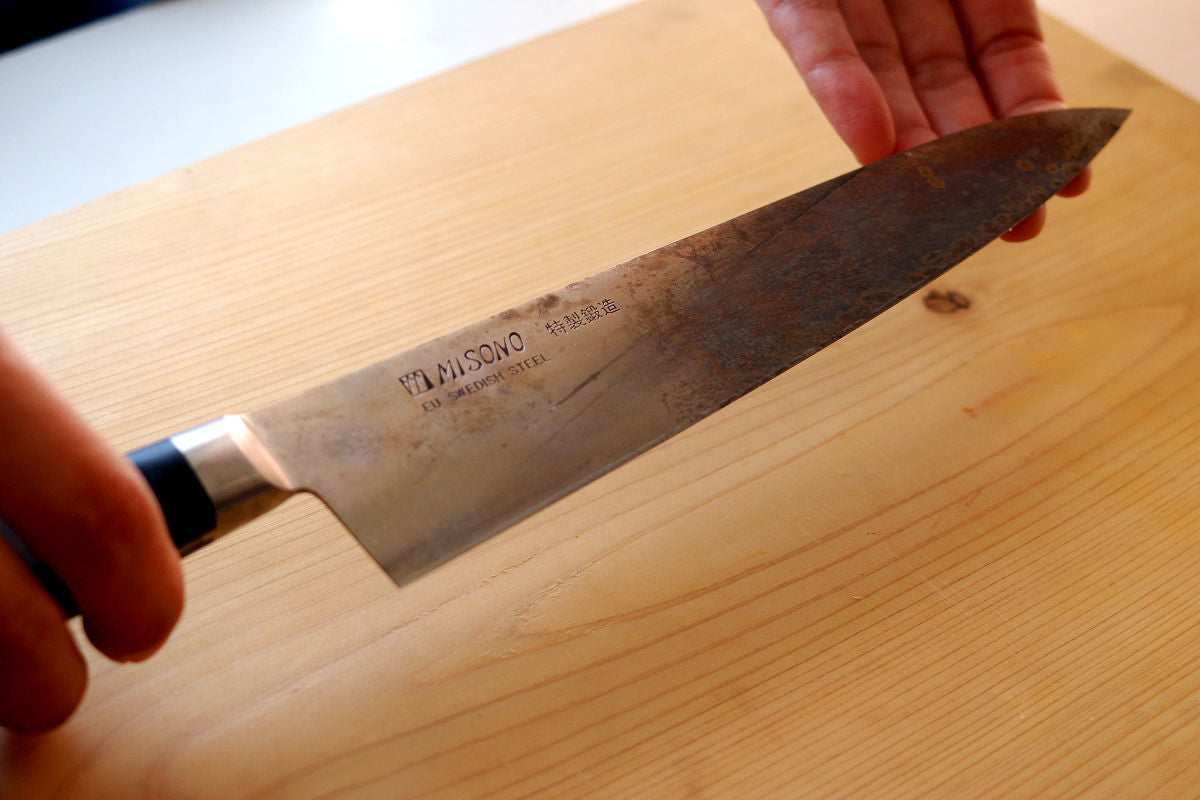
Image Source: www.globalkitchenjapan.com
Easy Step-By-Step Guide: How To Get Rust Off A Kitchen Knife Quickly
Rust on a kitchen knife can be frustrating. It looks bad and can even hurt how the knife cuts. But don’t worry! Getting rust off a kitchen knife quickly is often simpler than you think. This guide shows you easy ways to clean a rusty knife and make it look better. We will cover different kitchen knife rust treatment methods using things you likely have at home, plus some other options.
Rust, or iron oxide, forms when the iron in steel mixes with oxygen and water. Most knives use steel, which has iron. Even stainless steel knives can rust, especially if left wet. This is why removing rust stains from knives is a common need for home cooks.
Let’s look at how to bring your knife back to life.
Knowing Your Knife Steel
Different knife steels can rust differently.
h4 Types of Knife Steel
- Carbon Steel: These knives are very sharp. They rust easily. They need more care to stay rust-free.
- Stainless Steel: These knives have chromium added. This makes them fight rust better. But they are not “stain-proof.” They can still rust, especially along the edge or if left wet often. Stainless steel knife rust removal is usually easier than with carbon steel.
Knowing your knife helps choose the best way to remove rust from knife.
Getting Ready to Clean Rust
Before you start rust removal from knives, get everything ready. Safety is key when working with sharp objects and cleaning stuff.
h4 What You Need
Gather your supplies first. What you need depends on the method you pick.
- Your rusty kitchen knife.
- Cleaning cloths or old towels.
- Gloves (optional, but good for protecting your hands).
- A non-metal container (like a plastic bowl) if soaking the knife.
- Rust cleaning items (vinegar, baking soda, potato, special cleaner, etc. – more on these soon).
- A gentle scrub pad or old toothbrush.
- Fine steel wool (use carefully!).
- Warm water.
- Dish soap.
- Knife oil or cooking oil (for after cleaning).
h4 Safety First
Always handle knives with care.
- Keep the blade pointed away from you.
- Use gloves to protect your hands from cleaning stuff and the sharp edge.
- Work in a well-lit place.
- Keep kids and pets away from your workspace.
Natural Ways to Get Rust Off
You can use common kitchen items for natural rust removal kitchen knife. These methods are often gentle and work well for light rust spots.
h3 Using Vinegar
White vinegar is a weak acid. It helps break down rust. This is a popular way for rust removal from knives at home.
h4 Step-By-Step with Vinegar
- Find a container: Pick a glass or plastic container. It must be big enough for the knife blade.
- Pour vinegar: Pour white vinegar into the container. Pour enough to cover the rusty part of the knife blade.
- Soak the blade: Gently place the knife blade into the vinegar. Make sure the rust spots are covered.
- How long? For light rust, soak for about 30 minutes to a few hours. For heavier rust, you might soak for longer, but check it often. Do not leave carbon steel in vinegar for too long (many hours). It can damage the steel.
- Check the rust: After soaking, take the knife out. Look at the rust. Is it softer?
- Scrub gently: Use a soft cloth, an old toothbrush, or a non-metal scrub pad. Gently rub the rusty spots. The rust should start coming off.
- Rinse the knife: Rinse the knife well with warm water. Make sure all the vinegar is gone.
- Dry completely: This is very important! Dry the knife right away and very well with a clean, dry cloth. Any water left can cause rust again.
- Add oil: Put a thin layer of cooking oil (like mineral oil or vegetable oil) on the blade. This helps protect it.
h5 Tips for Vinegar Use
- Use white vinegar (about 5% acidity). Stronger vinegar might be too harsh.
- Do not soak the knife handle, especially if it’s wood. Only soak the blade.
- Watch the knife while it soaks. Take it out as soon as the rust looks ready to scrub off.
Using Baking Soda Paste
Baking soda is a mild abrasive. It can help scrub rust away without scratching the knife too much. This is good for removing rust stains from knives that are not too bad.
h4 Step-By-Step with Baking Soda
- Make a paste: Mix baking soda with a little bit of water. Add water slowly until you get a thick paste, like toothpaste.
- Cover the rust: Put the baking soda paste onto the rusty parts of the knife blade.
- Let it sit: Let the paste sit on the rust for about an hour.
- Scrub the rust: Use a soft cloth, an old toothbrush, or a scrub pad. Rub the paste over the rust spots. The baking soda helps lift the rust as you rub.
- Add more paste if needed: If the rust is stubborn, put more paste on and scrub again.
- Rinse the knife: Rinse the knife completely under warm running water. Get all the paste off.
- Dry completely: Dry the knife right away and very well with a clean, dry cloth.
- Add oil: Put a thin layer of oil on the blade to protect it.
h5 Tips for Baking Soda Use
- The paste should not be too watery. It needs to stick to the knife.
- Use a non-abrasive pad first. If the rust is tough, you might need something slightly rougher, but be careful not to scratch the finish.
Using a Potato and Dish Soap
This sounds strange, but it works! Potatoes have oxalic acid. This acid can help fight rust. Adding dish soap helps too. This is another simple natural rust removal kitchen knife method.
h4 Step-By-Step with Potato
- Cut a potato: Cut a raw potato in half.
- Add soap: Put a little dish soap on the cut surface of one potato half.
- Rub the rust: Use the soaped potato half. Rub it firmly over the rusty areas on the knife blade.
- Keep rubbing: Rub for a few minutes. The potato juice and soap work together.
- Check the rust: See if the rust is lifting. You might need to cut a bit more off the potato surface to get fresh juice.
- Rinse the knife: Rinse the knife well with warm water.
- Dry completely: Dry the knife right away and very well.
- Add oil: Add a thin layer of oil for protection.
h5 Tips for Potato Use
- This works best for very light rust or small spots.
- You can also stick the rusty knife blade into a whole potato and leave it for a few hours, then scrub with the potato.
Mechanical Ways to Remove Rust
Sometimes, rust is stuck on tight. You might need to rub or scrape it off. These methods use force. Use them carefully to avoid scratching your knife blade too much.
h3 Gentle Scrubbing
For light surface rust or after soaking, scrubbing can finish the job.
h4 What to Use for Scrubbing
- Old Toothbrush: Good for getting into small spots and along the edge.
- Non-metal Scrub Pad: Like the kind for washing dishes. Choose one that is not too rough.
- Cork: Rubbing a wine cork on rust can help. It’s gentle.
- Crumbled Aluminum Foil: Wet a piece of aluminum foil. Crumple it up. Rub it on the rust. It’s softer than steel wool but has some cleaning power.
h4 How to Scrub
- Use chosen tool: Pick one of the tools above.
- Rub the rust: Gently rub the rusty areas. Use small circles or rub back and forth.
- Use a cleaning aid: You can use water, dish soap, vinegar (after soaking), or baking soda paste while scrubbing.
- Check progress: Keep checking if the rust is coming off.
- Rinse and dry: When the rust is gone, rinse the knife well and dry it right away.
Using Steel Wool (Use with Caution!)
Steel wool can remove tougher rust. But it can also scratch the knife blade. Use the finest grade steel wool you can find (like 0000 grade). This method is sometimes needed for kitchen knife rust treatment on stubborn spots.
h4 Step-By-Step with Steel Wool
- Wet the steel wool: Get a small piece of fine steel wool wet with water. You can add a drop of dish soap or a tiny bit of oil.
- Rub gently: Rub the rusty spots gently with the wet steel wool. Rub in the direction of the steel’s grain if you can see it (often up and down the blade).
- Use light pressure: Do not push down hard! Let the steel wool do the work. Using too much force will scratch the blade deeply.
- Check often: Stop and look often to see if the rust is coming off. Stop as soon as the rust is gone.
- Rinse and dry: Rinse the knife completely to remove any small bits of steel wool and rust. Dry it very well.
- Add oil: Put a thin layer of oil on the blade.
h5 Steel Wool Warnings
- Always use the finest grade (0000). Coarser grades will scratch the knife badly.
- Rub gently. Scratches from steel wool are hard to remove.
- This method is more likely to change the look of the blade than natural methods.
- Wear gloves to protect your hands.
Using Sandpaper (For Heavy Rust Only!)
Sandpaper is very abrasive. Use this only for very heavy rust that other methods can’t remove. It WILL scratch the blade. You might need to polish the blade later to make it look nice again. This is a last resort for restoring rusty kitchen knife with deep rust.
h4 Step-By-Step with Sandpaper
- Start with fine grit: Get very fine grit wet/dry sandpaper (like 600 grit or higher). You can use different grits, starting lower for very heavy rust and moving to higher grits to make it smoother.
- Wet the paper: Wet the sandpaper and the knife blade.
- Rub the rust: Rub the rusty areas with the wet sandpaper. Rub in the direction of the blade’s grain if possible.
- Use even pressure: Try to rub evenly over the rusty spot.
- Move to finer grits: If you used a lower grit, switch to a finer grit sandpaper. Wet it and rub again. This helps make the scratches smaller. Keep going to higher grits (1000, 1500, 2000) to polish the steel.
- Rinse and dry: Rinse the knife completely and dry it very well.
- Add oil: Put a thin layer of oil on the blade.
h5 Sandpaper Warnings
- This method is aggressive. It will remove steel from your knife.
- It will leave scratches unless you use very fine grits afterwards to polish.
- Only use this for severe rust that’s affecting the knife’s function.
- Wear gloves.
Using Rust Remover Products
There are products made just for taking off rust. These can be very effective for rust remover products for knives. Always read the product’s instructions carefully.
h3 Types of Rust Removers
- Gels or Liquids: You apply these to the rust. They work by changing the rust so it can be wiped away.
- Pastes: Like gels, but thicker.
h4 Step-By-Step with a Product
- Read instructions: This is the most important step! Every product is different.
- Prepare the area: Work in a place with fresh air. Wear gloves. Protect your work surface.
- Apply the product: Put the rust remover onto the rusty spots as the instructions say. Use a brush, cloth, or sponge.
- Wait: Let the product sit for the time listed on the package. Do not leave it on longer than it says.
- Remove rust/product: Some products let you just wipe the rust away. Others need a light scrub. Follow the product’s guide.
- Rinse thoroughly: Rinse the knife very well with water. You must remove all the product.
- Dry completely: Dry the knife right away and very well.
- Add oil: Put a thin layer of oil on the blade.
h5 Product Warnings
- These products can be strong chemicals. Use them carefully.
- Always use gloves and work in a well-aired space.
- Do not use products not made for food surfaces on a kitchen knife blade. Look for food-safe options if possible, or rinse extremely well.
- Test the product on a small, hidden area first if you are worried about damage.
Cleaning Up After Rust Removal
After removing the rust stains from knives, you need to clean the knife well. This gets rid of any rust bits or cleaning stuff.
h3 Washing and Drying
- Wash: Wash the knife by hand using warm water and a little dish soap. Clean the whole blade and handle.
- Inspect: Look closely at the blade. Are all the rust spots gone? If not, you might need to repeat a removal step.
- Rinse again: Rinse the knife completely to remove all soap.
- Dry IMMEDIATELY: This step is critical for knife rust prevention. Use a clean, dry towel. Wipe down the entire blade and handle until it is bone dry. Pay extra attention to the edge and any cracks where water can hide.
Making the Knife Sharp Again
Removing rust, especially with abrasive methods, can hurt the knife’s edge a little. After you restore rusty kitchen knife by removing rust, sharpening might be needed.
h3 Sharpening the Blade
Use a knife sharpener or sharpening steel to bring the edge back. A sharp knife is safer and works better. If you are not sure how to sharpen, look up a guide or use a simple pull-through sharpener.
Stopping Rust From Coming Back (Prevention is Key!)
The best way to handle rust is to stop it from forming. Knife rust prevention is much easier than rust removal from knives.
h3 Simple Steps to Prevent Rust
- Wash Right Away: Clean your knife soon after you use it. Don’t let food or liquids sit on the blade.
- Hand Wash Only: Never put good kitchen knives in the dishwasher. The heat, water, and chemicals can damage the handle and cause rust on the blade.
- Dry Completely: This is the MOST important step. After washing, dry the knife blade and handle fully with a towel. Do this right away. Don’t let it air dry.
- Store Properly: Store knives in a dry place. Use a knife block, a magnetic strip, or blade guards. Don’t leave them loose in a drawer where they can get scratched or stay wet.
- Oil Carbon Steel: If you have carbon steel knives, put a thin layer of food-safe oil (like mineral oil) on the blade often, especially after use and drying. This protects the metal. Stainless steel knives can benefit from this too, but need it less often.
- Avoid Harsh Chemicals: Don’t use strong cleaners or abrasive pads daily. This can hurt the protective layer on the steel.
By following these steps, you make kitchen knife rust treatment and removing rust stains from knives less common.
Choosing the Best Method for You
The best way to remove rust from knife depends on how much rust is there and what kind of knife you have.
h3 Method Guide
| Rust Amount | Knife Type | Best Methods | Notes |
|---|---|---|---|
| Very Light | Stainless/Carbon | Vinegar soak (short), Baking soda paste, Potato | Gentle, less risk of scratching. |
| Light | Stainless/Carbon | Vinegar soak (longer), Baking soda paste, Gentle scrubbing | Might need a bit more time or effort. |
| Medium | Stainless/Carbon | Longer vinegar soak, Baking soda scrub, Fine steel wool | Use steel wool carefully! Check knife type for soak time. |
| Heavy | Stainless/Carbon | Rust remover product, Sandpaper (last resort) | More aggressive. Risk of scratching or changing blade finish. |
For stainless steel knife rust removal, natural methods often work well because the rust is usually on the surface. For carbon steel, rust can go deeper faster, and prevention is extra important.
No matter the method, always start gently. Move to stronger methods only if needed.
Detailed Steps for a Typical Rust Removal
Let’s put it all together into a clear plan for how to clean a rusty knife. This uses baking soda, a common and safe method.
h3 Step-By-Step Guide (Using Baking Soda)
- Get Ready: Find your rusty knife, baking soda, water, a small bowl, an old toothbrush or soft scrub pad, a clean towel, and some cooking oil. Put on gloves if you like.
- Mix the Paste: Put a few spoons of baking soda in the bowl. Add water slowly, mixing until you have a thick paste that stays together.
- Cover the Rust: Use your finger or a spoon to put the baking soda paste all over the rusty spots on the knife blade.
- Wait: Let the paste sit on the rust for about 30 minutes to an hour. This gives it time to work on the rust.
- Scrub Gently: Use the toothbrush or soft scrub pad. Gently rub the paste over the rusty areas. Use small circles. You should see the paste turning brownish as the rust comes off.
- Add More & Scrub (If Needed): If some rust is still there, put a little more paste on that spot and scrub again.
- Rinse Well: Go to the sink. Rinse the knife blade completely under warm running water. Make sure all the baking soda paste and rust bits are gone.
- Look Closely: Check the blade. Is all the rust gone? If not, you can repeat the baking soda steps or try another method for stubborn spots.
- Dry Immediately and Fully: Get your clean, dry towel. Dry the entire knife blade and handle right away. Leave no wet spots.
- Add Oil: Put a tiny amount of cooking oil on the towel. Wipe the oil over the blade. This adds a layer of protection.
- Store Safely: Put your clean, dry, slightly oiled knife back in its storage spot.
This baking soda method is great for removing rust stains from knives without being too harsh.
More on Rust Remover Products
While natural methods are good, sometimes a dedicated product is needed for kitchen knife rust treatment. These products are made to target rust.
h3 Types and How They Work
- Acid-Based: These use stronger acids than vinegar to break down rust. Examples include phosphoric acid or citric acid (though some natural methods use citric acid too, these products have it in higher amounts).
- Chelating Agents: These chemicals grab onto the iron in the rust and hold it, letting you rinse it away. They are often gentler on the base metal.
h4 Choosing and Using Safely
- Read the Label: Always check if the product is safe for use on food surfaces. Some require very thorough rinsing.
- Ventilation: Use in a place with good airflow.
- Protect Skin: Wear gloves and maybe eye protection.
- Test First: Try on a small, non-seen area if possible.
- Follow Time Limits: Do not leave the product on longer than the instructions say. This can damage the steel.
Rust remover products for knives can be very effective but come with more safety steps than natural methods. Always prioritize safety and follow instructions exactly.
Restoring the Knife’s Look
After removing rust, especially if you used abrasive methods, the knife’s finish might look dull or scratched. Restoring rusty kitchen knife might mean making it look nice again.
h3 Polishing the Blade
- Metal Polish: You can use a metal polish made for stainless steel or carbon steel. Apply a small amount to a soft cloth and rub the blade. This can help bring back some shine.
- Higher Grit Sandpaper: As mentioned earlier, using very fine grits (1000+) of wet/dry sandpaper can help smooth out scratches and polish the steel.
- Buffing: Some people use buffing wheels with polishing compounds to get a mirror finish, but this requires special tools and skill.
Polishing is not needed for the knife to work, but it can make your knife look better after removing rust stains from knives.
When Rust is Too Much
Sometimes, rust can be very deep. It can eat into the metal and make the blade uneven or weak. If the rust is very severe and goes deep into the blade, it might be hard to remove completely. In rare cases, a knife might be too damaged by rust to be safe or useful anymore.
Most kitchen knife rust treatment, however, is successful for typical surface rust.
Summary of Getting Rust Off
Getting rust off a kitchen knife quickly involves picking a method and following the steps carefully.
h3 Key Takeaways
- Rust happens when iron meets water and air.
- Preventing rust by drying knives well is the best plan.
- Natural methods (vinegar, baking soda, potato) are good for light rust.
- Mechanical methods (scrubbing, steel wool, sandpaper) are for tougher rust, but use them with care to avoid scratches.
- Rust remover products can be strong and work well but need careful use and rinsing.
- Always wash and dry the knife completely after removing rust.
- Consider sharpening the knife edge after rust removal.
- Knowing your knife steel (carbon vs. stainless) helps choose the right approach.
- The best way to remove rust from knife depends on the rust’s severity and your knife type.
With a little effort, you can often get your rusty kitchen knife looking and working better.
Frequently Asked Questions (FAQ)
h4 Can rust on a kitchen knife make you sick?
Small amounts of rust on a knife used to cut food are generally not seen as a major health risk. Rust is iron oxide, which is not toxic in tiny amounts. However, a rusty surface is not smooth and can hold onto bacteria or food bits. It’s best to remove rust for cleanliness and the knife’s performance. Always clean the knife well after removing rust before using it for food.
h4 Is vinegar safe to use on all knife blades?
Vinegar is safe for most metal knife blades when used for short soaking times (30 mins to a few hours). However, leaving a carbon steel knife in vinegar for too long (many hours or overnight) can damage the metal surface, causing pitting or darkening (a patina). Stainless steel is more resistant but should also not be soaked for excessively long periods. Avoid getting vinegar on wood or composite handles, as it can damage them.
h4 How can I tell if my knife is carbon steel or stainless steel?
Carbon steel blades often look less shiny and might show marks or discoloration easily, forming a “patina” over time. Stainless steel blades usually look brighter and stay shiny. Check the knife markings; sometimes they say “stainless steel” or list the type of steel (like “high carbon stainless steel”). If it rusts very easily and quickly, it’s likely carbon steel.
h4 What is the easiest way to remove light rust spots?
For light spots, making a baking soda paste and gently rubbing with a soft cloth or toothbrush is often the easiest and safest way. Rubbing with a cut potato can also work for very light spots.
h4 Will removing rust make my knife sharp again?
Removing rust itself does not sharpen the knife. In fact, some methods (like using abrasives) can make the edge duller. After removing rust and cleaning the knife, you should sharpen the blade if needed to restore its cutting ability.
h4 Can I use sandpaper on my good knife?
Use sandpaper only as a last option for very heavy rust that cannot be removed any other way. Sandpaper is abrasive and will scratch the knife’s surface. Use the finest grit possible and work your way up to higher grits to try and polish the blade afterwards. For most light to medium rust, try gentler methods first.
h4 Why does my “stainless steel” knife rust?
“Stainless” steel means it stains less than carbon steel, not that it won’t stain or rust at all. If a stainless steel knife is left wet, especially in humid places or with salty/acidic food residue, it can still develop rust spots, often called “pitting” or “tea stains.” This is common stainless steel knife rust removal needing attention.
h4 How often should I oil my knife blade?
For carbon steel knives, it’s a good idea to lightly oil the blade after every use and thorough drying, or at least regularly if not used often. For stainless steel knives, oiling is less critical but can still offer extra protection, especially if you live in a humid area. A thin layer is enough. Use a food-safe oil.
Getting rust off a kitchen knife is possible with things you have at home or some simple products. By following these steps for kitchen knife rust treatment and focusing on drying and care, you can keep your knives working well and looking good for a long time. Remember, knife rust prevention is the simplest step of all!