Drawing a kitchen layout plan helps you see how your new kitchen will look and work. It answers questions like: Where do appliances go? How much space do I need? Can I fit an island? Making a plan lets you try different ideas before you build or buy anything. It’s like making a map for your kitchen project. This guide will show you how to make your own kitchen floor plan drawing step by step.
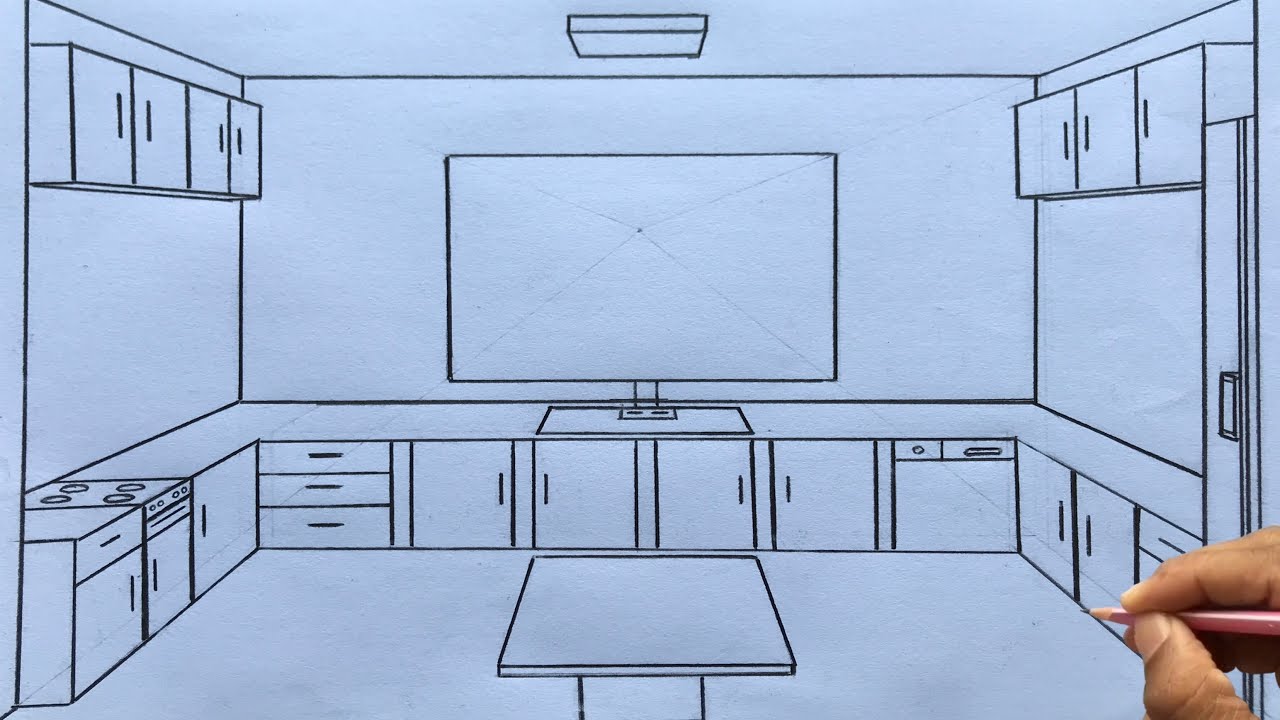
Image Source: i.ytimg.com
Why A Kitchen Plan Is Important
Making a good plan is the first step to a great kitchen. It saves you time and money. It stops mistakes before they happen. You can see if things fit and if you have enough room to move around. A plan helps you think about how you use your kitchen every day. Do you cook a lot? Do you need space for friends? A plan helps you answer these questions. It’s like having a map for your project. This simple guide helps you start your kitchen planning guide.
Tools You Need
You don’t need fancy tools to start. Simple things work fine.
- Tape measure (a long one)
- Paper (maybe
graph paper kitchen layoutpaper is best) - Pencil and eraser
- Ruler
- Maybe colored pencils
Later, you might use kitchen design software. But paper and pencil are great for starting.
Step 1: Get Ready to Measure
This is a very important step. Measuring kitchen for layout has to be right. If your measurements are wrong, your plan will be wrong. Your new cabinets and appliances might not fit. So, take your time here.
Clear the Way
Move anything that makes it hard to measure. Take things off counters. Move chairs out of the way. You need clear paths along the walls.
Draw a Simple Sketch
Before you measure, draw a rough picture of your kitchen shape. It doesn’t need to be perfect. Just show the walls, doors, and windows. This sketch helps you write down your measurements in the right place.
Decide on a Scale
You can’t draw your kitchen life-size on paper. You need a scale. This means making small drawing lines stand for bigger real-life lengths. A simple scale is often 1/2 inch or 1/4 inch equals 1 foot.
- If you use 1/4 inch = 1 foot: Every 4 feet in your kitchen is 1 inch on your paper.
- If you use 1/2 inch = 1 foot: Every 2 feet in your kitchen is 1 inch on your paper.
Graph paper helps a lot with this. Each square can stand for a certain length, like 6 inches or 1 foot. This makes graph paper kitchen layout easy.
Step 2: Take Your Measurements
Measure everything carefully. Write down each number right away on your simple sketch. Measure in inches or centimeters. Be consistent.
Measure the Walls
Measure the length of each wall. Go from corner to corner. Write these numbers on your sketch.
Measure Doors and Windows
Measure the width of each door and window opening. Also, measure the space from the corner of the wall to the edge of the door or window. Measure the space between windows or doors. Measure the height from the floor up to the bottom of the window. Also, measure from the top of the window to the ceiling. This helps you plan for cabinets around them.
Measure Height
Measure the height of the ceiling from the floor. Do this in a few places to make sure it’s the same everywhere.
Find Where Things Are
Measure where pipes and electric outlets are. Mark them on your sketch. Measure how far they are from the floor and the nearest wall. This is key for appliance placement kitchen design and sink spots.
Measure Big Things You Keep
If you are keeping your fridge or stove, measure its width, depth, and height. Also, measure any big furniture staying in the kitchen.
Double Check
Measure everything again. It sounds like extra work, but it saves big problems later. Have someone else measure with you if you can.
Step 3: Draw the Basic Plan
Now you use your measurements to draw the plan to scale. Get your graph paper kitchen layout ready.
Draw the Outline
Use your chosen scale. Draw the shape of your kitchen floor on the graph paper. Each square helps you keep lines straight and sized correctly. Draw the walls first.
Add Doors and Windows
Draw boxes or lines for doors and windows on the walls where you measured them. Make sure they are the right size based on your scale. Show which way doors swing open. This space needs to stay clear.
Mark Utilities
Put little marks on your drawing where the sink drain pipe, water lines, and electric outlets are. Use your measurements from the walls and floor.
Step 4: Placing Key Pieces
With the basic room shape done, it’s time to add the big things. This is where you start thinking about appliance placement kitchen design.
The Kitchen Work Triangle
This is a classic idea in kitchen design principles. It talks about the path between your three main work spots: the sink, the fridge, and the stove/oven. This path should form a triangle.
- Each side of the triangle should be between 4 feet and 9 feet long.
- The total length of all three sides should be between 12 feet and 26 feet.
- No cabinets or other things should cut through the triangle paths by more than 12 inches.
- The work triangle should not be a walk-through path to another room.
Thinking about the kitchen work triangle helps make your kitchen easy to use. You don’t want to walk miles to get food from the fridge to the sink to the stove.
Place Appliances First
Draw in the fridge, sink, and stove first. Think about the work triangle.
- Fridge: Often goes near the kitchen entry. People need to get drinks or snacks easily without getting in the cook’s way. Needs space to open the door fully.
- Sink: Usually under a window or near the dishwasher. Needs to be where the water pipes are.
- Stove/Oven: Needs space on both sides for putting down hot pots. Needs a vent hood above it. Needs to be away from heavy traffic.
Draw these in using your scale. Use the measurements of the appliances you plan to use. If you don’t know exact sizes yet, use standard sizes.
Add Other Appliances
Where will the dishwasher go? It should be next to the sink for easy loading. Where will the microwave go? On the counter, on a shelf, or above the stove? Add these to your drawing.
Step 5: Planning Your Cabinets
After the big appliances are in place, you plan the cabinets. This is kitchen cabinet layout planning. Cabinets fill the spaces between appliances and in corners. They give you storage and counter space.
Base Cabinets
These sit on the floor and hold up the counter. They come in standard sizes (like 12, 15, 18, 24, 30, 36 inches wide). Draw them along the walls, filling the spaces. Leave space for appliances. Remember corner cabinets can be tricky.
Wall Cabinets
These hang on the wall above the base cabinets. They are usually 12 inches deep. Standard heights are 30, 36, or 42 inches. Draw these above your base cabinets and appliances. Make sure they don’t hit windows or doors. Leave space above the stove for a vent hood.
Counter Space
The tops of the base cabinets become your counter space. Make sure you have enough counter space near the sink for food prep and near the stove for putting down hot items. Kitchen design principles say you need landing space.
Check Door Swings
Draw cabinet doors opening. Do they hit each other? Do they hit appliance doors? Adjust if needed.
Step 6: Look at Different Layout Types
The shape of your room and where doors/windows are will often point you to certain kitchen layout types. Knowing these types helps you think about how your kitchen will work.
Here are common kitchen layout types:
One-Wall Kitchen
All cabinets and appliances are on one wall. Good for small spaces or open plans. Simple, but less counter space. The work triangle becomes a work line.
Galley Kitchen
Has two rows of cabinets and appliances facing each other on two walls. Good for narrow rooms. Very efficient work triangle. Can feel closed in if both ends are blocked.
L-Shaped Kitchen
Cabinets and appliances are on two walls that meet to form an “L”. This is popular. Gives good counter space. Easy to have a good work triangle. The corner can be hard to use for storage.
U-Shaped Kitchen
Cabinets and appliances are on three walls, making a “U”. Gives the most counter space and storage. Very efficient work triangle. Needs a wider room. Only one entry/exit usually.
Island Kitchen
Any of the above shapes can have an island in the middle. An island adds counter space, storage, seating, or even a sink or cooktop. Needs enough clear space (at least 36-42 inches) around it to walk.
Peninsula Kitchen
Similar to an island, but attached to a wall at one end. Can offer seating and counter space like an island but fits into spaces that can’t take a full island.
Look at your drawing. Which type does it look like? Does that type work for how you cook? Try drawing different types on your plan to see what fits best. This is a key part of your kitchen planning guide.
Step 7: Refine Your Drawing
Your plan is getting detailed now. Add more notes and check everything.
Add Details
- Where will the trash can go?
- Is there space for a small table or chairs?
- Mark where you want lights or special outlets (like for a mixer).
- Add notes about cabinet features (like pull-out shelves).
Check Clearances
Make sure you have enough space to walk. Kitchen design principles give basic rules for clear space.
- Main walkways should be at least 36 inches wide.
- Space in a work area (like between an island and a counter) should be at least 42 inches for one cook, 48 inches for two cooks.
- Space in front of appliances (like the oven door when open) needs to be clear.
Look at your kitchen floor plan drawing. Do you have enough room to open the oven and dishwasher at the same time? Can people walk past someone working at the counter?
Think About Style
While the plan is about space, start thinking about how it will look. Where might colors go? What kind of sink? Adding notes helps later.
Step 8: Explore Kitchen Design Software
Once you have a good paper plan, you might want to try kitchen design software. There are many types. Some are free and simple online tools. Others are more complex and cost money.
Why Use Software?
- See your plan in 3D. This helps you really see what it will look like.
- Easily move things around. It’s faster than erasing on paper.
- Add details like colors, materials, cabinet styles.
- Some software helps you create shopping lists or estimates.
- Share your plan easily with others (family, designers, builders).
Types of Software
- Online Room Planners: Many websites offer free tools. You drag and drop shapes for rooms, cabinets, and appliances. Easy to start.
- Cabinet Company Tools: Big cabinet companies often have free tools to plan layouts using their specific cabinets.
- More Advanced Programs: Programs like SketchUp (has a free version) or paid design software offer more features and control. They take more time to learn.
Using kitchen design software can really bring your kitchen floor plan drawing to life. It’s a great next step after your paper plan.
Applying Design Principles
Good kitchen design principles make a kitchen look good and work well.
- Function First: How you use the kitchen is most important. Plan for cooking, cleaning, and storage needs.
- Safety: Avoid sharp corners in busy paths. Make sure there is enough light. Place the stove away from entryways.
- Lighting: Plan for different kinds of light: general light for the whole room, task light over counters, and maybe accent light.
- Storage: Think about what you own. Pots, pans, dishes, food. Plan cabinets and drawers that work for your things.
kitchen cabinet layout planningshould think about what goes inside. - Flow: How do you move around the kitchen? How do others move through it? The layout should allow easy movement. This links back to the
kitchen work triangle.
Using these ideas while you draw helps make sure your plan is not just pretty but also useful.
Simple Kitchen Planning Guide Steps Again
Let’s sum up the process for your kitchen planning guide:
- Measure everything: Walls, doors, windows, pipes, height. Be super careful.
- Draw the room shape: Use graph paper and a scale. Add doors, windows, utilities.
- Place big appliances: Fridge, sink, stove. Think about the
kitchen work triangle. - Add other appliances: Dishwasher, microwave.
- Draw cabinets: Plan base and wall cabinets around appliances. Think about storage and counter space (
kitchen cabinet layout planning). - Check the layout type: See which standard type your plan fits or is close to (L-shape, Galley, etc.).
- Refine details: Add notes, check walking space and clearances.
- Think about design rules: Safety, light, storage, flow.
- Consider software: Use
kitchen design softwareto see it in 3D.
Following these steps helps you create a useful kitchen floor plan drawing.
Trying Out Ideas
Don’t be afraid to draw your plan more than once. Try different ideas.
- What if the fridge was on a different wall?
- What if the sink was under the window?
- What if I added a small island?
Draw each idea. See how it changes the kitchen work triangle and the space. Compare the plans. Which one feels best for you? This is a fun part of kitchen planning guide.
Getting Ready for the Next Steps
Your finished plan is a great tool. You can use it to:
- Get ideas from kitchen companies.
- Talk to a designer or builder.
- Shop for cabinets and appliances.
- Make sure everything fits during install.
A good plan makes the rest of your kitchen project much easier. You’ve done the hard thinking on paper first.
Common Questions About Drawing Kitchen Plans
Is graph paper really needed?
No, not really needed, but it helps a lot. Graph paper kitchen layout makes keeping lines straight and to scale much easier. You can use plain paper, but you’ll need your ruler more often.
How exact do my measurements need to be?
Very exact. Even a few inches can make a big difference in a kitchen. Measure to the nearest 1/4 inch or half centimeter. This is why measuring kitchen for layout is so important.
Do I need to know exact appliance sizes when drawing?
It’s best if you do. But if not, use standard sizes. Most fridges are about 36 inches wide. Dishwashers are 24 inches. Stoves are 30 inches. You can find standard sizes online. But measure your chosen models before buying. Appliance placement kitchen design relies on correct sizes.
Can I draw a kitchen plan if I’m not good at drawing?
Yes! This isn’t art class. The goal is a clear map with correct sizes and locations. Use your ruler and take your time. Labels are more important than pretty pictures. The plan is a tool, not a masterpiece.
What is the most important thing to remember?
Measure twice, draw once! Correct measuring kitchen for layout prevents big problems. And thinking about the kitchen work triangle helps make the kitchen easy to use.
Where can I find examples of kitchen layout types?
Look online! Search for pictures of One-Wall, Galley, L-Shape, U-Shape kitchens. See how cabinets and appliances are placed in each. This helps you think about your own space and kitchen layout types.
Is using kitchen design software hard?
Basic online tools are usually easy. You just click and drag. More advanced software takes practice. Start with something simple if you’re new to it. It’s a good step after your paper kitchen floor plan drawing.
How do I plan for things like trash cans or pull-out shelves?
Add notes on your drawing. Draw a box for the trash can spot. On your kitchen cabinet layout planning, write notes like “pull-out pantry” or “drawer stack.” Details help you remember your ideas and tell others what you want.
Creating a kitchen floor plan drawing is the base for your dream kitchen. It takes some time, but the effort is worth it. It gives you a clear picture and helps you make smart choices. Happy planning!