So, how much CFM for a kitchen hood do you really need? Deciding on the right CFM (Cubic Feet per Minute) for your kitchen hood is key to clean air while cooking. CFM measures how much air your hood moves each minute. Getting the right amount means your hood can effectively pull out smoke, grease, smells, and steam from your kitchen space, making cooking more pleasant and your home cleaner.
Choosing a kitchen hood is more than just picking one that looks nice above your stove. Its main job is to keep your kitchen air fresh. The power of the hood to do this is measured in CFM. A higher CFM means the fan moves more air. If your hood has too little CFM, smoke and smells will stay in your kitchen. If it has too much CFM, it might pull too much air from your house, causing other problems, and you might pay more for power than you need. This guide will help you figure out the right power for your needs.
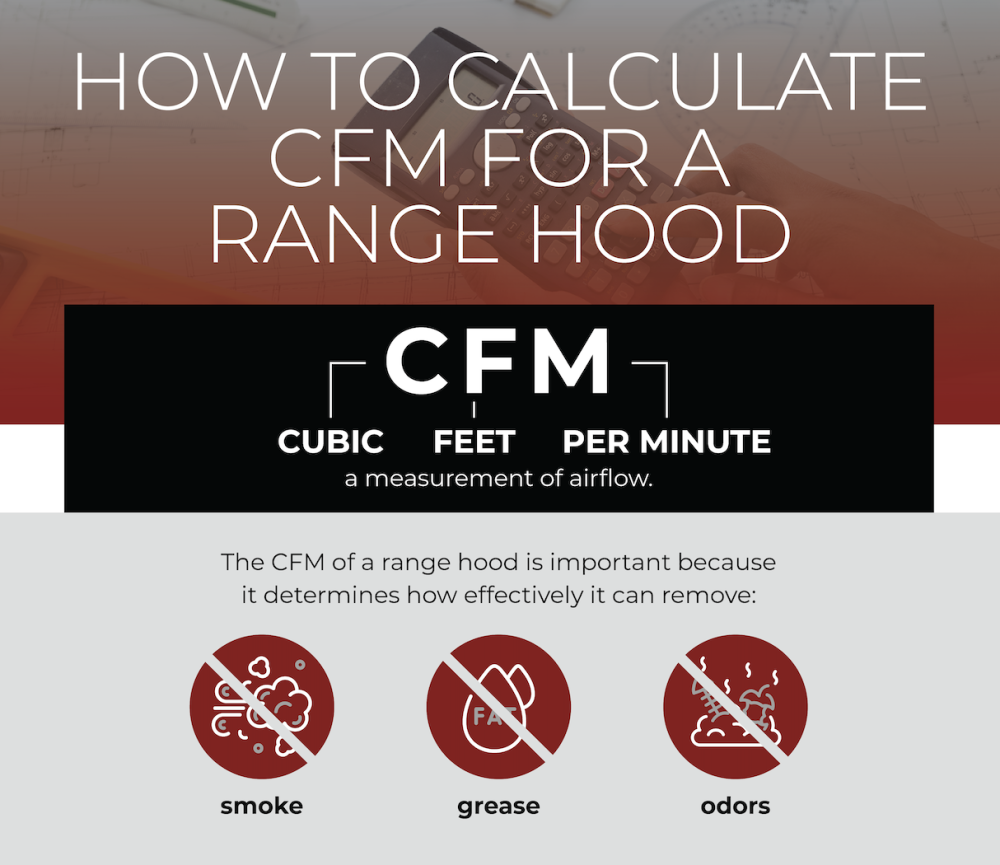
Image Source: www.worldcoppersmith.com
Grasping CFM for Kitchen Hoods
CFM stands for Cubic Feet per Minute. It tells you the volume of air a fan can move in one minute. When we talk about CFM requirements kitchen range hood, we mean the airflow needed to clear the air above your stove effectively. This is super important because cooking creates things you don’t want floating around your house: smoke, grease, steam, heat, and cooking smells.
A good kitchen hood with enough CFM pulls these things up and out. This helps keep your kitchen cleaner, prevents grease buildup on surfaces, and stops cooking smells from spreading through your home. It also helps manage heat and humidity, which is good for your home’s structure over time.
Why the Right CFM Matters
Picking the right CFM is not just about doing a good job of clearing the air. It also affects noise, energy use, and cost.
- Clearing the air: The main point. Enough CFM means smoke and smells go away fast. Too little, and they linger.
- Noise: Higher CFM hoods often mean bigger, louder fans. You want enough power, but maybe not so much that it’s too noisy to talk.
- Energy Use: More powerful fans use more electricity. If you get a much higher CFM than you need, you’re paying more for power you don’t use.
- Making up Air: Very high CFM hoods (usually over 400 CFM, but rules vary) might pull so much air out that your house needs “makeup air.” This means air from outside needs to come in to replace the air being pulled out. This can be cold in winter or hot in summer, affecting your heating and cooling costs. Some building codes require special systems for makeup air with high CFM hoods.
How to Figure Out Your Kitchen Hood CFM Needs
There are a few ways to figure out the right hood fan CFM needed. The best method depends on your stove type and how you cook. We will look at the most common ways to calculate kitchen hood CFM.
Method 1: Based on Your Stove’s Heat Output (BTU Method)
This is often the most recommended method, especially for gas stoves. Gas stoves produce more heat and different types of byproducts (like nitrogen oxides) than electric stoves. Gas needs more ventilation.
BTU stands for British Thermal Unit. It’s a measure of heat output. Most gas stove burners list their BTU rating. You can find this in the stove’s manual or sometimes on a sticker on the stove itself.
The rule of thumb here is: for every 10,000 BTU of heat output from your stove, you need at least 100 CFM of ventilation.
Steps to Use the BTU Method:
- Find the Total BTU: Look up the BTU rating for all the burners on your stove. If your stove has burners with different BTUs, add them all up. Example: Four burners at 10,000 BTU each = 40,000 BTU total.
- Calculate Minimum CFM: Divide the total BTU by 10,000 and multiply by 100.
- Formula: (Total Stove BTU / 10,000) * 100 = Minimum CFM
Example:
Let’s say your gas stove has:
* One large burner: 15,000 BTU
* Two medium burners: 9,000 BTU each (9,000 * 2 = 18,000 BTU)
* One small burner: 5,000 BTU
Total BTU = 15,000 + 18,000 + 5,000 = 38,000 BTU
Minimum CFM needed = (38,000 / 10,000) * 100 = 3.8 * 100 = 380 CFM
So, for this stove, you would need a hood with at least 380 CFM. You would likely look for a hood around 400 CFM or slightly higher to be safe.
Important Note on BTU Method: This method is best used with the BTU of the burners you are likely to use at the same time at high heat. Some people calculate based on all burners on maximum, but this might be overkill if you rarely use all burners on high simultaneously. However, using the total maximum BTU gives you the highest possible need and ensures you are covered for any cooking situation. This relates directly to BTU stove top CFM.
Method 2: Based on Kitchen Size (Air Changes Method)
Another way to think about kitchen size CFM needed is based on how often the air in your kitchen should be replaced. A common standard is to change the air in the kitchen about 15 times per hour. This is sometimes called the kitchen ventilation rate.
Steps to Use the Kitchen Size Method:
- Measure Your Kitchen Volume: Measure the length, width, and height of your kitchen space in feet.
- Calculate Kitchen Volume: Multiply length * width * height. This gives you the volume in cubic feet.
- Calculate Total Air Changes Needed: Multiply the kitchen volume by the desired number of air changes per hour (use 15 for a common standard).
- Convert to CFM: Divide the total air changes needed per hour by 60 (because CFM is per minute, and there are 60 minutes in an hour).
- Formula: (Length * Width * Height * Air Changes per Hour) / 60 = Minimum CFM
Example:
Let’s say your kitchen is:
* Length: 12 feet
* Width: 10 feet
* Height: 8 feet
* Desired Air Changes: 15 per hour
Kitchen Volume = 12 * 10 * 8 = 960 cubic feet
Total Air Changes Needed per Hour = 960 * 15 = 14,400 cubic feet per hour
Minimum CFM needed = 14,400 / 60 = 240 CFM
This method often gives a lower CFM number than the BTU method, especially for powerful gas stoves. The BTU method is generally preferred for gas stoves because it focuses on the source of the heat, smoke, and grease right at the cooking surface. The room size method is sometimes used as a minimum CFM for kitchen hood, or for electric stoves which produce less heat and byproducts.
Method 3: Minimum Recommendations
There are also general minimum CFM for kitchen hood recommendations. These are often based on the type of stove:
- Electric Stove: A common minimum is 150 CFM. However, this is truly a minimum. For anything more than light cooking (like boiling water or simple frying), more is usually better. Many recommendations suggest starting at 200-300 CFM for electric stoves.
- Gas Stove: Due to the higher heat and combustion byproducts, the minimum CFM for kitchen hood for a gas stove is often stated as 400 CFM. Again, this is a minimum, and the BTU calculation is usually more accurate for gas.
These minimums are a starting point but should not be the only factor you consider. Your cooking style matters a lot.
Factors That Change Your CFM Needs
Figuring out CFM requirements kitchen range hood isn’t just about numbers. Several factors change how much power you really need:
- Cooking Habits: Do you cook often? Do you fry, stir-fry, or grill indoors frequently? These methods produce a lot of smoke, grease, and smells. If you do this kind of cooking, you will need higher CFM than someone who only boils water or uses a microwave. This is a major factor in the hood fan CFM needed.
- Type of Range: As mentioned, gas ranges need more CFM than electric ones because they produce more heat and combustion byproducts.
- Kitchen Layout: Is your kitchen open to other living areas? In an open-plan home, smells and smoke can easily spread everywhere. A hood with higher CFM can help contain these things to the kitchen area better.
- Ducting: This is a big one. The CFM rating on the box is the fan’s power in ideal conditions (no ducting). When you add ducts, elbows (bends), and vent caps, the actual airflow goes down. This is called static pressure loss. A long duct run or lots of bends will reduce the actual air movement significantly. You might need a higher rated CFM fan to get the needed airflow at the hood’s capture area after considering duct loss. This directly relates to kitchen hood duct size.
- Hood Capture Area: How wide is your hood compared to your stove? The hood should ideally be at least as wide as your cooking surface, or even a bit wider (3 inches on each side is often recommended). A wider hood can capture more rising smoke and steam, even if the CFM is slightly lower than a narrower hood with the same CFM. The area the hood covers helps the range hood sizing guide.
- Hood Mounting Height: The recommended height above the stove (usually 24-30 inches for electric, 28-36 inches for gas) also affects how well the hood works. If the hood is mounted too high, smoke and grease can escape before reaching the filters. This means you might need higher CFM to compensate for the reduced capture effectiveness.
- Makeup Air: For hoods over a certain CFM (often 400 CFM or more, depending on local codes), you might need a system to bring fresh air into the house. This makeup air system adds cost but ensures the hood works correctly without causing problems like backdrafting from chimneys or furnaces. Ventilation codes kitchen hood often cover makeup air requirements.
Decoding Ducting and Its Effect on CFM
The best kitchen hood can only work as well as its ducting allows. Kitchen hood duct size is critical. Airflow is restricted by:
- Duct Diameter: Smaller ducts restrict airflow more than larger ones. A common standard for higher CFM hoods is 6-inch or even 8-inch round ducting. Do not use flexible ducting if you can avoid it, especially the ribbed type, as it creates a lot of resistance. Smooth, rigid metal ducting is best. Using a duct size smaller than the hood’s exhaust port will severely reduce performance.
- Duct Length: Longer duct runs mean more friction against the duct walls, slowing air down.
- Elbows (Bends): Every bend in the ducting significantly reduces airflow. A 90-degree elbow is like adding many feet of straight duct. Try to use as few elbows as possible, and use 45-degree bends if possible instead of 90-degree ones.
- Vent Caps: The cap on the outside of your house where the duct exits can also restrict airflow. Choose a low-restriction cap.
Think of it like drinking through a straw. A wide, short, straight straw is easy. A narrow, long straw with bends is much harder. Your hood fan is trying to ‘suck’ air through that straw.
If your duct run is long or has several bends, you might need to choose a hood with a higher CFM rating than your calculation suggests just to overcome this resistance and achieve your target airflow at the stove.
Example of Duct Loss: A hood rated at 400 CFM might only move 300 CFM (or less) by the time the air gets through a long duct run with several bends.
Choosing Your Hood Type and Size
The type of hood you choose also plays a role and is part of the range hood sizing guide.
- Under-Cabinet Hoods: These fit neatly under cabinets and are common. They come in various CFM ratings.
- Wall-Mount Hoods: These attach to the wall and can be a visual centerpiece. They often have higher CFM options and can handle more powerful stoves.
- Island Hoods: These hang from the ceiling over an island cooktop. They need higher CFM than wall-mount hoods because there is no wall behind them to help guide the airflow. Smoke and steam can escape on all sides. They often need a wider capture area too.
- Downdraft Systems: These rise from behind or next to the cooktop. They pull air down. They are less effective at capturing rising smoke and grease than overhead hoods and often require very high CFM to compensate.
For any hood type, aim for it to be at least as wide as your cooking surface. For a 30-inch stove, a 30-inch hood is the minimum width. A 36-inch hood over a 30-inch stove offers a better capture area. For island hoods or very high BTU stoves, wider hoods are often recommended. This contributes to the range hood sizing guide.
Understanding Ventilation Codes
Building codes in your area may have rules about kitchen ventilation. Ventilation codes kitchen hood often specify minimum CFM requirements based on the kitchen or stove type. They might also have rules about ducting materials (e.g., mandatory smooth metal ducts) and makeup air for high-CFM hoods.
It’s a good idea to check your local building codes or talk to a local contractor. Ignoring these codes could cause problems during home inspections or potentially create unsafe conditions (like poor air quality or problems with combustion appliances).
Tying It All Together: A Step-by-Step Approach
Here’s a simple plan to figure out the CFM requirements kitchen range hood:
- Assess Your Stove:
- Is it gas or electric?
- If gas, find the total BTU of all burners you might use at once (or total max BTU for simplicity).
- Assess Your Cooking Style:
- How often do you cook intensely (frying, searing, stir-frying)?
- If often, lean towards higher CFM.
- Calculate Base CFM:
- For Gas: Use the BTU method: (Total BTU / 10,000) * 100 = Base CFM.
- For Electric: Use a minimum starting point (e.g., 200-300 CFM), or the room size method (less common).
- Consider Your Kitchen and Ducting:
- Is your kitchen open concept? (Need more CFM).
- How long will your duct run be?
- How many bends (elbows) will there be?
- What kitchen hood duct size will you use (ideally same size or larger than hood outlet, smooth metal)?
- Factor in extra CFM for long/complex duct runs. There’s no exact formula for this without engineering tools, but a common rule of thumb is to add 10-20% CFM for a typical duct run, and potentially more for very long or complex ones. Consult installation guides for specific hood models, as they sometimes provide guidance on performance loss based on ducting.
- Consider Hood Type and Size:
- Is it an island hood? (Need more CFM).
- Is the hood wider than the stove? (Helps capture).
- Check Local Codes:
- Are there ventilation codes kitchen hood you need to follow?
- Is makeup air needed based on the CFM you are considering?
- Choose Your Hood: Select a hood with a CFM rating that meets or exceeds your calculated/estimated need, after considering ducting and other factors. If your calculations suggest 380 CFM, look for a hood around 400 CFM or maybe 500 CFM if your ducting is complex or you cook heavily. If your calculation is 240 CFM for an electric stove and you cook lightly, a 300 CFM hood might be perfect.
Table: Quick CFM Guidance (Estimates)
| Stove Type | Cooking Style | Ducting & Layout Factor | Estimated Minimum CFM Range | Notes |
|---|---|---|---|---|
| Electric | Light (Boiling, Simmering) | Simple | 150 – 250 CFM | Basic need |
| Electric | Moderate (Light Frying, Pan Searing) | Simple – Moderate | 200 – 350 CFM | Good for most electric cooking |
| Electric | Heavy (Lots of Frying, Searing) | Moderate – Complex | 300 – 500 CFM+ | Consider duct loss, open layout |
| Gas | Light (Simmering, Boiling) | Simple | 300 – 400 CFM | Even light gas cooking needs more |
| Gas | Moderate (Everyday Cooking) | Simple – Moderate | 400 – 600 CFM | Use BTU method for accuracy |
| Gas | Heavy (High-Heat Frying, Wok) | Moderate – Complex | 600 CFM+ | BTU method is crucial, factor in duct loss |
| Any | Island Hood, Open Kitchen | Adds Complexity | Add 100-300+ CFM | Island hoods need extra power/width |
| Any | Long/Complex Duct Run | Adds Resistance | Add 10-30%+ CFM | Factor in static pressure loss |
This table provides rough estimates. Always use the BTU method for gas stoves and factor in your specific situation.
A Note on Noise Levels
Higher CFM usually means more noise. Manufacturers list noise levels in Sones. A lower Sone number is quieter. 1 Sone is roughly the sound of a quiet refrigerator. A typical conversation is around 3-4 Sones. Some powerful hoods can be 8 Sones or higher on their top setting.
Look for hoods with multiple fan speeds. You might use the highest speed only for heavy smoke and a lower, quieter speed for less intense cooking. This way, you get the power when you need it without constant loud noise.
Summary: Don’t Guess, Calculate!
Choosing the right hood fan CFM needed is a key part of kitchen planning. It protects your home from grease and smells, keeps your air clean, and impacts comfort and energy costs. Relying on a simple guess or just buying the cheapest option is likely to leave you with poor ventilation.
Use the BTU method for gas stoves or consider the minimums and kitchen size for electric. Always factor in your cooking habits, kitchen layout, and especially the ducting you will use. Pay attention to kitchen hood duct size and the number of bends.
By taking a few minutes to calculate and consider these factors, you can confidently choose a hood with the right CFM requirements kitchen range hood for your home. This ensures effective ventilation that makes cooking more enjoyable and your kitchen a healthier space. You will have a much better range hood sizing guide tailored to your specific needs.
Frequently Asked Questions (FAQ)
h4: What is CFM for a kitchen hood?
h5: CFM means Cubic Feet per Minute. It is a measure of how much air the hood fan can move in one minute. Higher CFM means the fan moves more air, which helps remove smoke, grease, and smells from your kitchen.
h4: Is more CFM always better?
h5: Not always. While higher CFM means more powerful air movement, it also usually means more noise, higher energy use, and potentially the need for a makeup air system (which adds cost and complexity). It’s best to get enough CFM for your needs, not necessarily the highest possible number.
h4: How do I calculate the minimum CFM needed for my gas stove?
h5: The common method is based on your stove’s BTU output. Add up the BTU ratings of your gas burners. Divide the total BTU by 10,000, then multiply by 100. This gives you a base CFM requirement (e.g., 50,000 BTU / 10,000 * 100 = 500 CFM). This is the BTU stove top CFM method.
h4: What is a good minimum CFM for an electric stove?
h5: While 150 CFM is a basic minimum CFM for kitchen hood sometimes mentioned, it’s generally recommended to start higher for effective ventilation, especially if you cook more than just lightly. Aiming for 200-300 CFM is a better starting point for most electric stoves, and more if you cook heavily.
h4: How does duct size affect hood performance?
h5: Kitchen hood duct size is very important. Using a duct that is too small or is ribbed/flexible creates resistance (static pressure) that reduces the actual amount of air the fan can move, lowering its effective CFM. Using the recommended duct size (often 6-inch or 8-inch round for higher CFM) and smooth, rigid pipe is crucial for getting the rated performance.
h4: Do I need makeup air for my kitchen hood?
h5: Local ventilation codes kitchen hood often require a makeup air system if your hood’s CFM rating is above a certain level (commonly 400 CFM, but this varies). A makeup air system brings in fresh outdoor air to replace the air pulled out by the hood, preventing issues like backdrafting of other appliances.
h4: Does my kitchen size matter for CFM?
h5: Yes, kitchen size CFM needed can be calculated based on exchanging the air in the room a certain number of times per hour (the kitchen ventilation rate). However, for powerful gas stoves, the BTU method focusing on the heat source is generally considered more important than room volume. Room size is more often used for calculating minimum CFM for kitchen hood in general ventilation standards.
h4: Where can I find information on local ventilation codes?
h5: You can usually find local building codes on your city or county government’s website. You can also ask your local building permits office or consult with a qualified HVAC professional or contractor in your area. Understanding ventilation codes kitchen hood is important for safety and compliance.
h4: Should my range hood be wider than my stove?
h5: It is often recommended. While a hood the same width as the stove (e.g., a 30-inch hood for a 30-inch stove) is the minimum, a wider hood (e.g., a 36-inch hood over a 30-inch stove) provides a larger capture area. This helps catch smoke and steam that might drift sideways before rising, improving effectiveness even with the same hood fan CFM needed. This is part of a good range hood sizing guide.