Can you repaint a kitchen table? Yes, you absolutely can give your old kitchen table a fresh, new look with paint! What is the best paint for a kitchen table? Durable paints like alkyd enamel or mineral paint work very well for a table top, offering good adhesion and toughness. This guide will show you how to do it right, step by step, making your table look great again.
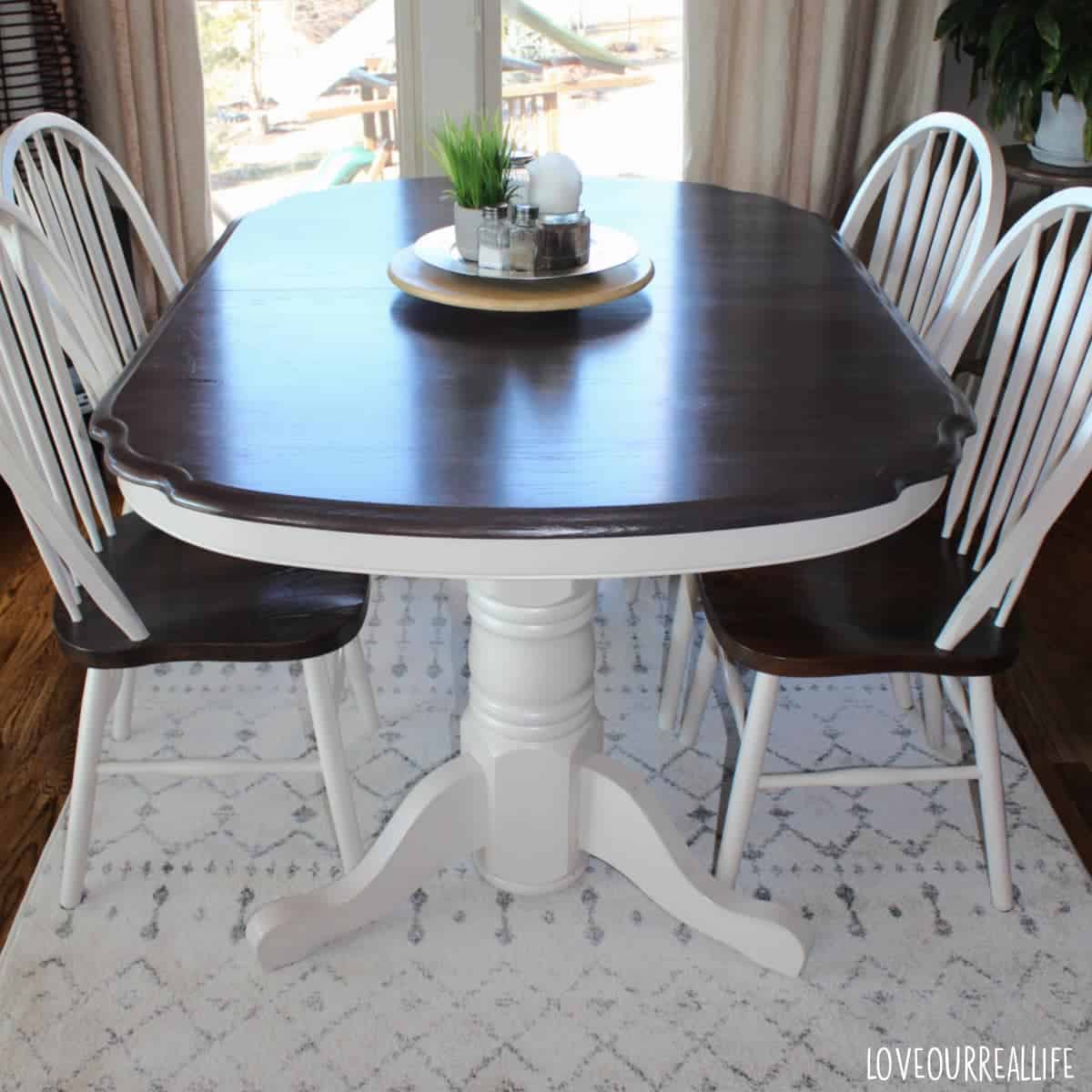
Image Source: www.loveourreallife.com
Giving Your Table a New Look
Your kitchen table gets a lot of use. It is where families eat. Kids do homework there. Friends share coffee. Over time, the surface gets worn. It gets scratches and dents.
Instead of buying a new table, you can repaint the one you have. This saves money. It is also good for the planet. Repainting gives your table a new life. You can pick any color you like. You make it fit your room’s style.
Repainting a kitchen table takes time and care. It is not a fast job. But the result is worth the work. A well-painted table looks like new. It can last for many more years.
Getting Your Tools Ready
Before you start painting, get everything you need. Having all your kitchen table painting supplies ready makes the job easier. You won’t stop and start.
Here is a list of things you will need:
- Cleaning stuff: Soap and water, or a special cleaner like TSP (Trisodium Phosphate) cleaner.
- Sandpaper: You will need different grits. Get medium (like 120-grit) and fine (like 220-grit). Maybe a rougher one (80-grit) if the old finish is thick.
- Sander: A sanding block works for small jobs. An orbital sander makes big jobs faster.
- Gloves: Protect your hands.
- Safety glasses: Protect your eyes from dust and paint.
- Dust mask: Protect your lungs from dust.
- Vacuum or tack cloth: To clean dust away.
- Primer: The right type for your table. (We’ll talk about this more.)
- Paint: The color and type you choose. (More on this later too.)
- Top coat/Sealer: Protects the paint. (We’ll cover this.)
- Brushes and rollers: Use good quality ones for a smooth finish. Small brushes for edges, rollers for flat parts. Foam rollers can leave a very smooth finish.
- Paint trays: For the roller.
- Drop cloths or plastic sheeting: Protect your floor and other things.
- Painter’s tape: To tape off areas you don’t want to paint.
- Screwdriver or wrench: If you need to take the table apart.
Having all these things before you begin helps a lot.
Getting the Table Ready for Paint
This is the most important step. Good prep work means a good paint job. Rushing this part leads to problems later. You must prepare kitchen table for painting very well.
H4 Cleaning the Table First
Start by cleaning the table completely. Use warm water and soap. A strong cleaner like TSP works better on grease and grime. Kitchen tables get messy!
Wipe down every part. Get into corners and under the edges. Make sure there is no food, grease, or sticky stuff left. Rinse the table well with clean water. Let it dry completely. Paint won’t stick to dirt or grease. It won’t stick to wet wood either.
H4 Taking Parts Apart (Optional)
If you can take the table apart, it helps. Remove the legs from the top. This makes it easier to sand and paint each part evenly. Keep screws or bolts in a plastic bag. Label the bag so you know where they go.
If you cannot take it apart, that is okay. Just work carefully around all the parts.
H4 Sanding the Surface
Now it is time to sand kitchen table before painting. Sanding does two main things:
- It smooths out bumps and scratches.
- It helps the new paint stick better.
You don’t always have to sand all the old finish off. But you do need to sand enough to make the surface dull, not shiny. This is called “scuff sanding.”
- Start with a medium grit: Use 120-grit sandpaper. If the old finish is very thick or damaged, you might start with 80-grit.
- Sand in the direction of the wood grain: If your table is wood, follow the lines in the wood. This makes the scratches from sanding less visible.
- Sand all surfaces: Sand the top, legs, edges, and any other parts you plan to paint.
- Use a sander or block: For large, flat areas like the table top, an orbital sander saves time. For legs or curved parts, a sanding block or just your hand holding the paper works best.
- Switch to a finer grit: After using 120-grit, switch to 220-grit sandpaper. Sand everything again. This makes the surface even smoother. The smoother the surface, the smoother the paint will look.
Sand until the surface feels smooth and looks dull everywhere. If there are deep scratches or dents, sanding can lessen them. You might need wood filler for really bad spots.
H4 Fixing Any Damage
If your table has dings or holes, fix them now. Use wood filler. Push it into the hole or dent with a putty knife. Make it a little higher than the surface.
Let the filler dry completely. This takes a few hours, sometimes longer. Read the instructions on the filler can.
Once it is dry, sand the filled spot smooth. Use your 220-grit paper. Make it level with the wood around it.
H4 Cleaning After Sanding
Sanding creates a lot of dust. You must get all the dust off before priming. If dust is left, it will get stuck in the primer and paint.
Use a vacuum cleaner with a brush attachment first. Vacuum the whole table. Get all the dust off.
Then, use a tack cloth. A tack cloth is a special sticky cloth. It picks up fine dust the vacuum missed. Wipe down the entire surface with the tack cloth. Be thorough. Make sure there is no dust left.
Now your table is truly ready for the next step: priming.
Choosing the Right Products
Picking the right primer, paint, and top coat is key. They protect the table and make the paint look good for a long time.
H4 Selecting the Best Primer
Primer is like a base coat. It helps the paint stick. It also covers the old color or finish. It makes the final color look true. Using the best primer for kitchen table is very important, especially for a surface that gets heavy use.
Here are types of primers to consider:
- Shellac-based primer: This is a great all-around primer. It sticks to almost anything. It blocks stains really well. It dries very fast. This is often a top choice for furniture because it works on wood, old finishes, and even tricky surfaces. BIN is a popular brand.
- Oil-based primer: Also very good at sticking and blocking stains. It is durable. But it smells strong and takes longer to dry than shellac. Clean up needs mineral spirits.
- Water-based (Latex) primer: Easier to use and clean up (just soap and water). Dries quickly. Less smell. Some types are made for furniture and offer good adhesion. Look for one labeled “bonding primer” or made for difficult surfaces.
Which one is best for your table?
- If your table has deep stains (like water rings or marker), shellac or oil-based are best at blocking them.
- If your table is made of wood that might “bleed through” (like knotty pine), shellac or oil primer will stop this.
- If you want fast drying and easy clean up, and your table doesn’t have bad stains, a good quality water-based bonding primer can work.
For most kitchen tables, especially if it’s your first time, a shellac-based primer is a safe and effective choice. It handles many common table issues well.
Apply the primer evenly. Use a brush for edges and legs. Use a roller for the top. Follow the drying time on the can. You usually need one or two coats. Sand lightly with 220-grit sandpaper after the primer is dry (if the can says to). Then wipe off the dust with a tack cloth.
H4 Picking the Paint
Now for the fun part: color! When it comes to kitchen table paint types, you need something tough. The table top needs a durable paint for table top.
Here are common paint types for furniture:
- Acrylic Latex Enamel: Water-based. Easy cleanup. Dries pretty fast. Look for “acrylic enamel” or paints made for cabinets/trim. These are harder than regular wall paint. They are a good choice for a table if you plan to use a strong top coat.
- Alkyd Enamel (Oil-based): Very durable. Hard, smooth finish. Takes longer to dry. Strong smell. Needs mineral spirits for cleanup. It is naturally tougher than latex, often a top pick for table tops due to its hardness.
- Mineral Paint: Often low-VOC (less smell). Sticks well to many surfaces with little prep (sometimes no sanding or primer needed, but check the brand). Creates a matte, chalky, or smooth finish depending on the brand and how you use it. Needs a top coat for protection. Popular brands include Fusion Mineral Paint or Annie Sloan Chalk Paint (though chalk paint often needs a wax or poly top coat which have different durabilities).
- Specialty Furniture Paints: Many brands make paints specifically for furniture. These are often acrylic-based but formulated to be extra hard and durable.
For painting wood kitchen table, both acrylic enamel and alkyd enamel are solid choices. Mineral paint is also popular for a different look and easier prep sometimes.
Consider these things when choosing paint:
- Durability: How much use does the table get? Choose a paint known for being tough. Enamels are good.
- Finish: Do you want glossy, satin, or matte? Glossy shows flaws but is easy to clean. Satin is a good middle ground. Matte hides flaws but might be harder to clean without a good top coat.
- Ease of Use: Water-based paints are easiest for beginners. Oil-based need more care with fumes and cleanup.
- VOCs: Some paints have strong fumes (VOCs). Low-VOC paints are better for air quality indoors.
For a high-use kitchen table top, a high-quality acrylic enamel or an alkyd enamel is often recommended for the paint layer itself, followed by a very durable top coat.
Pick your color! Buy enough paint for at least two coats.
H4 Picking the Top Coat
The paint color is pretty, but it is the top coat that protects your hard work. It is how you seal painted table. A good top coat for painted table is essential for durability.
Top coats create a protective layer. This layer guards against scratches, spills, heat (to a degree), and wear. Without a top coat, your painted table top will likely get damaged quickly.
Here are common types of top coats:
- Polycrylic: Water-based. Dries clear, doesn’t yellow over time (especially good over white paint). Easy cleanup. Dries fast. Durable, but maybe not as hard as polyurethane or varnish. Good for moderate use.
- Polyurethane: Comes in water-based and oil-based. Oil-based is very durable, but can yellow light colors over time. Water-based is less likely to yellow and easier to use, but slightly less durable than oil-based. Very good protection.
- Varnish: Very tough, often used for floors and boats. Can be oil or water based. Provides excellent protection.
- Epoxy: A very durable, plastic-like finish. Often used for garage floors or bar tops. Creates a very thick, strong layer. It is waterproof and very resistant to scratches and heat. It is more complex to apply and might give a very modern look. Can be expensive. This is one of the most durable options for a table top.
- Wax: Easy to apply (often used over chalk paint). Gives a soft feel and look. But it is not durable for a kitchen table. It needs redoing often and doesn’t protect well against spills or heat. Avoid wax for a kitchen table top.
For a durable kitchen table top, polyurethane (especially oil-based for maximum toughness, but use water-based over light colors) or a strong water-based acrylic top coat are good choices. For the most durability, especially against heat and scratches, epoxy is an option, though it’s a different process.
Choose a top coat with a finish you like (matte, satin, semi-gloss, gloss). Satin and semi-gloss are popular for tables.
You will likely need 2-4 coats of the top coat for good protection.
The Painting Process
Now that you have prepped and chosen your products, it’s time to paint! Work in a well-aired space. Put down your drop cloths. Tape off anything you don’t want paint on.
H4 Applying the Primer
- Stir the primer: Mix it well. Don’t shake it; that makes bubbles.
- Apply a thin coat: Use a brush for edges and legs. Use a roller for the flat top. Go with the grain on wood surfaces. Don’t put it on too thick. Thin coats dry better and are less likely to drip.
- Let it dry: Follow the time on the can. It might feel dry to the touch quickly, but it needs more time to cure (harden) before you add another coat or sand.
- Apply a second coat (if needed): If the old color shows through or you used a stain-blocking primer for stains, apply a second coat. Let it dry fully.
- Lightly sand (optional but recommended): Once the primer is fully dry and hard, sand very lightly with 220-grit or 320-grit sandpaper. This smooths out any bumps or brush strokes.
- Clean off dust: Use a tack cloth to remove all sanding dust.
Your table should now be one even color (the primer color) and feel smooth.
H4 Applying the Paint
- Stir the paint: Mix it well.
- Apply a thin, even first coat: Start with the harder parts like legs and edges using a brush. Then use a roller for the table top. Roll smoothly, don’t press too hard. Work quickly but carefully to avoid lines.
- Let it dry: Wait the full drying time listed on the paint can. This is important! Applying the next coat too soon can cause problems.
- Apply a second coat: Most tables need at least two coats for full coverage and color depth. Apply the second coat just like the first.
- Check for coverage: Once the second coat is dry, look closely. Do you need a third coat? Sometimes bold colors or covering a dark color requires more.
Wait for the paint to dry completely between coats. This could be a few hours. Let the final paint coat dry for at least 24 hours, maybe longer, before applying the top coat. The longer it dries, the harder the paint will be.
H4 Applying the Top Coat
This is the final protective layer. It is how you how to seal painted table for long-term use.
- Stir the top coat: Mix gently. Don’t shake.
- Apply a thin, even first coat: Use a clean brush or foam roller. Apply smoothly. Avoid drips. Work on the flat top first, then edges and legs if you are coating them.
- Let it dry: Allow the first coat to dry fully. Read the can – drying times vary.
- Lightly sand between coats (recommended): Once the first coat is dry, lightly sand the surface with very fine sandpaper (like 320-grit or 400-grit). This removes any tiny bumps or dust specks. Clean off all dust with a tack cloth. This step makes the final finish much smoother.
- Apply more coats: Apply a second coat. Let it dry. Sand again lightly and clean dust. Apply a third coat. Maybe even a fourth coat for extra durability on the table top. More coats offer more protection.
Apply at least 2-3 coats of a durable top coat. For a kitchen table top that sees heavy use, 3-4 coats is better.
Wait for the final coat of top coat to dry completely before using the table.
Drying and Curing Times
There’s a difference between drying and curing.
- Drying: The paint or top coat feels dry to the touch. It is safe to apply the next coat.
- Curing: The paint or top coat is fully hardened. It has reached its maximum durability. This takes much longer than drying.
Paint might be dry in a few hours but take 7-30 days to fully cure. Top coats also need time to cure.
You can often use the table gently after 24-72 hours of the final coat drying. But be careful! Avoid heavy use, spills, or putting hot things on it for the full curing time. Check the product labels for specific cure times.
Finishing Touches and Care
Once the table is fully cured, remove any painter’s tape carefully. Reattach legs or parts if you took them off.
To keep your repainted table looking good:
- Use placemats and coasters. This protects the surface from plates, cups, and heat.
- Wipe up spills right away. Don’t let liquids sit on the surface.
- Clean with a soft cloth and mild cleaner. Avoid harsh chemicals or abrasive pads.
- Don’t slide heavy or sharp objects across the surface.
Taking good care of your repainted table helps the finish last.
Giving the Whole Table a Makeover
Sometimes, you want to do more than just paint. Refinishing kitchen table can mean changing the whole look, not just the color. Maybe you paint the base but stain the top. Or you strip off all the old finish before painting.
If the table top is solid wood but badly damaged, you could sand it down to bare wood. Then you could stain it a new color and apply a tough finish like polyurethane. Then you could paint the legs and skirt a different color.
This process involves:
- Stripping the old finish (if needed).
- Sanding down to bare wood.
- Staining the wood.
- Applying a wood finish (like poly).
- Prepping and painting other parts.
This takes more work but can create a beautiful mixed-material look. The steps for prepping and painting parts you want to paint are the same as outlined above.
Fixing Issues That Come Up
Sometimes things don’t go perfectly. Here are a few common problems and what to do:
- Drips or sags: You put the paint or top coat on too thick. Wait for it to dry completely. Sand the drip smooth with fine sandpaper (220-grit or finer). Clean the dust. Apply another thin coat.
- Bumpy finish: This can be from dust, not sanding between coats, or applying paint unevenly. Once dry, lightly sand the bumpy area smooth with fine paper. Clean dust. Apply another thin coat. Proper sanding between coats helps a lot.
- Paint peeling or chipping: The surface wasn’t prepped right. There was still dirt, grease, or a bad old finish. Or you didn’t use primer. You will need to sand the peeling areas down to a solid surface. Clean well. Prime the spot. Repaint the area. For best results, you might need to redo the whole surface.
- Brush strokes showing: You might be using the wrong brush, applying paint too thick, or not using a leveler additive (for paint) or sanding between coats (for top coat). Using a roller on flat areas and lightly sanding between top coats helps get a smooth finish.
Taking your time and doing the prep right prevents most problems.
Table of Supplies
Here is a simple list of the kitchen table painting supplies you need, broken down:
| Category | Item | Purpose |
|---|---|---|
| Cleaning | Soap and Water / TSP | Remove dirt, grease, grime |
| Clean Rags | Washing and wiping | |
| Sanding | Sandpaper (80, 120, 220) | Smooth surface, help paint stick |
| Sanding Block/Sander | Make sanding easier | |
| Tack Cloth | Remove fine dust after sanding | |
| Protection | Gloves | Protect hands |
| Safety Glasses | Protect eyes from dust | |
| Dust Mask | Protect lungs from dust | |
| Drop Cloths | Protect floor | |
| Painter’s Tape | Mask off areas | |
| Products | Primer | Base coat, helps paint stick, blocks stains |
| Paint | The color layer | |
| Top Coat / Sealer | Protect the paint finish | |
| Wood Filler (Optional) | Fill holes or dents | |
| Application | Brushes | Painting edges and details |
| Rollers | Painting flat areas (table top) | |
| Paint Trays | Holding paint for rollers | |
| Tools | Screwdriver/Wrench | Taking table apart (if needed) |
Having these items ready before starting makes the project much smoother.
Frequently Asked Questions
Here are some common questions people ask about repainting a kitchen table.
H5 Do I Have to Sand My Kitchen Table Before Painting?
Yes, you really should sand kitchen table before painting. Sanding helps the new paint stick much better. It gives the surface some “grip.” If you paint over a smooth, shiny surface without sanding, the paint can scratch or peel off easily later. You don’t always need to sand down to bare wood, but scuff sanding (making the surface dull) is important.
H5 What is the Most Durable Paint for a Kitchen Table?
For a kitchen table top that gets a lot of use, you need a durable paint. Alkyd enamel paints are very tough. High-quality acrylic enamel paints made for cabinets or furniture are also good. The most durable finish often comes from the top coat, not just the paint itself. Using a strong top coat like polyurethane or epoxy over your chosen paint color gives the best protection.
H5 What is the Best Primer to Use on a Kitchen Table?
A good primer helps the paint stick and covers the old finish or any stains. Shellac-based primers are excellent because they stick to almost anything and block stains well. Oil-based primers are also very good. A high-quality water-based bonding primer can work too, especially if the table doesn’t have stains you need to cover. Choose a primer that works well with the type of paint you pick (though most primers work with both latex and oil paints).
H5 How Do I Protect a Painted Table Top?
You protect a painted table top by applying a durable top coat or sealer. This layer sits on top of the paint. It guards against scratches, spills, and wear. Popular choices for a top coat for painted table include water-based or oil-based polyurethane, or even epoxy for maximum durability. You need several thin coats of the top coat for the best protection. This is also how you how to seal painted table.
H5 Can I Paint Over a Varnished or Laminated Table?
Yes, you can often paint over varnish or laminate. The key is proper preparation. You must clean the surface very well. Then, sand the shiny surface until it is dull. Do not sand through the varnish or laminate. Just make it dull. Then, use a high-quality bonding primer that is made to stick to tricky surfaces like varnish or laminate. After the primer is dry and cured, you can paint and apply your top coat as usual.
H5 How Long Does it Take to Repaint a Kitchen Table?
Repainting a kitchen table is not a one-day job. The cleaning and sanding can take several hours. Applying primer, paint, and top coat involves multiple coats. Each coat needs drying time. Drying can take a few hours per coat. Curing (getting hard) takes even longer, sometimes 7 to 30 days. Plan for the active work to take 2-3 days, plus the longer curing time before you use the table normally.
H5 Can I Use Chalk Paint on My Kitchen Table?
Yes, you can use chalk paint on a kitchen table for the color layer. Chalk paint sticks well with little prep. However, chalk paint itself is not very durable. If you use chalk paint on a kitchen table, you must apply a very durable top coat over it. Wax is often used with chalk paint, but wax is not durable enough for a kitchen table top. Use a strong polycrylic, polyurethane, or similar protective finish instead of wax on the table top.
H5 How Do I Refinish a Kitchen Table if It’s Not Just Painting?
Refinishing kitchen table can mean more than just painting. If the wood top is in good shape under an old finish, you might strip off the old finish, sand the wood bare, stain it a new color, and then apply a wood finish like polyurethane. This gives a natural wood look. You can then paint the table base. This is a more complex process than just painting over the old finish.
Closing Thoughts
Repainting your kitchen table is a rewarding project. It saves money and lets you update your home’s look. The most important steps are cleaning, sanding, and using the right primer and durable top coat. Don’t rush the process. Give each layer enough time to dry and cure. With careful work and the right products, your repainted kitchen table will look great and last for many meals and memories.