Image Source: cdn.kitchencabinetkings.com
How Much Does Refacing Kitchen Cabinets Cost: Full Breakdown
So, how much does refacing kitchen cabinets cost? The average kitchen cabinet refacing cost typically falls between \$4,000 and \$10,000. This range depends a lot on the size of your kitchen, the materials you pick, and how complex the job is. Refacing gives your cabinets a fresh new look without the higher cost and mess of a full replacement.
What is Cabinet Refacing?
Cabinet refacing is like a major facelift for your kitchen cabinets. You keep the basic bones – the cabinet boxes that are attached to the wall. But you change the look of everything you see on the outside.
Here is what refacing usually includes:
- New Doors and Drawer Fronts: These are the main parts that get swapped out. You choose new styles, materials, and colors.
- Applying Veneer: A thin layer of material, often wood veneer or laminate, is put over the outside of the old cabinet boxes. This makes the boxes match the new doors.
- New Hardware: Handles, knobs, and sometimes hinges are replaced to match the new style.
Think of it this way: The structure stays, but the skin and face change completely.
Why Choose Cabinet Refacing?
Many people choose cabinet refacing over replacing for several good reasons.
- Cost Savings: Refacing almost always costs less than tearing out and replacing all your cabinets. It saves you money on materials and labor.
- Less Mess: Pulling out old cabinets is a big, dusty job. Refacing keeps the main boxes in place, so there is much less demolition, dust, and disruption in your home.
- Faster Project: Refacing jobs usually take less time than full replacements. A typical refacing project might take 2-4 days. A replacement can take a week or more, plus time for design and ordering.
- Eco-Friendly: Keeping the existing cabinet boxes means less waste goes to the landfill.
- Keeps Your Kitchen Layout: If you like your current kitchen layout, refacing lets you update the look without changing where everything is.
Refacing is a smart choice if your current cabinet boxes are strong and in good shape. If the boxes are falling apart or you want a totally different kitchen layout, replacement might be better.
Deciphering the Average Cost
Let’s look closer at the numbers for cabinet refacing costs. The average kitchen cabinet refacing cost can range from \$4,000 to \$10,000. But where does that number come from?
Average Kitchen Cabinet Refacing Cost Ranges
The total cost depends on several things. Here are some general cost ranges you might see:
- Basic Refacing: This usually means using laminate or rigid thermofoil (RTF) materials for doors and veneer. It’s the most budget-friendly option. Cost might be in the \$4,000 to \$6,000 range for a small to average kitchen.
- Mid-Range Refacing: This might involve higher quality laminates, painted RTF, or maybe entry-level wood veneers. You might have more choices in door styles. Cost is likely between \$6,000 and \$8,000.
- High-End Refacing: This uses real wood veneers and new solid wood doors. You can choose from many wood types, stains, and paint colors. Custom finishes or detailed door styles increase the cost. This level can cost \$8,000 to \$10,000 or even more for larger kitchens or premium materials.
Keep in mind these are just averages. Your specific cost could be lower or higher.
Cabinet Refacing Cost Per Linear Foot Explained
Another way pros price cabinet refacing is by the linear foot. A linear foot measures the length of your cabinets along the wall.
The cabinet refacing cost per linear foot usually ranges from \$100 to \$400 or more.
- \$100 – \$250 per linear foot: Often for laminate or RTF materials.
- \$250 – \$400+ per linear foot: For wood veneers and solid wood doors, especially with custom finishes.
To figure out your linear feet, measure the length of all your upper cabinets and all your lower cabinets separately, then add those numbers together. For example, if you have 10 feet of upper cabinets and 12 feet of lower cabinets, you have 22 linear feet total. Multiplying this by the per-foot cost gives you a rough idea of the material and basic labor cost.
This per-linear-foot pricing is a quick way to estimate, but detailed kitchen cabinet refacing estimates will break down costs more precisely based on the actual number of doors, drawers, and square footage of cabinet boxes needing veneer.
What Does the Average Price Include?
When you get kitchen cabinet refacing estimates, the price usually covers:
- New cabinet doors and drawer fronts in your chosen material and style.
- Matching veneer to cover the visible parts of the old cabinet boxes.
- Installation labor to remove old doors/drawers, apply veneer, install new doors/drawers.
- Basic new hardware like hinges. Knobs and pulls might be extra or a basic set included.
Costs that might be extra include:
- New knobs and pulls (beyond a basic set).
- Adding new features like pull-out shelves, trash can pull-outs, or spice racks.
- Modifying cabinet boxes (like adding a new drawer bank).
- Finishing the inside of glass-front cabinets.
- Painting or staining the inside of cabinet boxes.
- Removing and disposing of old cabinet parts (though some pros include this).
Always check your estimate carefully to see exactly what is included.
Factors Influencing the Refacing Price
Many things change the final price tag for your cabinet refacing project. Understanding these factors helps you see why costs vary so much.
Cabinet Size and Layout
This is a big one. More cabinets mean more materials and more labor.
- A small kitchen with only base cabinets and a few wall cabinets will cost much less than a large kitchen with cabinets on multiple walls, tall pantry cabinets, and an island.
- The layout matters too. A long, straight run of cabinets is often simpler to reface than a kitchen with many corners or cabinets of different depths and heights. Corner cabinets can be tricky and take more time.
Material Choices
The material you pick for your new doors, drawer fronts, and veneer is a major cost driver. Cabinet refacing materials cost varies greatly depending on the type.
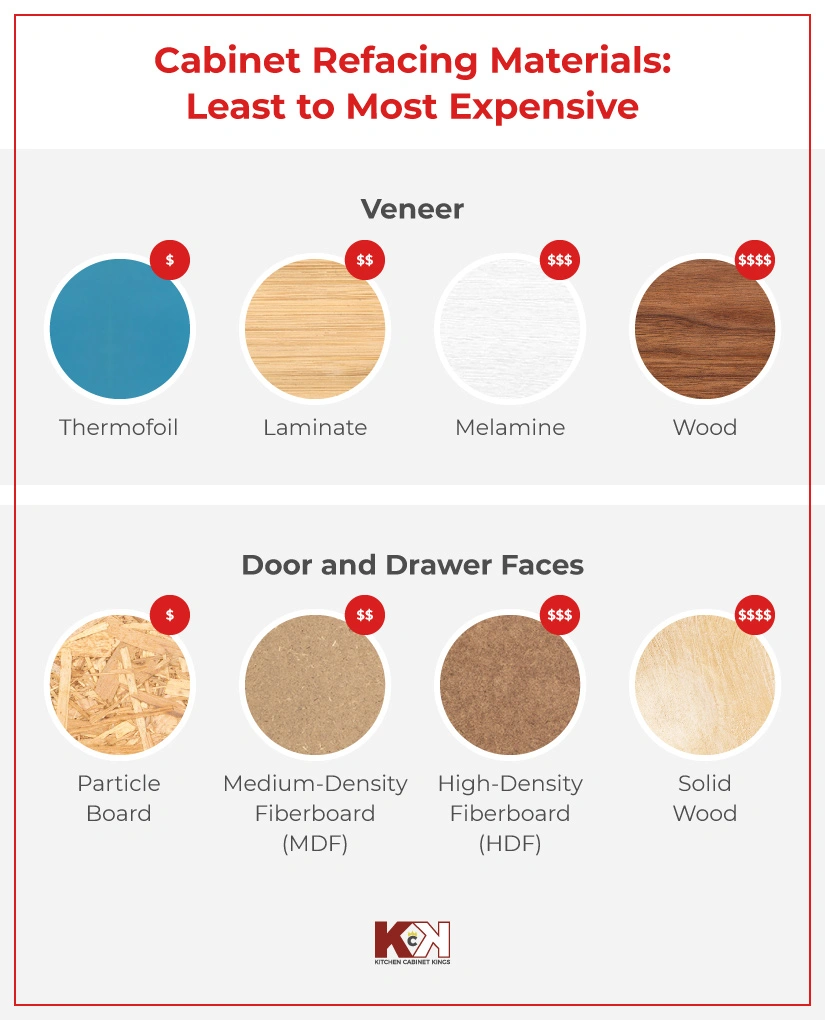
Veneers (Wood, Laminate, Rigid Thermofoil – RTF)
- Laminate: This is the most budget-friendly. It is durable and easy to clean. It comes in many colors and patterns, often looking like wood or solid colors. It is a good choice for a durable, low-cost update.
- Rigid Thermofoil (RTF): This is a vinyl film heated and pressure-wrapped around MDF (medium-density fiberboard). It creates seamless edges and is very durable and easy to clean. It is often used for solid color or faux wood grain doors. Prices are usually similar to or slightly higher than laminate. Painted RTF can mimic the look of painted wood.
- Wood Veneer: This is a thin layer of real wood applied to a backing material. It gives the look and feel of solid wood cabinets. Wood veneers can be stained or painted just like solid wood. This is typically the most expensive veneer option. Common wood veneers include oak, maple, cherry, and birch. The type of wood affects the cost.
Door and Drawer Front Styles
The style of the new doors affects the cost.
- Slab Style: These are flat, simple doors. They use the least material and are often the least expensive option.
- Shaker Style: This is a very popular style with a flat center panel and raised frame. It requires more work and material than slab doors, so they cost more.
- Raised Panel Style: These doors have a center panel that is raised, often with decorative edging. They are more complex to make and are usually more expensive than Shaker or slab styles.
- Custom or Highly Detailed Styles: Any door with special routing, carving, or complex shapes will cost more.
Hardware (Knobs, Pulls, Hinges)
While small, hardware adds up.
- Hinges: Refacing often includes new hinges. If you upgrade to soft-close hinges, there will be an extra cost per hinge.
- Knobs and Pulls: The cost for knobs and pulls varies hugely. Basic metal knobs might cost a few dollars each, while high-end decorative pulls can cost \$20 or more each. For a kitchen with 30-40 pieces of hardware, this can add hundreds or even over a thousand dollars to the total.
Labor and Professional Fees
Labor cost for refacing kitchen cabinets makes up a significant part of the total bill, often 40% to 60%.
- Skill and Experience: Highly skilled pros who specialize in refacing may charge more, but they often do a better job and work more efficiently.
- Time: The complexity of your kitchen (many corners, different cabinet sizes) affects how long the job takes, which impacts labor costs.
- Geographic Location: Labor rates vary by region. Refacing in a major city with a high cost of living will cost more than in a rural area. This also contributes to the overall professional cabinet refacing cost.
Project Complexity
Simple, straight cabinets are easiest. Complex kitchens cost more labor.
- Adding New Boxes: If you decide to add a new cabinet box during refacing (e.g., adding an island or pantry), this goes beyond standard refacing and adds cost.
- Modifications: Changing existing boxes, like adding a pull-out shelf inside or converting a standard cabinet to a drawer bank, adds labor and material cost.
- Matching Finishes: If you need the refaced cabinets to perfectly match existing kitchen elements, this might require custom work and increase cost.
Your Location
Costs for home improvement services differ a lot based on where you live. Demand for services, local labor rates, and the cost of materials vary by region, city, and even neighborhood. Getting kitchen cabinet refacing estimates from local companies is key to knowing costs in your area.
Extra Add-ons
Many homeowners add features during refacing.
- New drawers or pull-out shelves inside cabinets.
- Tray dividers.
- Spice racks.
- Under-cabinet lighting.
- Crown molding or decorative trim.
These extras add convenience but also add to the overall budget for kitchen cabinet refacing project.
Deconstructing the Cost Breakdown
Let’s look at a typical breakdown of costs for a refacing project. This can help you plan your budget for kitchen cabinet refacing project. The exact split between materials and labor varies depending on the material choice and the complexity of the work.
Typical Material Costs
Materials usually make up 40% to 60% of the total cost.
- Doors and Drawer Fronts: This is the largest material cost. Solid wood doors are most expensive, followed by RTF and then laminate.
- Veneer: The cost of veneer depends on the type (wood vs. laminate) and the amount needed to cover the cabinet boxes.
- Hardware: New hinges are often included, but knobs and pulls are often an extra line item. The cost here varies wildly based on your selection.
- Other Materials: Adhesives, screws, fasteners, finishing supplies (stain, paint if applicable) add to the material cost.
Typical Labor Costs
Labor usually makes up 40% to 60% of the total cost.
- Prep Work: Removing old doors and drawers, cleaning cabinet boxes, preparing surfaces for veneer.
- Applying Veneer: Cutting and carefully applying veneer to the sides and front edges of the cabinet boxes. This is a skilled task.
- Installing New Doors and Drawers: Hanging the new doors, attaching drawer fronts, making sure everything is level and aligned.
- Installing Hardware: Attaching new hinges, knobs, and pulls.
- Clean Up: Removing all project waste and cleaning the work area.
Other Potential Costs
- Disposal Fees: Some companies charge to haul away the old doors and materials.
- Repairing Cabinet Boxes: If the cabinet boxes have damage that needs fixing before refacing, this adds to the labor cost.
- Permits: While rare for simple refacing, checking local rules is wise, though usually not needed unless changing structure.
- Contingency: It is wise to set aside an extra 10-15% of your budget for unexpected issues.
Kitchen Cabinet Refacing Estimates: Getting Accurate Quotes
Getting good kitchen cabinet refacing estimates is key to planning your project and knowing the likely cost. You should get estimates from at least three different companies.
What to Ask For
When contacting companies for quotes, be clear about what you want.
- Specify Materials: Ask for quotes based on the materials you are interested in (e.g., “quote for laminate,” “quote for wood veneer,” “quote for painted RTF”).
- Specify Door Style: Mention the door style you like (e.g., “Shaker style”).
- Detail Any Extras: Tell them about any add-ons you want, like soft-close hinges, pull-out shelves, or new knobs/pulls (or if you will buy knobs/pulls separately).
- Ask About What’s Included: Get a detailed list. Does it include removing old hardware? Disposing of old doors? Is touch-up painting included if needed?
- Ask About Timelines: How long will the project take?
A good estimator will visit your home to measure your cabinets accurately and look at their condition. Be ready to show them exactly what you want refaced and point out any areas of concern.
Comparing Quotes
Do not just look at the bottom line.
- Compare Materials: Make sure the quotes are for the same types of materials and door styles. A low quote might use cheaper materials.
- Compare Scope of Work: Check if all quotes include the same steps and extras. One quote might be lower because it does not include new hinges or disposal.
- Look at Labor Detail: See how labor is described. Is it a fixed price, or estimated hours?
- Check Warranties: Ask about warranties on materials and labor.
- Read Reviews: Look at the company’s reputation and read reviews from past customers. Professional cabinet refacing cost includes peace of mind that the work will be done well.
Choosing the lowest bid is not always the best idea. Focus on getting good value from a reputable company.
Refacing vs. Replacing: A Cost Comparison
One of the biggest decisions homeowners face is whether to reface or replace cabinets. The cost to reface kitchen cabinets comparison to replacement heavily favors refacing if your existing boxes are sound.
Refacing Costs Overview
As we discussed, the average cost to reface kitchen cabinets is typically between \$4,000 and \$10,000. This can go higher for large, complex kitchens with high-end wood.
Key cost drivers for refacing:
- Size of the kitchen.
- Chosen materials (laminate < RTF < wood veneer/solid wood).
- Door style complexity.
- Labor rates in your area.
- Any added features.
Replacement Costs Overview
Replacing kitchen cabinets is generally much more expensive. The average cost to replace kitchen cabinets is often between \$10,000 and \$25,000 or more.
Key cost drivers for replacement:
- New Cabinet Boxes: This is a major cost. Custom cabinets are most expensive, semi-custom are mid-range, and stock cabinets are least expensive. Material (plywood, MDF) and construction quality matter.
- Labor: Demolition of old cabinets, installation of new boxes, hanging new doors, installing hardware. This is significant labor.
- Countertops and Backsplash: Often, you have to remove countertops and backsplash to replace cabinets, adding costs for removal and new installation.
- Plumbing and Electrical: Sometimes needs adjusting for the new layout or sink location.
- Flooring: Can be damaged during demolition/install, or you might have gaps where old cabinets were.
Comparing refacing vs replacing kitchen cabinets cost clearly shows replacement is a bigger investment.
Beyond the Price Tag: Time and Disruption
Cost is not the only difference.
- Time: Refacing usually takes a few days. Replacement can take 1-2 weeks for installation alone, plus weeks for ordering the new cabinets.
- Disruption: Refacing keeps most of the kitchen intact. You can often still use your sink and appliances. Replacement is a major construction project. Your kitchen will likely be unusable for a week or more.
- Structural Changes: Replacement lets you change the kitchen layout, move appliances, add islands, etc. Refacing does not allow for structural changes to the layout.
When Refacing Makes Sense
Refacing is a great option if:
- Your existing cabinet boxes are sturdy and well-built.
- You like your current kitchen layout.
- You want to update the look significantly for less money.
- You want a faster project with less mess.
When Replacement is Better
Replacement is necessary or a better choice if:
- Your cabinet boxes are old, damaged, or poorly made.
- You want to change the layout of your kitchen.
- You want more or different types of cabinets (e.g., taller wall cabinets, more drawers).
- You are doing a full kitchen gut and remodel anyway.
The cost to reface kitchen cabinets comparison to replacement highlights that refacing saves money and time when the core structure is good.
Planning Your Budget for a Refacing Project
Setting a clear budget helps keep your project on track. Planning your budget for kitchen cabinet refacing project involves more than just getting one quote.
Setting Realistic Expectations
Know the general cost ranges based on material choice and kitchen size. Do not expect a high-end wood refacing job for the price of basic laminate. Be honest about what you can afford.
Getting Multiple Estimates
As mentioned, get at least three kitchen cabinet refacing estimates. This helps you understand the average cost in your area for your specific project and lets you compare services.
Setting Aside a Contingency Fund
It is always smart to have extra money set aside, usually 10% to 15% of the project cost. This covers any unexpected issues, like finding hidden damage to a cabinet box once the old doors are off, or deciding you want to add one more pull-out shelf.
Is DIY Refacing an Option?
Can you reface your cabinets yourself? Yes, it is possible, especially if you are skilled at detailed DIY projects. However, it is not a beginner-level task.
DIY vs. Professional Refacing Cost
- DIY Cost: You save on the labor cost for refacing kitchen cabinets. You only pay for materials: veneer, new doors/drawer fronts, adhesive, tools, hardware. Material cost is a significant part, but you cut out a large chunk by doing the work yourself. This can bring the total cost down considerably.
- Professional Cost: The professional cabinet refacing cost includes not only the labor but also their expertise, tools, efficiency, and often a warranty on their work.
Skills Needed for DIY
DIY refacing requires precision.
- Accurate measuring is critical for ordering veneer and doors.
- Cutting and applying veneer smoothly without bubbles or wrinkles takes practice.
- Working with adhesives.
- Precisely installing hinges and making sure doors and drawers align perfectly.
- Attention to detail is key for a professional-looking finish.
Risks of DIY
- Poor Finish: If veneer is applied poorly, it can look uneven, peel, or bubble. Doors might not line up correctly.
- Wasted Materials: Mistakes in measuring or cutting materials can be costly.
- Time Commitment: DIY takes much longer than professional work, especially if you are learning as you go.
- Frustration: It can be a complex and frustrating project for those without experience.
For many homeowners, paying the professional cabinet refacing cost is worth it for the quality, speed, and lack of stress.
Getting Professional Cabinet Refacing
Hiring a professional for cabinet refacing is the most common approach. The professional cabinet refacing cost includes their expertise, tools, and warranty.
What to Look for in a Professional
- Experience: Choose a company or contractor with specific experience in cabinet refacing. It is different from just installing new cabinets.
- Reviews and References: Ask for references and read online reviews. Look at examples of their past refacing work.
- Insurance and Licensing: Make sure they are properly insured and licensed (if required in your area). This protects you if something goes wrong.
- Detailed Estimates: As mentioned, look for clear, detailed kitchen cabinet refacing estimates.
- Contract: Get everything in writing: cost, timeline, materials, scope of work, payment schedule, and warranty.
What Professionals Provide
- Accurate Measurement and Ordering: They ensure materials are ordered correctly for your kitchen.
- Skilled Installation: They have the tools and experience to apply veneer smoothly and install doors/drawers precisely.
- Efficiency: They can complete the project much faster than a DIYer.
- Problem Solving: They know how to handle common issues that arise during refacing.
- Warranty: Reputable professionals offer warranties on their labor and materials.
Paying the professional cabinet refacing cost often results in a higher quality finish that lasts longer.
FAQ
How long does cabinet refacing usually take?
Most kitchen cabinet refacing projects take 2 to 4 days, depending on the kitchen size and complexity.
Can I change the color of my cabinets with refacing?
Yes! Refacing is a great way to completely change the color and style of your cabinets by selecting new doors, drawer fronts, and veneer in your desired color or stain.
Does refacing use real wood?
It depends on the material you choose. You can get refacing done with real wood veneer and solid wood doors, or you can choose less expensive options like laminate or RTF that mimic the look of wood or provide solid colors. The cabinet refacing materials cost varies based on this choice.
Will refacing increase my home value?
Yes, updating your kitchen, including cabinets, can increase your home’s value and appeal to potential buyers. Refacing offers a good return on investment compared to its cost.
Can I add more cabinets when refacing?
Standard refacing does not add new cabinet boxes. It updates the existing ones. If you need a new cabinet box (like an island or pantry), that is usually added as a separate step or included as a modification that adds to the total cost, going beyond simple refacing.
Is refacing cheaper than painting cabinets?
Yes, professional refacing is typically more expensive than painting your existing cabinets. However, painting does not change the door style, and the finish may not be as durable as new veneer or RTF doors over time. Refacing provides a brand new look, while painting updates the existing one.
How much does cabinet refacing cost per linear foot?
The cabinet refacing cost per linear foot generally ranges from \$100 to \$400 or more, based on the materials chosen (laminate being lower, wood being higher).
Final Thoughts on Refacing Costs
Refacing kitchen cabinets is a cost-effective way to update your kitchen’s look dramatically without the expense, time, and mess of a full tear-out and replacement. The average kitchen cabinet refacing cost is much lower than replacing.
Your final cost will depend on many factors, including the size of your kitchen, the materials you select for doors and veneer, the complexity of the work, and the labor rates in your area. Getting detailed kitchen cabinet refacing estimates from several reputable companies is the best way to understand the specific cost for your project.
While DIY is possible, the professional cabinet refacing cost often provides better results and saves you time and potential frustration. By carefully considering your options and getting clear quotes, you can plan a budget for kitchen cabinet refacing project that gives you a beautiful, updated kitchen you will love.