How do you prevent falls in the kitchen? You stop falls in the kitchen by taking simple steps. This means keeping your floor clean and dry. It also means making sure your kitchen is easy to move around in. Good light helps you see where you are going. Checking for dangers is also a big help. We will look at these easy steps. They help make your kitchen a safe place for everyone. This is key for kitchen floor safety. These actions help prevent kitchen slips.
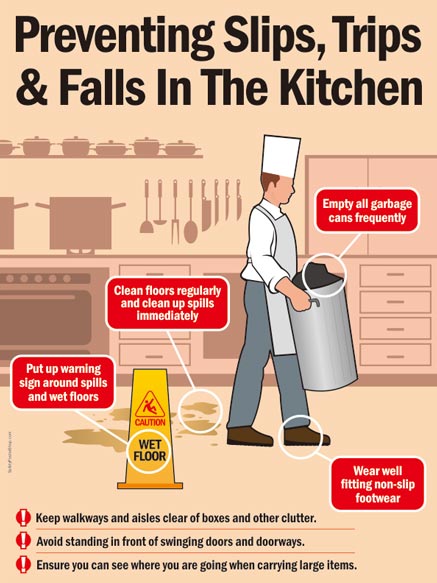
Image Source: www.safetypostershop.com
The Floor: Your First Step for Safety
The floor in your kitchen is very important. It is where you stand and walk. If the floor is not safe, you can fall. Keeping the floor safe is the first big step. This is all about kitchen floor safety.
Keeping Floors Clean and Dry
Floors get wet easily in the kitchen. Water spills from the sink. Food spills from pots and pans. Drinks can get knocked over. Even a little bit of water can be very slippery. It makes you lose your footing fast.
Cleaning up spills is the most important thing. Do it right away. Do not wait even a minute. Have towels ready. Keep them in a easy spot. Wipe up water right when you see it. Wipe up food spills right when they happen. This helps prevent kitchen slips.
Some spills are sticky. Juice, soda, or sauce makes the floor sticky. This can also make you fall. Wipe up sticky spills with a wet cloth first. Then wipe the spot again with a clean, dry cloth. Make sure no sticky spot is left. A clean floor is a safe floor.
Dry floors are much safer. Get in the habit of looking at the floor often. If you see wet spots, clean them fast. Teach everyone in your home to do this. Make it a rule: “See a spill? Wipe it up!” This simple rule makes a big difference in kitchen floor safety.
Think about how you clean your floor. Some floor cleaners can make floors slick. Read the bottle. Pick cleaners that do not leave a slippery film. Use the right amount of cleaner. Too much can make the floor sticky or slick. Rinse the floor well if the cleaner needs it. Always let the floor dry fully before walking on it. Maybe use a fan to help it dry faster.
Think about shoes, too. Some shoes slip more than others. Shoes with good grip are best in the kitchen. Avoid walking on wet floors in socks. Socks have no grip at all. They are very unsafe on hard floors, especially wet ones. Bare feet are better than socks on a wet floor, but a dry floor is always the safest.
It is not just spills you need to watch for. Sometimes the floor gets wet from other things. Water can splash out of the dishwasher. Ice can fall from the freezer door. Make sure these small things are not left on the floor. A small ice cube melts fast. It leaves a small wet spot. That small spot can cause a big fall.
Checking around the sink area is key. This spot gets wet the most. Water splashes when you wash dishes. Water drips from wet hands. Keep a towel near the sink just for drying this area. Use it often during cooking and cleaning times. This really helps prevent kitchen slips right where you stand the most.
The area near the trash can is also important. Sometimes wet trash drips on the floor. Make sure your trash bags do not leak. Clean the floor around the trash can often.
Cooking creates steam. Steam can make floors damp over time. Good air flow helps. Turn on your kitchen fan when you cook. Open a window if you can. This helps keep the air dry. It helps keep the floor dry, too.
Kitchen floor safety means thinking about many small things. It is not just about big spills. It is about stopping all wetness. It is about using the right cleaning stuff. It is about wearing the right things on your feet. It is about teaching everyone in the home to be careful.
Why Cleaning Spills Fast Matters
Cleaning up spills right away is not just a good idea. It is a must-do for safety. This is kitchen spill cleanup. If you leave a spill, someone might not see it. They walk over it and slip. It happens very fast. A fall can cause serious harm. You can break a bone. You can hit your head. These can be very bad.
Imagine you are cooking. You are busy watching the pot. Someone walks into the kitchen. They do not know you spilled water near the sink. They walk there and slip. This is how accidents happen. Being busy is no reason to wait to clean a spill. Stop what you are doing for a moment. Clean the spill. Then go back to cooking. It takes only a few seconds.
Think about different types of spills. Water is clear. It is hard to see on many floors. Oil is even worse. It is very slick. It can spread far. It takes more work to clean up oil spills fully. Flour or powder spills can also be bad. They make the floor slick, too.
Hot spills are double bad. Hot water or soup can burn you. Then the spill makes the floor unsafe. Clean hot spills very carefully. Use thick towels or mops. Protect your hands and feet.
Teaching children about spills is also key. They need to know not to touch spills. They need to tell an adult right away if they spill something. Or if they see a spill. Making a game of “spot the spill” can help younger kids. It makes them look at the floor more.
Animals can also cause spills. Pet water bowls can overflow. They can knock things over. Keep pet areas clean and dry, too.
Kitchen spill cleanup is a habit. Make it a strong habit. Clean up every spill, big or small. Clean up crumbs and food bits, too. They can also make you trip. A clean floor is a safe floor. It is the heart of kitchen floor safety. It is the most direct way to prevent kitchen slips.
Choosing Safer Floor Types
The kind of floor you have in your kitchen matters. Some floors are less likely to cause slips. They are called non-slip kitchen flooring. If you are building a new kitchen or fixing your old one, think about this.
Here are some floor types that can be safer:
- Textured Tiles: Some ceramic or porcelain tiles have a rough surface. They are not smooth and shiny. The texture gives your shoes more grip. This helps prevent slips, even if the floor gets a little damp. Look for tiles made for wet areas. They often have a higher “coefficient of friction.” This is just a fancy way of saying they have good grip. Small tiles are often safer than big ones. Why? Because the grout lines between the tiles offer more grip.
- Vinyl Flooring: Many types of vinyl flooring are not very slippery. Sheet vinyl or luxury vinyl planks (LVP) can be good. Look for kinds that are made for kitchens. Some vinyl has a little texture added. Vinyl is also soft underfoot. This can help if you do fall, though the goal is not to fall at all!
- Linoleum: Like vinyl, linoleum is not naturally very slippery. It is also friendly to the environment. It is a bit harder than vinyl but still offers decent grip.
- Cork Flooring: Cork is soft, warm, and has a bit of natural grip. It is also forgiving if you drop something. But it can get damaged by water if not sealed well. If you pick cork, make sure it is sealed perfectly for kitchen use.
- Rubber Flooring: Rubber floors are used in gyms and playgrounds because they have great grip. They are also soft. You can get rubber tiles or mats for kitchen areas. They might not look fancy, but they are very safe.
Floors to be careful with:
- Smooth, Shiny Tiles: Polished ceramic, porcelain, or natural stone tiles can be very beautiful. But they are often very slippery, especially when wet. They look great, but think about safety first in the kitchen.
- Polished Wood: Wood floors can be lovely. But if they are very smooth and have a shiny finish, they can be slick. Water is bad for wood anyway. If you have wood floors, be extra careful with spills.
- Laminate Flooring: Some laminates can be slippery when wet. Also, water can damage them easily. Be careful if you have laminate.
When picking a new floor, ask about its slip resistance. The salesperson should know. Tell them it is for a kitchen. You want non-slip kitchen flooring. This is a key part of creating a safe kitchen environment from the ground up.
If changing your whole floor is too much work or money, you can add non-slip mats in key areas. Put them in front of the sink. Put one near the stove. Put one near the fridge. Make sure these mats do not move. We will talk more about mats and rugs later.
Regular cleaning also helps your floor keep its grip. Dirt and grease can make even a non-slip floor slick. Follow cleaning instructions for your floor type.
Making the floor safer is a big step. It is a main part of kitchen floor safety. It directly helps prevent kitchen slips. Choosing the right floor or adding safety mats makes a real difference.
Look Around Your Kitchen
Safety in the kitchen is not just about the floor. It is about everything in the room. Making your kitchen a safe place is a goal. This means looking at how things are set up. It means looking at what is in the way. It means knowing where dangers might be. This is about creating a safe kitchen environment.
Finding Things That Can Cause Falls
Many things in a kitchen can make you fall. Sometimes we do not see them. We get used to them being there. But they are still dangers. Learning to spot them helps. This is identifying kitchen hazards.
Here is a list of common kitchen dangers:
- Things left on the floor: Toys, bags, boxes, shoes, pet bowls, cleaning supplies. Anything that should not be on the floor is a trip risk.
- Open cupboard doors or drawers: You can walk into them. You can trip over open drawers.
- Cords from appliances: Cords for mixers, toasters, coffee makers can hang. They can be across the counter. They can even hang down. You can catch your arm on them. Or they can make things fall. Cords on the floor are a big danger.
- Badly placed trash cans: If the trash can sticks out into a walkway, you can bump into it.
- Wet spots (we talked about these!): Water, oil, food spills.
- Loose rugs or mats (we will talk about these more, too!): Rugs that slide or have curled edges.
- Items stored too high or too low: Reaching up high can make you unsteady. Bending down low can also make you lose balance, especially if you have to stretch far back into a cupboard.
- Chairs or stools not pushed in: If a chair is out from the table, you can trip on it.
- Pets underfoot: Dogs and cats love to be near you, especially if food is around. They can get under your feet and cause you to trip.
You need to look for these things every day. Make it a habit to do a quick check. Before you start cooking. After you finish. Look at the floor. Look at the paths you use.
Think about the path from the fridge to the sink. Think about the path from the stove to the counter. Are these paths clear? Is anything in the way? This is part of identifying kitchen hazards.
Let’s look closer at some hazards.
Items on the floor: This is one of the easiest things to fix. Do not leave things on the floor! If you take something out of a cupboard, close the door right away. If you take something out of a drawer, close the drawer right away. Put things away after you use them. This is a simple rule but very important.
Cords: Try to keep appliance cords short. Use cord wraps or ties if needed. Keep cords on the counter. Do not let them hang down where someone could trip on them. If you use a vacuum or other cleaning tool with a cord, be extra careful. Watch where the cord is.
Storage: Keep things you use often in easy reach. Not too high. Not too low. Use step stools that are safe and sturdy if you need to reach high things. Do not stand on chairs or counters. That is very unsafe. For low cupboards, get down on your knees if you need to. This is safer than bending over far.
Look at your kitchen from a different view. Maybe sit down and look at the floor level. You might see things you do not notice when standing. Ask someone else in your home to look too. They might spot dangers you miss. Identifying kitchen hazards is a team effort.
A small step stool can be a hazard if left out. Keep it put away when you are not using it. Make sure the step stool you use is made for standing on. It should have non-slip steps. It should feel stable.
Think about things you carry. If you carry many things at once, you might not see the floor well. Make two trips instead of one big trip. It is safer. This helps prevent trips over small things on the floor.
A safe kitchen environment means looking at everything. It means fixing the small things before they cause big problems. It is about being careful and looking around you.
Clearing the Way
Having a clear path is vital in the kitchen. You move around a lot when you cook. You go from the fridge to the sink, then to the stove. You take hot pots and sharp knives with you. You need to move freely and safely. This is where kitchen clutter reduction comes in.
Clutter is anything that is messy or in the way. In the kitchen, clutter on the floor is very bad. But clutter on counters and tables can also be a problem. If counters are full, you might put things on the floor “just for a minute.” That minute is enough time for someone to trip.
Keep the floor space clear. This means no bags of groceries on the floor. No stacks of mail. No kids’ toys. No pet toys. No shoes. No boxes waiting to be broken down. If it does not belong on the floor, put it away right away.
Walkways should be wide enough. Can two people pass easily? If not, maybe move a small table or a cart. Think about the main paths. From the door to the fridge. From the fridge to the sink. Sink to stove. Stove to counter. Are these paths open?
Kitchen clutter reduction is a daily job. It is not just a big clean-up once in a while. It is about putting things away as you use them. Finish cooking? Wash the pot or put it in the dishwasher. Wipe the counter. Put ingredients back. Do not leave things sitting out that are not needed.
Things hanging can also be clutter and a hazard. Pot racks can be great. But make sure pots do not hang too low. They should not be where you might hit your head. Or where you might bump into them hard.
Tea towels or clothes left on the floor are hazards. Pick them up. Put them in the wash or hang them up.
Even small things matter. A banana peel on the floor is very slick. A dropped spoon can make you trip. A few pieces of dropped ice can melt into a slick spot. Clean up all these small things right away.
Think about your storage. Do you have enough space? If your cupboards and drawers are too full, things spill out. This makes clutter. Maybe you need to get rid of some old things you do not use. Old gadgets. Extra containers. Less stuff means less clutter. Less clutter means more safety.
Kitchen clutter reduction makes your kitchen look nicer, too. But the main reason is safety. A clear path is a safe path. It makes it much harder to trip and fall. It is a key part of a safe kitchen environment. It helps prevent kitchen slips and trips caused by obstacles.
Checking Your Rugs
Rugs can add comfort and color to your kitchen. They can also help if you drop something. But kitchen rugs can be a big danger if they are not safe. A rug that moves or curls up can cause a fall very fast. This is about secure kitchen rugs.
Not all rugs are good for the kitchen. Kitchen rugs should stay put. They should not slide around on the floor. The best kitchen rugs have a non-slip backing. This is often made of rubber or a similar material. This backing grips the floor. It keeps the rug from moving when you step on it.
If your rug does not have a non-slip backing, you can buy pads to put under it. These pads are thin and sticky or grippy. They go between the rug and the floor. They stop the rug from sliding. Make sure the pad is the right size for the rug.
Check your rugs often. Walk on them. Do they move? Do they bunch up? Does an edge curl up? Curled edges are very dangerous. Someone can easily catch their foot on a curled edge.
If a rug edge is curling, try to flatten it. Sometimes putting something heavy on it helps. If it still curls, it might be time to get a new rug. A secure kitchen rug lays flat and does not move.
Make sure rugs are the right size and shape for the space. A rug that is too big might get pushed up against cabinets. This can make it bunch up. A rug that is too small might shift around too much.
Place rugs in areas where spills are likely or where you stand a lot. In front of the sink. In front of the stove. Make sure the rugs do not block doors. A rug stuck under a door can cause someone to trip when opening or closing it.
Wash kitchen rugs often. They get dirty. Some backings can get less grippy over time or after many washes. Check the backing after you wash it. If the backing is worn out or damaged, the rug is no longer safe. Get a new one.
Using tape is sometimes an option to hold down rugs. Special rug tape can stick the rug to the floor. Make sure the tape is safe for your type of floor. And be ready for it to maybe leave a mark when you take it off. A rug with a good non-slip backing is usually the best way to have secure kitchen rugs.
For areas you stand a long time, like at the sink, padded mats are good. They are soft to stand on. Many are made with non-slip material on the bottom. Look for ones that are heavy and stay flat.
Secure kitchen rugs are part of kitchen floor safety. They can offer some cushion if a fall happens, but more importantly, they should not cause a fall themselves. Make sure your rugs are helping, not hurting, your safety efforts.
Seeing Clearly Helps
You need to see clearly in the kitchen. You need to see what you are doing. You need to see the floor. You need to see if there are spills or things in your way. Good light makes a kitchen much safer. This is about adequate kitchen lighting.
Dark spots in the kitchen are dangerous. You might not see a spill. You might not see something left on the floor. You might bump into things.
Where do you need good light?
- Overall room light: The main light in the kitchen should be bright enough to see everything. It should light up the whole room well.
- Task lighting: You need extra light where you work. Over the counters where you chop food. Over the stove where you cook. Over the sink where you wash dishes. Under-cabinet lights are great for counters. A good light over the stove hood helps you see what you are cooking and also lights the floor area in front of the stove.
- Lights inside cupboards: Some cupboards can be very dark inside. Small battery-powered lights can help you see what is inside without having to pull things out blindly. This is especially helpful in deep cupboards.
Make sure your light bulbs are bright enough. If a light bulb burns out, change it fast. Do not leave dark areas.
Think about shadows. Lights can cast shadows. Try to light areas so there are no dark spots where you walk or work.
Lights that turn on automatically can be helpful in certain areas. Maybe a light near the door that turns on when you enter the kitchen. This helps you see before you even reach the main light switch.
Clean your light covers and bulbs often. Dust can make lights much dimmer. Clean lights give more light.
Using different types of light is often best. A main ceiling light for the whole room. Smaller lights under cabinets for tasks. Maybe a light over the table.
If you have windows, natural light is great during the day. But you still need good lights for when it is dark outside or on cloudy days.
Adequate kitchen lighting helps you see hazards. It helps you see spills. It helps you move around safely. It is a simple but very important part of creating a safe kitchen environment. Especially for identifying kitchen hazards, seeing them is the first step. Make sure your kitchen is bright and welcoming, but most importantly, make sure it is well-lit for safety.
Tips for Everyone
Safety in the kitchen is for everyone. But some people need a little extra care. Older people, people with balance problems, or people who have trouble seeing might need more help to be safe. However, the steps for them make the kitchen safer for everyone. This is about kitchen safety for seniors and others who need it.
Making Kitchens Safer for Older People and Others
Many of the steps we talked about are extra important for older people.
- Floors: Non-slip kitchen flooring is very helpful. Cleaning spills right away is crucial. Even small spills are a big risk. Avoiding slick floors is key.
- Clutter: Keeping paths clear is a must. No obstacles on the floor. Everything put away. Kitchen clutter reduction is vital.
- Lighting: Adequate kitchen lighting is perhaps most important. Eyes change as people get older. They need more light to see well. Make sure all work areas and paths are very bright. Use nightlights if someone might go to the kitchen in the dark.
- Rugs: Only use secure kitchen rugs that absolutely do not move. Maybe avoid rugs completely if the floor itself has good grip.
- Reaching: Put often-used items in easy-to-reach spots (between waist and shoulder height). Use long-handled grabber tools to pick up things dropped on the floor. Use a stable step stool with a bar to hold onto if needed.
- Carrying: Do not carry too many things at once. Use a cart with wheels to move heavy items or many items at once.
- Appliances: Use appliances that are easy to use. Maybe an electric kettle instead of lifting a heavy pot of water.
- Adding Support: Installing grab bars can be a great help. Put them near the sink or stove where someone stands a lot. They give something steady to hold onto if balance feels shaky. Grab bars must be put into the wall studs, not just the drywall. They need to hold a lot of weight.
- Chairs: Have a sturdy chair nearby if someone needs to rest while cooking.
- Emergency: Have a phone in the kitchen. Know how to get help if a fall happens. Wear a medical alert device if needed.
Kitchen safety for seniors means looking at their specific needs. It means making the kitchen easy to use and move around in. It combines many safety steps we talked about. Good floor care (kitchen floor safety, prevent kitchen slips, non-slip kitchen flooring, kitchen spill cleanup), a clear space (safe kitchen environment, identifying kitchen hazards, kitchen clutter reduction, secure kitchen rugs), and good light (adequate kitchen lighting). Adding support like grab bars helps a lot too.
These steps help make the kitchen safer for anyone with less steady balance, poorer eyesight, or less strength. They make the kitchen safer for everyone in the home.
Simple Habits to Start
Safety is not a one-time job. It is about doing small things often. Starting good habits helps a lot.
Here are some simple habits for kitchen safety:
- Wipe spills right away: Make this your number one rule. Every drop, every crumb.
- Put things away: As soon as you are done with an item, put it back where it belongs. Do not leave things on counters or the floor.
- Close doors and drawers: Do it right after you open them.
- Check the floor: Take a quick look at the floor before you walk across the room. Look for spills or items.
- Check your rugs: Give them a quick feel with your foot. Do they slide? Are edges flat?
- Turn on the lights: Make sure you have enough light whenever you are working or moving in the kitchen. Use task lighting when needed.
- Wear safe shoes: If you spend a lot of time in the kitchen, wear shoes with good grip.
- Use a step stool safely: If you need to reach, use a proper stool. Have someone steady it if needed.
- Take your time: Do not rush in the kitchen. Be mindful of where you are stepping and what you are doing.
- Clear paths daily: At the end of the day, do a quick sweep to make sure all paths are clear for the morning.
These habits seem small. But doing them all the time makes a big difference. They help create a safe kitchen environment as part of your daily routine. They help with kitchen clutter reduction and prevent kitchen slips.
Why This Matters
Stopping falls in the kitchen is very important. Falls can cause bad injuries. Broken bones, head injuries, cuts, and bruises are common. These injuries can lead to pain, long stays in the hospital, and long recovery times. For older people, a fall can change their life a lot. It can make it hard to live on their own.
Preventing falls keeps you safe and healthy. It lets you keep using your kitchen fully. It lets you keep cooking meals for yourself and your family. It lets you stay independent.
Making the kitchen safe is an act of care. You are caring for yourself. You are caring for others in your home. It is a gift of safety.
Think about the money side too. Falls can be very expensive. Hospital bills, doctor visits, and maybe needing help at home all cost money. Preventing a fall saves money and worry.
So, while these steps might seem simple, they are very powerful. They help prevent kitchen slips. They make sure your kitchen floor safety is top-notch. They help with identifying kitchen hazards and removing them through kitchen clutter reduction. They ensure you have adequate kitchen lighting. They make sure you have secure kitchen rugs. They are key for kitchen safety for seniors and everyone else. Making your kitchen safe is worth the effort. It gives you peace of mind. It keeps you and your loved ones safe.
Taking these simple steps creates a safe kitchen environment. It is a place where you can cook, clean, and spend time without the fear of falling. Start today. Look at your kitchen. Find one thing you can make safer. Then find another. Step by simple step, make your kitchen a safe place.
Frequently Asked Questions
H3: Common Questions About Kitchen Safety
H4: What is the most common cause of falls in the kitchen?
The most common cause is wet or slippery floors. Spills of water, grease, or food make the floor slick. This is why kitchen spill cleanup is so important. It is the main reason for kitchen slips.
H4: Can the type of floor really make a difference?
Yes, it makes a big difference. Floors that are smooth and shiny are much more slippery than floors with some texture. Choosing non-slip kitchen flooring is a good way to improve kitchen floor safety.
H4: Are kitchen rugs safe?
Kitchen rugs can be safe IF they have a strong non-slip backing and lay completely flat. If a rug slides or has curled edges, it is a danger. Using secure kitchen rugs is key.
H4: How does light help prevent falls?
Good light helps you see clearly. You can see spills, items on the floor, and where you are walking. Adequate kitchen lighting helps you spot dangers (identifying kitchen hazards) before you trip over them.
H4: What are easy things to do right now to make my kitchen safer?
Clean up any spills right away. Put things away that are on the floor. Make sure paths are clear (kitchen clutter reduction). Check that your rugs do not slide. Turn on enough lights. These are quick steps for a safe kitchen environment.
H4: Is kitchen safety just for older people?
No, kitchen safety is for everyone. While kitchen safety for seniors might involve extra steps like grab bars, the basic steps like cleaning spills, clearing clutter, and having good light help people of all ages prevent falls. Anyone can slip or trip.
H4: How often should I check for dangers in my kitchen?
You should be mindful all the time. Get in the habit of looking at the floor and paths whenever you move around. Do a quick check for identifying kitchen hazards every day. A full check of rugs, lights, and storage can be done once a week or month.
H4: Does wearing shoes help prevent falls?
Yes, wearing shoes with good grip is better than socks or bare feet, especially on hard floors. They give you more traction and can help prevent kitchen slips, particularly on floors that might not have perfect kitchen floor safety features.