Can you fix a leaky kitchen faucet yourself? Yes, in most cases, you can fix a leaky kitchen faucet yourself with basic tools and a little patience. This guide will walk you through common kitchen faucet problems and their solutions.
Your kitchen faucet is a workhorse. It’s used for everything from washing dishes to filling water bottles. When it starts to leak or act up, it can be a real nuisance. A leaky kitchen tap wastes water and can drive up your utility bills. Fortunately, most common faucet issues are repairable with a DIY approach, saving you the cost of a plumber. This comprehensive guide will help you tackle those kitchen faucet repairs and get your sink back in perfect working order.
We’ll cover everything from identifying the problem to replacing worn-out parts. So, grab your toolbox, and let’s get started on your dripping faucet fix!
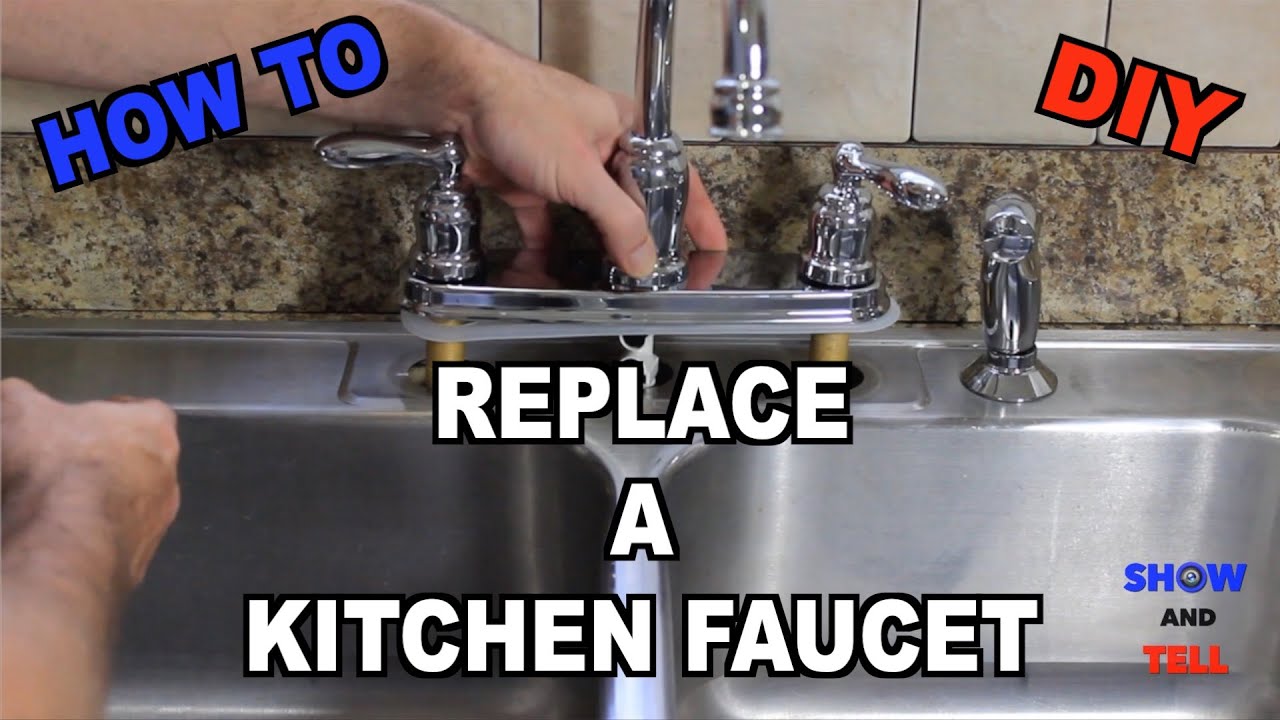
Image Source: i.ytimg.com
Getting Ready: Tools and Preparation
Before you dive into kitchen sink plumbing, gathering the right tools is essential. Having everything on hand will make the repair process smoother and more efficient.
Here’s a list of common tools you’ll likely need:
- Adjustable Wrench: This is your go-to tool for loosening and tightening various nuts and fittings.
- Pliers: Slip-joint pliers are useful for gripping and turning. Needle-nose pliers can be handy for reaching small parts.
- Screwdrivers: A set of Phillips head and flathead screwdrivers in various sizes is crucial.
- Allen Wrenches (Hex Keys): Many faucet handles are secured with small set screws that require Allen wrenches.
- Plumber’s Grease or Silicone Lubricant: This helps create a watertight seal and makes it easier to reassemble parts.
- Teflon Tape (Plumber’s Tape): Used to seal threaded pipe connections and prevent leaks.
- Old Towels or Rags: To catch dripping water and keep your workspace clean.
- Bucket: To place under the pipes to catch any residual water.
- Replacement Parts: This will depend on the specific problem, but common culprits include O-rings, washers, cartridges, and seals.
Safety First: Always remember to turn off the water supply to your faucet before beginning any repair. You’ll usually find shut-off valves directly beneath the sink. Turn them clockwise until they are tight. If you can’t find these valves or they don’t work, you’ll need to shut off the main water supply to your house.
Identifying the Faucet Problem
Before you can fix your faucet, you need to know what’s wrong. Leaks and other issues can stem from various sources within the faucet assembly. Here are some common problems and how to spot them:
- Dripping from the Spout: This is the most common issue. It usually indicates a worn-out washer or a faulty cartridge.
- Leaks Around the Handle: Water seeping from the base of the faucet handle often points to worn O-rings or a problem with the packing nut.
- Leaks from the Base of the Spout: If water drips from where the spout meets the faucet body, the issue is likely worn O-rings at the base of the spout.
- Low Water Pressure: This can be caused by a clogged aerator, a kinked supply line, or sediment buildup within the faucet itself.
- Sprayer Issues: A malfunctioning faucet sprayer fix might involve a leaky hose, a clogged nozzle, or a faulty diverter valve.
- Loose Faucet: A loose kitchen faucet might need tightening at its mounting points under the sink.
- Hot Water No Flow: If you have no hot water or very little, it could be a problem with the hot water supply line, the shut-off valve, or the faucet’s internal components.
Common Faucet Types and Their Mechanisms
Kitchen faucets come in several main types, and knowing yours will help you diagnose the problem. Each type has a different internal mechanism that controls water flow.
| Faucet Type | Description | Common Issues |
|---|---|---|
| Compression Faucet | The oldest type. Has separate hot and cold handles. Tightening the handle compresses a rubber washer against a valve seat. | Worn washers, leaky valve seats. |
| Cartridge Faucet | Features a single handle that moves up/down and side to side. Controls water flow and temperature with a removable cartridge. | Worn or damaged cartridge, O-ring failure. |
| Ball Faucet | Has a single handle that moves over a rounded cap. Uses a slotted metal or plastic ball to control water flow and temperature. | Worn O-rings, damaged ball, worn seats and springs. |
| Ceramic Disk Faucet | Features a single handle that controls two ceramic disks that slide against each other to regulate water flow. Very durable. | Cracked ceramic disks, O-ring failure, sediment buildup. |
Most modern kitchen faucets are either cartridge or ceramic disk types. Older homes might still have compression faucets.
Fixing a Dripping Kitchen Tap: The Most Common Repair
A dripping faucet fix is usually the first repair most homeowners tackle. The culprit is almost always a worn-out rubber washer or a faulty cartridge.
Repairing a Compression Faucet (Washer Replacement)
- Shut off the water supply: Turn the handles clockwise under the sink.
- Remove the handle:
- Look for a decorative cap on top of the handle. Pry it off gently with a flathead screwdriver or utility knife.
- Underneath the cap, you’ll find a screw. Unscrew it.
- Pull the handle straight up and off. If it’s stuck, you might need a handle puller.
- Remove the packing nut and stem:
- Use an adjustable wrench to unscrew the packing nut (the hexagonal nut below the handle).
- Once the packing nut is off, you should be able to unscrew or pull out the valve stem.
- Replace the washer:
- At the bottom of the valve stem, you’ll see a small screw holding a rubber washer.
- Unscrew the old screw and remove the old, worn washer.
- Place a new, correctly sized washer onto the stem and secure it with the screw. Make sure it’s snug but not overly tight.
- Inspect the valve seat (the opening the washer presses against). If it’s rough or pitted, you might need a valve seat dresser tool to smooth it or replace the seat itself if it’s removable.
- Reassemble the faucet:
- Apply a thin layer of plumber’s grease to the stem threads and O-rings.
- Screw the stem back into the faucet body.
- Tighten the packing nut, but not too tightly.
- Place the handle back on and secure it with the screw.
- Snap the decorative cap back on.
- Turn on the water: Slowly turn the shut-off valves back on and check for leaks.
Repairing a Cartridge Faucet (Cartridge Replacement)
This is a very common type, and a faucet cartridge replacement is often the solution for a persistent drip.
- Shut off the water supply: Turn off the hot and cold water valves under the sink.
- Remove the handle:
- Look for a decorative cap or cover. Pry it off carefully.
- You might find a set screw (often requiring an Allen wrench) on the side or back of the handle. Loosen or remove this screw.
- Pull the handle straight off the faucet body.
- Remove the retaining clip or nut:
- Under the handle, you’ll see a metal clip or a threaded retaining nut holding the cartridge in place.
- If it’s a clip, carefully pull it straight out with needle-nose pliers.
- If it’s a nut, use an adjustable wrench to unscrew it.
- Pull out the old cartridge:
- Grasp the top of the cartridge with pliers and pull it straight up. Some cartridges have a nut that you can use to help pull them out with a wrench. You might need to twist it slightly.
- Note the orientation of the old cartridge before removing it, as the new one needs to go in the same way.
- Install the new cartridge:
- Apply a thin coat of plumber’s grease to the O-rings on the new cartridge.
- Align the new cartridge with the faucet body, ensuring it’s oriented correctly.
- Push it firmly into place.
- Reassemble the faucet:
- Replace the retaining clip or screw the retaining nut back on.
- Place the handle back on and secure it with the set screw.
- Snap the decorative cap back on.
- Turn on the water: Slowly open the shut-off valves and check for leaks.
Repairing a Ball Faucet
Ball faucets have more parts, so this repair can be a bit more involved.
- Shut off water supply.
- Remove the handle: There’s usually a set screw on the back of the handle. Loosen it with an Allen wrench and lift the handle off.
- Remove the cap and collar: Use pliers to unscrew the cap and collar assembly that covers the ball.
- Lift out the cam and packing: There’s a plastic cam and packing piece on top of the ball. Lift these out.
- Remove the ball: Carefully lift the ball out of its socket.
- Replace seats and springs: Inside the faucet body, where the ball sat, you’ll see rubber seats and springs. Use a small screwdriver or pick to remove the old ones. Insert new springs (small end first) and then the new rubber seats on top of the springs.
- Reassemble:
- Place the new or cleaned ball back in.
- Position the new cam and packing over the ball.
- Screw the cap and collar back on.
- Reattach the handle and tighten the set screw.
- Turn on water and test.
Repairing a Ceramic Disk Faucet
Ceramic disk faucets are known for their durability, but leaks can still happen.
- Shut off water supply.
- Remove the handle: Similar to cartridge faucets, look for a decorative cover or a set screw. Remove it and pull the handle off.
- Remove the escutcheon cap: This is the decorative cover that shields the disk mechanism. Unscrew it.
- Remove the disk cylinder: You’ll see a cylinder with a metal or plastic cover. Unscrew this cover. The ceramic disk assembly is inside.
- Check and replace O-rings: The most common cause of leaks in ceramic disk faucets is worn O-rings, not necessarily the disks themselves. Carefully remove the disk cylinder. Inspect the O-rings at the base of the cylinder and on the faucet body. Replace any that look worn or damaged. Apply plumber’s grease to the new O-rings.
- Replace the ceramic disk cartridge (if needed): If the O-rings are fine, the ceramic disks themselves might be cracked or chipped. This is less common. If you suspect this, you’ll need to replace the entire ceramic disk cartridge. Note the orientation of the old cartridge before removal.
- Reassemble: Reverse the steps above, ensuring all parts are seated correctly and tightened properly.
- Turn on water and test.
Addressing Low Water Pressure in the Kitchen Faucet
If you’re experiencing low water pressure kitchen faucet, it’s often a simple fix.
1. Clean the Aerator
The aerator is the small screen at the tip of your faucet spout. It mixes air with water to create a smooth stream and can get clogged with mineral deposits.
- How to clean:
- Unscrew the aerator from the spout. You might need pliers, but wrap the aerator with a rag to prevent scratching.
- Disassemble the aerator components (screen, washer, housing).
- Soak the parts in a bowl of white vinegar for a few hours or overnight. This helps dissolve mineral buildup.
- Gently scrub the screen with an old toothbrush.
- Rinse thoroughly and reassemble the aerator.
- Screw the aerator back onto the spout.
2. Check Supply Lines and Shut-off Valves
Sometimes, the problem lies with the water supply itself.
- Inspect supply hoses: Ensure the flexible hoses connecting your faucet to the shut-off valves aren’t kinked or damaged.
- Check shut-off valves: Make sure the shut-off valves under the sink are fully open. Sometimes they can get partially closed.
3. Flush the Faucet Body
If the aerator is clean and supply lines are clear, sediment might be built up inside the faucet.
- How to flush:
- Turn off the water supply.
- Remove the aerator.
- Place a bucket under the spout.
- Carefully turn on the faucet handles to let any trapped sediment flow out. You might need to run water through both hot and cold for a minute.
- Turn off the faucet.
- Reattach the aerator and turn the water supply back on.
4. Consider the Cartridge or Stem
For cartridge or compression faucets, a worn-out cartridge or a faulty valve stem with debris can also restrict water flow. Replacing the cartridge or stem, as described in the dripping faucet section, might be necessary.
Fixing a Leaky Kitchen Tap Around the Handle or Base
Leaks around the faucet handle repair or at the base of the spout usually point to worn O-rings or seals.
Replacing O-Rings for Handle Leaks (Cartridge Faucets)
- Shut off water.
- Remove the handle (as described in cartridge faucet repair).
- Remove the packing nut/retaining nut.
- Remove the cartridge.
- Locate O-rings: On the faucet body, around where the cartridge sits, you’ll find one or more rubber O-rings. There might also be O-rings on the cartridge itself.
- Replace O-rings: Gently pry off the old O-rings using a small, flathead screwdriver or a pick. Be careful not to scratch the metal.
- Install new O-rings: Lubricate the new O-rings with plumber’s grease and carefully slip them into their grooves.
- Reassemble: Put the cartridge, retaining nut, handle, and cap back in place.
- Turn on water and test.
Replacing O-Rings for Spout Leaks
If your spout leaks where it swivels, it’s likely due to worn O-rings at the base of the spout.
- Shut off water.
- Remove the spout: This varies by faucet model. Sometimes, there’s a set screw holding the spout in place, or the spout simply lifts or unscrews after the handle and decorative pieces are removed. Consult your faucet’s manual if unsure.
- Locate O-rings: At the base of the spout, you’ll find one or more large O-rings.
- Replace O-rings: Carefully remove the old O-rings and install new, lubricated ones.
- Reassemble: Place the spout back onto the faucet body and secure it if necessary.
- Turn on water and test.
Faucet Sprayer Fixes
A problematic faucet sprayer can be a common annoyance.
1. Leaky Sprayer Hose
- Inspect the hose: Check the hose connecting the sprayer head to the faucet body for cracks or wear. If it’s damaged, you’ll need to replace the entire hose assembly.
- Tighten connections: Ensure the hose is securely attached at both the sprayer head and the faucet diverter valve.
2. Clogged Sprayer Nozzle
- Clean the nozzle: Similar to the aerator, the sprayer nozzle can get clogged with mineral deposits. Many sprayer heads can be unscrewed. Soak them in vinegar and scrub gently with a toothbrush.
- Use a pick: For stubborn clogs, you might be able to use a small pin or pick to clear the spray holes.
3. Leaky Sprayer Head
If the sprayer head itself leaks, it’s often due to worn internal seals or the O-ring where it connects to the hose.
- Disassemble the sprayer head: Some sprayer heads can be partially disassembled to access internal parts. Again, check your faucet’s manual.
- Replace O-rings or seals: Replace any worn rubber components.
4. Sprayer Not Working (Diverter Issue)
The diverter valve, usually located inside the faucet body or under the spout, directs water flow between the spout and the sprayer.
- Locate the diverter: Accessing the diverter can be tricky and varies by faucet model. It might be a separate part or integrated into the cartridge.
- Clean or replace: If the diverter is clogged or worn, it might need cleaning or replacement. This is often part of a larger faucet repair or cartridge replacement.
Dealing with a Loose Kitchen Faucet
A loose kitchen faucet can be annoying and potentially lead to more significant plumbing issues if left unaddressed.
- Access the mounting hardware: Look under your sink where the faucet mounts to the countertop or sink basin. You’ll typically find a large mounting nut or a set of washers and nuts holding the faucet in place.
- Tighten the mounting hardware:
- Use an adjustable wrench or basin wrench (a special tool for tight spaces under sinks) to tighten the mounting nut or nuts.
- Tighten them securely, but be careful not to overtighten, which could crack a porcelain sink or damage a countertop.
- Check for any leaks: While you’re under the sink, check the connections of the hot and cold water supply lines to ensure they are also secure.
Addressing Hot Water No Flow Kitchen Issues
If you’re experiencing hot water no flow kitchen, it’s important to isolate the problem.
- Check the hot water shut-off valve: Ensure the hot water shut-off valve under the sink is fully open.
- Check other hot water fixtures: Is there hot water at other sinks or showers in your house?
- If yes, the problem is likely localized to your kitchen faucet.
- If no, the issue is with your water heater or the main hot water supply line.
- Flush the hot water side: Similar to addressing low water pressure, turn off the water supply, remove the aerator, and run the hot water side of the faucet to flush out any sediment that might be blocking the hot water inlet.
- Inspect the hot water supply line: Ensure the flexible hose for the hot water is not kinked.
- Consider internal faucet components: If the above steps don’t resolve the issue, it’s possible that the hot water inlet within the faucet, or the cartridge itself, is blocked or faulty. This would require disassembling the faucet to inspect and potentially replace parts.
When to Call a Professional
While many kitchen faucet repairs are manageable for the average DIYer, there are times when it’s best to call a licensed plumber.
- You’re uncomfortable with the repair: If you lack the confidence or the right tools, it’s better to have a professional handle it.
- The problem is complex: If you can’t identify the source of the leak, or if it’s a highly specialized or antique faucet, a plumber will have the expertise.
- You’ve tried multiple fixes without success: If you’ve attempted a repair and the problem persists or worsens, it’s time to call in an expert.
- Major leaks or water damage: If you have a significant leak or notice water damage around your sink, shut off the main water supply immediately and call a plumber.
- Corroded or seized parts: If nuts and bolts are severely corroded and won’t budge, forcing them could cause more damage.
Frequently Asked Questions (FAQ)
- Q1: How often should I replace faucet washers?
A1: Faucet washers don’t have a set replacement schedule. You should replace them when you notice a drip from the spout, which is usually a sign of wear. - Q2: Can I use WD-40 to fix a leaky faucet?
A2: WD-40 is a lubricant but not a sealant. It might temporarily free up a stuck part, but it won’t fix a leak caused by worn washers or cartridges. Using plumber’s grease is recommended for seals and O-rings. - Q3: What’s the difference between a faucet cartridge and a valve stem?
A3: In modern faucets (cartridge, ball, ceramic disk), a cartridge is a self-contained unit that controls water flow and temperature. In older compression faucets, a valve stem is a part that, when turned, moves a washer to open or close the water passage. - Q4: My faucet handle is loose. How do I tighten it?
A4: If the handle itself is loose, there’s usually a set screw (often under a decorative cap) that needs tightening. If the entire faucet is loose, you’ll need to tighten the mounting nuts under the sink. - Q5: What kind of lubricant should I use on faucet parts?
A5: Use plumber’s grease or silicone-based lubricant. These are designed to be water-resistant and won’t degrade rubber seals like petroleum-based lubricants.
By following this guide, you should be well-equipped to tackle most common kitchen faucet repairs. Remember to work carefully, be patient, and always shut off the water supply before starting any work. Happy fixing!