The most common thickness for kitchen countertops is 1.25 inches (or 3 cm). However, the actual thickness can vary based on the material, style, and custom choices you make.
Choosing the right kitchen countertop thickness is more than just an aesthetic decision; it’s a practical one that impacts durability, installation, and even the overall look of your kitchen. The standard countertop thickness has evolved over time, and understanding these norms will help you make an informed choice for your home. Whether you’re renovating or building new, delving into countertop thickness standards is a crucial step.
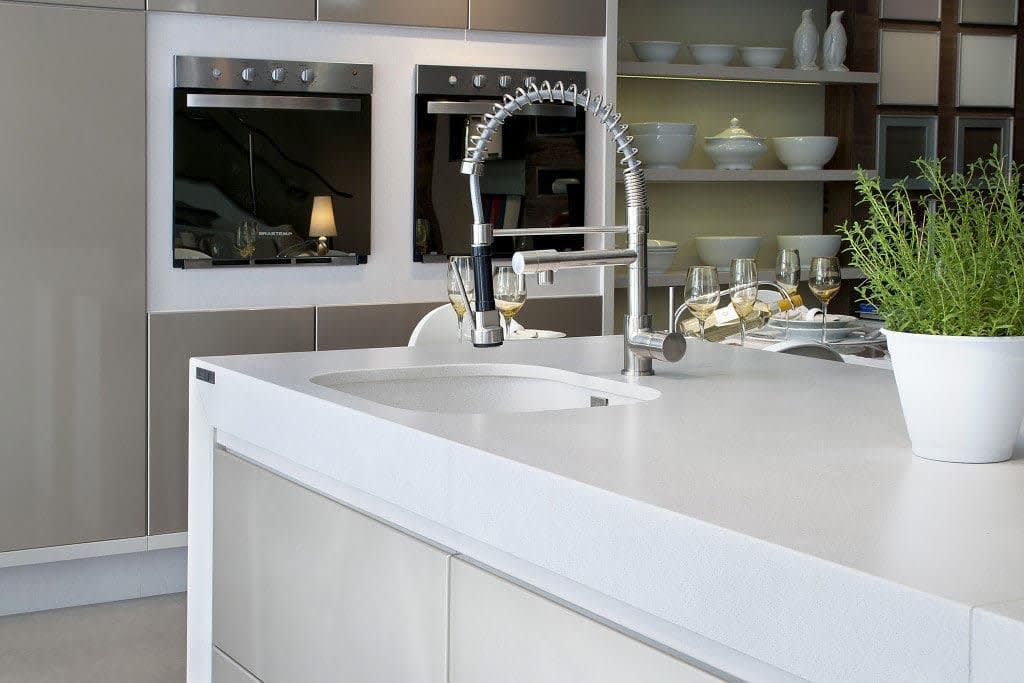
Image Source: images.ctfassets.net
The Foundation: Why Countertop Thickness Matters
The thickness of your countertop directly influences its perceived quality and its ability to withstand the rigors of daily kitchen use. A thicker slab often conveys a sense of luxury and robustness, while thinner options can be more budget-friendly and adaptable to certain design styles. Beyond the visual, thickness plays a role in:
- Durability: Thicker countertops generally offer greater resistance to chipping, cracking, and breakage, especially at edges and corners.
- Support: The thickness can affect how much weight a countertop can support and how it integrates with your cabinets.
- Aesthetics: A thicker profile can lend a more substantial and high-end feel to your kitchen.
- Installation: Certain thicknesses require specific support structures or cabinet modifications.
- Cost: Generally, thicker materials come with a higher price tag.
Standard Kitchen Countertop Thicknesses: A Universal Look
While there isn’t one single, universally mandated thickness, the industry has settled on common standards that are widely available and practical for most kitchens. These standards are often dictated by the way materials are quarried, processed, and fabricated.
Common Slab Thicknesses
The most prevalent thicknesses for natural stone and engineered stone slabs are:
- 1.25 inches (3 cm): This is the de facto standard for granite, quartz, and many other hard surfaces. It offers an excellent balance of durability, aesthetics, and cost. It’s sturdy enough for most applications and provides a substantial look without being overly bulky.
- 0.75 inches (2 cm): This thinner option is also available, particularly for quartz and some other engineered materials. While it can be more budget-friendly and lighter, it often requires additional support or a thicker edge profile to achieve a substantial look and adequate durability. It’s also sometimes used for certain types of stone like marble or when a specific minimalist design is desired.
It’s important to note that these are often the slab thicknesses. The final installed thickness can be influenced by edge profiles and any added support layers.
Average Kitchen Counter Depth
While we’re discussing thickness (the vertical dimension from top to bottom), it’s worth mentioning the standard average kitchen counter depth. Typically, kitchen countertops have a depth of 24 inches. This measurement is standard for fitting typical base cabinets. However, overhangs for seating or deeper prep areas can extend this depth.
Deciphering Thickness by Kitchen Countertop Material
The material you choose significantly dictates the available thicknesses and the associated implications. Each material has its own properties that influence how it’s fabricated and installed.
How Thick Are Granite Countertops?
Granite is a natural stone, quarried and then cut into slabs. The standard thickness for granite countertops is overwhelmingly 1.25 inches (3 cm). This thickness is ideal for granite as it balances the stone’s natural strength with its weight and the capabilities of fabrication machinery.
- Pros of 1.25-inch Granite:
- Excellent durability and resistance to chipping.
- Provides a substantial, high-quality appearance.
- Requires less support than thinner options, simplifying installation.
- Widely available from fabricators.
- Cons of 1.25-inch Granite:
- Heavier, requiring sturdy cabinet bases.
- Can be more expensive than thinner alternatives.
While 0.75-inch (2 cm) granite is technically available, it’s less common and generally not recommended for standard kitchen use without significant reinforcement. Thinner granite is more prone to cracking and chipping, especially around sink cutouts or edges. If a thinner profile is desired, it’s usually achieved with a laminated edge (where two thinner slabs are glued together to create the appearance of a thicker edge).
How Thick Are Quartz Countertops?
Quartz countertops, being engineered products, offer a bit more flexibility in thickness. The standard thickness is also typically 1.25 inches (3 cm), mirroring granite. This is largely due to the demand for consistency with other popular materials and the aesthetic preferences of homeowners.
However, 0.75-inch (2 cm) quartz is more readily available and commonly used than thinner granite.
- 0.75-inch Quartz:
- Pros: Lighter, often less expensive, can offer a sleeker, more minimalist look. Can be easier to handle during installation.
- Cons: May require more support, especially for large spans or heavy sinks. Edges can be more susceptible to chipping if not properly detailed. Often requires a reinforced edge profile to achieve a substantial look.
- 1.25-inch Quartz:
- Pros: More robust, less prone to damage, offers a classic substantial appearance.
- Cons: Heavier, can be more costly.
Many manufacturers produce quartz slabs in both thicknesses, allowing homeowners to choose based on their budget, design, and desired durability.
How Thick Are Marble Countertops?
Marble, a beautiful but softer natural stone, presents unique considerations regarding thickness. Similar to granite, 1.25 inches (3 cm) is the most common and recommended thickness for marble countertops.
- Why 1.25-inch Marble is Preferred:
- Durability: Marble is softer than granite and quartz, making it more susceptible to etching, staining, and scratching. The greater thickness provides more material mass to resist these issues and reduces the likelihood of chipping or cracking, especially around sink cutouts and edges.
- Aesthetics: A 1.25-inch slab contributes to the luxurious, substantial feel that many desire from marble.
- Structural Integrity: Marble, while beautiful, is also heavier and can be more brittle than granite. A thicker slab offers better structural integrity over time.
While 0.75-inch (2 cm) marble is available, it is generally discouraged for kitchen countertops due to its fragility in a high-traffic environment. If a thinner look is desired, it’s often achieved through a laminated edge profile. For bathroom vanities, where the wear and tear might be less intense, 0.75-inch marble is more commonly seen.
How Thick Are Butcher Block Countertops?
Butcher block countertops are made from strips of wood glued together. The thickness here is less about slab quarrying and more about woodworking and aesthetic choice. Common thicknesses for butcher block include:
- 1.5 inches (approx. 3.8 cm): This is a very popular thickness for butcher block. It offers a substantial look and good durability for chopping (if you opt for a food-safe finish) and general use.
- 1 inch (approx. 2.5 cm): A thinner option that can be more budget-friendly. It may require more careful handling and can be more prone to warping or damage over time if not properly maintained.
- 2 inches (approx. 5 cm) or more: Thicker butcher blocks offer maximum durability and a very premium, robust appearance. These are often found in high-end kitchens or as specialized island centerpieces.
The choice of butcher block thickness also relates to its intended use. If it’s primarily for prep work and chopping, a thicker option is generally preferred for longevity and stability.
Beyond the Standard: Custom Countertop Thickness Options
While 1.25 inches and 0.75 inches are the most common, fabricators can often accommodate custom thickness requests. These options allow for greater design flexibility but often come with added costs and considerations.
Achieving Thicker Looks
- Laminating Edges: This is the most common way to achieve the look of a thicker countertop without using a single, extremely thick slab. Two thinner slabs (often 0.75 inches or 1.25 inches) are adhered together, with the top slab typically extending slightly beyond the bottom slab to create a thicker edge profile. This can simulate thicknesses of 1.5 inches, 2 inches, or even more, depending on the design.
- Pros: Achieves a substantial look at a potentially lower cost than a single thick slab, lighter overall weight.
- Cons: The seam where the two slabs meet can be a point of vulnerability for dirt and moisture if not perfectly sealed. Different materials might have slightly different visual characteristics when laminated.
- Custom Slab Thickness: For certain materials, particularly engineered stones or some natural stones, it might be possible to order custom-thick slabs directly from the manufacturer. This is usually a more expensive option.
- Build-Up Kits/Support Structures: In some cases, a thinner countertop can be installed over a specially designed support structure that gives the illusion of greater thickness or provides structural reinforcement.
Custom Thickness Considerations
- Cost: Custom thicknesses, especially those requiring specialized fabrication or materials, will be more expensive.
- Weight: Thicker countertops are heavier, which means your cabinetry must be strong enough to support them. You may need additional bracing or reinforced cabinet bases.
- Edge Profiles: The chosen edge profile can significantly alter the perceived thickness. A thick, bullnose edge on a 0.75-inch slab can look as substantial as a simple eased edge on a 1.25-inch slab.
- Sink and Appliance Integration: Ensure that your chosen thickness is compatible with the installation requirements of your sink (undermount vs. top-mount) and other appliances. Undermount sinks, for example, typically require a minimum slab thickness for proper mounting.
- Fabrication Capabilities: Not all fabricators have the equipment to consistently and safely work with very thick or very thin slabs.
Countertop Thickness for Cabinets: A Crucial Match
The countertop thickness for cabinets is a critical consideration to ensure a stable, well-supported, and aesthetically pleasing installation.
Cabinet Support Requirements
- Standard Base Cabinets: Most standard kitchen base cabinets are designed to support a countertop thickness of 1.25 inches (3 cm) without significant modification. These cabinets have strong frames and tops.
- Thinner Countertops (0.75 inches): When opting for a 0.75-inch slab, especially in materials like quartz or thinner natural stones, you must ensure adequate support. This might involve:
- Plywood Substrate: Installing a layer of plywood (typically 0.75 inches thick) directly onto the cabinet tops before the stone is laid. This provides a rigid, even surface and distributes weight. The combined thickness would then be around 1.5 inches.
- Reinforced Cabinet Tops: Ensuring the cabinets themselves have robust top framing.
- Support Brackets: Adding additional support brackets, particularly in areas with large spans, over the sink, or at the edges of overhangs.
- Thicker Countertops (1.5 inches or more): These are heavier and require very sturdy cabinet construction. Ensure your cabinets have solid, reinforced tops. For very heavy or thick slabs, you might need to consult with your cabinet maker or installer about reinforcing the cabinet structure itself.
Standard Cabinet Dimensions and Countertop Projections
- Standard Cabinet Height: Base cabinets are typically 34.5 inches tall. When a countertop of 1.25 inches is added, the total working height becomes 35.75 inches, which is the standard comfortable kitchen counter height.
- Countertop Overhang: The standard countertop overhang from the front of the cabinet face frame is typically 1 to 1.5 inches. This provides knee clearance and creates a more ergonomic workspace. The thickness of the countertop will influence the visual weight of this overhang.
A Comparative Look: Countertop Thickness Standards Table
To help visualize the differences and commonalities, here’s a table summarizing countertop thickness standards by material:
| Material | Standard Thickness | Common Custom Thicknesses | Notes |
|---|---|---|---|
| Granite | 1.25 inches (3 cm) | 0.75 inches (2 cm) | 1.25″ is highly recommended for durability. 0.75″ often requires lamination for aesthetic/strength. |
| Quartz | 1.25 inches (3 cm) | 0.75 inches (2 cm) | Both 1.25″ and 0.75″ are widely available. 0.75″ may need more support. |
| Marble | 1.25 inches (3 cm) | 0.75 inches (2 cm) | 1.25″ is strongly recommended for kitchens due to marble’s softness. 0.75″ more suited for bathrooms. |
| Butcher Block | 1.5 inches (3.8 cm) | 1 inch (2.5 cm), 2 inches (5 cm) | Varies by preference and use. Thicker is generally more durable for prep. |
| Solid Surface | 0.5 inches (1.25 cm) | 0.75 inches (2 cm) | Often installed over a substrate, can be shaped/seamed invisibly. |
| Laminate | 1.5 inches (3.8 cm) | N/A | Built onto particle board/MDF, thickness is the manufactured core plus decorative layer. |
| Stainless Steel | 1.5 inches (3.8 cm) | 1.25 inches (3 cm) | Often integrated with a substrate for rigidity. Thickness relates to the core material. |
| Concrete | 1.5 inches (3.8 cm) | 2 inches (5 cm) | Can be cast to virtually any thickness, but 1.5-2″ are common for durability and cabinet fit. |
Note: Measurements are approximate and can vary slightly by manufacturer.
Factors Influencing Your Thickness Choice
When deciding on kitchen countertop material thickness, consider these key factors:
- Budget: Thicker slabs and custom fabrication naturally increase costs. Standard 1.25-inch slabs are often the most cost-effective for natural and engineered stones.
- Material Properties: As discussed, harder, denser materials like granite and quartz can be more forgiving with thinner profiles than softer materials like marble.
- Kitchen Design & Aesthetics: Do you prefer a sleek, modern look or a more substantial, traditional feel? Thinner profiles can contribute to minimalist designs, while thicker ones lend a sense of weight and luxury.
- Intended Use: Will the countertop be a primary workspace for heavy chopping, or more of a decorative surface? A high-use area benefits from greater thickness and durability.
- Cabinetry: The strength and construction of your existing or chosen cabinets are paramount. Ensure they can adequately support the weight and stresses of your selected countertop thickness.
- Edge Profile: A thicker edge profile can make a thinner slab appear more substantial. Conversely, a simple eased edge on a thick slab maintains a clean, modern look.
- Sink Type: Undermount sinks require a certain minimum thickness for secure mounting. Drop-in sinks are more forgiving.
Frequently Asked Questions
Q1: Can I use a 0.75-inch thick countertop in my kitchen?
A1: Yes, you can, but it’s crucial to ensure adequate support. This typically involves installing a plywood substrate beneath the countertop or using reinforced cabinet tops and support brackets. It’s also often paired with a laminated edge profile to give the appearance of greater thickness and durability.
Q2: What is the most durable countertop thickness?
A2: Generally, a thicker countertop is more durable. For natural and engineered stones, 1.25 inches (3 cm) is considered very durable for kitchen use. For butcher block, thicker options like 1.5 or 2 inches offer greater longevity.
Q3: How does countertop thickness affect installation?
A3: Thicker countertops are heavier and require stronger cabinet support. Thinner countertops might be easier to handle but often need additional support layers or reinforcement to prevent flexing or breakage.
Q4: What is the standard countertop thickness for cabinets?
A4: The standard thickness that most cabinets are designed to accommodate is 1.25 inches (3 cm).
Q5: Is a thicker countertop always more expensive?
A5: Yes, typically a thicker slab of the same material will be more expensive due to the increased amount of raw material and fabrication required. However, achieving the look of a thicker countertop through lamination can sometimes be a more cost-effective solution than using a single, custom-thick slab.
Q6: What are common countertop thickness standards for quartz?
A6: The most common thicknesses for quartz countertops are 1.25 inches (3 cm) and 0.75 inches (2 cm).
Q7: How thick are granite countertops typically?
A7: Granite countertops are most commonly 1.25 inches (3 cm) thick.
Q8: What is the standard thickness for marble countertops?
A8: The industry standard and recommended thickness for marble kitchen countertops is 1.25 inches (3 cm) for optimal durability.
Q9: What are the usual thicknesses for butcher block countertops?
A9: Butcher block countertops commonly come in thicknesses of 1 inch, 1.5 inches, and 2 inches, with 1.5 inches being very popular.
Q10: Can I get custom countertop thickness options?
A10: Yes, many fabricators and manufacturers offer custom countertop thickness options, though this often involves higher costs and may require special orders or fabrication techniques.
Choosing the right thickness is a blend of practical engineering and aesthetic vision. By carefully considering the material, your usage habits, and your cabinet’s capabilities, you can select a countertop thickness that perfectly suits your kitchen’s needs and style for years to come.