Image Source: i.ytimg.com
How To Sand Kitchen Cabinets: A Step-by-Step Guide for a Smooth Finish
Can you sand kitchen cabinets? Yes, you absolutely can sand kitchen cabinets, and it’s a crucial step for preparing them for paint or a new stain, ensuring a smooth and lasting finish. This comprehensive guide will walk you through the entire cabinet refinishing process, from initial preparation to achieving that perfectly smooth surface.
Sanding your kitchen cabinets might seem like a daunting task, but it’s the secret to a professional-looking paint job or a beautifully revitalized wood finish. Whether you’re looking to update your kitchen’s aesthetic or simply refresh worn-out cabinets, mastering the art of sanding is key. This guide covers everything you need to know, including preparing cabinets for paint, removing old finish from cabinets, and selecting the best sandpaper for cabinets.
Gathering Your Supplies: The Foundation for Success
Before you begin, having all your tools and materials ready will make the process much smoother. Think of this as setting the stage for a flawless performance.
Essential Tools and Materials:
- Safety Gear:
- Safety Glasses: Protect your eyes from dust and debris.
- Dust Mask or Respirator: Crucial for preventing inhalation of fine wood dust. A P100 respirator offers the best protection.
- Gloves: Protect your hands from dust and chemicals.
- Sanding Equipment:
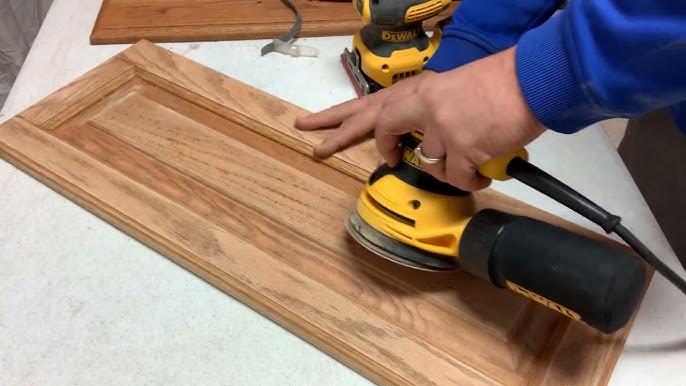
- Orbital Sander: This is your best friend for larger, flat surfaces. It makes the job faster and more efficient. An electric orbital sander is generally preferred for cabinet refinishing.
- Detail Sander: Useful for corners and intricate areas where an orbital sander can’t reach.
- Sanding Blocks: For hand sanding cabinets, especially on doors and detailed edges.
- Sandpaper: You’ll need a range of grits. We’ll cover the best sandpaper for cabinets in detail later.
- Cleaning Supplies:
- Vacuum Cleaner with Brush Attachment: For removing loose dust.
- Tack Cloths: These sticky cloths pick up fine dust particles that vacuums miss.
- Degreaser or Trisodium Phosphate (TSP) Substitute: To clean away grease and grime from the cabinet surfaces.
- Clean Rags or Sponges: For cleaning and wiping.
- Other Useful Items:
- Screwdriver or Drill: To remove cabinet doors and hardware.
- Drop Cloths or Plastic Sheeting: To protect your floors and surrounding areas from dust.
- Painter’s Tape: To mask off areas you don’t want to sand or paint.
- Wood Filler: For filling any dents or imperfections.
Step 1: The Crucial First Step – Cleaning Your Cabinets
You can’t achieve a smooth finish on dirty cabinets. Cleaning is paramount to preparing cabinets for paint or stain, ensuring no grease or grime interferes with the sanding or subsequent finishes.
- Remove Cabinet Doors and Hardware: This allows you to work on each piece individually and access all surfaces. Use a screwdriver or drill and keep the hardware in labeled bags so you know where each piece goes.
- Wipe Down with Degreaser: Mix your degreaser or TSP substitute with water according to the product instructions. Use a clean rag or sponge to thoroughly wipe down every surface of the cabinets. Pay close attention to areas around the stove and sink where grease accumulates.
- Rinse and Dry: After degreasing, use a clean rag dampened with plain water to wipe away any residue. Ensure the cabinets are completely dry before moving on to sanding. Any remaining moisture can affect the sandpaper and the finish.
Step 2: Deciding Your Sanding Goal: Stripping vs. Preparing for Paint
Your approach to sanding depends on what you want to achieve. Are you planning to strip cabinet paint and expose the natural wood, or are you simply preparing cabinets for paint and need to scuff up the existing finish?
Option A: Stripping Cabinet Paint and Removing Old Finish
If your cabinets have old, peeling paint, a thick varnish, or you want to stain them a different color, you’ll need to remove the old finish first.
- Chemical Strippers: For tough finishes, chemical strippers can be very effective.
- Application: Apply the stripper according to the manufacturer’s instructions, usually with a brush. Work in a well-ventilated area and wear appropriate safety gear.
- Scraping: Once the stripper has softened the finish (this can take 15-30 minutes or more), use a putty knife or scraper to carefully remove the dissolved paint or varnish. Be gentle to avoid gouging the wood.
- Neutralizing: After stripping, you often need to neutralize the chemical stripper. Follow the product’s instructions, which usually involves wiping with mineral spirits or denatured alcohol.
- Sanding After Stripping: Even after chemical stripping, you’ll likely have residue and an uneven surface. This is where you’ll start your initial sanding.
Option B: Preparing Cabinets for Paint (Scuff Sanding)
If your cabinets are in decent condition with no major peeling paint, you just need to create a surface that new paint can adhere to. This is called scuff sanding.
- Purpose: The goal here isn’t to remove the old finish but to lightly rough up the surface. This creates “tooth” for the new primer and paint to grab onto, preventing peeling and chipping later.
Step 3: Selecting the Right Sandpaper – The Heart of a Smooth Finish
Choosing the best sandpaper for cabinets is critical. The grit of the sandpaper determines how much material it removes and how smooth the surface becomes.
Sandpaper Grits Explained:
Sandpaper is rated by grit number. A lower number means a coarser grit, and a higher number means a finer grit.
| Grit Number | Description | Use |
|---|---|---|
| 60-80 | Coarse | Removing old finishes, significant repairs, heavy sanding |
| 100-120 | Medium | Smoothing after coarse sanding, general prep |
| 150-180 | Fine | Smoothing between coats of primer/paint, light prep |
| 220-320 | Very Fine | Final smoothing before painting, fine grit sandpaper for cabinets |
| 400+ | Ultra Fine | Smoothing between clear coats, polishing |
Recommended Sandpaper Grits for Cabinet Refinishing:
For most cabinet refinishing process aiming for a painted finish, you’ll typically use a progression of grits:
- Starting Grit:
- If removing old finish from cabinets with a chemical stripper, you might start with 80-100 grit to clean up any remaining residue.
- If scuff sanding for paint, start with 120-150 grit sandpaper.
- Intermediate Grits:
- Move to 180 grit to further smooth the surface.
- If you used a coarser grit or chemical strippers, you might use 120 or 150 grit after your initial pass.
- Finishing Grits:
- Always finish with 220 grit sandpaper. This is essential for smoothing wood cabinets to a baby-smooth feel, preparing them for primer and paint. For an ultra-smooth finish, especially if you’re painting a high-gloss color, you might even go up to 320 grit.
Key Considerations for Sandpaper:
- Aluminum Oxide: This is a common and durable abrasive that works well for wood.
- Adhesive Backing: For orbital sanders, look for sandpaper with adhesive backing or hook-and-loop attachment.
- Type: For hand sanding cabinets, use sandpaper sheets that you can wrap around a sanding block.
Step 4: The Sanding Technique: Achieving that Smooth Surface
This is where the real work happens. Proper technique ensures an even sanding job and prevents scratches.
Using an Orbital Sander for Cabinets
An orbital sander for cabinets is a game-changer for efficiency.
- Attach Sandpaper: Secure the appropriate grit sandpaper to your orbital sander.
- Start Gently: Place the sander flat on the cabinet surface before turning it on.
- Consistent Motion: Move the sander in long, overlapping strokes, following the grain of the wood. Avoid dwelling too long in one spot, as this can create divots or remove too much material.
- Pressure: Apply light to moderate pressure. Let the sander do the work. Pressing too hard can lead to uneven sanding and can overheat the sander.
- Edges and Corners: For edges and corners, you may need to tilt the sander slightly, or switch to a detail sander or sanding block for better control. Be careful not to sand through the veneer on the edges of cabinet doors.
- Change Sandpaper: As sandpaper clogs with dust, it becomes less effective. Swap out for a fresh sheet as needed.
Hand Sanding Cabinets: For Precision and Detail
Hand sanding cabinets is essential for areas an orbital sander can’t reach, or for those who prefer more control.
- Use a Sanding Block: Wrap sandpaper around a sanding block. This provides a flat surface and distributes pressure evenly, preventing you from creating dips or unevenness.
- Follow the Grain: Always sand in the direction of the wood grain.
- Gentle Pressure: Use smooth, even strokes. You’re not trying to force the sandpaper; you’re guiding it.
- Corners and Details: For intricate carvings or tight corners, fold a piece of sandpaper and use it directly with your fingers, or use a small detail sander.
- Progression: Work through your grits systematically. After sanding with one grit, wipe away the dust, and then move to the next finer grit.
The Grit Progression: Building Towards Smoothness
The key to a great finish is to gradually move from coarser grits to finer grits.
- Initial Sanding:
- If stripping cabinet paint, use your chosen starter grit (e.g., 80-100) to remove the bulk of the old finish and smooth any rough spots.
- If preparing cabinets for paint, use 120-150 grit to scuff the existing finish.
- Medium Sanding:
- Move to 180 grit sandpaper. This will smooth out the scratches left by the coarser grit. If you’re going for a very smooth finish, you might use 150 grit here.
- Fine Sanding:
- This is where you achieve that silky smooth surface. Use 220 grit sandpaper. This is the final sanding step before priming and painting. Ensure all scratches from the previous grit are gone. If you are very particular about the finish, consider using 320 grit.
Important Tip: After each sanding step, always wipe down the surface with a dry cloth or a vacuum with a brush attachment to remove dust. This is crucial because any remaining dust can clog your finer grit sandpaper, making it less effective.
Step 5: Addressing Imperfections: Dents, Dings, and Scratches
No wood surface is perfectly smooth. Sanding is also the time to address any physical flaws.
-
Filling Dents and Gouges:
- For minor dents, sometimes light sanding will raise the wood fibers, making them less noticeable.
- For deeper dents or gouges, use a good quality wood filler.
- Apply the wood filler with a putty knife, pressing it into the imperfection. Overfill slightly, as wood filler can shrink as it dries.
- Once the filler is completely dry (follow product instructions), sand it smooth, starting with a medium grit (like 120-150) and then progressing to finer grits (180 and 220) to match the surrounding surface.
-
Dealing with Old Finishes:
- If you’re removing old finish from cabinets, you might encounter stubborn spots. Sometimes, a second application of stripper or more aggressive sanding is needed.
- When stripping cabinet paint, be mindful of the substrate. If you have laminate or veneer, aggressive sanding can go through the surface.
Step 6: The Final Dust Removal: A Critical Step for a Flawless Finish
This is arguably one of the most important steps in preparing cabinets for paint. If you don’t remove all the dust, your paint will have a gritty texture.
- Vacuum Thoroughly: Use your vacuum cleaner with a soft brush attachment to remove all loose dust from the cabinet surfaces, crevices, and edges.
- Tack Cloths: This is where tack cloths shine. Gently wipe down every surface with a tack cloth. These cloths are slightly sticky and are designed to pick up the finest dust particles that vacuuming might miss. Work in one direction and don’t scrub hard, as this can leave residue.
- Repeat if Necessary: For very dusty environments, you might consider a second pass with a tack cloth after the first one starts to pick up a lot of dust.
Step 7: Inspecting Your Work: Are You Ready for the Next Step?
Before you move on to priming and painting, take a moment to inspect your sanded cabinets.
- Feel the Surface: Run your hand over the cabinets. They should feel smooth to the touch, with no rough spots or raised grain.
- Visual Check: Look at the cabinets under good lighting. You should see an even sheen, and no scratches from coarser grits should be visible.
- Dust-Free: Ensure there is no visible dust on the surfaces.
Frequently Asked Questions About Sanding Kitchen Cabinets
Q1: What is the best grit sandpaper for kitchen cabinets?
A1: The best grit sandpaper for kitchen cabinets depends on the task. For preparing cabinets for paint, you’ll typically use 120-150 grit to scuff the surface, followed by 180 and then 220 grit for a smooth finish. If you are removing old finish from cabinets, you might start with 60-80 grit, then move through 100-120 grit, and finish with 150-220 grit. Always use progressively finer grits.
Q2: Can I skip sanding kitchen cabinets before painting?
A2: No, it is highly recommended that you do not skip sanding. Sanding creates a surface for the primer and paint to adhere to. Without sanding, the paint is likely to peel or chip easily, resulting in a poor and short-lived finish.
Q3: Do I need an orbital sander for cabinets?
A3: While you can sand cabinets by hand, an orbital sander for cabinets significantly speeds up the process, especially for larger, flat surfaces like cabinet doors and drawer fronts. It also helps ensure a more uniform sanding job. However, you will still need to use sanding blocks for detailed areas and corners.
Q4: How do I sand cabinet doors without removing the finish?
A4: To sand cabinet doors without removing the finish, you’ll use a lighter grit sandpaper, typically 150-220 grit. The goal is “scuff sanding” – lightly roughening the existing finish so that new paint or primer has something to grip. Use gentle pressure and work in the direction of the wood grain.
Q5: What if I encounter raised grain after sanding?
A5: Raised grain is common, especially after initial sanding or if the wood has been exposed to moisture. To fix it, you can lightly sand it smooth with a fine-grit sandpaper (180-220 grit). Some professionals recommend “raising the grain” before the final sanding by wiping the wood with a damp cloth, letting it dry, and then sanding again with your final grit. This pre-treats the wood to prevent it from raising after you’ve applied your first coat of paint or stain.
Q6: How do I remove stubborn old finish from cabinets?
A6: For stubborn finishes, chemical paint strippers are often the most effective method. Apply the stripper as directed, let it work, and then scrape off the softened finish with a putty knife. Follow up with sanding to remove any remaining residue and smooth the surface. Always use this in a well-ventilated area and wear protective gear. You might need to repeat the process or use a combination of scraping and sanding.
Q7: What are the best sandpaper brands for cabinet refinishing?
A7: Reputable brands known for quality sandpaper include 3M, Norton, Diablo, and Mirka. Look for their aluminum oxide sanding products. The key is to use good quality sandpaper that cuts effectively and doesn’t clog too quickly.
By following these detailed steps and tips, you’ll be well on your way to achieving a perfectly smooth finish on your kitchen cabinets, ready for a beautiful new look. Happy sanding!