Planning a kitchen remodel? You’re not alone! Many homeowners wonder what needs to be done before the first hammer swings. The answer is: quite a lot! Thorough preparation is the secret ingredient to a smooth and successful kitchen remodel. It helps you stay on track, manage costs, and avoid common kitchen remodel mistakes.
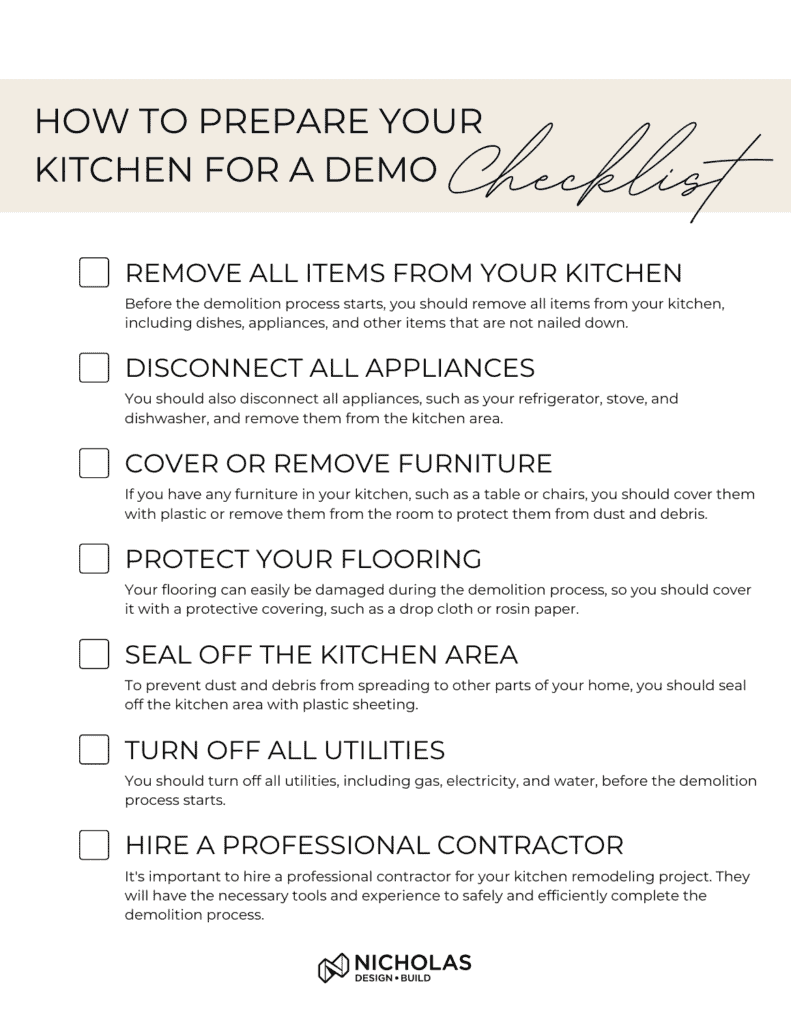
Image Source: nicholasdesignbuild.com
Crafting Your Kitchen Remodel Budget
Your kitchen remodel budget is the bedrock of your entire project. Without a clear financial plan, you risk overspending, compromising on quality, or facing stressful debt. It’s crucial to be realistic and thorough from the outset.
Breaking Down Costs
A kitchen remodel involves many expense categories. Here’s a breakdown to help you get started:
- Design Fees: If you hire a designer, factor in their costs.
- Materials: This includes cabinets, countertops, flooring, backsplash, appliances, lighting, sinks, faucets, and hardware.
- Labor: Costs for contractors, electricians, plumbers, painters, and installers.
- Permits: Fees required by your local municipality.
- Contingency Fund: Always set aside 10-20% for unexpected issues.
Estimating Costs
To create a realistic budget, research the average costs in your area. Talk to contractors, visit showrooms, and browse online retailers. Consider getting quotes for different materials and finishes. For instance, custom cabinetry will be more expensive than stock options. Similarly, high-end countertops will impact your budget significantly compared to laminate.
Prioritizing Your Wishlist
You might have a dream kitchen with all the bells and whistles. However, your budget might dictate compromises. Prioritize what’s most important to you. Is it state-of-the-art appliances? Custom cabinetry? Or perhaps improved lighting and a more functional layout? Knowing your priorities helps you allocate funds effectively and make tough decisions if needed.
Mastering Kitchen Remodel Planning
Kitchen remodel planning is an ongoing process that begins long before any demolition. It’s about defining your goals, envisioning the final outcome, and mapping out the steps to get there.
Defining Your Goals
What do you want to achieve with your kitchen remodel?
* Improved Functionality: Do you need more counter space, better storage, or a more efficient workflow?
* Updated Aesthetics: Is your current kitchen outdated, and you want a modern look?
* Increased Home Value: Are you renovating with resale value in mind?
* Addressing Structural Issues: Are there problems like poor ventilation or outdated plumbing that need fixing?
Gathering Kitchen Remodel Ideas
Inspiration is key! Collect kitchen remodel ideas from various sources:
* Magazines and Blogs: Home design publications are a treasure trove of inspiration.
* Pinterest and Instagram: Visual platforms are excellent for discovering styles and specific products.
* Showrooms: Visiting kitchen showrooms allows you to see materials and designs firsthand.
* Friends and Family: Talk to people who have recently remodeled their kitchens.
Creating a Mood Board
A mood board is a visual representation of your desired style, color palette, and materials. It helps you stay consistent throughout the planning process and communicate your vision to designers and contractors. Include images of cabinets, countertops, flooring, backsplash tiles, appliances, and hardware.
Establishing a Kitchen Remodel Timeline
A kitchen remodel timeline is essential for managing expectations and ensuring the project stays on track. Remodels rarely go exactly as planned, so building in some buffer time is wise.
Typical Project Phases
A typical kitchen remodel can be broken down into these phases:
- Planning & Design (2-6 weeks): This involves initial research, budgeting, design consultations, and final selections.
- Permitting (1-4 weeks): Depending on your location, obtaining necessary permits can take time.
- Ordering Materials (2-8 weeks): Custom cabinets, countertops, and specific appliances can have long lead times.
- Demolition (1-3 days): The messy but necessary removal of the old kitchen.
- Rough-In Work (1-2 weeks): Plumbing, electrical, and HVAC adjustments.
- Installation (2-6 weeks): Cabinets, countertops, flooring, appliances, backsplash, and fixtures.
- Finishing Touches (1-2 weeks): Painting, lighting installation, hardware, and final cleanup.
Factors Influencing the Timeline
Several factors can affect your kitchen remodel timeline:
* Project Scope: A minor refresh will take less time than a full gut renovation.
* Material Availability: Supply chain issues or custom orders can cause delays.
* Contractor Availability: Popular contractors may have waiting lists.
* Inspection Schedules: Local building departments have their own inspection timelines.
* Unforeseen Issues: Discovering hidden problems during demolition can extend the schedule.
Tip: Always communicate with your contractor about the projected timeline and potential delays.
Assembling Your Kitchen Remodel Checklist
A comprehensive kitchen remodel checklist acts as your project management tool, ensuring no critical step is missed.
Pre-Remodel Checklist
Before demolition begins:
- [ ] Finalize kitchen remodel design and layout.
- [ ] Secure kitchen remodel financing.
- [ ] Obtain necessary kitchen remodel permits.
- [ ] Select and confirm kitchen remodel contractors.
- [ ] Order all materials with adequate lead times.
- [ ] Establish a temporary kitchen setup.
- [ ] Clear out the existing kitchen and pack items.
- [ ] Arrange for waste disposal (dumpster rental).
- [ ] Inform neighbors about the upcoming construction noise.
During-Remodel Checklist
While the work is underway:
- [ ] Regular site visits to monitor progress.
- [ ] Address any unexpected issues promptly with contractors.
- [ ] Review invoices and payments against work completed.
- [ ] Approve or provide feedback on work in progress (e.g., cabinet placement, tile layout).
- [ ] Keep the work area organized and safe.
Post-Remodel Checklist
Once the main work is finished:
- [ ] Conduct a final walkthrough with your contractor.
- [ ] Create a punch list of any outstanding items.
- [ ] Ensure all permits are closed out.
- [ ] Obtain warranty information for appliances and fixtures.
- [ ] Clean the new kitchen thoroughly.
- [ ] Organize your new kitchen space.
Designing Your Dream Kitchen: Kitchen Remodel Design
The kitchen remodel design phase is where your vision starts to take shape. This involves functionality, aesthetics, and personal style.
Layout and Workflow
The layout is crucial for how your kitchen functions. Consider:
* The Work Triangle: The traditional layout connecting the sink, refrigerator, and stove. While still relevant, modern kitchens often benefit from a more fluid workflow.
* Island or Peninsula: These can add valuable counter space, seating, and storage.
* Traffic Flow: Ensure there’s enough space for people to move around comfortably, especially if your kitchen is a central hub in your home.
Cabinetry Choices
Cabinets are a major focal point and a significant cost in a kitchen remodel.
* Stock Cabinets: Most affordable, readily available, but offer limited customization.
* Semi-Custom Cabinets: A good balance of affordability and customization, allowing for more size and style options.
* Custom Cabinets: Highest cost, but offer unlimited design possibilities, tailored to your exact specifications.
* Door Styles and Finishes: From Shaker to slab, and painted to stained finishes, choose what complements your overall design.
Countertop Materials
Countertops are both functional and decorative. Popular options include:
* Granite: Durable, heat-resistant, and available in many unique patterns. Requires sealing.
* Quartz: Non-porous, highly durable, stain-resistant, and low maintenance. Consistent patterns.
* Marble: Luxurious and beautiful, but softer and more prone to etching and staining. Requires careful maintenance.
* Butcher Block: Adds warmth and a natural look. Requires regular sealing and maintenance.
* Laminate: Most affordable option, available in a wide range of colors and patterns. Less durable than stone.
Flooring Options
Your kitchen floor needs to be durable, easy to clean, and slip-resistant.
* Hardwood: Beautiful and classic, but can be susceptible to moisture damage.
* Tile (Ceramic/Porcelain): Highly durable, water-resistant, and available in endless styles. Can be cold underfoot.
* Luxury Vinyl Tile (LVT): Water-resistant, durable, and can mimic the look of wood or stone. Comfortable underfoot.
* Laminate Flooring: Affordable and easy to install, but less water-resistant than LVT.
Lighting Design
Good lighting is essential for both task-oriented activities and creating ambiance.
* Ambient Lighting: General overhead lighting (recessed lights, pendant lights).
* Task Lighting: Focused lighting for work areas (under-cabinet lighting, pendant over an island).
* Accent Lighting: Highlights specific features (in-cabinet lighting, toe-kick lighting).
Exploring Kitchen Remodel Ideas
Beyond the fundamental kitchen remodel design, exploring diverse kitchen remodel ideas can spark creativity and lead to unique solutions.
Smart Storage Solutions
Maximize every inch of your kitchen with smart storage:
* Pull-out Shelves and Drawers: Make accessing items in deep cabinets easier.
* Corner Cabinet Solutions: Lazy Susans or pull-out organizers utilize often-wasted corner space.
* Appliance Garages: Hide countertop appliances to keep your counters clutter-free.
* Vertical Storage: Utilizing wall space with open shelving or narrow cabinets.
Appliance Trends
Consider how appliances fit into your design and budget:
* Integrated Appliances: Appliances hidden behind cabinet panels for a seamless look.
* Smart Appliances: Wi-Fi enabled refrigerators, ovens, and dishwashers offer advanced features.
* Color and Finish: Stainless steel remains popular, but black stainless steel, panel-ready, and even color appliances are emerging trends.
Backsplash Styles
The backsplash is a great opportunity to add personality and a pop of color.
* Subway Tile: A timeless classic, versatile and budget-friendly.
* Mosaic Tile: Offers intricate patterns and can be a stunning focal point.
* Large Format Tile: Creates a clean, modern look with fewer grout lines.
* Natural Stone: Adds a touch of luxury and organic beauty.
Hiring Kitchen Remodel Contractors
The right kitchen remodel contractors are paramount to a successful project. This is one of the most critical decisions you’ll make.
Finding Reputable Contractors
- Referrals: Ask friends, family, and neighbors for recommendations.
- Online Reviews: Check platforms like Google, Yelp, and Houzz.
- Professional Organizations: Look for contractors who are members of industry associations.
- Local Building Departments: They may have a list of licensed contractors.
Vetting Contractors
Once you have a few potential candidates:
* Check Licenses and Insurance: Ensure they are properly licensed and insured.
* Ask for References: Contact previous clients to inquire about their experience.
* Review Portfolios: Look at examples of their past work.
* Get Multiple Bids: Obtain detailed written quotes from at least three contractors.
The Contract
Never start work without a written contract. It should include:
* Scope of Work: Detailed description of the project.
* Materials: Specifics on what will be used.
* Timeline: Estimated start and completion dates.
* Payment Schedule: How and when payments will be made.
* Warranties: Guarantees on labor and materials.
* Change Order Process: How modifications will be handled.
Navigating Kitchen Remodel Permits
Kitchen remodel permits are often a legal requirement from your local municipality. Failing to obtain them can lead to fines, delays, or even forced removal of work.
Why Permits Are Necessary
- Safety: Permits ensure that work is done according to building codes, which are in place for your safety (e.g., electrical, plumbing, structural).
- Compliance: They ensure your renovation meets legal requirements.
- Resale Value: A home with unpermitted work can be difficult to sell, as buyers and lenders often require proof of compliance.
What Might Require a Permit?
- Structural changes (moving walls).
- Significant plumbing or electrical work.
- Gas line connections.
- Window or door replacements.
- In some cases, extensive cabinetry or appliance upgrades.
The Permit Process
- Contact Your Local Building Department: Inquire about specific permit requirements for kitchen renovations in your area.
- Submit Plans: You may need to provide detailed drawings of your proposed renovation.
- Pay Fees: Permit fees vary by location and project scope.
- Inspections: During the renovation, building inspectors will visit the site at various stages to ensure work is compliant.
Important Note: Your contractor should be knowledgeable about the permit process and handle most of it. However, it’s wise to confirm this with them.
Securing Kitchen Remodel Financing
Adequate kitchen remodel financing is crucial. Don’t start a project without knowing how you’ll pay for it.
Funding Options
- Home Equity Loan (HEL): A lump sum loan based on your home’s equity.
- Home Equity Line of Credit (HELOC): A revolving line of credit you can draw from as needed.
- Cash-Out Refinance: Refinancing your mortgage for more than you owe and using the difference for the remodel.
- Personal Loan: Can be an option for smaller remodels, but often has higher interest rates.
- Credit Cards: Generally not recommended for large renovations due to high interest rates.
- Savings: Using your own savings is ideal if you have them readily available.
Budgeting for Financing Costs
When considering loans, factor in interest rates and fees. Include these potential costs in your overall kitchen remodel budget.
Avoiding Common Kitchen Remodel Mistakes
Awareness of potential kitchen remodel mistakes can save you time, money, and frustration.
Common Pitfalls to Avoid
- Insufficient Budgeting: Not accounting for all costs, including a contingency fund.
- Poor Planning: Rushing into design and material selections without thorough research.
- Choosing the Wrong Contractor: Hiring someone without proper vetting.
- Ignoring Permits: Failing to obtain necessary permits.
- Poor Lighting Design: Overlooking the importance of layered lighting.
- Ignoring Workflow: Designing a kitchen that is beautiful but not functional.
- Material Overload: Trying to incorporate too many different materials or patterns.
- Not Thinking About Resale: Making design choices that are too niche and may not appeal to future buyers.
- Underestimating Demolition Mess: Not preparing for the disruption and mess.
- Forgetting the Details: Overlooking things like cabinet hardware, outlet placement, or ventilation.
The Importance of a Contingency Fund
As mentioned earlier, unexpected issues are common. A kitchen remodel budget should always include a contingency fund (10-20% of the total project cost) to cover these surprises, preventing major financial stress. This could be anything from discovering faulty wiring behind a wall to needing to upgrade plumbing that wasn’t up to code.
Temporary Kitchen Solutions
While your kitchen is under construction, you’ll need a functional temporary setup.
Essential Items for a Temporary Kitchen
- Microwave: For heating meals.
- Hot Plate or Toaster Oven: For cooking simple dishes.
- Mini-Fridge or Cooler: To store perishables.
- Kettle or Coffee Maker: For hot beverages.
- Portable Sink or Access to a Bathroom Sink: For washing dishes and food prep.
- Storage Containers: To keep non-essential kitchen items safe.
Setup Locations
Consider using:
* A dining room or living room area.
* A garage or basement space.
* An outdoor grill for cooking.
Frequently Asked Questions (FAQ)
Q1: How long does a typical kitchen remodel take?
A typical kitchen remodel can take anywhere from 4 to 12 weeks, depending on the scope of the project, material lead times, and contractor availability. Minor updates might be quicker, while full gut renovations can extend beyond this timeframe.
Q2: What is the average cost of a kitchen remodel?
The average cost of a kitchen remodel varies significantly based on location, size, materials, and scope. Nationally, averages range from $20,000 to $75,000+, with mid-range remodels often falling in the $30,000 to $50,000 range. It’s crucial to get personalized quotes.
Q3: Can I do a kitchen remodel myself?
While some homeowners undertake DIY kitchen remodels, it’s generally recommended to hire kitchen remodel contractors for tasks involving plumbing, electrical, and structural changes due to safety and code requirements. For less complex tasks like painting or installing backsplash, DIY can be feasible.
Q4: What are the most important things to include in a kitchen remodel budget?
Key budget items include cabinetry, countertops, appliances, flooring, lighting, labor, permits, and a contingency fund (10-20% for unexpected costs).
Q5: How do I find the best kitchen remodel contractors?
Look for recommendations from friends and family, check online reviews, review portfolios, and always get multiple detailed bids. Ensure they are licensed and insured.
By thoroughly preparing for your kitchen remodel, you set the stage for a successful transformation. From meticulous planning and budgeting to careful contractor selection and understanding permit requirements, each step contributes to a smoother, less stressful, and ultimately more rewarding renovation experience.