Cloud kitchens operate by preparing food exclusively for delivery and takeaway orders, without a dine-in space. They are essentially food preparation and cooking facilities optimized for delivery-only business.
The world of food service is changing, and at the heart of this transformation is the rise of the cloud kitchen. You might have heard them called ghost kitchens, virtual restaurants, delivery-only kitchens, or even dark kitchens. Whatever the name, these innovative setups are revolutionizing how we get our favorite meals delivered right to our doorstep. But how exactly do they work? This guide will take you through the entire process, from concept to delivery.
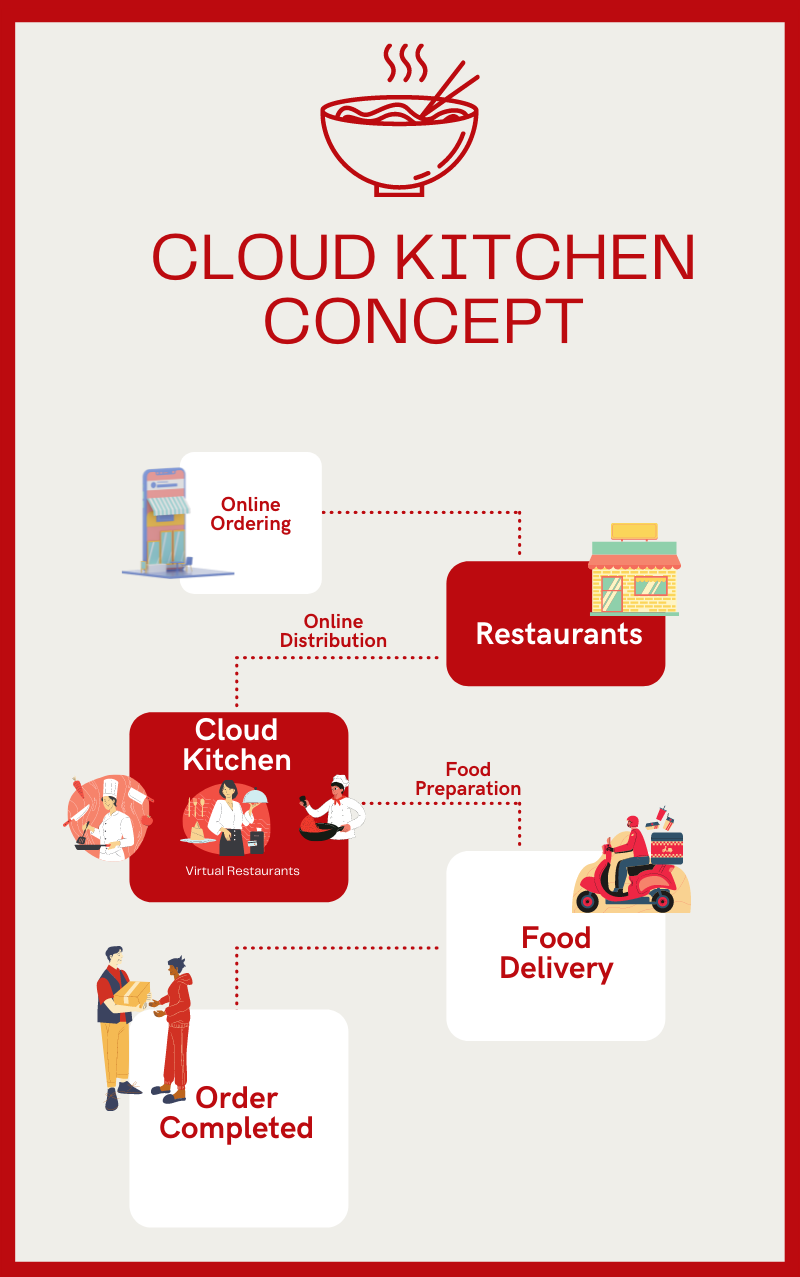
Image Source: www.code-brew.com
Deciphering the Cloud Kitchen Model
The cloud kitchen business model is built around efficiency and digital reach. Unlike traditional restaurants with a front-of-house dining area, cloud kitchens focus solely on food preparation and fulfillment for off-premise consumption. This means they don’t have tables, waiters, or a place for customers to sit and eat. Their entire operation is geared towards producing high-quality food that can be picked up by delivery drivers or dispatched directly.
Key Components of a Cloud Kitchen Ecosystem
A successful cloud kitchen relies on several interconnected elements working seamlessly together:
- The Kitchen Facility: This is the core of the operation. It’s a dedicated space designed purely for cooking and packaging.
- Technology Platform: This includes online ordering systems, kitchen display systems (KDS), and integration with third-party delivery platforms.
- Delivery Logistics: This involves either managing an in-house delivery fleet or partnering with external delivery services.
- Brand and Menu: The virtual restaurant brand and its menu are presented online, often through multiple channels.
Types of Cloud Kitchen Setups
Cloud kitchens aren’t one-size-fits-all. They come in various forms, each catering to different needs and investment levels:
1. Independent Cloud Kitchens
These are standalone facilities owned and operated by a single restaurant brand. They might be a new venture specifically designed as a delivery-only operation, or an existing restaurant that has opened a separate facility to expand its delivery reach without impacting its dine-in operations.
- Pros: Full control over brand, operations, and quality. Can leverage existing infrastructure and expertise.
- Cons: Higher initial investment. Requires managing all aspects of the business, including marketing and technology.
2. Shared Kitchen Spaces (Commissary Kitchens)
A shared kitchen space, also known as a commissary kitchen, is a large facility equipped with multiple cooking stations and professional-grade equipment. Several different food businesses can rent individual kitchen bays or stations within this shared space.
- Pros: Lower overhead costs due to shared utilities and infrastructure. Access to professional equipment without significant upfront investment. Can be a great entry point for new food entrepreneurs.
- Cons: Less control over the immediate environment and shared spaces. Potential for competition with other businesses in the same facility.
3. Aggregator-Owned Cloud Kitchens
In this model, large third-party delivery platforms (like Uber Eats, DoorDash, Grubhub) set up and manage their own cloud kitchen facilities. They then lease these kitchen spaces to various restaurant brands. The platform handles the kitchen infrastructure, and the brands focus on their menus and food preparation.
- Pros: Reduced operational burden for the restaurant brand, as the platform manages the facility. Access to the platform’s customer base and delivery network.
- Cons: Less control over the kitchen environment and operational flexibility. Reliance on the platform’s terms and conditions.
4. Hybrid Cloud Kitchens
These kitchens might operate a small, limited dine-in or takeaway counter alongside their robust delivery operations. This allows them to capture both in-person and online orders, offering a more diversified revenue stream.
- Pros: Can cater to different customer preferences. Provides a physical presence for brand building.
- Cons: Requires managing both dine-in and delivery operations, which can add complexity.
How a Cloud Kitchen Operates: Step-by-Step
Let’s walk through the typical workflow of a cloud kitchen:
Step 1: Receiving Orders
Orders primarily come through online channels:
- Third-Party Delivery Platforms: Customers browse menus and place orders via apps like DoorDash, Uber Eats, Grubhub, Deliveroo, etc. These orders are directly transmitted to the cloud kitchen’s system.
- Direct Online Ordering: Some cloud kitchens have their own websites or apps where customers can order directly. This often incurs lower commission fees for the business.
- Phone Orders: While less common, some operations might still accept phone orders.
Step 2: Order Processing and Kitchen Display System (KDS)
Once an order is received, it appears on the Kitchen Display System (KDS). The KDS is a digital screen that displays incoming orders, order details (items, customizations), preparation time, and delivery readiness.
- Order Prioritization: The KDS helps kitchen staff prioritize orders based on preparation time and estimated delivery windows.
- Real-time Updates: Staff can update the status of an order (e.g., “preparing,” “ready for pickup”), which is then communicated back to the customer and the delivery driver.
Step 3: Food Preparation
This is where the magic happens. Chefs and kitchen staff prepare the food according to strict recipes and quality standards.
- Streamlined Workflow: Kitchen layouts are optimized for speed and efficiency. Ingredients are prepped and organized for quick assembly.
- Quality Control: Despite the focus on speed, maintaining food quality, taste, and presentation is paramount.
Step 4: Packaging
Once cooked, the food is carefully packaged to ensure it travels well and maintains its temperature and presentation.
- Durable Packaging: High-quality, leak-proof, and insulated packaging is crucial.
- Branding: Packaging often includes the restaurant’s branding, reinforcing the virtual restaurant’s identity.
- Condiments and Utensils: Necessary condiments, cutlery, and napkins are included.
Step 5: Hand-off to Delivery Drivers
There are two primary ways delivery is handled:
- Third-Party Delivery: Drivers from delivery platforms arrive at the cloud kitchen to pick up orders. The kitchen staff verifies the order and hands it over. The platform’s app tracks the driver’s progress, and the customer receives updates.
- In-House Delivery: Some cloud kitchens manage their own delivery fleet. They might use their own drivers, vehicles, and delivery management software.
Step 6: Delivery to the Customer
The delivery driver transports the food from the cloud kitchen to the customer’s location. The customer tracks the delivery in real-time through the platform’s app or the kitchen’s own system.
Step 7: Customer Feedback and Data Analysis
After delivery, customers can often leave reviews and ratings. This feedback is invaluable for cloud kitchens to:
- Improve Food Quality: Identify dishes that need refinement.
- Enhance Service: Address any issues with packaging or delivery.
- Optimize Operations: Understand customer preferences and peak ordering times.
- Track Key Metrics: Monitor order volume, average order value, delivery times, and customer satisfaction.
Technology at the Core of Cloud Kitchens
Technology is the backbone of any successful cloud kitchen business model. It automates processes, enhances efficiency, and provides valuable data.
Online Ordering Systems
These systems allow customers to browse menus, customize orders, and make payments online. They can be integrated with third-party delivery platforms or be standalone solutions for direct orders.
Kitchen Display Systems (KDS)
As mentioned, KDS streamlines order management within the kitchen. They improve communication between front-of-house (order taking) and back-of-house (cooking) operations.
Inventory Management Software
Crucial for controlling costs and preventing waste, inventory software tracks ingredients, manages stock levels, and can even automate reordering.
Delivery Management Software
For kitchens with in-house delivery, this software optimizes routes, tracks drivers, and provides real-time updates to customers.
Point of Sale (POS) Systems
Even without a physical storefront, a robust POS system is needed to manage orders, payments, and sales data across various channels.
Benefits of the Cloud Kitchen Model
The popularity of cloud kitchens isn’t accidental. They offer significant advantages for restaurateurs:
- Lower Overhead Costs: Eliminating the need for a physical dining space, front-of-house staff, and prime real estate dramatically reduces operating expenses. Commercial kitchen rentals can be significantly cheaper than traditional restaurant leases.
- Increased Efficiency: Operations are streamlined for delivery, leading to faster order fulfillment and higher order volumes.
- Flexibility and Scalability: Cloud kitchens can adapt menus, experiment with new brands, and expand to new locations more easily and affordably than brick-and-mortar restaurants.
- Wider Reach: By partnering with multiple third-party delivery platforms, cloud kitchens can access a much larger customer base than a single physical location could typically serve.
- Data-Driven Decisions: The reliance on technology provides ample data for analyzing customer behavior, optimizing menus, and improving operational efficiency.
- Faster Launch Time: Setting up a cloud kitchen can be significantly faster than opening a traditional restaurant, allowing brands to enter the market quickly.
Challenges and Considerations
While the benefits are compelling, cloud kitchens also face their own set of challenges:
- Intense Competition: The low barrier to entry means the market can become crowded quickly. Standing out requires strong branding, excellent food, and effective marketing.
- Reliance on Third-Party Platforms: High commission fees from delivery platforms can eat into profit margins. Building direct customer channels is crucial for long-term sustainability.
- Brand Building without a Physical Presence: Creating a strong brand identity and customer loyalty can be more challenging when customers never physically interact with the establishment.
- Quality Control During Delivery: Maintaining food quality and temperature during transit requires careful attention to packaging and logistics.
- Managing Customer Expectations: Customers expect timely deliveries and high-quality food, so consistent performance is key.
The Role of Technology in Optimizing Food Delivery Operations
Food delivery operations have been fundamentally reshaped by technology, and cloud kitchens are at the forefront of this evolution.
| Technology Category | Impact on Cloud Kitchens |
|---|---|
| Online Ordering Platforms | Enable customer access to menus and ordering, aggregating demand from various sources. |
| Kitchen Display Systems | Streamline order flow, improve kitchen efficiency, reduce errors, and provide real-time order status for better customer communication. |
| Inventory Management | Minimizes waste, optimizes stock levels, tracks ingredient costs, and ensures consistent availability of menu items. |
| Delivery Management Software | Facilitates efficient dispatch of drivers, real-time tracking, route optimization, and communication with both drivers and customers. |
| Data Analytics Tools | Provide insights into sales trends, customer preferences, peak hours, and operational bottlenecks, enabling data-driven decision-making for menu optimization and marketing strategies. |
| Customer Relationship Management (CRM) | Helps manage customer data, loyalty programs, and targeted marketing campaigns to foster repeat business and build brand affinity. |
The Future of Cloud Kitchens
The cloud kitchen model is still evolving. We can expect to see:
- More Specialization: Brands focusing on niche cuisines or specific dietary needs.
- Integration of AI: For predictive ordering, personalized recommendations, and optimizing delivery routes.
- Data Monetization: Opportunities for cloud kitchens to leverage their data insights.
- Continued Growth in Virtual Brands: Launching multiple virtual restaurant brands from a single cloud kitchen facility to cater to diverse customer tastes.
- Increased Focus on Sustainability: Using eco-friendly packaging and optimizing delivery routes to reduce carbon footprints.
Frequently Asked Questions (FAQ)
What is a ghost kitchen?
A ghost kitchen, also known as a cloud kitchen, delivery-only kitchen, or dark kitchen, is a professional food preparation and cooking facility set up exclusively for the preparation of delivery-only meals. They do not have a physical dine-in space for customers.
Can I start a cloud kitchen with limited capital?
Yes, you can. Cloud kitchens, especially those utilizing shared kitchen space or commercial kitchen rentals, offer a more accessible entry point into the food industry compared to traditional restaurants. The reduced overheads allow for lower initial investment.
Who manages the delivery for a cloud kitchen?
Delivery can be managed in two primary ways:
1. Third-party delivery platforms: Restaurants partner with services like DoorDash, Uber Eats, or Deliveroo, who provide their own drivers.
2. In-house delivery: The cloud kitchen operates its own fleet of drivers and manages its delivery logistics.
How does a virtual restaurant differ from a cloud kitchen?
A virtual restaurant is a brand that operates solely online, without a physical storefront. It typically utilizes the kitchen facilities of an existing restaurant or a dedicated cloud kitchen. A cloud kitchen is the physical facility itself, which can house multiple virtual restaurants.
What are the main costs associated with running a cloud kitchen?
Key costs include rent for the kitchen space (or commercial kitchen rentals), utilities, ingredient costs, packaging, technology subscriptions (KDS, POS), marketing, and delivery fees (if using third-party platforms) or driver wages (if in-house).
How do cloud kitchens ensure food quality during delivery?
They focus on high-quality, durable packaging that maintains temperature and prevents spillage. They also optimize kitchen operations for speed to minimize the time food spends waiting for pickup. Using insulated delivery bags is standard practice.
Is a commissary kitchen the same as a cloud kitchen?
A commissary kitchen is a type of shared kitchen facility where multiple food businesses can rent space. A cloud kitchen is a broader term for a delivery-only food preparation facility, which can be independent, shared (like a commissary), or operated by aggregators. So, a commissary kitchen can be a type of cloud kitchen facility.
The cloud kitchen model represents a significant shift in the culinary landscape, driven by technology and changing consumer habits. By focusing on efficiency, digital reach, and a delivery-first approach, these operations are redefining convenience and accessibility in the world of food. Whether you’re a budding restaurateur looking for a lower-cost entry or an established brand seeking to expand, the cloud kitchen offers a compelling pathway forward.